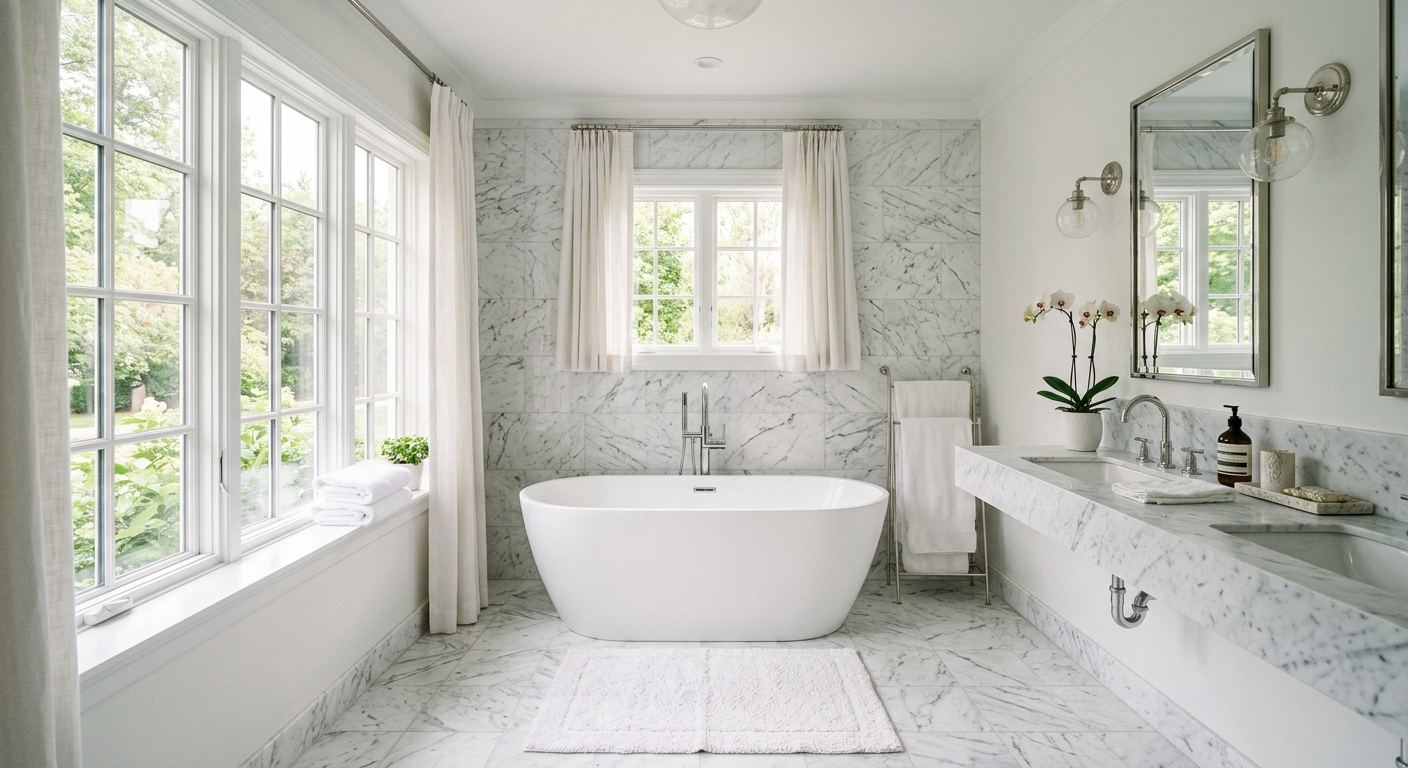
Bathroom renovation options and costs in Callaghan
Bathroom renovation in Callaghan, Alberta starts with choosing how much you want to change—and that choice quickly determines your total budget. Callaghan’s population is small (1,177 people as of the 2021 Census), but the homes that drive renovation work are still part of the broader Calgary housing market where many properties are long-established. In older housing stock, it’s common to see outdated drain and supply layouts, and in some homes that means potential asbestos concerns in older floor tile or drywall finishes—one reason a “refresh” can expand once walls come open. (Statistics Canada, 2021 Census)
In the Calgary economic region, costs are shaped less by weather than by local labour rates and the condition/age of the existing bathroom. Contractors in the region routinely find hidden-scope items like venting upgrades, subfloor or wall repairs, and sometimes galvanized supply piping that needs replacement. Even though Alberta winters don’t directly set bathroom material costs, they do affect scheduling and drying times for mortars and waterproofing—so the crew availability and staging approach matter to your timeline and overall labour efficiency. Trade coordination is also a factor: when plumbing, electrical, and tile work aren’t sequenced well, it adds days, and those days cost money.
Because of this, many homeowners in areas such as Taradale (a neighbourhood where renovation trades frequently cluster in the Calgary orbit) treat budgeting as two-step: price the visible scope, then plan contingency for discovery work. Use the comparison below to align your goals with realistic ranges for the Callaghan market, and to avoid under-budgeting what you can’t see yet.
| Renovation Scope |
What's Included |
Typical Duration |
Price Range |
| Cosmetic refresh (paint, fixtures, accessories only) |
Paint, faucet & drain trim swap, vanity refresh (if layout stays), toilet/lighting accessory replacement, new mirrors/towel hardware; usually no plumbing relocation and no major tile removal |
3–7 days |
$3,000–$8,000 |
| Mid-range full renovation (new tile, vanity, tub/shower, electrical) |
Demo and rebuild with ceramic/porcelain tile, new vanity & lighting, bathtub and/or shower surround, waterproofing, exhaust fan upgrade, GFCI wiring as needed, disposal, and surface repairs |
2–4 weeks |
$15,000–$25,000 |
| High-end full renovation (custom tile, steam shower, heated floors) |
Premium tile/grout detailing, custom shower pan or steam system, heated floor wiring and controls, higher-end fixtures, improved ventilation strategy, more extensive framing/subfloor corrections as needed |
4–7 weeks |
$25,000–$40,000 |
| Shower-only installation (convert tub to walk-in shower) |
Remove tub, frame and waterproof shower, install new shower pan and surround/tile, new glass door (optional), adjust plumbing/venting, add exhaust fan if upgrading |
2–3 weeks |
$12,000–$18,000 |
| Bathtub replacement or tub-liner install |
Remove existing tub (or install liner where appropriate), reconnect fixtures, waterproofing at transition points, new caulking/sealants, and touch-up finishing |
1–2 weeks |
$500–$3,000 |
| Tile-only installation (floor + surround, existing layout kept) |
Tile removal as needed, substrate prep, waterproofing at wet areas, installation of floor and surround tile, grout/sealant, and reinstallation of existing fixtures where feasible |
1–3 weeks |
$3,000–$12,000 |
Prices are estimates only and vary by project scope, site access and material selection.
What affects the price of bathroom renovation in Callaghan
Across Calgary and the rest of Alberta, homeowners can receive quotes for the “same” bathroom renovation that differ by 30–50%. The main drivers are regional labour rates and what’s hidden behind the existing finishes—not weather. Bathroom work is labour-intensive and sequence-dependent (plumbing rough-in, venting, electrical, waterproofing, tile setting, and curing). In older homes, discovery work can expand scope fast: you may find older cast-iron or copper drain sections that need upgrading, galvanized supply lines that are nearing end-of-life, or ventilation that can’t handle a modern shower load. Those items directly change labour hours and material quantities, which is why budgeting based only on visible tile and fixtures often comes up short.
In many older Calgary-area bathrooms, asbestos can be encountered in pre-1985 vinyl floor tile or even in hidden drywall compounds. When asbestos is confirmed, abatement protocols add time and cost—often pushing budgets up by $1,500–$5,000+ depending on the area affected and how the work is contained. For example, a mid-range full renovation that starts around the lower end of the $15,000–$25,000 band may move toward the $25,000–$30,000 territory if you need drain stack changes and additional subfloor repairs. If you instead keep the layout and select tile within the $3,000–$12,000 tile-only range, you reduce the likelihood of rough-in surprises.
Two common Callaghan/Calgary-area examples: (1) moving a sink to accommodate a new vanity can require drain/supply rerouting and additional framing, raising the job from “finish work” to true remodel work; (2) selecting large-format porcelain often costs more to install, because substrate flatness requirements are stricter—if the old floor is unlevel, the prep phase adds cost. Your contractor’s ability to evaluate the existing substrate and service lines early is what keeps the project closer to budget.
| Price Factor |
Why It Matters |
Cost Impact |
| Layout change — moving drain or supply lines requires rough-in work |
Rerouting involves plumbing demolition, pipe replacement, new rough-in access, and often venting confirmation |
Can add $3,000–$8,000 versus keeping the layout |
| Tile selection — large-format porcelain vs. mosaic vs. ceramic |
Harder cuts, stricter flatness needs, and different setting/curing considerations affect labour |
Often shifts cost by $1,000–$6,000 within tile-only or full scopes |
| Fixture tier — builder-grade vs. mid-range vs. designer brands |
Higher tiers can cost more and may require specialty install components |
Typical swing of $500–$4,000 |
| Subfloor condition — rot or unlevel concrete adds scope |
Water exposure can compromise plywood or cause floor deflection; leveling affects tile performance |
Can add $1,500–$7,000 |
| Electrical — adding GFCI outlets, exhaust fan, heated floor circuit |
New circuits or fan upgrades require properly routed wiring, code-compliant connections, and testing |
Often adds $800–$5,000 |
| Waterproofing method — membrane type and extent |
Different systems require different prep and coverage details; correct detailing prevents leaks |
Can add $500–$3,500 but reduces risk of costly callbacks |
| Older-home surprises — asbestos tile, cast-iron drains, galvanized pipes |
Abatement, pipe replacement, and demolition expand labour and disposal needs |
Often adds $1,500–$8,000+ depending on what’s found |
| Bathroom size — sq ft drives tile and labour time directly |
More surface area means more waterproofing, tile cuts, setting time, and cleanup |
Can swing $2,000–$10,000 across similar finishes |
Permits & regulations in Alberta
In Alberta, many bathroom updates fall into “low-risk” renovation work that typically doesn’t require a permit—especially cosmetic changes. Usually no permit is needed for swapping fixtures without changing plumbing locations, such as replacing a vanity, faucet trim, toilet, lighting accessories, mirrors, or re-painting. Replacing existing shower/tub components where the plumbing connection points remain the same often stays in the non-permit lane, too. However, permits commonly come into play when you change the building systems: relocating plumbing (moving a drain or supply line), adding or relocating an exhaust fan when electrical work is required, or making structural changes to framing or walls.
Electrical work must meet Alberta code requirements and be performed by (or signed off by) a licensed electrician. That includes adding new circuits for heated floors, upgrading the bathroom fan wiring, or installing new GFCI-protected outlets. Plumbing rough-in changes typically require a permit and inspection, because the rough work is where pressure testing and proper venting are verified.
For Callaghan homeowners, verify your contractor’s compliance step-by-step: (1) confirm the contractor’s Alberta trade licence (and any applicable sub-trade licensing) through the relevant provincial online registry; (2) request a certificate of insurance showing liability coverage and check that it’s current; (3) ask for WSIB/WCB clearance letters (or proof of registration/coverage) before work starts; and (4) keep copies of these documents with your signed contract so you’re protected if there’s an incident on site.
Choosing tile, waterproofing and fixtures for your Callaghan bathroom
In a Callaghan renovation, your budget is usually “spent” in three decision points: tile choice, waterproofing system, and fixture tier. First, tile: ceramic is a good entry option when you want a straightforward installation and you’re keeping design complexity moderate. Porcelain is denser and typically handles wear better, but it demands excellent substrate prep for clean installation—especially if you choose large-format panels. Natural stone (marble, travertine, slate) can look stunning, but it adds cost through premium material and the need for careful sealing and specialized finishing.
Second, waterproofing: in Alberta’s freeze-thaw winters and interior humidity swings, the goal is stable, well-detailed waterproofing behind the tile. A paint-on membrane can work in certain scenarios, but bonded sheet membranes and proven system approaches (including compatible corner/thin-set details) often deliver better long-term resilience when installed correctly. If you plan a custom shower pan or linear drain, the waterproofing approach becomes even more critical. The right system prevents mould in the “wet wall” areas that show up after months of use, when small leaks grow silently.
Third, fixtures: builder-grade faucets and shower trims lower upfront costs, while mid-range and designer brands usually raise material cost and can improve long-term performance (valves, finishes, shower heads). Where the extra spend is justified is often in parts that affect daily function: a better valve cartridge, a quieter fan, or better sealing components.
For a dollar example, choosing mid-range porcelain tile may cost roughly $1,500–$4,000 more than entry ceramic in a typical surround, but it’s frequently worth it when you’re also doing thorough waterproofing and keeping the layout—because you avoid redoing the expensive parts later. If you’re only aiming for a cosmetic refresh, you can often keep fixtures in the same locations and focus spending on visible finishes.
| Material / Option |
Pros |
Cons |
Price Range |
| Ceramic tile (floor + walls) |
Lower material cost, wide style variety, easier for basic patterns |
More prone to chipping; may be less forgiving in high-wear areas than porcelain |
$3,000–$7,000 |
| Porcelain tile (floor + walls) |
Higher durability, better for wet zones, often supports cleaner modern looks |
Heavier and can require more careful substrate prep for large formats |
$6,000–$12,000 |
| Natural stone (marble, travertine, slate) |
Premium appearance, unique veining and depth |
Sealing/maintenance required; can be costlier and more demanding to install |
$10,000–$20,000 |
| Frameless glass shower enclosure |
Brightens the room, modern look, generally easier cleaning |
Requires precise installation; higher cost than basic systems |
$2,000–$6,000 |
| Prefab tub surround (acrylic) |
Faster install, consistent look, often easier for DIY-adjacent homeowners |
Less “custom” design; seams and edges must be detailed carefully |
$500–$3,000 |
| Custom shower pan (tile or linear drain) |
Custom fit, better water management, can elevate accessibility and modern styling |
More labour-intensive; waterproofing detailing is critical |
$3,500–$12,000 |
How to choose a bathroom renovation contractor in Callaghan
Choosing the right contractor in Callaghan comes down to proof, process, and clarity. Start by confirming Alberta licensing for the trades involved (and requesting the licence details in writing). Then verify liability insurance with a current certificate of insurance, and ask for WSIB/WCB clearance so you know the contractor is compliant if something goes wrong on site. If a contractor can’t provide documents quickly, that’s usually a sign of poor administrative controls—exactly the kind of problem that shows up later when scope changes.
Next, get 2–3 itemised written quotes. A proper quote shows labour and materials as separate lines, including waterproofing components, tile set materials, disposal, and any allowances. Avoid vague “lump sum” pricing where exclusions are unclear. Read the scope carefully: ask whether permit pulling is included (if it’s needed), whether drywall/plaster repair is part of the finish phase, and whether demolition and disposal are covered. Also confirm what’s excluded (for example, existing subfloor replacement beyond a set allowance).
Warranty matters. Look for a workmanship warranty length and confirm whether the product/manufacturer warranty is valid for you and whether it’s transferable if you sell the home. Finally, payment schedules should protect you: never pay more than about 10–15% upfront, and hold back a portion until key completion milestones (waterproofing inspection, final caulking, and walkthrough) are done. Get a start date and a completion estimate in writing, including staging for tile curing and fixture lead times.
- Verify Alberta trade licences and list the responsible party on your contract
- Request certificate of insurance for liability coverage and confirm dates
- Ask for WSIB/WCB clearance letters before work starts
- Require itemised pricing for labour vs. materials (no vague allowances without explanation)
- Confirm waterproofing system type, coverage area, and who supplies the membrane
- Check disposal is included (especially for tile and subfloor demolition)
- Ask whether permits are included when relocating plumbing or upgrading electrical
- Confirm demolition details: what is protected, what is hauled, and what is replaced
- Get a timeline with realistic tile and membrane cure durations
- Clarify warranty terms: workmanship duration and exclusions
- Use a payment schedule that caps upfront payment at 10–15%
- Request references from recent Calgary-area bathrooms with similar scope
Concrete red flags to watch in Callaghan: (1) quotes that omit waterproofing details or list it as “included” without specifying the system; (2) refusal to provide insurance/WSIB/WCB proof; (3) unclear scope boundaries for demo, disposal, and substrate repairs; (4) pushing for large upfront deposits; and (5) promising an exact completion date without acknowledging fixture lead times and curing schedules.
Frequently asked questions — bathroom renovation in Callaghan
Can I live at home during a bathroom renovation in Callaghan?
Often, yes—especially if you plan for a defined work window and choose a contractor who sequences trades efficiently. In many Callaghan-area homes, crews can protect a functional area for short periods, but you should expect reduced access to water or bathroom use during demolition and waterproofing. If your project is a shower-only conversion or a tile-only job where plumbing locations stay put, you may be able to keep a workable routine. If you’re in a full renovation and relocating plumbing, plan for a longer disruption. Budget-wise, even a mid-range full renovation starting around $15,000–$25,000 typically requires staged access and careful scheduling, so living-in is possible but not the comfortable “vacate for a weekend” scenario.
What's the best bathtub material for a Callaghan home?
The “best” bathtub material depends on how your existing setup is built and what your goals are (durability, weight, and desired finish). In most Callaghan/Calgary-area basements and main floors, acrylic or fiberglass tubs are common because they’re lighter and easier to replace. If your goal is a like-for-like replacement without heavy structural changes, acrylic often makes the most sense. If you’re staying with a tub but want a quick visual refresh, a tub-liner system may be an option, and it can sit in the lower end of the band (for example $500–$3,000 for liner-type work depending on prep). For long-term durability, focus less on branding and more on correct prep, proper sealing around fixtures, and whether the installation includes sound waterproofing at the tub-to-wall transition.
Is it worth renovating a bathroom before selling in Callaghan?
Usually, yes—provided you renovate for buyers’ expectations and keep the project aligned with your home’s condition. In an older housing market around the Calgary economic region, bathrooms often show wear first, and that can affect perceived value. A cosmetic refresh (paint, fixtures, and tidy accessories) can improve first impressions quickly if the underlying plumbing and waterproofing are still sound. If you suspect hidden issues—like dated venting, compromised subfloor, or signs of past moisture—buyers may discount the home even if the tile looks fresh. That’s why a mid-range full renovation budget in the $15,000–$25,000 range can be worth it when it fixes real performance issues, not just surfaces.
How do I plan a bathroom renovation on a tight budget in Callaghan?
On a tight budget in Callaghan, the best strategy is to reduce the high-cost variables: layout changes, extensive demolition, and premium materials you may not need. Keep the layout if possible—moving drain or supply lines is where costs can jump quickly due to rough-in and inspection work. Consider a tile-only or cosmetic refresh approach if your existing plumbing and waterproofing are in good condition; tile-only projects often fall in the $3,000–$12,000 range. If you need a shower upgrade, a shower-only conversion may land around $8,000–$15,000, depending on glass, pan, and how much plumbing adjustment is required. Always plan a contingency for older-home surprises such as subfloor repairs or asbestos-related precautions (if discovered), so you don’t end up stopping mid-project.
What's the difference between a cosmetic and a full bathroom renovation?
A cosmetic renovation focuses on surfaces and visible fixtures without changing the bathroom’s core systems. In practice, that means paint, swapping faucets and lighting, replacing accessories, and sometimes updating the vanity or mirror. A full bathroom renovation goes deeper: it involves demolition, substrate repair, waterproofing, new tile or tub/shower assembly, and typically electrical and plumbing upgrades as needed for code compliance and proper performance. That’s why full renovations in the Calgary region commonly start around the low five figures and climb with material choices, waterproofing complexity, and any hidden issues behind the walls. For homeowners, the simplest way to budget is to decide early whether you’re addressing performance (waterproofing, venting, drainage) or only appearance—because those are different scopes with different price bands.
How do I choose the right contractor for my bathroom in Callaghan?
Choose a contractor based on verifiable credentials, a clear scope, and transparent pricing. In Alberta, confirm the contractor’s trade licensing (and that the required electricians/plumbers are properly licensed), ask for current liability insurance, and request WSIB/WCB clearance documentation before work begins. Next, get 2–3 itemised written quotes: labour and materials should be broken out, and the quote should explicitly say what’s included for demolition, disposal, waterproofing, and permits (where plumbing/electrical changes make a permit likely). Be cautious with “cheap” quotes that don’t specify waterproofing membranes or that use large, unexplained allowances. Finally, check the workmanship warranty and payment schedule—never pay more than about 10–15% upfront. If you’re comparing a project around $15,000–$25,000, the best quote is usually the one that reduces uncertainty, not the one with the lowest line total.