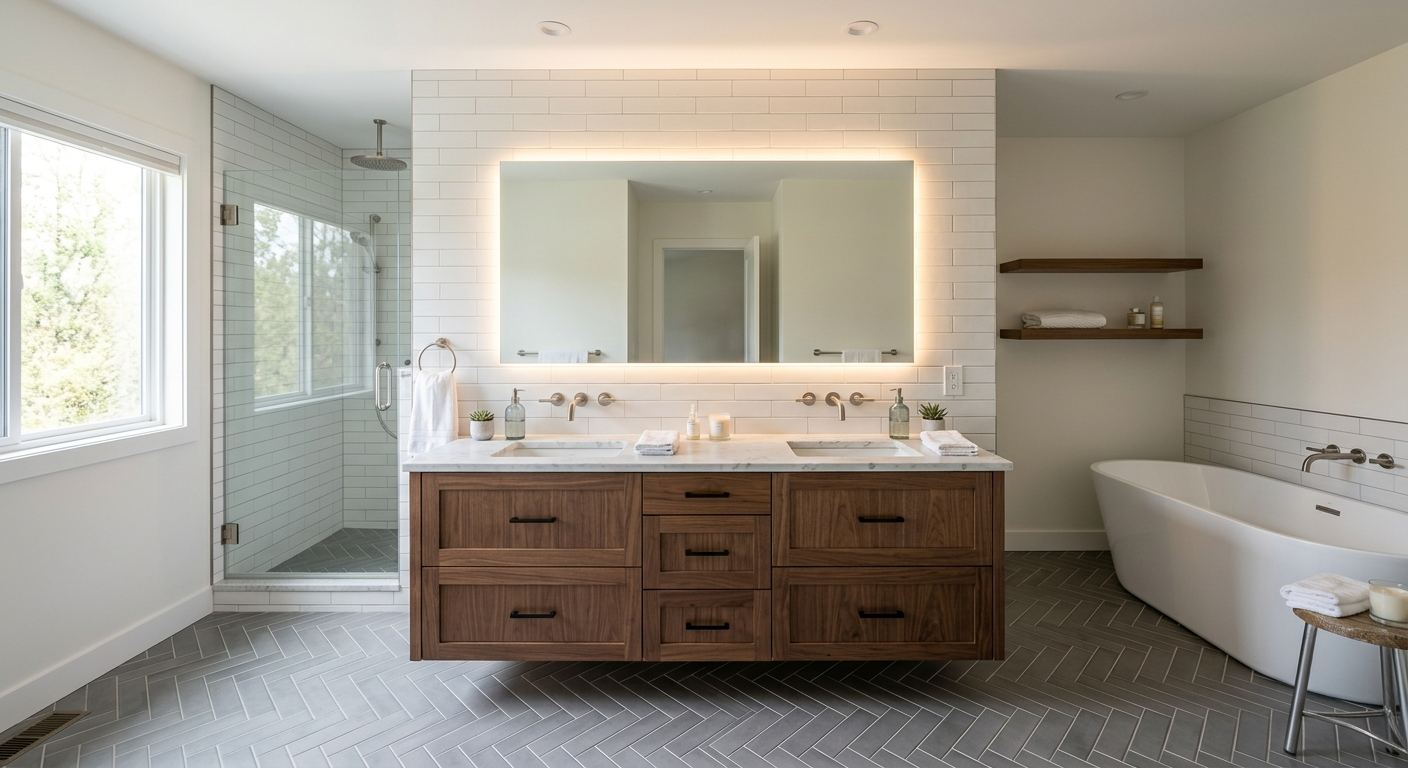
Bathroom renovation options and costs in Grande Cache
Bathroom renovation in Grande Cache is usually shaped by two realities: the town’s smaller housing market and the fact that many bathrooms sit in older homes with dated plumbing layouts. Grande Cache’s population was 3,276 in 2021 (Statistics Canada, 2021 Census), and in older neighborhoods you’ll often find cast-iron drain sections and older ventilation setups behind finishes. In the Calgary economic region, hidden-scope issues are common enough that a “simple” update can expand once walls and subfloor are opened.
Even though Grande Cache is in a colder, snowier northern climate, local cost pressure comes more from trade availability and labour rates than from weather alone. In the Calgary region, contractors consistently note that demolition often reveals upgrades needed for venting, supply lines, or subfloor repairs, and sometimes discovery of asbestos in floor tile or older drywall compound (particularly in pre-1985 construction). That’s why basic updates can start in the low five figures, while mid-range full renovations frequently rise into much higher budgets depending on tile, fixture selections, and whether plumbing moves.
In Grande Cache, trades are especially in demand in the downtown/core and river-belt residential areas, where older rental stock and compact homes often have limited access—meaning more time for protection, careful demo, and coordinating trades. If you’re planning around these realities, the most reliable next step is to compare common scopes side-by-side, then budget a contingency for concealed repairs. Below is a practical cost and timeline guide to help you start the conversation with contractors.
| Renovation Scope |
What's Included |
Typical Duration |
Price Range |
| Cosmetic refresh (paint, fixtures, accessories only) |
Paint, replace vanity and toilet if staying in the same location, update lighting, swap faucet/trim, re-caulk, install accessories; no major plumbing relocation |
3–6 days |
$3,000–$7,000 |
| Mid-range full renovation (new tile, vanity, tub/shower, electrical) |
Demo to reveal surfaces, new shower/tub surround or tile, new vanity, toilet, fan/lighting upgrades, waterproofing, basic electrical updates, disposal |
2–3 weeks |
$15,000–$24,000 |
| High-end full renovation (custom tile, steam shower, heated floors) |
Custom shower system, premium tile, heated floors (electric), upgraded ventilation, designer fixtures, advanced waterproofing, refined finishes and trim |
3–5 weeks |
$24,000–$35,000 |
| Shower-only installation (convert tub to walk-in shower) |
Remove tub, rough-in adjustments, new waterproofed shower base/surround, glass enclosure (optional), new valve trim, fan tie-in if needed |
1.5–3 weeks |
$12,000–$18,000 |
| Bathtub replacement or tub-liner install |
Replace with new tub (same general footprint) and re-seal, or install tub liner with surface prep; new trim and caulking |
2–5 days |
$1,000–$3,000 |
| Tile-only installation (floor + surround, existing layout kept) |
Tile floor and tub/shower surround, waterproofing prep, grout/seal, matching transitions; limited plumbing touches if valve locations remain |
1–2 weeks |
$7,000–$15,000 |
Prices are estimates only and vary by project scope, site access and material selection.
What affects the price of bathroom renovation in Grande Cache
Homeowners in the Calgary economic region can see the same bathroom renovation quoted 30–50% apart, even when the finished look sounds similar. The biggest drivers aren’t typically “how hard it looks”—they’re labour rates tied to local demand and the condition of the housing stock. In older Grande Cache homes, hidden plumbing and ventilation issues can add labour and materials once the walls are open. That’s why the same project might start in the low five figures for a refresh in a well-maintained home, but jump toward mid-range full renovation budgets (like the $15,000–$30,000 band) after rough-in upgrades and repairs.
Older homes in this region often hide cast-iron or copper drain sections that need replacement, galvanized supply lines that may require upgrading, and insufficient venting that affects performance and moisture control. That moisture problem is particularly relevant in Alberta because bathrooms are one of the fastest ways for humidity to damage framing and subfloor if the ventilation plan isn’t upgraded. If asbestos is discovered in vinyl floor tile or older drywall compound (common in pre-1985 construction), contractors may need abatement protocols—often adding $1,500–$5,000+ depending on extent and handling requirements.
Two practical examples from Grande Cache: (1) keeping the tub valve in place can reduce demo and rough-in time, while moving it often increases the scope quickly; (2) replacing rotted subfloor before tile keeps the warranty safer, but it adds labour and sometimes additional prep materials. Even tile cost can swing—large-format porcelain can cost more in materials but can reduce labour time on well-prepped surfaces; mosaic tile usually increases layout and cutting time.
| Price Factor |
Why It Matters |
Cost Impact |
| Layout change — moving drain or supply lines requires rough-in work |
Alters plumbing scope, subfloor breaking, and inspection steps |
Often +$3,000–$8,000 |
| Tile selection — large-format porcelain vs. mosaic vs. ceramic |
Changes cutting, waste, and installation time; affects substrate prep needs |
Often +$1,500–$7,000 |
| Fixture tier — builder-grade vs. mid-range vs. designer brands |
Premium trims, better valves, and enclosure options cost more |
Often +$800–$4,000 |
| Subfloor condition — rot or unlevel concrete adds scope |
May require repair, sistering, leveling compounds, or replacement |
Often +$1,000–$6,000 |
| Electrical — adding GFCI outlets, exhaust fan, heated floor circuit |
New circuits add material, labour, and licensed work coordination |
Often +$1,200–$5,500 |
| Waterproofing method — membrane type and extent |
Better systems reduce callbacks and moisture-related failures |
Often +$600–$3,500 |
| Older-home surprises — asbestos tile, cast-iron drains, galvanized pipes |
Triggers contingency work, disposal, and sometimes removal/replacement |
Often +$1,500–$10,000+ |
| Bathroom size — sq ft drives tile and labour time directly |
Larger floor/wall area increases tile quantity and setting time |
Often +$2,000–$9,000 |
Permits & regulations in Alberta
In Alberta, the permit picture depends on what you change—not just the “bathroom reno” label. Cosmetic updates—like swapping a vanity, replacing fixtures in the same location, repainting, and retiling where plumbing locations stay untouched—typically do not require a permit. However, permits are commonly required when you relocate plumbing (moving a drain or supply lines), add or change electrical circuits (for example, new GFCI outlets, new exhaust fan wiring, or tying in a heated floor circuit), or make structural changes to walls/floors.
Electrical work must meet applicable electrical code requirements and be completed or signed off by a licensed electrician. Plumbing rough-in changes—opening walls/floors to move valves, drains, or supply runs—often require a permit and inspection before finishes go back in. Because contractors handle this differently across projects, confirm what permits are required before demolition.
To verify a contractor in Grande Cache, start with their Alberta trade licence and liability coverage. Ask for (1) the trade licence number and confirm it through the relevant provincial online registry, (2) a current certificate of insurance showing liability coverage for the work, and (3) evidence of WCB (Workers’ Compensation Board) clearance/coverage documentation, where applicable. Request these before you pay any deposits, and make sure the listed insured/coverage matches your contractor’s legal business name. For your peace of mind, also ask whether permit pulling and inspections are included in the quote, or treated as an extra line item.
Choosing tile, waterproofing and fixtures for your Grande Cache bathroom
In Grande Cache, your budget usually gets decided by three material choices: tile, waterproofing, and fixture tier. First, tile selection matters because installation complexity changes with the product. Ceramic is the entry option—often cost-effective if your layout is straightforward and surfaces are in good shape. Porcelain tends to be more durable for floors and wet areas, and it can be a good middle ground for resale and wear. Natural stone (marble, travertine, slate) looks premium but can require more careful selection, sealing, and handling, and it can increase labour due to finish consistency and premium finish demands.
Second, waterproofing is what protects your walls and subfloor. A paint-on membrane is fine for certain systems and details, but bonded sheet membrane or a proven, compatible system (including correct overlaps at corners/penetrations) often provides greater confidence in wet-zone performance. Alberta bathrooms need dependable moisture control because indoor humidity from showers and baths can quickly damage framing if ventilation and waterproofing aren’t handled correctly.
Third, fixtures influence both cost and long-term user experience. Builder-grade faucets and trims can save money upfront, while mid-range and designer brands typically offer better valves, finishes, and consistency. A concrete budgeting example: if you’re choosing between a mid-range shower install and a cosmetic-only update, upgrading waterproofing and selecting porcelain tile can justify a bigger spend within the $15,000–$24,000 mid-range band—whereas trying to “save” by using the cheapest tiles without investing in a complete waterproofing plan can cost more if you end up redoing failures.
| Material / Option |
Pros |
Cons |
Price Range |
| Ceramic tile (floor + walls) |
Typically lower material cost; good variety of colours/patterns; works well in wall applications |
Can be less durable than porcelain for floors; may chip or wear faster depending on grade |
$3,000–$7,000 |
| Porcelain tile (floor + walls) |
Better wear resistance; consistent sizing; often easier to clean and more water-tolerant for bathrooms |
Higher material cost; premium looks may require more careful layout and extra labour |
$5,000–$12,000 |
| Natural stone (marble, travertine, slate) |
High-end appearance; distinct character; excellent design impact |
More expensive; requires sealing/maintenance; variations can complicate installation |
$8,000–$18,000 |
| Frameless glass shower enclosure |
Modern look; visually opens the space; durable hardware options |
Costs more; requires accurate tile flatness and proper mounting |
$2,000–$6,000 |
| Prefab tub surround (acrylic) |
Faster install; good water resistance when properly sealed; lower labour time |
More limited styles; can look less “custom” than tile |
$500–$2,500 |
| Custom shower pan (tile or linear drain) |
Custom slope/drain layout; clean aesthetics with linear options; supports a full tiled shower finish |
Higher labour and waterproofing complexity; drain alignment is critical |
$2,000–$7,000 |
How to choose a bathroom renovation contractor in Grande Cache
Choosing the right bathroom renovation contractor in Grande Cache is about verifying coverage, demanding itemised quotes, and confirming how the job will be managed from demo to tile and final inspection. Start by verifying Alberta licensing and liability insurance. Ask for the contractor’s trade licence details (and confirm them through the provincial online registry), then request a certificate of insurance naming their legal business entity and covering the work. For WCB/WSIB-type coverage, ask for confirmation documents and clearance evidence appropriate for the project and workforce—so you’re not exposed if a worker is injured.
Next, get 2–3 written quotes that break out labour and materials separately rather than one lump sum. A good bathroom quote should clearly list: demolition, plumbing and electrical work, waterproofing method, tile supply, tile installation, disposal, and any allowance items. Read the exclusions too—what’s not included (subfloor repairs, permit fees, asbestos assessment/abatement, glass enclosure changes, extra tile cuts for niche placement). Confirm whether permit pulling is included or billed as an add-on, and whether debris hauling and recycling are part of disposal.
For warranty, ask about workmanship (often 1–2 years or longer depending on the contractor) and whether product warranties are provided by the manufacturer and if they’re transferable after installation. Finally, manage cash flow: never pay more than 10–15% upfront, and use a holdback until critical milestones are complete and you’ve done your walk-through. Make sure the timeline includes a start date and completion estimate in writing, including dependencies like fixture lead times.
- Trade licence number shown on the quote and on request for verification
- Current liability insurance certificate provided before deposit
- WCB/coverage clearance evidence requested for your job
- Itemised labour/materials (tile labour separate from tile supply)
- Clear scope: permit pull, inspections, disposal and protection included or listed
- Waterproofing plan: membrane type and where it’s applied stated in writing
- Subfloor expectations explained (who repairs rot/unleveling, and at what allowance)
- Schedule includes lead times for glass enclosures and special fixtures
- Warranty written down for both workmanship and manufacturer-related items
- Payment schedule capped: 10–15% upfront; holdback until completion
- Change-order process described (how discovery items are priced after demo)
- References/photos for bathroom work in similar housing conditions
Red flags to watch for: contractors who won’t provide licensing/insurance paperwork, quotes that omit waterproofing details, unclear exclusions for plumbing/electrical/disposal, demands for large upfront payments, or no written timeline/scope—especially risky in older Grande Cache bathrooms where hidden-scope work is common.
Frequently asked questions — bathroom renovation in Grande Cache
Is it worth renovating a bathroom before selling in Grande Cache?
Often yes, but the “value” depends on what you fix versus what you simply refresh. In Grande Cache, buyers tend to scrutinize the fundamentals: waterproofing condition, ventilation performance, and whether plumbing and electrical meet modern expectations. If your bathroom is outdated or has visible cracking, worn tile grout, or slow drainage, a mid-range full renovation is usually more reassuring to buyers than cosmetic changes alone. As a budgeting anchor, many homeowners land in the $15,000–$30,000 full renovation band when they do it properly with upgraded waterproofing and practical layout decisions. If the bathroom is structurally sound, a cosmetic refresh can improve presentation with less risk. However, in older homes, hidden issues like subfloor softness or older drain components can surface after demo—so plan contingency and avoid delaying necessary fixes until after the sale.
How do I plan a bathroom renovation on a tight budget in Grande Cache?
Start by protecting the high-impact parts of the system: waterproofing, ventilation, and leak risk areas. A tight budget is best spent where failure is expensive—so choose a reliable waterproofing method and don’t skip subfloor repairs if the surface isn’t solid. For labour-saving, keep the layout: avoid moving drains and supply lines unless absolutely necessary. You can often control costs with a “refresh + strategic upgrades” approach—like replacing a vanity and fixtures, updating lighting and exhaust, and focusing tile work where it matters most. If you’re working toward a narrower scope, cosmetic refresh budgets can be closer to the $3,000–$7,000 range, while shower-only projects commonly climb to the $12,000–$18,000 range once rough-in and waterproofing are included. Request an itemised quote with explicit allowances for concealed repairs so you don’t get surprised mid-project.
What's the difference between a cosmetic and a full bathroom renovation?
A cosmetic renovation is mainly surface and fixture-level work: paint, swap fixtures like taps and trim, replace a vanity if it fits the existing plumbing, and update accessories and lighting—without opening walls or changing plumbing/venting. A full renovation goes deeper: demolition, waterproofing rebuild, new tile floors/walls (or shower surround replacement), electrical upgrades, and usually plumbing refresh work. Full renos also commonly include subfloor evaluation and repairs because tile requires a stable base. In Alberta—especially in older Grande Cache homes—your contractor may need to upgrade ventilation or correct hidden rough-in issues once finishes are removed. That’s why a “cosmetic” plan can sometimes grow into full scope after demolition. Budget accordingly: full bathroom renovations often land in the $15,000–$30,000 band, while cosmetic updates can start far lower when the structure and rough-in are already in good shape.
How do I choose the right contractor for my bathroom in Grande Cache?
Choose contractors based on documentation and clarity, not just the lowest price. In Grande Cache, verify the Alberta trade licence details (confirm via the provincial online registry), request a current liability insurance certificate, and ask for WCB/coverage clearance evidence appropriate for the job. Then compare itemised quotes: labour and materials should be broken out, not lumped together, and the scope should state whether permit pulling and disposal are included. Ask about waterproofing method specifically—what membrane type, where it’s applied, and how corners/penetrations are sealed. Make sure the quote describes change-order pricing if asbestos or hidden plumbing issues are discovered after demo. Finally, confirm warranty terms in writing and keep your payment schedule conservative (typically no more than 10–15% upfront, with a holdback). These steps help you avoid the most common cost blow-ups.
What's the most common mistake homeowners make in bathroom renovations?
The most common mistake is treating the project like a surface makeover when it’s really a systems job. Homeowners often choose finishes first—tile, vanity, fixtures—then under-plan for waterproofing, ventilation, and subfloor stability. In older Grande Cache homes, once walls come down, you may find hidden issues like unlevel surfaces, failing caulking, or older drain/supply components that need upgrading. If a contractor doesn’t investigate early or doesn’t include realistic contingencies, the homeowner ends up paying change-order costs and waiting on trades. Another frequent error is skipping clarity in the scope: for example, assuming a quote includes permits, disposal, and electrical fan work when it doesn’t. If you’re budgeting around a full renovation range like $15,000–$30,000, build in a contingency for concealed repairs—especially when the existing bathroom is older and the contractor expects to open up tile and surround.
How long does tile installation take in a Grande Cache bathroom?
Tile installation time depends on bathroom size, tile type, and how flat/solid the substrate is after demo. In a typical Grande Cache renovation where the layout stays the same and the subfloor is prepared properly, tile work commonly takes about 5–10 working days. That timing can be faster for straightforward ceramic or porcelain installs with fewer cuts, and slower for mosaic patterns, custom niches, or large-format tile requiring more careful alignment. Waterproofing and cure times also affect the schedule—good waterproofing can’t be rushed, because Alberta moisture control is not optional for a bathroom that will see daily showers. If your project is within a tile-focused scope (floor and surround, existing layout kept), many homeowners see tile-only work in the $7,000–$15,000 range, and duration typically aligns with that scale. Ask your contractor for a tile schedule that shows when setting, grouting, and waterproofing prep occurs.