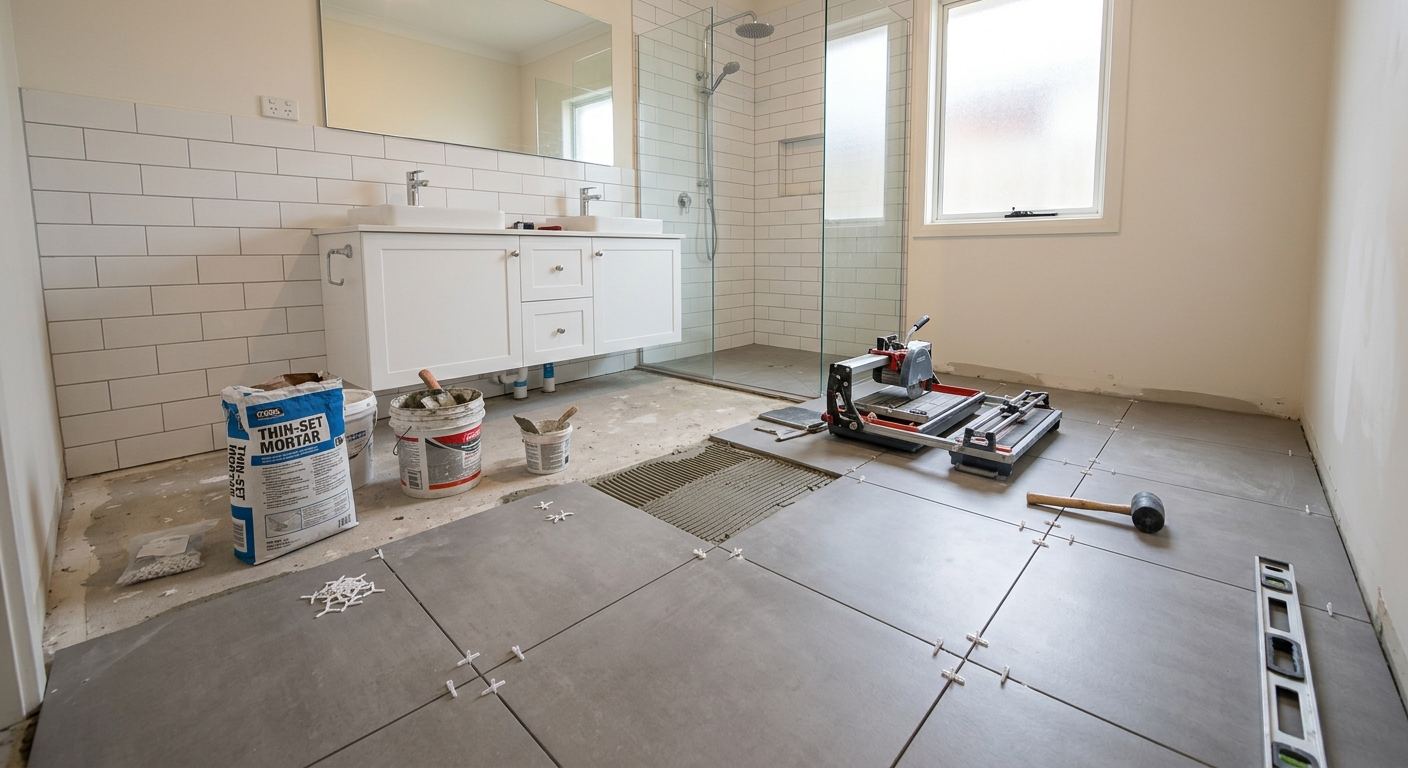
Bathroom renovation options and costs in Peace River
Peace River homeowners usually start their bathroom plan by asking one question: what will it cost for the level of change I want? In a community of 6,619 people (Statistics Canada, 2021 Census), many homes are older—about 52.9% were built before 1981. That matters because dated plumbing layouts can mean cast-iron or copper drain sections, older supply lines, and limited venting that must be corrected once walls open. In Peace River, most labour demand clusters around established residential areas such as downtown and the River Street corridor, where trades see consistent turnover and mid-project scheduling pressure.
In the Athabasca–Grande Prairie–Peace River region, bathroom pricing is driven more by local labour rates and what’s hidden behind finishes than by the weather itself. Labour remains the swing factor: demand from resource-sector schedules keeps rates strong, and older homes can require added plumbing upgrades and electrical updates. You’ll also see contractors budget time for discovery and remediation—particularly where pre-1985 materials may contain asbestos in floor tile or old drywall compounds. Those surprises don’t happen in every home, but when they do, they push projects from “cosmetic refresh” toward full renovation scope.
For budgeting, think in bands. A full renovation commonly lands in the $14,000–$32,000 range, while a shower-only conversion often sits around $3,000–$15,000 depending on drain relocation and waterproofing complexity. With that in mind, use the table below to compare typical options before you request itemised quotes.
| Renovation Scope |
What's Included |
Typical Duration |
Price Range |
| Cosmetic refresh (paint, fixtures, accessories only) |
New vanity top or vanity, taps/trim, toilet seat (swap), mirror, lighting swap (no new circuits), paint, accessories; no structural wall/plumbing moving |
2–5 days |
$4,500 – $10,000 |
| Mid-range full renovation (new tile, vanity, tub/shower, electrical) |
Remove to rough finish; new tub/shower or surround, tile floor and walls, vanity and mirror, ventilation upgrade, new GFCI outlet(s), basic electrical updates, plumbing check-and-repair, disposal |
10–18 days |
$14,000 – $22,000 |
| High-end full renovation (custom tile, steam shower, heated floors) |
Custom shower/tub configuration, premium tile work, heated floor system, higher-end fixtures, upgraded exhaust with ducting, expanded electrical (heated floors/extra circuits), advanced waterproofing and niche/bench builds |
18–28 days |
$22,000 – $32,000 |
| Shower-only installation (convert tub to walk-in shower) |
Demo tub, install walk-in shower base/pan, waterproofing, tile surround, new valve/trim, new glass option (if selected), ventilation check, plumbing rough-in as needed |
7–14 days |
$6,500 – $15,000 |
| Bathtub replacement or tub-liner install |
Replace tub with like-for-like size or install liner; re-caulk and seal, update trim, check/replace drain/valve parts, spot tile repairs, leak test |
3–8 days |
$1,500 – $6,500 |
| Tile-only installation (floor + surround, existing layout kept) |
Tile floor and walls up to typical height, re-grout/reseal, prep and waterproofing as required, minor plumbing/trim adjustments only; vanity and fixtures typically removed and set back |
7–14 days |
$2,000 – $12,000 |
Prices are estimates only and vary by project scope, site access and material selection.
What affects the price of bathroom renovation in Peace River
You can get two quotes for the “same bathroom renovation” in Athabasca–Grande Prairie–Peace River and still see a 30–50% difference. That’s usually because labour rates and hidden condition risks outweigh the posted cost of fixtures. In Peace River, many homes are older (Statistics Canada, 2021 Census)—with 52.9% built before 1981—so pricing often hinges on what’s behind the drywall rather than what you can see in the showroom. Older drain stacks (sometimes cast-iron) and supply lines (often galvanized) can require upgrades when the rough-in is disturbed, and that can effectively double typical plumbing budgets.
Ventilation is another cost lever. Bathrooms that lack proper exhaust—or have ducting that terminates poorly—can mean extra work to install an exhaust fan and route ducting correctly. If asbestos is encountered (commonly in pre-1985 vinyl floor tile or older drywall compounds), the project may require abatement by qualified professionals. That’s where budgeting should include contingency; abatement and remediation can add $1,500–$5,000+ even when the surface finishes look simple.
Concrete examples from Peace River: converting a tub to a shower can jump because the drain may need to be re-sited, pulling the job toward the $3,000–$15,000 shower-install band. Meanwhile, a tile-only refresh can stay near the $2,000–$12,000 range when the subfloor is flat and waterproofing is straightforward; if the subfloor is unlevel or rotted, labour and membrane prep climb quickly and can push you into “mid-range full renovation” territory near the $14,000–$22,000 band.
| Price Factor |
Why It Matters |
Cost Impact |
| Layout change — moving drain or supply lines requires rough-in work |
New rough-in means opening walls/floors, patching framing, and correcting slopes for drainage |
Often adds $2,000–$8,000+ |
| Tile selection — large-format porcelain vs. mosaic vs. ceramic |
Harder cuts, more labour time, and higher tolerance for flatness and substrate prep |
Often adds $500–$4,000 |
| Fixture tier — builder-grade vs. mid-range vs. designer brands |
Valves, trims, and trim kits vary in complexity and finish compatibility |
Often adds $800–$6,000 |
| Subfloor condition — rot or unlevel concrete adds scope |
Repairs, backerboard replacement, shimming/leveling, and added waterproofing requirements |
Often adds $1,000–$5,000+ |
| Electrical — adding GFCI outlets, exhaust fan, heated floor circuit |
Licensed electrical work, new circuits, and fan/thermostat routing increases trade coordination |
Often adds $400–$3,500+ |
| Waterproofing method — membrane type and extent |
Better systems cost more but reduce failure risk at seams, niches, and corners |
Often adds $300–$2,500 |
| Older-home surprises — asbestos tile, cast-iron drains, galvanized pipes |
Discovery drives remediation and sometimes plumbing replacement rather than patching |
Often adds $1,500–$5,000+ (sometimes more) |
| Bathroom size — sq ft drives tile and labour time directly |
More surface area means more setting, more waterproofing, and longer install time |
Often adds $1,000–$7,000+ |
Permits & regulations in Alberta
In Alberta, cosmetic bathroom updates—like swapping a vanity, changing fixtures (faucet/trim), retiling without moving plumbing, or refreshing paint—typically do not require permits. However, once you change the plumbing footprint (moving a drain or supply line), add new ventilation that involves new circuits, or alter structural walls, you’re generally in permit/inspection territory. Electrical work must meet provincial electrical code and must be completed or signed off by a licensed electrician.
For many Peace River projects, the permit-trigger moments happen in a predictable order:
- Plumbing rough-in changes: moving a drain location, relocating a valve, or replacing significant sections of supply/drain often requires a permit and inspection.
- Ventilation upgrades: adding or upgrading an exhaust fan is usually straightforward when it ties into existing wiring, but if new electrical circuits are needed, it’s treated as electrical work and must be done by a licensed electrician.
- Structural wall changes: removing or modifying framing requires permitting depending on the scope.
To verify your contractor in Peace River, do three things before you sign:
- Check the contractor’s Alberta trade licence (and ensure the correct licence class for the work they’re doing).
- Request a certificate of insurance showing liability coverage (and confirm the dates are active).
- Confirm workers are covered (WSIB/WCB coverage as applicable) and ask for clearance documentation if they provide it.
If a contractor can’t provide licensing and insurance documentation clearly, treat it as a red flag and move on.
Choosing tile, waterproofing and fixtures for your Peace River bathroom
Your bathroom budget in Peace River is shaped most by three decisions: tile choice, waterproofing method, and fixture tier. First, tile. Ceramic tile is usually the entry-level option and can work well for budget renovations when the substrate is well-prepped and the layout is straightforward. Porcelain tile typically costs more but is more consistent for wet areas and can handle heavier-duty wear. Natural stone (marble, travertine, slate) looks premium, but it requires careful sealing and more labour for finishing, layout matching, and edges.
Second, waterproofing—this is where renovations succeed or fail in Alberta bathrooms because moisture sits in corners, niches, and joints. A paint-on membrane can be a budget route for certain assemblies, but bonded sheet membranes or a proper system approach (often including a waterproofing strategy like a compatible schluter-style build-out or equivalent method) better reduces risk at seams. The right system matters more than the tile price because mould and water damage come from waterproofing failures, not from how attractive the tile looks.
Third, fixture tier. Builder-grade fixtures save money up front, while mid-range and designer lines typically offer better valve performance, finishes, and longevity—which can help resale appeal in a market where many homes are older and buyers look for “done-right” upgrades.
Example: choosing porcelain instead of ceramic may add a few hundred to a couple thousand dollars in materials and time, but it’s often justified if you’re already retiling the full shower surround and want fewer issues with staining and durability. If your plan is mainly cosmetic, spending heavily on high-end stone is usually not the best ROI; put the money into waterproofing and ventilation first.
| Material / Option |
Pros |
Cons |
Price Range |
| Ceramic tile (floor + walls) |
Budget-friendly, wide variety of colours; good for straightforward layouts |
Less durable than porcelain in some applications; more variation between lots |
$2,000 – $7,000 |
| Porcelain tile (floor + walls) |
Better moisture performance and durability; often more consistent sizing |
Higher material cost; requires good substrate flatness for large formats |
$5,000 – $12,000 |
| Natural stone (marble, travertine, slate) |
High-end look and texture; strong visual impact |
Sealing and maintenance; heavier installation and layout planning |
$8,000 – $18,000 |
| Frameless glass shower enclosure |
Brights up the space; modern, clean lines; easy to wipe down |
Higher material and install cost; needs accurate pan/wall geometry |
$2,500 – $6,500 |
| Prefab tub surround (acrylic) |
Fast install; typically lower labour; smooth surface for easier cleaning |
Less “custom” look; can be less ideal if you’re aiming for a luxury finish |
$1,000 – $3,500 |
| Custom shower pan (tile or linear drain) |
Premium, spa-like result; linear drain can improve slope design |
More detailed waterproofing and framing work; schedule depends on prep |
$3,500 – $12,000 |
How to choose a bathroom renovation contractor in Peace River
Choosing a bathroom contractor in Peace River is less about flashy photos and more about verifying trades. Start with licensing and coverage. Ask for their Alberta trade licence details for the scope they’ll do, then request a certificate of insurance showing liability coverage. For worker protection, confirm workers are covered through WSIB/WCB as applicable—then ask for the clearance documentation or proof they can provide. If they won’t give you documentation up front, don’t rely on verbal assurances.
Next, get 2–3 itemised written quotes. You want line items for labour and materials (tile, membrane, shower components, fixtures, electrical/plumbing rough-in allowances), not a single lump-sum number. Make sure the scope is specific: what demolition is included, is waterproofing included, and is drywall/tile prep included? Clarify disposal and haul-away, permit pull responsibility, and whether garbage and demolition materials are included in their price.
Warranty matters in a bathroom—especially for waterproofing and workmanship. Ask how long the contractor’s workmanship warranty runs, what the manufacturer warranty covers for products, and whether it transfers if you sell the home. Finally, use a sensible payment schedule: never pay more than 10–15% upfront, and keep a holdback until key items are complete and inspected.
Timeline: require a start date and a completion estimate in writing. Bathroom renos in older Peace River homes can uncover hidden plumbing or ventilation issues, so a good contractor will build realistic contingency time into the schedule.
- Verify Alberta trade licence for the exact scope (plumbing/electrical-related work handled correctly).
- Confirm liability insurance is active and request updated proof.
- Ask for WSIB/WCB coverage confirmation or clearance letter.
- Request 2–3 itemised quotes with labour/material breakdowns.
- Check exclusions: disposal, permit fees, asbestos/abatement handling, and any patching scope.
- Confirm waterproofing method and who supplies the membrane system components.
- Ask what happens if tile/subfloor issues are uncovered during demo.
- Get clear finish-level allowances (tile grades, fixture tiers, glass type).
- Review start/completion dates and ask about backup trade availability.
- Confirm warranty length for workmanship and product warranty coverage details.
- Agree on payment schedule (10–15% upfront max) and final holdback.
- Ask how inspections/permits are handled if moving plumbing or adding circuits.
Red flags in Peace River include: quotes that are only “ballpark” with no itemisation, contractors who won’t provide licensing/insurance/WSIB/WCB documentation, unclear waterproofing scope, no written start/end dates, and payment terms that demand large upfront deposits. If you see any of these, slow down and request clarification in writing.
Frequently asked questions — bathroom renovation in Peace River
What's the most common mistake homeowners make in bathroom renovations?
In Peace River and across Alberta, the most common mistake is focusing on visible finishes while underestimating the hidden conditions that control cost and timelines. Many homes built before 1981 can hide outdated plumbing layouts, limited ventilation, and sometimes legacy materials behind walls and floors (Statistics Canada, 2021 Census). When contractors start demo without a clear contingency plan, you can end up with change orders—especially if cast-iron or galvanized lines need upgrading, or if asbestos-containing materials are discovered and must be handled by qualified professionals. The best approach is to line up an itemised scope, confirm waterproofing details, and ask how they handle “found issues” during demo. Even if you expect a mid-range budget, the real cost drivers are usually rough-in and ventilation.
How long does tile installation take in a Peace River bathroom?
Tile timing in a Peace River bathroom typically depends on bathroom size, tile format, and substrate condition. For most standard floors and tub/shower surrounds, tile installation is commonly part of a 7–14 day window inside a broader renovation schedule. If your subfloor is flat and dry, porcelain or ceramic can be set efficiently and the job stays near the expected timeline. If the contractor finds uneven framing, rot, or extensive substrate repair, the install slows because waterproofing prep and additional backer/patching must be completed first. Custom layouts and large-format tile also require extra cutting and careful checking for lippage. If you’re budgeting toward a tile-focused option around the $2,000–$12,000 band, ask for the detailed schedule: demo-to-waterproofing-to-grout dates.
How much does a bathroom renovation cost in Peace River?
In Peace River, a full bathroom renovation commonly falls in the $14,000–$32,000 range for complete updates like new tile, a tub/shower, vanity, and typical electrical/ventilation fixes. The range can widen when plumbing rough-in needs changes due to older housing—about 52.9% of homes were built before 1981 (Statistics Canada, 2021 Census)—because supply lines, drains, and venting may need upgrading once walls are opened. If you’re converting a tub to a walk-in shower, many projects land in the $6,500–$15,000 band depending on whether the drain location must be adjusted and how complex the waterproofing becomes. Cosmetic-only refreshes usually stay much lower, but once you move into retiling and ventilation/electrical updates, plan around the full-reno bands and include contingency for hidden conditions.
How long does a bathroom renovation take in Peace River?
Timelines in Peace River are usually driven by demolition readiness, trade scheduling, and whether hidden issues appear. A cosmetic refresh can be as quick as 2–5 days if plumbing and electrical are not touched. A mid-range full renovation often takes 10–18 days, while high-end work with custom shower builds, heated floors, or extensive tile detailing can run 18–28 days. Shower-only conversions commonly fall around 7–14 days if the plumbing rough-in is manageable and the waterproofing build is straightforward. In older homes, expect extra coordination if cast-iron drain sections, galvanized supply lines, or ventilation ducting need replacement or rerouting. The best contractors will give you a written start date, a completion estimate, and a realistic plan for what happens if problems are found during demo.
Do I need a permit for a bathroom renovation in Alberta?
In Alberta, you generally don’t need permits for cosmetic changes like swapping a vanity, changing fixtures, repainting, or retiling without moving plumbing. Permits become more likely when you relocate plumbing (moving drain or supply lines), add electrical work like new exhaust fan circuits, or make structural wall changes. Electrical work must meet provincial code and be done or signed off by a licensed electrician. Plumbing rough-in changes typically require a permit and inspection. For Peace River homeowners, the practical step is to ask the contractor to clearly identify which tasks require permits before work begins and to confirm who pulls the permit. Always verify licences and insurance, then confirm inspection expectations in writing so there are no surprises at the end of the job.
What's the best tile for a bathroom in Peace River?
There isn’t one “best” tile, but for most Peace River bathrooms, porcelain is often the safest balance of durability and performance. Bathrooms here face ongoing moisture loads from showers and baths, and the tile choice matters less than the waterproofing system behind it. Ceramic can work well for budget remodels, but porcelain usually handles wet environments with fewer issues and better consistency, especially for larger-format tiles. Natural stone can look exceptional, but it needs sealing and more careful installation/maintenance. If you’re aiming for a full renovation around the $14,000–$22,000 band, porcelain plus a robust waterproofing approach is typically the value sweet spot—clean look, fewer long-term problems, and it supports resale appeal. If you’re unsure, match the tile finish to how you clean and whether you want a classic ceramic look or a more modern porcelain slab aesthetic.