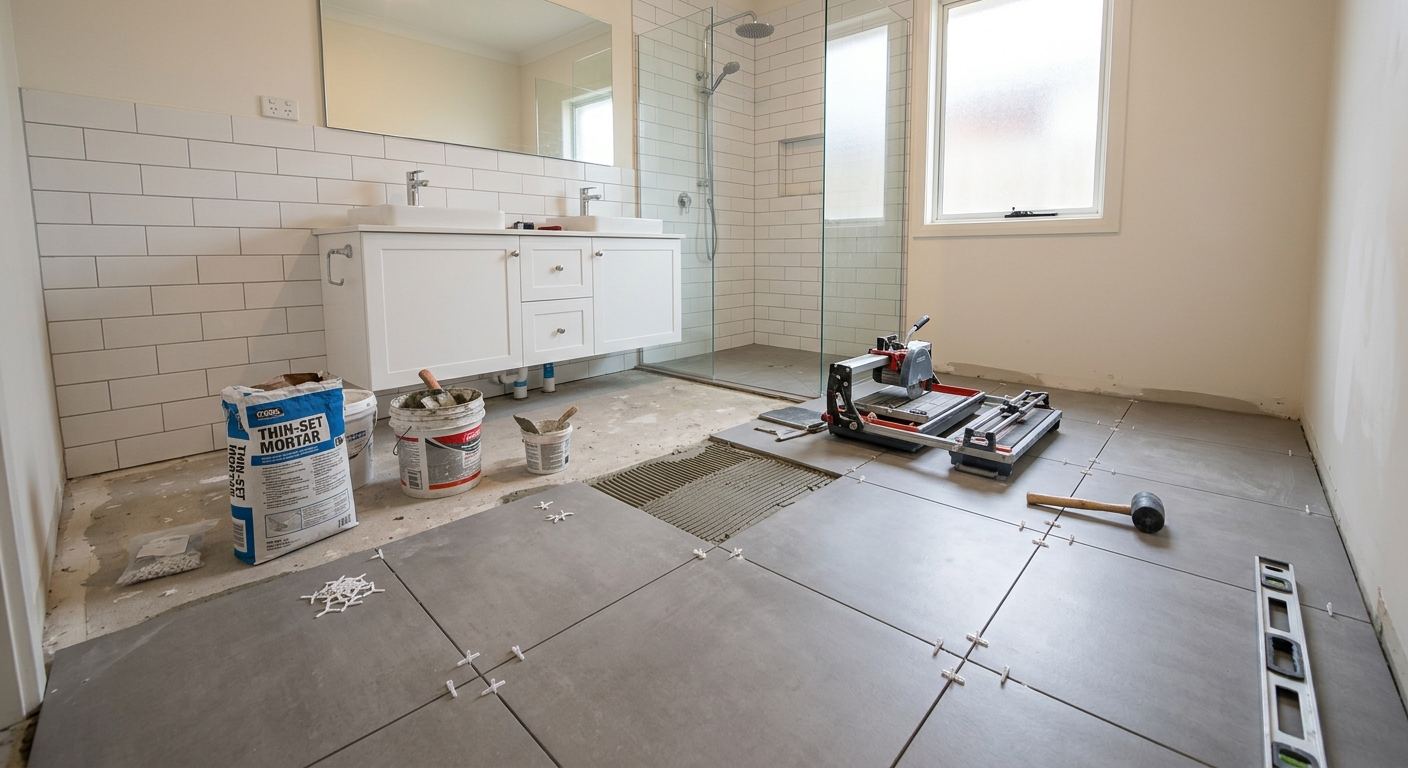
Bathroom renovation options and costs in Penhold
Penhold homeowners typically have a few clear paths when it comes to a bathroom renovation: a refresh, a mid-range full redo, or a higher-end upgrade that changes how the space functions. Because 26.8% of local homes were built before 1981, many projects start with older drain layouts, dated supply lines, and finishes that don’t match modern waterproofing expectations. In Penhold, the market also leans homeowner-led—80.0% of households own their homes (Statistics Canada, 2021 Census)—so contractors often price with the assumption that you’re planning to stay put for years, and that resale-grade finishes matter.
In the Red Deer economic region, bathroom pricing is driven more by trade availability and hidden site conditions than by weather exposure. You’ll see cost increases when demolition reveals cast-iron or galvanized plumbing sections that must be upgraded, or when ventilation is insufficient for today’s moisture-control targets. Alberta’s skilled-trade market can also push labour higher than you might expect; that’s why two contractors can quote different totals for the same “new tile and fixtures” plan. If your bathroom is in older areas with more dated plumbing—common in established pockets near Penhold’s residential core—expect more time for rough-in adjustments and inspections.
Below is a realistic budgeting guide for Penhold so you can compare quotes before demolition starts.
| Renovation Scope |
What's Included |
Typical Duration |
Price Range |
| Cosmetic refresh (paint, fixtures, accessories only) |
Paint, caulking refresh, replace vanity top or vanity (if plumbing stays), new taps, toilet seat/trim, towel bars, mirrors, light fixture swap (if no electrical expansion) |
3–7 days |
$3,500–$9,000 |
| Mid-range full renovation (new tile, vanity, tub/shower, electrical) |
Demo and haul-away, waterproofing, tile floor and walls, vanity install, tub/shower surround or surround tiles, new exhaust fan (if needed), basic electrical upgrades, plumbing refresh |
2–4 weeks |
$25,000–$45,000 |
| High-end full renovation (custom tile, steam shower, heated floors) |
More extensive re-plumbing where required, higher-end tile setting, custom shower/steam features, heated floor system, premium fixtures, improved lighting plan, upgraded waterproofing and ventilation |
4–7 weeks |
$45,000–$65,000 |
| Shower-only installation (convert tub to walk-in shower) |
Remove tub, rough-in changes, shower pan/base prep, tile or waterproofed walls, glass door/curtain rod, new drain connection, exhaust fan check/upgrade as needed |
1–3 weeks |
$8,000–$20,000 |
| Bathtub replacement or tub-liner install |
Replace tub (or install tub-liner system where suitable), new trim and seals, reconnect plumbing, re-caulk and re-finish surround, minor waterproofing touch-ups |
3–10 days |
$1,500–$6,000 |
| Tile-only installation (floor + surround, existing layout kept) |
Tile removal and reset (as required), tile floor plus shower surround, waterproofing to required areas, grout sealing as specified, light electrical disconnection/reconnection if needed |
1–3 weeks |
$5,000–$15,000 |
Prices are estimates only and vary by project scope, site access and material selection.
What affects the price of bathroom renovation in Penhold
In Penhold and across the Red Deer region, it’s common to see the same bathroom renovation scope land 30–50% apart between quotes. The biggest reasons are regional trade conditions (labour demand, scheduling, and who’s available for plumbing/electrical/tile) and what’s hidden behind the walls. Climate plays a smaller role than you’d think for cost. We don’t price bathrooms in Penhold around “outdoor weather exposure” the way you would with exterior envelope work; instead, pricing is driven by interior moisture control, ventilation design, and how older plumbing systems perform once opened.
Because 26.8% of homes built before 1981 are present locally, contractors often factor in older drain stacks, supply-line layouts, and subfloor conditions. Once demolition starts, cast-iron or galvanized pipes can require upgrades before modern waterproofing and code-compliant fixtures can go in. That’s also where ventilation and waterproofing details matter: add a correctly ducted exhaust fan and you reduce moisture issues that can otherwise lead to early grout failure. If asbestos-containing materials are discovered (for example, vinyl floor tile or old drywall compound), abatement protocols can add roughly $1,500–$5,000+ depending on extent and access.
Two Penhold examples that shift budgets quickly: (1) converting a tub to a walk-in shower usually triggers rough-in work and a different drain height, which aligns with typical shower conversion pricing of $8,000–$20,000; (2) choosing large-format porcelain tile increases labour time for layout, flattening, and detailing—often pushing tile-only packages toward the higher end of $5,000–$15,000 when preparation is thorough. If your bathroom layout stays the same and the subfloor is solid, costs can stay closer to the lower band.
| Price Factor |
Why It Matters |
Cost Impact |
| Layout change — moving drain or supply lines |
Requires rough-in work, possible framing adjustments, and new waterproofing transitions |
Often +$3,000–$12,000 |
| Tile selection — large-format porcelain vs. mosaic vs. ceramic |
Larger tiles need flatter substrates and careful planning; mosaics are labour-intensive to install |
Often +$1,000–$6,000 |
| Fixture tier — builder-grade vs. mid-range vs. designer brands |
Higher tiers cost more in purchase price and can require additional components/valves |
Often +$1,500–$8,000 |
| Subfloor condition — rot or unlevel concrete adds scope |
May require removal/replacement of subflooring, flattening, or reinforcement |
Often +$1,000–$7,000 |
| Electrical — adding GFCI outlets, exhaust fan, heated floor circuit |
New circuits, fan ducting support, and safe bathroom wiring add labour and materials |
Often +$800–$4,500 |
| Waterproofing method — membrane type and extent |
Different systems (paint-on, sheet, or bonded panel systems) vary in labour and material cost |
Often +$700–$4,000 |
| Older-home surprises — asbestos tile, cast-iron drains, galvanized pipes |
Discovery can expand scope, require remediation, and affect disposal/inspection costs |
Often +$1,500–$15,000+ |
| Bathroom size — sq ft drives tile and labour time directly |
Tile coverage and setting time scale with area; larger bathrooms require more materials and labour hours |
Often +$2,000–$12,000 |
Permits & regulations in Alberta
In Alberta, many “face-lift” updates are treated as cosmetic and typically do not need a permit. Swapping fixtures—like replacing a vanity, toilet, shower head, or tub trim—usually does not require permits if you’re not moving plumbing lines or changing the structure. Repainting, replacing accessories, and retiling within the existing layout often falls into the “refresh” category, provided you’re not altering load-bearing framing.
Permits are commonly required when you change the plumbing or the electrical scope. If you relocate a drain or supply line (for example, converting a tub to a walk-in shower), that plumbing rough-in change typically requires a permit and inspection. Adding or upgrading ventilation with a new exhaust fan and new wiring, adding additional bath outlets, or installing a heated floor circuit usually triggers electrical permitting requirements. Structural changes or modifying walls can also require permits because they can affect framing and inspection outcomes.
To verify your contractor in Penhold, start with their Alberta trade licence for the relevant trade (plumbing and electrical should be performed by appropriately licensed professionals). Next, ask for a current certificate of liability insurance and confirm WCB coverage (WSIB/WCB) where applicable for the contractor and any subcontractors. The fastest “proof” step is to request copies before scheduling: licence details, an up-to-date insurance certificate, and clearance/coverage documentation. Keep these on file with your contract paperwork.
Choosing tile, waterproofing and fixtures for your Penhold bathroom
In Penhold bathrooms, three material decisions drive the budget more than people expect: tile type, waterproofing system, and fixture tier. The right combination prevents recurring moisture problems in Alberta, while the wrong mix can create failures that show up as loose grout, cracked caulk, or damp subfloors.
First, tile choice: ceramic tile is a solid entry-level option, but porcelain usually offers better durability and water resistance for floors and wet-wall applications. Natural stone (marble, travertine, slate) looks premium, but it can be more expensive and requires careful installation and sealing discipline. Second, waterproofing: paint-on membranes are often used for lighter systems, but a bonded sheet membrane or a complete shower system with proper seams and tie-ins is the more dependable path when you want long-term performance. In bathrooms, waterproofing quality is what controls mould risk—ventilation helps, but waterproofing is the barrier.
Third, fixture tier: builder-grade fixtures help keep budgets closer to the lower end of full renovations, while mid-range or designer brands can improve function (valves, flow, finishes) and resale appeal. A concrete example: if you’re deciding between standard floor tile and a higher-end porcelain format, you might spend extra on the tile and setting materials, but you may save money by avoiding rework and expensive replacement later. For a project in the mid-range band (often $25,000–$45,000), shifting money from “extra fixtures” into better tile layout and a robust waterproofing approach usually delivers more value.
| Material / Option |
Pros |
Cons |
Price Range |
| Ceramic tile (floor + walls) |
Good entry-level choice; wide style selection; generally easier to match colours |
Less durable than porcelain in high-traffic areas; may chip if substrate isn’t properly prepared |
$5,000–$10,000 |
| Porcelain tile (floor + walls) |
Low water absorption; more durable; holds up well in wet zones; supports modern large-format looks |
Heavier tiles can require more labour for layout and flattening; premium finishes cost more |
$8,000–$15,000 |
| Natural stone (marble, travertine, slate) |
Luxury look; unique veining/texture; strong curb appeal and resale value |
More maintenance/ongoing sealing; careful selection needed to avoid staining and unevenness |
$12,000–$25,000 |
| Frameless glass shower enclosure |
Brightens the bathroom; modern style; easy to clean compared with older doors/tracks |
Requires correct waterproofing and precise framing; glass hardware can be pricier to replace if damaged |
$2,500–$6,500 |
| Prefab tub surround (acrylic) |
Faster install; fewer tile labour hours; consistent surfaces; budget-friendly |
Limited design options; can look less bespoke than tile; transitions must be well sealed |
$1,500–$4,000 |
| Custom shower pan (tile or linear drain) |
Clean “no-threshold” look; better water capture; great for curbless layouts |
More build-up and waterproofing steps; linear drain layout requires exact slope and detailing |
$4,000–$12,000 |
How to choose a bathroom renovation contractor in Penhold
Choosing the right contractor in Penhold starts with proof, not promises. First, confirm Alberta licensing for the trade(s) involved. If plumbing or electrical is part of the job, the installer should be appropriately licensed for the work performed. Next, verify liability insurance and WCB coverage so you’re not exposed if there’s an injury on site or damage to your property. Ask for current certificate(s) of insurance and coverage documentation and check that dates and names match the legal entity that’s doing the work.
Then, get 2–3 itemised written quotes. You want labour and materials broken out—especially tile labour, waterproofing system components, demolition/disposal, and any rough-in allowances. Avoid lump sums that hide exclusions; scope clarity is where real quote comparisons happen. Read the contract for what’s not included: permit pull fees, engineering/structural changes (if ever needed), haul-away and disposal, and whether asbestos remediation is included only if discovered after demolition. A reliable builder will explain how hidden-condition risks are handled and whether there’s a contingency line.
For warranty, ask for the workmanship warranty length and what it covers (often waterproofing/tile setting). Also confirm manufacturer warranties for products (fixtures, floors, membrane systems) and whether warranties are transferable if you sell your home. For payment schedule, keep it conservative: never pay more than 10–15% upfront, and hold back a meaningful completion amount until punch-list items are done. Finally, insist on a written start date and an estimated completion timeline tied to scope, lead times, and inspection scheduling.
- Ask for their Alberta trade licence information and match it to the quote scope.
- Request a certificate of liability insurance before work begins.
- Confirm WCB clearance/coverage for workers and any subcontractors.
- Get itemised quotes (labour + materials) instead of a single “all-in” number.
- Verify what demolition and disposal are included (dump fees, haul-away).
- Check whether permit pulling is included for plumbing/electrical changes.
- Confirm waterproofing method and what system name/product is being used.
- Ask how they handle hidden conditions (quote allowance vs. change order rules).
- Confirm tile substrate prep method (flattening, backer board, subfloor stabilization).
- Ask for sample schedule and access plan (parking, dust control, bathroom access).
- Review warranty terms in writing (workmanship + product coverage details).
- Use a staged payment schedule with holdback until completion and sign-off.
Red flags I see in Penhold include: quotes that don’t list waterproofing details or tile substrate prep, “permit not needed” claims when plumbing is being relocated, vague scope language like “everything included” without specifics, very large upfront deposits, and no written warranty or schedule. If a contractor can’t clearly explain what happens if asbestos or old plumbing is found after demo, that’s a warning sign.
Frequently asked questions — bathroom renovation in Penhold
How do I choose the right contractor for my bathroom in Penhold?
Start by confirming the contractor’s Alberta trade licensing for the work they’re doing, and request proof of liability insurance and WCB coverage so you’re protected if something goes wrong on site. Then compare 2–3 itemised quotes with clear lines for demolition/disposal, waterproofing system, tile labour, plumbing rough-in allowances, and any electrical changes. In Penhold, many bathrooms sit in older homes—26.8% built before 1981—so ask specifically how they manage older plumbing surprises and what happens if asbestos-containing materials are discovered after walls open. Finally, require a written start date and completion estimate, plus a workmanship warranty for tile and waterproofing. A good fit will explain scope clearly, not just sell the cheapest number.
What's the most common mistake homeowners make in bathroom renovations?
The most common mistake I see in Penhold is choosing tile finishes and fixtures first, before locking down waterproofing method and whether the layout will require plumbing/electrical relocation. When homeowners pick “premium looks” on a budget without budgeting for correct waterproofing transitions, the project can end up costing more later through rework—especially if subfloor preparation is rushed or ventilation isn’t addressed. Another frequent error is accepting a lump-sum quote that doesn’t include permit pull for plumbing/electrical changes. If the contractor later adds a change order after demolition, the total can jump quickly. A safer approach is to budget for the typical full renovation range (often $25,000–$45,000 for many mid-range projects) and keep contingency room for hidden conditions.
How long does tile installation take in a Penhold bathroom?
Tile timelines in Penhold generally depend on bathroom size and how much prep the installer needs. For a typical floor + shower surround, tile installation often takes about 5–10 working days once demolition and substrate work are ready. If the substrate is unlevel, requires additional flattening, or the layout needs careful cuts around plumbing, it can stretch closer to 2–3 weeks for the whole tile package. Dry times also matter because waterproofing and curing schedules affect when tile can be set. If your project is a tile-focused renovation and you’re staying within a similar layout, it often aligns with tile-only installation budgets in the $5,000–$15,000 range, with timeframes that reflect careful waterproofing and setting, not just “sticking tile to walls.”
How much does a bathroom renovation cost in Penhold?
For Penhold homeowners, a realistic budgeting range for a full bathroom renovation often lands around $25,000–$50,000, depending on whether plumbing rough-in changes are needed and what level of finishes you choose. If the project is more targeted—like a shower conversion or a tub-to-shower layout change—it may land closer to $8,000–$20,000. If you’re doing tub replacement or a tub-liner style approach, many projects fall into $1,500–$6,000. The big cost drivers in Penhold are older-housing conditions, subfloor condition, waterproofing scope, and electrical/ventilation upgrades. For homes built before 1981, hidden plumbing or potential asbestos discovery can expand scope, so it’s smart to plan contingency.
How long does a bathroom renovation take in Penhold?
Typical timelines in Penhold vary by scope, but you can plan in stages. A cosmetic refresh is often about 3–7 days. A mid-range full renovation commonly takes about 2–4 weeks, while higher-end projects (custom work like steam features or heated floors) are frequently 4–7 weeks due to lead times, additional trades, and more complex waterproofing/tiling. Shower-only conversions tend to be around 1–3 weeks depending on drain height changes and whether ventilation/electrical work needs to be updated. Older homes—especially those with dated plumbing layouts—can add time once rough-in adjustments are confirmed and inspections are scheduled. Your contractor should provide a written start date and completion estimate that accounts for inspections and cure times.
Do I need a permit for a bathroom renovation in Alberta?
Often, simple cosmetic updates in Alberta—like replacing fixtures, retiling without moving plumbing, painting, or swapping a vanity—typically do not require a permit. However, permits are commonly required when you change plumbing (such as moving a drain or supply line) or when you change electrical scope (like adding new bath wiring for a GFCI outlet, installing a new exhaust fan circuit, or running power for heated floors). If you’re planning structural wall changes, permits are also more likely. For Penhold homeowners, the safest approach is to ask your contractor to confirm which permit(s) apply before work starts. Verify your contractor’s Alberta trade licence for the relevant trades and confirm they’ll pull permits and schedule inspections when required.