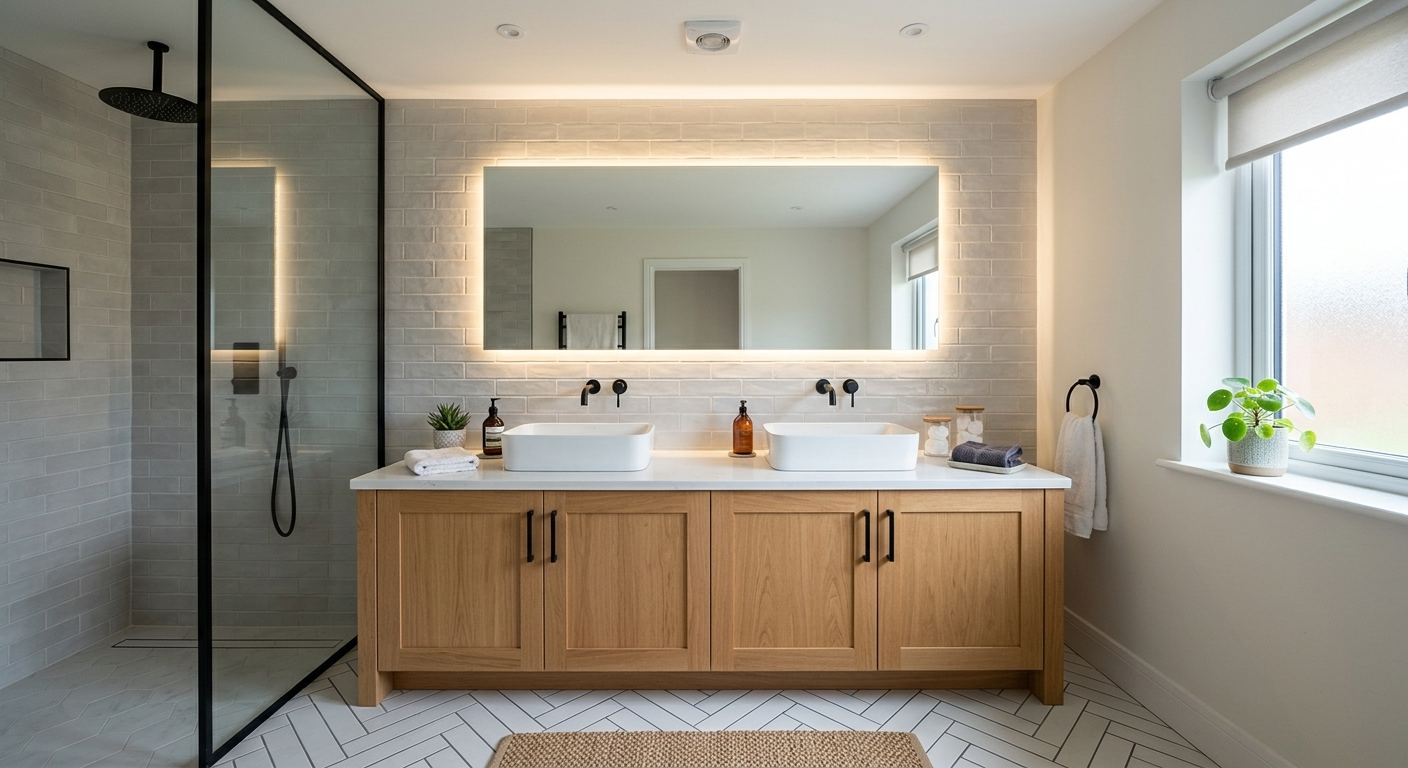
Bathroom renovation options and costs in Prince Rupert
Prince Rupert homeowners have a few reliable bathroom renovation paths, and the right one usually depends on how much hidden work is waiting behind the walls. With a small local population (1,319 in Prince Rupert as of the 2021 Census, Statistics Canada), many homes in the broader region of service are older by the time they reach renovation stage, which matters for plumbing layouts, drains, and ventilation upgrades. In an older bathroom, you can also run into dated finishes that weren’t built for modern water control—sometimes even asbestos-containing materials in older floor tile or related patching compounds—so a “refresh” can turn into a remodel once walls come open.
Even though Prince Rupert’s coastal conditions drive moisture management expectations, bathroom renovation pricing in the Calgary economic region is influenced more by labour rates and housing condition than climate alone. Trade scheduling, coordination (plumbing, electrical, tile setting, and insulation/drywall), and whether the installer needs to correct subfloor or wall movement often explain why two quotes for the same-looking bathroom can differ by 30–50%. In practice, basic updates commonly start in the low five figures, while mid-range renovations land much higher depending on fixtures, tile, and whether plumbing locations change. Contractors also report stronger demand around older neighbourhood pockets and infill-adjacent areas, especially where dated plumbing and patchy ventilation are common, such as the Westhill / downtown-adjacent housing stock.
Use the table below to compare typical scopes, then we can tighten the budget once we confirm what’s behind the existing walls.
| Renovation Scope |
What's Included |
Typical Duration |
Price Range |
| Cosmetic refresh (paint, fixtures, accessories only) |
New toilet/vanity faucet, vanity swap (same location), paint, mirror, lighting accessories, caulking, re-grouting where tile is left in place |
3–7 days |
$3,000–$7,500 |
| Mid-range full renovation (new tile, vanity, tub/shower, electrical) |
Demo and rebuild of shower/tub surround, ceramic or porcelain tile, new vanity (often same rough-in), new exhaust fan wiring, GFCI where required, waterproofing, new trim and fixtures |
3–5 weeks |
$15,000–$30,000 |
| High-end full renovation (custom tile, steam shower, heated floors) |
Custom layout refinements, premium tile work, steam shower valve package, heated floor system, higher-tier fixtures, upgraded waterproofing details, feature lighting |
5–8 weeks |
$28,000–$55,000 |
| Shower-only installation (convert tub to walk-in shower) |
Remove tub, frame and waterproof new shower, install tile or surround, linear drain (optional), new valve trim, new niche(s), adjust plumbing as needed |
2–4 weeks |
$12,000–$20,000 |
| Bathtub replacement or tub-liner install |
Replace existing tub with like-for-like, seal and finish, new tub spout/trim where applicable, minor tile touch-up; liner approach may reduce demo but can limit access for repairs |
1–2 weeks |
$500–$3,000 |
| Tile-only installation (floor + surround, existing layout kept) |
Remove existing tile, prep surfaces, install new waterproofing system, set tile on floor and walls, grout/seal, caulking and trim reinstatement |
2–4 weeks |
$3,000–$12,000 |
Prices are estimates only and vary by project scope, site access and material selection.
What affects the price of bathroom renovation in Prince Rupert
Two contractors can price the “same” Prince Rupert bathroom very differently because bathroom work is rarely a clean-slate job. Across the Calgary economic region, quotes often vary by 30–50% due to regional labour rates and the age/condition of housing stock, not because moisture or temperature swings are wildly different between cities. In older homes, hidden-scope work is common: plumbing and venting upgrades, subfloor or wall repairs, and sometimes the discovery of asbestos or knob-and-tube wiring after demolition. That’s why a renovation that looks like a simple refresh on paper can expand once trade access starts.
Here are the most common drivers that inflate budgets with real dollar impact. If cast-iron or copper drain stacks require replacement, or if supply lines are galvanized and need upgrading, labour and materials add quickly—often the difference between landing near $15,000–$30,000 versus exceeding it with a full rebuild. Ventilation is another big one: if the exhaust fan ducting doesn’t exist, is blocked, or doesn’t terminate properly, new duct routing and electrical tie-ins can add several thousand. If asbestos is found in older vinyl floor tile or drywall compound (more typical in pre-1985 homes), abatement protocols can add $1,500–$5,000+ before you even price tile and fixtures.
Concrete examples from the Prince Rupert style of housing conditions: (1) A “tile-only” plan can become a waterproofing-and-subfloor reset if the framing is unlevel after years of moisture; (2) swapping a tub for a walk-in shower often costs more than expected if the drain needs relocation; and (3) premium finishes may not deliver their value if waterproofing details are not corrected. These are the reasons homeowners should budget like an older-home renovation from day one and keep contingency for concealed repairs and trade coordination.
| Price Factor |
Why It Matters |
Cost Impact |
| Layout change — moving drain or supply lines requires rough-in work |
Relocating plumbing increases demo, framing adjustments, permits/inspection steps, and time for leak testing and tie-ins |
Often adds $3,000–$10,000 depending on distance and access |
| Tile selection — large-format porcelain vs. mosaic vs. ceramic |
Harder tile requires better substrate prep and slower cutting/setting to prevent lippage and cracking |
Can shift total tile scope by $1,500–$7,000+ |
| Fixture tier — builder-grade vs. mid-range vs. designer brands |
Higher-end valves, shower trims, and vanities cost more and often need precise installation tolerances |
Typically adds $1,000–$8,000+ |
| Subfloor condition — rot or unlevel concrete adds scope |
Moisture damage or movement means added repair materials, blocking, and sometimes complete rebuild sections |
Commonly adds $1,000–$6,000 |
| Electrical — adding GFCI outlets, exhaust fan, heated floor circuit |
New circuits, fan wiring, and heated-floor requirements require licensed electrical sign-off |
Often adds $800–$4,500 |
| Waterproofing method — membrane type and extent |
Better systems reduce callbacks and mould risk; coverage depth and tie-in details are labour-intensive |
Typically adds $600–$3,500, saves future repair costs |
| Older-home surprises — asbestos tile, cast-iron drains, galvanized pipes |
Abatement and pipe replacement add demolition complexity, disposal, and inspection coordination |
Can add $1,500–$10,000+ based on findings |
| Bathroom size — sq ft drives tile and labour time directly |
More surface area means more setting time, grout/caulk lines, and more waterproofing |
Large bathrooms can add $2,000–$12,000+ across full scopes |
Permits & regulations in Alberta
In Alberta, many cosmetic updates can be done without a permit, but bathroom renovations often cross into permitted work once you move services or change building systems. For example, swapping fixtures like a vanity top-to-top, replacing a toilet in the same location, painting, re-grouting, and retiling using the existing layout typically do not require a permit. Where permits commonly do come into play is when the scope includes relocating plumbing (moving a drain or supply lines), adding or relocating an exhaust fan with new wiring or ducting, altering structural walls, or making changes that affect how the space is ventilated and protected from moisture.
Electrical work must meet Alberta code requirements and be completed by a licensed electrician. If you’re adding a new heated floor circuit, expanding bathroom lighting, or installing GFCI protection where it doesn’t exist, you should expect electrical permits/inspections depending on the exact work. Plumbing rough-in changes typically require permits and inspections, because water and drainage safety must be verified after the lines are in and before walls close.
Here’s how a Prince Rupert homeowner can verify a contractor’s Alberta licence and protection step-by-step. First, ask for their trade licence number and check it through Alberta’s public contractor/licence registry. Second, request a current certificate of insurance (liability coverage) and confirm the effective dates and that bathroom-renovation work is covered. Third, confirm WSIB/WCB (workplace coverage) status—look for a clearance letter or proof that matches the project scope. Finally, keep everything in writing: licence details, insurance documents, permit responsibility (who pulls permits), and inspection scheduling.
Choosing tile, waterproofing and fixtures for your Prince Rupert bathroom
In Prince Rupert, your renovation budget is mostly shaped by three material decisions: tile choice, waterproofing strategy, and fixture tier. Even in a wet coastal environment, mould prevention comes down to the waterproofing system and correct details at corners, transitions, and penetrations—more than the name on the tile. Start with tile selection. Ceramic is usually the entry level and can be cost-effective if the subfloor is solid and the layout is straightforward. Porcelain is more forgiving for durability and often performs better in high-wear zones, but it can cost more and may require more labour for precise cuts. Natural stone (marble, travertine, slate) looks premium, but it’s more expensive and demands careful handling, sealing, and installation for flatness and consistency.
Second is waterproofing. Options typically include paint-on membranes, bonded sheet membranes, and integrated systems (often built around modern tile backer and sealing kits). The right choice prevents mould in Alberta bathrooms by ensuring continuous water control behind tile—especially at niches, where valves and fixtures penetrate the wall plane. Third is fixture tier. Builder-grade fixtures keep the initial spend down, while mid-range and designer brands improve finishes and longevity; however, they only “pay back” at resale if installation quality and water containment are correct.
To make it tangible: homeowners who choose porcelain and invest properly in waterproofing usually avoid costly callbacks that can wipe out the “savings” of cheaper tile. Conversely, going straight to natural stone without fixing subfloor movement can lead to cracking and rework. In many renos priced around $15,000–$30,000, choosing porcelain with a reliable waterproofing method offers the best balance. If you’re building toward higher tiers (steam features and heated floors), a premium valve and enclosure can justify the spend because those components are more labour-sensitive to install correctly.
| Material / Option |
Pros |
Cons |
Price Range |
| Ceramic tile (floor + walls) |
Lower material cost, wide style selection, good for straightforward layouts |
Less durable than porcelain for some floors; may chip with heavy impact |
$3,000–$7,000 |
| Porcelain tile (floor + walls) |
High durability, better stain resistance, often ideal for wet zones |
Higher material cost; harder tile needs skilled setting and careful layout |
$5,000–$12,000 |
| Natural stone (marble, travertine, slate) |
Luxury look and unique variation; strong aesthetic upgrade |
Higher material and labour; sealing/maintenance required |
$10,000–$25,000 |
| Frameless glass shower enclosure |
Modern appearance, visually opens the space, durable glass options |
More precise installation; can be more expensive with custom sizes |
$2,000–$6,000 |
| Prefab tub surround (acrylic) |
Fast install, consistent fit, easier cleanup; often reduces demo time |
Fewer design options; may not match high-end tile aesthetics |
$500–$3,000 |
| Custom shower pan (tile or linear drain) |
Best water management; seamless look; can eliminate traditional curb issues |
More labour and waterproofing detail; layout planning is critical |
$6,000–$15,000 |
How to choose a bathroom renovation contractor in Prince Rupert
Choosing the right contractor in Prince Rupert is mostly about verification and clarity. Start by confirming Alberta licensing and protection. Ask for the contractor’s Alberta licence details and verify them through the Alberta public registry. Next, request liability insurance documentation (certificate of insurance) and check that it’s current for the renovation period and covers renovation-related work. Finally, confirm WSIB/WCB coverage—look for a clearance letter or proof of coverage that aligns with the trade work on your jobsite. If a contractor can’t produce these, it’s a hard stop.
Then get 2–3 itemised written quotes. You want a breakdown that separates labour, demolition, waterproofing, tile setting, electrical/plumbing allowances, disposal, and any permit coordination—rather than a single lump sum that hides scope gaps. Read exclusions carefully: what’s not included for drywall patching, subfloor repairs, asbestos discovery, or ducting/exhaust fan upgrades? Also confirm disposal: is it included in the price, and where does waste get hauled? Ask about the waterproofing specifics and whether the contractor is responsible for permit pulls and inspections where required.
Warranty matters too. Check workmanship warranty length and whether it covers waterproofing and tile bond failures. Confirm product/manufacturer warranties separately, and ask if they’re transferable when you sell. For payment schedule, never pay more than 10–15% upfront; hold back a portion until the job is complete and punch-list items are done. Finally, insist on a written timeline with a start date and a realistic completion estimate, including lead times for tile and custom glass.
- Verify Alberta licence details and confirm they match the trade scope of your bathroom.
- Request certificate of insurance and confirm effective dates and coverage limits.
- Confirm WSIB/WCB coverage with proof or a clearance letter.
- Get itemised quotes (labour vs materials vs allowances), not lump-sum-only pricing.
- Ensure waterproofing method, membrane type, and coverage areas are stated in writing.
- Clarify permit responsibility: who pulls permits, who schedules inspections.
- Confirm what’s included for disposal, protection of floors, and cleaning.
- Ask for demolition scope and who handles subfloor or wall repairs if discovered.
- Review timeline including ordering and curing time (thinset/grout/membrane).
- Confirm warranty terms in writing: workmanship and exclusions.
- Use a progressive payment schedule with a holdback for final completion.
- Ask how asbestos or old wiring surprises are handled if encountered after demo.
Concrete red flags to watch for: (1) quotes that are not itemised and don’t separate allowances for tile, fixtures, and electrical/plumbing; (2) no proof of Alberta licence/insurance/WSIB/WCB; (3) vague statements like “permit included” with no confirmation of who pulls it; (4) no written waterproofing details or workmanship warranty; and (5) requesting large upfront deposits (beyond 10–15%) or refusing to provide a written schedule.
Frequently asked questions — bathroom renovation in Prince Rupert
Can I keep my existing plumbing layout to save money?
Yes—keeping your existing plumbing layout is one of the fastest ways to reduce cost in an Alberta bathroom renovation. If your toilet, vanity, and shower/tub are staying in the same general rough-in locations, contractors often avoid expensive drain and supply line relocation work, which also reduces disruption to framing and waterproofing tie-ins. In many renovations, this is the difference between a mid-range remodel staying closer to the $15,000–$30,000 band versus growing due to rough-in changes. In older Prince Rupert housing stock, you still may uncover hidden issues like galvanized lines, venting problems, or cast-iron sections—so “same layout” doesn’t guarantee zero surprises, but it typically keeps the project more predictable and reduces permit complexity.
How much does a walk-in shower cost in Prince Rupert?
A walk-in shower cost depends mainly on whether you’re converting from a tub, the drain style, and your tile and glass choices. For many homeowners converting a tub to a shower, shower-only installation commonly falls around the $12,000–$20,000 range when plumbing adjustments are required and proper waterproofing is built into the system. If you choose higher-tier linear drains, premium valves, and custom frameless glass, the scope can climb quickly, especially when subfloor repairs or waterproofing detail corrections are needed. If the existing layout is already shower-ready and the subfloor is solid, you may see the lower end; if discovery work appears, budget for the middle to higher end of the band.
What's the ROI on a bathroom renovation?
Bathroom renovation ROI is hardest to quote because resale value depends on the condition of the rest of the home, your fixture quality, and whether the renovation solves real water/moisture risks. In Prince Rupert and across Alberta, a renovation that improves function (ventilation, water containment, accessibility) and avoids future leaks typically holds value better than a cosmetic update that leaves behind questionable waterproofing or ageing plumbing. That said, homeowners often recover more value when the renovation is solidly built within a realistic budget rather than over-customized for one buyer profile. Practically, many projects land in the $15,000–$30,000 mid-range band; investing there in reliable waterproofing, durable tile (often porcelain), and quality exhaust ventilation usually performs better at resale than upgrading finishes while neglecting the underlying structure.
Do I need waterproofing behind the tile?
In almost all modern Alberta bathroom installations, yes—waterproofing behind tile is essential. Tile by itself is not waterproof; water can reach the wall cavity through grout joints, minor cracks, and penetrations. A proper waterproofing system (membrane type, sealing details around niches/valves, and correct tie-ins at transitions) is what stops mould and hidden deterioration. This matters even more when older Prince Rupert bathrooms have worn caulking, older substrate conditions, or inconsistent ventilation. When budgets are tight, some “cheap tile” approaches skip key steps—those shortcuts often lead to failures that cost far more to repair later. If you want to manage price responsibly, specify waterproofing coverage and method in your scope rather than trying to eliminate waterproofing entirely.
How do I compare bathroom renovation quotes?
Compare quotes like a contractor would: make sure the scopes are truly comparable. Ask for itemised pricing (labour vs materials vs allowances) and verify what’s included for demolition, disposal, substrate repair, waterproofing method, and any electrical/plumbing work. Confirm whether permits and inspections are included and who is responsible for pulling them. Look for the language on exclusions: if tile-only is quoted, is there a contingency for subfloor repair? If you’re converting to a walk-in shower, does the quote include niche building, drain type, and waterproofing tie-ins? Finally, compare warranty terms and payment schedules. A “low” quote can be misleading if it’s missing waterproofing detail, electrical allowances, or disposal—often the difference shows up later as change orders after demolition.
Can I live at home during a bathroom renovation in Prince Rupert?
Often you can, but it depends on the phase of work and whether you have a second bathroom available. In Prince Rupert, many renovations are staged so you can use an alternate bathroom while demo and plumbing/electrical happen in the main bath. Expect dust control measures, temporary protection, and occasional interruption to hot water or toilet access depending on plumbing tie-ins. Communication is key: confirm when you’ll lose water to the work area, how materials are stored, and how the contractor cleans up daily. Even with good planning, living in the home during a full renovation is usually more manageable for cosmetic refresh or tile-only jobs, while full conversions and electrical rough-ins typically require longer “inaccessible” windows for safe work. If you can’t be without a functioning bath, plan a shorter refresh or temporary setup rather than a full remodel at peak disruption times.