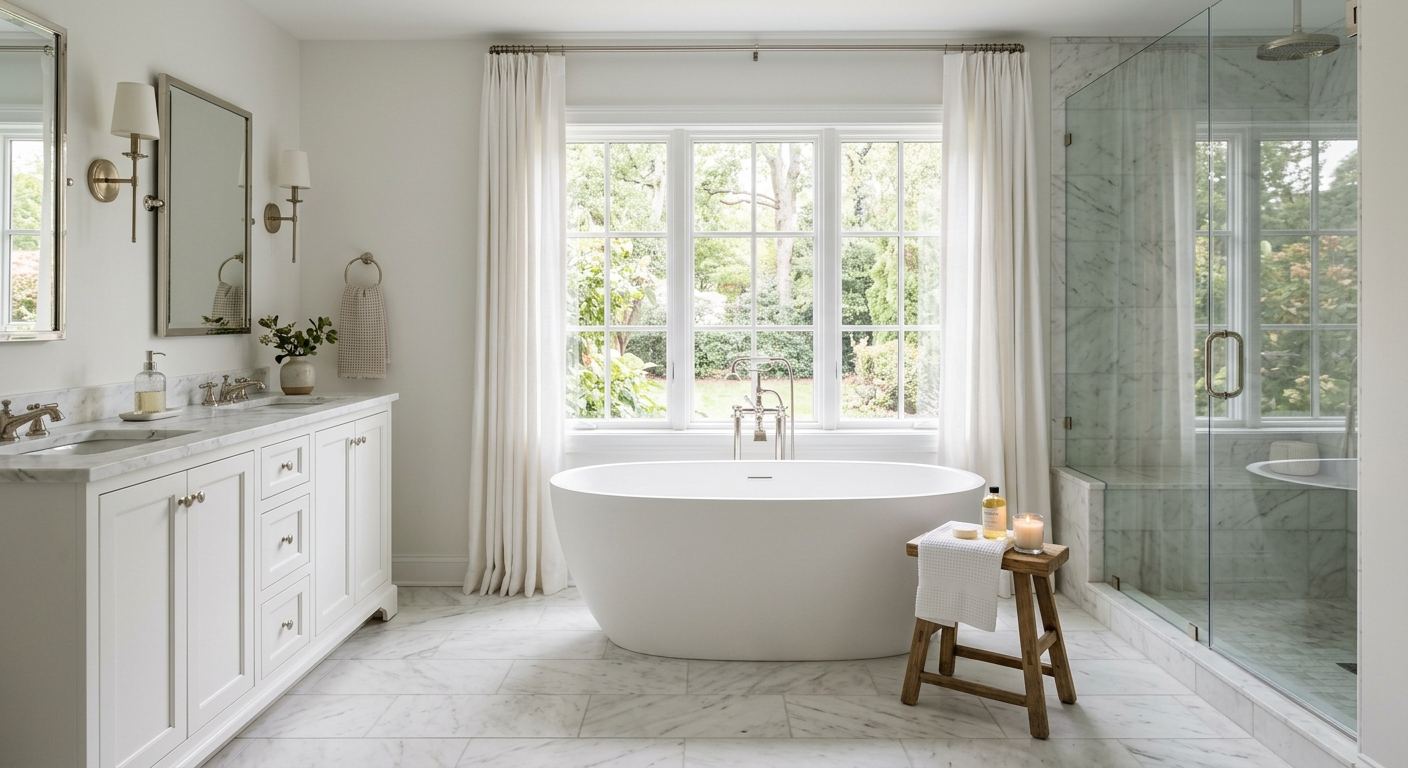
Bathroom renovation options and costs in Red Deer
Bathroom renovations in Red Deer typically start with a simple question: how far do you want to go? With 100,844 people calling the city home and a homeowner base of 26,255 households, many projects are planned around staying put while improving daily comfort. A key pricing driver here is housing age—34.1% of homes in the area were built before 1981—so it’s common to encounter dated plumbing layouts, older drain materials, and ventilation that doesn’t meet modern moisture-control expectations. In practice, that means a “standard” bathroom can turn into a bigger scope once walls or floors are opened.
Red Deer’s market also affects scheduling and labour pricing more than extreme weather. Bathroom work in the Red Deer, Sylvan Lake, Lacombe and Blackfalds area is driven by a fairly strong skilled-trades demand, so labour can price higher than smaller markets when multiple trades are needed (plumbing, electrical, tiling, and sometimes framing). Contractors are especially busy in older neighbourhoods such as Ottenbreit, where many homes were built across earlier phases of subdivision and renovations often begin with a refresh and expand after demolition.
Because older housing stock raises the biggest risk, you’ll get more reliable budgeting by picking an option level first, then planning for possible code and hidden-condition upgrades. Below is a practical comparison of renovation scopes you can use when reviewing quotes.
| Renovation Scope |
What's Included |
Typical Duration |
Price Range |
| Cosmetic refresh (paint, fixtures, accessories only) |
New vanity or faucet, toilet (if desired), mirror/light, paint, caulking/grout maintenance, accessories; typically keeps existing tile and layout |
3–7 days |
$2,500–$8,000 |
| Mid-range full renovation (new tile, vanity, tub/shower, electrical) |
Demolition, subfloor inspection, new tile floor + tub surround, updated vanity, tub/shower controls, exhaust fan and/or lighting upgrades, basic waterproofing and drywall finishes |
2–4 weeks |
$25,000–$40,000 |
| High-end full renovation (custom tile, steam shower, heated floors) |
Premium tile (custom layouts), heated floor circuit, custom shower/steam system, higher-tier fixtures and trim, upgraded waterproofing system, ventilation improvements, upgraded lighting |
4–7 weeks |
$40,000–$75,000 |
| Shower-only installation (convert tub to walk-in shower) |
Remove tub, rough-in adjustments as needed, waterproofing, new walk-in shower pan, tile surround or niche(s), frameless/standard glass option, updated exhaust/fixtures |
2–3 weeks |
$18,000–$30,000 |
| Bathtub replacement or tub-liner install |
Remove and replace tub with new surround as needed OR install approved tub-liner system; recaulk, re-grout, and address waterproofing at transitions |
5–10 days |
$1,500–$6,000 |
| Tile-only installation (floor + surround, existing layout kept) |
Tile floor and/or tub surround only; includes prep, waterproofing to the required extent, setting materials, grouting, and finishing at edges |
1–3 weeks |
$5,000–$15,000 |
Prices are estimates only and vary by project scope, site access and material selection.
What affects the price of bathroom renovation in Red Deer
In Red Deer, you can see the same bathroom reno quoted 30–50% differently from one contractor to another, even when the “look” is similar. The gap usually comes from how each quote accounts for labour sequencing, what gets included for prep and waterproofing, and how they price risk from hidden conditions. In the Red Deer region, that risk matters more than climate exposure—labour and scope dominate because tile, plumbing rough-in, and electrical add up quickly when walls are opened.
Older housing stock is the most common culprit. Homes built before the 1980s often have cast-iron or older drain runs, dated ventilation routes, and sometimes galvanized supply lines. If we find a drain stack that needs upgrading, or supply lines that can’t meet current pressure expectations, the “simple refresh” turns into a rough-in and permit-driven change. Another cost swing comes from asbestos-containing materials: discovery of asbestos in older vinyl floor tile or old drywall compound typically triggers abatement protocols, adding roughly $1,500–$5,000+ depending on area size and remediation requirements.
Concrete examples I see locally: (1) A mid-range bathroom that budgeted around $25,000–$40,000 can climb if we have to rework floor elevations for a flat, properly sloped shower base; (2) going from standard tile to large-format porcelain can add time for subfloor flattening and layout, pushing a tile-only scope from roughly $5,000–$15,000 toward the upper end; (3) if an exhaust fan requires a new circuit and duct path, electrical and venting scope increases even when the bathroom size stays the same.
Bottom line: plan your budget with the assumption that hidden site conditions will require contingency, especially in pre-1980 homes, and confirm waterproofing and ventilation details before demolition starts.
| Price Factor |
Why It Matters |
Cost Impact |
| Layout change — moving drain or supply lines requires rough-in work |
Re-routing plumbing means breaking walls/floors, new rough-in, and often additional inspections |
Often adds several thousand dollars; commonly the biggest driver of quote differences |
| Tile selection — large-format porcelain vs. mosaic vs. ceramic |
Different tile sizes demand different prep tolerances, cutting precision, and setting time |
Can shift a tile-heavy reno by thousands (especially with large-format porcelain) |
| Fixture tier — builder-grade vs. mid-range vs. designer brands |
Higher tiers cost more in materials and may require specialty trim and finishes |
Typically changes the budget by a few thousand depending on faucet, toilet, and hardware choices |
| Subfloor condition — rot or unlevel concrete adds scope |
Weak or uneven surfaces require repair/leveling before waterproofing and tile |
Commonly adds $1,000–$6,000+ based on how extensive the repairs are |
| Electrical — adding GFCI outlets, exhaust fan, heated floor circuit |
More circuits and fan upgrades increase labour and electrical material costs |
Often adds $500–$3,500+ depending on whether circuits must be added |
| Waterproofing method — membrane type and extent |
The system (and coverage) determines long-term moisture resistance and tile stability |
Premium systems can add $800–$3,000+ but reduce risk of failure |
| Older-home surprises — asbestos tile, cast-iron drains, galvanized pipes |
Remediation, upgrades, disposal, and inspection steps increase scope and schedule |
Can add $1,500–$5,000+ for asbestos scenarios and more for drainage upgrades |
| Bathroom size — sq ft drives tile and labour time directly |
More floor/wall area means more materials, layout time, and setting/grouting labour |
Smaller bathrooms can land near the low end; larger bathrooms push toward the high end |
Permits & regulations in Alberta
In Alberta, not every bathroom update triggers a permit, but many “behind-the-wall” upgrades do. Cosmetic updates—swapping a vanity, replacing a toilet, changing a faucet, painting, or retiling without moving plumbing—typically do not require a permit. However, if you’re relocating plumbing fixtures (moving a drain or supply lines), adding or relocating an exhaust fan, or changing structural walls, you’re usually in permit-and-inspection territory. Electrical work must meet Alberta code requirements and be performed or signed off by a licensed electrician, especially if new circuits are added for things like heated floors or upgraded bathroom exhaust.
A reliable approach for Red Deer homeowners is to verify the contractor’s Alberta trade licence and liability coverage before any demolition. Step-by-step, check: (1) the contractor’s Alberta trade licence details through the relevant provincial registry or the contractor’s provided documentation; (2) certificate of insurance showing general liability coverage and that it’s current for the project; (3) WSIB/WCB coverage (or acceptable exemption/registration documentation, where applicable) so you’re not left holding risk if a worker is injured on-site.
Ask for these items in writing and match them to the quote. Also clarify whether permits and inspections are included (and who pulls them). For projects that involve plumbing rough-in changes or new electrical circuits, treat permit/inspection delays as part of the schedule—especially in older pre-1981 homes where additional inspection items can surface after demolition.
Choosing tile, waterproofing and fixtures for your Red Deer bathroom
In Red Deer, your biggest budget decisions usually come from tile choice, waterproofing method, and fixture tier—because these determine both material cost and the labour complexity of installation. First, tile: ceramic is a solid entry-level option, but it may be more forgiving on cost while still requiring careful prep. Porcelain (floor + walls) tends to offer better durability and water resistance, and it often looks more “high-end,” but large-format porcelain can require additional subfloor flattening and meticulous layout work.
Second, waterproofing: in Alberta bathrooms, moisture management is non-negotiable. A paint-on membrane may be fine for certain applications, but bonded sheet membranes or a proven system (including compatible components) generally deliver more robust protection when detailed correctly at corners, niches, and transitions. Third, fixtures: builder-grade can keep your reno near the lower band, while mid-range or designer brands increase material costs but can improve day-to-day function and long-term parts availability.
Match the combination to your situation. For example, if you’re aiming for a mid-range full renovation around $25,000–$40,000, you can justify spending more on waterproofing and a good exhaust fan while keeping fixtures mid-range. If you chase luxury tile and heated floors at the same time, your project may drift toward high-end full renovation pricing (often $40,000–$75,000), and those upgrades are only worth it if your layout and subfloor are ready for the added complexity. In many Red Deer homes built before 1981, stronger waterproofing systems are one of the better “risk-reducers” because they help compensate for the reality of older substrates and ventilation limitations.
| Material / Option |
Pros |
Cons |
Price Range |
| Ceramic tile (floor + walls) |
Entry-level cost, wide design selection, easier to source matching trims |
Not as tough as porcelain in some applications; may chip if substrate is not perfectly prepped |
$5,000–$11,000 |
| Porcelain tile (floor + walls) |
Durable, water-resistant, modern look; excellent for floor-to-wall continuity |
May require more prep time for large-format sizes and tighter tolerances |
$8,000–$15,000 |
| Natural stone (marble, travertine, slate) |
Luxury appearance, unique veining, strong curb appeal |
Higher material cost, requires sealers and more careful maintenance; can add labour due to variation |
$12,000–$25,000 |
| Frameless glass shower enclosure |
Clean sightlines, modern feel, typically increases visual “space” |
Hardware and glass cost; installation accuracy is critical |
$2,000–$6,000 |
| Prefab tub surround (acrylic) |
Fast install, consistent surfaces, often easier to maintain than tile |
Fewer design options; detailing at edges must be done correctly to prevent moisture intrusion |
$1,500–$5,000 |
| Custom shower pan (tile or linear drain) |
Better spa-like performance, improved drainage, sleek design options with linear drains |
More labour and waterproofing detailing; subfloor conditions can significantly affect scope |
$3,500–$12,000 |
How to choose a bathroom renovation contractor in Red Deer
Choosing the right bathroom renovation contractor in Red Deer comes down to verification, documentation, and clarity on scope. Start with Alberta licensing: confirm the contractor’s trade licence for the work they’re doing, and ensure subcontractors (especially electrical and plumbing) are licensed for their specific tasks. Next, verify liability insurance—ask for an up-to-date certificate of insurance and confirm it names the right project parties. For worker protection, confirm WSIB/WCB coverage (or the contractor’s valid exemption/registration documentation). You don’t want your home to carry the risk if an accident happens on-site.
Then get 2–3 itemised written quotes. A good bathroom quote breaks out labour and materials (demo, framing repairs, waterproofing system, tile setting labour, fixture and glass, electrical/plumbing line items) instead of using one lump-sum number. Read the exclusions line carefully: ask what’s not included (permit pull, disposal, asbestos testing/abatement, subfloor repairs, cement board, extra tile cuts, or additional plumbing tie-ins). Also ask for warranty details—workmanship warranty length, product/manufacturer warranty terms, and whether warranties are transferable to you as the homeowner.
For payment schedule, never agree to pay more than about 10–15% upfront. Use a holdback until the job is complete and deficiencies are corrected. Request a start date and completion estimate in writing, along with key milestones like demolition, rough-in inspection, waterproofing, and tile completion.
- Provide Alberta licence numbers (and match them to the tasks in the scope)
- Share certificate of insurance before work starts
- Confirm WSIB/WCB coverage with documentation
- Use itemised quoting (labour vs materials vs allowances)
- State exactly which waterproofing method is being used
- Clarify whether permits/inspections are included and who pulls them
- List disposal/removal included (demo waste, tile debris, drywall)
- Confirm how asbestos-containing materials are handled if discovered
- Include expected lead times for tile/glass/vanity and long-lead fixtures
- Define warranty for workmanship and products separately
- Require a realistic payment schedule with holdback
- Schedule a pre-start walkthrough for measurements and selections
Red flags in Red Deer bathrooms: vague scopes (“we’ll figure it out”), quotes that don’t explain waterproofing coverage, missing or outdated insurance/WSIB/WCB paperwork, pressure to pay high deposits (well beyond 10–15%), and contractors who start demolition before confirming permit requirements and electrical/plumbing sign-offs for rough-in work.
Frequently asked questions — bathroom renovation in Red Deer
What's the best tile for a bathroom in Red Deer?
In Red Deer, the “best” tile is the one that matches your shower build and substrate prep. For most bathrooms, porcelain tile is a strong choice because it handles moisture well and holds up to frequent cleaning. If you’re doing a shower, focus on the full system: correct underlayment, a waterproofing method that’s compatible with your tile, and careful detailing at changes of plane (corners, niches, and curb transitions). Ceramic can work for budgets, but I’d still prioritize proper waterproofing and subfloor flattening so grout lines don’t crack. If you’re budgeting around a tile-focused scope (often $5,000–$15,000 depending on area), you can usually spend a little more on porcelain and still keep the project balanced by selecting mid-range fixtures and a sensible exhaust fan upgrade.
Should I do a tub-to-shower conversion?
A tub-to-shower conversion is common in Red Deer because it improves daily usability, especially for households that prefer a quick walk-in over bath bathing. It also tends to reduce long-term maintenance points like caulking at tub edges. The trade-off is scope: you may need plumbing rough-in changes (moving the drain or supply lines) and you’ll almost always need a properly built shower pan with full waterproofing. In many Red Deer projects, shower-only installs typically land around $18,000–$30,000, but older homes can increase that if we uncover cast-iron drainage issues, unlevel floors, or ventilation that needs upgrading. If your layout is straightforward and your subfloor is solid, it can be a very cost-effective upgrade.
How do I prevent mold in a Red Deer bathroom?
Mold prevention in Red Deer starts with two basics: moisture control and water containment. First, make sure you have a correctly sized bathroom exhaust fan vented properly—bathrooms in older homes sometimes lack modern venting pathways. Second, install waterproofing that’s detailed correctly around niches, seams, and any transitions (tub-to-tile or shower-to-wall). If your renovation involves retiling, insist on a waterproofing system that covers the right areas, not just paint-on coatings in high-risk zones. Also choose high-quality grout/caulking and avoid “thin” waterproofing at corners. If you’re working in a home built before 1981 (34.1% of local housing), be aware that older materials may require extra handling if asbestos-containing materials are discovered, which can impact the schedule and cost.
What adds the most resale value in a bathroom reno?
For resale value in Alberta and especially in Red Deer’s older housing stock, buyers tend to respond to upgrades that improve function, reduce future risk, and look modern. The biggest value multipliers are a clean, waterproof shower build, updated ventilation, durable tile installation, and an efficient vanity/lighting layout. Heated floors can be a “nice to have,” but they’re not always the top return on budget unless the rest of the renovation quality is already excellent. Plumbing and electrical updates that bring safety and reliability also matter. If your goal is a balanced ROI, a mid-range full renovation often sits around $25,000–$40,000 and typically provides the best blend of visible improvement and underlying systems reliability—particularly when waterproofing and exhaust are done right.
Can I keep my existing plumbing layout to save money?
Yes—keeping the existing plumbing layout is one of the most reliable ways to control cost in Red Deer. When you don’t move the drain or supply lines, you reduce rough-in work, demolition of extra walls, and the number of inspection items that can come with plumbing relocation. That said, you still need to inspect what’s there once the walls/floor are open—older homes (34.1% built before 1981) may include galvanized supply lines, dated shutoffs, or older drainage runs that require upgrading to make the new fixture work correctly. If the plumbing is serviceable and venting is adequate, you can often target a renovation around the base mid-range bands like $25,000–$40,000 rather than allowing scope creep into a full re-plumb. Always confirm waterproofing and ventilation regardless of layout decisions.
How much does a walk-in shower cost in Red Deer?
A walk-in shower in Red Deer commonly costs in the range of $18,000–$30,000 when converting from a tub, depending on shower size, tile choice, glass enclosure, and whether plumbing relocation is required. If you’re keeping the layout mostly the same and the subfloor is in good shape, you can be closer to the lower end of that band. If your home is older and we find drainage or subfloor issues—or if you decide on a custom shower pan with a linear drain—the price typically rises. The shower-only budget also overlaps with waterproofing scope, exhaust fan upgrades, and electrical details. For homeowners aiming to manage risk, I recommend treating waterproofing and ventilation as “must-fund” items, because they’re what keep moisture from becoming a recurring problem.