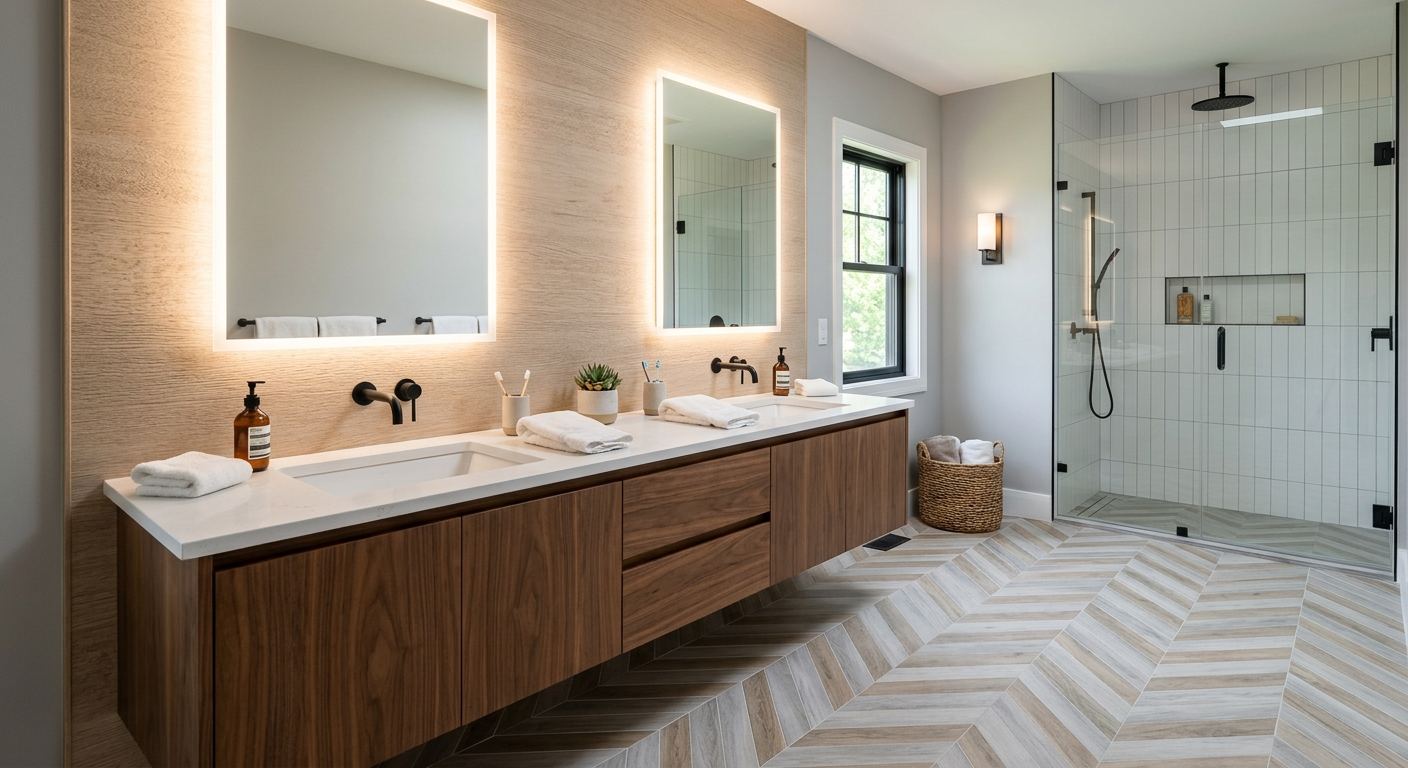
Bathroom renovation options and costs in Renfrew
Renfrew homeowners usually start bathroom planning with one goal—make the space feel cleaner and more modern—but the path from “refresh” to “full remodel” is often shaped by the age of the local housing stock. In Renfrew’s community, the overall population is 6,580 (Statistics Canada, 2021 Census), and many homes in the Calgary economic region were built with older plumbing layouts, dated venting strategies, and finishes that don’t always hold up once walls are opened. That matters because hidden-scope work (subfloor repairs, vent upgrades, supply line corrections) can turn a renovation that should sit in the low five figures into a project closer to mid- or high-range budgets.
In the Calgary economic region, pricing is driven less by climate and more by regional labour rates and the condition of what’s behind the walls. Contractor availability and scheduling also play a role, especially for tile setting and waterproofing specialists. While Alberta’s winters are tough on building envelopes, bathrooms still fail most often due to moisture management and older construction details—think inconsistent waterproofing at tub surrounds, weak exhaust performance, or deteriorated subfloor from years of humidity exposure. If you’re renovating near demand areas such as the Renfrew core and nearby residential streets, you’ll commonly see trades working year-round, but the best window for scheduling tile and plumbing rough-ins is usually planned well ahead.
Below is a realistic comparison of options so you can budget before demolition reveals the “extra” work that’s common in older homes—then use the table as your starting point.
| Renovation Scope |
What's Included |
Typical Duration |
Price Range |
| Cosmetic refresh (paint, fixtures, accessories only) |
Paint, vanity hardware, faucet swaps (no plumbing relocations), toilet/lighting swaps (no new circuits), accessories, caulking/trim updates |
3–7 days |
$4,500–$9,000 |
| Mid-range full renovation (new tile, vanity, tub/shower, electrical) |
Demo and disposal, drywall repairs, new tub/shower kit and surround or tile work, vanity and mirror, updated exhaust fan, basic electrical updates, new waterproofing, standard finishes |
2–4 weeks |
$15,000–$22,000 |
| High-end full renovation (custom tile, steam shower, heated floors) |
Premium tile, custom shower/steam components, heated floor system, upgraded ventilation, designer hardware, advanced waterproofing and framing repairs as needed |
4–7 weeks |
$23,000–$30,000+ |
| Shower-only installation (convert tub to walk-in shower) |
Remove tub, prep subfloor, new shower valve and drain modifications, waterproofing, shower base, tile/grout finishes, curb/threshold details, exhaust fan updates if required |
2–4 weeks |
$10,000–$15,000 |
| Bathtub replacement or tub-liner install |
Swap to new tub (or liner where appropriate), drain/valve reconnection, waterproofing at transitions, re-caulk and finish trims |
5–10 days |
$1,000–$3,000 |
| Tile-only installation (floor + surround, existing layout kept) |
Tile removal and prep, waterproofing on existing walls where required, floor and surround tiling, grout/sealing, new transitions, minor drywall patching |
1–3 weeks |
$3,000–$12,000 |
Prices are estimates only and vary by project scope, site access and material selection.
What affects the price of bathroom renovation in Renfrew
In Renfrew, two neighbours can receive very different quotes for what sounds like the same bathroom—sometimes by 30–50%—because the real drivers aren’t visible at the start. In practice, Calgary-area bathroom costs are pulled up by regional labour rates and the age/condition of the existing bathroom, not by weather. Older homes commonly have concealed issues like cast-iron or older drain stacks that don’t vent properly, galvanized supply lines that need rework, and ventilation that’s insufficient for modern bathroom humidity loads.
Another major swing factor is hidden material risk. If pre-1985 construction includes asbestos-containing vinyl floor tile or older drywall compound, discovery triggers abatement steps that increase costs quickly. It’s not unusual for asbestos-related work to add $1,500–$5,000+ to the budget depending on containment needs, testing, and how much material is impacted.
Here are a few Renfrew-specific examples of what raises or lowers cost: (1) Keeping your plumbing layout often avoids rough-in labour—so a “tile-only” scope can stay near the lower end of the $3,000–$12,000 band, while relocating the drain moves that labour and increases demolition/patching time. (2) If your subfloor is soft or out of level, tile installation time rises and you may need structural patching before waterproofing. (3) If you opt for heated floors or premium custom shower builds, your labour and materials change together; that’s why mid-range projects around $15,000–$22,000 can move higher when you add heated floors, steam elements, or higher-spec tile systems.
Even though Alberta’s climate is harsh, most renovation failures—and the repair scope that follows—come from moisture control problems and dated bathroom detailing. That’s why contractors often budget contingency for concealed repairs and trade coordination when they open the walls.
| Price Factor |
Why It Matters |
Cost Impact |
| Layout change — moving drain or supply lines |
Requires rough-in work, new piping, and additional demolition/patching |
Often adds significant labour and trades coordination; can push a mid-range job toward higher bands |
| Tile selection — large-format porcelain vs. mosaic vs. ceramic |
Harder materials and more cuts increase setting time and waste |
Can swing tile budgets by thousands, especially for intricate patterns |
| Fixture tier — builder-grade vs. mid-range vs. designer brands |
Higher tiers cost more and may need special install components |
Materials can add a few thousand; labour may rise for premium trims |
| Subfloor condition — rot or unlevel concrete adds scope |
Creates prep work before waterproofing and tile can be installed |
Commonly increases demo, framing/patching time, and material amounts |
| Electrical — adding GFCI outlets, exhaust fan, heated floor circuit |
Requires code-compliant routing and often a licensed electrician |
Adds labour and permit/inspection planning; heated floors increase system cost |
| Waterproofing method — membrane type and extent |
Proper waterproofing coverage prevents future moisture damage |
Better systems cost more but reduce callbacks and long-term repair risk |
| Older-home surprises — asbestos tile, cast-iron drains, galvanized pipes |
Discovery triggers remediation and replacement work |
Asbestos-related adds can be $1,500–$5,000+; plumbing upgrades add further scope |
| Bathroom size — sq ft drives tile and labour time directly |
More surface area means more waterproofing, tile, and setting time |
Costs scale quickly; bigger bathrooms push projects up the price bands |
Permits & regulations in Alberta
In Alberta, many bathroom updates are considered “cosmetic” and typically do not require a permit. Swapping fixtures—like replacing a vanity, toilet, tub faucet, or retiling with the same layout—usually falls under maintenance/finish work. However, permits become more likely when you change plumbing, electrical, or structural elements. In practice, moving plumbing (relocating drain or supply lines), changing the venting strategy, adding new exhaust fan ducting, or installing new circuits/adding significant electrical work generally requires permits and inspections. If the project includes structural wall changes (for example, opening walls to alter studs or framing support), that also moves beyond cosmetic.
For electrical, Alberta work must comply with the provincial code and be completed by (or signed off by) a licensed electrician. For plumbing rough-ins, permitting and inspection are common whenever you’re changing piping paths or the method of drainage.
How to verify your contractor in Renfrew, step by step: (1) Ask for their Alberta trade licence details and confirm the licence is active using the relevant online registry listing for their trade. (2) Request a current certificate of insurance showing liability coverage; if applicable to the scope, ask about WSIB/WCB clearance or coverage documentation. (3) Before signing, request a clearance letter or equivalent proof of account status if your contractor is required to carry it for the job type. (4) Ensure the quote clearly separates permitted work that needs trade sign-off from finish-only work—so you’re not surprised later.
Choosing tile, waterproofing and fixtures for your Renfrew bathroom
Renfrew bathroom budgets typically hinge on three decisions: tile choice, waterproofing method, and fixture tier. First is tile. Ceramic tile is a practical entry level for bathrooms, but it’s usually best when you’re keeping the design simple and accepting that installation complexity can rise with tight cuts. Porcelain tile is denser and holds up better in high-moisture environments, and it often makes sense when you want larger-format looks (though larger tiles require a flatter substrate and more precise installation). Natural stone (marble, travertine, slate) can look stunning, but it brings added preparation, sealing considerations, and careful selection to avoid staining—so labour and material costs tend to increase.
Second is waterproofing. In Alberta’s bathroom conditions, the humidity problem isn’t the weather—it’s the moisture that gets into grout lines and transitions if waterproofing is wrong or incomplete. Options range from paint-on membranes to bonded sheet systems and more engineered approaches (including reputable system kits used with proper flashing details). The right method depends on your shower/tub type, substrate condition, and whether you’re doing a custom shower. Done correctly, waterproofing prevents mould and protects the subfloor behind the tile.
Third is fixtures. Builder-grade sets can keep a mid-range remodel closer to the $15,000–$22,000 band, while designer brands and add-ons can push you toward the high end, especially when you’re also upgrading ventilation and valves. A specific example: if you choose a premium linear drain and custom shower pan finish, the extra cost may be justified for accessibility and a cleaner look—but if your budget is tight, a well-built standard shower pan with excellent waterproofing can deliver similar day-to-day performance.
Matching your choices to your bathroom’s layout and age-related conditions is how you protect both the finish and the budget—without paying for features you won’t enjoy.
| Material / Option |
Pros |
Cons |
Price Range |
| Ceramic tile (floor + walls) |
Lower material cost, wide design options, suitable for many standard bathrooms |
Less durable than porcelain for some high-wear uses; may chip if poorly installed |
$3,000–$7,000 |
| Porcelain tile (floor + walls) |
Higher durability, better moisture resistance, supports modern larger-format looks |
Requires flatter substrate; more precise setting to avoid lippage |
$6,000–$10,000 |
| Natural stone (marble, travertine, slate) |
Luxury look and depth; unique veining; strong visual impact |
More demanding installation and sealing; can vary batch-to-batch |
$9,000–$14,000 |
| Frameless glass shower enclosure |
Modern, opens up the bathroom visually; better water containment when installed correctly |
More expensive hardware; needs accurate wall alignment and strong framing |
$2,500–$6,500 |
| Prefab tub surround (acrylic) |
Quicker install, consistent finish, often reduces tile labour complexity |
Limited style flexibility compared to full tile; depends heavily on proper sealing |
$500–$3,000 |
| Custom shower pan (tile or linear drain) |
Seamless look, accessibility-friendly slopes, can integrate linear drain style |
More labour and waterproofing detail; higher planning requirements |
$1,500–$8,000 |
How to choose a bathroom renovation contractor in Renfrew
Choosing the right contractor in Renfrew is mostly about verifying credentials, getting clear scope, and controlling risk in the payment and timeline. Start by confirming Alberta licensing and liability coverage. Ask for their trade licence details for the work they’ll perform (for example, plumbing/electrical where applicable) and request a certificate of insurance that shows active liability coverage for the project duration. For coverage status, request WSIB/WCB documentation or the appropriate clearance letter depending on their account requirements—this is especially important for any team member who will be working on-site.
Next, get 2–3 itemised written quotes with a labour + materials breakdown rather than one lump sum. You want line items for demo/disposal, rough-ins (if any), waterproofing, tile setting, electrical/plumbing trade work, and permit-related tasks. Read the scope carefully: what’s excluded (subfloor replacement, structural framing, asbestos testing, custom glass), who supplies materials, and whether disposal is included. Also check whether permits are included in the contractor’s price or if you’re responsible for permit fees.
Warranty matters for both workmanship and products. Ask: how long is the workmanship warranty, does it cover waterproofing/tile movement, and is the manufacturer’s warranty valid for the installed product? Confirm whether warranties are transferable to you as the homeowner.
Payment schedule should be controlled: never pay more than about 10–15% upfront. Hold back a meaningful final portion until the job is complete, cleaned up, and any punch-list items are addressed. Finally, get a written start date and an estimated completion timeline so you’re not stuck in an open-bathroom limbo.
- Confirm Alberta trade licensing for each trade scope (plumbing/electrical where applicable).
- Request proof of liability insurance and ensure it covers renovation work.
- Ask for WSIB/WCB clearance or coverage documentation before work starts.
- Get 2–3 itemised quotes (labour vs. materials, not just a total).
- Verify what’s included in demo and disposal (dump fees, haul-away).
- Confirm waterproofing method and who installs it (named system if possible).
- Check tile scope: floor only vs. floor + walls, grout type, and build-up thickness.
- Ask whether permit pull, inspections, and trade sign-offs are included or extra.
- Review exclusions for hidden-scope items (subfloor repairs, venting upgrades, asbestos testing).
- Confirm warranty length for workmanship and whether it covers shower waterproofing.
- Set a payment schedule with no large upfront payment (10–15% max).
- Require a written timeline and a clear start/completion estimate.
In Renfrew, common red flags include: quotes that don’t list waterproofing and substrate prep, “cash-only” pressure with no written contract, a schedule that can’t explain when tile and waterproofing steps happen, promises that skip permits for electrical/plumbing changes, and a warranty that’s limited to product only (no workmanship coverage).
Frequently asked questions — bathroom renovation in Renfrew
Do I need a permit for a bathroom renovation in Alberta?
In Alberta, cosmetic updates often don’t require a permit—think swapping a vanity, replacing a toilet, changing a faucet, or retiling without moving plumbing routes. You’re more likely to need permits when you relocate drain or supply lines, change venting, add or modify electrical circuits (like installing a new exhaust fan circuit or heated floor circuit), or do structural wall changes. For Renfrew homeowners, the most common permit surprises happen after demolition, when contractors discover ventilation shortcomings or when you decide to move fixtures. As a budgeting reference, a cosmetic refresh typically stays in the lower band (often under the low five figures), while jobs that include electrical or plumbing rough-in are more likely to involve permits and licensed trade sign-off.
What's the best tile for a bathroom in Renfrew?
For most Renfrew bathrooms, porcelain is the best balance of durability and performance in a wet environment. It handles moisture well and can be used for modern larger-format looks, but it depends on good prep—especially if you’re renovating an older home with an out-of-level substrate. Ceramic tile can work if you’re staying with a simpler pattern and budget (often within the $3,000–$7,000 tile range), while natural stone can look luxurious but typically costs more due to selection, sealing, and careful install (often higher, closer to $9,000–$14,000 for stone-influenced scopes). The “best” tile is also the one paired with a proper waterproofing system and correct sealing at transitions.
Should I do a tub-to-shower conversion?
Tub-to-shower conversions are popular in Alberta because they reduce long-term maintenance—less caulking at tub edges and fewer surface areas where water can linger. They’re also a good choice if you want easier daily access, especially as mobility changes over time. In Renfrew projects, the budget typically lands in the shower installation range, often around $8,000–$15,000, because conversions frequently require drain adjustments, shower valve setup, and detailed waterproofing. The decision is worth it if your tub is aging, your surround is failing, or you’re already doing a broader renovation. If you only want cosmetic changes, keeping the tub and refreshing the surround may be more cost-effective.
How do I prevent mold in a Renfrew bathroom?
Mould prevention is mainly about moisture control, not just cleaning. In Renfrew bathrooms, the biggest causes are weak ventilation, water escaping at transitions (tub/shower edges, niches, and around plumbing penetrations), and waterproofing that wasn’t applied to the right areas or wasn’t compatible with the substrate. A well-installed exhaust fan (proper venting strategy and correct fan sizing) helps, but it won’t save a shower system with compromised waterproofing. Choose the correct waterproofing method for your assembly—bonded sheet or reputable membrane systems often outperform paint-on approaches in demanding shower zones when installed correctly. Finally, ensure all grout lines and sealing transitions are done properly, and avoid leaving moisture-trapping materials in place after demolition.
What adds the most resale value in a bathroom reno?
Resale value in Renfrew generally tracks with perceived quality, moisture safety, and finish longevity. Typically, the biggest value gains come from a full, well-executed remodel that addresses waterproofing, ventilation, and dated fixtures—often aligned with the mid-range full renovation band around $15,000–$22,000. Buyers also notice upgrades like a modern vanity with good storage, a clean tile layout, improved lighting, and a functional exhaust fan. Heated floors and steam showers can add value, but only if the rest of the project is already solid—otherwise they’re paid for twice through complexity. If your budget is limited, prioritize waterproofing, fan performance, and workmanship first, then choose tasteful finishes.
Can I keep my existing plumbing layout to save money?
Yes—keeping the existing plumbing layout is one of the most reliable ways to control cost in Renfrew. When you don’t move drain or supply lines, you usually avoid extra rough-in labour, less demolition, and fewer patch-and-repair steps in the walls and subfloor. That’s why “tile-only installation” projects can stay in a narrower range when the layout is already workable. If your bathroom is older, you may still discover issues like older venting or failing lines once demolition starts, but scope stays more predictable than when relocating plumbing. Even in older housing stock, you can often refresh the look with updated fixtures and finishes while keeping the plumbing in the same general locations—reducing the chance of budget blowouts.