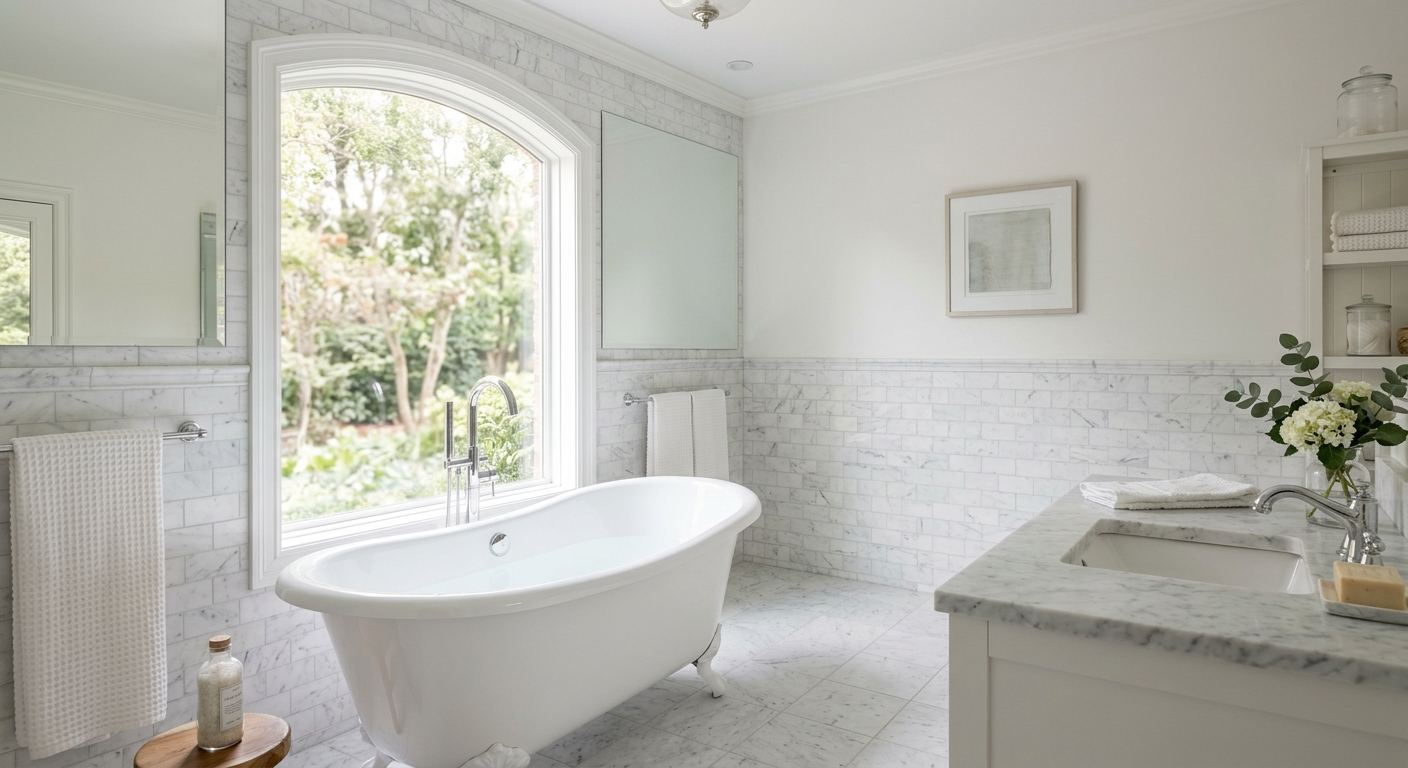
Bathroom renovation options and costs in Woodlands
In Woodlands, bathroom renovation decisions usually start with what you want to change, because the housing stock here skews older—many bathrooms sit in homes that were built long before today’s modern drain and vent layouts. With Woodlands part of the Calgary economic region and a population of 5,830 (Statistics Canada, 2021 Census), the contractor pool is active, but demand is concentrated around established neighbourhoods and repeat clients. That matters when scheduling trade coordination for plumbing, electrical, waterproofing and tile setting. In older Calgary-area homes, “simple” upgrades often uncover hidden scope: cast-iron or aging drain stacks, copper or galvanized supply lines, and dated waterproofing in the wet area.
On top of the local building age, pricing in Calgary tends to track labour rates and the likelihood of concealed repairs more than the direct effect of outdoor weather. Winters in Southern Alberta can be tough on exterior access and drying time if projects run late, but the biggest cost drivers are what’s behind the walls. In practice, many Woodlands homeowners see their budget move toward the mid-range full renovation band (commonly higher than $15,000) once demolition reveals rough-in fixes, venting updates, or subfloor rebuilds.
If you’re near established south Calgary commuting corridors and the general Woodlands service radius, tile and plumbing crews are especially in demand because they’re scheduled around multiple simultaneous renos. For budgeting, it’s smart to treat your plan as a spectrum—from cosmetic refreshes to full remodels—then compare quotes using a scope table. Use the options below as a starting point before you meet contractors.
| Renovation Scope |
What's Included |
Typical Duration |
Price Range |
| Cosmetic refresh (paint, fixtures, accessories only) |
Paint, caulking refresh, new vanity top or vanity swap (no plumbing move), toilet/vanity accessories, towel bars, basic lighting (if no new circuits) |
2–5 days |
$3,000–$7,000 |
| Mid-range full renovation (new tile, vanity, tub/shower, electrical) |
Demolition, subfloor assessment, new waterproofing system, tile on floor and walls, new vanity and mirror, tub or surround replacement, ventilation fan, electrical updates (GFCI/exhaust as needed), trim and fixtures install |
2–3 weeks |
$15,000–$22,000 |
| High-end full renovation (custom tile, steam shower, heated floors) |
Custom layout planning, premium tile/mosaic, heated floors and control, high-end shower system or steam, upgraded ventilation, specialty waterproofing and build-ups, upgraded plumbing trim and designer lighting |
3–6 weeks |
$22,000–$30,000 |
| Shower-only installation (convert tub to walk-in shower) |
Demo and rework of drain location if required, new shower pan/slopes and waterproofing, walk-in glass enclosure, new plumbing trim, ventilation upgrade if needed |
2–4 weeks |
$8,000–$15,000 |
| Bathtub replacement or tub-liner install |
Remove and replace tub or install tub liner system, new caulking and trim, waterproofing touch-ups where applicable, plumbing hook-up and test |
4–8 days |
$500–$3,000 |
| Tile-only installation (floor + surround, existing layout kept) |
Surface prep, demolition limited to tile, membrane or approved waterproofing, tile installation for floor and shower/tub surround, grout/seal, trim and finishing |
1–2 weeks |
$3,000–$12,000 |
Prices are estimates only and vary by project scope, site access and material selection.
What affects the price of bathroom renovation in Woodlands
It’s common to see quotes for the “same” bathroom in Calgary and the broader Alberta market swing by 30–50%. The reason isn’t usually the tile brand—it’s labour availability and the hidden-condition risk of older homes. In Woodlands, contractors price for what they might find after demolition: rough-in conflicts, inadequate venting, subfloor variations, and aging drainage that needs upgrading. Climate plays a smaller role than people expect for renovation cost; Southern Alberta weather mostly affects scheduling and drying conditions, not the core trade scopes. In other words, the biggest budget changes happen when walls open, not when outdoor temperatures shift.
Older housing in the Calgary region often hides cast-iron or copper drain stacks that need replacement, galvanized supply lines that aren’t ideal for modern pressure and finishes, and ventilation that doesn’t meet bathroom moisture control expectations. If discovery includes asbestos-containing materials—commonly reported in pre-1985 vinyl floor tile and some older drywall compounds—abatement protocols can add roughly $1,500–$5,000+ depending on extent and access, even if the finish plan was “basic.”
Concrete examples from Woodlands-area renos: (1) If you keep the existing tub position, you may stay nearer the “tile-only” ($3,000–$12,000) or cosmetic-refresh end of the spectrum; (2) moving the vanity and relocating supply lines can push you toward the mid-range full renovation budget (often starting around $15,000); (3) a small bathroom with a lot of cuts, niches, and large-format porcelain can raise labour time even when the layout stays the same. Those are the reasons homeowners should plan for concealed repairs when budgeting for a Calgary-area remodel rather than assuming a straight cosmetic update.
| Price Factor |
Why It Matters |
Cost Impact |
| Layout change — moving drain or supply lines |
Requires rough-in work, possible joist/subfloor adjustments, and more coordination between trades |
Can add several thousand dollars; often shifts project from refresh to mid-range/full scope |
| Tile selection — large-format porcelain vs. mosaic vs. ceramic |
Large-format needs flatter substrates and more careful layout; mosaics add time for patterns and setting |
Labour variability commonly changes the total by thousands even with similar square footage |
| Fixture tier — builder-grade vs. mid-range vs. designer brands |
Higher tiers cost more and may require more labour for trim alignment and matching finishes |
Can swing material spend significantly while affecting overall budget |
| Subfloor condition — rot or unlevel concrete adds scope |
Water exposure can cause hidden rot; uneven surfaces increase prep and rebuild costs |
Often turns a “tile” job into a partial floor rebuild |
| Electrical — adding GFCI outlets, exhaust fan, heated floor circuit |
New circuits add electrician time and permit/inspection steps where required |
May add $1,000+ depending on how much work is needed |
| Waterproofing method — membrane type and extent |
Proper coverage is critical to prevent moisture-related failures in the shower zone |
Good systems reduce future call-backs; budget impact is typically a few thousand depending on area |
| Older-home surprises — asbestos tile, cast-iron drains, galvanized pipes |
Discovery triggers compliance steps and higher disposal/replacement scope |
Can add roughly $1,500–$5,000+ for asbestos-related work, plus plumbing replacement labour/materials |
| Bathroom size — sq ft drives tile and labour time directly |
More surface area increases setting time, thinset/grout, and waterproofing labour |
Small size keeps projects nearer low five figures; larger builds commonly escalate |
Permits & regulations in Alberta
In Alberta, the permit requirement is mainly about whether you’re changing plumbing, electrical, or structural elements—not about cosmetic finish swaps. In most Woodlands bathroom projects, cosmetic updates such as replacing a vanity, swapping a toilet, re-painting, or retiling without moving plumbing generally do not require a permit. However, permits are commonly needed when you relocate plumbing (moving a drain or supply line), add or rework ventilation fan ducting, or make any electrical changes like adding new circuits or installing a heated-floor control circuit. If you’re adding a new exhaust fan that requires wiring and connection to an electrical circuit, that electrical scope typically triggers code-compliance steps and may require inspection by the proper authority.
Plumbing rough-in changes (for example, changing the shower valve location, altering drain slope, or reworking venting) typically require a permit and inspection once rough-in is completed and before closing walls. Always ask your contractor which steps are permitted and what inspections they schedule.
Step-by-step verification for Woodlands homeowners: (1) Ask for the contractor’s Alberta trade licence information and confirm it through the appropriate online registry the province provides; (2) request a Certificate of Insurance—make sure it lists liability coverage and confirm the expiry date and project name/address if available; (3) confirm workers’ compensation coverage (WSIB/WCB) by asking for clearance paperwork or verification letter; (4) keep copies of the licence and insurance documents in your file. If a contractor can’t provide proof promptly, that’s usually a red flag for the job’s risk profile.
Choosing tile, waterproofing and fixtures for your Woodlands bathroom
In Woodlands, the fastest way to control your bathroom renovation budget is to lock three decisions early: tile type, waterproofing method, and fixture tier. First, tile choice drives both material cost and installation complexity. Ceramic tile is typically an entry-level option—fine for many floors and walls when substrates are sound. Porcelain (especially for floors) is denser, often more forgiving for wet-area durability, and it can be worth the jump when you want longer-lasting finishes in the shower and tub surround.
Second, waterproofing is what prevents the “Alberta bathroom leak story” before it starts. A paint-on membrane can work for certain systems and smaller areas, but bonded sheet membrane or a robust engineered system (including approved bonding details) is often the safer route for showers where moisture is constant. In practice, the right waterproofing—properly applied to the entire wet zone and transitions—is what keeps mould and soft substrates from showing up a year or two later, especially when bathrooms are used daily.
Third, fixture tier affects both upfront cost and long-term satisfaction. Builder-grade fixtures can keep you nearer the lower end of the mid-range budget, while designer brands and steam-ready components can push you toward high-end totals. A realistic example: upgrading from standard wall tile to premium porcelain or a more detailed custom layout may add a noticeable amount, but the money is justified when it reduces labour waste (better layout planning) and improves longevity. If you’re trying to stay near the tile installation band of $3,000–$12,000, consider upgrading tile selection while keeping the layout and plumbing locations stable to avoid costly rough-in changes.
| Material / Option |
Pros |
Cons |
Price Range |
| Ceramic tile (floor + walls) |
Good entry-level durability, wide style variety, familiar installation methods |
Can be less water-resistant for certain floor uses; may require careful selection for slip resistance |
$3,000–$7,000 |
| Porcelain tile (floor + walls) |
Excellent durability for wet areas, consistent sizing, strong stain resistance |
Substrate needs to be flatter; larger formats can increase installation time |
$6,000–$12,000 |
| Natural stone (marble, travertine, slate) |
High-end look, premium feel, unique veining and colour depth |
Requires more care (sealing, maintenance); some stones can be more complex to install and protect |
$10,000–$18,000 |
| Frameless glass shower enclosure |
Bright, modern look; easier visual maintenance; can make small bathrooms feel larger |
Higher cost; requires precise installation and good waterproofing discipline at edges |
$2,000–$6,000 |
| Prefab tub surround (acrylic) |
Fast install, consistent finish, less grout maintenance |
Fewer design options; may not match the premium tile aesthetic |
$500–$3,000 |
| Custom shower pan (tile or linear drain) |
Custom slope and drain placement; clean modern lines; can improve water control |
More labour and detailed waterproofing; depends heavily on correct installation |
$3,500–$12,000 |
How to choose a bathroom renovation contractor in Woodlands
Choosing the right bathroom contractor in Woodlands starts with verifying credentials and then matching their written scope to your expectations. In Alberta, ask for proof of trade licence (where applicable), liability insurance and workers’ compensation coverage. You can verify licence information via the provincial online registry, and for insurance request a current Certificate of Insurance—confirm coverage limits and effective dates. For WSIB/WCB, ask for clearance documentation or a letter that confirms the contractor is in good standing; don’t rely on verbal assurance.
Next, get 2–3 itemised quotes rather than lump sums. A good quote breaks labour and materials separately (demo, rough-in, waterproofing, tile setting, electrical/plumbing labour, disposal). Read the exclusions line-by-line: what’s not included (subfloor repairs, asbestos testing/abatement, permit pulls, patch-and-paint, drywall replacement beyond the wet zone)? Disposal should be clear—hauling and landfill fees often matter. Confirm if permit applications are included in the contractor’s process and whether inspections are scheduled.
Warranty matters: insist on a workmanship warranty period and clarity on product/manufacturer warranties. Ask whether the warranty is transferable if you sell the home. On payment, keep deposits modest: never pay more than 10–15% upfront, and use a holdback until the job is complete and deficiencies are corrected. Finally, demand a written start date and completion estimate that reflects realistic tile and membrane cure times; in Calgary-area schedules, rushing waterproofing is how problems happen.
- Request Alberta trade licence details and verify them online before work starts.
- Confirm liability insurance with a current Certificate of Insurance.
- Verify WSIB/WCB clearance or proof of coverage in writing.
- Ask for an itemised quote separating labour vs. materials.
- Confirm what permits are required and whether permit pulls are included.
- Clarify disposal: demolition debris hauling and any special waste handling.
- Check exclusions for subfloor repair, drywall rebuild, and ventilation upgrades.
- Require a written waterproofing scope (system type, coverage area, transitions).
- Ask how they protect floors/doorways during demo and tile work.
- Confirm tile tolerances, layout method (how they handle niches and patterns) and grout specifications.
- Review warranty: workmanship length and product warranty terms.
- Use milestone payments: small deposit, then progress payments, holdback on completion.
Common Woodlands red flags include: (1) quotes that aren’t itemised (no clear labour/material breakdown), (2) a contractor who won’t provide insurance/WSIB/WCB proof, (3) vague waterproofing descriptions or “we’ll figure it out later,” (4) a payment request above 10–15% upfront, and (5) no written timeline or start/completion estimate.
Frequently asked questions — bathroom renovation in Woodlands
How do I compare bathroom renovation quotes?
Start by putting the quotes into the same structure: what’s included and what’s excluded. In Woodlands, differences often come from whether rough-in upgrades are assumed (venting, drain adjustments, supply line changes) and how the waterproofing scope is defined. Compare the duration and sequencing too—tile and membrane require cure time, and a rushed schedule can increase rework. Look for line items for demo, disposal, waterproofing system type, tile setting, electrical (GFCI/exhaust/lighting) and plumbing trim. If one contractor prices closer to a “cosmetic refresh,” ask what they do when they find hidden damage in older bathrooms. For budgeting, anchor your comparison to realistic bands: a mid-range full renovation commonly sits around $15,000–$22,000, while shower-only installs often land within $8,000–$15,000, depending on demolition surprises.
Can I live at home during a bathroom renovation in Woodlands?
Often, yes—especially for cosmetic refreshes or tile-only work—because you can keep access to the rest of the home. But in a full renovation, you may only have limited water access depending on how quickly plumbing is capped and later reconnected. Many Woodlands homeowners plan around this by using a secondary bathroom or setting up a temporary wash station. The key is scheduling: when the waterproofing and tile phases begin, you’ll want the area dry and protected, which means you should minimise foot traffic into the work zone. If your renovation involves electrical additions or plumbing rough-in changes, plan for short windows when power or fixtures are offline. If the project starts in late fall or runs through winter weather, contractor availability can affect sequencing, so confirm lead times and daily access rules in writing.
What's the best bathtub material for a Woodlands home?
There isn’t one “best” for every Woodlands bathroom—what’s best depends on your budget, installation complexity and how you want the room to look. For many homeowners, replacing the tub with a durable, factory-made unit or installing a tub-liner system can keep costs from ballooning compared with a full custom build. If you’re staying closer to the bathtub/fixture replacement budget band, tub work may land around $500–$3,000 depending on whether you’re swapping the tub or using a liner approach. If you prefer a more premium finish and want custom tile surround control, a tiled tub surround is beautiful but usually adds more labour and requires meticulous waterproofing details at corners and transitions. Whatever option you pick, insist on a waterproofing plan that matches Alberta bathroom moisture expectations—no shortcuts at seams and around the valve.
Is it worth renovating a bathroom before selling in Woodlands?
Usually, yes—especially when the current bathroom looks dated or has visible wear, because buyers in the Calgary region pay attention to clean, modern wet-area finishes and reliable ventilation. Renovating can also reduce “buyer doubt” when plumbing or waterproofing issues are suspected. That said, it’s only worth it if you choose changes that support resale value: new vanity, updated lighting, good ventilation, and upgraded tile/wet-area waterproofing tend to have the most impact. If the bathroom’s condition is poor, plan for hidden-scope risk, which is why many projects move toward mid-range full renovation budgets (commonly $15,000–$22,000) rather than cosmetic refresh pricing. If you keep the layout and focus on finishes, you may stay nearer the low five figures, but always confirm what’s behind the walls before you commit.
How do I plan a bathroom renovation on a tight budget in Woodlands?
On a tight budget, prioritise decisions that reduce risk of expensive surprises. First, keep the layout where possible—don’t move drains or supply lines unless it’s necessary. That one choice often prevents rough-in work from pushing you beyond the cosmetic or tile-only ranges. Second, spend on waterproofing and the parts that prevent future failures; cutting corners here can cost far more later. A practical approach is to start with a cosmetic refresh if your plumbing is sound, but be realistic: older bathrooms can hide issues that increase scope once walls open. If you’re targeting a renovation band around $3,000–$12,000, consider a tile-only plan (existing layout kept) and upgrade finishes within that range. Finally, request an itemised quote with exclusions clearly listed (subfloor repair, permit pull, disposal) so you understand what could trigger additional costs before the demo day.
What's the difference between a cosmetic and a full bathroom renovation?
A cosmetic renovation focuses on visible surfaces and fixture replacements without changing plumbing locations or major wet-area construction. Examples include painting, replacing accessories, swapping a vanity or light fixture, and retiling only if it doesn’t require major rough-in or structural change. A full renovation includes demolition back to the relevant substrate, updating waterproofing, installing new tile across the wet zone, replacing or upgrading fixtures and ventilation, and often doing electrical and plumbing updates. That’s why cosmetic scopes can be scheduled quickly, while full renovations commonly take multiple weeks due to waterproofing and tile cure time, plus coordination of trades. In Woodlands, the “full” scope may also be where hidden-condition work appears—cast-iron drains, subfloor rebuilds and possible asbestos abatement—so you can’t assume pricing based only on what you can see. For reference, cosmetic refresh pricing often sits below mid-range full work, while mid-range projects commonly begin around $15,000–$22,000.