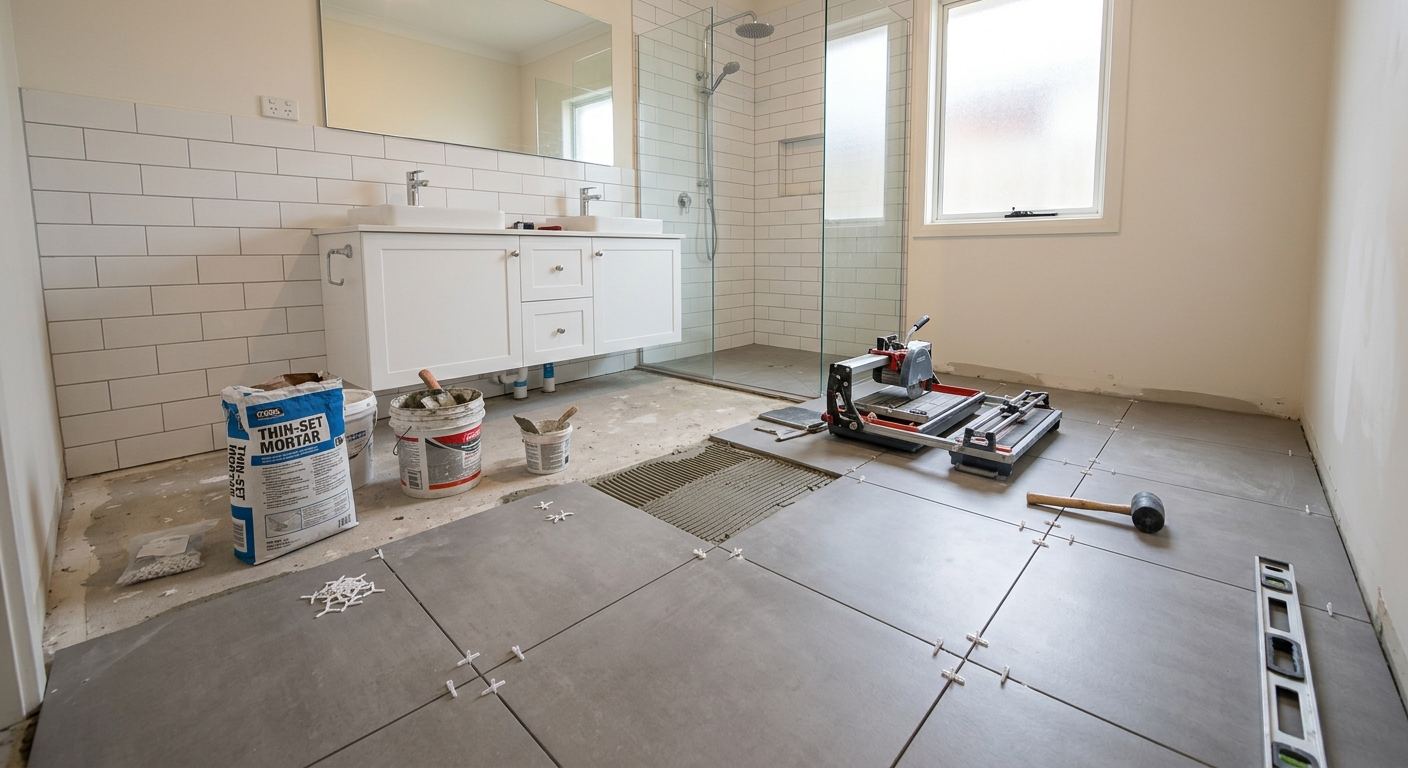
Bathroom renovation options and costs in Hastings-Sunrise
In Hastings-Sunrise, a bathroom renovation can range from a tidy refresh to a full gut-and-rebuild, and the right approach depends on how much of the hidden work needs correcting. With a population of 34,575 residents (Statistics Canada, 2021 Census), the area draws ongoing demand from homeowners in older mid-century housing where plumbing layouts are often dated. In pre-1980 homes across the Lower Mainland–Southwest, it’s not unusual to find cast-iron or galvanized drain and supply components, plus the occasional asbestos-containing material embedded in flooring, drywall compound, or insulation. Those discoveries can increase the scope quickly once walls and floors are opened.
Costs in this market are shaped more by labour rates and the age of the housing stock than by outdoor climate. Even though British Columbia’s winters are typically milder than inland regions, bathrooms still face high indoor humidity, so ventilation and waterproofing quality matter. In Hastings-Sunrise—especially around the Renfrew-Collingwood area corridor—tilers, plumbers, and electricians are in steady demand because many homeowners renovate in occupied homes with tight timelines. That availability, plus union-influenced pricing patterns in the Lower Mainland–Southwest, often pushes the “same job” quotes toward the upper end of provincial price expectations.
Below is a realistic comparison of common scopes, with ranges anchored to typical Lower Mainland–Southwest costs. Use it as a planning baseline, then tighten the numbers after an on-site assessment of your plumbing condition, ventilation, and substrate.
| Renovation Scope |
What's Included |
Typical Duration |
Price Range |
| Cosmetic refresh (paint, fixtures, accessories only) |
Vanity refresh or replacement of like-for-like size, toilet/trim swap (no rough-in), new lighting, fan accessory if existing circuit allows, caulking, paint, accessories |
3–7 days |
$3,500 – $8,000 |
| Mid-range full renovation (new tile, vanity, tub/shower, electrical) |
Remove finishes, new tile floor + surround, vanity and mirror, tub-to-shower updates (as applicable), new exhaust fan (vent to exterior where required), GFCI where needed, basic waterproofing, disposal and patching |
2–4 weeks |
$18,000 – $32,000 |
| High-end full renovation (custom tile, steam shower, heated floors) |
Higher-spec waterproofing and tile system, custom shower (or full steam-ready plan), heated floor circuit, premium fixtures/valves, niche(s), upgraded lighting plan, expanded electrical scope, more extensive substrate work |
4–7 weeks |
$32,000 – $45,000 |
| Shower-only installation (convert tub to walk-in shower) |
Remove tub and replace with walk-in shower, new shower pan/waterproofing, curb or linear drain option, glass enclosure allowance, new valve trim (rough-in as needed), ventilation checks |
2–3 weeks |
$12,000 – $25,000 |
| Bathtub replacement or tub-liner install |
Swap tub and plumbing trim (if compatible), or tub-liner system where feasible, new surround sealing and caulking, minor drywall repair, paint touch-up |
1–2 weeks |
$1,500 – $6,000 |
| Tile-only installation (floor + surround, existing layout kept) |
Tile removal to substrate (as needed), waterproofing system for tiled zones, tile installation only (vanity/fixtures kept unless replacement is requested), grout/sealing, standard patch and finish |
1–3 weeks |
$2,000 – $8,000 |
Prices are estimates only and vary by project scope, site access and material selection.
What affects the price of bathroom renovation in Hastings-Sunrise
It’s common to see quotes for the “same” bathroom land 30–50% apart in the Lower Mainland–Southwest, and that gap is usually less about taste and more about scope risk. Labour rates in the region are higher, skilled trades are booked tightly, and once contractors open the bathroom, they often uncover hidden issues in older housing stock. In British Columbia, that same discovery step can turn a straightforward update into a rough-in upgrade, especially when plumbing and venting don’t meet modern expectations for a fully tiled shower.
Climate plays a smaller role than homeowners expect. Hastings-Sunrise and the surrounding Lower Mainland have relatively mild weather outdoors, but bathrooms still experience constant indoor humidity. That means ventilation upgrades, correctly detailed waterproofing, and proper curing time are what protect against mould and callback repairs—so those choices affect long-term cost more than seasonal extremes. For older homes in the Lower Mainland–Southwest region, hidden costs often come from aging cast-iron or galvanized drains, outdated copper supply lines, and sometimes insufficient venting capacity. If asbestos-containing materials are found in pre-1985 flooring, drywall compound, or insulation, abatement can add roughly $1,500–$5,000+ (sometimes more) and increases the number of trades on site.
Two practical examples from local Reno work: (1) switching to a linear drain or moving a shower valve can require additional rough-in work, pushing a shower-only job from the mid band toward the upper $8,000–$25,000 range; (2) choosing large-format porcelain can raise tile material cost, but it can reduce labour time if the substrate is flat—whereas tile over unlevel concrete usually costs more because the crew spends time on prep. When your plan stays within proven layouts and you avoid surprise remediation, a mid-range full renovation often aligns closer to $18,000–$32,000; when plumbing and electrical upgrades expand the scope, you’ll feel it in the final total.
| Price Factor |
Why It Matters |
Cost Impact |
| Layout change — moving drain or supply lines |
Requires plumbing rough-in, possible venting adjustments, and wall/floor disruption |
$3,000 – $10,000+ |
| Tile selection — large-format porcelain vs. mosaic vs. ceramic |
Impacts waste rate, complexity of cuts, and labour time to achieve flat, consistent planes |
$500 – $6,000 |
| Fixture tier — builder-grade vs. mid-range vs. designer brands |
Higher tiers cost more and may require more complex rough-in parts or trim kits |
$300 – $4,500 |
| Subfloor condition — rot or unlevel concrete adds scope |
Water damage and uneven substrates require repairs, underlayment, or re-leveling |
$800 – $5,000+ |
| Electrical — adding GFCI outlets, exhaust fan, heated floor circuit |
New circuits and fan controls add labour, materials, and possibly panel work |
$600 – $3,500+ |
| Waterproofing method — membrane type and extent |
Better systems cost more but reduce failure risk in wet areas |
$400 – $2,500 |
| Older-home surprises — asbestos tile, cast-iron drains, galvanized pipes |
Remediation and replacement add trades, permits, and schedule impacts |
$1,500 – $8,000+ |
| Bathroom size — sq ft drives tile and labour time directly |
More surface area means more tile, more waterproofing, more setting time |
$1,000 – $7,000 |
Permits & regulations in British Columbia
In British Columbia, cosmetic updates usually don’t require permits. That typically includes swapping a vanity, replacing like-for-like fixtures (for example, a toilet or faucet without moving connections), painting, and retiling within the same footprint when plumbing rough-in isn’t changing. However, permits and inspections are typically required when you relocate or materially alter plumbing systems—such as moving a drain or supply line, changing the shower valve location, or modifying venting connections. If you’re adding or modifying electrical for a new exhaust fan, adding heated floors, or installing additional receptacles (including GFCI-protected locations), electrical must be completed or signed off by a licensed electrician and must comply with the electrical code.
Here’s a homeowner-friendly step-by-step approach in Hastings-Sunrise: (1) Ask for the contractor’s British Columbia trade licence number (and confirm it matches the scope you’re hiring them for); (2) Request a current certificate of liability insurance and verify coverage limits are active for the project dates; (3) Confirm workers’ compensation coverage—many homeowners ask for proof of WCB/clearance before work starts (what you’re looking for is documentation that the contractor and any workers are covered); (4) If the job includes plumbing or electrical alterations, ask who will pull permits and schedule inspections, and make sure those steps are written into the contract.
Finally, verify that disposal and any required site protection are included, because bathroom renos in older homes often require additional removal of finishes and sometimes remediation materials once hidden conditions are exposed.
Choosing tile, waterproofing and fixtures for your Hastings-Sunrise bathroom
For a Hastings-Sunrise bathroom, your budget is most influenced by three material decisions: tile choice, waterproofing method, and fixture tier. First, tile: ceramic is a solid entry-level option when you want classic finishes, but it often has a lower density and can be less consistent for heavy wet-area wear. Porcelain costs more, but it’s typically denser and easier to maintain in damp environments—especially when you’re doing floor + shower surround. Natural stone (marble, travertine, slate) can look premium, but it can be higher in both material and labour because it needs careful layout, sealing, and more meticulous cutting and setting.
Second, waterproofing: British Columbia bathrooms are high-moisture spaces, and mould risk rises when systems fail at the edges, corners, or penetrations. A paint-on membrane may be fine for some applications, but bonded sheet membranes or a well-detailed schluter-style system often provide more robust, proven coverage for tiled showers when installed correctly. In practice, the waterproofing you choose should match your shower details (bench, niches, linear drain) and your contractor’s installation method—not just the product label.
Third, fixture tier: builder-grade fixtures can keep first costs down, while mid-range or designer brands often improve long-term satisfaction (better cartridges, smoother valves, better finishes) and can support resale appeal.
A concrete budget example: if a porcelain and ceramic approach differs by roughly $1,500–$2,500 in material, the spend is justified when the porcelain layout reduces tile waste and the substrate is already flat. If your subfloor is out of level, the best-looking tile won’t prevent extra labour—so fix prep first, then upgrade finishes.
| Material / Option |
Pros |
Cons |
Price Range |
| Ceramic tile (floor + walls) |
Entry-level cost, wide design options, good for consistent patterns |
Generally more porous than porcelain; may be less durable in wet-floor conditions depending on spec |
$2,000 – $4,500 |
| Porcelain tile (floor + walls) |
Denser and often more water-resistant; cleaner look with fewer chips; typically longer-lasting |
Higher material cost; large formats require flatter substrates and careful installation |
$3,000 – $7,000 |
| Natural stone (marble, travertine, slate) |
Luxury appearance and unique veining; strong design impact |
Needs sealing and careful maintenance; more variation increases installation labour and wastage |
$5,000 – $12,000+ |
| Frameless glass shower enclosure |
Modern look, easier visual cleanup, durable tempered glass |
Installation requires precise measurements; can be a cost driver if walls are out of square |
$2,000 – $6,000 |
| Prefab tub surround (acrylic) |
Fast install, fewer grout lines, easier cleaning, good for tight schedules |
Less “custom” look than tiled surrounds; expansion/fit issues if substrate is not prepared correctly |
$1,200 – $3,000 |
| Custom shower pan (tile or linear drain) |
Premium finish, better water management, more design flexibility |
More labour and coordination; waterproofing and slope must be executed perfectly |
$8,000 – $20,000+ |
How to choose a bathroom renovation contractor in Hastings-Sunrise
Choosing the right contractor in Hastings-Sunrise starts with verifying British Columbia credentials and coverage. First, ask for the trade licence relevant to the scope—then confirm the licence status before you sign. Next, request proof of liability insurance (certificate of insurance) and review the effective dates and project coverage. For workers’ compensation coverage (WCB/WCB clearance documentation), ask for proof of coverage so you’re not left exposed if someone is injured on your site. These checks are especially important for bathroom renos because multiple trades (plumbing, electrical, tile) operate in a confined space.
Then get 2–3 written, itemised quotes. You want a breakdown that separates labour and materials, not a single lump sum, so you can compare the same inclusions: demolition limits, subfloor prep, waterproofing system type, disposal, and whether permits are included. Scope clarity matters—ask what’s excluded (for example, moving plumbing, subfloor replacement, glass enclosure, or replacing old shutoff valves). Confirm warranty terms: look for a workmanship warranty length (and whether it covers tile and waterproofing systems), plus manufacturer product warranties, and ask if warranties are transferable if you sell your home.
For payment scheduling, avoid paying more than 10–15% upfront. Hold back a portion until critical steps are completed (waterproofing inspection sign-off if applicable, final caulking, and turn-over cleaning). Also require your start date and completion estimate in writing—bathrooms can expand once plumbing is exposed, so a well-managed schedule often includes a contingency window.
- Verify BC trade licence and confirm it matches the work scope you’re hiring for.
- Request a current liability insurance certificate (active dates, appropriate coverage limits).
- Ask for WCB/WCB clearance proof for the contractor and any subcontractors.
- Get 2–3 itemised quotes with labour + materials line items.
- Ensure waterproofing is specified by system name (membrane type, coverage areas, and transitions).
- Confirm tile prep requirements (subfloor flatness standards, underlayment levelers, and crack repairs).
- Clarify what “disposal included” means (how debris is removed and where it’s hauled).
- State whether permits and inspections are included (or which party pulls them).
- Confirm electrical scope: exhaust fan, GFCI outlets, heated floor circuits (if added).
- Require a detailed inclusions list: shower valve trim compatibility, niche(s), glass enclosure allowance.
- Use a written payment schedule with a holdback until final walkthrough.
- Ask for a workmanship warranty in writing and product warranty details (and transferability).
Local red flags I see in Hastings-Sunrise: contractors who won’t show proof of BC coverage/licensing, quotes that omit waterproofing system specifics, “lump sum” pricing with unclear inclusions/exclusions, vague warranty language, and payment demands that exceed 10–15% upfront without a signed agreement and schedule.
Frequently asked questions — bathroom renovation in Hastings-Sunrise
Can I keep my existing plumbing layout to save money?
If you keep the plumbing layout (same drain location and valve locations), you typically save the most—because you avoid rough-in work, potential venting complications, and extra wall/floor reconstruction. In the Lower Mainland–Southwest, labour and skilled-trade availability drive costs, so limiting “hidden” changes helps keep your budget closer to the mid-band. For example, a mid-range full renovation often lands around $18,000 – $32,000 when the scope stays within the existing footprint. If your home has older galvanized supply lines or cast-iron drainage, you may still need selective replacement, but layout stability usually reduces scope expansion. In Hastings-Sunrise, always ask for an inspection of shutoffs, supply lines, and drain condition before you commit.
How much does a walk-in shower cost in Hastings-Sunrise?
A walk-in shower converted from an existing tub is commonly priced by the combination of waterproofing complexity, glass, and any valve relocation. In the Hastings-Sunrise market, shower-only installation ranges roughly $12,000 – $25,000, with the higher end usually tied to linear drain details, upgraded valve trim, or discovered plumbing issues behind the walls. If you’re converting without moving plumbing and you can keep compatible valve locations, your cost may trend toward the lower part of the range. If you add heated flooring, upgrade exhaust/venting, or replace problematic pipe sections (common in older homes), expect the project to stretch. A precise estimate depends on whether you’re using curb vs. zero-threshold and what your glass enclosure design requires.
What's the ROI on a bathroom renovation?
ROI varies by the condition of your original bathroom, the quality of workmanship, and how well the renovation aligns with buyer expectations in British Columbia. While no contractor can guarantee a dollar-for-dollar return, well-executed bathroom upgrades tend to support resale because they reduce ongoing maintenance and improve perceived value. In Hastings-Sunrise, practical improvements like reliable waterproofing, modern ventilation, and durable finishes generally outperform purely cosmetic changes. If your budget is closer to a full renovation band—such as $18,000 – $45,000 for full bathroom work—buyers often respond positively when plumbing and moisture-risk areas are upgraded. The best ROI typically comes from fixing underlying issues (subfloor flatness, drainage condition, exhaust fan performance) rather than overspending on higher-end tile alone.
Do I need waterproofing behind the tile?
In almost all tiled shower and wet-area applications, yes—waterproofing behind the tile is essential. In British Columbia’s humid bathroom conditions, the goal is to prevent water from getting into the framing/subfloor through grout lines, cracks, or penetrations. A properly executed system includes waterproofing membranes at critical transitions (shower walls, shower floor, benches, niches, and around fixtures), not just paint on top of existing surfaces. If your contractor proposes retiling without an appropriate waterproofing plan, that’s a major risk for mould and failure. In cost terms, waterproofing is typically a modest portion compared with the overall project—yet it can be the difference between a bathroom that performs for years and one that requires rework. Always ask what system is being used and where it will be installed.
How do I compare bathroom renovation quotes?
To compare quotes in Hastings-Sunrise, you need apples-to-apples scope. Ask for itemised labour and materials, then compare inclusions line-by-line: demolition limits, disposal, subfloor prep, the waterproofing system type, tile grade and tile layout assumptions, exhaust fan specs, and whether GFCI is included. Confirm permit responsibility—cosmetic updates often don’t need permits, but plumbing relocation and electrical changes typically do. Look for clarity on exclusions (glass enclosure, heated floors, niche(s), moving valve positions, replacing shutoffs). Finally, compare warranty terms and payment schedules. If one quote sits significantly below the others, ask what it’s leaving out. Since full bathroom renovations in this tier commonly start around $18,000 – $32,000, a “too good to be true” number often signals missing waterproofing or plumbing scope.
Can I live at home during a bathroom renovation in Hastings-Sunrise?
Often you can, but it depends on the staging plan and how disruptive the work is. Many homeowners in Hastings-Sunrise choose to live at home during part of the reno, especially if the project is limited to tile refreshes or a short bathroom shutdown. If it’s a full renovation, you may have a period where the toilet and shower can’t be used while demolition and rough-in work are underway. Contractors typically manage this with a clear timeline, dust control, and sometimes temporary access arrangements. A cosmetic refresh may be workable with minimal disruption, while a shower conversion generally requires a longer “no shower” window. Confirm in your contract what days access is unavailable and whether a temporary bathroom setup is part of the scope. Your risk is greatest in older homes where plumbing is discovered to be failing—scope changes can extend shutdown time.