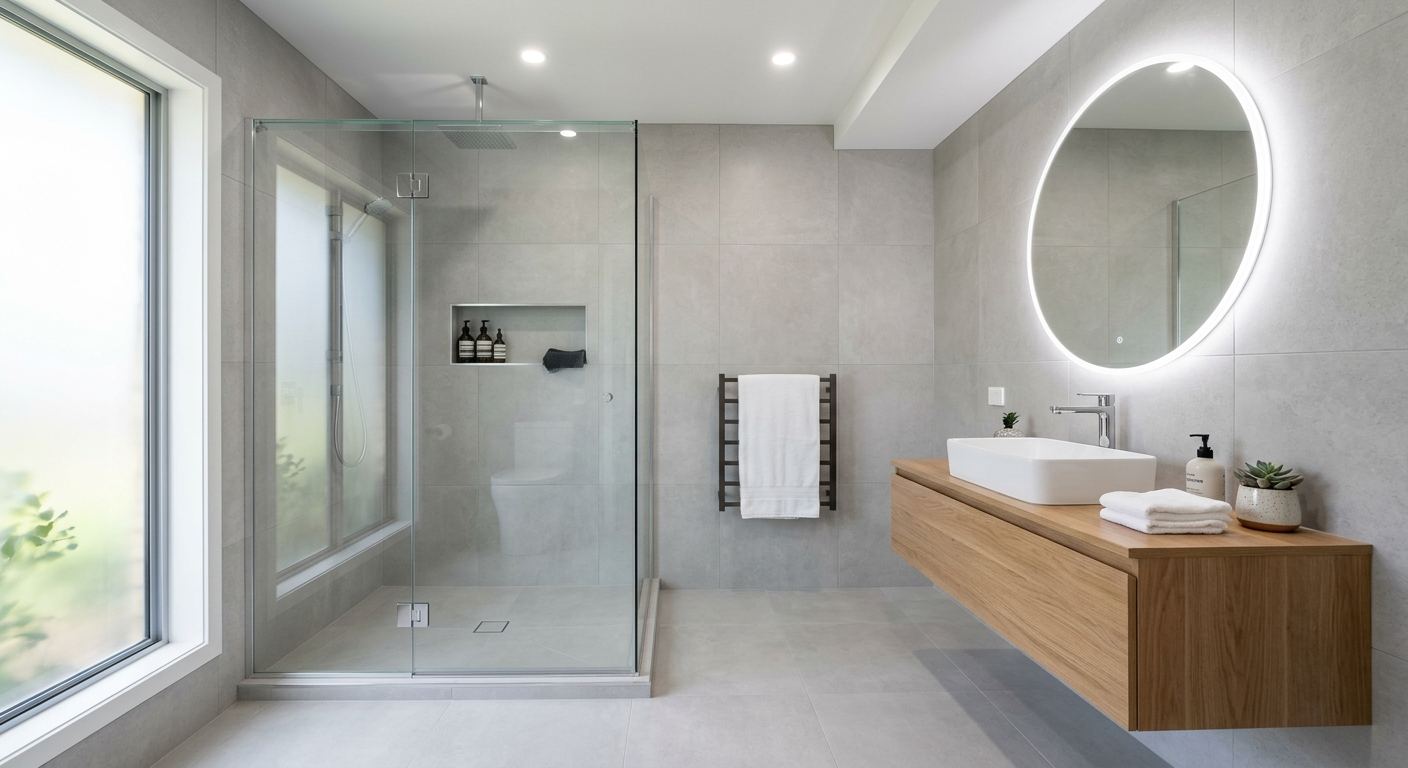
Bathroom renovation options and costs in Huron Park
Huron Park homeowners often start bathroom renovations thinking they’re picking finishes, but in practice the decision is usually about scope: what you’ll change, what you’ll keep, and what gets discovered once walls come open. With a population of 6,579 (Statistics Canada, 2021 Census), Huron Park sits in the wider Toronto market where demand for skilled trades is steady, especially around older residential pockets. In the Toronto economic region, many homes reflect post-war and earlier layouts, meaning dated rough-ins, sometimes problematic venting, and a greater chance of uncovering asbestos-containing materials in older floor tile or related finishes during demolition.
Toronto doesn’t create a “different climate” problem for bathrooms the way northern frost does, but the regional market still drives cost. Labour premiums in the GTA, plus bathroom work being labour-intensive (tiling, custom showers, detailed plumbing and waterproofing), are the main reasons realistic budgets in the Toronto area often land above national averages. If your home is near Huron Park corridors where service contractors routinely rotate through neighbourhoods, you’ll generally see quicker scheduling windows—but still expect careful estimating because plumbing brought up to current Ontario code can add several thousand dollars.
Below are typical options you can use to compare contractor quotes side-by-side and spot where pricing differences are coming from. Use the durations to sanity-check timelines, and use the price bands to confirm whether your scope is “cosmetic,” a “full renovation,” or a more complex change like a tub-to-shower conversion.
| Renovation Scope |
What's Included |
Typical Duration |
Price Range |
| Cosmetic refresh (paint, fixtures, accessories only) |
Prep and paint, vanity/lighting accessories (no plumbing relocation), replace toilet or vanity in existing rough-in positions, regrout as needed |
3–7 days |
$3,000–$7,500 |
| Mid-range full renovation (new tile, vanity, tub/shower, electrical) |
Demo and disposal, waterproofing, new floor and surround tile, vanity swap, new tub or shower trim (existing plumbing kept), exhaust fan with new wiring, GFCI where required |
2–4 weeks |
$12,000–$20,000 |
| High-end full renovation (custom tile, steam shower, heated floors) |
Full demo to studs, premium tile and custom layout, heated floor wiring, heated towel bar/steam-ready components, upgraded shower system, detailed trim and frameless options |
4–7 weeks |
$20,000–$30,000 |
| Shower-only installation (convert tub to walk-in shower) |
Remove tub, build new shower pan and waterproofing, convert plumbing where needed (drain height and slope corrections), new glass or wall system, re-tile floor and walls |
2–4 weeks |
$16,000–$26,000 |
| Bathtub replacement or tub-liner install |
Swap tub (or install a liner where appropriate), sealing and re-tile limited areas, basic fixture replacement (existing plumbing positions), waterproofing touch-ups |
5–10 days |
$1,200–$6,000 |
| Tile-only installation (floor + surround, existing layout kept) |
Tile floor and shower surround only, demo limited to tile removal, subfloor prep, waterproofing if required for the system, grout/seal, finish trims |
1–3 weeks |
$6,000–$15,000 |
Prices are estimates only and vary by project scope, site access and material selection.
What affects the price of bathroom renovation in Huron Park
Even when two homeowners describe the “same” bathroom, quotes in Toronto can diverge by 30–50%. The reason isn’t climate—it’s labour rates, how labour-intensive tile-and-waterproofing is, and what’s typical to uncover in older housing stock across the region. In the GTA, skilled trades charge a premium and bathroom work is rarely quick once walls are opened. If your bathroom is in an older home, hidden conditions often drive scope: drain stacks may be cast-iron, supply lines can be galvanized, and the venting/termination strategy may no longer match what inspectors expect today. In a pre-1985 scenario, discovering asbestos-containing materials in vinyl floor tile or old drywall compound can trigger abatement steps and add roughly $1,500–$5,000+ to your budget.
Concrete examples you’ll see in Huron Park: (1) keeping the plumbing in the same positions usually keeps the job closer to the mid-band full renovation range—around $12,000–$20,000—whereas moving a toilet or relocating the shower drain often pushes you toward the upper end because rough-in work and testing become necessary. (2) Large-format porcelain can be cost-effective in material, but it increases labour time for layout, slope planning, and installation tolerances—especially if the subfloor is out of level. (3) A heated floor circuit and new exhaust fan add both materials and electrical labour; those items commonly separate cosmetic upgrades from true full renovations that land closer to $20,000–$30,000 when combined with premium finishes.
| Price Factor |
Why It Matters |
Cost Impact |
| Layout change — moving drain or supply lines |
Requires rough-in, subfloor modification, pressure testing, and possible drain slope corrections |
Often $3,000–$8,000+ depending on how far things move |
| Tile selection — large-format porcelain vs. mosaic vs. ceramic |
Harder tile needs more prep, tighter tolerances, more cutting and higher labour time |
Typically $1,500–$6,000 difference from tile-only scopes |
| Fixture tier — builder-grade vs. mid-range vs. designer brands |
Premium valves, toilets, vanities and shower systems cost more and may need more trim work |
Often $1,000–$5,000+ |
| Subfloor condition — rot or unlevel concrete adds scope |
Waterproofing fails when the substrate moves; prep and rebuild become necessary |
Typically $800–$4,000+ |
| Electrical — adding GFCI outlets, exhaust fan, heated floor circuit |
Licensed electrical labour plus code-compliant fan ducting and wiring increases scope |
Often $600–$4,500 |
| Waterproofing method — membrane type and extent |
Better systems cost more and take more time to install correctly at details and transitions |
Typically $800–$3,000 |
| Older-home surprises — asbestos tile, cast-iron drains, galvanized pipes |
Abatement, disposal, and plumbing upgrades expand the job beyond finishes |
Often $1,500–$8,000+ depending on what’s found |
| Bathroom size — sq ft drives tile and labour time directly |
More area means more tile, more waterproofing, more setting time and longer cure times |
Can change total cost by $2,000–$10,000 across comparable finish tiers |
Permits & regulations in Ontario
In Ontario, many bathroom updates are considered cosmetic and typically do not require permits—for example: swapping a vanity or toilet in the same location, replacing a like-for-like faucet or light fixture, painting, installing accessories, and retiling without moving plumbing. However, once you start relocating plumbing (moving a drain or supply line), adding or changing ventilation with a new circuit, or altering structural walls, permits and inspections are commonly required.
Electrical work must be completed to Ontario code standards and performed by (or signed off by) a licensed electrician—especially if you’re adding or relocating circuits for a bathroom exhaust fan, upgrading to GFCI protection, or wiring heated floors. Plumbing rough-in changes also generally require a permit and inspection; it’s not just the final fixture that matters, it’s the rough-in pressure testing, drain slope, and venting compliance.
For a Huron Park homeowner, verify before you sign: (1) ask for the contractor’s Ontario trade licence number (or proof of registration where applicable) and confirm it matches the legal business name; (2) request a certificate of insurance and check that liability coverage is current and includes your project address; (3) confirm WSIB/WCB coverage status—either via clearance documentation or the insurer/coverage letter your contractor can provide. Always keep copies of licence/insurance documents and attach them to your contract file.
Choosing tile, waterproofing and fixtures for your Huron Park bathroom
In Huron Park and the broader Toronto market, three material decisions drive both appearance and long-term performance: tile choice, waterproofing method, and fixture tier. First, tile: ceramic is usually the entry-level pick and can be economical for smaller bathrooms or budget renos, but it’s typically less expensive to install only when the layout is simple. Porcelain is denser and often more consistent for floors and wet areas, which reduces the risk of uneven absorption and makes it a better mid-range choice when you’re tiling a shower surround. Natural stone (marble, travertine, slate) looks premium, but it usually needs careful sealing, selection for water resistance, and a higher attention-to-detail install because variations show more in lighting.
Second, waterproofing. Ontario bathrooms deal with everyday humidity from showers, so the “how” matters more than the “what.” A paint-on membrane can work in limited contexts, but bonded sheet membranes or modern detail-focused systems generally offer better protection at corners and changes of plane—critical in a tiled shower. Third, fixtures: builder-grade options reduce upfront cost, while mid-range and designer brands can improve day-to-day feel (valve quality, shower performance) and usually hold resale value better in this market.
For an example of where money is justified: upgrading from basic ceramic to porcelain tile and using a robust waterproofing system for a tub surround often costs more up front, but it can prevent costly rework if moisture finds a weak seam. When you’re budgeting around a mid-range full renovation of about $12,000–$20,000, choosing porcelain plus dependable waterproofing is often the best value balance; pushing to steam and heated floors is what typically moves you into $20,000–$30,000 territory.
| Material / Option |
Pros |
Cons |
Price Range |
| Ceramic tile (floor + walls) |
Budget-friendly, wide style selection, good for straightforward layouts |
More variation in hardness and performance; can be less ideal for heavy floor loads |
$3,000–$8,000 |
| Porcelain tile (floor + walls) |
More moisture-resistant, consistent sizing, better longevity in wet areas |
Often higher material cost; installation requires more precise substrate prep |
$5,000–$12,000 |
| Natural stone (marble, travertine, slate) |
High-end look and unique patterning; premium curb appeal |
Needs sealing and careful selection; can be more labour-intensive and pricey |
$8,000–$18,000 |
| Frameless glass shower enclosure |
Modern appearance, visually opens the bathroom, easier to keep clean when installed well |
Can be costly; requires level walls and precise waterproofing details |
$2,000–$6,500 |
| Prefab tub surround (acrylic) |
Fast install, lower labour than full tile surrounds, less grout maintenance |
Less custom look; seam detailing still matters at edges |
$1,200–$3,500 |
| Custom shower pan (tile or linear drain) |
Better drainage options; sleek finish with linear drain; fully custom slope |
Higher labour and waterproofing complexity; demands skilled details |
$4,000–$12,000 |
How to choose a bathroom renovation contractor in Huron Park
Choosing the right contractor in Ontario starts with verification, not promises. Ask for proof of Ontario licensing and make sure the coverage documents match the business you’re hiring. For liability insurance, request a certificate of insurance showing current dates and coverage amount; for WSIB/WCB, request clearance documentation or a coverage letter so you’re protected if a worker is injured. If a contractor can’t provide these documents promptly, treat it as a serious warning sign.
Next, get 2–3 written quotes that are itemised—not lump sum—so you can compare labour versus materials, line items for demolition, waterproofing, and electrical/plumbing. Read the scope carefully: is permit pulling included, is disposal included, and are there allowances for tile, trim, glass, and subfloor repair? Ask about what’s excluded (for example: replacing subfloor beyond a stated allowance, moving plumbing, or correcting venting). Warranty matters: confirm the workmanship warranty length (and what it covers), the product/manufacturer warranty details, and whether it’s transferable if you sell the home. Finally, use a sensible payment schedule—never more than about 10–15% upfront, and hold a portion until completion and walkthrough sign-off. Get the start date and completion estimate in writing and ask how delays in tile/glass ordering will be handled.
- Confirm Ontario licence/registration and that the company name matches your contract.
- Verify liability insurance is current and ask for proof for your specific project period.
- Request WSIB/WCB clearance or coverage documentation before work begins.
- Demand itemised quotes (labour, materials, waterproofing, electrical/plumbing, disposal).
- Check what’s included for permits, inspections, and any required engineering/engineering letters (if applicable).
- Confirm disposal/recycling handling costs are explicitly stated.
- Ask for the waterproofing system name and installation method, including detail work around corners.
- Confirm tile substrate prep requirements (subfloor flattening, backer board/underlayment).
- Require a start date and a completion target tied to curing/dry times.
- Ask how changes are priced if asbestos, rot, or outdated wiring is discovered.
- Use a payment schedule with a meaningful holdback until the final inspection and walkthrough.
- Get workmanship warranty terms in writing, including claim process and timelines.
Red flags in Huron Park bathroom projects: contractors who won’t show insurance/licence documents, quotes that are “one number” without waterproofing and electrical/plumbing line items, no clear warranty terms, demanding large upfront payments (well beyond 10–15%), and vague scheduling that doesn’t account for demolition dust control, cure times, and inspection steps.
Frequently asked questions — bathroom renovation in Huron Park
What's the best tile for a bathroom in Huron Park?
For most Huron Park and Toronto-area bathrooms, porcelain tile is the safest “best overall” choice because it handles moisture and day-to-day wear well, and it’s typically more consistent than basic ceramic for wet areas. Ceramic can work if your layout is straightforward and your contractor does strong substrate prep and waterproofing details. Natural stone can look exceptional, but it needs sealing and careful selection to reduce stain and water absorption. If you’re budgeting around a mid-range full renovation of about $12,000–$20,000, prioritise porcelain plus a proven waterproofing system rather than chasing the most expensive stone—because waterproofing and installation quality protect your investment.
Should I do a tub-to-shower conversion?
A tub-to-shower conversion is often worth it for accessibility, easier cleaning, and more usable floor space. In Ontario homes, the key is that the contractor correctly addresses shower drain slope, waterproofing at transitions, and the impact on venting and rough-in details when plumbing moves are needed. If your existing plumbing layout can stay reasonably close, you may land closer to the lower end of shower conversion budgets; if you need significant drain reconfiguration, the project typically rises. For planning, many GTA homeowners see shower conversions land in the broad range of $4,000–$12,000 for shower installation alone, but when you add full tile, waterproofing, glass, and code-driven plumbing work, it often supports a full renovation budget mindset.
How do I prevent mold in a Huron Park bathroom?
Mold prevention in Huron Park is mostly about moisture control: correct waterproofing, proper ventilation, and clean detail work. A bathroom exhaust fan that vents to the exterior and is wired correctly (often with required GFCI protection) is essential—don’t rely on window-only ventilation. Next, make sure the contractor uses a waterproofing system designed for tiled showers, including correct membrane coverage at corners and changes of plane. Grout still needs correct sealing and maintenance, but it’s the waterproofing under the tile that matters most. Finally, address substrate issues early—if your subfloor is out of level or has rot, moisture pathways can form. In older homes, hidden failures are also a reason realistic budgets in Toronto can be higher.
What adds the most resale value in a bathroom reno?
In Ontario’s Toronto market, resale value is usually driven by perceived quality and by the “big ticket” functions: a modern vanity and lighting, a properly tiled and waterproofed shower (often with updated controls), and code-compliant electrical and ventilation. Premium finishes like high-end stone or steam features can raise the top-end price perception, but they only pay off if the underlying waterproofing and plumbing/venting are done correctly. For many homeowners, upgrades that reduce future maintenance—heated floors, durable porcelain tile, and a well-installed frameless glass enclosure—tend to be the most consistently valued. If your aim is value, a mid-range full renovation around $12,000–$20,000 with strong waterproofing and durable materials is a common sweet spot.
Can I keep my existing plumbing layout to save money?
Yes—keeping the toilet, tub/shower drain, and water supply locations close to the existing layout is one of the best ways to control costs in Huron Park. Moving plumbing usually triggers rough-in work, permit/inspection steps, and more labour-intensive wall/floor modifications. When the layout is unchanged, contractors can focus on tile, waterproofing, ventilation, fixtures, and cosmetic changes, which often keeps you in a lower band. For example, a mid-range full renovation with new tile and fixtures but minimal plumbing relocation commonly sits around $12,000–$20,000. If the goal is a shower conversion, you may still save money by keeping drain positions as close as possible, but slope and valve placement must still be engineered for correct drainage.
How much does a walk-in shower cost in Huron Park?
A walk-in shower’s cost depends on whether you’re converting from a tub, how much tile coverage you’re changing, and whether plumbing and electrical require relocation. In the Toronto region, a standalone shower installation can fall roughly in the $4,000–$12,000 range. But most homeowners are also replacing the surrounding floor tile, adding waterproofing, possibly installing frameless glass, and updating an exhaust fan or electrical details—so total “walk-in shower plus finishing” budgets often shift into full-renovation thinking. If your project is tight and plumbing stays close, you might stay closer to the lower end; if you’re reconfiguring drain reventing, you should plan higher. For a full renovation approach, budgets commonly align with the local $12,000–$30,000 bands.