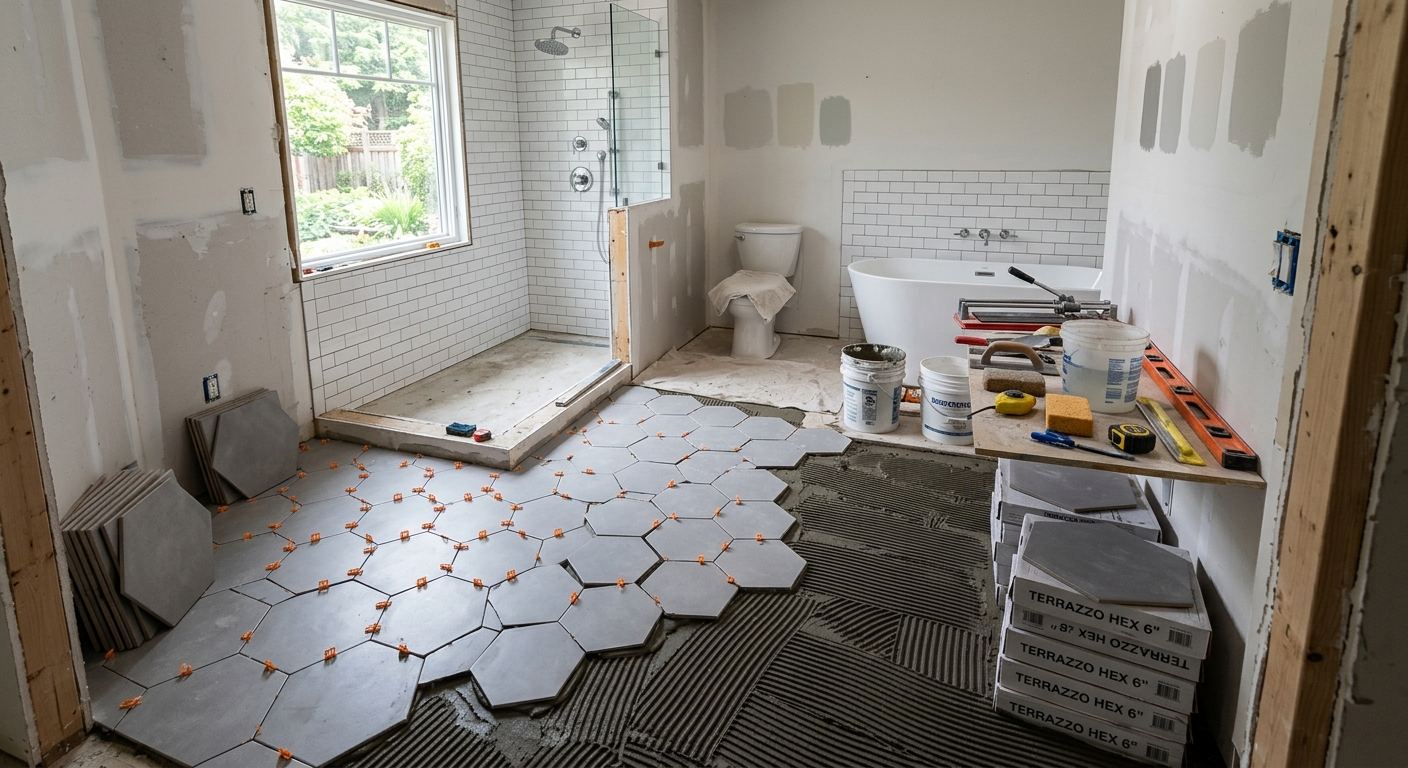
Bathroom renovation options and costs in Moose Factory
Bathroom renovation in Moose Factory is usually priced around labour and what’s hidden behind the walls—not outdoor conditions. With a population of 1,807 in Moose Factory (Statistics Canada, 2021 Census), you’ll typically find fewer contractors than you would in the GTA, so schedules can be tighter and mobilization costs can matter. Just as important, the local housing stock skews older in many Ontario communities, and older builds often come with dated plumbing layouts and material surprises once walls open. In the broader Toronto economic region, that same “open-the-wall” reality is why asbestos-containing materials, older drain piping, and ventilation gaps can surface during mid-range projects.
In the Toronto market, skilled trades command premium hourly rates, and bathroom work is labour-intensive—especially for tiling, custom showers, and any plumbing/vent rerouting. Even though Moose Factory isn’t priced as heavily as central Toronto streets, bathroom budgets still tend to land in Ontario’s full-reno range once you include realistic rough-in upgrades, licensed electrical, and waterproofing done correctly. Contractors who routinely work around neighbourhoods with older post-war and 1960s–1980s homes—such as areas of the Toronto region tied to mature housing—are the ones who price for these risks.
To help you compare quotes, here are common bathroom renovation options and the typical durations and price bands you’ll see in Moose Factory. Use this table as your “apples-to-apples” starting point before you request itemised bids.
| Renovation Scope |
What's Included |
Typical Duration |
Price Range |
| Cosmetic refresh (paint, fixtures, accessories only) |
New vanity or basic faucet, toilet accessories, paint, re-caulk, replace towel bars/mirrors, lighting swap if permitted/allowed by scope, no plumbing/vent relocation |
2–5 days |
$3,000–$8,000 |
| Mid-range full renovation (new tile, vanity, tub/shower, electrical) |
Demo and rebuild of walls/floors, waterproofing, new tile (floor + surround), new vanity, tub or tub/shower combo, new exhaust fan (as required), updated lighting, typical rough-in checks |
2–4 weeks |
$12,000–$22,000 |
| High-end full renovation (custom tile, steam shower, heated floors) |
Custom shower/tub layout, higher-end tile, membrane system, heated floor circuit, upgraded fixtures, advanced waterproofing details, electrical upgrades, more complex plumbing/vent corrections if needed |
3–6 weeks |
$22,000–$30,000 |
| Shower-only installation (convert tub to walk-in shower) |
Remove tub, install shower pan and waterproofing, tile surround, new glass/door (if chosen), updated drain slope, exhaust fan/vent considerations, rework plumbing where required |
1.5–3 weeks |
$8,500–$16,000 |
| Bathtub replacement or tub-liner install |
Replace tub and re-set fixtures OR install tub liner (where permitted by condition), new caulking and sealing, limited wall touch-up; deeper floor repairs only if damage is found |
3–7 days |
$1,200–$3,500 |
| Tile-only installation (floor + surround, existing layout kept) |
Tile removal/replacement (as needed), underlayment and waterproofing for tile areas, floor tile + wall surround, grouting and sealing; keeps current fixtures/plumbing locations |
1.5–3 weeks |
$5,000–$18,000 |
Prices are estimates only and vary by project scope, site access and material selection.
What affects the price of bathroom renovation in Moose Factory
Two homeowners in Moose Factory can receive quotes that differ by 30–50% for what looks like the same bathroom refresh because labour intensity and “unknowns” change the scope once the walls come down. In Ontario, these swings are common in the Toronto economic region as well, where higher skilled-trade labour rates and older housing stock drive the budget up more than weather does. The climate factor matters mainly for humidity control and ventilation requirements, not the labour schedule itself.
The biggest cost drivers are what you can’t see: older homes frequently hide cast-iron or undersized drains that need upgrading for proper slope, and sometimes galvanized or aging supply lines that should be renewed while walls are open. Ventilation is another frequent hidden issue—if the bathroom doesn’t exhaust properly, contractors end up reworking fan ducting and controls to meet Ontario best practice.
Asbestos and other hazardous materials can also be the budget breaker. If asbestos-containing materials are found in vinyl floor tile or older drywall compound (more common in pre-1985 homes), abatement protocols can add roughly $1,500–$5,000+ to your job. For reference, a mid-range full renovation often sits in the $12,000–$22,000 band, while fully premium work with complex shower builds and upgrades can push toward $22,000–$30,000.
In Moose Factory specifically, cost can rise when a bathroom is tight (more cuts, more labour) or when the subfloor is out of level, and it can come down when you keep your plumbing layout and choose straightforward tile patterns with a smaller-format install area.
| Price Factor |
Why It Matters |
Cost Impact |
| Layout change — moving drain or supply lines requires rough-in work |
Plumbing work is labour-intensive and often triggers permit/inspection requirements |
+ |
| Tile selection — large-format porcelain vs. mosaic vs. ceramic |
Material choice affects cutting time, breakage risk, and installation difficulty |
Medium to + |
| Fixture tier — builder-grade vs. mid-range vs. designer brands |
Premium brands increase material costs and sometimes require specialty installation |
+ |
| Subfloor condition — rot or unlevel concrete adds scope |
May require floor repairs, leveling compound, or additional waterproofing prep |
Medium to ++ |
| Electrical — adding GFCI outlets, exhaust fan, heated floor circuit |
New circuits/vent fan ducts increase labour and licensed electrician involvement |
Medium to + |
| Waterproofing method — membrane type and extent |
Correct membrane coverage reduces call-backs and future moisture problems |
Medium |
| Older-home surprises — asbestos tile, cast-iron drains, galvanized pipes |
Abatement and drain upgrades expand timeline and require skilled coordination |
++ |
| Bathroom size — sq ft drives tile and labour time directly |
More surface area means more prep, more tile setting, and longer cure times |
Medium to ++ |
Permits & regulations in Ontario
In Ontario, some bathroom updates are straightforward and typically don’t require permits, while other changes almost always do. For example, cosmetic work like swapping a vanity, replacing fixtures in place (faucet, toilet, shower trim), painting, re-caulk, and retiling with the existing plumbing locations usually falls into “no permit” territory for most homeowners—assuming you’re not changing wiring circuits, moving drains, or modifying structural elements. However, permits and inspections are generally triggered when you relocate plumbing (moving drain or supply lines), add an exhaust fan where none exists or change the venting path, or make structural wall changes.
Electrical also matters: any new or modified electrical work must meet Ontario electrical code requirements and be completed or signed off by a licensed electrician. If you’re adding a new exhaust fan circuit, adding additional GFCI protection, or installing a heated floor circuit, plan on licensed electrical involvement. Plumbing rough-in changes—especially moving a drain—commonly require a permit and inspection before walls close.
How to verify a contractor in Moose Factory step-by-step: (1) Ask for their Ontario trade licence number (or the applicable registration details) and confirm it on the appropriate online registry; (2) Request a current certificate of insurance showing liability coverage; (3) Ask for WSIB/WCB clearance (or coverage evidence) before work starts; (4) For larger jobs, get the electrical and plumbing subcontractor details and their proof as well; and (5) Keep copies in your project folder so you can verify coverage if anything changes mid-job.
Choosing tile, waterproofing and fixtures for your Moose Factory bathroom
In Moose Factory, the three biggest material decisions that shape your bathroom reno budget (and long-term comfort) are tile choice, waterproofing approach, and fixture tier. First, tile: ceramic is usually the entry-level option and can be a good fit when you want a budget-friendly look with a simpler installation plan. Porcelain costs more but is tougher for floors and wet zones and often goes cleaner with fewer replacements over the years. Natural stone (marble, travertine, slate) can look stunning, but it adds installation complexity, surface sealing/maintenance needs, and higher labour sensitivity for leveling and finish.
Second, waterproofing. Ontario humidity makes ventilation and full shower waterproofing non-negotiable. A paint-on membrane can work for certain systems, but bonded sheet membranes or a well-installed schluter-system approach often give more robust coverage when done correctly—especially around niches, corners, and linear drain details.
Third, fixtures. Builder-grade fixtures keep costs down, while mid-range or designer brands can raise the material line but sometimes reduce future servicing and improve reliability. If you want a clear example: upgrading from basic wall tile to a higher-end porcelain can add several thousand dollars across materials and labour (cuts, layout time), but it’s usually justified when you’re already doing a full $12,000–$22,000 renovation and you plan to keep the bathroom for many years.
Match your budget to your situation: if you’re converting from tub to shower, spend where it matters most—proper membrane and a shower pan system—then tune tile and fixtures to the remaining budget.
| Material / Option |
Pros |
Cons |
Price Range |
| Ceramic tile (floor + walls) |
Often lowest material cost, many style options, straightforward detailing |
Can be less forgiving for floor slip/strength depending on grade; may need more careful layout for small spaces |
$3,000–$10,000 |
| Porcelain tile (floor + walls) |
Dense and durable for wet areas, wider choice of textures, typically better long-term wear |
Heavier and can be harder to cut; premium tile raises material cost and may increase labour time |
$5,000–$16,000 |
| Natural stone (marble, travertine, slate) |
High-end look, unique veining, premium feel |
Requires sealing/maintenance, can be less consistent, needs skilled installation to avoid lippage |
$8,000–$20,000 |
| Frameless glass shower enclosure |
Modern appearance, easy to clean, maximizes visual space |
Costs more; requires accurate pan and tile plane alignment |
$2,000–$7,000 |
| Prefab tub surround (acrylic) |
Faster install, lower labour than full tile, good water resistance when properly fitted |
Limited design choices; can look more “builder” depending on finish |
$1,200–$3,500 |
| Custom shower pan (tile or linear drain) |
Best performance and clean look; linear drains improve modern styling and drainage |
More labour and detailing; requires exact slope and waterproofing discipline |
$4,000–$12,000 |
How to choose a bathroom renovation contractor in Moose Factory
Choosing the right contractor in Moose Factory starts with proof, not promises. Ask for Ontario trade licence information that matches their work scope, and verify their liability insurance certificate (and that the coverage is active for the project dates). For worker protection and compliance, request WSIB/WCB clearance evidence and check the paperwork is current before anything is demolished. If a contractor can’t provide these documents promptly, that’s a major warning sign.
Next, get 2–3 itemised written quotes. You want a labour-and-materials breakdown (tile install, waterproofing, rough-in adjustments, electrical allowance, disposal/dump fees), not a single lump-sum number. Read the scope carefully: what’s included for permit pull (if required), what’s excluded (subfloor replacement, fan ducting upgrades, electrical upgrades), and whether demolition disposal is priced in. Confirm who supplies and installs niche, glass, fixtures, and what happens if you uncover asbestos-containing materials or damaged subfloor during demo.
Warranty matters for both workmanship and products. Ask for the workmanship warranty length and whether the manufacturer warranty transfers to you. Also, payment schedules should be sensible: never pay more than 10–15% upfront, and use a holdback until substantial completion. Finally, insist on a written start date and an estimated completion timeline so you can plan around curing times for tile and waterproofing.
- Request licence and proof of insurance before signing.
- Confirm WSIB/WCB clearance for trades and subcontractors.
- Get a detailed written quote with line items for labour and materials.
- Verify whether permits and inspections are included or separately billed.
- Confirm disposal/dump fees are included (or clearly excluded).
- Ask what waterproofing system they use and where it’s applied (walls, seams, niches).
- Require a plan for ventilation updates (exhaust fan and ducting).
- Check that electrical for GFCI/heated floors is included with a licensed electrician.
- Confirm how they handle hidden-condition surprises (price adjustments process).
- Get the expected grout/curing timeline and how it affects your schedule.
- Clarify warranty: workmanship length and product warranty terms.
- Use a payment schedule that holds back until completion and walkthrough.
Red flags to watch for in Moose Factory: (1) they won’t show insurance/WSIB/WCB documentation; (2) they quote “all-in” without itemising waterproofing, tile labour, and electrical allowances; (3) they promise tile and shower waterproofing “same week” without cure time; (4) they minimize the need for permits even when plumbing or electrical is changing; and (5) they ask for large deposits upfront or won’t sign a clear contract with scope and timeline.
Frequently asked questions — bathroom renovation in Moose Factory
What's the best tile for a bathroom in Moose Factory?
For most Moose Factory bathrooms, porcelain tile is the best balance of durability and looks in wet areas. It holds up well to cleaning and moisture cycles, which matter because bathrooms here rely heavily on exhaust and good waterproofing to manage humidity. If you’re aiming for a mid-range Reno, porcelain often pairs well with a full waterproofing membrane and a proper shower pan system, keeping long-term maintenance lower than many ceramic options. In budget terms, tile installation typically runs from $3,000–$10,000 for simpler installs, and climbs when you increase complexity (larger formats, custom patterns, or more prep). If you choose natural stone, plan for sealing and extra care, and make sure the installer has experience with stone flatness and lippage control.
Should I do a tub-to-shower conversion?
A tub-to-shower conversion is usually a smart move when you want easier daily use, lower maintenance, and a modern look—especially if your tub surround is old or poorly ventilated. In Ontario, the real cost swing isn’t the demo; it’s the plumbing rough-in and waterproofing details after walls are opened. If your layout can stay close to the existing drain and supply locations, you can often control costs within the “shower-only” budget band. Toronto-region pricing trends support this reality: converting to a walk-in shower commonly lands around $4,000–$12,000 for the shower installation scope, then increases with glass enclosures, tile complexity, and any vent/exhaust corrections. If your current drain is undersized, cast-iron is aging, or there are older venting issues, expect the project to rise toward the higher end.
How do I prevent mold in a Moose Factory bathroom?
Preventing mold in Moose Factory comes down to three things: ventilation, waterproofing, and correct drying. First, ensure your exhaust fan actually vents outdoors and is sized for the bathroom. If you’re replacing or adding a fan during the reno, plan for electrical work that meets Ontario code, and confirm the duct route is sealed. Second, use a proven waterproofing method for wet zones—especially where grout lines and seams would otherwise be vulnerable. Third, design for drying: proper silicone around changes in plane, no gaps behind fixtures, and good airflow around the shower curtain area (if you don’t use glass). If you’re budgeting for a full renovation, many projects land in the $12,000–$30,000 range when waterproofing and ventilation are upgraded, which is exactly where you want your money spent to avoid future moisture problems.
What adds the most resale value in a bathroom reno?
Resale value typically comes from visible quality and from systems that reduce future risk—more than from “designer-only” choices. In Moose Factory and across Ontario, buyers notice a clean, modern layout, durable tile work, bright lighting, and a functional exhaust setup. Upgrading waterproofing and addressing ventilation is also a credibility factor for inspectors and future purchasers. Another strong value driver is a sensible upgrade to the shower experience (proper pan, good glass or curtain system, and leak-tested plumbing). If you’re planning a mid-range full renovation, many homeowners target the $12,000–$22,000 band because it usually covers the heavy labour: demo, tile setting, waterproofing, and electrical updates. Pushing to the upper end—like heated floors or custom steam-style layouts—can increase cost toward $22,000–$30,000, but it’s best when you want a long-term “stay here” renovation rather than a pure resale flip.
Can I keep my existing plumbing layout to save money?
Yes—keeping your plumbing layout is one of the best ways to save money in Moose Factory. Moving a drain or supply lines creates rough-in labour, often involves permits/inspections, and increases the risk of discovering older pipe issues when walls open. If your existing drain locations work with your desired vanity placement and shower/tub plan, contractors can usually focus on finishes and waterproofing rather than extensive reconfiguration. That’s why a “tile-only installation” or a renovation that keeps fixtures close to original positions tends to cost less than a full layout redesign. As a reference, shower installation and conversion work often starts around $4,000–$12,000, but it climbs quickly when you reroute plumbing or venting. Your contractor should verify drain slope, venting, and shut-off accessibility before you lock in the plan.
How much does a walk-in shower cost in Moose Factory?
A walk-in shower in Moose Factory typically starts in the mid-range “shower installation” band, then rises based on tile complexity, enclosure choice, and whether plumbing/venting needs corrections. For budgeting, many contractors anchor shower installations around $4,000–$12,000 when converting from a tub or installing a new shower pan with proper waterproofing. If you add frameless glass or choose premium tile layouts, you should expect to move upward. If hidden conditions show up—like cast-iron drain sections, galvanized supply lines, or older venting that can’t keep up with moisture—costs can increase, sometimes pushing a bathroom project toward full renovation territory (often $12,000–$30,000 depending on scope). The most reliable way to price it is an itemised quote that separates shower pan/waterproofing, tile labour, glass/enclosure, and any electrical or plumbing rough-in updates.