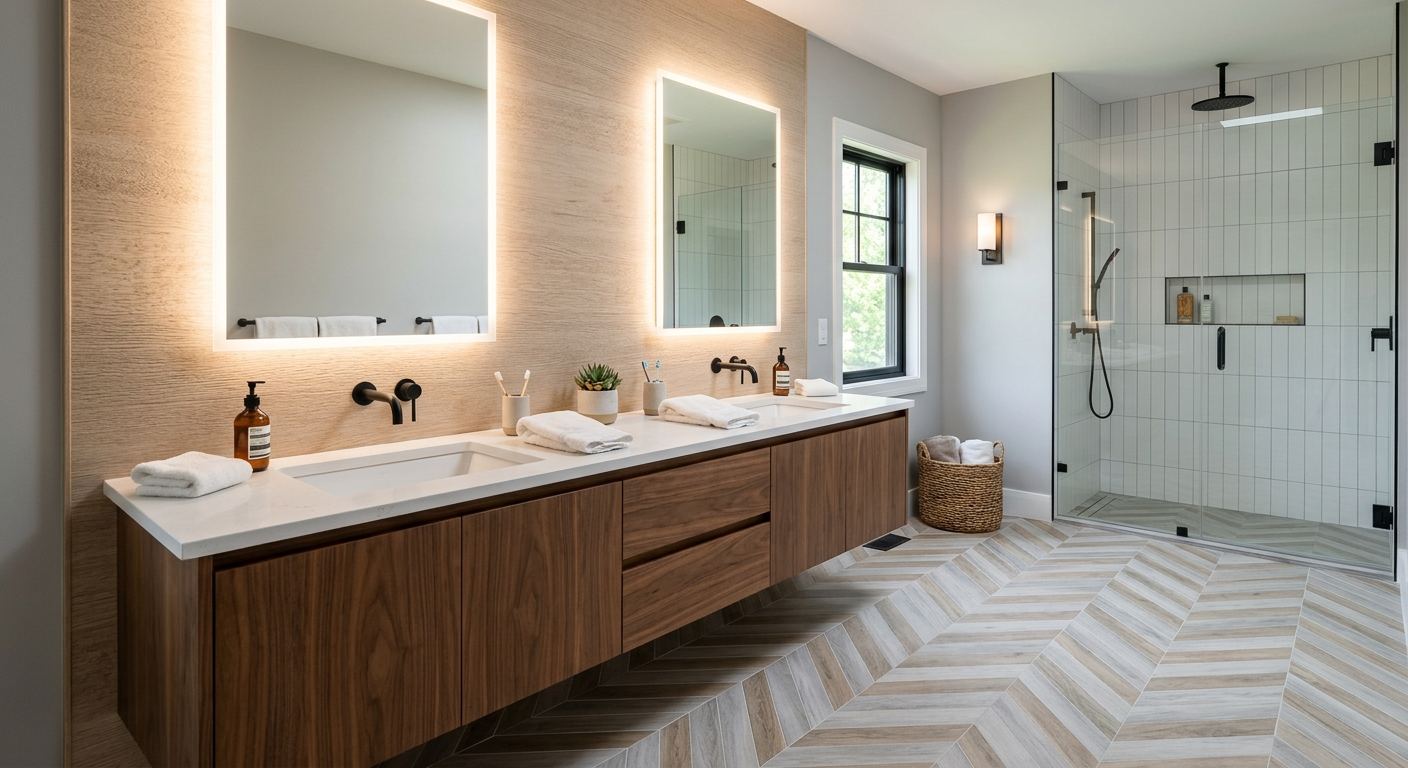
Bathroom renovation options and costs in Renfrew
Renfrew homeowners typically have a clear range of bathroom renovation options, from a quick refresh to a full gut-and-build. With many homes built before 1981 (76.4% of dwellings, Statistics Canada, 2021 Census), it’s common to find dated plumbing runs, older venting, and drains that don’t tolerate minor “patch and pray” fixes. The Kingston–Pembroke market also tends to be busy with trades because the housing stock is older across the region (Statistics Canada, 2021 Census), so discovery work behind walls can move a quote quickly.
In Renfrew, costs are shaped more by what contractors uncover during demolition and how much remedial work is needed than by weather alone. Ontario’s humidity swings—especially around winter shutdowns—make ventilation and waterproofing choices non-negotiable. In practical terms, local labour availability and the scope-driven nature of older-home construction often matter more than the day-to-day climate.
If you’re renovating in areas such as downtown Renfrew and nearby older neighbourhood pockets, you’ll often see repeated patterns: tighter access, limited storage space for demolition debris, and walls that were closed up long ago. That’s why even “mid-range” jobs can land at different numbers once tile removal, substrate prep, waterproofing corrections, and electrical updates are priced in.
Below is a straightforward way to compare renovation paths, then we’ll break down what drives price up or down in Renfrew.
| Renovation Scope |
What's Included |
Typical Duration |
Price Range |
| Cosmetic refresh (paint, fixtures, accessories only) |
Paint, new vanity top/vanity if like-for-like, toilet or faucet swap, light trim work, re-sealing caulking, towel bars/accessories |
3–7 days |
$4,500–$9,000 |
| Mid-range full renovation (new tile, vanity, tub/shower, electrical) |
Demo and floor/wall tile, new vanity and mirror, tub or shower surround replacement, new exhaust fan (typical), GFCI update where needed, improved waterproofing and sealing, basic electrical modifications |
2–4 weeks |
$15,000–$24,500 |
| High-end full renovation (custom tile, steam shower, heated floors) |
Custom shower/tub surround, premium tile layouts, advanced waterproofing, heated floor circuit, designer fixtures, upgraded lighting, steam shower components (where desired), deeper electrical planning |
4–7 weeks |
$24,500–$32,000 |
| Shower-only installation (convert tub to walk-in shower) |
Convert to walk-in, new shower valve/trim, waterproofing and liner/pan system, new tile or prefab enclosure, new drain connection as needed, exhaust fan checks |
2–3 weeks |
$6,000–$12,000 |
| Bathtub replacement or tub-liner install |
Remove and replace tub (or install tub liner system), recaulk and re-seal, update valve trim if needed, patch and re-finish around perimeter, modest waterproofing corrections |
1–2 weeks |
$1,200–$6,000 |
| Tile-only installation (floor + surround, existing layout kept) |
Tile removal (as required), subfloor prep, new floor and wall tile, grout/sealing, waterproofing upgrades in tiled areas, matching trim and transitions |
1–2.5 weeks |
$2,000–$10,000 |
Prices are estimates only and vary by project scope, site access and material selection.
What affects the price of bathroom renovation in Renfrew
Across Kingston–Pembroke and Ontario, two quotes for what sounds like the “same” bathroom reno can differ by 30–50% because renovation scope is discovered work. In Renfrew, that’s especially true because so many homes were built before 1981 (76.4% of dwellings, Statistics Canada, 2021 Census). Older basements, crawlspaces, and wall systems can hide cast-iron drain sections, galvanized supply lines, and ventilation that doesn’t meet today’s bathroom moisture control expectations.
Labour rates and the age of the housing stock usually drive cost more than climate. That said, Ontario’s seasonal humidity means you can’t skim on waterproofing and exhaust performance. When demolition opens walls, you may also find remediation triggers: for example, asbestos-containing materials in older floor tile or related compounds can require abatement protocols. In practice, that kind of discovery commonly adds about $1,500–$5,000+ to a budget depending on how much material is affected and how much containment is needed.
Concrete Renfrew examples I see often: (1) a “like-for-like” tub swap becomes a higher budget when the drain stack needs rework because the old cast-iron section has corrosion or misalignment; (2) a standard tile refresh becomes expensive when the subfloor is uneven and needs levelling or replacement before tile can be installed; and (3) adding an exhaust fan with correct venting can push a project toward the higher end of the mid-range band, often aligning with the move from about $15,000 toward $24,500+ once electrical and waterproofing corrections are included.
In other words, if your plan stays cosmetic, you can be near the lower side, but once rough-in changes and waterproofing corrections are required, budgets trend toward the full renovation ranges—often mid-teens to low-thirties for complete projects.
| Price Factor |
Why It Matters |
Cost Impact |
| Layout change — moving drain or supply lines requires rough-in work |
New locations mean opening walls, adjusting plumbing rough-in, and reconnecting fixtures |
Often adds thousands; commonly drives jobs upward toward mid-high full-reno pricing |
| Tile selection — large-format porcelain vs. mosaic vs. ceramic |
Material cost and labour time increase with cutting complexity and substrate demands |
Can shift you from a low tile budget toward upper tile ranges (e.g., ~$2,000 up to ~$10,000+) |
| Fixture tier — builder-grade vs. mid-range vs. designer brands |
Higher-tier fixtures add purchase cost and sometimes require upgraded trims/valves |
May increase totals by several thousand depending on product selections |
| Subfloor condition — rot or unlevel concrete adds scope |
Tile demands a stable, level substrate; repairs must be done before waterproofing |
Unlevel surfaces can add labour and materials quickly, pushing costs toward the high end |
| Electrical — adding GFCI outlets, exhaust fan, heated floor circuit |
Bathroom electrical must be code-compliant; heated floors require dedicated planning |
Typically adds noticeable costs; heated floors commonly push projects toward higher full-reno bands |
| Waterproofing method — membrane type and extent |
Good waterproofing is what protects tile and framing; mistakes lead to costly repairs later |
Switching to better systems can add upfront cost but reduces long-term risk |
| Older-home surprises — asbestos tile, cast-iron drains, galvanized pipes |
Discovery work can require containment/abatement and plumbing replacement |
Commonly adds $1,500–$5,000+ (abatement) plus additional plumbing labour if needed |
| Bathroom size — sq ft drives tile and labour time directly |
Tile coverage area increases labour, setting time, and material waste |
Larger bathrooms often move a job from lower bands toward mid-range or higher |
Permits & regulations in Ontario
In Ontario, the permit picture depends on what you change. Cosmetic updates—swapping fixtures, painting, replacing a vanity in the same location, or retiling without moving plumbing—often don’t require a building permit. However, if you relocate plumbing (moving a drain or supply lines), add or modify electrical circuits (like an exhaust fan powered through new wiring or a heated-floor circuit), or make structural wall changes, permits and inspections are commonly required.
Electrical work must be done or signed off by a licensed electrician and must meet provincial electrical safety requirements. Plumbing rough-in changes—new drain connections, moving valve locations, and modifying supply routes—typically require a permit and inspection so the rough work is verified before walls close. If you’re converting layouts or touching venting and drainage pathways, assume you’ll need permits unless your contractor clearly documents otherwise.
For homeowners in Renfrew, verify the contractor first, then ask how they handle permitting. Step-by-step: (1) check the contractor’s Ontario trade licence details through the appropriate online registry (where applicable to their trade); (2) request a certificate of insurance and confirm coverage limits for liability; (3) confirm workers’ compensation clearance (WSIB/WCB) for the contractor’s employees; (4) ask whether the permit (if required) is pulled by the contractor, and who schedules inspections; and (5) get everything in writing—especially what work is included in permitting and what isn’t.
Choosing tile, waterproofing and fixtures for your Renfrew bathroom
In Renfrew, your three biggest budget levers are tile choice, waterproofing method, and fixture tier. The right combination prevents moisture issues in Ontario’s wet winters and humid shoulder seasons—while also keeping the renovation from creeping beyond your target.
1) Tile choice. Ceramic is your entry-level option for floors and walls, often priced for straightforward installs. Porcelain usually performs better in bathrooms because it’s denser and more water-resistant, but it can be harder and more expensive to cut for complex layouts. Natural stone (marble, travertine, slate) can look stunning and raise the perceived “luxury” level, but it often needs additional sealing and careful selection to avoid staining or uneven colour.
2) Waterproofing method. For shower areas, the difference between “good enough” and long-lasting is the waterproofing system. Many contractors use a paint-on membrane for smaller or simpler areas, but in tile showers, bonded sheet membranes or a tile-system approach can offer a more robust, consistent barrier when installed correctly. The goal is simple: prevent water from reaching framing and subfloor—because repairs after a leak are far more costly than doing the right system up front.
3) Fixture tier. Builder-grade fixtures keep budgets predictable, while mid-range and designer brands can improve finish quality and longevity. Sometimes you’ll justify a higher fixture price when it reduces long-term maintenance (better valves, better seals) and when paired with a proper rough-in and waterproofing.
Here’s a practical dollar example: moving from a standard ceramic tile floor to porcelain with a more advanced prep and waterproofing detail can add several thousand, but it’s often justified if your bathroom is frequently used, has limited ventilation, or your home is older (76.4% built before 1981). If you’re doing only a tub-liner or limited retile, spending more on custom stone may not pay back the way it does in a full renovation.
When you match the system to your shower type and ventilation reality, you’ll land in the right band—whether that’s closer to the tile-only range or deeper into a full-reno budget.
| Material / Option |
Pros |
Cons |
Price Range |
| Ceramic tile (floor + walls) |
Good entry cost, wide style selection, familiar installation methods |
May be less forgiving than porcelain in high-moisture use depending on finish and grout/maintenance |
$2,000–$6,000 |
| Porcelain tile (floor + walls) |
Denser and more water-resistant, works well for floors and shower walls, holds up better |
Higher material and sometimes higher cutting labour; some large formats require extra prep |
$4,000–$9,000 |
| Natural stone (marble, travertine, slate) |
Premium look, distinctive character, strong curb appeal |
Needs sealing/maintenance; can be more labour-intensive to install and finish |
$7,000–$12,000 |
| Frameless glass shower enclosure |
Modern look, easier to clean, can make smaller bathrooms feel larger |
Requires precise installation; adds cost and may need layout adjustments |
$1,800–$6,500 |
| Prefab tub surround (acrylic) |
Faster install, consistent waterproofing approach, lower labour compared to full tile walls |
Fewer design options than custom tile; details may not match premium tile aesthetics |
$800–$2,800 |
| Custom shower pan (tile or linear drain) |
Better floor-drain integration, clean lines, premium finish potential, improved accessibility |
More complex waterproofing and slope/line accuracy requirements |
$3,500–$10,000 |
How to choose a bathroom renovation contractor in Renfrew
Choosing the right contractor is the easiest way to control risk and cost overruns in Renfrew. Start by verifying Ontario licensing for their trade(s) and confirming liability insurance. Next, ask for proof of WSIB/WCB coverage so you know the job is covered if an employee is injured. If anything is missing or vague, that’s usually a sign you’ll pay later in delays or change orders.
Then get 2–3 itemised, written quotes—not just a single lump sum. A solid quote breaks labour and materials separately (tile supply, membrane, fixtures, electrical rough-in allowances, disposal, and any demo allowances). Pay close attention to what’s excluded: old subfloor removal, disposal, permit fees, asbestos testing/abatement contingencies, electrical upgrades, and any adjustments needed for unexpected plumbing conditions.
Warranty matters. Ask for the workmanship warranty length, and confirm whether product warranties are from the manufacturer and how they’re documented. Also ask if any warranty is transferable if you sell your home.
For payment schedule, never pay the full amount upfront. A practical rule is no more than 10–15% deposit, then progress payments tied to measurable milestones. Hold back a reasonable portion until completion and snagging are done. Finally, insist on a start date and completion estimate in writing, with how weather or material lead times will be communicated.
- Verify the contractor’s Ontario trade licence details (and the specific trade licences for each part of the job).
- Request a certificate of liability insurance and check it’s current.
- Confirm WSIB/WCB coverage for workers before work starts.
- Get 2–3 itemised quotes with labour + materials breakdown, not lump sums.
- Ask whether permits are required for your scope and whether the contractor pulls them.
- Confirm disposal is included (demo haul-away and waste management).
- Ensure the waterproofing method and products are listed (membrane type, shower-pan approach).
- Ask how they handle older-home surprises (cast-iron drains, galvanized pipes, possible abatement).
- Confirm tile prep scope: subfloor levelling, backer board type, and underlayment details.
- Review electrical scope: exhaust fan, GFCI requirements, heated-floor circuit (if applicable).
- Use a written schedule: start date, trade sequence, and a completion target.
- Know warranty terms for workmanship and whether manufacturer warranties are documented.
In Renfrew, red flags include: a quote that’s only a lump sum without line items for waterproofing and electrical; promises like “no permits needed” without reviewing plumbing relocation; contractors asking for most payment upfront (more than 15%); vague warranty language (“we stand behind it” with no written terms); and no proof of insurance/WSIB/WCB coverage.
Frequently asked questions — bathroom renovation in Renfrew
How much does a bathroom renovation cost in Renfrew?
In Renfrew, pricing usually follows Ontario’s scope-driven reality, not just “what people pay elsewhere.” A cosmetic refresh typically lands in the lower range, while a full renovation moves into the mid-teens to low-thirties depending on what you change. For example, a mid-range full renovation commonly falls around $15,000–$24,500, while higher-end full projects can reach $24,500–$32,000. Renfrew’s housing stock is older—76.4% of dwellings were built before 1981 (Statistics Canada, 2021 Census)—so hidden plumbing, venting, and substrate issues can change the budget once demolition starts. (Statistics Canada, 2021 Census). If you’re keeping the plumbing layout and doing standard updates, you’re more likely to stay near the lower side.
How long does a bathroom renovation take in Renfrew?
Timelines in Renfrew usually depend on whether plumbing/electrical are changing and how complex the tile waterproofing becomes. Cosmetic refresh projects can be as quick as 3–7 days. A mid-range full renovation typically takes about 2–4 weeks, while high-end builds with custom tile layouts, heated floors, or more involved electrical can take around 4–7 weeks. Shower-only conversions (like converting a tub to a walk-in) often land in the 2–3 week window. Older-home realities matter: once walls open, fixing rough-in issues or correcting ventilation can add time before tile goes back on. Plan for lead times for fixtures and glass too, and make sure the start date and completion estimate are written into your agreement.
Do I need a permit for a bathroom renovation in Ontario?
Often, cosmetic updates don’t need permits—things like swapping fixtures, replacing a vanity in the same location, painting, and retiling without moving plumbing are usually treated as non-structural refresh work. But in Ontario, permitting is commonly triggered when you relocate plumbing (moving drain/supply lines), add or modify electrical circuits (like new exhaust fan wiring or heated floor circuits), or make structural wall changes. Plumbing rough-in changes and inspections are typically required so the work is verified before walls close. In Renfrew, the safest approach is to ask your contractor to spell out: what permits are needed for your exact scope, who pulls them, and whether permit costs are included. Also confirm the contractor has Ontario trade licence coverage and liability insurance (and WSIB/WCB clearance where applicable) before they start.
What's the best tile for a bathroom in Renfrew?
For most Renfrew bathrooms, porcelain tile is often the best balance of performance and long-term durability. Ceramic can be a good entry-level option, but porcelain tends to handle moisture conditions more reliably when installed with proper waterproofing and grout practices. Natural stone (marble, travertine, slate) looks exceptional, but it can require more maintenance like sealing and careful selection. Your best choice also depends on where the tile is used: floors and shower walls should match the waterproofing plan and slip considerations. If you’re budgeting, ceramic may keep you closer to a tile-only range, while porcelain often nudges the budget upward—commonly within $2,000–$10,000 depending on size and complexity. Regardless of the tile, substrate prep and waterproofing method are what truly prevent moisture problems.
Should I do a tub-to-shower conversion?
A tub-to-shower conversion is popular in Renfrew, especially if you want easier access now or later in life. It also tends to feel more “fresh” and open in older bathrooms. Cost-wise, it’s not just the new shower trim—your budget depends on whether the drain configuration and plumbing rough-in must be adjusted, and how the waterproofing pan and tile detailing are built. In many Ontario projects like these, shower-only conversions often fall around $6,000–$12,000, but it can move higher if venting or electrical upgrades are needed (for example, upgrading the exhaust fan). The decision is also about lifestyle: if you rely on tub soaking, a conversion may not suit you—consider instead improving the existing tub surround and waterproofing where needed.
How do I prevent mold in a Renfrew bathroom?
Mold prevention is mostly about controlling moisture, not just cleaning. In Renfrew and across Ontario, humidity builds quickly when ventilation is weak—especially during winter when homes are sealed up. Start with a properly installed exhaust fan vented correctly to the exterior, and ensure it runs long enough after showers. Next, waterproof the shower thoroughly using the correct system for the shower type (membrane/pan approach), and don’t skip substrate prep—tile needs a stable base to prevent cracks that can trap water behind surfaces. Grout and caulking should be handled carefully around changes in plane. If your home is older (76.4% built before 1981, Statistics Canada, 2021 Census), you may have hidden moisture pathways from older plumbing or venting, so discovery work can matter as much as finish choices. A well-done renovation reduces risk more than any single “mold killer.”