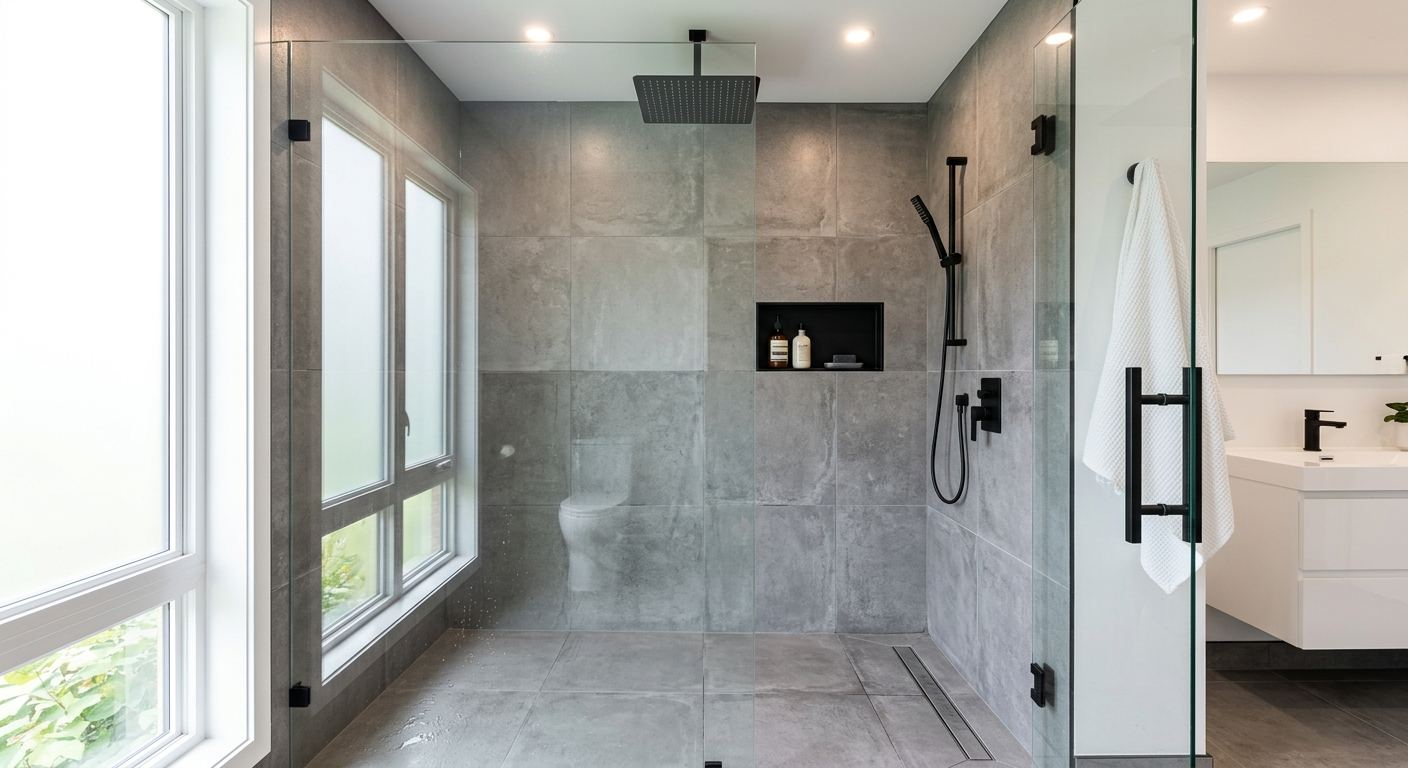
Bathroom renovation options and costs in Blue Quill Estates
Renovating a bathroom in Blue Quill Estates usually starts with one of three goals: freshen the look, improve functionality, or solve hidden problems opened up during demolition. With Blue Quill Estates being part of a Calgary-area housing mix where smaller, older homes are common, many bathrooms sit on dated rough-ins that can include cast-iron drain sections and older supply piping. In the Calgary economic region, the population is 1,296 (Statistics Canada, 2021 Census), and in these smaller pockets you’ll often find that trades are busiest around established demand corridors—so getting the right crew on the schedule matters for cost and timing.
In Alberta, the weather itself doesn’t usually drive bathroom renovation pricing the way it does in coastal climates; instead, contractor availability and local labour rates do. Calgary-area projects frequently uncover ventilation shortfalls (under-sized or poorly ducted exhaust), uneven subfloors, or moisture-damaged backing boards once walls come down. That’s why a “simple” refresh can turn into a mid-range full renovation once plumbers and electricians coordinate rough-in work.
In Blue Quill Estates, trade demand is especially strong where homeowners plan whole-home refreshes ahead of winter—commonly around the neighbourhood pockets near main access routes and busy commercial corridors in the wider Calgary north area. For budgeting, it’s smartest to compare scope levels side-by-side, because pricing is driven more by what’s behind the walls than by what you see.
Use the table below as a practical baseline before you request an itemised quote.
| Renovation Scope |
What's Included |
Typical Duration |
Price Range |
| Cosmetic refresh (paint, fixtures, accessories only) |
New vanity or faucet, toilet/lighting swap, fresh paint, re-caulking, accessories (towel bars, mirrors), minor hardware updates; existing tile and plumbing locations kept |
3–7 days |
$3,000–$7,500 |
| Mid-range full renovation (new tile, vanity, tub/shower, electrical) |
Remove/replace vanity, tub or shower system, new shower surround and floor tile, upgrade exhaust fan (often with new ducting), GFCI-protected electrical updates, waterproofing and backer board as needed |
2–4 weeks |
$15,000–$22,000 |
| High-end full renovation (custom tile, steam shower, heated floors) |
Custom layout, premium waterproofing system, large-format tile installation, heated floor wiring/mats, niche detailing, designer fixtures, upgraded plumbing rough-in, higher-spec ventilation and finishes |
4–6+ weeks |
$22,000–$30,000 |
| Shower-only installation (convert tub to walk-in shower) |
Remove tub, new shower base/pan, waterproofing, tile surround, frameless or standard glass, plumbing reconfiguration for drain location, updated exhaust fan if required |
2–3 weeks |
$8,500–$15,000 |
| Bathtub replacement or tub-liner install |
Swap existing tub (or add a liner where suitable), re-install surround materials where needed, new caulking, basic plumbing connection checks |
5–10 days |
$500–$3,000 |
| Tile-only installation (floor + surround, existing layout kept) |
Demo of existing tile (if required), layout and waterproofing prep, new tile floor and shower surround with matching grout, sealing and finishing where applicable; plumbing locations remain unchanged |
1–2.5 weeks |
$3,000–$12,000 |
Prices are estimates only and vary by project scope, site access and material selection.
What affects the price of bathroom renovation in Blue Quill Estates
Across Calgary and the surrounding Alberta market, you can easily see the same bathroom renovation idea priced 30–50% apart. The reason isn’t the weather; it’s local labour rates plus the age and condition of the housing stock. In Blue Quill Estates, many bathrooms are in homes where rough-in systems were installed decades earlier, so when contractors open walls they often find the “hidden scope”: cast-iron drain sections that need upgrading for proper slope, galvanized supply lines that don’t match modern shutoffs, or ventilation duct runs that never achieved the airflow needed for moisture control. Those upgrades push a renovation from a cosmetic refresh toward a mid-range full renovation, especially when plumbing locations must be corrected.
Another driver is concealed material discovery. Pre-1985 homes in the Calgary region sometimes have asbestos-containing vinyl floor tile or asbestos in old drywall compounds; when that happens, abatement protocols can add $1,500–$5,000+ to the budget depending on extent and containment needs. Flooring and wall “repairs” then become controlled demolition and re-build work, which also changes scheduling and labour coordination.
Two examples that commonly raise cost in Blue Quill Estates are (1) correcting an under-sized exhaust fan or adding ducting to an exterior termination, and (2) dealing with unlevel subfloors that require self-levelling or subfloor repair before tile can be installed. Conversely, costs can stay closer to the mid-range band when you keep the existing layout, select tile within the same format as the old install, and avoid moving plumbing. If your plan stays near the shower-only range—$8,000–$15,000 for converting a tub to a walk-in—your budget is usually easier to control than a full remodel that trends toward $15,000–$30,000.
| Price Factor |
Why It Matters |
Cost Impact |
| Layout change — moving drain or supply lines requires rough-in work |
Moving plumbing triggers demolition, new rough-ins, inspections, and patch/finish carpentry |
Often adds 20–40% versus keeping the existing layout |
| Tile selection — large-format porcelain vs. mosaic vs. ceramic |
Larger tiles demand flatter floors and tighter tolerances; mosaics increase labour time |
Can shift the tile portion by several thousand dollars within the $3,000–$12,000 band |
| Fixture tier — builder-grade vs. mid-range vs. designer brands |
Valve quality, finish durability, and installation complexity vary by tier |
Typically swings total project cost by ~5–15% when fixtures are upgraded |
| Subfloor condition — rot or unlevel concrete adds scope |
Water damage and uneven floors can force re-build of supporting layers and re-levels |
Commonly adds 10–25% to tile and waterproofing labour |
| Electrical — adding GFCI outlets, exhaust fan, heated floor circuit |
Bathrooms require safe, code-compliant wet-area electrical and correct fan/thermostat wiring |
Can add $800–$3,500 depending on complexity and heated flooring |
| Waterproofing method — membrane type and extent |
Better systems and full coverage reduce mould risk and expensive failures |
May add upfront cost but reduces rework risk significantly |
| Older-home surprises — asbestos tile, cast-iron drains, galvanized pipes |
Discovery changes demolition approach and increases trades coordination |
Often the biggest swing; asbestos abatement can add $1,500–$5,000++ |
| Bathroom size — sq ft drives tile and labour time directly |
More coverage area means more setting time, grout, and waterproofing prep |
Smaller bathrooms may stay near the low five figures; larger baths trend higher |
Permits & regulations in Alberta
In Alberta, many bathroom updates are considered cosmetic and typically do not require permits—especially when you’re not moving plumbing or altering major electrical circuits. Examples of work that usually does not require a permit include swapping a vanity or toilet, replacing faucets and showerheads in the same location, painting, installing accessories, and re-caulking. Re-tiling surfaces without moving plumbing can also often be handled as finishing work, though some contractors will still pull permits when other trades are involved in the same scope.
Work that does require a permit is generally tied to moving services or making electrical/structural changes. For Blue Quill Estates homeowners, the common permit triggers include: relocating drain or supply lines (rough-in plumbing changes), adding or upgrading an exhaust fan with new wiring/circuit changes, installing heated floors (typically involving dedicated electrical work), and any structural changes that affect framing or walls. Plumbing rough-in changes are also typically inspected to confirm proper fittings, venting connections, and pressure testing.
Electrical work in Alberta must meet provincial code standards and be done or signed off by a licensed electrician. Before you hire, verify your contractor’s Alberta trade licence (where applicable for the trade they’re doing), and confirm liability insurance. For coverage, ask for a certificate of insurance showing current general liability with your project listed if possible, and request proof of WSIB/WCB coverage for the workers they employ or subcontract. Step-by-step: (1) request their licence numbers, (2) ask for your insurer-ready certificate of insurance, (3) ask for WSIB/WCB clearance documentation, and (4) confirm everything matches the scope in writing before demolition begins.
Choosing tile, waterproofing and fixtures for your Blue Quill Estates bathroom
In Blue Quill Estates, three material decisions usually decide whether you land near the tile band or push into a full renovation budget: tile choice, waterproofing method, and fixture tier. First, tile selection. Entry-level ceramic can look great and keeps material cost down, but it’s often more forgiving than porcelain when it comes to durability—porcelain typically handles daily wear better, especially in family bathrooms. Natural stone (marble, travertine, slate) can provide a premium look, but it’s higher in labour complexity (cutting, finishing) and may require more careful sealing and maintenance.
Second is waterproofing. In Alberta’s cycle of indoor humidity spikes (showers) and cool-down periods, the right waterproofing system is what prevents mould and costly call-backs. Paint-on membranes may work for certain surface applications, but bonded sheet membranes or a well-executed system with compatible primers and overlapping details generally provide a more robust barrier in wet zones—especially around niches, seams, and curb transitions. Your installer should show how they’ll treat corners, transitions, and the full shower floor plan, not just “coat and hope.”
Third is fixture tier. Builder-grade can keep the project closer to a cosmetic refresh, while mid-range or designer fixtures add both material and sometimes valve/installation upgrades. For a concrete budgeting example: if you choose standard ceramic tile versus mid-range porcelain for the same bathroom footprint, you might add a few thousand dollars within the $3,000–$12,000 tile band. That difference is usually justified when you also upgrade waterproofing details and match tile to the floor’s flatness—otherwise you may pay more for a finish that still fails due to prep issues.
| Material / Option |
Pros |
Cons |
Price Range |
| Ceramic tile (floor + walls) |
Good value, wide style selection, familiar installation methods |
May be less durable than porcelain; requires careful substrate prep for long-term grout performance |
$3,000–$7,000 |
| Porcelain tile (floor + walls) |
Durable, better moisture resistance, often supports larger formats for a cleaner look |
Can cost more and may demand flatter subfloors for best results |
$6,000–$11,000 |
| Natural stone (marble, travertine, slate) |
High-end appearance, unique veining and texture |
More expensive material, requires sealing strategy, and installation is typically more labour-intensive |
$9,000–$15,000 |
| Frameless glass shower enclosure |
Modern look, easy to clean, can make smaller bathrooms feel larger |
Higher material cost; needs precise layout and strong waterproofing around fasteners/pan |
$1,200–$4,500 |
| Prefab tub surround (acrylic) |
Faster install, fewer tile cuts, consistent fit, often simpler maintenance |
Less custom look; can limit design options and may still require good wall prep for seal integrity |
$600–$2,200 |
| Custom shower pan (tile or linear drain) |
Thermal and water-flow control, seamless look, improved function for walk-in showers |
More detailed waterproofing and slope planning; increases labour and material coordination |
$2,000–$7,500 |
How to choose a bathroom renovation contractor in Blue Quill Estates
Choosing the right contractor in Blue Quill Estates is mostly about verifying coverage, clarity, and workmanship. Start with licensing and proof of responsibility. In Alberta, confirm your contractor’s trade licence (for the work they’ll actually do), and ask for a certificate of liability insurance valid for the project period. For worker coverage, request confirmation of WSIB/WCB coverage—either clearance documentation or proof that subcontractors are covered as well. If they can’t provide clear documentation quickly, that’s a red flag.
Next, get 2–3 itemised written quotes rather than lump sums. A proper bathroom quote should break down labour and materials, including demo, rough-ins, waterproofing, tile setting, caulking, and ventilation/electrical allowances. Pay attention to what’s excluded: permit pull, disposal/dump fees, missing subfloor repairs, and any asbestos-related discovery work should be addressed as contingency or an addendum process.
Warranty matters. Ask for workmanship warranty length and what it covers (for example, waterproofing and tile bond failure), plus the manufacturer warranty for fixtures and tile systems. If work is discontinued or transferred, ask whether warranty is transferable to a new owner—this can matter for resale in Calgary-area markets. Finally, handle money carefully: never pay more than 10–15% upfront. Use a holdback until completion and final cleaning, and confirm the start date and completion estimate in writing.
- Request licence numbers and confirm the trade matches the scope (plumbing, electrical, general contracting as applicable).
- Verify general liability insurance with project dates (ask for the certificate).
- Confirm WSIB/WCB coverage for their workers and evidence for subcontractors.
- Get 2–3 itemised quotes (labour + materials), not just a total price.
- Confirm whether permits are included or billed separately.
- Ask whether disposal/dump fees are included in the quote.
- Require a written scope of exclusions (e.g., asbestos discovery, hidden rot, subfloor rebuilding).
- Ask who supplies waterproofing materials and which membrane system will be used.
- Clarify tile layout details (exact sizes, grout joint width, niche/tile pattern alignment).
- Confirm electrical details: GFCI protection, exhaust fan specs, and heated floor circuits if applicable.
- Set a payment schedule: 10–15% max upfront, with holdback until final walkthrough.
- Confirm warranty in writing: workmanship plus manufacturer coverage and whether transferable.
Common red flags in Blue Quill Estates include: (1) quotes that omit waterproofing specifics, (2) vague electrical/plumbing language like “as needed” without allowances, (3) requesting a large deposit upfront, (4) no written timeline or no start-date commitment, and (5) refusal to provide insurance/WSIB/WCB documentation or licence details when asked.
Frequently asked questions — bathroom renovation in Blue Quill Estates
Is it worth renovating a bathroom before selling in Blue Quill Estates?
Often, yes—especially if your bathroom shows wear that buyers notice immediately: tired fixtures, outdated lighting, cracked caulk, or mouldy grout. In Blue Quill Estates and the broader Calgary area, a well-executed update can help you avoid pricing yourself out during negotiations. If the layout is sound, you can sometimes target a cosmetic refresh range (roughly $3,000–$7,500) with a vanity/faucet swap, paint, and ventilation improvements. However, if your bathroom has plumbing or ventilation issues behind the walls, buyers typically expect you to fix the cause, not just the surface. That’s when a mid-range full renovation budget—commonly $15,000–$22,000—may be money better spent. The best move is an inspection-first approach so you don’t overspend on finishes while the real problem remains.
How do I plan a bathroom renovation on a tight budget in Blue Quill Estates?
Start by protecting your budget with scope control: keep the existing plumbing layout and focus on a refresh or tile-focused plan. Cosmetic upgrades (paint, lighting, accessories, and select fixtures) are the most predictable option, while full bathroom remodels quickly expand once contractors open walls. If you want a stronger impact without changing everything, consider a tile-only installation and select materials that fit your schedule—tile tends to fall within the $3,000–$12,000 band depending on area and type. Plan for hidden-scope common in older Calgary-area homes: subfloor repairs, ventilation upgrades, and potential asbestos-related contingency. I recommend allocating a contingency line in your planning so you’re not forced into rushed decisions. Finally, get itemised quotes so you can see what’s truly driving cost: waterproofing system, labour hours for tile, and electrical updates like GFCI and fan circuits.
What's the difference between a cosmetic and a full bathroom renovation?
A cosmetic renovation is about changing what you can see without altering core systems. In Alberta, that usually means swapping fixtures and finishes in place—new faucet, toilet, vanity, mirrors, paint, re-caulking, and potentially cosmetic lighting. A full bathroom renovation typically includes demolition and replacement of major wet-area components: tub or shower system, waterproofing layers, shower surround tile, floors, ventilation upgrades, and often electrical rework. In pricing terms, a cosmetic refresh often begins around the low end of the market (around $3,000–$7,500), while a mid-range full renovation commonly lands in the $15,000–$22,000 range once tile, waterproofing, plumbing coordination, and electrical work are involved. If you’re unsure which category applies, ask the contractor to identify what will be removed and what remains—especially around the vent fan and shower walls, since moisture control is where “cosmetic” plans often fail.
How do I choose the right contractor for my bathroom in Blue Quill Estates?
Choose a contractor who can prove coverage and who gives you clarity in writing. In Blue Quill Estates, verify the contractor’s Alberta trade licence for the work they’ll do, and request a certificate of liability insurance. Also ask for WSIB/WCB coverage confirmation (or equivalent documentation) for their workers and any subcontractors. Then, compare itemised quotes: you should see line items for demolition, waterproofing materials and method, tile labour, electrical allowances, and whether permits are included. Look for a realistic timeline and a payment schedule that doesn’t front-load costs—never pay more than 10–15% upfront, and hold back until completion and walkthrough. Finally, ask how they handle older-home surprises such as cast-iron drains or asbestos-containing floor tile from pre-1985 materials, because that should be part of their risk and change-order conversation before demolition starts.
What's the most common mistake homeowners make in bathroom renovations?
The most common mistake is treating the job like it’s only about finishes. Homeowners often budget for tile and fixtures, but the real cost (and failure risk) comes from prep, waterproofing, and concealed conditions—especially in older Calgary-area housing. Another frequent error is choosing a contractor based on the lowest price without waterproofing specifics or without confirming who will pull permits and handle electrical code requirements. When waterproofing is vague or corners are cut around niches, transitions, and exhaust ventilation, bathrooms can develop odours and recurring moisture issues. Finally, underestimating hidden scope—like subfloor damage, inadequate ventilation ducting, or asbestos discovery in older floor tile—causes delays and mid-project redesigns. Build a contingency into your plan so you’re not forced to compromise later. If you’re budgeting for a shower-only install, remember it’s not just “tile on top”—it must include the base/pan system and proper waterproofing to stay within the typical $8,000–$15,000 band.
How long does tile installation take in a Blue Quill Estates bathroom?
Tile time depends on bathroom size, tile format, and whether demolition is straightforward. For a typical Blue Quill Estates bathroom where the layout stays the same and subfloor is reasonably flat, tile installation often takes about 5–10 working days. If the job includes full-floor and shower-surround work, waterproofing prep, and detailed patterns or niches, the overall tile-and-waterproofing phase can stretch to 1–2.5 weeks. Larger-format porcelain and mosaics can change the schedule because they’re more sensitive to flatness and take longer to set and grout. Also factor curing/setting time between steps—especially if you’re using bonded waterproofing membranes and require proper drying windows. If you’re planning a tile-only renovation within the $3,000–$12,000 band, ask your contractor for a step schedule (demo, prep, membrane, set day-by-day, grout, seal) so you can align it with your household routine.