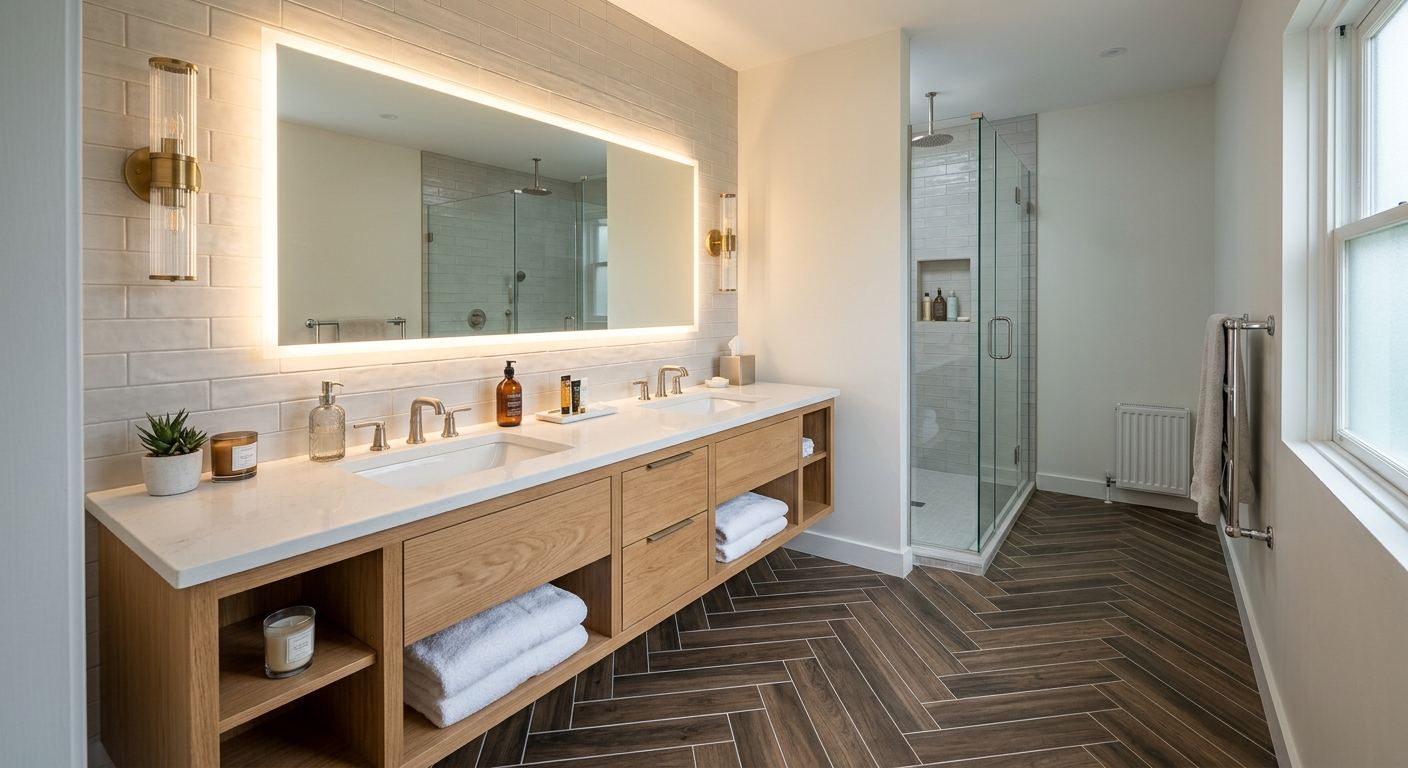
Bathroom renovation options and costs in Falconridge
Bathroom renovations in Falconridge typically start with one of three goals: make the space look newer, make it function better, or do a full gut-and-rebuild. Because Falconridge is part of the Calgary economic region, pricing is closely tied to how old the housing stock is and what’s hidden behind walls—not to winter weather alone. In the Calgary area, a meaningful share of homes were built decades ago, which often means dated plumbing layouts, older drain materials, and the possibility of asbestos-containing materials in older floor tile and drywall compounds (Statistics Canada, 2021 Census). With 10,325 residents in 2021 (Statistics Canada, 2021 Census), the area also has steady contractor demand, so scheduling can tighten during peak renovation months.
Climatically, you don’t “pay more” just because of Alberta winters, but you do see impacts on bathroom performance: bathrooms are high-moisture zones, and correct ventilation and waterproofing matter year-round. In Calgary, many contractors report that a “simple” refresh can expand once walls come open—common drivers include venting upgrades, subfloor or framing repairs, and plumbing rough-in changes to relocate a vanity or improve drainage. That’s why comparing options is easiest when you look at scope, not just fixtures. If your goal is to avoid surprises, use the bands below as a budgeting baseline—then ask your contractor to include discovery/contingency allowances in writing.
Below is a practical comparison of common renovation paths for Falconridge homeowners, based on typical local durations and the mid-range pricing homeowners usually see in Calgary-area projects.
| Renovation Scope |
What's Included |
Typical Duration |
Price Range |
| Cosmetic refresh (paint, fixtures, accessories only) |
Paint, caulking, lighting refresh, tap/handle swap, mirror and accessories, re-sealing around tub/shower |
3–7 days |
$2,500–$7,000 |
| Mid-range full renovation (new tile, vanity, tub/shower, electrical) |
Demo and disposal, vanity and toilet replacement, new wall/floor tile, tub or surround update, exhaust fan upgrade, basic electrical changes (e.g., vanity light, GFCI) |
2–4 weeks |
$15,000–$22,000 |
| High-end full renovation (custom tile, steam shower, heated floors) |
Premium tile and layout, custom shower system (pan/waterproofing), heated floors, designer fixtures, upgraded lighting and ventilation, longer electrical/plumbing coordination |
4–7 weeks |
$22,000–$30,000 |
| Shower-only installation (convert tub to walk-in shower) |
Remove tub, install walk-in shower pan and surround, waterproofing, glass enclosure (where chosen), plumbing rough-in adjustments for drain height and slope |
1.5–3 weeks |
$8,000–$15,000 |
| Bathtub replacement or tub-liner install |
Option A: replace tub, reglaze/replace surround, new drains/trim; Option B: tub-liner system preparation and installation |
2–5 days (liner) or 5–10 days (replace) |
$500–$3,000 |
| Tile-only installation (floor + surround, existing layout kept) |
Tile removal to appropriate substrate, prep, install floor and shower/tub surround tile, sealing and grout/caulk, basic waterproofing at joints |
1–2.5 weeks |
$3,000–$12,000 |
Prices are estimates only and vary by project scope, site access and material selection.
What affects the price of bathroom renovation in Falconridge
In Falconridge, two bids for the same bathroom can still land 30–50% apart because the real work often shifts once contractors remove drywall, tile, and subfloor coverings. Calgary-area labour rates and the age/condition of the local housing stock typically explain more of that swing than weather does. Even in winter, the “cost driver” is usually what’s hidden: older homes commonly have cast-iron or older drain stacks that need replacement or reconfiguration, galvanized supply lines that don’t always play nicely with modern valve cartridges, and ventilation that isn’t up to today’s moisture-control expectations. When ventilation isn’t properly ducted or sized, contractors must open up walls/ceilings to correct airflow—expanding scope quickly.
Older materials can also trigger compliance work. If asbestos is present in vinyl floor tile or related drywall compounds (more common in pre-1985 construction), abatement protocols add both time and labour coordination. Budget increases of about $1,500–$5,000+ aren’t unusual once discovery happens, depending on where the material sits and how far it must be removed. In practical terms, a “tile-only” job that starts in the $3,000–$12,000 band can become a broader renovation closer to mid-range full pricing when subfloor patching and waterproofing repairs are required. Conversely, a straightforward mid-range refresh at $15,000–$22,000 can come in lower if your plumbing layout is already serviceable and the bathroom substrate is solid.
Here are a few Falconridge-specific examples of how local conditions change cost: (1) moving a vanity 12–18 inches often requires drain/supply rough-in and re-venting coordination; (2) large-format porcelain tile can reduce grout lines, but it increases prep demands on an unlevel floor; and (3) older exhaust fans that vent into attic spaces can force duct routing changes, not just fan replacement. Those are the moments where the quote either holds—or expands after demolition.
| Price Factor |
Why It Matters |
Cost Impact |
| Layout change — moving drain or supply lines |
Triggers plumbing rough-in, patching, and sometimes venting/inspection coordination |
Often adds $3,000–$8,000+ |
| Tile selection — large-format porcelain vs. mosaic vs. ceramic |
Different substrate tolerances, cutting complexity, and labour time for pattern alignment |
Typically shifts $1,000–$5,000 |
| Fixture tier — builder-grade vs. mid-range vs. designer brands |
Higher-price fixtures can also increase install complexity (valves, trim styles, custom sizing) |
Often changes $500–$4,000 |
| Subfloor condition — rot or unlevel concrete adds scope |
Correcting slope/flatness is required for tile longevity and proper drainage in showers |
Commonly adds $1,000–$6,000 |
| Electrical — adding GFCI outlets, exhaust fan, heated floor circuit |
May require additional runs, panel coordination, and licensed electrician involvement |
Often adds $800–$4,500 |
| Waterproofing method — membrane type and extent |
Better systems protect against moisture migration and reduce callbacks |
Typically adds $600–$3,500 |
| Older-home surprises — asbestos tile, cast-iron drains, galvanized pipes |
Discovery can change demolition approach and require specialized trades |
Can add $1,500–$10,000+ |
| Bathroom size — sq ft drives tile and labour time directly |
More area increases material quantities, cutting waste, and installation duration |
Often shifts $2,000–$8,000 |
Permits & regulations in Alberta
In Alberta, the permit trigger is less about “renovation” as a word and more about what trades are changing. For most Falconridge homeowners, simple cosmetic updates—like swapping a vanity, replacing a toilet, updating trim/caulking, painting, or retiling with the same layout—often do not require a building permit. Likewise, replacing fixtures in-place (where plumbing connections don’t move) is typically simpler.
Permits are more likely required when you relocate plumbing. That means moving drain or supply locations (for example, changing where a vanity sits, converting a tub to a walk-in shower with a new drain height, or altering shower plumbing valves). Adding or modifying ventilation also matters: upgrading an exhaust fan with new wiring or making changes to duct routing generally crosses into regulated scope. Structural wall changes, significant framing alterations, or any work that affects load-bearing elements also typically requires permits and inspections.
For electrical, anything involving circuits, new outlet additions, heated floor wiring, or adding GFCI protection must follow Alberta electrical code requirements and be done or signed off by a licensed electrician. Homeowners should verify the contractor’s Alberta trade licence (for trades who require it) and confirm liability coverage before any demo starts.
To verify properly, start by requesting the contractor’s licence number and checking it through the relevant provincial registry online. Then ask for a current certificate of insurance and check expiry dates and scope (general liability at minimum; confirm they carry coverage for the work they’ll perform). For workers, ask about WCB/coverage status—don’t rely on verbal confirmation. Finally, request any written clearance letter or coverage proof the contractor can provide, and keep copies with your quote documents.
Choosing tile, waterproofing and fixtures for your Falconridge bathroom
In Falconridge, the three biggest material decisions that shape both budget and long-term performance are tile choice, waterproofing system, and fixture tier. First, tile: entry-level ceramic is usually the lowest-cost option for floors and walls, but it’s more demanding to install correctly if your substrate isn’t perfectly flat. Porcelain tile costs more than basic ceramic, yet it’s denser and typically performs better in high-moisture shower surrounds. Natural stone (marble, travertine, slate) looks premium, but it’s also where labour and finish requirements can add up—sealing, extra care in layout, and careful selection to avoid uneven tones.
Second, waterproofing. In Alberta’s wet/dry bathroom cycles, the “best looking” tile can still fail if the waterproofing details aren’t right. Paint-on membranes are often budget-friendly but are limited in coverage strategy. Bonded sheet membranes and modern systems (including crack isolation details and proper drain transitions) typically offer more robust protection where movement and water exposure occur. A correctly detailed waterproofing system is what reduces mould and soft substrate damage—especially around tub flanges, shower curb corners, and penetrations for valves and showerheads.
Third, fixtures. Builder-grade fixtures keep initial cost down, but mid-range and designer models can improve functionality and resale appeal (finish durability, valve smoothness, and matching trim). A concrete way to budget: if you’re choosing between a basic tile-and-surround package versus heated floors, the price difference can be justified when you’re already doing a full mid-range reno around $15,000–$22,000. Heated floors are often unnecessary for a cosmetic refresh, but they can be a worthwhile upgrade when the floor is already being opened and corrected.
Match the upgrade level to your situation: if your layout is changing, invest in the waterproofing and rough-in quality first; if the layout stays put, you can usually spend more on tile and finishes without inflating plumbing scope.
| Material / Option |
Pros |
Cons |
Price Range |
| Ceramic tile (floor + walls) |
Lower material cost, familiar install methods, good for straightforward layouts |
Can be less forgiving in moisture zones, needs careful grout/caulk detailing |
$3,500–$7,500 |
| Porcelain tile (floor + walls) |
Excellent durability, more moisture-resistant, cleaner look with fewer grout lines |
Premium tile costs more; large-format porcelain demands flatter substrates |
$5,000–$12,000 |
| Natural stone (marble, travertine, slate) |
High-end look, unique veining/texture |
Requires sealing and careful handling; finish selection affects labour time |
$8,000–$18,000 |
| Frameless glass shower enclosure |
Modern appearance, easier visual styling, helps the bathroom feel larger |
Higher upfront cost; accurate framing and waterproofing transitions required |
$1,500–$4,500 |
| Prefab tub surround (acrylic) |
Faster install, lower risk of tile cracking if the budget is tight |
Less customization than tile; styling options can be more limited |
$900–$2,500 |
| Custom shower pan (tile or linear drain) |
Improved accessibility and a premium finish; linear drains support sleek modern design |
More labour and waterproofing detailing; linear drains can increase rough-in time |
$2,500–$8,500 |
How to choose a bathroom renovation contractor in Falconridge
Choosing a bathroom contractor in Falconridge is about confirming they can handle both the visible finish work and the hidden plumbing/waterproofing details. Start with Alberta trade licensing and liability insurance: ask for proof of the correct trade licence for plumbing/electrical-related scope (where applicable) and obtain a current certificate of general liability before work begins. For workers, confirm WCB/WCB coverage (or the contractor’s proof of coverage); don’t accept “we’re covered” without documentation. If a contractor can’t provide paperwork quickly, that’s a red flag—especially when demolition can expose asbestos-containing materials or older wiring issues.
Next, get 2–3 itemised written quotes. You want a labour + materials breakdown, not a single lump sum that hides the real assumptions. Review the scope line-by-line: what’s included in demo and disposal, whether permit fees or permit pulls are included, and what exclusions apply (for example, subfloor replacement if rot is found, or extra electrical changes if the exhaust fan needs new ducting). Make sure waterproofing prep is described—surface prep, membrane or system type, and how transitions are handled around drains and corners.
Warranty matters as much as price. Ask for the workmanship warranty length, whether it’s transferable if you sell your home, and what the manufacturer warranty covers on tile, waterproofing products, and fixtures. Then lock the payment schedule: never pay more than 10–15% upfront, and use a holdback until completion and punch-list items are signed off. Finally, request a written start date and a completion timeline that matches the scope and includes a plan for inspections if plumbing/electrical permits are required.
- Ask for the contractor’s Alberta licence number(s) relevant to the work and verify them before scheduling.
- Confirm general liability insurance and request a certificate of insurance copy.
- Request WCB/WCB coverage proof for the workforce.
- Get 2–3 itemised quotes with labour and material line items (no “allowances only” approach).
- Confirm whether permit pull and inspection fees are included if plumbing/electrical scope changes.
- Ask how disposal is handled (bagged vs. hauled) and whether it’s included in the price.
- Require a written scope for waterproofing: product type, coverage areas, and drain/wall transitions.
- Clarify what happens if subfloor rot, unlevel framing, or cast-iron drain upgrades are discovered.
- Check the warranty: workmanship length, exclusions, and whether it transfers to a new owner.
- Use a payment schedule with a 10–15% maximum upfront deposit and a holdback for completion.
- Get a target start date and realistic completion estimate in writing (and ask about inspection timing).
- Confirm who supplies fixtures and who is responsible if there are delivery delays (common with glass enclosures).
In Falconridge, common red flags include: quotes that are not itemised, missing waterproofing details, no proof of insurance/WCB coverage, unclear permit responsibility, and payment terms asking for large upfront deposits that leave you with little leverage if issues appear after demolition.
Frequently asked questions — bathroom renovation in Falconridge
What's the most common mistake homeowners make in bathroom renovations?
The most common mistake in Falconridge is focusing on surface finishes while under-budgeting hidden scope. Many older Calgary-area homes have drainage or venting details that look “fine” until the walls come down—then rough-in adjustments, subfloor repairs, and ventilation upgrades appear. Another frequent error is choosing tile and fixtures without locking in the waterproofing approach and substrate prep, which can lead to grout cracking or moisture migration. If discovery work triggers asbestos abatement in older materials, the budget can change quickly, so you need contingency. As a guideline, even a mid-range full renovation can start around the $15,000–$22,000 band, but concealed repairs can push timelines and totals upward.
How long does tile installation take in a Falconridge bathroom?
Tile installation time in Falconridge depends on how much prep is required and whether you’re tiling floors, shower walls, or both. For a typical bathroom where the layout stays the same, tile work often takes about 5–10 working days. That timeframe assumes the substrate is properly prepared and the waterproofing plan is already in place (membrane, correct slope, and allowed cure times). If the floor needs flattening, if patterns are complex, or if shower plumbing penetrations require extra layout work, it can stretch closer to two-plus weeks for full scope. The key is scheduling—your contractor should coordinate tile delivery and allow for curing between waterproofing layers and grout.
How much does a bathroom renovation cost in Falconridge?
For Falconridge homeowners, pricing usually fits within the local Calgary-area bands driven by labour and hidden scope. Cosmetic refresh projects can start in the low end, but full renovations commonly land in the mid to high five figures. A mid-range full renovation with new tile, vanity, tub/shower and electrical often falls around $15,000–$22,000, while higher-end work with custom features (heated floors, premium tile, steam-style shower systems) commonly moves into the $22,000–$30,000 range. If you’re only converting a tub to a walk-in shower, many projects fall around the $8,000–$15,000 band. The best budgeting move is to assume an older home and plan for concealed repairs after demolition.
How long does a bathroom renovation take in Falconridge?
Typical bathroom renovation timelines in Falconridge are often shorter than homeowners expect, but they can lengthen when hidden repairs are discovered or when permits/inspections are required. Cosmetic updates can be as quick as 3–7 days. Tile-inclusive mid-range full renovations commonly take 2–4 weeks when plumbing/electrical details stay straightforward. Higher-end projects with heated floors, custom shower systems, and premium finishes can be 4–7 weeks. Shower-only conversions (tub-to-walk-in) often land around 1.5–3 weeks. Your timeline should include waterproofing cure times and the inspection window if plumbing/electrical scope changes—good contractors put this in writing.
Do I need a permit for a bathroom renovation in Alberta?
In Alberta, you often do not need a permit for purely cosmetic changes—like replacing fixtures in place, painting, accessories, or retiling without changing plumbing locations. However, permits are commonly required when you relocate plumbing (moving drain/supply lines), add or modify ventilation where wiring/duct routing changes, or make structural changes to walls. Electrical scope that involves new circuits, outlets, heated floor wiring, or adding/altering GFCI protection typically requires a licensed electrician and may require permits depending on the exact work. In Falconridge, the fastest way to confirm is to provide your contractor with a clear scope and ask them directly which items trigger permits and inspections before work starts. Always request the permit responsibility in the written quote.
What's the best tile for a bathroom in Falconridge?
“Best” depends on how you’re using the bathroom and your tolerance for maintenance. For most Falconridge bathrooms, porcelain is a top choice because it’s durable, moisture-resistant, and performs well in shower surrounds when paired with the right waterproofing system. Ceramic can work well too, but it’s generally better for lower-impact areas or when your substrate is perfectly prepared. Natural stone can be beautiful and premium, but it adds cost and usually requires sealing and careful selection to avoid uneven finishes. Regardless of tile type, the long-term win in Alberta is correct substrate prep, a proper waterproofing membrane, and meticulous detailing at corners and penetrations. If you’re targeting a mid-range reno near $15,000–$22,000, porcelain often gives the best balance of look, performance, and realistic installation time.