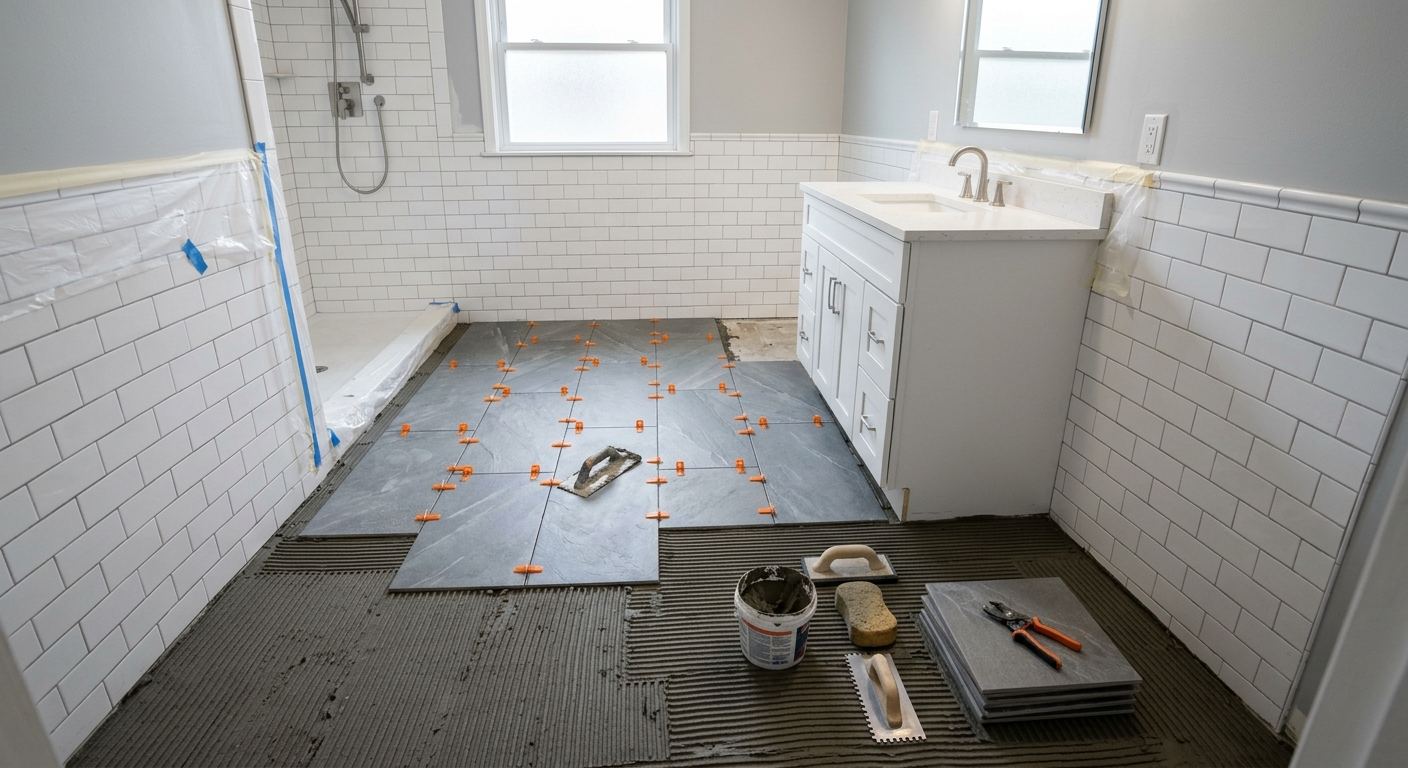
Bathroom renovation options and costs in Highwood
Bathroom renovation in Highwood is mainly about choosing the right upgrade path for your home’s age and condition—because many houses here are older and the work is rarely “just cosmetic.” In Highwood, the total population is 2,205 (Statistics Canada, 2021 Census), which supports a smaller pool of trades compared with Calgary proper, so scheduling can be tighter during peak spring and summer. Equally important, the Calgary area’s housing stock often means dated plumbing layouts and aging drains behind finished walls; in older homes across the region, it’s not uncommon to find cast-iron or galvanized plumbing and, in some cases, asbestos-containing materials in older floor tile or drywall compound.
Calgary-area costs are shaped more by local labour rates and the hidden condition of existing bathrooms than by climate alone. Alberta’s freeze–thaw cycles and winter heating habits don’t usually increase labour the way older infrastructure does, but they do make air movement and ventilation critical. If your bathroom shares walls with older exterior framing, or if the fan ducting is short/poorly routed, moisture can linger and add time to correct the ventilation and waterproofing details before tile goes back in.
In Highwood, trade demand is especially noticeable around the community core where older bungalow-style homes are concentrated and owners frequently coordinate simultaneous interior updates. From there, most homeowners compare a cosmetic refresh versus a true full renovation—so below is a practical range of options and budgets to help you plan.
| Renovation Scope |
What's Included |
Typical Duration |
Price Range |
| Cosmetic refresh (paint, fixtures, accessories only) |
New vanity or faucet, toilet/sink hardware, paint, accessories, caulking and minor repairs; no structural or rough-in moves |
3–6 days |
$2,500–$6,000 |
| Mid-range full renovation (new tile, vanity, tub/shower, electrical) |
Demo and disposal, new waterproofing and tile (floor + surround), vanity/lighting, tub or pre-built shower system, exhaust fan and GFCI outlet, basic plumbing refresh |
2–4 weeks |
$15,000–$23,000 |
| High-end full renovation (custom tile, steam shower, heated floors) |
Custom layout adjustments (as needed), designer tile detailing, heated floors, higher-end fixtures, upgraded waterproofing system, electrical upgrades, niche/shelves, frameless or upgraded enclosure |
4–6+ weeks |
$23,000–$30,000+ |
| Shower-only installation (convert tub to walk-in shower) |
Demo tub, plumbing reroute if needed, waterproofing and tile or shower pan, glass enclosure, new drain and controls, ventilation check |
2–4 weeks |
$8,000–$15,000 |
| Bathtub replacement or tub-liner install |
Replace tub and refinish surrounds (or liner installation), new caulking/trim, basic leak checks; limited tile work if liner is chosen |
3–8 days |
$500–$3,000 |
| Tile-only installation (floor + surround, existing layout kept) |
Tile removal and re-set, new waterproofing and backer/patches as required, grout/caulking; vanity and fixtures typically reused |
1–3 weeks |
$3,000–$12,000 |
Prices are estimates only and vary by project scope, site access and material selection.
What affects the price of bathroom renovation in Highwood
Two homeowners in the same Calgary economic region can receive quotes that differ by 30–50% for what sounds like the same job. The biggest drivers are regional labour rates and the age/condition of the housing stock—particularly what’s hiding behind the walls and under the floor. In Highwood and nearby towns, many bathrooms are in older homes where drains may be cast-iron, supply lines can be galvanized, and ventilation ducting is often undersized or poorly routed. When walls open, that concealed scope triggers additional rough-in work, patching, and trade coordination.
It’s also why “basic” budgets can slide upward. In older homes (especially pre-1985 builds), discovery of asbestos in vinyl floor tile or old drywall compound can require abatement protocols. That can add roughly $1,500–$5,000+ depending on the extent of materials disturbed and how much containment is needed. Meanwhile, if you’re aiming for mid-range renovations (often landing in the $15,000–$23,000 range), you may still find that plumbing venting upgrades or subfloor leveling are the difference between a predictable schedule and a longer one.
Concrete examples I see locally: (1) moving a vanity from one wall to another can mean relocating supply lines and adding time for waterproofing detailing around new penetrations; (2) switching from smaller ceramic tiles to large-format porcelain can increase labour because of layout time, substrate flatness requirements, and higher waste rates; (3) replacing an exhaust fan with ducted venting often costs less if wiring and duct runs are already accessible, and more if the contractor has to open soffits or ceiling spaces.
Even climate-related issues are usually “indirect.” Alberta’s moisture control depends on proper waterproofing and ventilation, but the cost jump is usually tied to fixing how the existing bathroom was originally built—not the outdoor weather forecast.
| Price Factor |
Why It Matters |
Cost Impact |
| Layout change — moving drain or supply lines |
Requires rough-in work, patching, and new waterproofing details around fresh penetrations |
Can add $3,000–$8,000 |
| Tile selection — large-format porcelain vs. mosaic vs. ceramic |
Different thicknesses, cutting complexity, and tolerance for substrate flatness |
+$500–$5,000+ |
| Fixture tier — builder-grade vs. mid-range vs. designer brands |
Material and trim complexity; some require more precise installation and controls |
+$500–$6,000 |
| Subfloor condition — rot or unlevel concrete adds scope |
May require full removal, rebuilding, and more waterproofing prep |
+$1,500–$7,000 |
| Electrical — adding GFCI outlets, exhaust fan, heated floor circuit |
Licensed electrical work and potential circuit upgrades increase labour and scheduling |
+$800–$4,500 |
| Waterproofing method — membrane type and extent |
Better systems typically cost more but reduce long-term moisture and failure risk |
+$500–$3,500 |
| Older-home surprises — asbestos tile, cast-iron drains, galvanized pipes |
Abatement, disposal, and plumbing upgrades expand the demolition and rough-in scope |
+$1,500–$10,000+ |
| Bathroom size — sq ft drives tile and labour time directly |
Larger areas mean more tile, thinset, labour hours, and longer curing/return-to-install windows |
Varies; often $2,000–$8,000 difference |
Permits & regulations in Alberta
In Alberta, not every bathroom update needs a permit, but the line usually comes down to whether you’re altering plumbing, electrical, or structural elements. Cosmetic updates—like swapping a vanity, replacing fixtures, repainting, and retiling with the same layout—often typically do not require permits. However, in Highwood, projects frequently uncover “hidden” work that does trigger permitting, especially in older homes.
Work that typically DOES require a permit and inspection includes: relocating plumbing (moving drain and/or supply lines, changing venting configurations), adding or altering exhaust fan ducting that involves electrical connections, and any structural wall changes or modifications. Electrical work must comply with provincial electrical code and be completed or signed off by a licensed electrician. Heated-floor installs also generally involve electrical permitting/inspection depending on how the circuit is added and how it’s connected.
Step-by-step for homeowners: (1) request the contractor’s Alberta trade licence number and verify it on the provincial registry; (2) ask for a certificate of liability insurance and confirm the coverage is active and sufficient for renovations; (3) request proof of coverage relevant to worker protection (WSIB/WCB coverage) and ensure the certificate matches the contractor’s legal name; (4) if the contractor offers sub-trades (electrician/plumber), ask for their licence/coverage details too; (5) keep a copy of all documents before work starts.
Finally, confirm whether permit pulling is included in the quote, and if not, who is responsible. This avoids delays when discovery work expands the scope.
Choosing tile, waterproofing and fixtures for your Highwood bathroom
For bathroom renovations in Highwood, your budget is mostly shaped by three material decisions: tile type, waterproofing approach, and fixture tier. First, tile choice affects both cost and installation complexity. Entry-level ceramic is usually the most budget-friendly, but it can be more demanding on substrate preparation and may be less forgiving in high-traffic splash zones. Mid-range porcelain is denser, often more consistent in size and water resistance, and typically performs well in the wet areas of an Alberta bathroom when installed correctly. Natural stone (marble, travertine, slate) can look stunning, but it usually requires more labour for layout, sealing, and careful attention to finishing details.
Second is waterproofing—this is where Alberta homeowners should be most disciplined. In practice, the risk to your bathroom isn’t “outdoor humidity,” it’s how water is managed behind the walls. A proper bonded sheet membrane (often paired with compatible thinset and system details) can outperform paint-on membranes in critical stress points. Schluter-style systems and equivalent methods can also help standardize the transitions, reducing failure risk around corners and niches.
Third, fixture tier influences both upfront cost and long-term satisfaction. Builder-grade fixtures can be economical, while mid-range or designer brands often improve flow, finish durability, and installation tolerances. A practical example: upgrading from basic ceramic tile to porcelain might add $1,500–$4,000 to a mid-range renovation, and that’s usually justified when you’re doing a full tile reset (not just a small patch). But if you’re staying with a limited tile-only scope, that upgrade may not be as compelling as investing in a higher-grade waterproofing system and better ventilation.
Match materials to the realities of Highwood homes: older framing, occasional subfloor unevenness, and moisture control needs. The right combination protects your renovation, not just your finish.
| Material / Option |
Pros |
Cons |
Price Range |
| Ceramic tile (floor + walls) |
Lower material cost, wide style options, good for budget refreshes with proper prep |
Can be less durable than porcelain in heavy use; more sensitivity to substrate flatness |
$3,000–$6,500 |
| Porcelain tile (floor + walls) |
More moisture resistant, consistent sizing for cleaner layouts, excellent for tub/shower surrounds |
Material can cost more; requires accurate leveling for large formats |
$6,000–$12,000 |
| Natural stone (marble, travertine, slate) |
Premium look, unique patterning, high resale appeal |
More expensive, needs sealing/maintenance, higher labour for templating and finishing |
$10,000–$20,000 |
| Frameless glass shower enclosure |
Modern look, easier to clean than heavy frames, improves perceived space |
Higher hardware cost, requires precise measurements and stable framing |
$2,000–$5,500 |
| Prefab tub surround (acrylic) |
Fast installation, fewer grout joints, easier maintenance |
Less “custom” look; may not align with every tile aesthetic or budget plan |
$500–$3,000 |
| Custom shower pan (tile or linear drain) |
Superior drainage design, sleek linear options, can integrate with premium waterproofing systems |
More labour and waterproofing detail; relies on correct subfloor preparation |
$3,500–$12,000 |
How to choose a bathroom renovation contractor in Highwood
Choosing the right bathroom renovation contractor in Highwood is mostly about verification and clarity. Start with Alberta licensing and coverage: ask for the contractor’s Alberta trade licence details (and confirm them via the provincial online registry), then request a certificate of liability insurance showing active coverage. For jobsite protection, ask for WSIB/WCB coverage confirmation for workers—have the contractor provide documentation with the correct legal name. If they use subcontractors for plumbing or electrical, ask for the same checks for those trades.
Next, get 2–3 itemised written quotes—not lump sums. The best quotes break down labour and materials so you can compare like-for-like: demolition and disposal, waterproofing method, tile installation, glass/enclosure supply, electrical scope, and plumbing rough-in allowance. Read the scope line-by-line for exclusions: “permit included,” “disposal included,” “subfloor repairs included,” and “any asbestos discovery allowance included.” If asbestos or other concealed conditions are possible, a good contractor will show how they handle discovery and how that affects schedule.
Warranty matters too. Confirm workmanship warranty length (typically covering installation defects), product/manufacturer warranties for fixtures/tile systems, and whether warranties are transferable to you as homeowners. For payment scheduling, avoid large deposits—never more than 10–15% upfront—and request a holdback (often tied to completion and punch-list items). Finally, get a written start date and completion estimate, including how delays from fixture lead times are communicated.
- Licence and insurance documents provided before signing
- Itemised labour vs materials breakdown
- Explicit waterproofing method and who supplies the membrane system
- Confirmation whether permit pulling is included
- Disposal and dump fees listed
- Allowance lines for tile, fixtures, and any plumbing adjustments
- Schedule that includes cure times for waterproofing and tile
- Clear scope on subfloor repair and leveling
- Photos/portfolio of similar Highwood-area renovations
- Warranty terms in writing (workmanship + product)
- Payment schedule with holdback tied to punch-list completion
- Site protection plan (tarps, dust control, toilet protection) during demo
In Highwood, common red flags include quotes that are unusually low with no hidden-scope allowances, “we’ll figure permits later” language, vague waterproofing descriptions, missing insurance/licence documentation, and payment requests that ask for more than 10–15% upfront without a signed schedule and scope.
Frequently asked questions — bathroom renovation in Highwood
How much does a bathroom renovation cost in Highwood?
In Highwood, most homeowners budget based on the condition of an older bathroom rather than the calendar. A cosmetic refresh typically starts in the low five figures—often around $2,500–$6,000—if plumbing locations don’t change. If you’re planning a mid-range full renovation with new tile, a tub/shower update, and electrical for a fan/GFCI, many projects land around $15,000–$23,000. High-end custom work (heated floors, steam-style upgrades, premium tile details) can push into the upper end of the $23,000–$30,000+ territory. Quotes can vary widely because older homes may need plumbing venting upgrades, subfloor repairs, or (in some pre-1985 cases) asbestos abatement—costs that only appear once walls open. (Statistics Canada, 2021 Census)
How long does a bathroom renovation take in Highwood?
Typical timelines in Highwood depend on whether you’re changing the layout. A cosmetic refresh is usually fast—about 3–6 days—because it focuses on paint and swapping fixtures without rough-in work. Mid-range full renovations commonly take 2–4 weeks, while shower-only conversions (tub-to-walk-in) are often 2–4 weeks once demolition and waterproofing are done correctly. High-end projects can run 4–6+ weeks due to custom tile detailing, heated floor electrical coordination, and glass/enclosure lead times. Older housing stock can add time if cast-iron drain sections, supply lines, subfloor leveling, or venting upgrades are discovered after demo. The best contractors schedule return visits that account for waterproofing cure time and grout set time, not just “construction hours.”
Do I need a permit for a bathroom renovation in Alberta?
Often you do not need a permit for purely cosmetic changes in Alberta—like replacing a vanity, updating lighting, re-caulking, or retiling without moving plumbing. But you should expect permitting when you relocate plumbing (moving drain/supply lines or changing venting), add/modify electrical circuits (like new exhaust fan wiring or heated floor circuits), or make structural changes to walls. In practical Highwood bathroom renovations, many projects trigger permits because owners choose to update ventilation and improve the shower/tub layout. Your contractor should explain exactly which tasks require a permit and confirm whether permit pulling is included in the quote. Before work starts, verify the contractor’s Alberta licence (via the provincial registry), and confirm liability insurance and WSIB/WCB coverage documents match their legal name.
What's the best tile for a bathroom in Highwood?
“Best” depends on how your shower and floor are built. For most Highwood bathrooms, porcelain is a strong choice because it’s dense, moisture resistant, and performs well in tub/shower surrounds when installed over properly prepared substrates. Ceramic can work for budget-friendly projects and smaller areas, but porcelain generally offers more consistent durability and sizing for a cleaner finish. Natural stone looks premium, but it requires extra labour and sealing/maintenance, so it fits best when you’re investing in a higher-end renovation. The bigger determinant than tile type is waterproofing quality and substrate flatness—especially with large-format porcelain. If your renovation budget is tight, prioritize the waterproofing system and correct prep first, then choose the best tile that fits your scope.
Should I do a tub-to-shower conversion?
A tub-to-shower conversion is often a smart move for accessibility, faster day-to-day cleaning, and making the bathroom feel more modern. In Highwood homes, it also helps if the tub area has persistent caulking leaks or if the layout allows a more efficient shower configuration with proper slope and drainage. Cost-wise, many conversions land in the $8,000–$15,000 band because demolition, waterproofing, and sometimes drain/supply adjustments are involved. Whether it’s “worth it” depends on how much you’d spend otherwise: if you were already planning a tub replacement and surround refresh, the conversion can be close in total cost while improving usability. A good contractor will confirm ventilation and waterproofing details and explain any plumbing reroute needs uncovered during demo.
How do I prevent mold in a Highwood bathroom?
Mold prevention is mostly about managing water and drying time. Start with correct waterproofing in wet areas: proper membrane coverage behind tile and correct sealing at corners, niches, and all penetrations. Next, ensure ventilation is adequate—an exhaust fan ducted correctly is often more important than homeowners realize, especially in older bathrooms where duct runs were short or fans were never upgraded. Use water-resistant materials where appropriate and keep caulking in good shape; failure at grout/caulk joints can let moisture migrate behind finishes. If you’re renovating in an older Highwood home, include a plan for ventilation and substrate prep rather than treating mold as a “surface problem.” Regularly verify the fan runs long enough and that the bathroom dries between showers. With the right waterproofing and ventilation upgrades, you can significantly reduce the conditions mold needs to take hold.