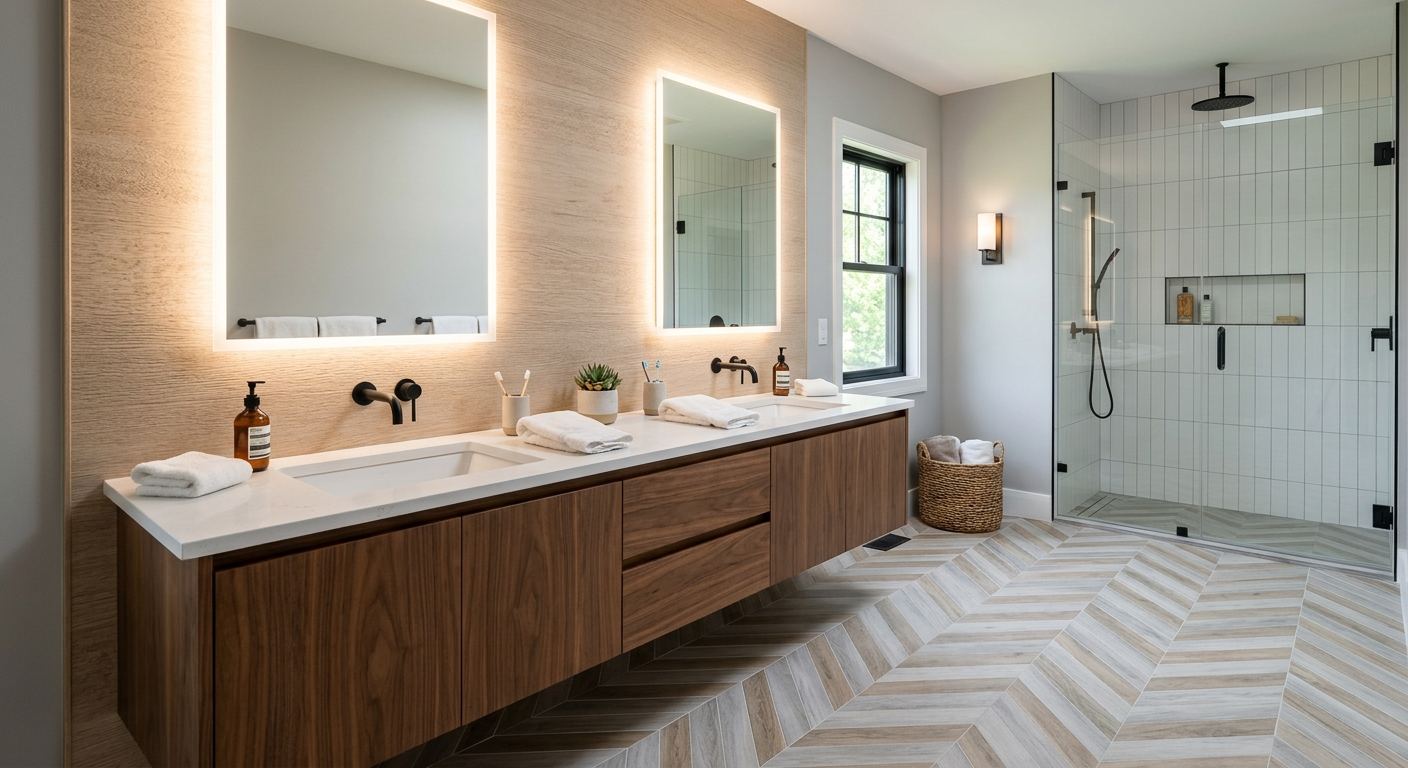
Bathroom renovation options and costs in Rio Terrace
Bathroom renovation options in Rio Terrace, Alberta, vary widely because most homes here aren’t “new construction”—and the local housing mix matters. In the Calgary economic region, the population is 1,305 (Statistics Canada, 2021 Census), and that smaller local market typically means contractors are scheduling around projects across the Calgary orbit rather than turning over crews every day. In practice, Rio Terrace renos often start in older homes where plumbing layouts are dated, drains can be cast-iron, and floor/tub surrounds may include materials that need careful removal. Even when a homeowner thinks it’s a simple refresh, opening walls can uncover hidden scope like venting upgrades, subfloor repairs, or older wiring that wasn’t built with today’s bathroom exhaust and GFCI expectations.
Calgary-area pricing is also influenced more by local labour rates and the age/condition of the housing stock than by climate alone. That said, Alberta winters and freeze–thaw conditions make ventilation and moisture control non-negotiable. Contractors in demand around established residential corridors (including the communities connecting into Calgary’s northeast corridor) often have tighter availability windows, which can affect turnaround times and scheduling costs. When labour and coordination are layered on top of hidden plumbing or waterproofing repairs, a “refresh” can become a remodel.
Below are common project tiers homeowners use to budget realistically before a site visit confirms what’s behind the walls.
| Renovation Scope |
What's Included |
Typical Duration |
Price Range |
| Cosmetic refresh (paint, fixtures, accessories only) |
Paint, new vanity or faucet, toilet swap (no rough-in changes), lighting refresh, accessories (towel bars, mirror) |
3–7 days |
$5,000–$9,000 |
| Mid-range full renovation (new tile, vanity, tub/shower, electrical) |
Demo and disposal, waterproofing, new tile floor and surround, new vanity, tub/shower base, exhaust fan upgrade, updated lighting, basic electrical |
2–3 weeks |
$18,000–$24,000 |
| High-end full renovation (custom tile, steam shower, heated floors) |
Custom waterproofing system, large-format tile or designer layouts, steam/thermostatic shower components, heated floor circuit and finishes, premium fixtures |
3–5 weeks |
$25,000–$38,000 |
| Shower-only installation (convert tub to walk-in shower) |
Remove tub, build shower pan and curb/threshold as required, waterproofing, glass/door or curtain track, new valve trim, tile surround |
2–4 weeks |
$12,000–$18,000 |
| Bathtub replacement or tub-liner install |
Replace with alcove tub (or liner where suitable), re-caulk/seal, update trim and faucet connection, limited tile touches at transitions |
2–5 days |
$1,200–$3,800 |
| Tile-only installation (floor + surround, existing layout kept) |
Tile removal and re-set, waterproofing refresh, new floor tile and wall surround, grout/seal, reinstallation of existing vanity where feasible |
1–2 weeks |
$6,500–$14,000 |
Prices are estimates only and vary by project scope, site access and material selection.
What affects the price of bathroom renovation in Rio Terrace
Homeowners in Calgary and across Alberta often see quotes for the “same” bathroom that differ by 30–50%. The reason usually isn’t the weather—it’s that bathroom labour is schedule- and skill-dependent, and older housing stock hides extra scope once the walls and floor come apart. In many Rio Terrace homes, pricing rises because concealed drain stacks (including cast-iron sections), galvanized or older supply lines, and weak or undersized ventilation all need attention to meet modern performance expectations. That’s why a renovation that starts with a mid-range tile and vanity plan can quickly move toward a full renovation once rough-in changes are required.
Older-home surprises also affect cost dollars fast. For instance, asbestos-containing materials can be present in certain older floor tiles or related products used around bathrooms. If discovery happens after demolition, professional abatement protocols can add about $1,500–$5,000+ depending on what’s found and how much needs containment. Similarly, if electrical needs evolve—like adding a properly placed GFCI outlet and upgrading the exhaust fan circuit—labour and coordination increase, particularly during peak contractor availability.
Two concrete Rio Terrace examples I see often: (1) moving a shower valve or relocating a drain changes the rough-in scope and usually pushes the job toward a shower conversion budget (often in the $8,000–$15,000 shower installation band), and (2) large-format porcelain tile may look cleaner and last longer, but it increases subfloor prep time when the slab or subfloor isn’t perfectly flat—so your “tile-only” plan can drift into full-reno territory (commonly $15,000–$30,000 for a full bathroom) when repairs are unavoidable.
| Price Factor |
Why It Matters |
Cost Impact |
| Layout change — moving drain or supply lines |
Requires rough-in work, patching, and more time for plumbing coordination |
Often adds thousands; can shift a refresh toward a mid-range or full renovation |
| Tile selection — large-format porcelain vs. mosaic vs. ceramic |
Material cost plus extra labour for flatness, cutting and layout |
Typically adds $1,000–$6,000 depending on size and pattern complexity |
| Fixture tier — builder-grade vs. mid-range vs. designer brands |
Higher-end valves, trims, and toilets raise material totals and sometimes install time |
Commonly shifts project by $2,000–$8,000 |
| Subfloor condition — rot or unlevel concrete adds scope |
Waterproofing demands a sound, level substrate; repairs must match system specs |
Can add $1,500–$7,000+ if extensive |
| Electrical — adding GFCI outlets, exhaust fan, heated floor circuit |
Code-compliant placement and permit/inspection timing affects schedule |
Often adds $800–$4,500+ |
| Waterproofing method — membrane type and extent |
Proper membrane coverage and detailing prevent failures and callbacks |
Can add $500–$3,000 depending on system and complexity |
| Older-home surprises — asbestos tile, cast-iron drains, galvanized pipes |
Discovery triggers remediation and/or pipe replacement and extra demo |
Often adds $1,500–$5,000+ (and more if plumbing is extensive) |
| Bathroom size — sq ft drives tile and labour time directly |
More wall/floor area means more labour, materials, and drying/set time |
Typically moves project totals by $2,000–$10,000 |
Permits & regulations in Alberta
In Alberta, not every bathroom update needs a permit, and it’s important to separate “cosmetic” from “infrastructure.” In general, cosmetic updates—like swapping a vanity, changing lighting fixtures, replacing a toilet with like-for-like, repainting, and re-caulking—typically do not require permits. Likewise, if you’re installing fixtures without moving plumbing connections, you’re usually keeping the work in the lower-risk bucket.
Permits and inspections are typically required when you relocate plumbing or modify structural conditions. That means moving a drain or supply line for a new shower location, replacing an internal rough-in valve with relocation, or changing wet-wall framing/structural wall elements to accommodate new plumbing. For electrical, anything that adds or changes circuits—like installing a new exhaust fan with a new circuit, adding heated floor wiring, or adding/relocating GFCI protection—must be completed or signed off by a licensed electrician and meet provincial code requirements. Plumbing rough-in changes also commonly require a permit and inspection before covering walls or floors.
For homeowners in Rio Terrace, verify in this order: (1) request the contractor’s Alberta trade licence details (and ensure it matches the scope), (2) ask for a certificate of liability insurance—confirm it covers renovations and is current, and (3) confirm required worker coverage documentation through WSIB/WCB where applicable. Look for clearance/coverage letters directly from the carrier or insurer and keep copies with your contract. If a contractor can’t provide these documents promptly, that’s a major warning sign before you sign a contract.
Choosing tile, waterproofing and fixtures for your Rio Terrace bathroom
In Rio Terrace bathrooms, three choices tend to drive both quality and budget: tile, waterproofing, and fixture tier. First, tile choice changes more than appearance. Entry-level ceramic is usually the most budget-friendly, but it can be more forgiving to install when you’re not pursuing the flattest, most demanding finish. Porcelain is denser and often better for wet locations, and natural stone looks premium but can require additional finishing and careful sealing/maintenance. Second, waterproofing method determines whether your renovation stays mould-free through Alberta’s cycles of drying and cold-to-warm temperature swings. A paint-on membrane can be suitable for some applications, but shower systems typically benefit from robust bonded sheet membranes or engineered systems designed for tile assemblies. Third, fixture tier affects both the sticker price and how smoothly the installation goes: builder-grade trims are straightforward, mid-range often improves parts quality and longevity, and designer systems may require more precise rough-in and higher material totals.
In the Calgary market, a common value strategy is to spend where it prevents problems: a well-matched waterproofing system and correct substrate prep often deliver better long-term value than upgrading every visible surface. For example, if your “full renovation” target is in the $15,000–$30,000 band, spending more on porcelain tile ($3,000–$12,000 for tile installation depending on scope) and investing in a proper waterproofing build can be justified, while overspending on high-end hardware in a small bathroom sometimes doesn’t deliver proportional resale lift. If you’re converting to a walk-in shower, the waterproofing and pan build are the non-negotiables that keep costs predictable in the $8,000–$15,000 shower installation range.
| Material / Option |
Pros |
Cons |
Price Range |
| Ceramic tile (floor + walls) |
Great budget balance, easy to source, good coverage for typical layouts |
Not as dense as porcelain; requires careful selection for wet-floor use |
$3,000–$7,000 |
| Porcelain tile (floor + walls) |
Durable in wet areas, consistent colours, often ideal for clean grout lines |
More expensive tile and may demand extra subfloor prep for large formats |
$6,000–$12,000 |
| Natural stone (marble, travertine, slate) |
Premium look and unique character; strong style impact |
Sealing/maintenance, variation in material, and higher installation complexity |
$10,000–$18,000 |
| Frameless glass shower enclosure |
Modern appearance, easier cleaning than framed units, improves perceived space |
Higher material cost; precise measurements required |
$2,500–$6,000 |
| Prefab tub surround (acrylic) |
Fast install, fewer tile grout joints, good for budget-controlled timelines |
Less custom look; seams and finishes may not match high-end tile aesthetics |
$700–$2,500 |
| Custom shower pan (tile or linear drain) |
Best “spa” look and functionality; linear drains improve water management |
Higher labour and waterproofing detailing; requires perfect framing and slope |
$3,500–$10,000 |
How to choose a bathroom renovation contractor in Rio Terrace
Choosing the right contractor in Rio Terrace comes down to verifying credentials, comparing like-for-like scopes, and managing risk. Start by confirming Alberta licensing for the trades involved in your scope—then verify liability insurance coverage (and that it’s current). For worker coverage, confirm WSIB/WCB status where applicable; reputable contractors can provide documentation without delays. Ask for proof before you book materials or demolition.
Next, request 2–3 itemised written quotes. Look for a breakdown that separates labour from materials, and that clearly lists what is included for demo, disposal, waterproofing, tile setting, electrical rough-in, and ventilation upgrades. Avoid lump sums without scope detail—bathroom renovations often shift once walls open, but a good contractor should explain allowances and contingencies upfront (especially for concealed plumbing and subfloor repairs common in older Calgary-region housing stock).
Read exclusions line-by-line: permit pull included or not, disposal included or not, and whether asbestos abatement is covered under a specific allowance if materials are discovered. For warranties, confirm workmanship warranty length and whether product warranties are direct-manufacturer. Ask if the warranty is transferable to future owners (important for resale in Alberta’s active market). Payment schedule matters: never pay more than about 10–15% upfront; hold back until key stages complete. Finally, get a start date and completion estimate in writing so delays don’t become a cost leak.
- Verify Alberta trade licence details match the exact scope (plumbing/electrical involved trades where required).
- Request current certificate of liability insurance and keep it with your contract paperwork.
- Confirm WSIB/WCB coverage documentation for workers (clearance letters if applicable).
- Get 2–3 itemised quotes (labour + materials) rather than lump sums.
- Ensure permit pull and inspections are clearly stated (who applies, who pays, which inspections).
- Confirm disposal of old fixtures/tile is included.
- Ask how waterproofing is done and what system is being used (membrane type and coverage).
- Confirm tile subfloor prep requirements and who handles any subfloor repairs.
- Confirm electrical scope includes GFCI and exhaust fan upgrades where needed.
- Check the warranty: workmanship duration, product warranty details, and transferability.
- Review payment schedule—no more than 10–15% upfront; holdback until substantial completion.
- Get a written timeline with milestones (demo, rough-in, tile, finish, final)
In Rio Terrace, watch for red flags like: quotes that avoid mentioning waterproofing methods, “allowance” pricing that’s too vague to compare, contractors who won’t provide insurance/licence proof in writing, no written warranty terms, and plans that don’t address concealed-scope risk (plumbing venting, subfloor repairs, or older wiring concerns) once demo starts.
Frequently asked questions — bathroom renovation in Rio Terrace
How do I compare bathroom renovation quotes?
Start by comparing like-for-like scopes, not just the bottom-line total. Ask each Rio Terrace contractor to itemise labour and materials (tile supply and labour, waterproofing system, shower pan build, exhaust fan/electrical, and disposal). Make sure permit pull responsibility is clearly stated—especially if you’re moving plumbing or adding a new exhaust fan circuit. If one quote includes a waterproofing membrane and another just says “waterproofing,” assume those are not equivalent. Also compare allowances: fixture brands and tile grades can change quickly once you select colours in a Calgary-region market. Finally, sanity-check cost against common bands: a cosmetic refresh is typically much lower than a full renovation, and shower conversions commonly land in the $8,000–$15,000 range depending on valve changes and tile complexity. (Statistics Canada, 2021 Census)
Can I live at home during a bathroom renovation in Rio Terrace?
Often yes, but it depends on how invasive the work is. In Rio Terrace, many homeowners can stay in the home if the renovation is a “limited room” plan where plumbing remains in place and the project can be staged. However, once demo starts and walls/floor are opened for waterproofing and rough-in inspection, the bathroom may be unusable for at least the tile/wet-area phase. If you’re doing a full bathroom in the $15,000–$30,000 band, plan for several disruption-heavy days while demolition, plumbing, electrical, membrane work, and curing happen. If you’re converting a tub to a walk-in shower, drying and flood-test/inspection steps can extend bathroom downtime. The practical approach is to set up a temporary routine (alternate sink, portable toilet if needed) and confirm daily site protection so dust stays controlled.
What's the best bathtub material for a Rio Terrace home?
For most Calgary-region homes, acrylic tubs and quality fiberglass/solid-surface units are popular because they install cleanly and are relatively lightweight—helpful when you’re working around older framing and subfloor conditions. If you’re aiming for durability and easier long-term maintenance, a properly fitted acrylic alcove tub is often a strong choice. That said, if your bathroom is older and the plumbing rough-in needs upgrades or the surround is failing, the “best” material becomes the one that matches your waterproofing plan and transitions. Replacing a tub typically fits the $500–$3,000 fixture replacement band, but your true total may increase if access reveals cast-iron drain segments, older supply lines, or subfloor repairs. In short: choose the tub material that your installer can seat and seal correctly—not just the look.
Is it worth renovating a bathroom before selling in Rio Terrace?
It can be worth it, but only when you align the renovation with what buyers in the Calgary economic region will value: clean waterproofing, updated ventilation, and modern finishes. In an older housing stock, a bathroom that functions reliably (no fan issues, no recurring grout/mould problems, no loose fixtures) tends to score better than one that’s “pretty” but has hidden moisture risks. A cosmetic refresh can improve appearance quickly, but if your plumbing or venting is dated, buyers may treat it as a future expense. If you’re considering a full renovation in the $15,000–$30,000 range, focus first on the wet-area reliability—waterproofing and waterproof detailing—then on tile and fixture updates. A full conversion or a shower upgrade can also be attractive, but only budget it if you’re comfortable with schedule and potential concealed-scope work once walls open. (Statistics Canada, 2021 Census)
How do I plan a bathroom renovation on a tight budget in Rio Terrace?
On a tight budget in Alberta, you’ll usually get the best outcome by doing targeted work and keeping the layout steady. Choose a cosmetic refresh path if your plumbing and waterproofing are sound: paint, vanity/faucet, lighting, and accessory upgrades can be a meaningful lift. If you need wet-area performance, prioritise waterproofing and ventilation before you upgrade everything visible. For example, if you’re working around a tub and the surround is worn, consider a bathtub replacement or a tub-liner approach within the $500–$3,000 fixture band only if the surfaces behind the liner are in good condition. For tile, keep the scope realistic: a tile-only plan can be cost-effective when the subfloor is flat and stable, while large-format upgrades and custom shower pans can quickly raise totals toward mid-range or full renovation. Build a contingency for concealed repairs common in older homes—hidden plumbing venting, subfloor patches, or electrical updates can add thousands even when the demo looks straightforward.
What's the difference between a cosmetic and a full bathroom renovation?
A cosmetic bathroom renovation focuses on changing surfaces and fixtures without opening the wet-area infrastructure. In Rio Terrace, that typically means painting, swapping the vanity or faucet, replacing lighting, updating mirrors/accessories, and sometimes replacing a toilet—usually without moving drain/supply lines or rebuilding waterproofing layers. A full renovation, on the other hand, typically includes demolition, a waterproofing system rebuild, tile floor and wall reinstallation, new tub/shower or valve trim changes, and often electrical/ventilation upgrades. Full projects also carry higher risk of concealed-scope because walls and floors are opened—especially in older Calgary-region homes where cast-iron drains, galvanized supply lines, or asbestos-containing materials may be discovered after demo. Budget accordingly: a full renovation commonly lands in the $15,000–$30,000 range, while shower installs and tub/fixture replacements can fit narrower bands like $8,000–$15,000 for shower installation or $500–$3,000 for fixture replacement.