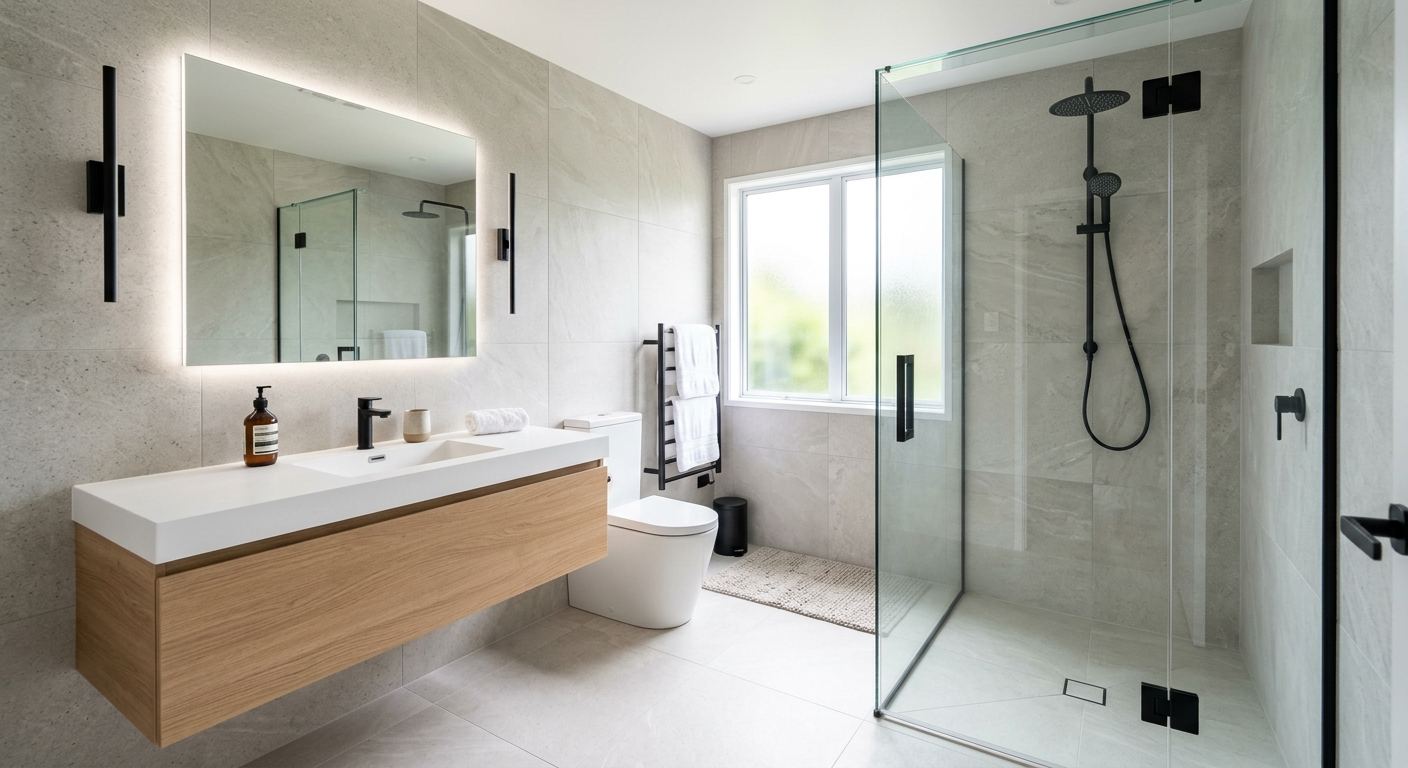
Bathroom renovation options and costs in Kiniski Gardens
Kiniski Gardens, Alberta is a great place to refresh a tired bathroom, but homeowners should expect that the “same” reno can price very differently from house to house. With a population of 6,637 (Statistics Canada, 2021 Census), the local market is busy enough that contractors can book several weeks out in peak seasons, yet small-access issues still tend to surface once walls come down. In Calgary-area housing, older layouts are common, and that matters: dated plumbing runs, cast-iron or older drain stacks, and sometimes asbestos-containing materials in floor tile or older drywall compounds can expand scope after demolition. In practice, many bathrooms also suffer from inconsistent ventilation, which is a contributor to moisture issues even in Calgary’s relatively drier climate.
Budgeting is also shaped by Alberta’s labour market and the trade coordination required for rough-in work, waterproofing, tile setting, and electrical. Even though climate isn’t the main cost driver here, the fast temperature swings and indoor humidity during showers make waterproofing quality non-negotiable—good systems cost more upfront but reduce call-backs for failed seams.
If you’re near a higher-demand trade corridor like the inner-Calgary access routes that serve Kiniski Gardens commuters, you’ll often see stronger availability from crews that are already scheduled for nearby renovations—handy if you’re aiming to start on a realistic timeline. Next, use the table below to compare typical renovation paths and cost ranges for your project.
| Renovation Scope |
What's Included |
Typical Duration |
Price Range |
| Cosmetic refresh (paint, fixtures, accessories only) |
Repaint walls/ceiling, replace toilet/vanity faucet and accessories, update towel bars, swap lighting fixture only if it remains in the same location |
2–5 days |
$3,000–$8,000 |
| Mid-range full renovation (new tile, vanity, tub/shower, electrical) |
New vanity and countertop, new tub/shower surround or full wall tile, updated exhaust fan (with electrical as needed), new flooring prep and tile, improved waterproofing, basic drywall repairs |
2–4 weeks |
$15,000–$22,500 |
| High-end full renovation (custom tile, steam shower, heated floors) |
Custom shower or tub surround, premium tile installation with modern layout, heated floor circuit, upgraded ventilation, designer fixtures, enhanced waterproofing and niche details |
4–7 weeks |
$22,500–$30,000 |
| Shower-only installation (convert tub to walk-in shower) |
Remove tub, install walk-in shower pan and walls, new glass enclosure, new valves/fixtures (as specified), waterproofing and tile/finish |
2–4 weeks |
$12,000–$18,000 |
| Bathtub replacement or tub-liner install |
Option A: replace tub and re-tile edges; Option B: tub-liner system where existing tub condition allows; re-seal plumbing connections |
3–10 days |
$1,500–$4,000 |
| Tile-only installation (floor + surround, existing layout kept) |
Remove existing tile/cleanup, prepare substrate, waterproofing as required, install new floor tile and wall surround using the existing plumbing layout |
1–3 weeks |
$3,500–$12,000 |
Prices are estimates only and vary by project scope, site access and material selection.
What affects the price of bathroom renovation in Kiniski Gardens
In Kiniski Gardens and the wider Calgary economic region, it’s common to see quotes for the “same” bathroom differ by 30–50%. The biggest drivers aren’t really Calgary’s weather—it’s local labour rates, how old your home is, and what’s hidden behind the walls. When crews open a bathroom in an older Calgary-area home, they often find plumbing or venting that doesn’t meet modern expectations, including cast-iron or older drain sections, galvanized supply lines, and inadequate exhaust. Each of those items adds labour and materials and can shift the job from a straightforward refresh into a full remodel.
Older-home surprises are a known budget escalator. If discovery happens of asbestos in vinyl floor tile or older drywall joint compound (pre-1985 homes are the main risk profile), abatement work triggers scheduling constraints and adds meaningful cost—often in the $1,500–$5,000+ range depending on what’s disturbed and how containment is handled. That’s why many homeowners end up closer to the full renovation bands (for example, the $15,000–$30,000 full-bath range) even when their original plan was “just new tile.”
Two concrete examples we see in the Kiniski Gardens area: (1) keeping the existing shower valve location lowers cost compared with moving plumbing, because rough-in work and patching are avoided; (2) upgrading an exhaust fan and adding a proper circuit typically costs more than a simple bulb-and-fixture swap, but it protects the tile assembly from moisture problems. On projects limited to tile, you may still land in the $3,000–$12,000 tile band, but only if the subfloor is flat and dry—otherwise tile pricing quickly rises due to prep and waterproofing upgrades.
| Price Factor |
Why It Matters |
Cost Impact |
| Layout change — moving drain or supply lines |
Requires rough-in plumbing, patching, and sometimes joist/subfloor work |
Often adds $3,000–$8,000 to a mid-range job |
| Tile selection — large-format porcelain vs. mosaic vs. ceramic |
Harder products need more labour time, careful setting, and more cuts/trim planning |
Can shift $1,000–$6,000 within the tile scope |
| Fixture tier — builder-grade vs. mid-range vs. designer brands |
Premium valves, vanity hardware, and special finishes cost more and may require custom install |
Typically adds $500–$4,500 depending on choices |
| Subfloor condition — rot or unlevel concrete adds scope |
Tile and waterproofing fail on unstable substrates; repairs must be done before finish |
Commonly adds $1,000–$5,000 |
| Electrical — adding GFCI outlets, exhaust fan, heated floor circuit |
May require new circuits, compliant connections, and contractor sign-off |
Often adds $800–$4,000 |
| Waterproofing method — membrane type and extent |
Better membranes and correct coverage reduce mould and leaks under tile |
Can add $700–$3,000 but reduces rework risk |
| Older-home surprises — asbestos tile, cast-iron drains, galvanized pipes |
Hidden materials and failing systems expand scope and affect scheduling |
Often adds $1,500–$8,000+ depending on findings |
| Bathroom size — sq ft drives tile and labour time directly |
More square footage increases materials, thinset coverage, and install time |
Can shift project cost by $2,000–$10,000 between small and larger baths |
Permits & regulations in Alberta
In Alberta, many bathroom updates are considered “cosmetic” and typically don’t require a permit when they don’t change plumbing routes, structural elements, or electrical wiring locations. For example, swapping a vanity, replacing a toilet, repainting, re-caulking fixtures, or retiling while keeping the same drain and supply locations often falls into the no-permit category. However, permits and inspections generally become necessary when you relocate plumbing (moving drain or supply lines), change the exhaust strategy by adding a new fan with new wiring/circuit work, or make structural wall changes such as opening studs beyond minor repairs.
Electrical work must meet the Canadian Electrical Code requirements and be performed by (or at minimum signed off by) a licensed electrician. Plumbing rough-in changes—anything involving new or relocated supply/drain connections behind the wall—should be planned as permit-requiring work, with inspection at appropriate stages before walls are closed.
To verify a contractor in Kiniski Gardens step-by-step, ask for three things before work starts: (1) their Alberta trade licence details for the applicable trade(s); check the contractor’s licence information using the relevant online registry they provide or the association listing they reference; (2) certificate of insurance—request an up-to-date liability certificate showing coverage appropriate for renovation work; (3) proof of workers’ compensation coverage (WSIB/WCB): ask whether coverage is in place for their workers and request a clearance letter or proof document. Keep copies with your contract package.
When permits are required, confirm who pulls them and what inspections are scheduled. A legitimate contractor should clearly outline the permit responsibility in writing.
Choosing tile, waterproofing and fixtures for your Kiniski Gardens bathroom
For Kiniski Gardens bathrooms, three material decisions usually determine whether you land closer to a tile-only budget or a full renovation. First is tile choice. Ceramic tile is typically the entry-level option; it’s budget-friendly but can be more sensitive to uneven substrates and generally offers fewer premium size/finish options. Porcelain is a mid-range sweet spot for floors and walls because it’s denser and more consistent, making it easier to achieve a durable, water-resilient finish. Natural stone (marble, travertine, slate) looks exceptional, but it’s higher cost and can require additional installation care—sealing, tile conditioning, and more precise layout planning.
Second is waterproofing. In Alberta, the goal isn’t “humidity resistance” in theory—it’s preventing moisture migration behind tile where mould can develop. A paint-on membrane is often used on simple areas, but bonded sheet membranes or a modern system (including correctly detailed corners/penetrations) tends to provide higher reliability for showers. Third is fixture tier. Builder-grade fixtures reduce upfront cost, mid-range upgrades offer better internals, and designer options often boost daily comfort and resale appeal, especially when paired with a good valve and consistent water pressure.
Here’s where pricing gets real: if you’re comparing standard ceramic versus porcelain for a typical shower and floor surround, you might spend an extra $500–$2,000 in materials and install time, but it’s usually justified because porcelain performs better and tolerates bathroom use more reliably. If your project is already trending toward the $15,000–$30,000 full renovation band, it’s often smarter to spend on waterproofing and tile quality than to cut those areas to stay “cosmetic.”
| Material / Option |
Pros |
Cons |
Price Range |
| Ceramic tile (floor + walls) |
Lower material cost, good variety of styles, familiar installation methods |
Can be more prone to chipping; performance depends heavily on substrate prep |
$3,000–$7,000 |
| Porcelain tile (floor + walls) |
More durable, consistent sizing, better for shower walls/floors, holds up well to moisture |
Higher material cost; large formats demand careful layout |
$6,000–$12,000 |
| Natural stone (marble, travertine, slate) |
High-end look and unique veining; premium spa effect |
More expensive; requires sealing and extra installation care |
$10,000–$18,000 |
| Frameless glass shower enclosure |
Bright, modern look; easier visual cleanup; durable glass when properly installed |
More expensive; needs level walls and accurate tile tolerances |
$2,000–$6,000 |
| Prefab tub surround (acrylic) |
Fast install, good water resistance, typically easier maintenance |
Limited design flexibility; seams/edges can be less “custom” than tile |
$800–$2,500 |
| Custom shower pan (tile or linear drain) |
Modern, clean drainage lines; excellent aesthetic potential; improved finish continuity |
More complex waterproofing and slope planning; higher labour time |
$3,000–$8,000 |
How to choose a bathroom renovation contractor in Kiniski Gardens
Choosing the right contractor in Kiniski Gardens is mostly about verification and clarity—especially because bathroom renos can shift once walls are opened. First, confirm Alberta licensing for the trades involved (or the lead contractor’s authorizations, where applicable). Then request proof of liability insurance and confirm they’re properly covered for jobsite risks. Finally, verify workers’ compensation coverage (WSIB/WCB): ask for documentation such as a clearance letter or proof of coverage and keep it with your contract. If a contractor can’t provide these documents immediately, that’s a major warning sign.
Next, get 2–3 itemised written quotes instead of one lump-sum. You want line items that separate labour and materials (tile supply, thinset, waterproofing, rough-in allowances, electrical items like the fan and GFCI outlet, disposal, and any permit fees). Carefully read the scope: what’s excluded? Is asbestos abatement included if discovered? Is subfloor repair assumed or treated as an extra? Is permit pulling included, and who pays for inspections? Confirm disposal and drywall/tidy clean-up responsibilities. A solid workmanship warranty should be stated (length and what it covers), and product warranties should be listed separately from workmanship. Ask whether warranties are transferable if you sell your home.
On payment schedule, never agree to pay more than about 10–15% upfront. Hold back a final portion until the job is complete and any punch-list items are finished. Also request a start date and completion estimate in writing so the project timeline isn’t just verbal.
- Provide Alberta trade licence details (or licensed subcontractors) in writing.
- Show liability insurance certificate and jobsite coverage limits.
- Confirm WSIB/WCB coverage with proof (clearance letter or equivalent).
- Use itemised quotes (labour vs materials) with allowances clearly labelled.
- State whether permits are included and who pulls them.
- Define demolition scope and disposal fees up front.
- Explain waterproofing method and who supplies the system (membrane type, coverage details).
- Clarify what happens if hidden issues are discovered (asbestos, subfloor rot, venting).
- List warranty length for workmanship and manufacturer warranty for products.
- Request references for similar Calgary-area bathroom remodels.
- Include a start date, milestones, and completion timeframe.
- Use a payment schedule that holds back final payment until completion and sign-off.
Common red flags in Kiniski Gardens include: vague scope (“we’ll handle it”), no written waterproofing plan, refusal to provide insurance/licence documents, quotes that don’t mention disposal or permits, and aggressive upfront payment demands. If you see two or more of these, keep shopping.
Frequently asked questions — bathroom renovation in Kiniski Gardens
What's the best bathtub material for a Kiniski Gardens home?
For most Kiniski Gardens bathrooms, a well-installed acrylic bathtub (often in the $500–$3,000 replacement band before surround work) is a practical choice because it’s lighter, typically easier to handle during replacement, and usually performs well in standard Alberta bathroom use. If you’re replacing a tub as part of a wider reno, pairing acrylic with proper re-sealing and a durable surround (tile or a quality prefab system) is more important than the tub material alone. Cast iron tubs can be very durable, but they’re heavier and installation can be more labour-intensive, especially in older homes with tight access. For homes where subfloor conditions are unknown, don’t choose material first—verify the base condition because uneven support can cause premature wear regardless of tub type.
Is it worth renovating a bathroom before selling in Kiniski Gardens?
Often, yes—if the reno addresses moisture risk, outdated finishes, and functional issues. A cosmetic refresh can help, but it only pays off when the plumbing and ventilation are already in good shape. In older Calgary-area housing that serves Kiniski Gardens, many bathrooms hide problems behind tile: weak exhaust, older drain/vent arrangements, or substrate issues that are invisible during viewings. If those are present, a more complete project tends to protect you from last-minute surprises. Budget-wise, homeowners commonly choose between a tile-focused approach (sometimes within the $3,000–$12,000 tile installation band) or a mid-range full renovation depending on how extensive repairs are. The key is to fix what buyers will notice in daily use—waterproofing, layout convenience, and clean, modern finishes.
How do I plan a bathroom renovation on a tight budget in Kiniski Gardens?
Start by deciding what you will not change. Keeping the plumbing locations (same drain and supply points) is one of the fastest ways to prevent rough-in upgrades from inflating your budget. Then focus your spend where it prevents failures: waterproofing details, proper fan venting, and durable tile for high-contact areas. If you’re trying to control cost, aim for a tile-only or cosmetic+tile hybrid rather than a full relocation remodel. A realistic target is often the low end of tile work (for example, within the $3,000–$12,000 tile band) plus limited electrical changes like a new exhaust fan where required. Also request a contingency allowance in your plan for older-home surprises (subfloor prep, venting changes, or in rarer cases asbestos abatement), because those are the items that most often blow up tight budgets after demolition.
What's the difference between a cosmetic and a full bathroom renovation?
A cosmetic refresh typically involves surface-level updates: repainting, swapping fixtures that stay in the same locations, changing accessories, and sometimes refreshing lighting. It doesn’t move plumbing routes, doesn’t rework the shower structure, and usually doesn’t disturb tile assemblies. A full bathroom renovation generally includes opening walls or floors, replacing or upgrading the wet-area components (tub/shower walls, waterproofing, vanity, flooring), and often updating electrical and ventilation. Cost-wise, cosmetic projects can start in the low thousands, while full renovations in the Calgary economic region commonly land in the $15,000–$30,000 range depending on finishes and whether hidden scope appears. In Kiniski Gardens specifically, the age of local housing stock is the reason “cosmetic” can become “full” once contractors confirm the condition of subfloor, venting, and plumbing behind the walls.
How do I choose the right contractor for my bathroom in Kiniski Gardens?
Choose a contractor who can prove they’re set up to do bathroom work safely and to code in Alberta. Confirm their Alberta trade licence details for relevant trades, and ask for liability insurance and workers’ compensation coverage proof (WSIB/WCB). Then get 2–3 itemised written quotes that break out labour and materials—especially waterproofing, tile install method, electrical items (like GFCI outlet and exhaust fan), and disposal. Read scope exclusions: permit pull included or not, what happens if subfloor repairs are needed, and whether asbestos abatement is addressed if discovered. Good contractors will also provide a clear workmanship warranty and a payment schedule that keeps most funds protected until completion (commonly 10–15% upfront, with a holdback). In Kiniski Gardens, the best contractors will also give you a realistic timeline based on Calgary-area scheduling, not just a hopeful start date.
What's the most common mistake homeowners make in bathroom renovations?
The most common mistake is under-budgeting for concealed scope and not clarifying exclusions. Homeowners often start with a target like a “refresh” or “tile only” plan, then discover issues after demolition—subfloor flatness problems, outdated or corroded plumbing, weak ventilation, or sometimes asbestos-containing materials in older floor tile/drywall compound. That leads to schedule delays and higher costs because the contractor must mobilize additional trades and adjust waterproofing or rough-in work. Another frequent error is choosing tile or fixtures before agreeing on a waterproofing and layout plan; an incompatible tile format or poor membrane detailing can cause mould or failures behind the wall. Use a contingency approach, insist on an itemised quote, and ensure waterproofing and ventilation are explicitly included—especially important in Alberta bathroom humidity where moisture control is critical.