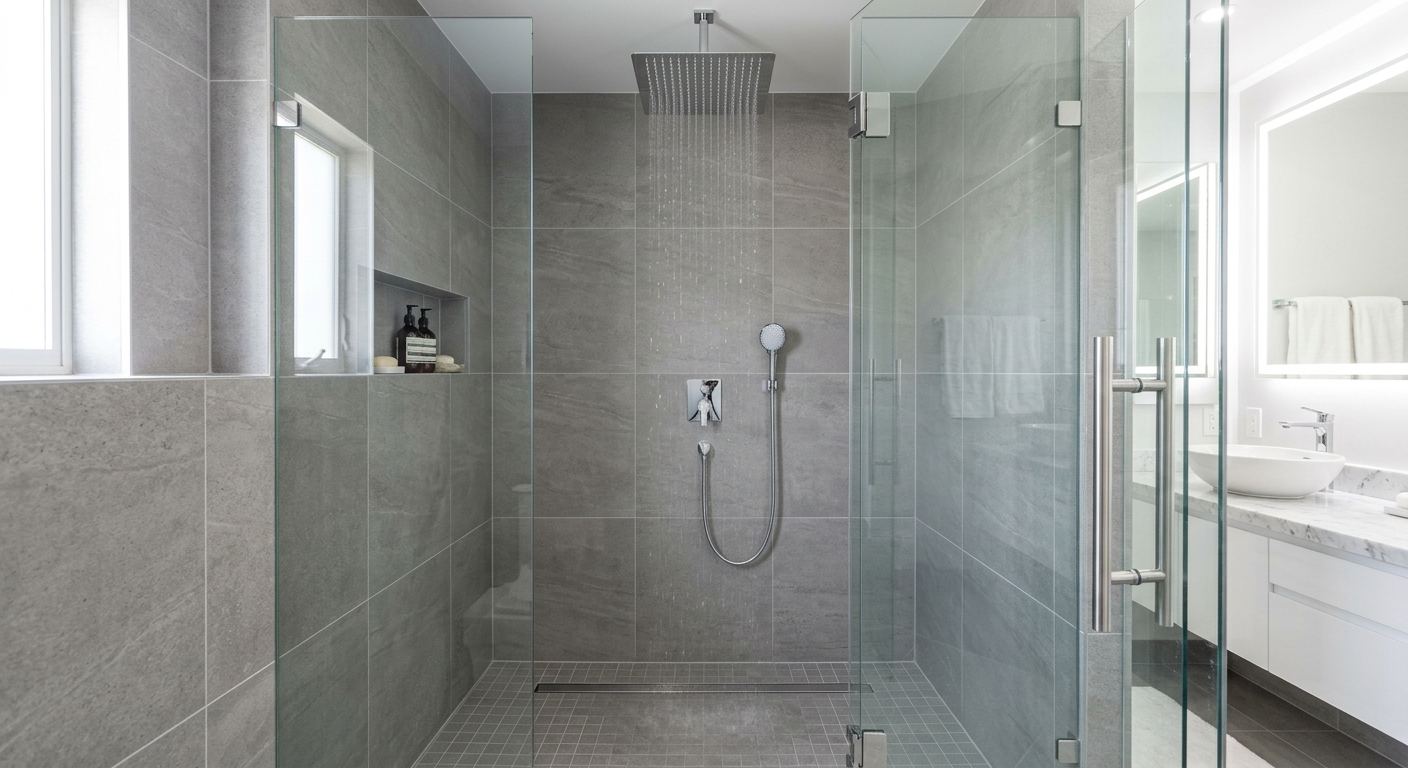
Bathroom renovation options and costs in Lansdowne
Lansdowne is a small Alberta community (population 1,215 per the Statistics Canada, 2021 Census), but bathroom renovation work is still influenced by the Calgary economic region—especially labour availability and the way older homes are built. In many Lansdowne-area houses, the bathroom is decades old, which often means dated plumbing layouts, slower drain venting, and the kind of hidden-scope issues that don’t show up until walls come down. That’s where costs can jump: concealed drain stacks (often cast-iron in older assemblies) and subfloor damage from past leaks can expand a “refresh” into a full remodel. Some pre-renovation materials also raise the stakes, including the possibility of asbestos-containing materials in older floor tile or mastic.
In the Calgary region, pricing is driven more by local trade rates and housing condition than by climate swings. Alberta’s freeze-thaw cycles do stress caulking and grout over time, so bathrooms that haven’t been properly waterproofed can develop recurring moisture problems—leading to more prep and more waterproofing work. If you’re renovating in or near busy residential pockets like the older core streets around downtown Lansdowne, you’ll often notice stronger demand for plumbers and electricians during peak seasons, which can affect scheduling and labour rates.
Below are realistic renovation pathways to help you compare quotes before demolition starts, and to budget for the concealed work that’s common in older housing.
| Renovation Scope |
What's Included |
Typical Duration |
Price Range |
| Cosmetic refresh (paint, fixtures, accessories only) |
Paint, replace vanity or tap fixtures (no plumbing relocation), update lighting trims, accessories, caulking/grout touch-ups |
3–7 days |
$3,000 – $7,000 |
| Mid-range full renovation (new tile, vanity, tub/shower, electrical) |
Demo & disposal, waterproofing, tile floor/surround, vanity, tub/shower refinishing or replacement, exhaust fan, GFCI upgrades as needed, standard trim |
2–4 weeks |
$15,000 – $22,000 |
| High-end full renovation (custom tile, steam shower, heated floors) |
Premium tile/custom layouts, heated floor circuit, steam shower system, upgraded ventilation, higher-end fixtures, detailed carpentry and finishes |
4–7 weeks |
$22,000 – $30,000 |
| Shower-only installation (convert tub to walk-in shower) |
Demo, new shower pan & waterproofing, glass enclosure, plumbing tie-ins (drain/supply as required), exhaust fan typically recommended |
1–3 weeks |
$8,500 – $14,000 |
| Bathtub replacement or tub-liner install |
Remove and replace tub (or prep for liner), minor surround updates, new sealing, re-set fixtures; liner option may be limited by existing condition |
2–5 days |
$500 – $3,000 |
| Tile-only installation (floor + surround, existing layout kept) |
Tile installation over prepared surface, waterproofing system within scope, re-grout/seal transitions, no major plumbing relocation |
1–3 weeks |
$3,500 – $12,000 |
Prices are estimates only and vary by project scope, site access and material selection.
What affects the price of bathroom renovation in Lansdowne
In Lansdowne and across the wider Calgary economic region, the same bathroom can come in 30–50% apart between quotes because the “same” job is often not the same once the trades see the existing conditions. Two big drivers explain most of that spread: regional labour rates and the age/condition of the housing stock. Calgary-area contractors routinely account for hidden work like venting upgrades, plumbing rough-in corrections, and repairs to subfloors or walls after demolition—because once tile is off, you can’t unsee what’s behind it.
Climate is a secondary factor here. Alberta’s freeze-thaw doesn’t automatically raise labour rates, but it does accelerate wear on grout and caulking, which can lead to repeating moisture issues that increase prep and waterproofing scope. In older homes in the Calgary economic region, concealed drain and supply issues can inflate the budget: cast-iron drain lines may need upgrading or reconfiguration, and galvanized supply piping can be a red flag that pushes contractors to address pressure and sealing. If asbestos is discovered in older vinyl floor tile or drywall compound (common in certain pre-1985 renovations), abatement protocols can add about $1,500 – $5,000+ depending on access, material quantity, and required containment.
For a concrete example in Lansdowne: if you keep the layout and focus on tile-only, you may start in the $3,500 – $12,000 band, but if you change the drain location for a larger shower, you’re effectively moving into a scope more like a shower conversion at $8,500 – $14,000 once rough-in work and waterproofing depth are included. Another cost lever: moving from builder-grade fixtures to higher tiers often doesn’t blow up the budget by itself—but pairing it with new lighting, exhaust upgrades, and heated floors can.
| Price Factor |
Why It Matters |
Cost Impact |
| Layout change |
Moving drain or supply lines requires rough-in work, patching, and more waterproofing continuity details |
Add roughly $2,000 – $7,000 depending on distance and structural changes |
| Tile selection |
Large-format porcelain is heavier and needs better prep; mosaic is labour-intensive; ceramic may be easier but less forgiving |
Can shift tile scope by about 10% – 60%+ |
| Fixture tier |
Designer brands raise product costs and can require specific valves, trims, and finish compatibility |
Typically +$1,000 – $6,000 |
| Subfloor condition |
Rot, unlevel surfaces, or failing underlayment add build-up, repairs and extra labour time |
Add roughly $500 – $3,500 |
| Electrical |
GFCI protection, new exhaust fan ducting, and heated floor circuits add parts, labour, and inspection steps |
Often +$800 – $4,000 |
| Waterproofing method |
Membrane type and coverage determine how much prep is needed and how robust the system is long-term |
Can add $500 – $3,000 based on system and surface prep |
| Older-home surprises |
Asbestos tile/mastic, cast-iron drains, and galvanized pipes can force abatement, upgrades, and extra demo |
Add roughly $1,500 – $10,000+ when discovered |
| Bathroom size |
Sq ft affects tile area, thinset/wet-area prep, and the labour hours for layout and setting |
Small baths may be 15% – 25% cheaper; larger baths can be 20% – 40%+ higher |
Permits & regulations in Alberta
In Alberta, cosmetic bathroom updates—like swapping fixtures, changing paint, replacing a vanity, or retiling where plumbing locations stay the same—usually don’t require a permit. However, you should expect a permit (and inspection) when you relocate plumbing (moving a drain or supply line), change structural walls, add new ventilation ducting, or make significant electrical additions such as new circuits for an exhaust fan or heated flooring. Electrical work must meet the provincial code and be done or signed off by a licensed electrician.
Here’s a practical step-by-step approach for a homeowner in Lansdowne. First, ask the contractor for their Alberta trade licence details (the business should provide their registration information) and confirm it matches the trades doing the work. Next, request a current certificate of insurance (liability coverage) and verify the coverage dates and scope are active for your project period. For workers compensation, confirm they carry WSIB/WCB coverage (or the applicable coverage status). If you’re hiring separate trades, verify each one—not just the general contractor.
Where to look: (1) online licence registry listings for Alberta trade status, (2) the certificate of insurance document provided at bid time, and (3) documentation that confirms workers compensation coverage. Also ask your contractor to confirm whether permits are pulled by them or by you—then ensure the quote states what’s included.
If you plan to change the shower valve location, add a second vanity circuit, or install a new exhaust fan tied into ducting, treat that as permit-level scope from day one.
Choosing tile, waterproofing and fixtures for your Lansdowne bathroom
Your bathroom renovation budget in Lansdowne typically hinges on three material decisions: tile choice, waterproofing method, and fixture tier. First, tile: entry-level ceramic can be cost-effective, but it’s less durable in wet-area conditions and may be more prone to staining or chipping at edges. Porcelain is a common mid-range sweet spot because it’s denser, more water-resistant, and handles busy bathrooms better. Natural stone (marble, travertine, slate) looks premium, but it often requires extra sealing and careful installation details.
Second, waterproofing: Alberta bathrooms need a proper system because moisture damage shows up as staining, soft subflooring, and grout failure over time—especially after freeze-thaw seasons. A paint-on membrane can work in some scenarios but often isn’t the best fit for full shower walls without the right prep and build-up. Bonded sheet membranes or a proven system (including compatible products and correct overlaps) generally provide stronger protection if installed carefully.
Third, fixtures: builder-grade models cost less up front, while mid-range and designer brands often deliver smoother valves, better finishes, and improved resale appeal. The real budget win is choosing better components where they matter most—like shower valves, ventilation, and reliable sealing—rather than upgrading every trim detail.
To make it practical: if you compare a ceramic surround and floor versus porcelain in a mid-size bath, the difference might be a few thousand dollars overall—often justified when you’re already paying for labour and waterproofing. In contrast, swapping tile colour within the same material tier is rarely where you “find” savings; labour is what you can’t easily redo once mistakes are made.
| Material / Option |
Pros |
Cons |
Price Range |
| Ceramic tile (floor + walls) |
Lower material cost, straightforward selection, good for lighter-use spaces |
Less dense than porcelain, can be less forgiving in wet-area durability |
$3,000 – $7,000 |
| Porcelain tile (floor + walls) |
High durability, better water performance, handles freeze-thaw wear patterns better |
Heavier tile can raise install complexity; premium styles cost more |
$5,000 – $12,000 |
| Natural stone (marble, travertine, slate) |
Luxury appearance, unique colour/texture |
Higher material and handling cost, often requires sealing and careful maintenance |
$8,000 – $16,000 |
| Frameless glass shower enclosure |
Modern look, easier cleaning than tiled doors, strong resale appeal |
Higher glass cost; careful measurements required; limited flexibility after install |
$2,000 – $5,500 |
| Prefab tub surround (acrylic) |
Faster install, fewer grout joints, good budget option |
Less custom look than tile; best results depend on the existing wall condition |
$500 – $2,500 |
| Custom shower pan (tile or linear drain) |
Best long-term waterproofing when done right; seamless look; modern drainage options |
More labour; requires correct slope and detailed waterproofing system |
$3,000 – $10,000 |
How to choose a bathroom renovation contractor in Lansdowne
Choosing the right contractor in Lansdowne comes down to proof, clarity, and reliability. Start by verifying Alberta licensing for the trades involved (especially plumbing and electrical). Ask for their liability insurance certificate and confirm it’s current for the period of your project. Then check WSIB/WCB coverage: you want written confirmation that the contractor’s workers are covered, because you don’t want liability to fall on your household if an incident occurs.
Next, get 2–3 itemised written quotes instead of one lump sum. The best bathroom quotes break down labour and materials separately (tile, waterproofing system, fixtures, glass, insulation/venting, disposal) and identify what’s included for demo, hauling, and surface prep. Read exclusions line-by-line: is permit pulling included, and if so, who submits? Is disposal included in the price, and is it for normal construction debris or does it exclude specialty waste?
Warranty matters too. Ask for the workmanship warranty length and whether it’s transferable if you sell the home. Also confirm product/manufacturer warranty timelines for fixtures, shower systems, and any heated-floor components.
For payment, don’t let the schedule get front-loaded—never pay more than 10–15% upfront. A holdback until completion (and punch-list sign-off) protects both parties. Finally, request a written start date and a completion estimate tied to material lead times, especially for tile, glass enclosures, and specialty valves.
- Confirm Alberta trade licence details match the work being done.
- Verify liability insurance is active and includes renovation work.
- Ask for WSIB/WCB coverage proof for the contractor and subcontractors.
- Get quotes with line-by-line labour and materials, not just totals.
- Ensure the scope lists permits: who pulls them, and what’s included.
- Ask what happens if asbestos or knob-and-tube wiring is discovered (abatement plan and cost treatment).
- Confirm disposal/hauling is included and what types of waste are covered.
- Check waterproofing system specs (membrane type, coverage, transition details).
- Demand a clear tile scope: floor area, wall height, trim pieces, and layout responsibility.
- Ask whether electrical upgrades include exhaust fan ducting and GFCI requirements.
- Review the warranty: workmanship term, exclusions, and transferability.
- Use a payment schedule with a holdback and written completion/punch-list process.
Common red flags in Lansdowne include: quotes that don’t mention waterproofing details, “lump sum” pricing with no exclusions list, refusal to provide insurance/coverage documentation, vague timelines without material lead-time planning, and demanding large deposits upfront with no contract-based holdback.
Frequently asked questions — bathroom renovation in Lansdowne
How do I plan a bathroom renovation on a tight budget in Lansdowne?
For Lansdowne budgets, I suggest you protect the high-impact layers first: waterproofing, ventilation, and the shower/tub sealing strategy. If your existing layout is in good shape, you can often start with a cosmetic refresh—typically around $3,000 – $7,000—then upgrade tile and fixtures later when you’re ready. In older Calgary economic region homes, however, hidden plumbing and subfloor issues are common; budget contingency early so you don’t stall mid-project. Get an itemised quote that separates labour and materials and includes disposal, permit handling (if any), and electrical basics like GFCI and exhaust fan capacity. If you’re converting a tub to a walk-in, plan for a higher scope (often $8,500 – $14,000) because drain/supply rough-in and waterproofing drive the cost.
What's the difference between a cosmetic and a full bathroom renovation?
A cosmetic renovation generally keeps plumbing locations and wet-area assemblies intact. In practical terms in Alberta, that means painting, replacing fixtures like taps/handles or a vanity, and doing accessory upgrades—without moving drains or supply lines. A full renovation removes finishes down to the substrate in key wet areas and typically includes waterproofing, new tile surfaces, ventilation improvements, and often electrical updates. In Lansdowne, “full” also means you’re paying for the hidden-scope risk management: repairs to subfloor/walls, correcting venting or drain conditions, and sometimes discovery-related scope like asbestos abatement if older materials are present. As a budgeting reference, a mid-range full renovation commonly lands in the $15,000 – $22,000 band, while cosmetic refresh work is usually far lower at around $3,000 – $7,000.
How do I choose the right contractor for my bathroom in Lansdowne?
Choose a contractor who can prove they’re the right fit before you sign: confirm Alberta trade licensing for the relevant trades, ask for liability insurance documentation, and verify WSIB/WCB coverage for workers. Then insist on 2–3 itemised quotes that show labour and materials breakdown—not a single lump sum. Scope clarity matters: does the quote include permit pulling, disposal/hauling, and the exact waterproofing system? In older Lansdowne-area homes, ask how they handle surprises like cast-iron drains, galvanized lines, or potential asbestos discovery, including who performs abatement and how costs are approved. Finally, review warranty terms for workmanship and product warranties, and check that the payment schedule protects you (10–15% upfront maximum, with a holdback).
What's the most common mistake homeowners make in bathroom renovations?
The most common mistake is under-budgeting for concealed conditions and not pricing the “opening up” stage properly. People often plan around visible items—tile, vanity, and fixtures—then discover after demolition that the subfloor is uneven, ventilation is inadequate, or plumbing/venting needs corrections. In the Calgary economic region, it’s also not rare to see older drain stacks and supply piping that require upgrades once walls are open. If asbestos is present in older floor tile or drywall materials, abatement protocols add time and cost. The fix is simple: get an itemised quote that explicitly includes waterproofing prep, disposal, ventilation/electrical basics, and a contingency approach for hidden scope. Use realistic bands like $15,000 – $22,000 for mid-range full renovations, not just the cost of fixtures.
How long does tile installation take in a Lansdowne bathroom?
Tile timelines in Lansdowne depend on size, layout complexity, and what condition the walls and subfloor are in after demo. If you keep the existing layout and your surfaces are properly prepped, tile work in a typical bathroom often takes about 1–3 weeks within a larger project, because prep and waterproofing are part of the schedule. Larger-format porcelain, custom niches, and intricate trims increase the labour time. Also factor in cure times for waterproofing/membrane systems and grout/sealants, plus any adjustments if concealed issues are found. If your scope is tile-only (existing layout kept), the overall job can still take 1–3 weeks to do correctly, and the budget commonly sits in the $3,500 – $12,000 range depending on tile choice and coverage.
How much does a bathroom renovation cost in Lansdowne?
In Lansdowne, total cost mostly tracks renovation scope rather than climate alone, because labour rates and housing condition in the Calgary economic region drive hidden-scope work. A cosmetic refresh typically starts around $3,000 – $7,000 if plumbing isn’t moved. A mid-range full renovation—new tile, vanity, tub/shower, and electrical updates—commonly lands around $15,000 – $22,000, while higher-end projects with upgrades like heated floors and more custom detailing often reach $22,000 – $30,000. If you’re converting a tub to a walk-in shower, many projects fit the $8,000 – $15,000 style band once waterproofing, enclosure, and plumbing tie-ins are included. For accurate budgeting, compare itemised quotes and plan contingency for repairs discovered after demolition.