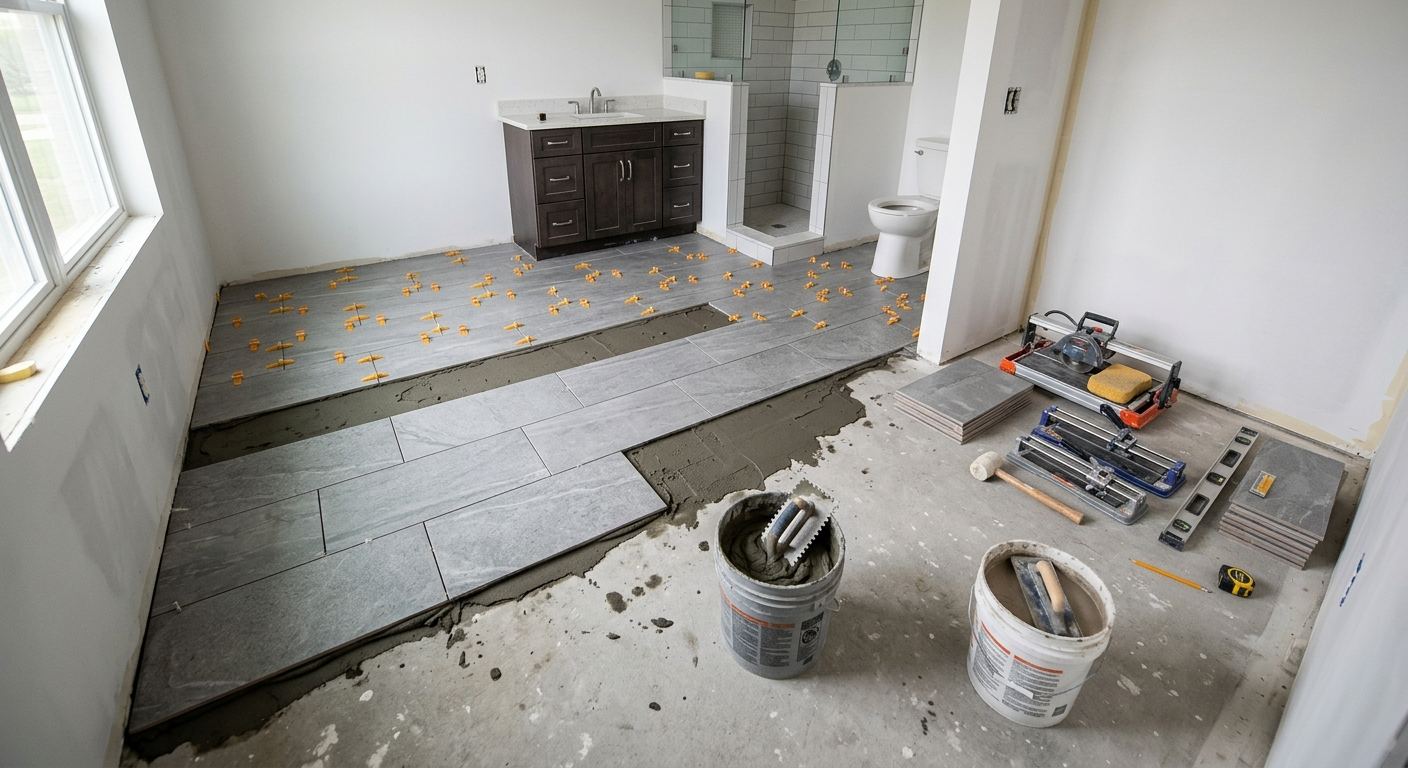
Bathroom renovation options and costs in McQueen
Renovating a bathroom in McQueen usually starts with choosing how much you want to change—and how much your existing walls might reveal once the demo begins. In this area, housing stock is often older: with only 1,670 people in McQueen (Statistics Canada, 2021 Census), many homes are tied to earlier building eras, and that matters because dated plumbing layouts, older drain assemblies, and floor-tile adhesives can turn a “straight refresh” into a deeper remodel. Calgary-area contractors also frequently note that some bathrooms in pre-1985 homes may carry asbestos-containing materials in vinyl floor tile or associated compounds, which can trigger abatement once floors are opened.
Costs in the Calgary economic region are driven more by local labour availability and the condition/age of the home than by climate swings. Still, Alberta winters mean bathrooms need reliable venting to manage moisture after showers, and good waterproofing so thaw cycles and interior humidity don’t become long-term problems. When contractors are coordinating trades (plumbing, electrical, tile setting), schedules can tighten during busy seasons—affecting labour rates and the time you’ll wait for materials like tile and glass.
In high-demand pockets such as the Rocky View County–adjacent housing areas (with many older infill homes), we see frequent “hidden scope” discoveries—subfloor repairs, venting upgrades, and rough-in changes—that commonly push a mid-range job toward the upper end of the pricing bands. If you want clearer budgeting, use the options below as a starting point, then plan for concealed repairs. From there, compare the scope levels in the table.
| Renovation Scope |
What's Included |
Typical Duration |
Price Range |
| Cosmetic refresh (paint, fixtures, accessories only) |
New vanity or faucet, toilet replacement (if included), fresh paint, re-caulk, lighting/accessories; no wall opening required |
3–7 days |
$3,500–$8,000 |
| Mid-range full renovation (new tile, vanity, tub/shower, electrical) |
Demo and rebuild, waterproofing system, tile floor + surround, new vanity and hardware, tub or shower replacement, exhaust fan, GFCI where required, labour for plumbing/electrical rough-in as needed |
2–3 weeks |
$15,000–$22,500 |
| High-end full renovation (custom tile, steam shower, heated floors) |
Premium tile (custom layout), custom shower/steam components, heated floors (bathroom circuit), higher-end finishes, improved venting, enhanced waterproofing, detailed trim and glass |
3–5 weeks |
$22,500–$30,000 |
| Shower-only installation (convert tub to walk-in shower) |
Remove tub, build new shower pan and waterproofing, tile surround, shower valve trim, glass door/trim, updated venting/exhaust and necessary plumbing adjustments |
1.5–3 weeks |
$8,000–$15,000 |
| Bathtub replacement or tub-liner install |
Replace tub with new unit (or install liner where appropriate), new caulking and trim, drain/overflow connection adjustments, sealing and finishing |
1–2 weeks |
$500–$3,000 |
| Tile-only installation (floor + surround, existing layout kept) |
Remove existing tile (if required), install new floor + wall tile, waterproofing prep (as needed for tile), grout/seal, finish trim; keeps plumbing positions |
1–3 weeks |
$3,000–$12,000 |
Prices are estimates only and vary by project scope, site access and material selection.
What affects the price of bathroom renovation in McQueen
If you receive two quotes for the “same bathroom,” don’t be surprised if they differ by 30–50% across Calgary and Alberta. In McQueen, that spread is less about weather and more about what’s happening behind the walls and who’s available to do the work. Labour rates and scheduling drive a lot of the difference, but the real budget swing comes from age/condition of the home: hidden plumbing issues, older venting routes, and subfloor irregularities often only become visible once demo starts.
In the Calgary region, older homes commonly have cast-iron or older drain stacks that can be harder to work around, plus older supply lines that may need upgrading. If the existing ventilation is weak, contractors usually plan for a more effective exhaust fan—often with updated electrical—because that reduces moisture accumulation after showers. When asbestos is discovered in pre-1985 materials (for example, vinyl floor tile or drywall compounds), the project can require abatement protocols, which can add $1,500–$5,000+ and extend timelines.
Concrete examples we see in McQueen: (1) keeping the toilet/vanity in place can keep the job closer to a tile-only band like $3,000–$12,000; move the vanity and you may need drain/supply rough-in work that pushes you toward mid-range full renovation budgets such as $15,000–$22,500. (2) A cracked or unlevel subfloor can turn a “straight” tile plan into rebuild + extra waterproofing effort, especially with large-format porcelain where lippage is unforgiving.
Bottom line: use the published price bands as your starting point, and budget contingency for concealed repairs and trade coordination—particularly in older homes.
| Price Factor |
Why It Matters |
Cost Impact |
| Layout change — moving drain or supply lines |
Requires plumbing rough-in, sometimes partial framing adjustments, and more coordination for tile continuity |
Commonly adds several thousand dollars (often the biggest variable in quotes) |
| Tile selection — large-format porcelain vs. mosaic vs. ceramic |
Larger formats demand flatter substrates and more precise setting; mosaics can be slower to install |
Can swing labour + material by thousands, not hundreds |
| Fixture tier — builder-grade vs. mid-range vs. designer brands |
Trim quality, warranty, and cartridge/valve durability vary; so does installation complexity |
Higher tiers can add meaningful line-item cost while not always increasing the scope |
| Subfloor condition — rot or unlevel concrete adds scope |
Requires repair/replacement, re-laying substrate, and potentially extra waterproofing build-up |
Often adds time and materials; can push a “tile-only” job toward a full renovation band |
| Electrical — adding GFCI outlets, exhaust fan, heated floor circuit |
New circuits require licensed electrical work and permit steps in many cases |
Typically adds mid-range incremental cost; heated floors push higher |
| Waterproofing method — membrane type and extent |
Better systems (sheet/membrane + proper detailing) cost more but reduce failure risk |
Upfront cost is offset by fewer call-backs and better long-term performance |
| Older-home surprises — asbestos tile, cast-iron drains, galvanized pipes |
Discovery triggers removal protocols, additional disposal, and sometimes partial pipe replacement |
Can add $1,500–$5,000+ (abatement scenarios) and extend schedule |
| Bathroom size — sq ft drives tile and labour time directly |
More square footage means more setting time, materials, and curing/wait periods for waterproofing and grout |
Small changes in size can meaningfully shift labour cost |
Permits & regulations in Alberta
In Alberta, many bathroom updates are straightforward and typically do not require permits, but the moment you change plumbing routing, ventilation, or electrical components, you need to plan for permitting and inspections. In practice, cosmetic updates—swapping a vanity, replacing faucets/fixtures in the same locations, repainting, re-caulking, and retiling with the same plumbing footprint—often proceed without a permit.
Permits are commonly required when you relocate plumbing (for example, moving a drain or supply lines), add a new or relocated exhaust fan, or make structural wall changes. If your renovation includes any new electrical work (such as adding GFCI protection, wiring an exhaust fan, or installing a heated floor circuit), it must be completed by or signed off by a licensed electrician and should be aligned with provincial electrical code requirements.
Plumbing rough-in changes typically require a permit and inspection, especially where lines are opened, rerouted, or replaced. For homeowners in McQueen, the practical approach is to verify your contractor’s credentials before you pay for materials. Start by checking the contractor’s Alberta trade licence (and whether they perform the work themselves or sub-contract). Then request a certificate of insurance (liability coverage) and confirm whether their coverage includes WCB/WCB clearance letters or equivalent coverage documentation for workers. Ask for these documents up front—before demolition—and keep copies for your records.
Choosing tile, waterproofing and fixtures for your McQueen bathroom
In McQueen, your biggest budget levers usually aren’t “premium vs. basic” in general—they’re the combination of tile choice, waterproofing method, and fixture tier. First, decide on tile: ceramic is the entry-level option and can be easier to work with, while porcelain is denser, more moisture-resistant, and usually performs better on bathroom floors and shower surrounds. Natural stone (marble, travertine, slate) looks luxurious but can be more sensitive to sealing and installation detailing.
Second is waterproofing. In Alberta’s climate, bathrooms still cycle through wet use followed by drying—and without a robust system, small failures can become mould risk behind tile. Paint-on membranes can work in some straightforward areas, but a bonded sheet membrane or a more engineered system with proper corners/edges generally provides more reliable protection where movement and moisture are highest (like shower pans and niche details).
Third, choose fixture tier. Builder-grade fixtures keep costs down, but mid-range and designer options often bring smoother valves, better finishes, and improved performance—useful for day-to-day use and resale appeal.
Here’s a dollars-and-value example: if you’re tempted to choose cheaper ceramic tile but you’re converting a tub to a shower, that can backfire if you cut waterproofing corners. Spending more to use porcelain plus a more comprehensive waterproofing approach can cost more upfront, but it helps prevent rework later. The same logic applies if you go from builder-grade to mid-range valves while you’re already paying for wall openings—better components are justified when the labour is already in place.
| Material / Option |
Pros |
Cons |
Price Range |
| Ceramic tile (floor + walls) |
Lower material cost, easier selection for many styles, good for many non-wet wall applications |
More variation in water absorption than porcelain; can be less durable under heavy use if not specified correctly |
$3,000–$7,500 |
| Porcelain tile (floor + walls) |
High moisture resistance, excellent for floors and shower surrounds, strong long-term durability |
Heavier and requires careful substrate prep; large-format tiles increase installation precision needs |
$6,000–$12,000 |
| Natural stone (marble, travertine, slate) |
Premium look and uniqueness; great for feature walls and luxury builds |
Requires sealing/maintenance; may need additional labour for layout and finishing |
$9,000–$20,000 |
| Frameless glass shower enclosure |
Modern appearance, easier to clean than framed systems, strong perceived value |
Higher material and fabrication cost; setup must be precise to prevent leaks/fit issues |
$2,000–$6,000 |
| Prefab tub surround (acrylic) |
Fast installation, good water resistance when installed correctly, lower labour time |
Limited design flexibility; seams/joints may be more noticeable than tiled systems |
$500–$3,000 |
| Custom shower pan (tile or linear drain) |
Seam-optimized finish and premium drainage options; great for step-in accessibility |
More labour and detail work; requires precise waterproofing and slope planning |
$8,000–$15,000 |
How to choose a bathroom renovation contractor in McQueen
Choosing the right contractor in McQueen comes down to verification, clarity, and how they manage risk when walls come off. In Alberta, confirm the contractor’s licensing for the trades they perform, request proof of liability insurance, and verify WCB coverage or clearance documentation so you’re not exposed if a worker is injured on site. To check each item, ask for documents directly: a current certificate of insurance, the contractor’s licence details, and the WCB/WCB clearance letter (or equivalent proof for coverage). Don’t accept verbal reassurance—get it in writing.
Next, get 2–3 itemised written quotes. The best quotes break down labour and materials separately (tile, waterproofing, fixtures, electrical/plumbing allowances, demolition/disposal). Look closely at exclusions: confirm whether permits are pulled by the contractor or by you, whether disposal/dump fees are included, and whether any patching/drywall is part of the rebuild scope. Warranty is also critical—ask for the workmanship warranty length and whether the manufacturer warranties for products are registered and transferable if you sell your home.
Payment schedule matters. Avoid heavy upfront payments; a good rule is never more than 10–15% upfront, with progress payments tied to completed milestones and a holdback until punch list items are finished. Finally, request timeline information in writing: a start date, expected duration, and when critical inspections or trade scheduling will occur.
- Provide Alberta trade licence details (and confirm who does the work vs. subcontracting)
- Share a current certificate of liability insurance
- Provide WCB/WCB clearance documentation for their workers
- Use itemised quotes (labour vs materials), not a single lump sum
- Clearly list what’s included for waterproofing (membrane type and where it’s applied)
- Confirm tile scope: floor only vs floor + walls + niche/curb work
- Confirm electrical scope: exhaust fan, GFCI, lighting, and heated floor circuit if applicable
- Confirm plumbing scope: valve replacement, drain changes, venting changes
- Spell out permit responsibility and inspection steps
- Include disposal/dump fees and protection of adjacent areas
- Warranty terms in writing for labour and products (including transferability)
- Payment schedule with 10–15% max upfront and a holdback until completion
Red flags I see with bathroom contractors in McQueen: vague scopes that don’t mention waterproofing and substrate prep; refusing to provide insurance/licence or WCB documentation; quoting “tile-ready” without discussing subfloor checks; demanding large upfront deposits; and offering no timeline or warranty details in writing.
Frequently asked questions — bathroom renovation in McQueen
Is it worth renovating a bathroom before selling in McQueen?
Often it is—especially if your bathroom shows moisture issues, dated finishes, or functional problems that will be noticed on a showing. In McQueen and the Calgary region, buyers tend to pay attention to waterproofing quality, clean lines, and whether the bathroom feels dry and well-ventilated after a shower. If the current bathroom is cramped or has an awkward tub/shower setup, a shower conversion can be a strong value move, and in many cases bathroom refresh work can start around the low five figures depending on scope. If you’re aiming for a full renovation, typical mid-range projects commonly land in the $15,000–$22,500 range, so it’s best to match improvements to the home’s overall condition rather than over-upgrading one small room.
How do I plan a bathroom renovation on a tight budget in McQueen?
Start by separating “must-do” from “nice-to-have.” On a tight budget in McQueen, focus money on waterproofing, venting, and anything that prevents call-backs—these are the items that protect your home. If you keep the layout and avoid moving plumbing, you can often stay closer to tile-only scope, which may run roughly $3,000–$12,000, plus a fixture/vanity refresh. Get itemised quotes and insist on a realistic allowance for concealed repairs, since older homes may require subfloor fixes, venting upgrades, or even abatement if asbestos-containing materials are discovered in pre-1985 materials. Set a contingency so one surprise doesn’t derail the project.
What's the difference between a cosmetic and a full bathroom renovation?
A cosmetic renovation changes appearance and surface-level components without major demolition—think paint, new vanity, updated faucet/lighting, accessories, and often re-caulking and re-grouting. A full bathroom renovation usually includes opening the walls or floor, replacing or upgrading plumbing fixtures and rough-ins as required, installing a comprehensive waterproofing system, and rebuilding tile/finishes. In practical terms, cosmetic work can start much lower, while a full renovation commonly falls within the broader $15,000–$30,000 band depending on tile, fixtures, and whether plumbing/electrical locations change. If your contractor plans for waterproofing and substrate checks during a “refresh,” that’s a good sign you’ll avoid hidden moisture problems later.
How do I choose the right contractor for my bathroom in McQueen?
Choose a contractor who can prove credentials and give you a clear, itemised scope. In Alberta, verify their trade licence information, request liability insurance documentation, and confirm WCB coverage/clearance for their workers. Then compare 2–3 written quotes that break out labour and materials rather than lump sums. Pay attention to whether they specify waterproofing method and how they handle permits, disposal, and any electrical/plumbing rough-in that may be needed. A solid schedule and workmanship warranty matter too—especially in bathrooms where tile systems depend on correct prep and curing time. A reliable contractor will also explain potential older-home surprises, including possible abatement scenarios.
What's the most common mistake homeowners make in bathroom renovations?
The most common mistake is under-budgeting for concealed scope—especially in older homes in the Calgary region where issues may be hidden until the walls come off. Homeowners sometimes choose a “low-cost” plan based on visible fixtures but don’t account for subfloor repairs, upgraded venting, outdated drain/supply lines, or electrical updates needed for code compliance. Another frequent error is skimping on waterproofing detail to save money, which can lead to mould risk and expensive repairs later. If your contractor uncovers older materials and needs abatement, the project can jump; that’s why contingency matters. Even a plan that starts with a shower conversion estimate around $8,000–$15,000 can rise if you need additional rough-in or substrate work.
How long does tile installation take in a McQueen bathroom?
Tile time depends on bathroom size, tile type, and whether the substrate is perfectly flat. In McQueen, a smaller floor-and-surround project can often be completed in about 1–2 weeks of active tile work, but the overall timeline is longer because waterproofing prep, membrane work, and curing/grout schedules need time. Porcelain and large-format tile typically require more careful layout and substrate correction, which adds time. If you’re doing tile-only with existing plumbing positions and minimal repairs, the schedule can be closer to a “tile band” project (often $3,000–$12,000), but any subfloor or waterproofing scope changes will extend the timeline. Ask your contractor for a step-by-step schedule tied to curing and inspections.