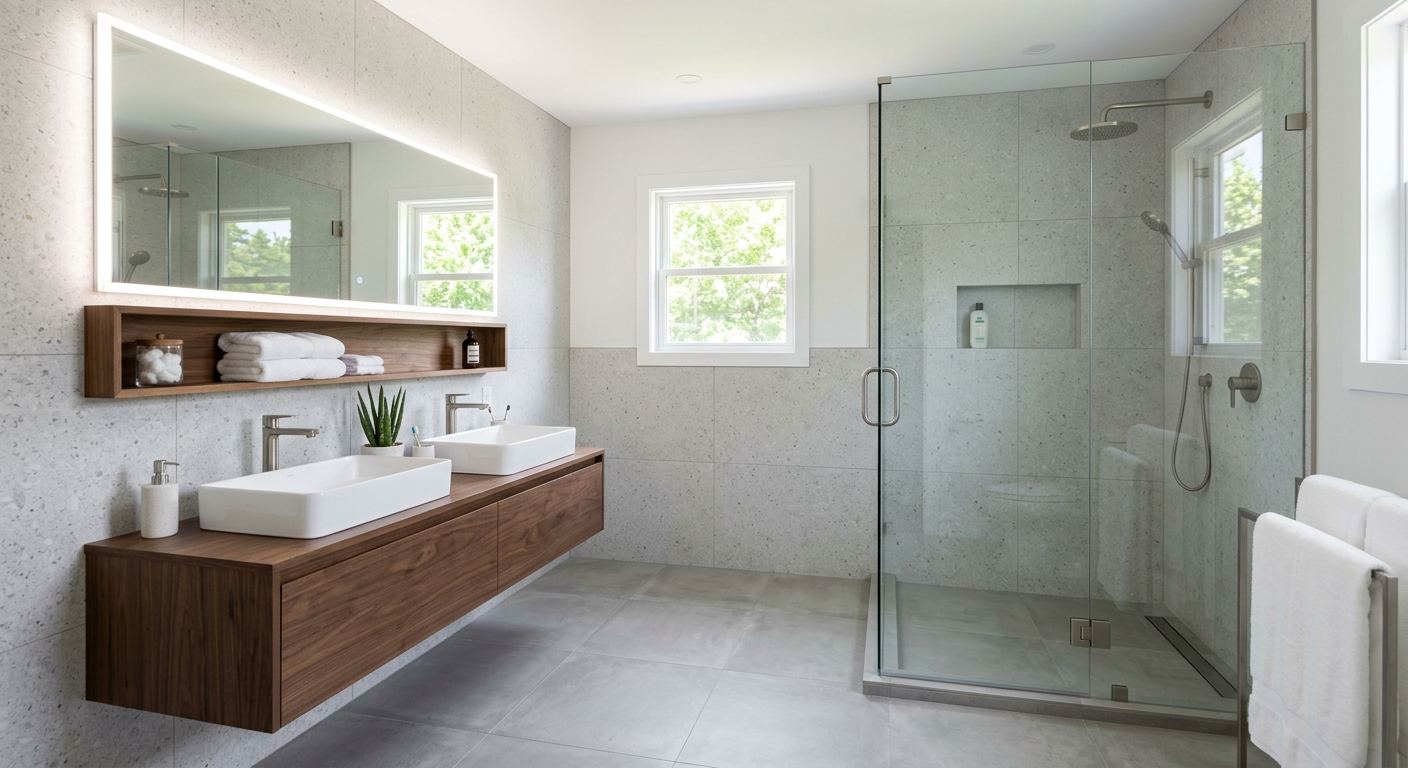
Bathroom renovation options and costs in Midnapore
Midnapore homeowners typically see bathroom renovation choices fall into three lanes: a quick refresh, a mid-range remodel, or a higher-end build-out. With a population of 6,480 in Midnapore (Statistics Canada, 2021 Census), demand is often concentrated in the same older residential pockets where bathrooms were built to early plumbing layouts—meaning what looks “fine” behind the walls can be dated. In many Calgary-area homes, a large portion of the housing stock is older, and that often correlates with cast-iron drain sections, older venting routes, and finishes that were never designed for today’s water-efficient fixtures. For some pre-1985 properties, there’s also a real possibility of asbestos-containing materials in older floor tile or related materials, which is one reason concealed work can expand after demolition.
In the Calgary economic region, pricing is shaped less by climate and more by local labour rates and the condition of what’s already there. Calgary-area trades are busy, and when projects require plumbers, electricians, and tile setters to coordinate, scheduling affects cost. Even though Alberta’s winters don’t directly “damage” bathrooms, cold floors and temperature swings can make it more important to choose proper waterproofing and insulated, well-vented assemblies—especially for tub surrounds, shower pans, and exhaust fan ducting. In Midnapore, contractors are especially in demand around the central commercial corridor and the adjacent residential blocks where families plan updates around school schedules.
If you’re trying to budget confidently, start by picking a scope—then use the table to compare realistic ranges before you talk numbers with contractors.
| Renovation Scope |
What's Included |
Typical Duration |
Price Range |
| Cosmetic refresh (paint, fixtures, accessories only) |
Paint, swap vanity top or vanity, replace toilet/trim, install towel bars/mirrors, deep clean; usually no movement of plumbing or major electrical |
3–7 days |
$4,500–$9,000 |
| Mid-range full renovation (new tile, vanity, tub/shower, electrical) |
Tile floor + shower surround, new vanity and toilet, tub or surround replacement, new exhaust fan, electrical updates to meet code, updated waterproofing, disposal |
2–4 weeks |
$15,000–$22,000 |
| High-end full renovation (custom tile, steam shower, heated floors) |
Custom tile layout, premium fixtures, steam shower or upgraded shower system, heated floor circuit, higher-end waterproofing and membrane system, enhanced lighting, trim millwork |
4–7 weeks |
$22,000–$35,000 |
| Shower-only installation (convert tub to walk-in shower) |
Remove tub, create walk-in shower, new valve trim, new shower pan base, tile surround, waterproofing, exhaust fan check/update as needed |
1–3 weeks |
$8,000–$15,000 |
| Bathtub replacement or tub-liner install |
Replace tub with matching plumbing tie-ins, or install a tub liner where appropriate; recaulk, test for leaks, seal waterproofing transitions |
1–2 weeks |
$500–$3,000 |
| Tile-only installation (floor + surround, existing layout kept) |
Remove old tile only where needed, install new floor + wall tile, grout/seal, waterproofing prep; keeps plumbing locations as-is |
1–3 weeks |
$3,000–$12,000 |
Prices are estimates only and vary by project scope, site access and material selection.
What affects the price of bathroom renovation in Midnapore
In Midnapore and the wider Calgary area, you can see quotes for the “same” bathroom that swing by 30% to 50%. Most homeowners assume the difference is tile selection, but the bigger drivers are local labour rates and the age/condition of the housing stock. Labour availability in Calgary is competitive, and when a bathroom needs coordinated plumbing, rough-in repairs, electrical adjustments, and tile installation, contractors can’t always absorb extra time without changing the price.
Older homes in the Calgary economic region often hide issues that aren’t visible during a first walkthrough—such as cast-iron or deteriorating drain sections that require replacement, copper supply line pinholes, and venting routes that don’t match modern fixture demands. Venting and drainage upgrades add labour because they may require cutting access, patching drywall, and coordinating with inspections. Another common cost accelerator is galvanized supply lines: they may not fail immediately, but troubleshooting and planned upgrades can expand the rough-in scope. If asbestos-containing materials are discovered in older vinyl floor tile or old drywall compound (more common in pre-1985 homes), abatement protocols are triggered, which typically adds $1,500–$5,000 or more depending on scope and disposal requirements.
Here are examples of how local conditions change costs in Midnapore: (1) if you keep the same vanity footprint and don’t move the drain, you can stay closer to the tile-only band around $3,000–$12,000; (2) if you change the shower size and move the valve location, you usually move into shower-conversion territory around $8,000–$15,000; (3) if the exhaust fan ducting can’t be reused and needs rerouting for proper airflow, electrical and drywall time increase. Calgary’s climate isn’t the main cost driver—but good ventilation and waterproofing choices are essential to prevent moisture problems in cold-season living.
| Price Factor |
Why It Matters |
Cost Impact |
| Layout change — moving drain or supply lines requires rough-in work |
Relocating plumbing means opening walls/floors, adding or replacing pipe runs, pressure testing, and coordinating trades |
Can add 20%–45% versus keeping locations |
| Tile selection — large-format porcelain vs. mosaic vs. ceramic |
Harder materials require more prep, specialized cuts, and careful flatness to avoid cracking or lippage |
Can add 10%–30% to tile labour and prep |
| Fixture tier — builder-grade vs. mid-range vs. designer brands |
Better valves, finishes, and trims cost more and sometimes require more precise installs |
Varies widely; often a 5%–20% total project swing |
| Subfloor condition — rot or unlevel concrete adds scope |
Soft spots, water damage, or uneven substrates require framing repair, leveling, and additional waterproofing strategy |
Often adds 15%–40% when discovery occurs |
| Electrical — adding GFCI outlets, exhaust fan, heated floor circuit |
New circuits, fan upgrades, and safety-compliant outlets require licensed electrician time and inspection coordination |
Commonly adds $800–$3,500 depending on complexity |
| Waterproofing method — membrane type and extent |
Proper systems protect against leaks; more extensive coverage and better membranes increase material and install time |
Can add $600–$2,000+ for better systems |
| Older-home surprises — asbestos tile, cast-iron drains, galvanized pipes |
Discovery changes the work: abatement, demo control, pipe replacement, patching and inspections |
Often adds $1,500–$5,000+ in concealed repair scenarios |
| Bathroom size — sq ft drives tile and labour time directly |
More square footage increases tile setting, waterproofing coverage, thinset/grout, and drying/curing time |
Typically affects total cost proportionally |
Permits & regulations in Alberta
In Alberta, the permitting picture is usually straightforward, but it’s important to sort “cosmetic” from “functional changes.” In practice, cosmetic updates—like swapping a vanity, replacing fixtures, repainting, or retiling without moving plumbing routes—rarely need permits. However, permits are typically required when you change the plumbing rough-in, move drain or supply lines, add or relocate vents, or make structural wall changes that affect framing or load paths. Adding a new exhaust fan often triggers permitting if it involves new wiring, a new circuit, or electrical work beyond basic replacement; and any electrical work must meet the provincial code and be done or signed off by a licensed electrician.
Step-by-step for a homeowner in Midnapore to verify an Alberta-licensed contractor:
- Ask for the contractor’s Alberta trade licence details (and name the scope it covers, like plumbing or electrical subcontracting if applicable).
- Request a current certificate of insurance (liability) and confirm the policy covers renovation work and the project address.
- Ask for WSIB/WCB coverage documentation (or a clearance letter, if the contractor provides it for your project).
- Verify all documentation is current—before work starts, not after the first day of demolition.
- If a permit is needed, confirm who pulls it and who schedules inspections (and get that in writing).
When you keep the plumbing in place and only update finishes, you usually avoid permits; once you move valves/drains, add electrical circuits for fans or heated floors, or alter walls, expect permits and inspections to enter the plan.
Choosing tile, waterproofing and fixtures for your Midnapore bathroom
In Midnapore, the fastest way to control budget is to make smart pairings between tile, waterproofing, and fixtures—because each decision affects the time your installer spends and how resilient the finished bathroom is to daily use. First, choose tile tier based on both looks and installation complexity. Ceramic tile is an entry-level option and can be cost-effective when your substrate is flat; it’s commonly used for straightforward floor and wall patterns. Porcelain tile is denser and generally more reliable for wet areas; it also holds up better to scrubbing, but it typically needs more careful planning for cuts and grout lines. Natural stone (marble, travertine, slate) looks premium, but it demands more prep, sealing, and careful layout to manage porosity and variations—so labour time usually rises.
Second, waterproofing. In Alberta’s cold-season homes, bathrooms are repeatedly cycled between warm showers and cooler storage temps, so protecting against moisture intrusion matters. A paint-on membrane can work in certain applications, but bonded sheet membranes or a well-proven system (including a proper perimeter detailing approach) usually provides stronger protection where joints and corners are most vulnerable. The right waterproofing choice can prevent mouldy grout lines and the “musty” smell that sometimes shows up behind shower walls.
Third, fixtures. Builder-grade valves and trims save upfront, but mid-range or designer brands often bring better internals, finishes, and long-term reliability—helping resale appeal in Calgary. For example, upgrading to higher-quality shower trim while keeping the overall tile footprint may be a better value than switching to natural stone everywhere; you’re paying the premium where it’s most visible and used daily.
If you’re balancing cost, it’s typical to start around the tile band of $3,000–$12,000 and put the savings into better waterproofing detailing or a stronger exhaust strategy—often where homeowners feel the benefits later, not just at install time.
| Material / Option |
Pros |
Cons |
Price Range |
| Ceramic tile (floor + walls) |
Good entry price, wide style selection, predictable performance when installed on solid substrate |
More prone to chipping if substrate prep is poor; may be less durable than porcelain in high-scrub homes |
$3,000–$7,000 |
| Porcelain tile (floor + walls) |
More durable for wet areas, tighter manufacturing consistency, great for modern large-format looks |
Can increase labour and cut complexity; higher material cost |
$6,000–$12,000 |
| Natural stone (marble, travertine, slate) |
Luxury look, unique veining/texture, strong curb appeal for resale |
Requires sealing, careful selection for slip resistance, higher risk of variability and increased install time |
$10,000–$22,000 |
| Frameless glass shower enclosure |
Bright, modern appearance; makes smaller bathrooms feel larger |
More expensive hardware; requires precise measurement and clean, plumb edges |
$2,500–$6,500 |
| Prefab tub surround (acrylic) |
Fast installation, fewer seams than traditional tile surrounds, often easier on budgets |
Less customization than full tile; transitions still need careful detailing |
$500–$3,000 |
| Custom shower pan (tile or linear drain) |
Best drainage performance when designed correctly; premium look for modern walk-ins |
More build time, more waterproofing detailing, higher labour and membrane material |
$4,000–$12,000 |
How to choose a bathroom renovation contractor in Midnapore
Choosing the right contractor in Midnapore starts with documentation, because renovations often uncover hidden issues. First, verify Alberta licensing and liability insurance: ask for the trade licence(s) that match the scope, and request a certificate of insurance that names the project location. For worker coverage, confirm WSIB/WCB coverage (or request the clearance letter if they use one for renovation projects). If a contractor can’t provide these without delays, that’s a risk to you.
Next, get 2–3 itemised written quotes. You want labour and material separated—not one lump sum—so you can compare tile setting labour, waterproofing materials, electrical scope, plumbing rough-in, demolition, disposal, and drywall/paint. Scope clarity matters in Calgary-area bathrooms because concealed repairs can arise; a good quote will identify assumptions (like “opening walls to verify condition”) and list what happens if surprises are found.
Read the warranty terms carefully. Ask the contractor how long they warranty workmanship, what the manufacturer warranty covers for fixtures/tile systems, and whether warranties are transferable to you as the homeowner. For payments, avoid large deposits; a practical approach is no more than 10%–15% upfront, then a holdback until the job is substantially complete and verified. Finally, request a written timeline with a start date and realistic completion estimate that reflects lead times for tile, glass, vanities, and inspections.
- Confirm their Alberta trade licence details for the work they perform.
- Verify liability insurance certificate is current and project-address specific.
- Confirm WSIB/WCB coverage and obtain proof before work starts.
- Ask for an itemised quote (labour + materials) and compare apples-to-apples scopes.
- Confirm who pulls permits and schedules inspections (if needed).
- Check what’s included in disposal (dump fees, haul-away, recycling).
- Clarify exclusions: subfloor repairs, ventilation upgrades, valve changes, electrical add-ons.
- Request waterproofing details: membrane type, coverage areas, and tie-in method at corners and drains.
- Ask about tile installation method and how they handle floor flatness/small lippage.
- Verify electrical scope: GFCI outlets, exhaust fan wiring, and heated-floor circuits where applicable.
- Get warranty in writing (workmanship length, product warranties, what triggers voiding).
- Plan payments: small deposit, staged payments, and holdback until completion and walkthrough.
Red flags: contractors who won’t show insurance/licence documentation; quotes that omit waterproofing method and assume “standard tile install” on older substrates; pressure to pay a large deposit; vague timelines with no start/completion dates; and change-order language that doesn’t define what triggers extra charges when hidden conditions appear.
Frequently asked questions — bathroom renovation in Midnapore
How do I compare bathroom renovation quotes?
Start by comparing scope line-by-line, not just the total number. In Midnapore, two quotes can land in similar territory but differ dramatically if one includes waterproofing membrane details, exhaust fan upgrades, drywall repair, or permit pull while the other treats them as “extras.” Ask each contractor whether plumbing locations are staying the same, because relocating drain/supply lines often changes the job into rough-in work. Also compare fixture tiers: a “new vanity and toilet” could range from builder-grade to designer brands. If one quote fits a mid-range band (for example, around $15,000–$22,000) and another is much lower, verify what’s excluded—especially disposal, electrical/GFCI updates, and any subfloor repairs discovered after demo. Finally, confirm who is responsible for scheduling inspections in Alberta when permits are required.
Can I live at home during a bathroom renovation in Midnapore?
Often yes, but it depends on how your contractor sequences the work and whether you can keep a partial bathroom function. In Midnapore, many homeowners live in the home during a renovation if the project is limited to a cosmetic update or tile work that doesn’t require shutting down the whole plumbing system for long. However, if your reno includes a tub-to-shower conversion, valve relocation, or electrical changes for an exhaust fan/heated floor, expect temporary disruption—sometimes for a couple of weeks. A practical approach is to plan for a “working shower” option (or use a spare bathroom if you have one) and set clear milestones for when plumbing is reconnected, when waterproofing is cured, and when tile grout is complete. If your bathroom is the only one in the home, ask the contractor for a phasing plan and a written timeframe to reduce downtime.
What's the best bathtub material for a Midnapore home?
For most Midnapore homes, the “best” bathtub material is the one that matches your subfloor stability, insulation needs, and the level of finishing you want. If you’re keeping costs controlled, replacing a tub with a durable acrylic tub or using a suitable liner approach can be cost-effective—bathtub replacement or tub-liner installs can fall in the $500–$3,000 band depending on what’s being done. If you’re doing a full renovation, you may move up to options that better retain heat and pair well with modern waterproofing and updated surround finishes. The key is not just the tub material but also proper waterproof detailing where the tub meets walls and how your contractor handles any older substrate issues. In Alberta’s seasonal temperature swings, good insulation and ventilation help reduce condensation and moisture lingering in the wall cavity.
Is it worth renovating a bathroom before selling in Midnapore?
Usually it can be, especially if your current bathroom shows wear that buyers immediately notice—worn tile, outdated vanities, poor ventilation, or visible staining. In a market where older housing stock is common, buyers often expect modern waterproofing, fresh finishes, and updated plumbing/electrical safety (like correctly installed GFCI protection). A cosmetic refresh can improve appearance, but if there are hidden moisture issues, only a proper remodel will address them. For a value-focused update, you can aim for mid-range renovations that align with typical full-reno expectations (often in the $15,000–$22,000 range for many projects, depending on tile and electrical scope). If you have a tight timeline before listing, ask contractors for staged options: finish tile and waterproofing first, then upgrade fixtures and lighting once the core system is stable. The most important factor is that the work is completed to a durable, inspection-ready standard.
How do I plan a bathroom renovation on a tight budget in Midnapore?
Budget-tight bathrooms in Midnapore do best when you protect the “must-haves” and reduce optional upgrades. First, keep plumbing locations where possible—layout changes are where costs jump because they require rough-in work, inspections, and more demolition. Second, choose tile strategically: you can often hit a tile-only path around $3,000–$12,000 when the layout stays put, then allocate savings to waterproofing quality and a proper exhaust fan. Third, consider a cosmetic refresh if the tub/shower walls are sound; a refresh can be far less disruptive than a full rebuild. When homeowners do upgrade, pick one “hero” area—like the shower surround or the vanity—rather than upgrading everything. And always include contingency for concealed issues common in older Calgary-area homes, because once walls open you may encounter subfloor repairs or older plumbing/venting adjustments.
What's the difference between a cosmetic and a full bathroom renovation?
A cosmetic renovation focuses on surface-level changes: paint, swapping fixtures/trim, replacing a vanity, and sometimes retiling without moving plumbing or major electrical. A full bathroom renovation typically includes demolition down to the substrate, new waterproofing, tile and fixture replacement throughout, and often electrical and ventilation upgrades. In Midnapore and the Calgary region, the “full” scope is the one that usually addresses hidden conditions—subfloor damage, outdated drain/venting setups, and potential older-material surprises that only show up after demo. Budget-wise, a cosmetic refresh can start around the low five figures, while full renovations commonly land much higher (with full bathroom renovation pricing often within $15,000–$30,000, depending on selections and concealed repairs). If you’re unsure which category you’re in, ask contractors to list what they assume stays in place versus what they will open and verify.