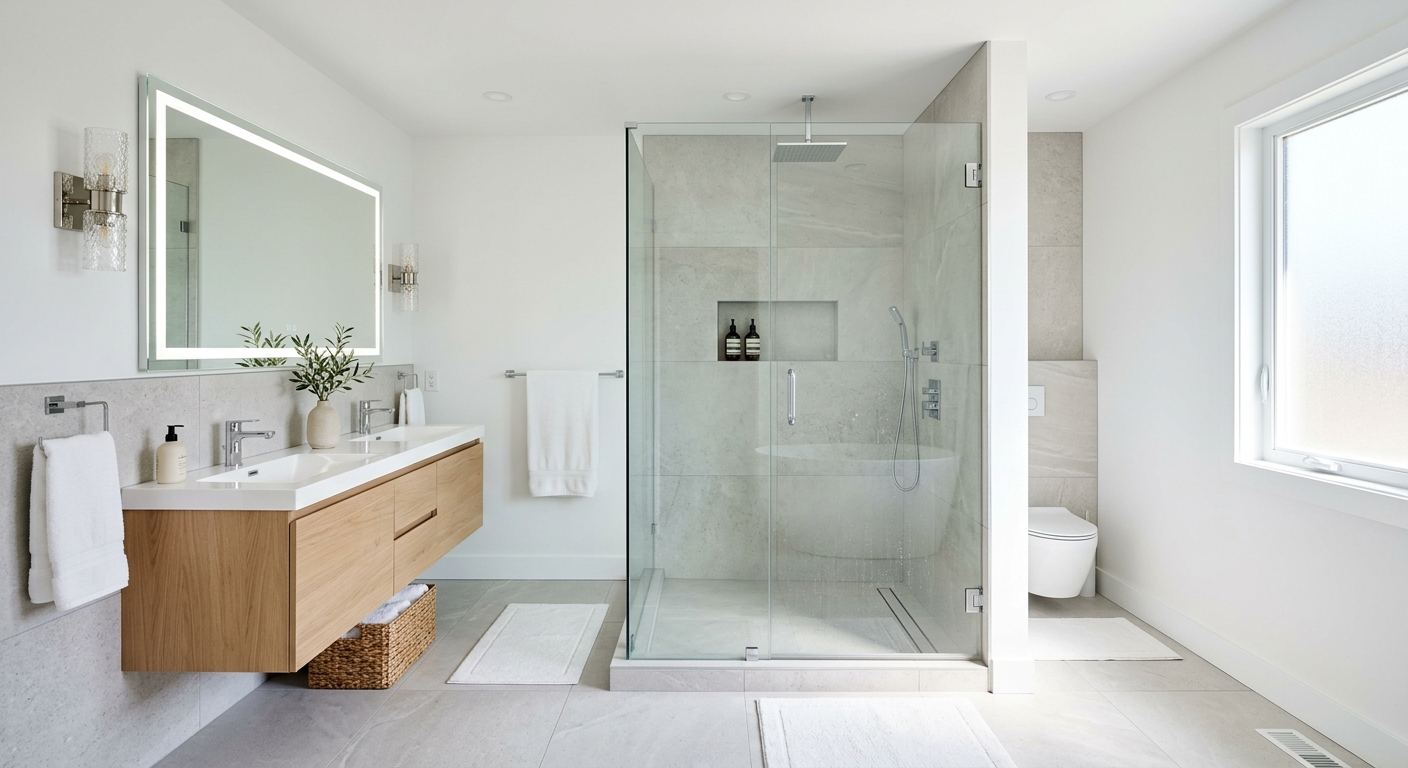
Bathroom renovation options and costs in Tawa
Tawa, Alberta sits in the Calgary economic region, and pricing here is shaped less by weather and more by labour availability and what’s hidden behind the walls. With a population of 1,972 (Statistics Canada, 2021 Census), trade capacity can feel tight compared with bigger centres, and that can affect scheduling and labour rates. Tawa homes often reflect older build patterns—meaning dated plumbing layouts, cast-iron or older drain assemblies, and sometimes floor-tile materials that were installed in earlier eras—so even a “simple” refresh can uncover extra scope after demo. In Calgary-area housing, concealed repairs like venting upgrades, subfloor or wall repairs, and drainage rework are commonly discovered once walls are opened, which is why bids for the same bathroom can diverge quickly.
Renovation costs in the Calgary region are also influenced by finish choices: tile coverage, shower complexity, and electrical scope (exhaust fan, GFCI, or heated-floor circuits) tend to drive the largest swing. Climate-wise, Alberta winters don’t directly increase labour, but they do raise the importance of good waterproofing and ventilation so moisture doesn’t linger in a cold, less forgiving bathroom environment.
If you’re looking in parts of town where older housing stock is most common, contractors often see the highest demand for trade coordination and concealed work—especially around mature residential corridors. Next, compare the common renovation pathways and realistic budget ranges in the table below.
| Renovation Scope |
What's Included |
Typical Duration |
Price Range |
| Cosmetic refresh (paint, fixtures, accessories only) |
Repaint, replace vanity or faucet, mirror/light swap, new toilet or tub spout (no plumbing relocation), accessories |
2–5 days |
$3,000–$7,000 |
| Mid-range full renovation (new tile, vanity, tub/shower, electrical) |
New tub/shower or refinished surround, tile floor + walls, vanity, toilet, electrical for GFCI + exhaust fan, plumbing updates as needed, waterproofing system, new trim/fixtures |
2–3 weeks |
$15,000–$22,000 |
| High-end full renovation (custom tile, steam shower, heated floors) |
Custom steam shower or high-end walk-in, premium tile layout, heated floors, upgraded waterproofing, designer fixtures, enhanced lighting, more extensive plumbing/electrical coordination |
3–5 weeks |
$22,000–$35,000 |
| Shower-only installation (convert tub to walk-in shower) |
Demo tub, install new walk-in shower base/pan, tile surround, glass or curtain hardware, plumbing reconfiguration, exhaust fan or upgrades if required |
1–2 weeks |
$12,000–$18,000 |
| Bathtub replacement or tub-liner install |
Tub swap (or liner where appropriate), sealing, new trim/fixtures, minor plumbing adjustments, re-caulk and finish |
3–7 days |
$2,000–$5,000 |
| Tile-only installation (floor + surround, existing layout kept) |
Remove/prepare surfaces, install tile floor and/or tub surround, standard shower waterproofing where accessible, grout/seal, matching trim |
1–2 weeks |
$6,000–$14,000 |
Prices are estimates only and vary by project scope, site access and material selection.
What affects the price of bathroom renovation in Tawa
Two homeowners in the same Calgary economic region can receive quotes that differ by 30–50% for what sounds like a similar bathroom, and it usually isn’t because of the “look”—it’s because of what gets counted (and what gets discovered). Regional labour rates, the age and condition of the housing stock, and the amount of hidden scope (venting, subfloor repairs, and drain upgrades) drive the real cost. In older Tawa homes, plumbing can include cast-iron or older drain assemblies that need replacing, and supply lines can be dated or undersized. If ventilation is inadequate, the contractor’s ventilation and moisture-control work can expand beyond the original plan.
Asbestos and older wiring can also swing budgets. Discovery of asbestos in vinyl floor tile or older drywall compound (commonly seen in pre-1985 construction) triggers abatement protocols and typically adds $1,500–$5,000+ depending on quantity, containment, and disposal. That’s why even a “mid-range” plan that starts around the mid-teens often moves closer to a full-reno range once the team opens the walls.
Here are a few concrete examples tied to typical Tawa bathrooms: (1) If you move a toilet or vanity, the rough-in can require additional drain work and labour-heavy re-routing—often pushing a shower refresh toward a full renovation budget (for context, full renovations commonly land between $15,000–$30,000 in this tier). (2) Upgrading ventilation from a weak fan to a correctly ducted exhaust can add cost, but it prevents long-term moisture issues. (3) Large-format porcelain tile looks cleaner, but it demands flatter substrates; if the subfloor is unlevel, prep and levelling add labour.
| Price Factor |
Why It Matters |
Cost Impact |
| Layout change — moving drain or supply lines |
Requires plumbing rough-in, patching, and often more demolition |
Often +$3,000–$8,000 |
| Tile selection — large-format porcelain vs. mosaic vs. ceramic |
Harder materials and more cutting/layout time increase labour |
Often +$1,000–$6,000 |
| Fixture tier — builder-grade vs. mid-range vs. designer brands |
Premium trims and valves cost more and may be more complex to install |
Often +$500–$4,000 |
| Subfloor condition — rot or unlevel concrete adds scope |
Need for repairs/level prep, thicker backer boards, and extra waterproofing detail |
Often +$1,500–$7,000 |
| Electrical — adding GFCI outlets, exhaust fan, heated floor circuit |
Licensed electrical work, permits/inspections, and wiring routes |
Often +$800–$4,500 |
| Waterproofing method — membrane type and extent |
Better systems require proper prep and detailed terminations at corners/penetrations |
Often +$500–$3,000 |
| Older-home surprises — asbestos tile, cast-iron drains, galvanized pipes |
Abatement, replacements, and additional disposal/containment |
Often +$1,500–$10,000+ |
| Bathroom size — sq ft drives tile and labour time directly |
More surface area increases materials and install time |
Varies, commonly +$1,500–$6,000 |
Permits & regulations in Alberta
In Alberta, not every bathroom update triggers a permit, but the work type does matter. In most cases, cosmetic updates—like swapping a vanity, replacing a faucet, changing light fixtures, painting, or retiling without moving plumbing or altering structural elements—typically do not require a permit. However, permitting becomes more likely when you relocate plumbing (moving a drain or supply lines), add or relocate an exhaust fan with new wiring/circuit work, or make changes that affect structure (like removing/altering framing or load-bearing components). Electrical work must meet Alberta electrical code requirements and be completed or signed off by a licensed electrician.
Homeowners in Tawa should also assume plumbing rough-in changes will require a permit and inspection, since the rough-in phase must be verified before walls close. Step-by-step, here’s how to protect yourself when hiring:
- Ask for the contractor’s Alberta trade licence details and confirm the licence is active (use the province’s online registry for your trade type).
- Request a certificate of insurance for general liability—make sure the coverage dates align with your project start and completion.
- Confirm workers’ compensation coverage (WCB/WSIB coverage, depending on the insurer naming used in your documents). If the contractor can’t provide coverage proof, pause the job.
- Get the permit plan in writing: who pulls permits, whether the electrician and plumber handle their own inspections, and whether you’re responsible for anything.
- For electrical tied to exhaust fans, heated floors, or additional outlets, ensure a licensed electrician is listed on the permit/inspection paperwork.
Good contractors will welcome verification—those who avoid documentation are the ones most likely to cut corners on the details that can cost you later.
Choosing tile, waterproofing and fixtures for your Tawa bathroom
In Tawa bathrooms, your three biggest budget levers are tile choice, waterproofing method, and fixture tier. Start with tile: entry-level ceramic can be cost-effective, but it still takes skilled prep and installation. Mid-range porcelain usually offers better durability and water resistance for floors and shower walls, while natural stone (marble, travertine, slate) adds both material cost and installation complexity because it may require sealing schedules and extra attention to substrate flatness and joint layout. In practice, porcelain often hits the sweet spot for the Calgary market—durable enough for daily use, with fewer surprises than softer stone.
Next is waterproofing, which is the difference between a bathroom that stays crisp through Alberta cycles and one that develops odours or grout breakdown. A paint-on membrane can work for certain simpler systems, but bonded sheet membranes and professional schluter-style assemblies generally provide more robust performance when installed correctly at seams, corners, and penetrations. In Alberta’s colder months, bathrooms can dry more slowly when ventilation is inadequate—so the quality of the waterproofing details matters.
Finally, fixtures: builder-grade options can keep you near the lower end, while mid-range or designer brands can raise costs but may reduce maintenance and improve user experience. For example, upgrading to a better valve/trim and a properly sized shower head system might add around $500–$2,000, which is often justified if you’re already investing in a shower surround and waterproofing.
Match these choices to your situation: if you’re doing a “tile-only installation,” spend where it prevents failure; if you’re doing a mid-range full renovation (often around $15,000–$22,000), it’s usually worth selecting a waterproofing system you won’t want to redo later.
| Material / Option |
Pros |
Cons |
Price Range |
| Ceramic tile (floor + walls) |
Good budget control, wide style selection, easy to source |
Can chip or wear faster than porcelain; may need more grout lines |
$3,000–$7,000 |
| Porcelain tile (floor + walls) |
Denser and more water-resistant; holds up well in showers and on floors |
Often heavier and may increase substrate prep needs |
$5,000–$12,000 |
| Natural stone (marble, travertine, slate) |
Luxury look, unique variation, strong perceived value |
Sealing/maintenance; layout and installation complexity increase cost |
$8,000–$18,000 |
| Frameless glass shower enclosure |
Bright, modern look; easy to clean; complements tile-heavy designs |
Higher hardware cost; needs precise leveling and waterproofing detail |
$2,000–$6,000 |
| Prefab tub surround (acrylic) |
Faster install, fewer tile cuts, often more budget-friendly |
Less “custom” look; can be less forgiving if the underlying wall isn’t smooth |
$1,000–$3,000 |
| Custom shower pan (tile or linear drain) |
Premium look, integrated slope and drainage control; cleaner lines with linear drains |
More waterproofing detailing and specialty installation time |
$3,500–$10,000 |
How to choose a bathroom renovation contractor in Tawa
Choosing a bathroom contractor in Tawa starts with verification, not sales pitch. First, confirm Alberta trade licensing (for the relevant trades used on your scope), then verify liability insurance and workers’ compensation coverage. Ask for documentation: a current certificate of insurance for general liability and proof of WCB/WSIB coverage for the crew. When you receive these documents, check the dates (coverage should overlap your renovation window) and ensure the contractor’s legal name matches the quote and paperwork.
Next, get 2–3 itemised quotes. Look for labour and materials broken out separately—especially for demo/disposal, waterproofing, tile install, plumbing rough-in, and electrical work. A quote that’s a single lump sum often hides differences in waterproofing details, membrane choice, and whether permit fees or patching/level preparation are included.
Read the scope carefully for exclusions: who is responsible for permit pulls, what disposal costs are covered, whether asbestos or hazardous material handling is included if discovered, and what happens if subfloor repairs uncover additional rot. Warranty matters too—ask for the workmanship warranty length and whether it’s transferable to future owners if you sell. Finally, payment schedule: never go beyond 10–15% upfront for materials and deposits, and hold back until key milestones or full completion. In writing, require a start date and a completion estimate with allowances for curing times (membranes, grout, and sealants).
- Ask which waterproofing system is used (membrane type) and how corners/penetrations are detailed.
- Confirm who supplies tile backer boards, sealants, and movement joints.
- Demand an itemised line for plumbing rough-in and any venting changes.
- Verify exhaust fan specifications and duct routing (not just “install a fan”).
- Check if permits are included for plumbing/electrical scope and who pulls them.
- Request the disposal plan for tile, drywall, and any demolition debris.
- Confirm your toilet/vanity offsets and rough-in dimensions before ordering.
- Ask for product warranty details (manufacturer) and workmanship warranty details.
- Ensure the quote includes caulking, trim finishing, and grout sealing steps.
- Confirm the schedule in writing, including inspection/rough-in milestones.
- Get proof of licensed electrician involvement for any new circuits.
- Use a written change-order process if hidden scope is discovered.
Red flags in Tawa bathroom renovations include: “cash-only” or no documented insurance, quotes that skip waterproofing specifics, refusing to itemise labour/materials, vague timelines with no start/finish dates, and payment demands beyond 10–15% upfront without a deposit breakdown.
Frequently asked questions — bathroom renovation in Tawa
How much does a walk-in shower cost in Tawa?
A walk-in shower in Tawa typically starts in the mid-range because the project often includes demo, waterproofing, a new shower base, and tile or surround work. If you’re converting from a tub to a walk-in, many Calgary-area contractors budget around $12,000–$18,000 depending on glass enclosure, drain type, and whether plumbing rough-in needs changes. In older Tawa homes, budget can climb if concealed issues appear—like drainage alignment, venting adjustments, or subfloor repairs needed for a proper waterproofing system. If your plumbing layout is already compatible, costs can land closer to the lower end; if you’re moving fixtures or adding heated floors, it naturally trends higher.
What's the ROI on a bathroom renovation?
ROI depends on your resale market condition, the finish level you choose, and whether the renovation corrects functional problems (like poor ventilation, outdated plumbing, or leaking). In the Calgary region, bathrooms are high-impact rooms, but an “overbuilt” luxury refresh doesn’t always return dollar-for-dollar. A sensible mid-range renovation often performs better because it upgrades the durable parts—waterproofing, ventilation, and plumbing—while keeping finishes realistic. If you’re planning a full renovation in this tier, many homeowners view projects around $15,000–$22,000 as a balance between modernization and resale appeal, especially in homes where hidden-scope repairs are already expected. (Statistics Canada, 2021 Census) data shows Tawa’s smaller population base, so buyer pools can be tighter—meaning buyers prioritize reliability and moisture control.
Do I need waterproofing behind the tile?
Yes—proper waterproofing behind tile is essential in a bathroom shower or tub-surround area, regardless of whether you’re in Tawa or across Alberta. Tile itself isn’t waterproof; grout and minor imperfections can allow moisture to travel if the assembly isn’t protected. A professional contractor will install a waterproofing method appropriate to the system: commonly a membrane approach (paint-on or bonded-sheet) with correct terminations at seams, corners, and plumbing penetrations. If you skip waterproofing, you may see early grout discolouration, soft subfloor spots, or odours that return every Alberta winter when bathrooms take longer to dry. That’s why quotes should explicitly state the waterproofing method and coverage—not just “we tile it.”
How do I compare bathroom renovation quotes?
Start by comparing scope line-by-line, not by the total price alone. Ask each contractor to itemise: demolition/disposal, waterproofing type, tile coverage, subfloor preparation/leveling, plumbing changes (including venting), and electrical scope (GFCI, exhaust fan, heated floor circuit). Confirm whether permit pulling is included for the work that typically needs it—especially plumbing rough-in changes and new exhaust fan circuits. Compare product selections too: “mid-range vanity” can vary widely. If one quote for a similar shower-only job comes in closer to $12,000–$18,000 while another is far higher, ask why—glass type, pan/linear drain choice, waterproofing system, and labour hours matter. Also confirm warranty and workmanship terms before you pick the cheapest bid.
Can I live at home during a bathroom renovation in Tawa?
Often yes, but it depends on how extensive the renovation is and whether you can keep a functional bathroom. For a cosmetic refresh or tile-only install, many homeowners manage by using the rest of the home while work is staged. For full renovations, living at home is possible if you can tolerate limited bathroom access during demolition and waterproofing cure times; however, many contractors will recommend relocating to a different bathroom for the week or two when the shower/tub area is open. In Tawa and the wider Calgary region, scheduling is important: trades coordinate to reduce downtime, but hidden-scope discoveries can extend the exposed period. The safest planning approach is to ask your contractor for a day-by-day access plan and a clear statement of when fixtures will be back in service.
What's the best bathtub material for a Tawa home?
“Best” depends on the look you want and what your existing rough-in and floor can support. For many Tawa homeowners, acrylic tubs are a practical choice: they’re relatively lightweight for installation, they can be cost-effective, and they hold heat better than some alternatives. Cast iron tubs are extremely durable and stable, but they’re heavier and can increase labour and floor/subfloor considerations. Fibreglass/acrylic systems may be paired with a tub surround for budget control, while a full tile surround around a tub can be more time-intensive but offers a unified waterproofed finish. If you’re budgeting a tub replacement, it commonly falls in the $2,000–$5,000 range when the plumbing location doesn’t change. If you’re changing the layout, you should expect the budget to move upward due to rough-in scope.