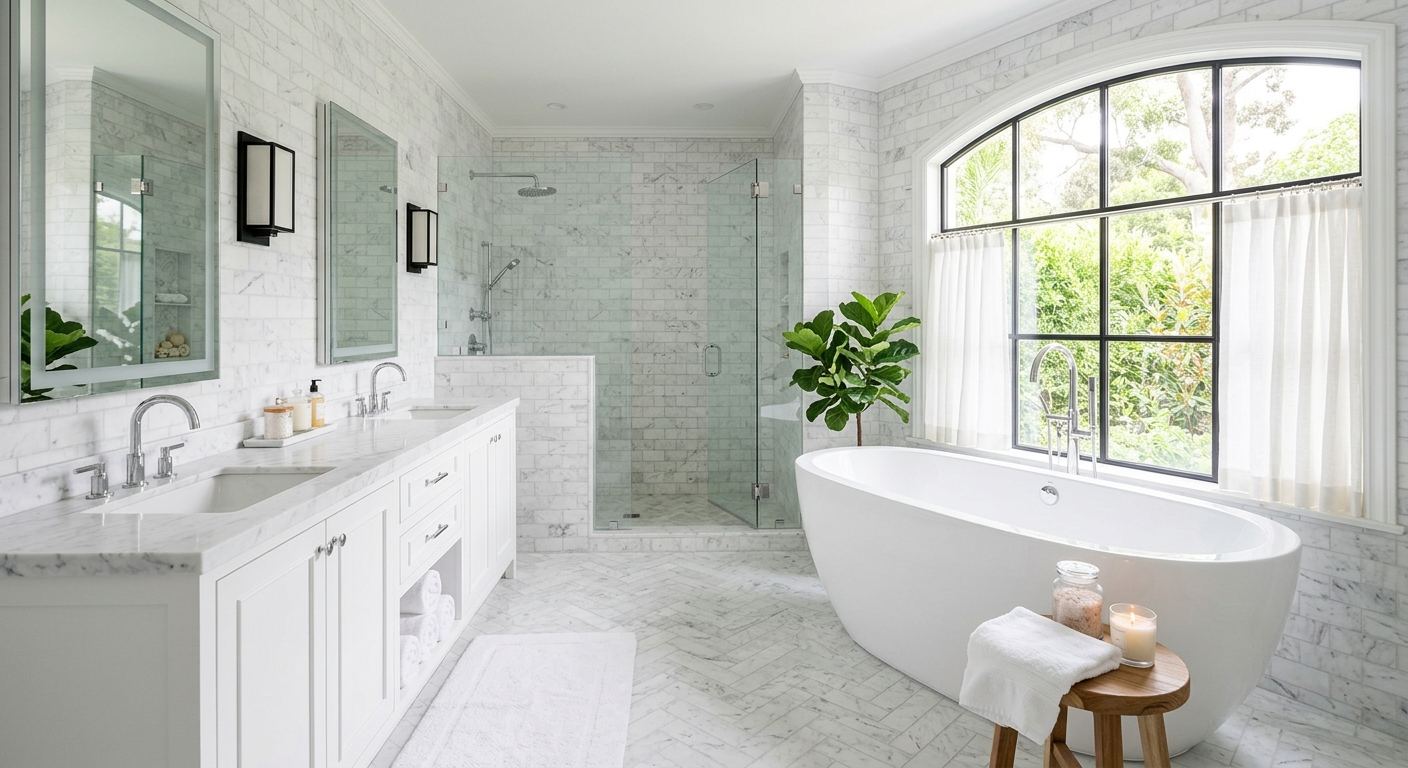
Bathroom renovation options and costs in Whitehorn
Bathroom renovations in Whitehorn, Alberta often start with simple decisions—then reveal how old the home really is. Whitehorn’s population was 11,085 in 2021 (Statistics Canada, 2021 Census), and the neighbourhoods around Calgary include a large share of older housing that came with dated plumbing layouts, older venting strategies, and finishes that may have hidden issues behind the tile. In Calgary’s broader housing stock, you’ll also run into older floor tile installations that can contain asbestos or have asbestos-containing adhesives, particularly in homes built or renovated before modern materials standards were common.
Pricing in the Calgary economic region is shaped more by local labour availability and the age/condition of existing bathrooms than by outdoor climate alone. Contractors commonly report that what looks like a “refresh” can turn into a full remodel once walls are opened—especially when cast-iron drains, galvanized supply lines, or inadequate ventilation are discovered. That’s why budget ranges can swing by thousands even when homeowners request the same look.
In Whitehorn, trades are especially in demand in the older townhouse pockets and near high-traffic commuter routes where access, parking, and staging can be tighter. If your bathroom is in an older structure, it’s smarter to assume concealed scope will appear and compare options based on the level of demolition and rebuild you’re willing to accept.
Use the table below as a realistic budgeting map for Whitehorn bathroom work.
| Renovation Scope |
What's Included |
Typical Duration |
Price Range |
| Cosmetic refresh (paint, fixtures, accessories only) |
Paint, caulking refresh, swap vanity top or vanity, toilet/lighting fixtures replacement (existing plumbing), towel bars/accessories, deep clean |
3–7 days |
$3,000–$7,000 |
| Mid-range full renovation (new tile, vanity, tub/shower, electrical) |
Demo and rebuild, new vanity, new tub/shower system or surround, new tile floor and walls, exhaust fan upgrade, basic electrical updates (often GFCI), new waterproofing system, disposal |
2–4 weeks |
$15,000–$25,000 |
| High-end full renovation (custom tile, steam shower, heated floors) |
Higher-end layout detailing, custom tile work, steam shower plumbing/electrical coordination, heated flooring, premium fixtures and glass, enhanced waterproofing details, coordination of finishes |
4–7 weeks |
$25,000–$40,000 |
| Shower-only installation (convert tub to walk-in shower) |
Convert tub area to walk-in shower, new shower pan and drain work (where required), tile surround or wall system, new glass or curtain system, exhaust fan/venting checks, waterproofing |
2–4 weeks |
$12,000–$20,000 |
| Bathtub replacement or tub-liner install |
Remove existing tub (or prep), install new tub or tub-liner over existing surfaces (when condition allows), trim/caulking, leak testing, re-tile limited areas as needed |
5–12 days |
$1,500–$3,500 |
| Tile-only installation (floor + surround, existing layout kept) |
Tile floor and/or shower surround only, substrate prep, waterproofing where tile is being installed, grout/trim, limited demolition to expose proper surfaces |
1–3 weeks |
$6,000–$14,000 |
Prices are estimates only and vary by project scope, site access and material selection.
What affects the price of bathroom renovation in Whitehorn
Two homeowners in Whitehorn can receive quotes for the “same” bathroom and still see 30–50% differences. In the Calgary area, the usual driver isn’t outdoor weather—it’s labour rates, trade coordination, and the condition of what’s behind the walls. Calgary-area contractors commonly price with the expectation that older homes include hidden scope such as rough-in plumbing upgrades, venting corrections, subfloor repairs, or waterproofing remediation once demolition is underway.
Older housing in the Calgary economic region often includes cast-iron or dated drain stacks that need replacement or reconfiguration, galvanized supply lines that may not meet today’s performance expectations, and ventilation that isn’t adequate for fast humidity recovery. Those issues inflate scope even if your visible finish package looks simple. On top of that, discovery of asbestos in vinyl floor tile or older drywall compound in pre-1985 homes triggers abatement protocols, adds labour and containment, and often adds $1,500–$5,000+ to the overall budget depending on how much material is disturbed.
Concrete examples from Whitehorn projects: (1) a bathtub surround that “just needs fresh tile” can become a full waterproofing replacement if the membrane was applied incorrectly or has failed at corners; (2) moving the vanity can add rough-in work if you need to relocate supply lines; (3) if the floor is out of level, expect extra underlayment/patching to ensure tile won’t crack. These are the reasons you’ll often see mid-range full renovations land around $15,000–$25,000, while higher-end upgrades with steam features and heated floors commonly push well past $25,000–$30,000.
| Price Factor |
Why It Matters |
Cost Impact |
| Layout change — moving drain or supply lines requires rough-in work |
New distances often mean cutting joists, modifying subfloor, and re-venting coordination |
$3,000–$8,000 |
| Tile selection — large-format porcelain vs. mosaic vs. ceramic |
Harder tile increases labour time, patterning waste, and substrate precision requirements |
$1,000–$6,000 |
| Fixture tier — builder-grade vs. mid-range vs. designer brands |
Higher-end taps, valves, and shower systems raise material costs and sometimes rough-in compatibility |
$500–$5,000 |
| Subfloor condition — rot or unlevel concrete adds scope |
Repairs, flattening, and reinforcement can be required before waterproofing and tile install |
$1,000–$7,500 |
| Electrical — adding GFCI outlets, exhaust fan, heated floor circuit |
New circuits mean licensed electrical work, permits/inspection where applicable, and extra coordination |
$800–$4,500 |
| Waterproofing method — membrane type and extent |
Better membranes reduce failure risk but add cost through materials and labour detail |
$700–$4,000 |
| Older-home surprises — asbestos tile, cast-iron drains, galvanized pipes |
Discovery changes demolition approach, increases labour and sometimes requires specialized abatement |
$1,500–$10,000+ |
| Bathroom size — sq ft drives tile and labour time directly |
More surface area increases tile quantities, thinset/grout use, cutting, and installation time |
$800–$6,000 |
Permits & regulations in Alberta
In Alberta, the permit path depends on how much you change, not just that you renovate a bathroom. Cosmetic updates—swapping fixtures, replacing a vanity, repainting, and doing retiling where you do not move plumbing—typically do not require permits. However, permitting is commonly required when you relocate plumbing (moving a drain or supply line), make structural wall changes, or add new exhaust ventilation with new wiring where the electrical scope changes.
Electrical work must meet Alberta’s electrical code requirements and be completed by (or signed off by) a licensed electrician. Adding a new exhaust fan, installing a heated floor circuit, or adding a GFCI outlet in a new location usually triggers a code-compliant approach that requires proper inspection. Plumbing rough-in changes—opening walls to change pipe runs, drains, or venting—are typically permitted and inspected before closing the walls.
For a homeowner in Whitehorn, the verification steps should be practical and documented. First, ask for the contractor’s Alberta trade licence number and confirm it through the province’s online licence registry. Second, request a current certificate of liability insurance—make sure the coverage is active for the project dates and matches bathroom trade work. Third, confirm WSIB/WCB coverage (or the appropriate clearance letter where applicable) so you’re not exposed if a worker is injured. Keep copies of these documents in your renovation file alongside the itemised quote.
If asbestos is suspected due to age or prior finishes, ask how the contractor handles testing and containment and whether separate abatement is booked before demolition proceeds.
Choosing tile, waterproofing and fixtures for your Whitehorn bathroom
In Whitehorn bathrooms, your budget is mostly decided by three material choices: tile, waterproofing, and fixture tier. (1) Tile choice affects not only material cost but also installation complexity. Ceramic is usually the entry-level option—fine for many renovations—but it may be less durable for heavy traffic and can require more surface prep. Porcelain is a common mid-range pick because it handles moisture well and tends to be more uniform for consistent finishes. Natural stone (marble, travertine, slate) looks premium, but it adds cost and demands careful sealing and substrate preparation.
(2) Waterproofing is where Alberta bathrooms succeed or fail. You want a system designed for wet areas and consistent wet-to-dry drying. A paint-on membrane can work for certain limited applications, but bonded sheet membranes or a well-detailed schluter-style system often provides stronger performance where tile meets corners, niches, and transitions.
(3) Fixture tier affects both cost and long-term satisfaction. Builder-grade taps and valves save money initially, while mid-range or designer brands can reduce issues like cartridge wear and improve water control. For example, upgrading to a higher-end shower valve and glass may cost more, but it’s often justified if you’re already doing a full shower rebuild around $12,000–$20,000 for a tub-to-shower conversion—because the valve and framing work are already happening.
Matching the combination to your budget matters: if you’re aiming near a mid-range renovation of $15,000–$25,000, select porcelain tile plus a proven membrane system, then allocate savings toward a quality exhaust fan and correct waterproofing details rather than chasing the most expensive stone.
| Material / Option |
Pros |
Cons |
Price Range |
| Ceramic tile (floor + walls) |
Often lower material cost, good variety, straightforward install for standard sizes |
More prone to chipping; may require extra attention to layout and substrate flattening |
$3,000–$8,000 |
| Porcelain tile (floor + walls) |
Moisture-resilient, consistent quality, typically better for wet-area durability |
Can cost more; larger formats need highly accurate substrate |
$5,000–$12,000 |
| Natural stone (marble, travertine, slate) |
High-end look, unique veining and texture, excellent statement finish |
Sealing/maintenance, potential for uneven tones, higher material and labour risk |
$8,000–$20,000 |
| Frameless glass shower enclosure |
Modern look, easy to clean, makes small bathrooms feel larger |
Higher hardware cost; requires proper waterproofing and alignment |
$2,000–$6,500 |
| Prefab tub surround (acrylic) |
Faster install, lower labour intensity than tile, good for budget refreshes |
Less customization; still needs correct prep to avoid movement issues |
$500–$2,500 |
| Custom shower pan (tile or linear drain) |
Best drainage performance, integrated look, enables modern linear drains and custom slopes |
More build time; requires precise waterproofing and drain placement |
$4,000–$12,000 |
How to choose a bathroom renovation contractor in Whitehorn
Choosing the right contractor in Whitehorn starts with verifying Alberta credentials and protecting yourself on the business side. Ask for their Alberta trade licence number and check it through the provincial licence registry. Request a certificate of liability insurance and confirm it covers the scope of bathroom renovation work. Also verify WSIB/WCB coverage (or the appropriate clearance documentation). If a contractor can’t provide documents quickly, that’s a sign to pause—especially in older Calgary-area homes where concealed work and additional trades can increase site risk.
Next, get 2–3 itemised written quotes. You want labour and materials broken out (demo, plumbing rough-in, waterproofing, tile labour, electrical allowances, disposal), not a single lump sum that hides exclusions. Read the scope for what’s not included: drywall patching beyond a certain square footage, permit pulling, asbestos testing/abatement allowances, supply/delivery delays, and whether materials carryers are included. Confirm whether disposal and dumpster rental are included, since that can change week-to-week costs in busy residential areas.
For warranty, ask for workmanship coverage in writing—length matters—and confirm whether product/manufacturer warranties transfer to you if you sell the home. Payment schedule should be conservative: never pay more than 10–15% upfront, and hold back a meaningful amount until completion and final walkthrough.
Finally, timeline matters. Get a stated start date, estimated duration, and a process for how change orders are priced if surprises occur after demolition.
- Provide licence number and proof of Alberta insurance before you sign.
- Show WSIB/WCB coverage or clearance documentation for the crew.
- Quote is itemised: labour vs. materials, including allowances for tile and fixtures.
- Scope clearly states what is included for waterproofing (membrane type and coverage).
- Confirm whether permits are included and who pulls them.
- Confirm disposal: demolition debris hauling and any dumpster rental.
- Written start date and completion estimate with a realistic buffer for older homes.
- Request names of the plumber and electrician (or proof they are licensed) for your project.
- Ask how they handle older-home surprises (asbestos assessment, drain replacement allowances).
- Warranty: workmanship duration and exclusions, plus product warranty transfer details.
- Payment schedule capped at 10–15% deposit; holdback retained until sign-off.
- Use a change-order process with written pricing and timelines before extra work starts.
Red flags I see in Whitehorn projects: contractors who won’t share licence/insurance proof; quotes that omit waterproofing details; “cash only” or vague payment schedules; no written timeline or warranty terms; and lump-sum pricing with no exclusions for demolition, disposal, or permit scope.
Frequently asked questions — bathroom renovation in Whitehorn
What's the best tile for a bathroom in Whitehorn?
For Whitehorn, the “best” tile is usually porcelain—because it’s dependable in wet areas and holds up well to humidity swings typical of Alberta bathroom use. If your budget is tighter, ceramic tile can work, but the real determinant of performance is the substrate prep and waterproofing system underneath. In older Calgary-area homes, uneven floors or past water damage can cause tile failures even with good tile. If you’re targeting a mid-range full renovation, many homeowners choose porcelain and land in the $15,000–$25,000 band depending on whether plumbing/electrical is updated. Spend where it counts: proper membrane coverage, correct curing times, and accurate layout to reduce cutting and lippage.
Should I do a tub-to-shower conversion?
A tub-to-shower conversion is often worth it in Whitehorn if you want easier day-to-day access and less maintenance. It usually improves usability and can be a good choice for resale as bathroom buyers often prefer step-in showers. Budget-wise, conversions commonly run in the $12,000–$20,000 range because you’re not just swapping finishes—you’re changing the waterproofing and drain strategy. In older homes, expect a chance of additional scope if the existing drain line or venting needs adjustment. If you love soaking tubs, you can compromise with a smaller tub or a hybrid shower system, but if you’re unsure, ask your contractor to confirm feasibility once walls are opened and you see the plumbing condition.
How do I prevent mold in a Whitehorn bathroom?
Mold prevention in Alberta comes from moisture control, not just paint. In Whitehorn bathrooms, the two best investments are a properly sized exhaust fan vented correctly (with code-compliant electrical wiring) and a waterproofing system that prevents water from migrating behind tile. Even if the bathroom looks dry, moisture can build at grout lines, corners, and shower niches. Choose a membrane system designed for tiled wet areas, and make sure transitions (around niches, plumbing penetrations, and floor-to-wall joins) are sealed with the right detailing. Also, plan for drying time: run the fan during and after showers and keep door/airflow habits consistent. Contractors in the Calgary region often see mold risk rise when older ventilation is underperforming or when a previous membrane is compromised.
What adds the most resale value in a bathroom reno?
Resale value usually comes from improvements buyers can feel instantly: modern, durable finishes and functional upgrades that remove friction in daily use. In Whitehorn and the Calgary market, that commonly means fresh tile done well, updated lighting and ventilation, and fixtures that look current but are installed correctly. A well-built shower with clean waterproofing often has more impact than “surface-only” work. If your layout is aging, addressing ventilation and plumbing reliability can be more valuable than upgrading to the most expensive tile. Many homeowners find a mid-range full renovation lands around $15,000–$25,000, and those projects typically balance visible updates with the unseen work that affects long-term performance.
Can I keep my existing plumbing layout to save money?
Yes—keeping the plumbing layout is one of the most reliable ways to control cost in Whitehorn. When you don’t move drains or supply lines, you reduce the amount of rough-in work behind the walls, which lowers labour time and coordination complexity. That’s especially important in older homes where hidden conditions (like cast-iron drain sections, dated venting, or galvanized supply) can expand scope after demolition. If you keep the layout but change the vanity and fixtures, you still get a strong visual upgrade without the same risk level. Your contractor should confirm rough-in condition during demo; if they uncover issues, you can plan targeted upgrades rather than a full rework. This is why budget planning often differs between “cosmetic” and “mid-range full renovation” approaches.
How much does a walk-in shower cost in Whitehorn?
A walk-in shower cost in Whitehorn depends on whether it’s a conversion from an existing tub and how complex the build is (glass, tile, niche work, and linear drains). Many homeowners converting tub to walk-in showers fall within the $12,000–$20,000 range, especially when new waterproofing, tile, and drain strategy are included. If you choose higher-end features like custom glass, heated floors, or extensive custom tile detailing, the number climbs toward higher full-renovation budgets. If your existing layout is already shower-ready and you’re doing tile-only changes, the project can be less. The best way to get a realistic number is an itemised quote that separates shower installation labour, waterproofing scope, and glass/fixtures allowances.