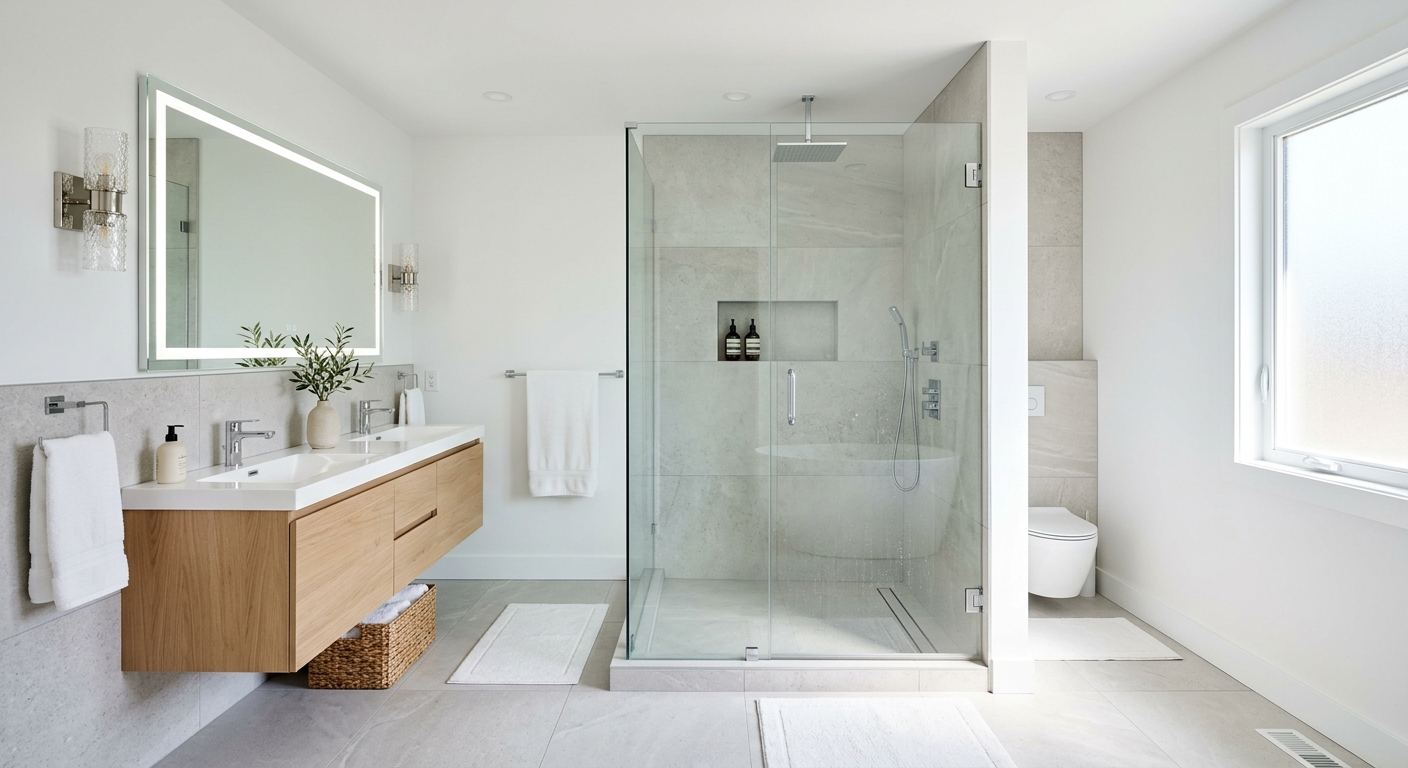
Bathroom renovation options and costs in Cape Horn
Bathroom renovations in Cape Horn are shaped as much by the local building market as by the room itself. With a population of 12,680 (Statistics Canada, 2021 Census), the Lower Mainland–Southwest area has steady demand for trades, and that shows up in renovation pricing. Cape Horn homes also tend to reflect Lower Mainland housing patterns—mid-century and older construction is common—so it’s not unusual to uncover dated plumbing layouts, patchy subfloors, and, in some pre-1985 builds, the possibility of asbestos-containing materials in flooring or drywall compound.
Lower Mainland–Southwest costs are driven primarily by labour rates and the age of the housing stock, more than by climate. That said, British Columbia’s coastal humidity still punishes weak ventilation and imperfect waterproofing, so bathrooms require careful moisture management. When contractors open walls and floors, projects frequently expand to include plumbing and venting upgrades to bring systems up to current British Columbia code.
In the Cape Horn area around the peninsula and older residential pockets near the central commercial strip, plumbers, tilers, and electricians are often booked ahead because many homeowners are renovating bathrooms at the same time. For many households, the biggest price swings happen after discovery work—what looks like a cosmetic refresh can turn into rough-in updates once supply lines, drains, and electrical are assessed.
Below are realistic options and price bands to help you compare contractor proposals before you choose a scope.
| Renovation Scope |
What's Included |
Typical Duration |
Price Range |
| Cosmetic refresh (paint, fixtures, accessories only) |
New vanity or faucet, toilet/trim updates (no plumbing relocation), paint, re-caulk, accessory changes, basic reseal around tub/shower |
3–7 days |
$6,000–$12,000 |
| Mid-range full renovation (new tile, vanity, tub/shower, electrical) |
Demo and rebuild, floor and wall tile, vanity and mirror, tub/shower replacement or refinishing, new exhaust fan, updated GFCI outlets, waterproofing and custom backer/underlayment as needed |
2–4 weeks |
$18,000–$32,000 |
| High-end full renovation (custom tile, steam shower, heated floors) |
Premium tile layout, custom steam shower design, heated floor wiring and controls, upgraded lighting, upgraded waterproofing system, higher-tier plumbing fixtures and ventilation strategy |
4–8 weeks |
$33,000–$45,000 |
| Shower-only installation (convert tub to walk-in shower) |
Remove tub, install shower base/pan and tile surround, new valves and controls as needed, waterproofing system, new exhaust fan (typical), updated plumbing connections |
2–3 weeks |
$14,000–$25,000 |
| Bathtub replacement or tub-liner install |
Replace existing tub with new unit (or install liner where applicable), re-seal, new caulking/grout, minor wall prep, reattach fixtures/trim (no major layout change) |
5–10 days |
$1,500–$6,000 |
| Tile-only installation (floor + surround, existing layout kept) |
Tile removal and install, waterproofing prep, new grout/caulk, typically vanity and toilet protected or reset if needed, layout kept to reduce rough-in |
1–2 weeks |
$8,000–$22,000 |
Prices are estimates only and vary by project scope, site access and material selection.
What affects the price of bathroom renovation in Cape Horn
Two quotes for what seems like the same bathroom reno in Cape Horn can differ by 30–50% across the Lower Mainland–Southwest and the wider British Columbia market. In practice, the difference usually isn’t the tile—it’s the labour availability and the age of the housing stock. Lower Mainland–Southwest construction labour costs are typically higher due to strong demand and skilled-trade availability, so even “small” changes add up quickly when multiple trades are scheduled back-to-back.
Older homes in this region often hide the real budget killers: cast-iron or older drain stacks that need upgrading, galvanized or aged copper supply lines, and ventilation that’s undersized for today’s shower usage. Once walls are opened, contractors may need to expand scope to improve venting and drainage to meet current requirements. That’s why a project that starts as a mid-range renovation can climb toward the full renovation range—commonly from around $18,000–$32,000 toward the $33,000–$45,000 side if rough-in upgrades and premium waterproofing are required.
Pre-1985 materials can also matter. If asbestos-containing material is discovered in vinyl floor tile or drywall compound, abatement protocols and specialized handling are required, commonly adding $1,500–$5,000+ depending on extent, access and disposal requirements. Two common Cape Horn examples: (1) removing a “simple” shower surround reveals undersized backer and compromised framing, which adds time; (2) upgrading an exhaust fan duct route through older ceilings adds cutting and patching because paths are constrained.
In short, British Columbia’s humidity doesn’t usually change labour rates, but it increases the importance of waterproofing and ventilation—so skipping steps typically costs more later.
| Price Factor |
Why It Matters |
Cost Impact |
| Layout change — moving drain or supply lines requires rough-in work |
New lines mean demolition, framing access, plumbing rough-in, pressure testing and inspection |
Typically +10% to +25% over kept-layout scopes |
| Tile selection — large-format porcelain vs. mosaic vs. ceramic |
Harder tiles demand better prep, more precise cuts and additional labour for detailing |
Often +$2,000–$8,000 depending on size and complexity |
| Fixture tier — builder-grade vs. mid-range vs. designer brands |
Premium valves, trim finishes and specialty shower components cost more and may require more labour to install |
Commonly +$1,500–$6,000 |
| Subfloor condition — rot or unlevel concrete adds scope |
Correcting structure and waterproofing underlayment increases prep time and materials |
Often +$1,000–$4,000 |
| Electrical — adding GFCI outlets, exhaust fan, heated floor circuit |
Licensed electrical connection, permits/inspection coordination and wiring increases project coordination time |
Typically +$800–$3,500 (heated floors can be higher) |
| Waterproofing method — membrane type and extent |
Better membranes and correct details around niches and transitions reduce moisture failures |
Often +$600–$2,500, but can prevent costly redo work |
| Older-home surprises — asbestos tile, cast-iron drains, galvanized pipes |
Discovery triggers remediation, additional trades, and sometimes permit/inspection expansion |
Potentially +$1,500–$10,000+ depending on findings |
| Bathroom size — sq ft drives tile and labour time directly |
More surface area means more tile, thinset, backer, waterproofing and longer labour days |
May swing total costs by 15%–30% between small and larger bathrooms |
Permits & regulations in British Columbia
In British Columbia, cosmetic updates to a bathroom typically do not require a permit—swap fixtures, repaint, and re-tile in the same layout are usually treated as finishing work. However, permits commonly apply when you relocate plumbing (moving a drain or supply lines), change the structure (like altering walls), or add mechanical/electrical components that require new circuits. In practice for Cape Horn homeowners, the “permit triggers” are often:
- Plumbing changes that require a permit: moving a toilet/shower drain, relocating valves, changing the venting path, or replacing sections of drain/supply that require rough-in inspection.
- Electrical changes that require licensed work: new or altered circuits (including GFCI outlets, exhaust fan wiring, or heated floor controls). Licensed electrical is required and must meet provincial code.
- Ventilation updates: adding a new exhaust fan or changing ducting usually requires correct electrical and may require inspection depending on scope.
Step-by-step to verify your contractor in Cape Horn:
- Trade licence: Ask for their British Columbia licence number and confirm it via the appropriate online registry for their trade category (plumbing/electrical/general contractor as applicable).
- Liability insurance: Request a current certificate of insurance (COI) showing liability limits and that the policy is active during your dates.
- Worker coverage: Confirm coverage through WSIB/WCB documentation (coverage letter or proof). This protects you if a worker is injured on-site.
- Clearance letters (if applicable): Ask for written proof of good standing/clearance for the work period.
Also request written confirmation that permits/inspections will be coordinated by the trades that trigger them, not by you.
Choosing tile, waterproofing and fixtures for your Cape Horn bathroom
In Cape Horn, the smartest bathroom budgets start with three material decisions: tile choice, waterproofing method, and fixture tier. These choices don’t just affect look—they directly affect how long the project takes, how reliably it resists moisture, and whether you’ll need to revisit repairs in a few years.
1) Tile choice. Entry-level ceramic is usually the most economical for floor and wall, but it can be less forgiving on uneven substrates. Porcelain typically costs more but handles wear better and is easier to keep consistent in high-traffic zones. Natural stone (marble, travertine, slate) looks premium, yet it often requires more careful sealing and more labour for premium finishes and fit.
2) Waterproofing method. British Columbia humidity and frequent showers demand robust waterproofing. Paint-on membranes can work in limited applications if installed correctly, but bonded sheet membranes or proven systems with better detail continuity around corners/niches generally lower the risk of mould and leaks. Skipping proper overlaps and transitions is where failures happen.
3) Fixture tier. Builder-grade fixtures can be fine for function, while mid-range and designer brands add smoother valves, better finishes, and improved longevity. In a resale-minded Reno, that can matter more than swapping from mid-grade to luxury trim if your waterproofing and ventilation are already solid.
Where the price difference is justified: Spending the extra labour on a higher-quality waterproofing detail often costs less than the cost of a future re-tile. For example, a realistic upgrade from basic tile installation to a more robust full waterproofing approach often moves you within the broader full renovation bands—shifting an install from the lower end of bathroom work toward $18,000–$32,000 rather than risking later water damage that can blow past the $33,000–$45,000 end range.
| Material / Option |
Pros |
Cons |
Price Range |
| Ceramic tile (floor + walls) |
Lower material cost, wide selection, workable for most layouts |
More prone to chips and can be harder to match perfectly on complex patterns |
$2,000–$6,000 |
| Porcelain tile (floor + walls) |
Better durability, water resistance and consistent sizing for cleaner grout lines |
Higher material cost and often requires more precise substrate prep |
$3,500–$8,000 |
| Natural stone (marble, travertine, slate) |
High-end look, natural texture and colour variation |
Sealing and more selective installation, labour-intensive cuts and detailing |
$6,000–$15,000 |
| Frameless glass shower enclosure |
Brightens the space, modern lines, good long-term appearance |
Costlier hardware and must be installed square on a properly prepared pan |
$2,000–$6,000 |
| Prefab tub surround (acrylic) |
Fast install, consistent surfaces, typically easier maintenance |
Limited design flexibility; not as custom-looking as full tiling |
$1,200–$3,000 |
| Custom shower pan (tile or linear drain) |
Custom look, improved water containment, supports linear drain design |
More detailed waterproofing and slope planning; higher labour time |
$4,000–$12,000 |
How to choose a bathroom renovation contractor in Cape Horn
Choosing the right contractor in Cape Horn comes down to proof, paperwork and clarity. Start by confirming British Columbia licensing and insurance in plain terms. Ask for (1) their trade licence number, (2) liability insurance certificate, and (3) WSIB/WCB coverage documentation. For checking: look for the licence number on their invoices/quotes and verify it through the relevant online registry for their trade category; then ensure the COI shows active coverage for the work period; finally, request clearance/coverage letters showing they’re covered for workers on your jobsite.
Next, get 2–3 written, itemised quotes—not lump sums. You want a breakdown that separates labour and materials and identifies what’s included for demolition, disposal, waterproofing, tile install, electrical scope coordination and any permit pulling.
Read the scope carefully. Does the quote include permit applications when plumbing/electrical triggers them? Is waste disposal included, or will you pay extra for skips/dump fees? What’s the plan for subfloor remediation if the inspection reveals rot, unlevel concrete, or hidden piping issues? A good contractor explains allowances (tile, fixtures, niche accessories) and how changes affect price and timeline.
Warranty matters: ask for a written workmanship warranty length and whether it covers waterproofing and sealing systems. Also confirm the product/manufacturer warranties and whether they’re transferable to you as the homeowner. For payment, avoid large upfront payments—keep deposits within about 10–15% and hold back a portion until the job is complete and deficiencies are corrected. Finally, get the start date and completion estimate in writing, including the key milestones (rough-in, tiling, final trim).
- Itemised labour and material costs (no “mystery” allowances).
- Explicit inclusions: waterproofing system type, thickness and coverage details.
- Permit pull responsibility clearly stated where required.
- Disposal/skip and drywall/tile debris handling included in writing.
- Schedule includes shutdown windows for plumbing/electrical inspections.
- Proof of insurance (COI) dated for your project period.
- WSIB/WCB clearance/coverage evidence for worker protection.
- Workmanship warranty details in writing (especially for waterproofing).
- Manufacturer warranty documentation for fixtures and shower systems.
- Payment terms with a small deposit and holdback until completion.
- Clear change-order process for hidden damage discoveries.
- Reference photos of similar Cape Horn-sized bathrooms.
Red flags I see in Cape Horn bathroom projects: vague scopes with no waterproofing details, “cash price” quotes that skip permits when plumbing/electrical is changing, contractors who won’t provide a licence number or COI on request, payment schedules asking for most funds upfront, and unrealistic timelines that ignore curing/grout/waterproofing schedules.
Frequently asked questions — bathroom renovation in Cape Horn
Do I need a permit for a bathroom renovation in British Columbia?
In British Columbia, cosmetic work typically doesn’t need a permit—repainting, replacing a vanity, updating fixtures, or retiling in the same layout are generally treated as finishing. Permits and inspections are much more likely when you change plumbing (moving a drain or supply lines), alter structure, or add new electrical circuits (like wiring a GFCI outlet, exhaust fan, or heated floor controls). In Cape Horn, many older bathrooms have dated drainage and ventilation, so once walls open, the scope can expand to include plumbing/vent upgrades that trigger permits and inspections. The safest approach is to ask your contractor to list which parts of the job require permits and who pulls them, and then confirm their British Columbia trade licensing and insurance before work begins.
What's the best tile for a bathroom in Cape Horn?
For most Cape Horn bathrooms, porcelain tile is usually the best balance of durability and moisture performance in a humid coastal climate. Ceramic can work well too, but porcelain tends to be more consistent for larger formats and better handles everyday wear. If you’re trying to stay budget-conscious, a tile-only approach can land around the lower end of typical tile installation ranges, while a full mid-range bathroom often sits closer to $18,000–$32,000 once waterproofing, substrate prep and electrical coordination are included. If you go natural stone, plan for sealing and more precise installation; it’s beautiful, but it costs more and takes more care. Whatever you choose, the waterproofing details and grout/caulk lines matter as much as the tile brand.
Should I do a tub-to-shower conversion?
A tub-to-shower conversion is often a great move in Cape Horn homes because it improves accessibility and reduces the risk of mould-prone caulking failure around older tub surrounds. It can also make the bathroom feel larger and easier to maintain. The real question is whether your plumbing layout and venting allow a clean rough-in; moving drains or supplies can add scope and cost. Budget-wise, a shower-only installation (convert tub to walk-in) commonly falls in the $14,000–$25,000 range, depending on whether you’re keeping the layout and what shower pan/premium glass you choose. If your existing subfloor is sound and ventilation is upgraded, the payback is usually strong.
How do I prevent mold in a Cape Horn bathroom?
Mould prevention in British Columbia starts with controlling moisture at the source: a properly sized exhaust fan vented to the exterior, correct electrical GFCI protection, and strong waterproofing around wet areas. Many bathroom failures come from poor membrane transitions at corners/niches or from older bathrooms with inadequate ventilation. During renovations in Cape Horn, I recommend using a proven waterproofing system (often membrane-based rather than paint-only in high-risk zones), plus careful sealing where tile meets fixtures and transitions to drywall. Also, don’t underestimate fan performance—if the fan duct route is long or blocked, it can underperform and keep humidity high. Finally, keep caulk/grout maintained; even premium installations can fail if routine sealing maintenance is skipped.
What adds the most resale value in a bathroom reno?
Resale value usually follows reliability and comfort more than maximum luxury. In Cape Horn and the broader Lower Mainland–Southwest market, the biggest “value signals” are a clean, current layout (even if it stays the same), a modern vanity and lighting, and—most importantly—watertight work that won’t leak. Upgrading ventilation, using correct waterproofing, and bringing electrical to current safety expectations typically protect you from future repair costs, which buyers notice. High-end features like heated floors and premium steam-style components can be a plus, but they’re not the only driver. A well-scoped mid-range full renovation often lands around $18,000–$32,000, while higher-end work can reach $33,000–$45,000. The best resale outcome comes from matching features to your home’s condition and the job’s real needs (subfloor, plumbing, venting).
Can I keep my existing plumbing layout to save money?
Yes—keeping the existing plumbing layout is one of the most reliable ways to save money in Cape Horn because it reduces rough-in demolition and the number of trades required. If the toilet, tub/shower, and vanity can stay in their current positions, you often avoid the labour-heavy parts of moving drain and supply lines. That said, you still need to assess condition: older drain stacks (cast-iron) or supply lines (galvanized or aging copper) may need replacement even when the layout stays the same. Venting is another key factor; older bathrooms sometimes under-vent showers, and fixing that can add cost but prevents future moisture problems. When layout is kept, budgets commonly land in the mid-range full renovation band (about $18,000–$32,000) or a tile-focused package, depending on finishes and waterproofing requirements.