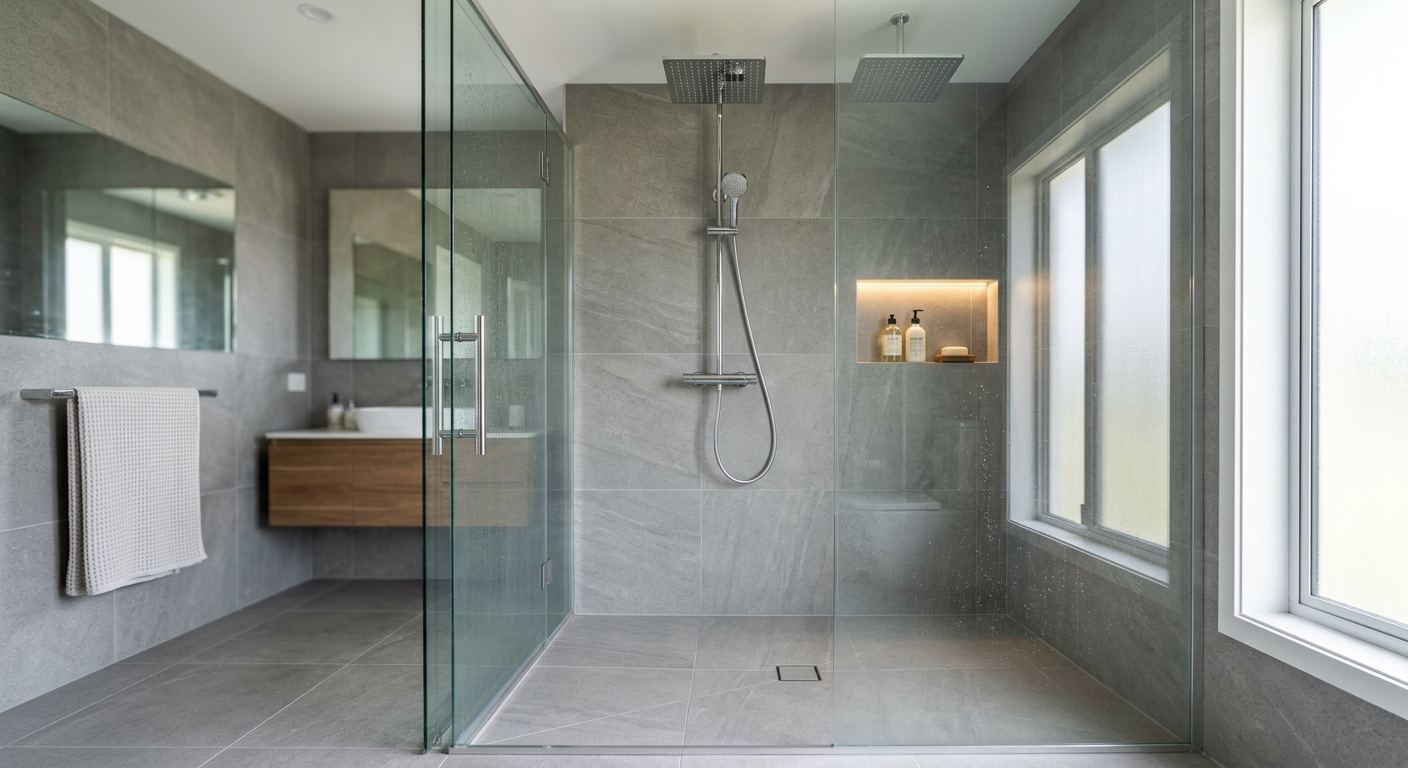
Bathroom renovation options and costs in Vedder Crossing
Bathroom renovation planning in Vedder Crossing usually starts with one question: which level of upgrade matches your needs and budget? With Vedder Crossing sitting in a Lower Mainland–Southwest housing mix where a meaningful share of homes are older, many bathrooms are found in pre-mid-century layouts that can hide dated plumbing runs and finishes behind tile and drywall. That’s where surprises show up—like cast-iron or galvanized components in wall cavities or floor assemblies—and in some pre-1985 homes, asbestos-containing materials can be encountered during demo. (Statistics Canada, 2021 Census) also reminds us this area is established and busy, with a population of 22,620, so skilled trades are in steady demand.
In the Lower Mainland–Southwest, the biggest cost drivers aren’t outdoor weather so much as labour rates and the age of the local housing stock. Contractors in and around Abbotsford and other nearby hubs often juggle high volumes of work, so trades availability and call-out times affect timelines and pricing. Once walls are opened, projects frequently expand to include plumbing and venting upgrades to bring systems up to current British Columbia code, which can shift a “simple” refresh into a full renovation.
In practice, projects in older pockets such as parts of Vedder Crossing near the more established residential streets tend to have higher discovery risk during demo. If you’re comparing options, the table below gives a realistic starting point for common renovation scopes—then you can align the scope to your site conditions and material choices.
| Renovation Scope |
What's Included |
Typical Duration |
Price Range |
| Cosmetic refresh (paint, fixtures, accessories only) |
New paint, replace vanity/lighting/trim, refresh accessories, optional toilet swap, no plumbing relocation, no major tile demo |
3–7 days |
$4,500–$9,000 |
| Mid-range full renovation (new tile, vanity, tub/shower, electrical) |
Remove and replace finishes, vanity, toilet, tub/shower surround, selected tile on floor/walls, new exhaust fan, updated GFCI as needed, basic waterproofing and disposal |
2–4 weeks |
$18,000–$32,000 |
| High-end full renovation (custom tile, steam shower, heated floors) |
Custom waterproofing, premium tile/stone accents, heated floor circuit, upgraded shower system (e.g., steam-ready plumbing/elements), designer fixtures, expanded electrical (fan/lighting/dedicated circuits) |
4–7 weeks |
$32,000–$45,000 |
| Shower-only installation (convert tub to walk-in shower) |
Demolition of tub, new shower pan/tiling, glass or curtain-ready surround, plumbing modifications to drain/supply, exhaust fan check, waterproofing system |
2–3 weeks |
$10,000–$20,000 |
| Bathtub replacement or tub-liner install |
Replace existing tub with a new unit and re-tile/caulk transition; liner where appropriate, updated seals, checks of supply/drain condition, disposal |
3–10 days |
$1,500–$6,000 |
| Tile-only installation (floor + surround, existing layout kept) |
Tile removal (as needed), new tile floor and walls, waterproofing upgrades where required, grout/seal, no drain/supply relocation |
1–3 weeks |
$2,500–$8,000 |
Prices are estimates only and vary by project scope, site access and material selection.
What affects the price of bathroom renovation in Vedder Crossing
Homeowners in Vedder Crossing often get surprised when two quotes for what sounds like the same bathroom land far apart—sometimes by 30–50% across the Lower Mainland–Southwest compared with other parts of British Columbia and Canada. The reason is that bathroom renovations here are heavily labour-driven and schedule-driven: tile setters, plumbers and electricians are in steady demand, and older housing stock means you can’t ignore what’s behind the walls. Climate plays a supporting role through humidity and the need for high-performance waterproofing, but labour costs and housing age typically drive the biggest swings.
Lower Mainland–Southwest homes are frequently mid-century or older, which means contractors commonly uncover cast-iron or older drain stacks that need replacement, galvanized supply lines that may not meet current expectations, and ventilation that wasn’t designed for today’s bathroom exhaust requirements. If asbestos-containing materials are discovered in vinyl floor tile, drywall compound, or insulation in pre-1985 homes, you may face abatement protocols and documentation—often adding roughly $1,500–$5,000+ depending on scope and access.
Two practical examples I see in Vedder Crossing: (1) an “upgrade the vanity and re-tile” job turns into rough-in work when the drain is corroded and requires changes before the shower pan can be properly installed; (2) changing from a standard tub surround to a fully tiled shower can add cost not because the space is bigger, but because the waterproofing system and tile layout time are more demanding. That’s why a tile-only approach can sit near the $2,500–$8,000 band, while a mid-range full renovation that includes electrical and plumbing updates often moves into the $18,000–$32,000 range.
When you plan for discovery—rather than hoping the first opening reveals a perfect system—budgets become more predictable even in an older, busy market.
| Price Factor |
Why It Matters |
Cost Impact |
| Layout change — moving drain or supply lines requires rough-in work |
More demolition and re-plumbing; potential venting considerations |
Often +$3,000–$10,000 depending on how far lines move |
| Tile selection — large-format porcelain vs. mosaic vs. ceramic |
Material cost and install complexity (cuts, stability, labour time) |
Commonly +$800–$4,500 across typical bathroom areas |
| Fixture tier — builder-grade vs. mid-range vs. designer brands |
Supply, finish, valves, trim complexity, and sometimes rough-in requirements |
Typically +$500–$3,500+ for fixtures alone |
| Subfloor condition — rot or unlevel concrete adds scope |
May require reinforcement, membrane adjustments, or subfloor rebuild |
Often +$1,000–$6,000 |
| Electrical — adding GFCI outlets, exhaust fan, heated floor circuit |
Licensed electrical labour, new circuits, safer ventilation design |
Usually +$800–$3,500 |
| Waterproofing method — membrane type and extent |
Better systems reduce failure risk; labour to achieve correct tie-ins |
Frequently +$600–$2,500 depending on method and coverage |
| Older-home surprises — asbestos tile, cast-iron drains, galvanized pipes |
Special handling, extra demo, and replacement of failing components |
Potential +$1,500–$8,000+ |
| Bathroom size — sq ft drives tile and labour time directly |
More surface area means more materials, more set time, longer cure times |
Can change the total by $3,000–$15,000 across similar scopes |
Permits & regulations in British Columbia
In British Columbia, cosmetic bathroom updates—like swapping a vanity, replacing lighting/trim, re-painting, or retiling without moving plumbing—rarely require a permit. Where permits usually come into play is when you change the systems: relocating plumbing (moving drains or supply lines), adding or relocating ventilation with a new exhaust fan circuit, or altering structural walls. Electrical work must meet provincial code and be performed by (or signed off by) a licensed electrician.
Plumbing rough-in changes—opening walls to modify drain/supply routing, replacing sections of drain piping, or changing venting arrangements—typically require a permit and inspection. If your project includes new circuits for heated floors, dedicated GFCI protection, or upgrades to bathroom wiring, that also falls under electrical permitting/verification expectations. For Vedder Crossing homeowners, the practical advice is to assume that any hidden work behind tile or drywall is the part that triggers paperwork, not the face-level finishes.
Step-by-step, here’s how to verify your contractor before you sign: (1) confirm their British Columbia trade licence (request the licence number and verify it via the appropriate online registry); (2) ask for a certificate of liability insurance and ensure the coverage is active for the project dates; (3) request proof of WCB/WSIB coverage—most contractors can provide documentation showing they’re registered and in good standing; (4) ask whether disposal, permit pulling, and inspections are included in the scope so you don’t get hit later with unplanned costs.
Choosing tile, waterproofing and fixtures for your Vedder Crossing bathroom
In Vedder Crossing, three material decisions usually determine both your renovation budget and your long-term comfort: tile choice, waterproofing system, and fixture tier. First is tile. Entry-level ceramic can be a cost-saver, but it may be less forgiving for wet-area performance depending on specification and installation details. Mid-range porcelain is popular in Lower Mainland–Southwest bathrooms because it handles moisture and wear well, and it often installs efficiently when you plan layout around a few key tile sizes. Luxury natural stone—marble, travertine, or slate—looks unmatched, but it demands careful selection and sealing practices and can increase installation time due to tolerances and finishing.
Second is waterproofing. In British Columbia’s humidity and seasonal swings, waterproofing isn’t optional—it’s how you prevent mould and tile failures. A paint-on membrane system can work for specific assemblies when installed to the manufacturer’s schedule, but bonded sheet membranes and well-detailed systems (including curb/shower pan tie-ins) often provide more consistent results in complex shower builds. Getting corners, seams, and penetrations right is where good installers separate from average ones.
Third is fixture tier. Builder-grade fixtures can keep your budget near the “mid-range full renovation” band, while designer brands can push costs higher even if the plumbing layout stays the same. For example, moving from standard valves and trim to a mid-range matching set can be a justified spend when it improves durability and reduces future cartridge/service headaches—but jumping to the highest-priced designer lines may not pay back unless you’re aiming for resale-level finish consistency.
Match your budget to your goal: if you’re staying in the $18,000–$32,000 range, prioritize waterproofing and the correct tile underlayment; if you’re targeting $32,000–$45,000, then heated floors, steam-ready shower details, and premium stone become easier to justify.
| Material / Option |
Pros |
Cons |
Price Range |
| Ceramic tile (floor + walls) |
Good value, wide style selection, straightforward to source |
Can be more prone to chipping; requires careful slip/finish selection |
$2,000–$5,000 |
| Porcelain tile (floor + walls) |
Moisture- and wear-friendly, often more consistent for large-format looks |
Higher material cost; heavier tiles need solid substrate planning |
$3,000–$7,000 |
| Natural stone (marble, travertine, slate) |
Premium appearance and unique veining/texture |
Sealing/maintenance; installation can be slower and more labour-intensive |
$6,000–$12,000 |
| Frameless glass shower enclosure |
Modern look; easier visual alignment with tile |
Costly hardware and precise measurements; can be impacted by tile layout tolerances |
$2,000–$6,000 |
| Prefab tub surround (acrylic) |
Faster install; often reduces tile labour; waterproofing included/optimized for system |
Fewer style options; less “custom” look than full tile |
$1,500–$4,000 |
| Custom shower pan (tile or linear drain) |
Durable, seamless look; linear drains can improve accessibility |
More complex waterproofing and lining; requires skilled detailing |
$2,500–$8,000 |
How to choose a bathroom renovation contractor in Vedder Crossing
Choosing the right contractor in Vedder Crossing means verifying credentials and then controlling scope. Start with British Columbia licensing: ask for their trade licence information and confirm it through the provincial online licensing registry. Next, verify liability insurance—request a current certificate showing coverage limits and the effective dates. Finally, confirm WCB/WSIB coverage: reputable contractors can provide documentation that demonstrates they’re properly registered and insured for their workers.
Then get 2–3 itemised written quotes. You want labour and materials broken out so you can compare apples to apples—tile removal, waterproofing labour, plumbing rough-in, electrical labour, disposal, and any permitted work. Be strict about what’s excluded: for example, ask whether asbestos testing/abatement is included if discovered, whether permit pulling and inspections are part of the price, and whether materials include underlayment, membrane, fasteners, and backer requirements.
Warranty matters in bathrooms because failures aren’t always visible immediately. Ask for the workmanship warranty length and whether it’s in writing; also ask about product/manufacturer warranties on fixtures, shower systems, and heated floor components. Determine if warranties are transferable to you if you sell the home.
On payment schedule, a safe rule of thumb in this market is to never pay more than 10–15% upfront. Hold back payments until key milestones—like waterproofing sign-off and tile completion—so the project doesn’t stall due to disputes. Request a start date and completion estimate in writing, including a realistic plan for when trades like plumbers and electricians are needed.
- Provide BC trade licence numbers for all relevant trades (or sub-trades).
- Show current liability insurance certificate before work starts.
- Confirm WCB/WSIB coverage documentation for their employees/sub-contractors.
- Use itemised quotes: labour line items and material allowances separated.
- Clarify exclusions (asbestos risk handling, subfloor repairs, venting changes).
- Confirm permit pulling responsibility and whether inspections are included.
- Ask for disposal/recycling included in the scope and where debris goes.
- Require waterproofing details: membrane type, coverage areas, tie-in plan.
- Get shower system specifics: drain type, slope method, curb/water-stop approach.
- Ask for a written schedule showing plumber/electrician tile-ready milestones.
- Review warranty documents before paying final amounts.
- Set payment milestones so no more than 10–15% is paid upfront.
Concrete red flags I’ve seen with bathroom contractors in the Vedder Crossing area: (1) only quoting “materials” without defining allowances or specific products; (2) promising waterproofing “the usual way” without naming the membrane system; (3) refusing to provide licence/insurance/WCB proof; (4) requesting large upfront payments beyond 10–15%; and (5) treating permits as optional when you’re moving plumbing or adding fan/heated-floor circuits.
Frequently asked questions — bathroom renovation in Vedder Crossing
What's the best bathtub material for a Vedder Crossing home?
For many Vedder Crossing bathrooms, the “best” bathtub material comes down to installation needs and how much your existing plumbing and subfloor can support. Acrylic tubs are common because they’re relatively lightweight, install cleanly, and keep labour time down when you’re not relocating drains. Fibreglass/almost-any acrylic is often a good value if you’re staying within the lower end of the bathtub replacement band—many tub replacements land around the $1,500–$6,000 range depending on access and whether tile touch-ups are extensive. If you’re doing a full reno and the subfloor is being rebuilt anyway, cast-iron or steel can be durable choices, but they may raise costs due to weight, handling, and fit adjustments. In British Columbia’s humid bathroom environment, what matters most is a proper waterproofing tie-in at the tub-to-wall transition—regardless of tub material.
Is it worth renovating a bathroom before selling in Vedder Crossing?
Usually, it’s worth renovating if your bathroom has visible wear (cracked tile, failing caulking, dated fixtures) or functional issues (poor ventilation, slow drains, unsafe electrics). In Vedder Crossing and the Lower Mainland–Southwest, buyers expect modern waterproofing details and clean, consistent tile work—so skipping waterproofing upgrades rarely helps resale. If your budget is limited, a cosmetic refresh can improve first impressions, but avoid “surface-only” fixes if the waterproofing or plumbing is failing behind the walls. For many sellers, a mid-range full renovation that lands in the $18,000–$32,000 band tends to offer a better buyer-confidence signal than a partial upgrade, especially in older homes where hidden systems may need updates to meet current expectations. If you suspect cast-iron/copper/galvanized age issues or ventilation problems, address them before listing.
How do I plan a bathroom renovation on a tight budget in Vedder Crossing?
On a tight budget in Vedder Crossing, the goal is to protect the expensive parts of the system while trimming finishes and scope. Start by deciding what absolutely must change: if your ventilation is weak, it’s worth investing in an updated exhaust fan and safe electrical connections; if the waterproofing is unknown, don’t risk it. A smart budget approach is to keep the layout so you avoid rough-in changes; layout changes are a major cost driver in the Lower Mainland–Southwest because they require additional demolition and plumbing work. Consider a tile-only or cosmetic-first strategy when your plumbing is sound—tile-only installations commonly fall in the $2,500–$8,000 range when you keep the layout. If you need a tub-to-shower conversion, plan for a bigger budget jump because plumbing and waterproofing complexity rises.
What's the difference between a cosmetic and a full bathroom renovation?
A cosmetic renovation is typically limited to finishes and visible fixtures: painting, replacing a vanity, swapping lighting, updating accessories, and possibly re-caulking or replacing a fixture. It generally does not relocate plumbing or open walls to rework drains/supply lines, and it usually won’t require the same permit level as hidden-system changes. A full renovation involves removing finishes down to the rough structure (often walls and flooring), then rebuilding: new waterproofing, new tile (or shower system), updated ventilation and electrical as required, and sometimes plumbing and venting upgrades. In British Columbia, cosmetic changes usually avoid permits, while plumbing relocation and adding new circuits often trigger permits and inspections. Cost-wise, cosmetic refresh projects often start lower than full renovations; many fall well below the $18,000–$32,000 mid-range full band, while full renovations can reach $32,000–$45,000 depending on features and materials.
How do I choose the right contractor for my bathroom in Vedder Crossing?
Choose a contractor who can prove three things: licensing/qualification, insurance, and a clearly written scope. In British Columbia, ask for their trade licence details and confirm them through the provincial licensing registry. Get a certificate of liability insurance before work starts and request documentation showing WCB/WSIB coverage so you’re protected if something goes wrong. Then get 2–3 itemised written quotes—not lump sums—so you can compare labour vs. materials allowances and see what’s excluded (disposal, permit pulling, subfloor repairs, waterproofing scope). A reliable contractor will also specify waterproofing method, shower system details, and tile prep requirements. For bathroom projects in the Lower Mainland–Southwest, timeline clarity matters too—if they can’t coordinate plumber/electrician/tile milestones, expect delays and change-orders.
What's the most common mistake homeowners make in bathroom renovations?
The most common mistake is under-scoping the hidden work—especially waterproofing tie-ins and plumbing/venting checks—then trying to fix it after tile is installed. In Vedder Crossing and the wider Lower Mainland–Southwest, older homes frequently reveal issues once walls open: aged drain components, dated supply lines, insufficient ventilation, and sometimes asbestos-containing materials in pre-1985 floor tile or drywall compound. Homeowners may choose finishes first and leave waterproofing and system verification for later, but that’s exactly when costs rise fast. Another common mistake is not setting a contingency and relying on a single “best guess” budget. A well-scoped quote should explain discovery allowances and what happens if cast-iron drains or subfloor repairs are found. If you do need a realistic target, think in bands: mid-range full renovations often start around the $18,000–$32,000 range once plumbing/electrical and proper waterproofing are accounted for.