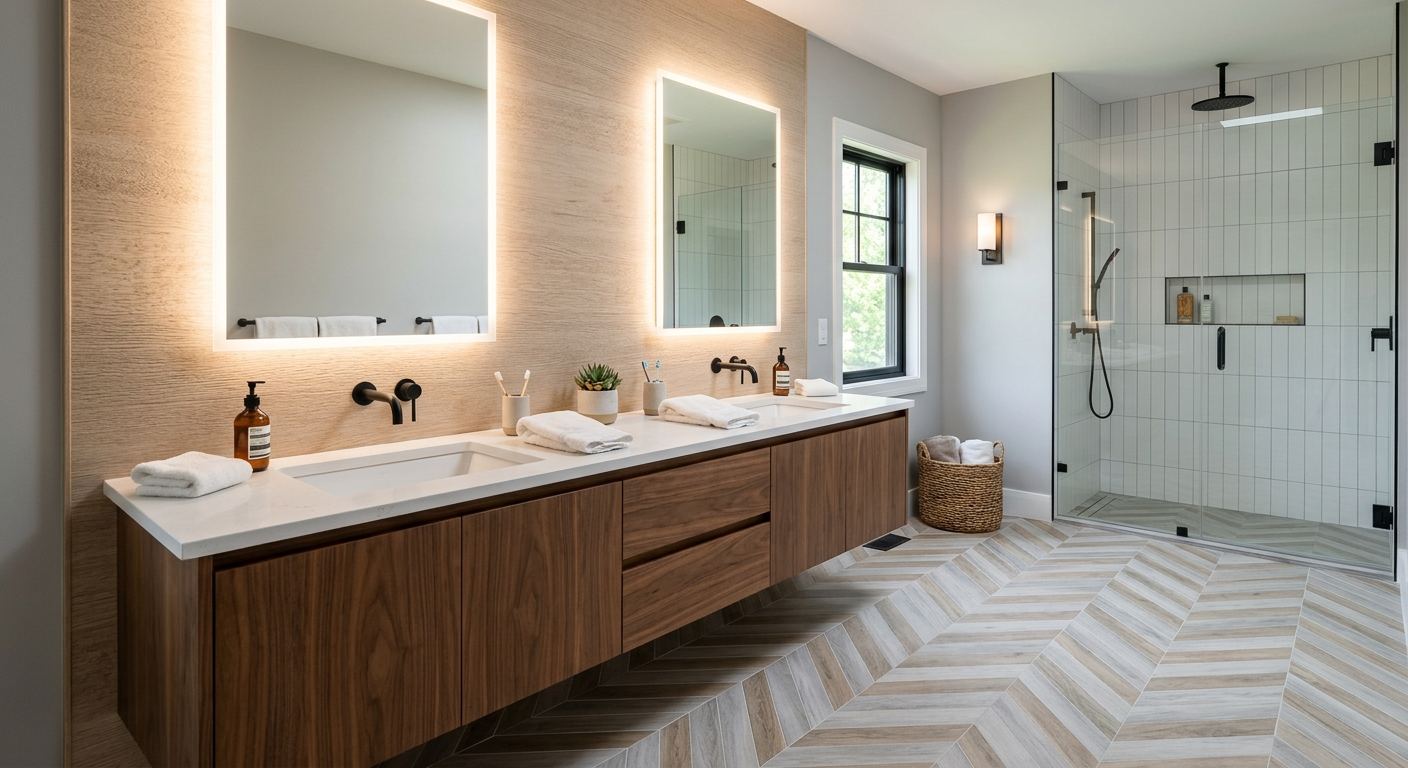
Bathroom renovation options and costs in Handsworth
Bathroom renovations in Handsworth usually start with a simple question: what do you want to change, and how much are you willing to touch once the wall is open? Handsworth has a small population (1,965 people in 2021 per Statistics Canada, 2021 Census), so local crews can book up quickly, especially in mid-week windows for plumbers and tile setters. Just as important, much of the housing stock in the Lower Mainland–Southwest area is older than newer infill, and that age factor affects what you uncover: dated drain work, older copper or galvanized supply lines, and in pre-1985 builds, a higher chance of asbestos-containing materials in floor tile or drywall compound. Any of that can push a “refresh” into a larger renovation once discovery happens.
In the Lower Mainland–Southwest, market pricing is shaped less by day-to-day “weather” and more by labour rates and availability—Metro Vancouver and nearby communities like Surrey, Burnaby, Richmond, and Abbotsford pull skilled trades toward busy schedules. That’s why you may see the same bathroom scope come in 30–50% apart depending on whether the quote includes plumbing/venting upgrades, how much demolition is allowed, and how quickly the contractor can secure a tiler and electrician.
In Handsworth—where older mid-century homes are common—bathrooms near family spaces and hallway layouts also tend to be in high demand. Trades often prioritize work that minimizes disruption, so projects in older neighbourhood pockets typically book first. Use the table below to compare your options, typical durations, and realistic cost bands.
| Renovation Scope |
What's Included |
Typical Duration |
Price Range |
| Cosmetic refresh (paint, fixtures, accessories only) |
Paint, caulking and touch-ups, replace vanity or toilet (if no plumbing relocation), re-hang or replace mirror, towel bars, new taps/sink hardware |
3–7 days |
$18,000–$26,000 |
| Mid-range full renovation (new tile, vanity, tub/shower, electrical) |
Demo, new waterproofing system, floor + wall tile, vanity and toilet, tub or shower replacement, exhaust fan upgrade, new GFCI outlet as needed |
2–4 weeks |
$26,000–$35,000 |
| High-end full renovation (custom tile, steam shower, heated floors) |
Premium waterproofing, custom tile layouts, heated floor system, higher-end fixtures, steam shower or luxury shower package, upgraded ventilation, refined lighting/controls |
4–7 weeks |
$35,000–$45,000 |
| Shower-only installation (convert tub to walk-in shower) |
Remove tub, new shower base/pan, waterproofing, tile surround, new valve/trim, glass enclosure (if selected), exhaust fan check/upgrade |
1–3 weeks |
$10,000–$18,000 |
| Bathtub replacement or tub-liner install |
Remove and replace tub (or install tub liner if feasible), new trim/taps, re-seal and re-caulk, optional minor wall retile at tub deck area |
5–10 days |
$5,000–$10,000 |
| Tile-only installation (floor + surround, existing layout kept) |
Remove existing tile, prep and leveling, install waterproofing to tiled areas, install new floor tile and shower surround, re-grout and seal |
1–3 weeks |
$4,000–$10,000 |
Prices are estimates only and vary by project scope, site access and material selection.
What affects the price of bathroom renovation in Handsworth
Even when homeowners ask for the “same” bathroom, quotes in Handsworth can vary by 30–50% across the Lower Mainland–Southwest and the rest of British Columbia. The main reason isn’t luxury choices—it’s labour rates, the age of the housing stock, and how much hidden work is uncovered once walls and floors are opened. In older Lower Mainland homes, you can discover cast-iron or aged drain sections that need replacement, dated galvanized supply lines that don’t meet modern expectations, and ventilation that’s inadequate for today’s shower use. Those items expand scope quickly and require multiple trades (plumbing, electrical, tiling), which increases total cost.
As a contractor, I also see asbestos-related remediation as a swing factor. In pre-1985 homes, discovery of asbestos in vinyl floor tile, drywall compound, or other finishes triggers abatement protocols and adds meaningful cost—often in the range of $1,500–$5,000+ depending on what’s found and how much area must be treated. Another local driver is electrical and ventilation updates for code compliance; even if you keep the same layout, adding or upgrading a fan and ensuring proper GFCI protection is common.
Here are a few concrete Handsworth examples that raise or lower budgets: if you’re keeping the tub and only doing tile, you may land closer to the $18,000–$26,000 “refresh/cosmetic-leaning” range; if you convert from tub to shower and add new rough-in, you can move toward the $10,000–$18,000 shower-only bands. If the subfloor is unlevel, tile labour and prep materials increase to prevent lippage and cracked grout—especially with larger-format porcelain. And if the vent route is blocked, you may pay more for ducting and drywall restoration rather than straightforward patch-and-paint.
| Price Factor |
Why It Matters |
Cost Impact |
| Layout change — moving drain or supply lines |
Requires plumbing rough-in, potentially new venting routes, and more demolition/restoration |
Typically adds $4,000–$12,000 depending on how far lines must travel |
| Tile selection — large-format porcelain vs. mosaic vs. ceramic |
Larger panels need flatter substrates; mosaics are labour-intensive and time-consuming to set |
Often shifts total tile scope by $2,000–$6,000 |
| Fixture tier — builder-grade vs. mid-range vs. designer brands |
Higher-end valves, trims, and toilets cost more and may need tighter install tolerances |
Can move budgets by $1,000–$5,000 |
| Subfloor condition — rot or unlevel concrete adds scope |
Needs structural repair/flattening and increases waterproofing prep time |
Often adds $1,500–$7,000 |
| Electrical — adding GFCI outlets, exhaust fan, heated floor circuit |
Requires licensed electrical work; circuit capacity and wiring routes affect labour |
Typically adds $800–$3,500 |
| Waterproofing method — membrane type and extent |
Proper coverage reduces mould risk; better systems cost more but protect the tile assembly |
Usually adds $600–$3,000 |
| Older-home surprises — asbestos tile, cast-iron drains, galvanized pipes |
Discovery triggers remediation, replacement, and additional permits/inspections |
Can add $1,500–$10,000+ |
| Bathroom size — sq ft drives tile and labour time directly |
More wall/floor area increases tile, thinset, labour, and waterproofing coverage |
Small bathrooms may save $2,000–$6,000 vs. larger ones |
Permits & regulations in British Columbia
In British Columbia, cosmetic bathroom updates usually don’t require a permit. Swapping fixtures (like taps and toilets), re-sealing caulking, replacing a vanity in the same location, or retiling without changing plumbing or structural walls typically fall into “like-for-like” renovation work. However, permits and inspections are commonly required when you change the plumbing or modify building systems—especially because bathrooms in British Columbia must be ventilated properly and wet areas must be built to code.
Work that typically does require a permit includes: relocating or adding plumbing rough-ins (moving the drain line, changing supply connections), installing or relocating a shower valve where pipe routing changes, adding new electrical circuits or making significant electrical upgrades (like adding a heated floor circuit), and replacing/adding mechanical ventilation ducting or components that tie into electrical controls. Any electrical work must be completed by (or signed off by) a licensed electrician.
How a Handsworth homeowner can verify a contractor step-by-step: (1) Ask for the contractor’s current British Columbia trade licence number and confirm it on the applicable online registry page; (2) Request a certificate of insurance showing liability coverage appropriate for renovations; (3) Confirm workers are covered for WCB/WorkSafeBC (commonly referred to as WCB coverage). Then request a clearance letter or proof of account status. Finally, ensure the permit responsibilities are clearly stated in writing—who pulls permits, who schedules inspections, and what is included in the scope.
Choosing tile, waterproofing and fixtures for your Handsworth bathroom
In a Handsworth bathroom renovation, three material decisions usually decide your budget and long-term performance: tile type, waterproofing system, and fixture tier. First is tile choice. Entry-level ceramic can be cost-effective, but it’s generally less demanding on install than porcelain; mid-range porcelain offers better durability and stain resistance, and natural stone (marble, travertine, slate) looks luxurious but requires careful sealing and more labour to cut and finish. The Lower Mainland–Southwest market is full of natural-stone and large-format porcelain requests, and that’s where costs can jump if your subfloor isn’t perfectly prepared.
Second is waterproofing. For British Columbia bathrooms, the right waterproofing protects against persistent humidity and reduces the chance of mould behind tile. A paint-on membrane can work in limited applications, but full shower assemblies typically need a bonded sheet membrane or a well-installed system (often build-ready with approved membranes and compatible thinset). The best choice is the one matched to your shower construction and drainage method.
Third is fixtures. Builder-grade items keep budgets lower, but designer brands often improve comfort (better shower valves, higher performance cartridges) and can hold resale value. A good example: upgrading from a standard tub/shower valve set to a mid-range thermostatic or pressure-balanced valve can add roughly $800–$2,500, and that increase is usually justified because it reduces temperature swings day-to-day. Meanwhile, spending heavily on intricate mosaic when your goal is simply a durable family bathroom may not pay off as much as investing in better waterproofing coverage and proper substrate prep.
| Material / Option |
Pros |
Cons |
Price Range |
| Ceramic tile (floor + walls) |
Budget-friendly, lots of design options, good for many standard shower wall applications when installed correctly |
More susceptible to chipping than porcelain; requires careful selection for floors |
$4,000–$8,000 |
| Porcelain tile (floor + walls) |
Highly durable, lower water absorption, excellent for larger-format layouts and busy households |
Demands flatter substrate; higher material and cutting costs |
$6,000–$12,000 |
| Natural stone (marble, travertine, slate) |
Premium look and unique veining; strong curb appeal |
Needs sealing/maintenance, can be prone to staining depending on stone; higher waste and labour |
$10,000–$20,000 |
| Frameless glass shower enclosure |
Modern appearance, visually expands the bathroom, durable hardware options available |
Higher material cost; requires precise tile alignment and solid framing |
$2,500–$7,500 |
| Prefab tub surround (acrylic) |
Fast installation, water-resistant, easier maintenance, reduces tile time in some layouts |
Less custom design flexibility; transitions must be detailed carefully |
$1,500–$4,500 |
| Custom shower pan (tile or linear drain) |
Better aesthetics for modern showers, improved drainage with linear options, integrates cleanly with custom tile |
More build time; requires careful waterproofing and slope |
$3,000–$9,000 |
How to choose a bathroom renovation contractor in Handsworth
Choosing the right bathroom contractor is mostly about verification, clarity, and control over change. In British Columbia, confirm licensing and insurance before you sign anything: ask for their current BC trade licence and the certificate of liability insurance (and ensure it matches the work they’ll perform). For workers on site, request proof of WCB/WorkSafeBC coverage—most reputable companies can provide clearance or account proof on request.
Next, get 2–3 written quotes that are itemised. You want labour + materials broken out (tile labour vs. tile supply, waterproofing system, electrical scope, plumbing rough-in, disposal), not one lump-sum number. When you compare, read the exclusions line-by-line: is asbestos testing or abatement included if discovered, does the price include permit pulls, and is demolition disposal handled by the contractor? In bathroom renovations in Handsworth, “small exclusions” (like disposal, drywall patching, or replacing damaged subfloor) are where budgets drift.
Warranty matters too. Ask for the workmanship warranty length and what triggers it (for example, defects in waterproofing system installation). Confirm the product/manufacturer warranties for fixtures and waterproofing materials, and whether the warranty is transferable to you if you sell your home.
For payment schedule, never pay more than 10–15% upfront. Use holdback until substantial completion and key close-out items (final waterproofing details, caulking, and punch-list correction). Also get a written start date and completion estimate—bathrooms often stall when a tiler or electrician is delayed, so your schedule needs buffers.
- Ask for the BC trade licence number and confirm it matches the work (plumbing/electrical coordination).
- Request liability insurance certificate and verify limits are appropriate for renovation work.
- Provide WCB/WorkSafeBC proof for workers on site (ask for clearance or account proof).
- Get 2–3 itemised quotes with labour and materials separated.
- Confirm disposal and debris handling is included.
- Ask who pulls permits and whether inspections are scheduled by the contractor.
- Clarify what happens if asbestos or concealed damage is discovered.
- Require a written waterproofing scope (membrane type, coverage areas, installation method).
- Confirm electrical scope: GFCI requirements, exhaust fan connection, heated floor circuit if included.
- Specify tile prep requirements (underlayment/flattening) and substrate responsibilities.
- Review warranty terms: workmanship duration and manufacturer warranty documentation.
- Use a payment schedule with holdback and a defined punch-list close-out process.
In Handsworth, red flags I see: contractors who won’t provide written scope or itemised pricing; quotes that omit waterproofing details but assume “tile will be fine”; firms asking for large upfront payments (well over 15%); vague timelines with no start/finish estimate; and anyone who can’t show BC licensing/insurance and WCB/WorkSafeBC proof before mobilizing.
Frequently asked questions — bathroom renovation in Handsworth
Do I need waterproofing behind the tile?
In most Handsworth and wider British Columbia shower areas, yes—waterproofing behind tile is essential. Tile is not waterproof on its own; the grout and thinset are not a substitute for a proper waterproofing system. For tub surrounds, it’s still important to waterproof the wet zones to protect framing and subfloor from repeated moisture exposure. If your bathroom has an older layout, you may find dated backer material or inconsistent substrate flatness, which makes waterproofing and prep even more critical.
During quoting, ask what waterproofing method is included (for example, bonded sheet membrane or a complete membrane system) and the coverage boundaries. A properly designed system helps reduce the long-term risk of mould and adhesive breakdown that can show up months later in Lower Mainland–Southwest humidity conditions. In terms of budget, waterproofing is commonly part of the mid-range renovation scope; for example, projects often fall within $26,000–$35,000 when waterproofing and tile are included end-to-end.
How do I compare bathroom renovation quotes?
Compare quotes in British Columbia by scope, not just total cost. Ask each contractor to provide an itemised breakdown: demolition, plumbing rough-in (if any), electrical/electrical allowance, waterproofing method, tile labour and supply, disposal, and any drywall restoration. For Handworth homes—where older plumbing and ventilation issues are common—make sure each quote states whether they will inspect and upgrade drainage, venting, and exhaust performance once walls are opened.
Also confirm what’s excluded. Common omissions include permit pulls, asbestos testing/abatement if discovered, subfloor flattening, and replacement of damaged framing. Finally, check quality signals: do they specify membrane type, valve trim compatibility, and how they’ll manage transitions (like curb-less showers)? When a quote comes in lower than the $26,000–$35,000 mid-range band but lacks waterproofing detail or proper electrical scope, that difference often reflects missing work rather than better value.
Can I live at home during a bathroom renovation in Handsworth?
Sometimes you can live at home in Handsworth during a bathroom renovation, but it depends on how invasive the scope is. A cosmetic refresh (paint and like-for-like fixture swaps) is usually the easiest to manage while staying in the home. Once you move into a full renovation—especially if you’re removing a tub or opening walls for plumbing/venting—your bathroom use is typically interrupted. Most families choose a workable compromise: keep access to a second washroom if the home has one, and plan daily “buffer” time for showers elsewhere.
In older Lower Mainland homes, demolition can expose surprises like aged plumbing lines, subfloor issues, or asbestos-containing materials. Those can extend timelines and increase disruption. If you’re targeting a mid-range full renovation range like $26,000–$35,000, ask the contractor for a stage plan: demo day, rough-in, waterproofing inspection, tile installation, and final trim—so you know when the bathroom becomes usable again. Always confirm how dust control and debris removal will be handled while you remain onsite.
What's the best bathtub material for a Handsworth home?
The “best” tub material depends on how your bathroom is built, your budget, and how you want the install to work with the surrounding tile and waterproofing. In many Handsworth renovations, homeowners choose between acrylic (including prefab tub surrounds) and upgraded options that pair well with modern valve systems. Acrylic tubs are common because they’re lighter than many alternatives, can be installed more quickly, and typically provide a straightforward surface for sealing and re-tiling edges.
If your home has older plumbing or dated drain work, the tub choice should be coordinated with the rough-in and venting strategy—material alone won’t solve drainage or slope issues. For families prioritizing value, tub replacement typically falls within $5,000–$10,000 in the local bands when demolition, new trim, and sealing are included. If you’re looking for a longer-term premium feel and easier resale appeal, consider upgrading the faucet/valve package and ensuring proper waterproofing detailing at the tub deck and wall junctions.
Is it worth renovating a bathroom before selling in Handsworth?
Often it is worth renovating, but only if the scope matches the buyer’s expectations and you don’t over-improve for your neighbourhood. In Handsworth and the Lower Mainland–Southwest, bathrooms are heavily weighed in buyer decisions because they combine visible materials (tile, vanity, finishes) with functional essentials (ventilation, waterproofing, and safe electrical). If your current bathroom has cracking grout, weak exhaust performance, outdated fixtures, or signs of moisture damage, a renovation can improve both perceived value and inspection outcomes.
That said, expensive upgrades like heated floors or complex steam systems are best when they align with your target buyer demographic. For a practical pre-sale approach, many homeowners choose a mid-range full renovation—commonly within $26,000–$35,000—or a well-scoped tile-and-fixture upgrade that keeps the layout intact. Avoid taking a cosmetic refresh route if plumbing or ventilation is failing; buyers and home inspectors will find those issues regardless of paint colour.
Plan for the possibility of older-home surprises common in the Lower Mainland–Southwest—like cast-iron drainage sections or dated wiring—so you’re not stuck with a rushed, incomplete sale timeline.
How do I plan a bathroom renovation on a tight budget in Handsworth?
On a tight budget in Handsworth, the goal is to spend where it prevents expensive failures later: waterproofing, substrate prep, and code-compliant ventilation/electrical. Start by deciding what stays. Keeping the layout (no drain or supply relocation) is the biggest way to prevent rough-in expansion, which is a major driver of Lower Mainland pricing. Then prioritize tile and waterproofing decisions that fit your use patterns—choose durable porcelain in key wet zones if it’s within your range, and ensure the correct membrane system is included.
Use staged options: for example, a tile-only scope with existing layout kept can be a smart compromise, but confirm waterproofing coverage is still done properly. Or consider a cosmetic refresh if plumbing and ventilation are in good condition—this can land around $18,000–$26,000 depending on fixture swaps and labour.
Finally, protect yourself from scope creep with contingencies: older homes may reveal galvanized supply issues, inadequate exhaust routing, or asbestos-containing materials in pre-1985 finishes. Ask contractors to price a baseline and identify what’s “allowance” versus fixed. In British Columbia, also ensure permits and licensed trade work are accounted for so budget surprises don’t derail your timeline.