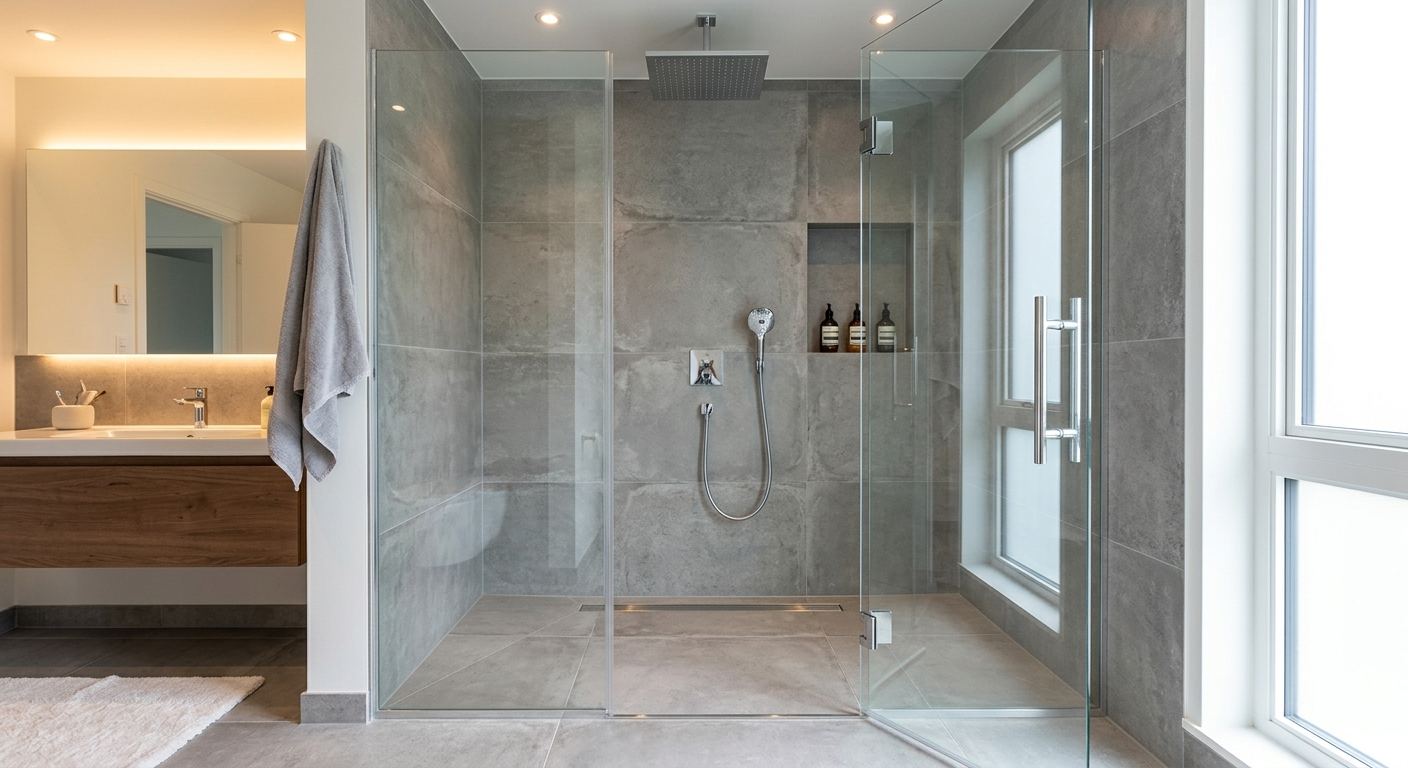
Bathroom renovation options and costs in Clinton-Glenwood
Bathroom renovation planning in Clinton-Glenwood usually starts with one big question: which level of update matches your home and budget. With a population of 8,422 (Statistics Canada, 2021 Census), the community’s housing mix reflects the broader Lower Mainland–Southwest pattern—many older, mid‑century homes where plumbing layouts and ventilation are often dated. In practical terms, that means contractors commonly uncover items like aging drain piping, older supply routing, and sometimes materials requiring careful handling during demo. In British Columbia, once walls and floors are opened, projects often expand to include plumbing and venting upgrades to bring the bathroom back into reliable code-compliant performance.
In the Lower Mainland–Southwest region, bathroom budgets are driven more by labour rates and the age of the housing stock than by weather. Metro Vancouver and surrounding areas—including nearby commuting pockets and trade networks—tend to have higher construction labour costs, and demand for licensed plumbers, tilers, and electricians can keep schedules tighter. That’s why even “simple” work can carry a higher per-square-foot cost than in other provinces, especially when unexpected issues appear behind tile or drywall.
You’ll typically see the strongest trade demand around areas with older rental stock and established service corridors, where frequent refreshes and turnover are common. If you’re comparing options, the best next step is to line up scope, duration, and realistic cost bands—see the table below.
| Renovation Scope |
What's Included |
Typical Duration |
Price Range |
| Cosmetic refresh (paint, fixtures, accessories only) |
Paint, new vanity taps/faucets, toilet or sink swap (no plumbing move), mirror, towel bars, accessory trim; existing fan kept if serviceable |
3–7 days |
$2,000–$7,000 |
| Mid-range full renovation (new tile, vanity, tub/shower, electrical) |
Demo and new wall/floor tile, new vanity and toilet, tub/shower plumbing refresh, GFCI outlet updates, new/existing exhaust fan integration, waterproofing and grout sealing |
2–4 weeks |
$18,000–$32,000 |
| High-end full renovation (custom tile, steam shower, heated floors) |
Custom-format tile (including niche/feature wall), premium shower system (including steam or advanced controls where specified), heated floors wiring and materials, upgraded waterproofing detailing, designer fixtures and refined trim |
4–8 weeks |
$32,000–$45,000 |
| Shower-only installation (convert tub to walk-in shower) |
Convert tub area to tiled shower or linear-drain style pan (per plan), new valves/controls, updated waterproofing, glass enclosure or curtain option, exhaust/fan tie-in if needed |
2–3 weeks |
$8,000–$25,000 |
| Bathtub replacement or tub-liner install |
Remove and replace tub (or install liner where suitable), set new surround/trim, re-seal transitions, minor plumbing connection work, caulking and touch-up |
5–12 days |
$1,500–$6,000 |
| Tile-only installation (floor + surround, existing layout kept) |
Tile floor and selected wall areas, underlayment prep, waterproofing membrane to shower zone, grout and finishing; assumes plumbing layout stays unchanged |
1–3 weeks |
$2,000–$8,000 |
Prices are estimates only and vary by project scope, site access and material selection.
What affects the price of bathroom renovation in Clinton-Glenwood
In Clinton-Glenwood and across the Lower Mainland–Southwest, quotes for the same bathroom can vary by 30–50% because labour availability, trade scheduling, and what’s hidden behind older finishes aren’t consistent from house to house. Even when homeowners choose the same tile and vanity, the big swings happen once walls come off: plumbing rough-in may need corrections, ventilation may be inadequate, and floors might not be level enough to set tile properly. In the region, labour rates and the age of the housing stock typically outweigh climate conditions in driving the total cost.
Lower Mainland bathrooms also tend to be in homes where dated systems are common—especially in pre‑1980 or mid‑century builds. It’s not unusual to discover cast‑iron or galvanized components in the drainage path, older copper supply lines, or insufficient venting. Those findings can inflate scope quickly. If asbestos-containing materials are suspected in flooring or drywall compound (pre‑1985 homes), proper abatement protocols add both time and cost. A realistic budget adjustment for asbestos-related work is commonly in the range of $1,500–$5,000+ depending on what’s found and how much area needs mitigation.
Concrete examples in Clinton-Glenwood: (1) converting a tub to a walk-in shower almost always triggers extra waterproofing detailing and often drain rework, which pushes shower installation toward the upper end of the $8,000–$25,000 band; (2) keeping the existing toilet and vanity location can hold a tile-only job closer to $2,000–$8,000 by avoiding rough-in and patching; (3) adding a heated floor circuit can be modest in material cost but expensive in labour coordination because it requires careful electrical planning and subfloor prep.
| Price Factor |
Why It Matters |
Cost Impact |
| Layout change — moving drain or supply lines requires rough-in work |
More demo, framing/patching, and licensed plumbing work to reposition fittings and drainage |
Often adds $3,000–$10,000+ |
| Tile selection — large-format porcelain vs. mosaic vs. ceramic |
Harder materials require better prep and more labour time for cutting, patterning, and tolerances |
Commonly shifts total by $1,500–$6,000 |
| Fixture tier — builder-grade vs. mid-range vs. designer brands |
Cost differences in fixtures plus impacts on installation complexity and trim requirements |
Often $800–$4,000 variation |
| Subfloor condition — rot or unlevel concrete adds scope |
Requires structural repairs, backer prep, or leveler/underlayment before waterproofing |
Typically adds $1,000–$7,000+ |
| Electrical — adding GFCI outlets, exhaust fan, heated floor circuit |
Licensed electrical work, safe routing, and integration with existing panel capacity |
Often adds $700–$5,500 |
| Waterproofing method — membrane type and extent |
Better systems cost more but reduce call-backs and moisture-related failure |
Usually $400–$2,500 more than basic approaches |
| Older-home surprises — asbestos tile, cast-iron drains, galvanized pipes |
Discovery triggers remediation, extra disposal, and additional plumbing upgrades |
Can add $1,500–$8,000+ |
| Bathroom size — sq ft drives tile and labour time directly |
Tile surface area and labour hours scale with footprint, walls, and details |
Typically changes costs by $2,000–$12,000 |
Permits & regulations in British Columbia
In British Columbia, cosmetic updates in a Clinton-Glenwood bathroom—like swapping fixtures, replacing a vanity, repainting, or retiling without moving plumbing—often do not require permits. However, permits are commonly required when you relocate plumbing (moving a drain or supply lines), add or significantly modify an exhaust fan with new electrical circuits, or make structural changes to walls. Electrical work must meet the provincial electrical safety code and be performed by (or signed off by) a licensed electrician.
For the homeowner, the easiest way to avoid surprises is to treat the renovation like two tracks: (1) “finish-only” work and (2) “building systems” work. Finish-only projects typically include: new vanity, toilet swap (if staying on the same rough-in), mirror/accessories, and tile replacement in the same footprint. Building-systems work typically includes: moving valves, rerouting supply lines, replacing venting/duct runs, adding heated floors (new circuit), and modifying waterproofing in a way that involves redoing the shower receptor and rough framing.
To verify a contractor’s British Columbia trade licence and coverage, start by requesting their licence details and checking the provincial online registry, if applicable for that trade scope. Next, ask for a current certificate of insurance showing general liability (and specific coverage when relevant to the work). Finally, request clearance for workers’ coverage (WSIB/WCB coverage documentation where applicable) rather than assuming it. If a contractor can’t provide clear documentation, that’s a strong signal to pause and ask again before demo starts.
Choosing tile, waterproofing and fixtures for your Clinton-Glenwood bathroom
In Clinton-Glenwood, the renovation budget usually hinges on three material decisions: tile, waterproofing, and fixture tier. First, tile choice affects both cost and installation complexity. Entry-level ceramic can be budget-friendly, but porcelain is often more consistent for floors and can handle real-world wear better—especially where basements or older subfloors demand extra prep. Natural stone (marble, travertine, slate) looks premium, but it often needs more detailed layout planning, sealing, and careful selection to avoid uneven shade and staining.
Second is waterproofing, which is critical in British Columbia bathrooms where humidity and everyday shower use create long-term moisture exposure. A paint-on membrane can work in limited scenarios, but bonded sheet membrane or a robust system designed for shower assemblies usually offers more dependable protection when detailing is done correctly at corners, seams, niches, and transitions. Using the right membrane and extending coverage to the correct wet-area boundaries helps prevent mould and grout deterioration.
Third is fixture tier. Builder-grade fixtures keep initial costs down, while mid-range and designer brands often improve finish durability, valve performance, and long-term user experience—plus they can elevate resale appeal because buyers notice the look of the shower control, vanity, and lighting.
How to match budget to your situation: if you’re targeting value, pair mid-range porcelain tile with a higher-end waterproofing approach—this is usually where the money is genuinely justified. For example, stepping up from a basic shower surround to a well-detailed custom shower pan can be the difference between a mid-range bathroom and one closer to the $18,000–$32,000 band, because the labour-intensive waterproofing and pan build protect everything underneath. Conversely, paying a large premium for exotic stone is not always “worth it” if you also need major plumbing updates—those hidden issues can swallow the savings.
| Material / Option |
Pros |
Cons |
Price Range |
| Ceramic tile (floor + walls) |
Lower material cost, straightforward colour coordination, good option for straightforward layouts |
Can be less durable than porcelain in high-traffic areas; more chipping risk on impact |
$2,000–$5,500 |
| Porcelain tile (floor + walls) |
Denser, better durability; wider selection of styles that mimic wood/stone; consistent performance |
May cost more per sq ft; heavier tiles require careful setting and prep |
$3,500–$8,000 |
| Natural stone (marble, travertine, slate) |
Luxury look and unique veining; strong visual impact for resale |
Higher material and sealing/maintenance demands; tolerances and layout are more labour-intensive |
$6,000–$15,000+ |
| Frameless glass shower enclosure |
Brightens the bathroom, modern look, easier cleaning than some framed options |
Costs more and requires very accurate pan/tile plane for best fit |
$2,000–$6,500 |
| Prefab tub surround (acrylic) |
Fast install, less labour-intensive, good for budget-focused remodels |
Less custom look than tile; seams and transitions can be a maintenance point |
$1,500–$4,000 |
| Custom shower pan (tile or linear drain) |
Great for accessibility and modern layouts; linear drain can improve water evacuation; durable when detailed well |
More planning and labour; requires correct slope, waterproofing system integration, and inspection-ready assembly |
$4,000–$12,000+ |
How to choose a bathroom renovation contractor in Clinton-Glenwood
Start by verifying British Columbia licensing and coverage in a way that you can document. Ask the contractor for their trade licence details relevant to plumbing/electrical scope and confirm they match the work they’ll perform. For liability protection, request a current certificate of insurance before work begins—check that the expiry date is valid and that the coverage level is appropriate for a renovation of your size. For worker coverage, ask for proof of WSIB/WCB coverage (or the applicable documentation for the trades they use). If a contractor won’t provide paperwork upfront, it’s a scheduling and liability risk.
Next, compare 2–3 itemised written quotes. You want a line-by-line breakdown of labour and materials—not a single lump sum. Ensure it clearly states what’s included and what’s excluded: permit pull included or not, disposal and tipping fees included, demolition scope, and whether electrical and plumbing rough-in is part of the base price. The warranty should be explicit: workmanship coverage length, product/manufacturer warranty terms, and whether warranty coverage is transferable if you sell your home.
For payment, keep it conservative. Never pay more than 10–15% upfront; hold back a portion until key milestones are complete and the job is inspected/finished. Finally, get a start date and completion estimate in writing, including how schedule changes will be handled if tile deliveries or permits take longer than expected.
- Confirm BC licence details that match the scope (plumbing/electrical/remediation if applicable).
- Request certificate of insurance (general liability) and verify dates before signing.
- Ask for WSIB/WCB coverage documentation and make sure it aligns with the trades onsite.
- Get 2–3 itemised quotes with labour and materials separated.
- Require a written scope list: demo, rough-in, waterproofing, tile setting, trim, and final cleaning.
- Check inclusions: permits, inspections, disposal, and site protection for floors/doorways.
- Ask who supplies waterproofing materials and what system is specified (membrane type and coverage).
- Verify who sets the toilet/vanity and how plumbing connections are tested/approved.
- Request a schedule for key trades and confirm lead times for glass, tile, and fixtures.
- Clarify warranty: workmanship length, manufacturer warranty for fixtures, and whether transferable.
- Use a milestone payment schedule; keep a holdback until completion and snag list are done.
- Have a change-order process in writing (pricing method, approval steps, and documentation).
Red flags to watch for in Clinton-Glenwood: (1) only offering a lump-sum without exclusions/inclusions, (2) vague waterproofing descriptions like “we’ll waterproof it” with no membrane system named, (3) refusing to provide licence/insurance documentation before demo, (4) asking for most of the money upfront, and (5) promising a fixed finish date without acknowledging permit and materials lead times common in Lower Mainland scheduling.
Frequently asked questions — bathroom renovation in Clinton-Glenwood
How long does a bathroom renovation take in Clinton-Glenwood?
For Clinton-Glenwood homes, timelines usually depend on whether plumbing is staying put and whether tile and glass are custom-ordered. A cosmetic refresh is typically 3–7 days. A mid-range full renovation (new tile, vanity, tub/shower, and electrical updates) often lands around 2–4 weeks, assuming materials arrive on schedule. If you’re converting a tub to a walk-in shower, plan for about 2–3 weeks, but it can stretch if drain routing, waterproofing details, or an older-home plumbing issue adds time. High-end custom work (heated floors, steam options, and premium tile detailing) can run 4–8 weeks.
Do I need a permit for a bathroom renovation in British Columbia?
In British Columbia, many cosmetic changes do not require permits—swapping a vanity, changing fixtures, repainting, and retiling without moving plumbing are generally treated as finish work. Permits are typically needed when you change plumbing locations (moving drains or supply lines), add or modify an exhaust fan with new electrical work, or make structural changes to walls. Electrical upgrades like adding GFCI outlets, updating circuits for a heated floor, or wiring a new fan must meet code and be performed or signed off by a licensed electrician. In Clinton-Glenwood, always ask the contractor to confirm what will be permitted before demo starts.
What's the best tile for a bathroom in Clinton-Glenwood?
The “best” tile is the one that fits your use and your waterproofing plan. For most homeowners in Clinton-Glenwood, porcelain is often the top balance of durability and appearance—especially for floors—while still fitting many modern looks. Ceramic can work well for budget-friendly renovations when the installation prep is solid. Natural stone can look spectacular, but it usually increases maintenance expectations and can add labour due to cutting and sealing requirements. In British Columbia’s humidity, the bigger determinant than tile brand is correct waterproofing and detailing. If you’re targeting a mid-range bathroom around $18,000–$32,000, porcelain paired with a robust shower waterproofing system is a reliable choice.
Should I do a tub-to-shower conversion?
A tub-to-shower conversion is usually worth considering if you use the shower more than the tub, want easier daily access, or plan to update the bathroom layout for future needs. In many Lower Mainland–Southwest projects, it also modernizes the look quickly, but it’s rarely “simple” because the drain direction, waterproofing, and sometimes venting need careful planning. Budget-wise, shower installation for this type of conversion commonly sits in the $8,000–$25,000 range depending on whether you add a glass enclosure, switch to a linear drain, and whether plumbing must be rerouted. If your home has older drainage or supply lines, expect potential additional scope once walls are open.
How do I prevent mold in a Clinton-Glenwood bathroom?
Mould prevention in Clinton-Glenwood comes down to three controls: moisture management, ventilation, and waterproofing quality. Use an exhaust fan that vents outdoors (and confirm it’s sized properly) rather than relying only on natural airflow. Keep the shower waterproofing continuous behind the tile—especially at corners, niches, and transitions—because moisture escaping through small failures is what drives mould. Grout and caulking are also part of the system: choose appropriate products and ensure correct sealing at the start. If your home is older, confirm whether any floor underlayment or materials need remediation before renovation. When done right, it’s common to see fewer moisture issues long after the refresh.
What adds the most resale value in a bathroom reno?
In British Columbia, resale value usually tracks “visible reliability”: a clean layout, modern fixtures, and surfaces that won’t fail from moisture. Buyers tend to pay attention to the shower area and the vanity/lighting because those are high-visibility daily-use zones. That said, the hidden work matters too—safe electrical updates, code-compliant exhaust ventilation, and correct waterproofing reduce the risk of future repairs, which supports buyer confidence. If you’re choosing where to spend first, focus on the core full-renovation elements. For example, a mid-range full renovation often falls around $18,000–$32,000, and it’s frequently the point where bathrooms look complete rather than “patched.” High-end upgrades can lift finishes, but they don’t replace the need for correct waterproofing and systems.