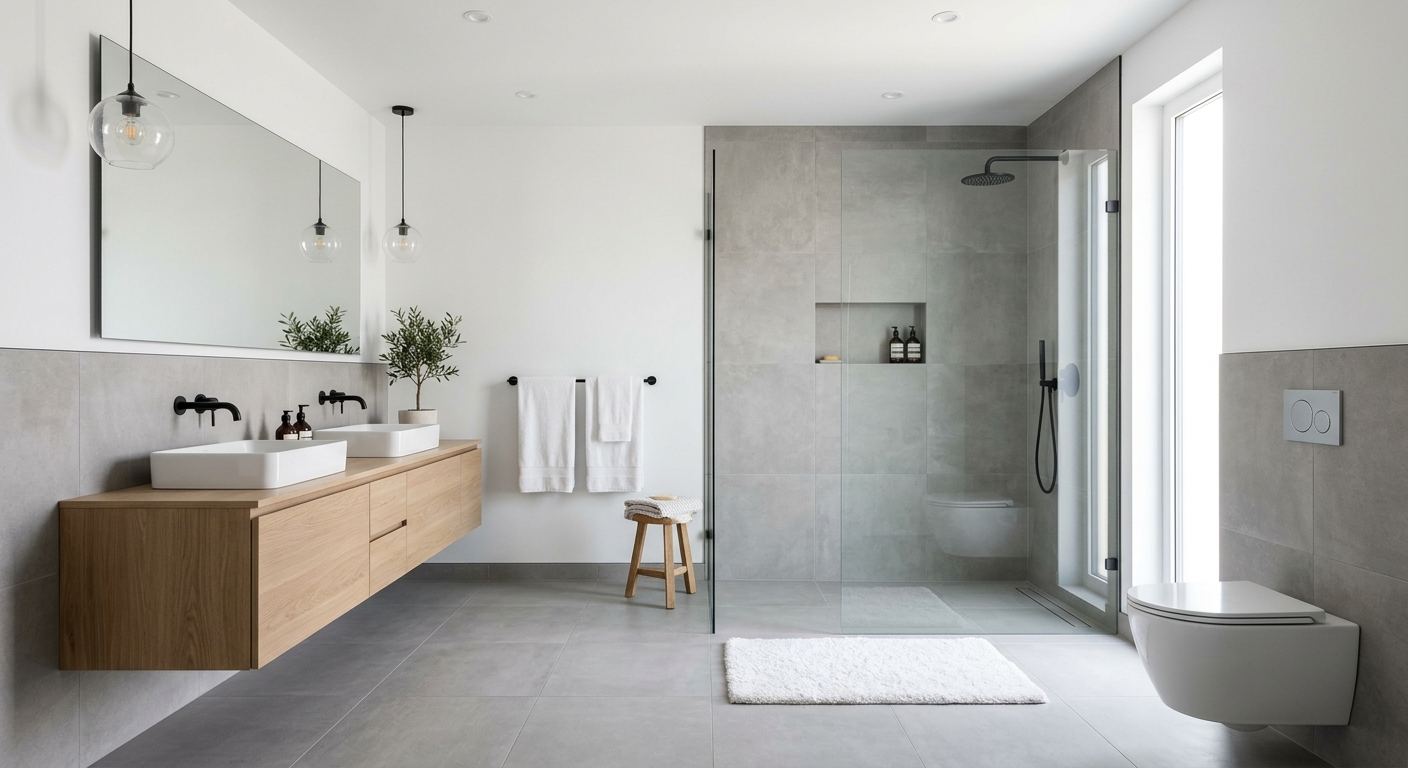
Bathroom renovation options and costs in Edmonds
Renovating a bathroom in Edmonds usually starts with deciding how much you want to change: cosmetics only, a mid-range refresh, or a full rebuild. Edmonds is home to 22,318 residents (Statistics Canada, 2021 Census), and that steady homeowner base means contractors in the Lower Mainland–Southwest area see a lot of typical mid-century and older layouts. In older homes, dated plumbing routes and subfloor conditions can hide issues like cast-iron or galvanized components, and in some pre-1985 builds you may also run into materials that require extra care before demolition.
In this part of British Columbia, the cost drivers are less about “weather damage” and more about demand and labour availability: Lower Mainland–Southwest trades often price projects based on the complexity of the work, the age of the housing stock, and the need to upgrade venting, rough-ins, and electrical to match current requirements. Even modest bathrooms can cost more per square foot because multiple trades work in a tight space—plumbers, electricians, and tilers all contribute to the schedule. When you’re in demand areas, such as the older duplex and townhouse pockets near Edmonds Station and around the central residential streets, installers and inspectors can be booked out—so a careful scope and materials selections up front help avoid costly change-orders.
Once you know your target level of change, you can compare budgets side-by-side in the table below, then refine it after a site visit and a plumbing/electrical look-up.
| Renovation Scope |
What's Included |
Typical Duration |
Price Range |
| Cosmetic refresh (paint, fixtures, accessories only) |
Paint, vanity swap (if same location), toilet/lighting upgrades (no moving plumbing), caulking/grout touch-ups, basic accessories |
3–7 days |
$4,500 – $9,000 |
| Mid-range full renovation (new tile, vanity, tub/shower, electrical) |
Demo and disposal, waterproofing, new floor tile and shower/tub surround tile, new vanity + mirror, tub/shower refresh or replacement, exhaust fan upgrades, GFCI where needed, updated trim and finishes |
2–4 weeks |
$18,000 – $30,000 |
| High-end full renovation (custom tile, steam shower, heated floors) |
Higher-end tile work (custom layout), custom shower system, heated flooring circuit + waterproofing system, premium fixtures, upgraded electrical planning, niche shelves, enhanced lighting |
4–8 weeks |
$30,000 – $45,000 |
| Shower-only installation (convert tub to walk-in shower) |
Remove tub, rough-in/restore drains and plumbing as needed, new shower pan and waterproofing, walk-in enclosure, new tile floor/surround, ventilation check |
2–4 weeks |
$12,000 – $25,000 |
| Bathtub replacement or tub-liner install |
Tub removal and replacement OR liner installation where appropriate, re-caulk, reseal joints, minor surround touch-ups, drain/fixture reconnect |
1–2 weeks |
$1,500 – $6,000 |
| Tile-only installation (floor + surround, existing layout kept) |
Removal of existing tile (as required), surface prep, membrane waterproofing, floor + wall tile installation, grouting and sealing, reinstallation of trim within scope |
1–2.5 weeks |
$2,000 – $8,000 |
Prices are estimates only and vary by project scope, site access and material selection.
What affects the price of bathroom renovation in Edmonds
If you get two quotes for what sounds like the “same” bathroom job, it’s not unusual for pricing in Lower Mainland–Southwest to land 30–50% apart. The gap usually comes from how much investigation a contractor does before quoting and how well they include the real work behind the finishes. Labour rates are higher in the Lower Mainland–Southwest region, and the age of local housing stock means more renovations uncover dated drainage, supply lines and ventilation paths that need to be brought up to current British Columbia expectations.
In many pre-1980 homes across the Lower Mainland–Southwest region, renovators commonly run into galvanized supply lines, cast-iron drains that need partial replacement, and bathroom venting that’s insufficient once the space is rebuilt. A hidden issue can quickly change a “$18,000” renovation into a “$30,000+” project because the plumber and electrician must open walls, modify rough-ins, and sometimes coordinate around inspection timing. In pre-1985 construction, asbestos-containing materials have been found in some flooring, drywall compound, or insulation—when that happens, abatement adds budget; I often see remediation allowances in the range of $1,500–$5,000+ depending on scope and containment.
Concrete examples in Edmonds: (1) changing a tub to a walk-in shower typically increases cost because you’re not only tiling—you’re moving and reconfiguring drainage and waterproofing layers; it also tends to push you into shower installation pricing of $8,000 – $25,000 rather than a simple cosmetic refresh. (2) Upgrading an exhaust fan with a new circuit can add cost on paper, but it prevents moisture problems later in our coastal, humid conditions. (3) If your subfloor is unlevel or has rot, tile labour expands because proper backer and slope correction must be done before waterproofing. For homeowners, it helps to understand that a realistic full bathroom budget band is commonly $18,000 – $45,000, with the midpoint depending on what’s discovered once walls are open.
| Price Factor |
Why It Matters |
Cost Impact |
| Layout change — moving drain or supply lines requires rough-in work |
Rerouting plumbing means wall/floor access, new rough-in parts, sealing, and inspection coordination |
Often adds $3,000 – $10,000 |
| Tile selection — large-format porcelain vs. mosaic vs. ceramic |
Harder materials and complex patterns demand more cutting, setting time, and labour detail |
Usually shifts total tile scope by $1,500 – $6,000 |
| Fixture tier — builder-grade vs. mid-range vs. designer brands |
Higher tiers cost more and may require different installation details (e.g., rough-in valves, trims) |
Often adds $500 – $4,000 |
| Subfloor condition — rot or unlevel concrete adds scope |
Repairing structure and correcting flatness is critical for tile adhesion and waterproofing performance |
Often adds $1,000 – $6,500 |
| Electrical — adding GFCI outlets, exhaust fan, heated floor circuit |
Dedicated circuits and ventilation upgrades require licensed work and appropriate waterproof-rated fixtures |
Typically adds $800 – $3,500 |
| Waterproofing method — membrane type and extent |
Good waterproofing coverage affects longevity; membranes vary by performance and system design |
Usually adds $600 – $3,000 |
| Older-home surprises — asbestos tile, cast-iron drains, galvanized pipes |
Remediation and pipe upgrades can’t be “patched and painted”; they require professional steps and time |
Can add $1,500 – $12,000+ |
| Bathroom size — sq ft drives tile and labour time directly |
More area means more tile, more waterproofing, longer demo and install time |
Often changes scope by $2,000 – $12,000 |
Permits & regulations in British Columbia
In British Columbia, cosmetic bathroom updates—like swapping a vanity, changing faucets or light fixtures, repainting, and retiling where plumbing locations don’t move—often don’t require a homeowner permit. Typical “no permit” work includes: painting, replacing a toilet, replacing trim, installing accessories, and doing tile over the same shower/tub layout (assuming the waterproofing method is installed correctly).
Where permits usually come into play is when you change plumbing or electrical function. If you relocate plumbing (moving a drain or supply lines), add or modify venting for a bath, or make rough-in changes behind walls, a permit and inspection are typically required. Similarly, electrical work must meet the provincial code and must be completed or signed off by a licensed electrician—especially anything involving new circuits for an exhaust fan or heated floor, or changes that affect GFCI protection. If structural wall changes are planned (opening walls for framing, moving load-bearing elements), additional approvals are also commonly involved.
For a homeowner in Edmonds, verify your contractor in a clear order: (1) confirm British Columbia trade licence status in their name (and subcontractors) via the appropriate online registry listings; (2) request a certificate of liability insurance—make sure it’s active for the project period and includes sufficient coverage; (3) ask for WCB clearance/coverage documentation if they use employees (and confirm whether any subtrades provide their own coverage). Before you start, ask for the permit plan: which permits they will pull, when inspections are scheduled, and what trades handle rough-in versus finish work.
Choosing tile, waterproofing and fixtures for your Edmonds bathroom
Your tile, waterproofing, and fixture choices determine whether your Edmonds renovation feels “premium” or turns into a maintenance headache. In the Lower Mainland–Southwest, the biggest long-term driver is how well the waterproofing system performs in a naturally humid environment—steam, daily showers, and temperature cycling can expose even small installation flaws. Start with the three key budget decisions.
(1) Tile choice: entry-level ceramic can work well for floors and walls, but it’s usually more forgiving and less expensive than porcelain or natural stone. Porcelain typically offers better durability and water resistance, and it’s common when homeowners want large-format panels that look seamless. Natural stone (marble, travertine, slate) looks luxurious, but it usually increases cost because of material selection variability, sealing, and careful labour.
(2) Waterproofing method: a paint-on membrane can be fine in some scenarios, while bonded sheet membranes and systems designed for showers often provide more robust coverage and confidence when correctly installed at all corners, seams, and transitions. If you’re converting from a tub to a walk-in shower, I strongly recommend a complete shower system with proper thickness, bonding, and detailing.
(3) Fixture tier: builder-grade fixtures save money upfront, but mid-range valves, showerheads and better bathroom fans can improve comfort and reliability—often supporting better resale value in Edmonds. For a dollar example, homeowners sometimes choose heated floors to justify a higher budget band; that upgrade may add $800 – $3,500 depending on wiring and mat type, but it can be worth it if you’re already renovating the floor and want consistent comfort during colder starts.
Match your combination to your household: if budget is tight, prioritize excellent waterproofing and sensible tile selection over chasing the most expensive finishes. If you’re aiming for a high-end renovation, the premium look (porcelain large format or natural stone) is only as good as the waterproofing underneath.
| Material / Option |
Pros |
Cons |
Price Range |
| Ceramic tile (floor + walls) |
Budget-friendly, good variety of colours/patterns, easier cuts than many harder materials |
May be less durable than porcelain for high-traffic floors; requires careful sealing/maintenance where needed |
$2,000 – $4,500 |
| Porcelain tile (floor + walls) |
Very water-resistant, durable for floors, supports modern large-format looks |
Harder to cut; installation takes more precision; premium tile can cost more per square foot |
$3,500 – $8,000 |
| Natural stone (marble, travertine, slate) |
High-end appearance, unique veining, strong resale appeal when installed well |
Sealing/ongoing care, risk of staining if not maintained; more variable material for estimating |
$6,000 – $14,000 |
| Frameless glass shower enclosure |
Bright, modern look; visually expands a small bathroom; fewer frame lines |
Requires accurate plumbing geometry; can cost more for custom sizes; cleaning needs |
$2,500 – $6,500 |
| Prefab tub surround (acrylic) |
Faster install; fewer tile labour hours; easier maintenance |
Less “designer” than full tile; can look dated quicker; surface detailing is limited |
$1,000 – $3,000 |
| Custom shower pan (tile or linear drain) |
Design flexibility; improved drainage; cleaner shower experience with the right slope |
More trade time (waterproofing and detailing); linear drains need precise layout |
$3,000 – $12,000 |
How to choose a bathroom renovation contractor in Edmonds
Choosing the right contractor in Edmonds starts with verifying British Columbia coverage and then matching scope to your budget. First, check licensing: request their BC trade licence information (and confirm subcontractors match what they claim—plumbing/electrical should be properly covered). Next, confirm liability insurance—ask for the certificate of insurance and ensure the policy is active and includes work at your address. For workers, verify WCB/WCB clearance documentation (or coverage evidence) so you don’t inherit payroll-related risk if something changes mid-project.
Then get 2–3 itemised written quotes. You want a breakdown that separates labour from materials, and ideally lists key items: demo/disposal, waterproofing system, tile setting labour, plumbing rough-in allowances, electrical allowances, ventilation work, and glass/shower enclosure pricing. Avoid quotes that use vague phrases like “standard tile labour” without quantities or specs—bathrooms are small, so small wording differences can create expensive change-orders.
Read exclusions carefully. Ask whether permits are included, who pulls them, and what inspection work is scheduled. Confirm disposal (dump fees and hauling), and whether contractor protection and dust control are included for the work area. For warranty, look for clear workmanship warranty length, product/manufacturer warranties for fixtures and waterproofing materials, and whether warranties are transferable if you sell your home.
Finally, agree on a sensible payment schedule: never more than 10–15% upfront. Hold back a portion until finish details are complete, caulking is done, and any punch-list items are corrected. Put the timeline in writing too: start date, milestone dates, and completion estimate based on material lead times common in the Lower Mainland–Southwest.
- Provide BC trade licence details and names of all subcontractors.
- Show active liability insurance certificate for the project period.
- Confirm WCB/WCB clearance or coverage for workers.
- Use itemised quotes with labour/material quantities (not lump sums).
- List allowances for tile, fixtures, glass, and waterproofing separately.
- State whether permits are included and who pulls them.
- Confirm disposal, dump fees, and recycling/hauling responsibility.
- Require a waterproofing method and product list (system, not just “membrane”).
- Include ventilation upgrade details (exhaust fan model/spec) where applicable.
- Set a clear change-order process with written approvals.
- Provide workmanship warranty terms and what’s excluded.
- Agree on payment milestones and holdback (finish + punch-list completion).
Common red flags in Edmonds include: (1) quotes that don’t account for demolition and disposal or waterproofing details; (2) a “lump-sum” bathroom price with no allowance breakdown for tile setting, glass, and electrical; (3) no proof of BC licensing or insurance; (4) asking for large upfront payments beyond 10–15%; and (5) avoiding written timelines by saying “it’ll be quick” without a start/completion estimate.
Frequently asked questions — bathroom renovation in Edmonds
What's the difference between a cosmetic and a full bathroom renovation?
In Edmonds and across British Columbia, a cosmetic renovation is mostly surface-level: you’re changing finishes (paint, vanity if it stays in the same plumbing location, fixtures like taps and lighting, and accessories) without moving the drain or supply lines. A full renovation goes further: it typically includes demo, new waterproofing, new tile work, plumbing and/or electrical upgrades, and sometimes a tub-to-shower conversion. That’s where costs climb into realistic full-reno bands such as $18,000 – $45,000, while cosmetics often land far below that because fewer trades and rough-ins are required.
How do I choose the right contractor for my bathroom in Edmonds?
Start by confirming British Columbia licensing and coverage before you sign anything. Ask for their BC trade licence details, a current certificate of liability insurance, and WCB/WCB clearance or coverage evidence for their workers. Then request 2–3 itemised written quotes that separate labour and materials (including waterproofing system, disposal, and ventilation/electrical work if needed). In the Lower Mainland–Southwest, bathroom schedules can tighten, especially around Edmonds Station and nearby residential pockets, so insist on a written start date and completion estimate. A reputable contractor should also clearly explain what’s included and what triggers change-orders (like discovered plumbing deterioration or tile substrate issues).
What's the most common mistake homeowners make in bathroom renovations?
The most common mistake I see in Edmonds is under-scoping the “hidden” work. Homeowners often budget for visible finishes but don’t plan for what’s behind walls and under floors—especially in older Lower Mainland–Southwest homes where galvanized supply lines, aging drains, or inadequate venting are discovered once demo starts. Another frequent issue is choosing tile and fixtures without locking a waterproofing method and detailing plan. If you convert a tub to a walk-in shower, the waterproofing system and pan slope matter more than the tile colour. When waterproofing isn’t properly planned, it can cause recurring moisture problems, which usually costs more to fix than doing it right the first time.
How long does tile installation take in a Edmonds bathroom?
For a typical Edmonds bathroom, tile installation timelines depend on tile type, bathroom size, and the condition/flatness of the substrate. If you’re doing a floor and tub/shower surround with standard patterns, tile setting often takes about 5–10 working days after prep and waterproofing steps are complete. For porcelain with large-format tile, intricate layouts, or linear drains, expect longer because cutting, fitting, and leveling take more labour. Remember: the clock doesn’t start at tile—demo, substrate repair, and waterproofing system curing also affect the overall duration. In many mid-range renovations, you’ll see the whole tile + waterproofing portion span roughly 2–3 weeks within a $18,000 – $30,000 type project.
How much does a bathroom renovation cost in Edmonds?
Edmonds bathroom renovation costs in the Lower Mainland–Southwest are mainly driven by labour demand, housing age, and how much plumbing/electrical upgrading is needed once walls are open. As a practical guide, full bathroom renovations generally fall within $18,000 – $45,000. If you’re converting a tub to a walk-in shower, shower installation work often lands in the $8,000 – $25,000 range depending on plumbing changes and enclosure selection. Tile-only projects and bathtub replacement can be lower, but the final number depends on your scope, bathroom size, and any surprises like subfloor repairs or older drainage that needs upgrading. A site visit is the best way to tighten the estimate.
How long does a bathroom renovation take in Edmonds?
Timelines vary, but many Edmonds projects follow a predictable sequence once materials are confirmed. Cosmetic refresh work can be as quick as 3–7 days. Mid-range full renovations often take around 2–4 weeks because of demo, waterproofing steps, rough-ins, tile, and finishing. High-end projects with custom tile layouts, heated floors, or more complex shower systems commonly run 4–8 weeks. The schedule is also influenced by lead times and inspection timing in British Columbia once permits are required for plumbing or electrical changes. If older plumbing, ventilation, or substrate conditions require additional trades or repairs, that can add days or a week—so it’s wise to build a contingency into your planning.