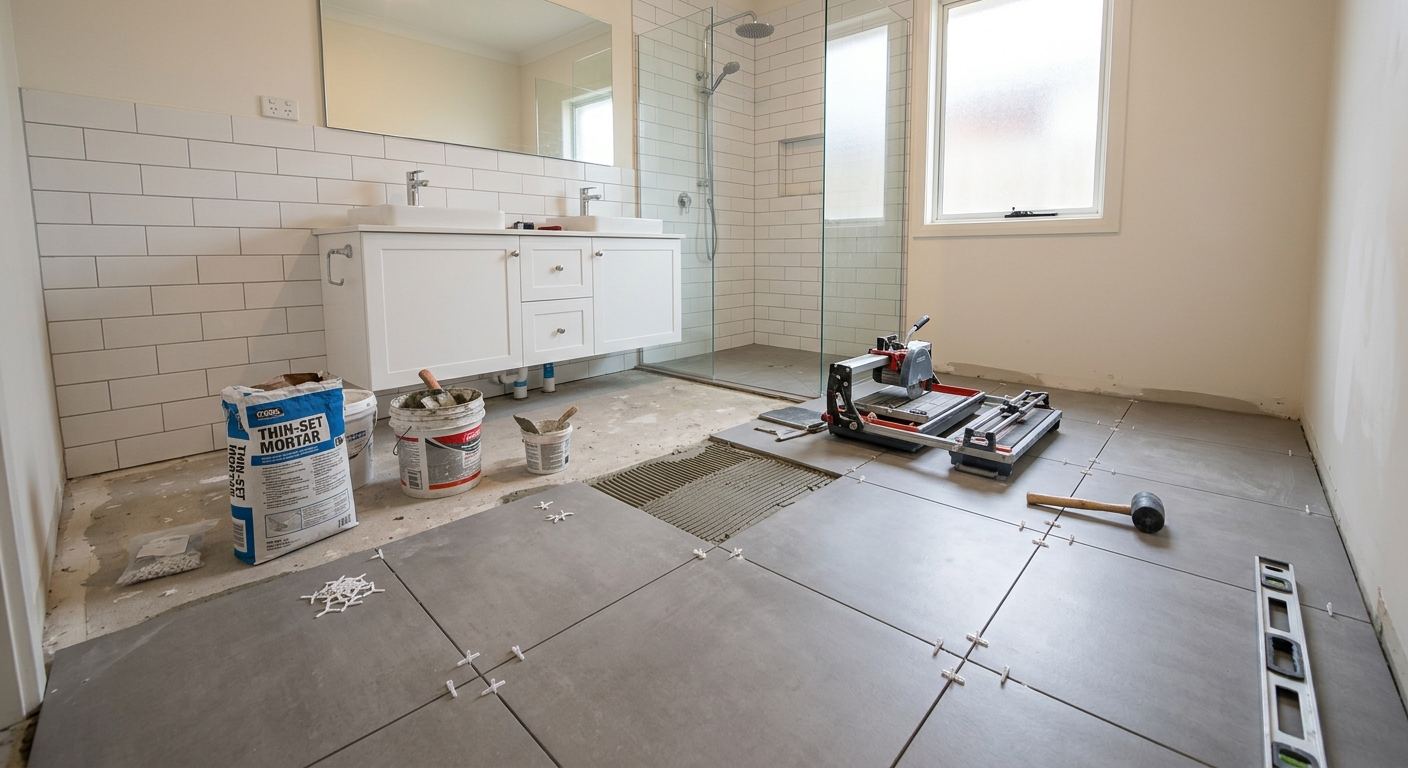
Bathroom renovation options and costs in Whalley
Renovating a bathroom in Whalley can run the gamut from a quick refresh to a full rebuild, and the right choice depends on how much you’re willing to open up walls and floors. In Whalley and the surrounding Lower Mainland–Southwest area, many homes are older—Statistics Canada reported a population of 102,555 in the area (Statistics Canada, 2021 Census)—so it’s common to uncover dated plumbing layouts, aging drains, and materials that can complicate the job once demolition starts. In pre-1980 homes across the region, homeowners often encounter galvanized or cast-iron drainage, older copper supply lines, and sometimes asbestos-containing materials in flooring, drywall compound, or insulation, which can expand scope and require remediation.
Lower Mainland–Southwest costs are driven less by outdoor weather and more by the local market: higher construction labour rates and tight availability of specialized trades like tilers, plumbers, and electricians. Once you open a bathroom in Surrey/Burnaby-adjacent demand pockets (including Whalley), the project can expand to include plumbing and venting upgrades to bring systems up to current British Columbia expectations. That’s why two quotes for the “same” bathroom can differ even when the finish package looks identical.
To help you compare options clearly, use the table below as a budgeting starting point. From cosmetic refreshes to heated-floor, custom-tile showers, it’s usually the plumbing/electrical scope (not the paint) that determines whether you stay near the low end or land closer to the upper end of the price bands.
| Renovation Scope |
What's Included |
Typical Duration |
Price Range |
| Cosmetic refresh (paint, fixtures, accessories only) |
Paint, fan cover refresh, swap vanity or toilet (if no plumbing relocation), replace faucets, light accessories, caulking and minor trim touch-ups |
3–7 days |
$18,000–$25,000 |
| Mid-range full renovation (new tile, vanity, tub/shower, electrical) |
Demo, waterproofing, floor and surround tile, vanity install, tub/shower surround or basic system, new/existing exhaust fan upgrade, GFCI outlet where needed, plumbing refresh where required |
2–4 weeks |
$25,000–$35,000 |
| High-end full renovation (custom tile, steam shower, heated floors) |
Expanded waterproofing, custom tile work, heated floor prep and electric connection, steam-ready shower layout, higher-end fixtures/valves, upgraded electrical for dedicated circuits, potential plumbing/venting improvements |
4–7 weeks |
$35,000–$45,000 |
| Shower-only installation (convert tub to walk-in shower) |
Remove tub, new shower pan/prep, waterproofing, tile or surround, new glass or panel, drainage connection and test, exhaust fan check, rework plumbing as needed |
2–4 weeks |
$18,000–$25,000 |
| Bathtub replacement or tub-liner install |
Remove and replace tub or install liner system, new trim and caulking, leak testing, address any failed subfloor/backsplash, reconnect fixtures |
1–3 weeks |
$1,500–$6,000 |
| Tile-only installation (floor + surround, existing layout kept) |
Tile demolition (selective), new tile floor and wall surround, waterproofing system over prepared surfaces, grout/seal, transition trims, cleanup |
1–3 weeks |
$2,000–$8,000 |
Prices are estimates only and vary by project scope, site access and material selection.
What affects the price of bathroom renovation in Whalley
If you get multiple quotes for the same bathroom in Whalley, it’s not unusual to see swings of 30–50% across Lower Mainland–Southwest versus other parts of British Columbia. The main reasons are local labour rates and the reality of older homes here: contractors in the Lower Mainland often face higher demand for plumbers, tilers, and electricians, and that pushes both hourly costs and schedule availability. When you open walls, you also discover what the original builders concealed—especially in mid-century layouts where drain stacks, venting paths, and supply lines may not align with today’s expectations.
Climate does play a role, but in this region the bigger driver is moisture management inside the envelope. With British Columbia’s frequent humidity and temperature swings, bathrooms need robust waterproofing and ventilation; if the existing exhaust fan is undersized or poorly routed, the contractor may add electrical scope and ducting work. For older homes, asbestos discovery can be a deciding cost factor: when asbestos-containing materials are suspected in pre-1985 flooring or drywall compound, abatement procedures can add roughly $1,500–$5,000+ or more, depending on access and removal volume. That can move a “mid-range” plan closer to the upper end of full renovation ranges like $18,000–$45,000 for a complete bathroom refresh or rebuild.
Concrete examples from Whalley projects: (1) keeping an existing drain location can avoid rough-in demolition and reduce labour—often keeping a shower installation nearer $8,000–$25,000. (2) switching from small ceramic tiles to large-format porcelain can increase labour because of layout planning and substrate prep, sometimes raising tile labour time even when the finish looks similar. (3) adding heated floors in an older slab can add prep and wiring tasks, even before finish installation begins.
In short, your final number is usually determined by what’s behind the walls and what needs to be upgraded to make the bathroom last in a high-moisture environment—rather than by the paint colour or towel bar style.
| Price Factor |
Why It Matters |
Cost Impact |
| Layout change — moving drain or supply lines requires rough-in work |
Relocating plumbing means wall openings, re-piping, drain slope correction, and sometimes venting adjustments |
Often adds $5,000–$12,000 depending on extent |
| Tile selection — large-format porcelain vs. mosaic vs. ceramic |
Harder tiles require better substrate flatness, more careful cuts, and longer installation time |
Often adds $1,000–$5,000 |
| Fixture tier — builder-grade vs. mid-range vs. designer brands |
Valve/trim quality affects performance, compatibility, and serviceability |
Often adds $500–$6,000 |
| Subfloor condition — rot or unlevel concrete adds scope |
Correcting low/high spots and replacing soft framing increases prep and labour |
Often adds $1,500–$7,000 |
| Electrical — adding GFCI outlets, exhaust fan, heated floor circuit |
Bathrooms require safe, code-compliant power distribution and proper fan ventilation |
Often adds $800–$4,500 |
| Waterproofing method — membrane type and extent |
More robust systems and correct coverage reduce the risk of mould and failures |
Often adds $800–$3,500 |
| Older-home surprises — asbestos tile, cast-iron drains, galvanized pipes |
Remediation and plumbing upgrades trigger extra trades, testing, and sometimes permits |
Often adds $1,500–$10,000+ |
| Bathroom size — sq ft drives tile and labour time directly |
More square footage increases materials, layout time, thinset/grout use, and curing time |
Often adds $2,000–$8,000 across common size ranges |
Permits & regulations in British Columbia
In British Columbia, cosmetic updates in a bathroom—like swapping a vanity, replacing fixtures that don’t move plumbing, repainting, or retiling while keeping the existing layout—often don’t require a permit. Where permits typically enter the picture is when you change the “systems,” not the finishes. For example, relocating plumbing (moving a drain or supply line), adding or upgrading an exhaust fan with new electrical circuits, and any structural wall changes generally require permits and inspections.
Electrical work must be completed by a licensed electrician, and it needs to meet provincial electrical code requirements. Plumbing rough-ins that involve changes to supply/drain routing usually require a permit and inspection—especially when the work includes venting and trap/drain connections. Because bathrooms combine water and power in a tight space, inspectors will want to verify safe installation and waterproofing steps before walls are closed.
To protect yourself in Whalley, verify your contractor’s British Columbia trade licence and liability coverage before work begins. Step-by-step: (1) ask for their BC business details and licence number; (2) confirm the licence is valid using the online trade registry for the applicable trade category; (3) request a current certificate of insurance showing liability coverage (for the trade and the project address); and (4) obtain proof of workers’ compensation coverage (WCB) for the crew. If any part of the job will be subcontracted, require the same proof for each trade—especially for electrical and plumbing.
Choosing tile, waterproofing and fixtures for your Whalley bathroom
In Whalley, the materials you pick decide not only the look of your bathroom, but also how confidently it can handle moisture and foot traffic. Start with three budget-driving decisions: tile choice, waterproofing method, and fixture tier. Lower Mainland–Southwest buyers often underestimate installation complexity—especially with tile—so matching the material to your renovation scope is how you keep costs predictable.
1) Tile choice: ceramic is the entry-level option and is usually more budget-friendly, but it can be less durable for heavy-use floors. Porcelain costs more than ceramic but handles moisture and wear better and is flatter for large-format styles. Natural stone (marble, travertine, slate) looks premium, but installation is more complex and requires careful sealing and substrate prep.
2) Waterproofing method: in British Columbia’s humidity, a weak waterproofing system is the fastest route to mould risk. Paint-on membranes can work for simple applications, but many renovations in this region benefit from a bonded sheet membrane or a system approach (e.g., a complete tiled assembly) where coverage and transitions are designed for wet areas.
3) Fixture tier: builder-grade fixtures help control cost, while mid-range and designer brands often provide better valves, smoother operation, and improved longevity—important for resale and for reducing callbacks.
A practical example: if you’re choosing between $2,000–$8,000 for a tile-only approach versus upgrading to porcelain throughout and adding a premium waterproofing package, you might spend an extra $1,500–$3,500. That premium is usually justified when your home is older and you need strong substrate prep anyway—because the tile and waterproofing are where failures get expensive.
For most Whalley homeowners, the best value comes from upgrading waterproofing and using the right tile for the stress points, then calibrating the fixture tier to the rest of the finishes.
| Material / Option |
Pros |
Cons |
Price Range |
| Ceramic tile (floor + walls) |
Budget-friendly, good variety of styles, straightforward installation |
Can be more prone to wear in high-traffic areas; requires careful selection for slip resistance |
$2,000–$4,500 |
| Porcelain tile (floor + walls) |
Denser and more water-resistant, better durability, supports modern large-format looks |
Higher material cost and may require extra labour for flatness and layout |
$4,000–$8,000 |
| Natural stone (marble, travertine, slate) |
Luxury look, unique character |
Higher labour complexity, sealing/maintenance, potential variability in colour and thickness |
$6,000–$12,000 |
| Frameless glass shower enclosure |
Clean modern look, good durability when properly anchored, easier visual maintenance |
Costs more; requires correct wall alignment and waterproofing details |
$2,000–$5,500 |
| Prefab tub surround (acrylic) |
Faster install, consistent finish, good value when you keep layout simple |
Less “custom” look than full tile; grout-free but seams still need correct waterproofing |
$1,000–$3,000 |
| Custom shower pan (tile or linear drain) |
Great performance with correct waterproofing; supports accessible design; premium look with linear drains |
More complex and labour-intensive; requires precise slope and drain alignment |
$8,000–$25,000 |
How to choose a bathroom renovation contractor in Whalley
Choosing the right contractor in Whalley is mostly about verifying credentials and controlling scope, because bathroom projects are trade-heavy in a small space. First, confirm British Columbia licensing: ask for the contractor’s licence details and then verify them through the relevant BC trade registry for the trades performing the work. Next, request liability insurance documentation (certificate of insurance) and ensure the coverage is active and corresponds to the work at your address. For workers, confirm WCB/WCB coverage so you’re not exposed if a worker is injured on your site.
Then get 2–3 itemised written quotes. You want a labour and materials breakdown—tile supply, waterproofing materials, electrical/plumbing line items, demo and disposal, and any permit-related work. Avoid lump sums that hide assumptions. Carefully read what’s excluded: for instance, disposal, asbestos testing/abatement, subfloor repairs, waterproofing upgrades, or permit fees. Many homeowners get surprised when “standard waterproofing” is replaced with a different approach after demolition.
Warranty matters too. Ask for a workmanship warranty length (and what it covers), and whether manufacturer warranties are included for tile products, membranes, and fixtures. Also check if warranties are transferable if you sell the home. For payment schedule, never let a contractor push you toward large upfront payments: keep it to roughly 10–15% upfront and hold back until the job is complete. Finally, demand a written timeline with a start date and a realistic completion estimate.
- Verify the contractor’s applicable BC trade licence(s) before signing.
- Request a certificate of insurance with liability coverage and confirm it’s current.
- Confirm WCB/WCB coverage for the crew; ask subcontractors for their own proof too.
- Insist on itemised quotes (labour vs materials; demo, disposal, waterproofing, electrical, plumbing separate).
- Confirm whether permits are included and who pulls them.
- Ask what demolition includes (selective vs full, and whether tiles/backer board are removed).
- Ask how waterproofing is handled: product brand, coverage, and test steps before closing walls.
- Clarify disposal: is garbage removal and dump tipping included?
- Confirm subfloor prep scope: flattening, replacing damaged materials, and time for curing.
- Review the electrical scope: GFCI outlets, exhaust fan connection, and heated floor circuit if included.
- Request a workmanship warranty in writing, plus how warranty claims are handled.
- Agree on payment milestones tied to completed stages, not vague “project progress.”
Red flags I often see with bathroom contractors in Whalley: (1) they won’t provide an itemised scope and only offer a lump-sum number; (2) they avoid discussing waterproofing products and procedures; (3) they request large upfront payments beyond 10–15%; (4) they can’t show proof of liability insurance or WCB/WCB coverage; and (5) their timeline is “guaranteed” without any allowance for inspection scheduling, material lead times, or older-home surprises.
Frequently asked questions — bathroom renovation in Whalley
Do I need a permit for a bathroom renovation in British Columbia?
In British Columbia, many purely cosmetic updates generally don’t require a permit—for example, swapping fixtures that don’t move plumbing, repainting, or retiling while keeping the layout. Permits are typically required when you relocate plumbing (moving a drain or supply line), add or change electrical circuits (like new exhaust fan wiring or adding GFCI outlets where required), or make structural changes. Plumbing rough-in changes usually need a permit and inspection so the inspector can verify connections before walls are closed. In Whalley, it’s especially important to ask your contractor whether permits are included in their quote, because older homes can reveal additional scope (and therefore permit requirements) once walls are opened. A full renovation often falls into ranges like $18,000–$45,000, and the permit scope can be a big reason.
What's the best tile for a bathroom in Whalley?
For most Whalley bathrooms, porcelain tile is the “best balance” of durability, water resistance, and design flexibility—especially for floors where slip resistance matters. Ceramic can be a budget-friendly choice, but it may wear faster depending on your household use. If you love the look of natural stone, it can be beautiful, but it requires more care (sealing and careful installation) and typically costs more because the substrate prep and installation are more demanding. The right tile also depends on your waterproofing method and subfloor condition: if your home is older, the contractor may need extra prep to get the surface flat so tile doesn’t crack. If you’re working near the tile band of $2,000–$8,000, compare tile quality plus installation quality—sometimes paying more for porcelain is more cost-effective than replacing cracked or failed tile later.
Should I do a tub-to-shower conversion?
A tub-to-shower conversion is often a smart move in Whalley because walk-in showers typically age well—especially if you want easier access for daily use. It can also reduce long-term cleaning hassles compared to a tub with hard-to-reach corners. That said, it’s not automatically the cheapest option: because conversions require plumbing drainage work and careful waterproofing, the budget can land anywhere from the shower installation band of about $8,000–$25,000, depending on whether you keep the drain where it is or relocate it. In older homes, a conversion can also uncover cast-iron drains or galvanized lines that need upgrading, which increases scope. If you want the best value, ask your contractor to keep the plumbing layout as much as possible and focus on a durable shower pan and correct ventilation.
How do I prevent mold in a Whalley bathroom?
Mould prevention is mainly about three things: ventilation, waterproofing quality, and drying time. In British Columbia’s Lower Mainland–Southwest humidity, a bathroom exhaust fan must move air effectively to the exterior and be connected correctly to electrical code requirements. Waterproofing must cover the right areas with the right membrane system—especially around the shower/tub boundaries, corners, and any niche or valve penetrations. Poor substrate prep is another common cause; if the surface isn’t solid or waterproofing is rushed, moisture can get behind finishes. For older Whalley homes, discovery of failing subfloor materials or deteriorated backer board after demolition can also change your risk profile. Plan for leak testing before walls are closed, and choose a waterproofing method appropriate for your shower type. This is why “tile-only” projects can still need a waterproofing line item, even when your finish cost looks lower (often $2,000–$8,000).
What adds the most resale value in a bathroom reno?
Resale value usually tracks function and perceived quality. In Whalley and the broader Lower Mainland, buyers often pay attention to a modern, clean layout, dependable ventilation, and water-resistant construction. Upgrading from older fixtures to reliable mid-range options, installing a durable shower system, and improving lighting and exhaust airflow can outperform “cosmetic only” changes. If you have the budget, heated floors and premium waterproofing details are also strong selling points because they’re felt immediately and signal longevity. However, the biggest value comes from getting the build right: correct waterproofing, properly prepared subfloors, safe electrical (including GFCI protection), and no hidden leaks. A mid-range full renovation typically sits around $25,000–$35,000, while high-end builds can extend toward $35,000–$45,000 depending on custom tile and steam-ready layouts. Work with your contractor to prioritize the upgrades most visible and most functional.
Can I keep my existing plumbing layout to save money?
Yes—keeping your existing plumbing layout is one of the most reliable ways to save money in Whalley. When you don’t move drains or supply lines, you usually reduce demolition, reduce rough-in labour, and lower the risk of discovering extra issues behind walls. Layout changes are often the price swing factor because they can require new pipe runs, additional openings, and sometimes venting adjustments to meet current expectations after walls are opened. If you’re converting a tub to a shower, staying with the same drain location (when possible) can help you stay closer to the shower installation band of $8,000–$25,000. For older homes, you may still uncover galvanized supply lines, cast-iron drains, or other hidden deterioration, but the overall scope is typically more controlled than a full re-pipe. Ask your contractor to do a pre-reno inspection of accessible plumbing and explain what assumptions are—or aren’t—in the quote.