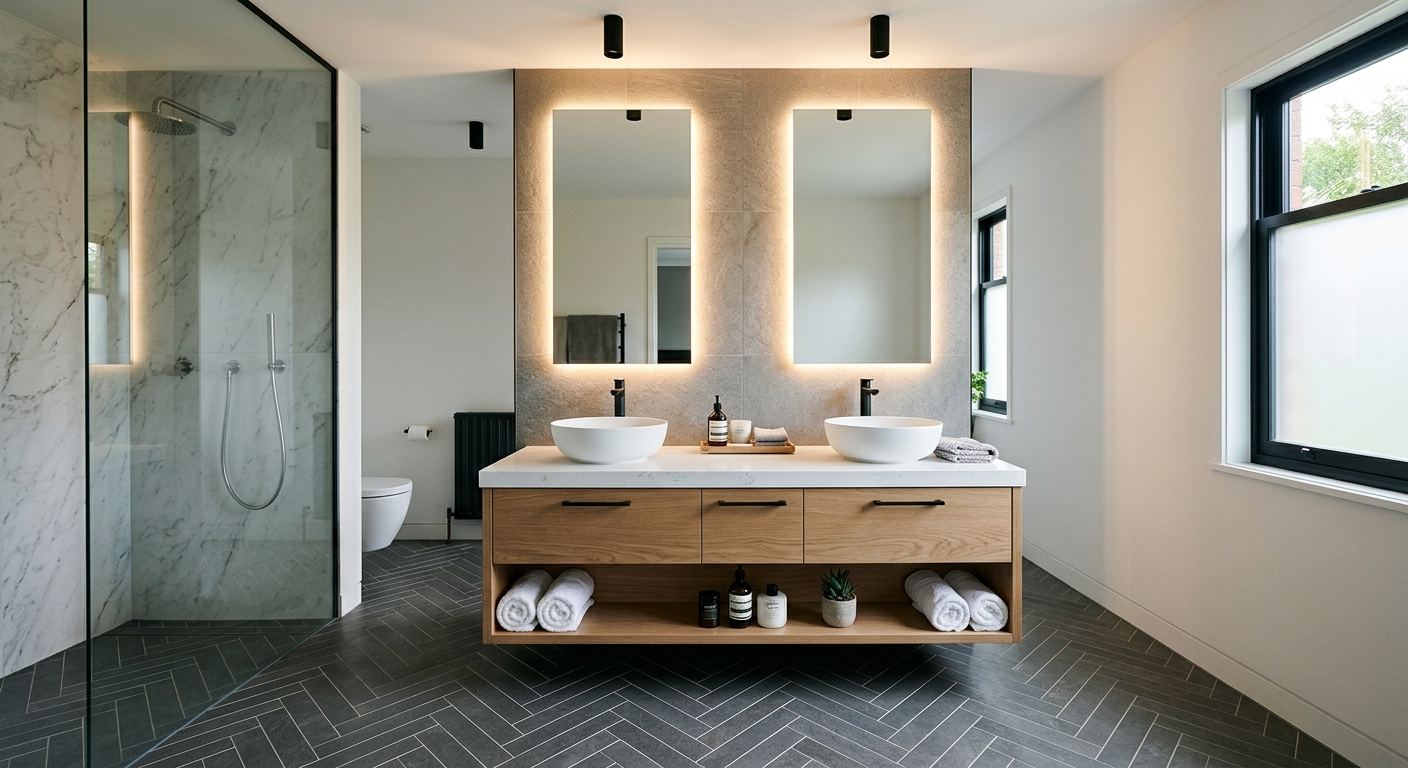
Bathroom renovation options and costs in Esquimalt
Bathroom renovation in Esquimalt can be as straightforward as a fresh coat and a new vanity—or as involved as opening walls to correct drainage, ventilation, and dated services. With 70.3% of homes built before 1981 in the area (Statistics Canada, 2021 Census), many bathrooms start life on legacy layouts and older rough-ins that don’t always match today’s expectations for waterproofing, fan ducting, and electrical safety. In total population terms, Esquimalt is home to 17,533 residents (Statistics Canada, 2021 Census), and that mix of owner-occupied homes and older housing means steady demand for trades—especially around neighbourhoods like Chartwell/Esquimalt Village where repair and upgrade cycles are common.
On Vancouver Island and the Coast, the mild maritime climate doesn’t usually “drive” costs the way freeze-thaw does, but it absolutely affects bathroom performance requirements: ventilation matters, humidity control matters, and the market has learned to spec durable waterproofing and better fan routing. More importantly, renovation pricing here is driven by the age of the housing stock and by labour availability. Southern BC contractors commonly bill in the 80–120/hr range for general work and 100–150/hr for plumbers/electricians, so once walls are opened, labour quickly becomes the biggest line item—especially if galvanized supply lines, undersized vents, or old drain conditions are found.
Below are realistic price bands for common Esquimalt bathroom scopes, so you can compare options before you ask for quotes and site measurements.
| Renovation Scope |
What's Included |
Typical Duration |
Price Range |
| Cosmetic refresh (paint, fixtures, accessories only) |
New toilet/vanity tap or faucet, light fixture, mirror, accessories; patch/prime/paint; recaulk; existing fan assessed (no major electrical/vent work) |
3–7 days |
$1,500–$5,000 |
| Mid-range full renovation (new tile, vanity, tub/shower, electrical) |
Demo + disposal, tub/shower or shower surround, new vanity and toilet, tile floor and walls, waterproofing, exhaust fan upgrade with wiring, GFCI where required, basic plumbing refresh |
2–4 weeks |
$12,000–$22,000 |
| High-end full renovation (custom tile, steam shower, heated floors) |
Custom shower with niche/bench, large-format tile with premium layout, heated floor system and circuit, steam-ready plumbing/electrical coordination, higher-tier fixtures, expanded waterproofing and detailing |
4–6 weeks |
$25,000–$35,000 |
| Shower-only installation (convert tub to walk-in shower) |
Remove tub, prep subfloor, new shower waterproofing and pan, tile surround, new valve trim, glass door or curtain system, exhaust fan assessment/upgrade as needed |
2–3 weeks |
$8,000–$15,000 |
| Bathtub replacement or tub-liner install |
Remove and replace tub (or install liner where appropriate), recaulk, new valve trim as needed, patch/paint around access areas, basic waterproofing at perimeter |
5–10 days |
$1,500–$7,000 |
| Tile-only installation (floor + surround, existing layout kept) |
Tile demo (if needed), backer/waterproofing prep, tile floor and surround installation, grouting/sealing as specified, transitions and finishing |
1–2 weeks |
$2,500–$10,000 |
Prices are estimates only and vary by project scope, site access and material selection.
What affects the price of bathroom renovation in Esquimalt
If two contractors price the “same” bathroom renovation in Esquimalt, you can still see a 30–50% spread because the real scope only becomes clear after demo and opening walls. On Vancouver Island and the Coast, labour rates and the age of local housing stock are the dominant drivers—more than the climate itself. With 70.3% of homes built before 1981 (Statistics Canada, 2021 Census), it’s common to encounter older drain configurations, aged venting strategies, or supply lines that are no longer ideal for today’s fixtures and pressures.
It’s also why quotes for a full renovation commonly land in the $10,000–$35,000 range even when the finish selections are similar. When galvanized piping, cast-iron drains, or insufficient fan exhaust are discovered, contractors need extra rough-in time and sometimes additional permits and inspections, which escalates labour quickly at the 80–120/hr and 100–150/hr bands. In pre-1985 interiors, asbestos-containing materials may be present in certain vinyl flooring or drywall compounds; if abatement is required, it can add roughly $1,500–$5,000+ depending on what’s found and how much containment is needed.
Concrete examples from Esquimalt-area jobs: (1) a “simple” tub-to-shower conversion often costs more than expected if the drain line needs re-sloping or if the subfloor is uneven, and (2) a tile-only upgrade can turn into a mid-range full renovation if waterproofing prep is compromised behind existing finishes. On the other hand, cost can be contained when the layout stays put and electrical upgrades are limited to the exhaust fan and a GFCI outlet, keeping the project closer to the $4,000–$15,000 shower-install band.
| Price Factor |
Why It Matters |
Cost Impact |
| Layout change — moving drain or supply lines requires rough-in work |
New plumbing routes mean breaking walls/floors and coordinating valve and drain heights |
Often adds several thousand dollars due to labour and potential permit/inspection |
| Tile selection — large-format porcelain vs. mosaic vs. ceramic |
Harder materials require higher skill, more cutting, and faster setting products |
Material + labour can shift the job by a wide margin (commonly $1,000–$6,000+) |
| Fixture tier — builder-grade vs. mid-range vs. designer brands |
Better trims, valves, and finishes can reduce callbacks but cost more upfront |
Can move total budget several thousand dollars, especially for shower valves and glass |
| Subfloor condition — rot or unlevel concrete adds scope |
Unlevel substrates require additional prep, underlayment, or partial floor replacement |
May add $500–$5,000+ depending on extent |
| Electrical — adding GFCI outlets, exhaust fan, heated floor circuit |
Bathroom-safe wiring, correct circuit planning, and new fan ducting add trade time |
Frequently a significant line item on older homes; can add $1,000–$5,000+ |
| Waterproofing method — membrane type and extent |
Correct system coverage prevents leaks and mould issues long-term |
Better systems cost more but reduce expensive failure risk (often $500–$3,000+) |
| Older-home surprises — asbestos tile, cast-iron drains, galvanized pipes |
Hidden materials and failing drainage systems require corrective work or abatement |
Can add $1,500–$5,000+ (abatement) plus additional rough-in labour |
| Bathroom size — sq ft drives tile and labour time directly |
More area means more setting time, thinset/membrane, and longer detailing work |
Commonly changes the budget by thousands as labour hours scale |
Permits & regulations in British Columbia
In British Columbia, cosmetic updates typically don’t need a permit. That usually includes swapping fixtures like faucets, toilets, vanity tops, replacing a mirror, repainting, and retiling when you’re not moving plumbing or making structural changes. If you’re only changing finishes and the plumbing locations remain the same, most homeowners can proceed without a permit.
However, permits are typically required when you relocate plumbing—moving a drain or supply line, changing valve locations, or doing plumbing rough-ins that alter existing connections. Adding or upgrading an exhaust fan often needs electrical work and may require a permit if new circuits, new wiring runs, or fan ducting changes are involved. Electrical installations and alterations must meet BC safety requirements and be performed by (or signed off by) a licensed electrician. Structural wall changes, including removing or altering framing elements, also typically require permits and inspection.
Step-by-step verification for an Esquimalt renovation contractor: (1) confirm the correct BC trade licence details on the contractor’s website or by checking the appropriate BC registry listing where applicable; (2) request a certificate of insurance and confirm liability coverage limits, then look for up-to-date dates; (3) ask for WCB/WSIB-equivalent coverage documentation used in Canada for workplace coverage—contractors should provide proof upon request; (4) ensure the contract states who pulls permits (if required), what inspections are included, and that disposal is part of the scope.
Choosing tile, waterproofing and fixtures for your Esquimalt bathroom
In Esquimalt, your bathroom budget is shaped less by the temperature swings and more by Vancouver Island and Coast humidity, ventilation, and how reliably the waterproofing system is built. Start with tile choice: ceramic is usually the entry point—great if you want reliable performance at a lower cost and you’re keeping the installation straightforward. Porcelain is typically a mid-range move because it’s denser and more water-resistant for floors and wet areas, but it’s heavier and can require more careful layout and tile handling. Natural stone (marble, travertine, slate) can look exceptional, yet it brings sealing and installation complexity that can raise labour time and material allowances significantly.
Second, waterproofing method: paint-on membranes can work in the right system and detail, but they demand strict surface prep and correct thickness. Bonded sheet membranes and systems using precision boards or integrated approaches (including modern tile-underlayment methods) tend to be more forgiving when installed correctly and can better protect against long-term moisture exposure. In a BC bathroom, mould risk is largely about water escaping behind tile or through failed transitions—so the “best” membrane is the one installed to spec and tied into drains, corners, and penetrations.
Third, fixture tier: builder-grade fixtures keep budgets down, mid-range can improve valve feel and finish durability, and designer brands often justify the cost when paired with higher-end shower valves and better glass hardware. For a concrete example: choosing porcelain tile instead of ceramic might add a few thousand dollars in total tile-and-labour pricing on a full renovation—often justified when you’re also upgrading the exhaust fan and waterproofing details to reduce the chance of rework. Done well, a mid-range full renovation commonly sits near $12,000–$22,000, while high-end approaches with heated floors and custom detailing frequently move into the $25,000–$35,000 band.
| Material / Option |
Pros |
Cons |
Price Range |
| Ceramic tile (floor + walls) |
Cost-effective, broad style selection, familiar installation methods |
Porosity varies by product; may be less ideal for high-wet floors vs porcelain depending on spec |
$2,500–$7,500 |
| Porcelain tile (floor + walls) |
Durable for floors, strong water resistance, cleaner look with many modern formats |
Heavier tile and sometimes tighter tolerances; premium formats can increase cutting/layout time |
$5,000–$10,000 |
| Natural stone (marble, travertine, slate) |
Luxury appearance, unique veining and texture |
Needs sealing/maintenance; installation can be more technical and costly |
$7,500–$15,000 |
| Frameless glass shower enclosure |
Brightens the room, modern look, easier visual match with tile |
Costs more; requires precise installation and stable waterproof detailing |
$3,000–$8,000 |
| Prefab tub surround (acrylic) |
Fast install, easy cleaning, typically fewer tile cuts and seams |
Less “custom” look; relies on proper fit and bonding/edge detailing |
$1,200–$3,500 |
| Custom shower pan (tile or linear drain) |
Improved drainage planning, sleek aesthetics with linear options |
More labour and waterproofing complexity; must be installed to a very tight standard |
$4,500–$12,000 |
How to choose a bathroom renovation contractor in Esquimalt
Choosing the right bathroom renovator in Esquimalt comes down to verification, clarity, and workmanship accountability. Start by confirming British Columbia licensing for the relevant trades (especially plumbing and electrical) and request proof of liability insurance. Ask for your contractor’s workplace coverage documentation for jobsite safety—then confirm the date range and that the insured party matches the contracting company, not just an individual. If heated floors or electrical upgrades are part of the scope, ensure the electrical work is handled by a licensed electrician or appropriately signed off.
Next, get 2–3 itemised written quotes rather than lump sums. You want labour and materials broken out (demo/disposal, waterproofing method, tile setting and grouting, exhaust fan supply and wiring, glass/enclosure supply, plumbing rough-in allowances). Read the scope line by line for what’s excluded: permit pulls (if required), disposal, patching/paint outside the immediate bathroom, subfloor repairs, and any contingency for older-home surprises.
Warranty matters. Look for a workmanship warranty length (and what it covers), plus the product/manufacturer warranties for tile installation components, shower systems, and fixtures. Ask whether warranties are transferable if you sell your home—important in a market where homeowners may renovate before listing.
Finally, payment schedule: never pay more than 10–15% upfront, and hold back a portion until the work is complete and inspected. Get a start date and completion estimate in writing, with schedule buffers for tile lead times and material delivery.
- Provide BC trade licence details for plumbing and electrical scopes (or confirm who holds them).
- Show a current certificate of liability insurance before any work begins.
- Ask for proof of workplace coverage and confirm the coverage is active.
- Use itemised quotes: separate labour, materials, and allowance items.
- Confirm disposal is included (demo debris and old fixture removal).
- Clarify what happens if asbestos is discovered in older vinyl flooring or drywall compounds (process and cost).
- Require written confirmation of the waterproofing system (brand/type and coverage detail).
- Specify the exhaust fan plan: model, duct route assumptions, and whether fan ducting is inspected.
- Confirm GFCI/outlet and lighting decisions are included in the electrical scope.
- Request a workmanship warranty in writing and ask how claims are handled.
- Agree on payment milestones (10–15% max upfront; holdback until complete).
- Get a written start date, target completion, and realistic lead-time expectations.
Red flags specific to bathroom renovations in Esquimalt: (1) a quote that excludes waterproofing details while still promising “tile-ready walls,” (2) no written scope for the exhaust fan upgrade or ventilation plan, (3) refusal to itemise or to explain allowances (glass, tile, fixtures), (4) asking for large upfront payments, and (5) vague warranty language or no proof of licensing/insurance before starting.
Frequently asked questions — bathroom renovation in Esquimalt
Do I need waterproofing behind the tile?
Yes, in almost all Esquimalt shower and wet-area installs you should expect waterproofing behind the tile. British Columbia bathrooms deal with consistent moisture exposure, and the “best” tile job fails when water migrates through grout lines or penetrations and reaches framing or subfloor. A proper system typically includes waterproofing on shower walls and the correct method at floors, corners, and around niches, valves, and plumbing penetrations. If your quote is for retiling, ask what waterproofing method is being used (paint-on membrane, sheet membrane, or a board-based integrated system) and whether it’s installed to spec with the correct tie-ins. Even a cosmetic “tile-only” job should include waterproof prep where required.
How do I compare bathroom renovation quotes?
Compare quotes the way you’d compare apples to apples: scope first, then unit costs. Ask each contractor to itemise labour and materials (demo/disposal, waterproofing type, tile setting/grout, exhaust fan supply and wiring, glass/enclosure, and plumbing/electrical rough-in allowances). The Vancouver Island and Coast market can produce 30–50% differences for similar bathrooms because labour rates and older-home discovery work vary. Make sure each quote addresses the same assumptions: bathroom size, whether layout changes are included, whether GFCI and ventilation upgrades are in-scope, and what happens if subfloor or plumbing issues are discovered. If you’re budgeting, use the realistic bands—full renovations often land in the $10,000–$35,000 range, while shower-only conversions are commonly $4,000–$15,000.
Can I live at home during a bathroom renovation in Esquimalt?
Often, yes—especially if you have a second bathroom or a workable plan to keep one toilet and a temporary wash setup. Many Esquimalt homes are older (70.3% built before 1981), and once walls are opened, plumbing and electrical checks can extend timelines. Living onsite is usually feasible for cosmetic refreshes and some tile-only scopes, but full renovations typically mean a period where the shower and sink aren’t usable. A good contractor will provide a clear sequence: demo and waterproofing first, then tile, then fixtures and glass. Discuss whether they can isolate dust, protect flooring in hallways, and maintain safe access. If the project includes plumbing rough-in or electrical upgrades, you may temporarily rely on a neighbour’s bathroom or schedule work around your household routine.
What's the best bathtub material for a Esquimalt home?
“Best” depends on your priorities: durability, ease of installation, and how much you want to change the surround. Acrylic tubs and prefabricated surrounds are common because they’re lighter and can speed installation—helpful when labour is the largest cost driver. Enamel-on-steel tubs can be durable, but installation and subfloor/leveling become important to avoid flex that leads to cracking or seal failure. In Esquimalt’s older housing stock, the most important factor is the condition of the subfloor and waterproofing details around the tub. If you’re replacing the tub, ensure the contractor confirms the rough-in dimensions, uses proper waterproofing at the perimeter, and ties sealing into wall waterproofing where needed. If you’re staying within a practical budget, many homeowners pair tub replacement with a mid-range full refresh to stay nearer the $10,000–$22,000 territory rather than escalating to high-end systems.
Is it worth renovating a bathroom before selling in Esquimalt?
It can be worth it, but only if you match the renovation to buyer expectations and don’t over-customise for a niche audience. Esquimalt’s homeowner profile and older housing stock (70.3% pre-1981) means buyers often look for signs of updated waterproofing, functional ventilation, safe electrical, and modern finishes rather than just cosmetic upgrades. If your bathroom has moisture staining, weak exhaust, outdated electrics, or a layout that no longer works, renovating can improve day-to-day livability and reduce buyer concerns during inspections. On the other hand, high-end choices like steam showers and heated floors may not deliver proportional value if your home’s overall market positioning won’t support it. A practical approach is to target a mid-range full renovation around the $12,000–$22,000 band while spending more on waterproofing and ventilation than on ultra-premium tile patterns.
How do I plan a bathroom renovation on a tight budget in Esquimalt?
Plan around the “must-fix” items first, then choose finishes that deliver the biggest visual improvement per dollar. For many Esquimalt homeowners, the best budget strategy is to keep the layout stable to reduce plumbing rough-in labour. Then prioritise a reliable waterproofing system and proper exhaust fan performance—those protect against expensive leaks and mould remediation later. You can often get meaningful cost savings with a cosmetic refresh plus selective fixture upgrades, or by limiting tile to the floor + most visible wall areas rather than every surface. If you’re converting from a tub to a shower, know that shower installation commonly falls in the $4,000–$15,000 range depending on waterproofing, glass, and any required electrical/vent work. Build in a contingency because older homes can hide issues; even a well-planned quote may uncover subfloor unevenness or outdated piping once demo starts.