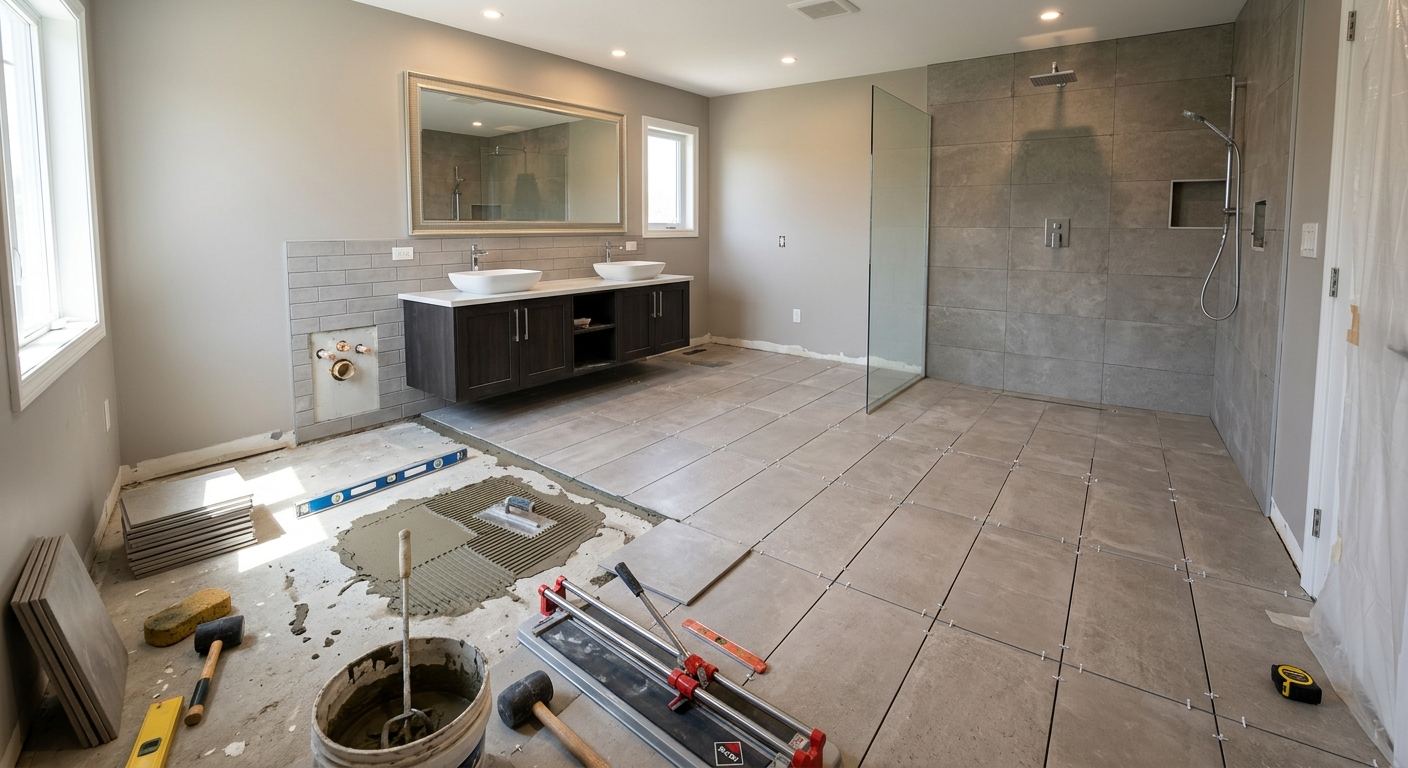
Bathroom renovation options and costs in Telkwa
Telkwa homeowners typically have several bathroom renovation paths, and the right one depends on what’s changing behind the walls. With 41.1% of homes built before 1981 (Statistics Canada, 2021 Census), many projects in Telkwa start as a “refresh” and then run into older drain layouts, older venting, and sometimes dated wiring conditions. In the Nechako region, that discovery drives labour and trade coordination more than climate alone—so costs can rise quickly once demolition starts. Nechako’s mixed seasons also mean bathrooms need durable waterproofing and ventilation that can handle frequent temperature swings and regular humidity from showers, not just a good-looking finish.
Contractor availability can also affect timelines and pricing: when tile, waterproofing, or electrical work stacks up, scheduling travel and trade bottlenecks adds cost. In Telkwa, the area around the main residential stretches off Hwy 16 is where I most often see demand, especially for walk-in shower upgrades and family-bath refreshes that improve safety without changing the footprint.
Below are practical options and realistic cost bands for Telkwa so you can compare quotes consistently—then we’ll break down what most often moves the number up or down.
| Renovation Scope |
What's Included |
Typical Duration |
Price Range |
| Cosmetic refresh (paint, fixtures, accessories only) |
New paint/trim, toilet/vanity accessory swaps, faucet + drain trim, mirror/accessories, minor caulking |
3–7 days |
$3,000–$8,000 |
| Mid-range full renovation (new tile, vanity, tub/shower, electrical) |
Demo within existing footprint, new waterproofing and tile (floor + walls), vanity, tub/shower unit, exhaust fan, GFCI outlet, basic plumbing trim |
2–4 weeks |
$22,000–$35,000 |
| High-end full renovation (custom tile, steam shower, heated floors) |
Higher-end tile selection, custom shower build, heated floor circuit, upgraded fixtures, improved venting, detailed finishes and trim |
4–7 weeks |
$35,000–$50,000 |
| Shower-only installation (convert tub to walk-in shower) |
Shower pan or liner system, waterproofing, glass door/enclosure, new valve trim, tile surround, exhaust fan as needed |
1.5–3 weeks |
$9,000–$18,000 |
| Bathtub replacement or tub-liner install |
Remove and set tub (or install liner), new caulking/mold-resistant trim, reconnect plumbing, re-grout/spot tile |
4–10 days |
$1,500–$8,000 |
| Tile-only installation (floor + surround, existing layout kept) |
Tile removal, underlayment prep, waterproofing system, tile floor + shower surround (no major plumbing relocation) |
1.5–3.5 weeks |
$5,000–$15,000 |
Prices are estimates only and vary by project scope, site access and material selection.
What affects the price of bathroom renovation in Telkwa
In Nechako and across British Columbia, it’s common to see quotes for the “same” bathroom reno vary by 30–50%. The biggest reason isn’t the weather—it’s what older housing stock hides until the first wallboard and flooring come out. In the Nechako region, many bathrooms are tied into older drain stacks and supply lines, and ventilation plans that once met code can fall short once fixtures are upgraded. That’s why labour and trade availability, not climate alone, typically drive the swing.
Older homes can reveal cast-iron or ageing copper drain components that need upgrading to proper modern drainage fall, galvanized supply lines that require replacement for reliability, and ventilation ducting that doesn’t move enough moisture. If asbestos-containing materials are discovered (for example, in some older vinyl floor tile or old drywall compounds from pre-1985 homes), abatement protocols can add $1,500–$5,000+ and introduce scheduling delays for safe removal and clearance. When you keep the job in the existing footprint with minimal drainage changes, you usually stay closer to the mid-range full renovation band (for example, around $22,000–$35,000 depending on finishes). When you correct venting, adjust subfloor and relocate plumbing, the project often climbs toward the upper full renovation range (up to $35,000–$50,000).
Here are practical examples I see in Telkwa: converting a tub to a walk-in shower can be cost-effective when the drain location is unchanged; but if the drain has to move even slightly, rough-in work expands fast. Tile-only projects can stay in the $5,000–$15,000 range if the subfloor is sound—yet if we find rot or an unlevel slab, prep becomes a major cost driver. Also, electrical changes like adding an exhaust fan and upgrading outlets are relatively predictable, while hidden wiring issues can force additional assessment and safe replacement.
| Price Factor |
Why It Matters |
Cost Impact |
| Layout change — moving drain or supply lines |
Requires rough-in plumbing work, potential subfloor openings, and re-routing |
Often adds $5,000–$15,000+ depending on distance and repairs |
| Tile selection — large-format porcelain vs. mosaic vs. ceramic |
Harder cuts, higher tolerance for flatness, more labour for detailing |
Usually adds $1,000–$6,000+ |
| Fixture tier — builder-grade vs. mid-range vs. designer brands |
Valve quality, finishes, warranty value, and drain/trim complexity |
Commonly adds $800–$4,000 |
| Subfloor condition — rot or unlevel concrete adds scope |
Waterproofing systems fail on movement/deflection; prep must be corrected |
Often adds $1,500–$8,000+ |
| Electrical — adding GFCI outlets, exhaust fan, heated floor circuit |
May require new circuiting, fan duct routing, and code-compliant devices |
$1,000–$6,000+ |
| Waterproofing method — membrane type and extent |
Shower longevity depends on system coverage, thickness, and correct tie-ins |
$800–$4,000+ |
| Older-home surprises — asbestos tile, cast-iron drains, galvanized pipes |
Triggers testing/abatement, safe removal, and replacement for reliability |
$1,500–$10,000+ |
| Bathroom size — sq ft drives tile and labour time directly |
More surface area means more waterproofing, setting, and drying time |
Typically shifts the project by $2,000–$12,000 |
Permits & regulations in British Columbia
In British Columbia, many bathroom updates are treated as “cosmetic” work and typically don’t require permits—especially when you’re keeping the plumbing and electrical routing the same. Examples that usually do not need a permit include swapping a vanity, replacing a toilet with a like-for-like model, changing faucets and shower trim, repainting, and retiling surfaces when the waterproofing is replaced without moving plumbing or altering structural walls.
Work that does generally require permits (and inspections) includes relocating plumbing—such as moving a drain or supply line for a tub-to-shower conversion—or adding a new exhaust fan that requires new wiring or vent routing. Electrical changes must meet British Columbia electrical code and must be completed or signed off by a licensed electrician, including updates like new GFCI receptacles and heated-floor circuits.
To verify a contractor in Telkwa step-by-step, start by requesting their valid British Columbia trade licence number and confirming it through the province’s online licence registry. Next, ask for a certificate of insurance (liability coverage) that matches the job value and dates of work. If the contractor uses crew labour, confirm workers’ compensation coverage documentation (WCB/WSIB clearance) so you’re not left exposed if someone is injured. Finally, request that the permit pulls (when required) are clearly listed in the written scope—who applies, who pays, and what’s included in the schedule.
Choosing tile, waterproofing and fixtures for your Telkwa bathroom
In Telkwa, your bathroom budget is usually decided by three material choices: tile, waterproofing, and fixtures. First, tile choice affects both material cost and installation complexity. Ceramic tile is a budget-friendly entry option for floor and walls, but it’s less forgiving on flatness and can be more prone to chipping if the subfloor isn’t properly prepared. Porcelain tile (a common mid-range upgrade) typically offers better water resistance and durability, and it sets well when paired with correct thinset and prep. Natural stone—marble, travertine, or slate—looks premium, but it demands tighter layout planning and sealing considerations, plus it often costs more in labour for careful cuts and finishing.
Second, waterproofing is what prevents mould in British Columbia bathrooms where moisture is persistent. For shower areas, a paint-on membrane can work in limited cases, but a bonded sheet membrane or a proven system (including professional-grade corners/transition details) generally performs better for long-term risk reduction. The right system matters more than “brand name”—especially when older housing stock has minor movement or uneven subfloor spots that must be addressed before membranes are installed.
Third, fixture tier impacts both budget and resale. Builder-grade fixtures keep costs down, while mid-range and designer brands often deliver smoother valves, better finishes, and longer-life cartridges. For example, if you’re deciding between a standard builder-grade valve trim and a mid-range set, spending an extra $400–$900 can be justified if you’re also upgrading waterproofing and tile, because the improvements are visible daily and usually transfer better to resale. In practice, it’s smarter to invest where it protects the structure (waterproofing, pan performance) before upgrading every cosmetic detail.
| Material / Option |
Pros |
Cons |
Price Range |
| Ceramic tile (floor + walls) |
Lower material cost, wide style selection, good for dry wall areas |
Less durable than porcelain for high-traffic floors; more sensitive to prep |
$5,000–$10,000 |
| Porcelain tile (floor + walls) |
Higher durability and water resistance, better longevity for floors and shower walls |
Can require extra labour for large formats and precision layouts |
$9,000–$14,000 |
| Natural stone (marble, travertine, slate) |
Distinctive premium look, strong curb appeal for resale |
More demanding installation (cuts/level tolerances) and may require sealing/maintenance |
$12,000–$20,000 |
| Frameless glass shower enclosure |
Modern appearance, easier wipe-down, helps light feel brighter |
Higher material and installation precision; may limit layout choices |
$3,000–$7,000 |
| Prefab tub surround (acrylic) |
Fast install, consistent surface, typically less labour than full tile on walls |
Limited design flexibility; can look less “custom” than tile |
$1,500–$4,500 |
| Custom shower pan (tile or linear drain) |
Best integration and long-term performance when done correctly; linear drains improve accessibility |
More labour and must be planned for slope/level accuracy and correct waterproofing tie-ins |
$7,000–$18,000 |
How to choose a bathroom renovation contractor in Telkwa
Choosing the right contractor in Telkwa is mainly about proving they can handle the “hidden work” common in older Nechako homes. Start with British Columbia licensing and insurance: ask for their trade licence number and confirm it through the province’s online registry. For liability, request a certificate of insurance with coverage that matches the project scale and shows the work dates. Also confirm workers’ compensation coverage (WCB/WSIB) so you’re protected if an installer is injured on site.
Next, get 2–3 itemised written quotes. The quote should separate labour from materials and list key line items (demolition, waterproofing, tile setting, electrical scope, plumbing trim, disposal and haul-away). Avoid “lump sum only” unless it’s backed by a detailed scope sheet. Read what’s excluded: disposal of old materials, permit pulls (if required), subfloor repairs, asbestos testing/abatement procedures (if discovery occurs), and any changes due to hidden damage.
Warranty matters too. Ask for the workmanship warranty length, what it covers (waterproofing performance, cracking, grout failure), whether it’s in writing, and if it’s transferable if you sell your home. Payment schedules should protect you: never pay more than 10–15% upfront, and use a holdback until the job is complete and deficiencies are corrected. Finally, demand a start date and a completion estimate in writing, including lead times for tile and glass.
- Verify BC trade licence number and that it matches the type of work proposed.
- Review certificate of insurance (liability) and confirm coverage limits are appropriate.
- Confirm WCB/WSIB clearance for employees or subcontractors.
- Get an itemised quote: labour + materials with quantities and unit rates where possible.
- Ensure waterproofing method is named (membrane type and coverage) and is included in the scope.
- Ask who performs/coordinates permit pulls for plumbing or electrical changes.
- Clarify disposal/haul-away: is it included for drywall, tile, and old fixtures?
- Confirm tile layout approach for your room size (cuts at transitions, niche planning, thresholds).
- Check electrical scope: GFCI, exhaust fan (and venting), and heated floor circuit if applicable.
- Request a written warranty for workmanship and confirm product/manufacturer warranty terms.
- Review payment schedule: keep holdback until final inspection and punch list completion.
- Ask for a timeline with curing/drying time for waterproofing and mortar before closing walls.
Red flags I commonly see with less reliable bathroom contractors in Telkwa include: refusing to provide licence/insurance documentation, quoting without listing waterproofing and electrical scope, using vague language like “as required” with no allowance for permits, demanding large upfront deposits, and skipping site protection/clean-up plan so your home and finishes take unnecessary damage.
Frequently asked questions — bathroom renovation in Telkwa
Do I need a permit for a bathroom renovation in British Columbia?
In British Columbia, cosmetic updates like swapping a vanity, replacing trim fixtures, repainting, and retiling surfaces without moving plumbing typically don’t require a permit. Where permits usually come into play is when you change plumbing routes (moving a drain or supply line), add or relocate vents, or do electrical work that introduces new circuits or changes outlets. If you’re converting a tub to a walk-in shower and the drain has to be repositioned, plan for permit/inspection requirements for the plumbing rough-in. For Telkwa homeowners, this matters because older homes (41.1% built before 1981) can uncover wiring and venting issues once walls open. Before work starts, confirm what the contractor will permit and what your electrician/plumber will sign off.
What's the best tile for a bathroom in Telkwa?
For Telkwa bathrooms, the “best” tile is usually the one that matches how you’ll build the shower and how durable your floor needs to be. Many homeowners choose porcelain tile for both floors and walls because it holds up well to moisture and daily use, and it tends to last longer than ceramic. If you want to stay budget-minded, ceramic can work well—especially on less wet wall areas—provided the subfloor is solid and waterproofing details are correct. Where customers often spend the right money is on the waterproofing system and installation quality, not just the tile name. If your quote is targeting the mid-range renovation band (around $22,000–$35,000), upgrading tile to porcelain within a proper waterproofing plan is usually a better value than expensive stone if the rest of the system isn’t upgraded.
Should I do a tub-to-shower conversion?
A tub-to-shower conversion is a strong option in Telkwa for accessibility and day-to-day practicality, especially for households with mobility needs. The key cost driver is whether the drain and valve positions stay in the existing location. If we can keep plumbing within the footprint, a shower-only install often lands in the $9,000–$18,000 band. If the drain needs relocation, or subfloor repairs and venting corrections are required, the scope expands and pricing can approach the upper renovation ranges. In older Nechako homes, it’s also common to discover outdated venting or supply issues when the tub comes out, so it’s wise to plan a contingency. I recommend this upgrade when you want easier showering and you’re also willing to invest in a correctly sloped shower pan and full waterproofing.
How do I prevent mold in a Telkwa bathroom?
Mould prevention is about controlling moisture at the source: a properly built shower waterproofing system, correct ventilation, and accurate detailing at corners and transitions. In British Columbia’s humid bathroom environments, even small pinholes at grout lines, poorly sealed niches, or incomplete waterproofing coverage can lead to moisture migration. For Telkwa homes—many of which are older—hidden issues like under-venting or older ducting can make the problem worse after you upgrade fixtures. The practical approach is: use a proven waterproofing method (bonded membrane or a robust system with the right seams and transitions), seal wet-area seams correctly, install a properly ducted exhaust fan sized for the bathroom, and ensure air moves after showers. Choosing a higher-quality exhaust and making sure the vent duct ties in correctly is often more effective than adding more caulk.
What adds the most resale value in a bathroom reno?
In Telkwa and the broader Nechako market, resale value comes from perceived quality and problem avoidance. Buyers notice shower upgrades, clean tile work, updated vanities, and modern lighting/ventilation—especially when the reno feels complete rather than “patched.” The highest value often comes from a full bathroom renovation approach (commonly $22,000–$35,000 for mid-range builds) because it typically includes waterproofing renewal, updated electrical safety like GFCI outlets, and improved exhaust. Conversions that improve usability—like safer walk-in showers—also tend to score well. Less value is added when renovations are purely cosmetic and the home still has dated plumbing or weak ventilation. If you’re thinking resale, prioritize waterproofing performance, a durable shower surface, and professional-quality finishes you’ll be proud of.
Can I keep my existing plumbing layout to save money?
Yes—keeping your plumbing layout is one of the best ways to control cost in Telkwa. When the drain and supply lines remain where they are, you reduce rough-in plumbing labour, limit subfloor demolition, and minimize the chance of uncovering major hidden issues like cast-iron drainage components or galvanized supply problems. That’s why projects that stay within the existing footprint are more likely to land in predictable bands such as tile-only work (often $5,000–$15,000) or mid-range full renovations (around $22,000–$35,000). If you move plumbing, expect added scope for demolition, framing/subfloor repairs, venting corrections, and additional coordination with licensed trades. Before you commit, ask the contractor to walk you through exactly which lines will remain and what changes would trigger a cost increase.