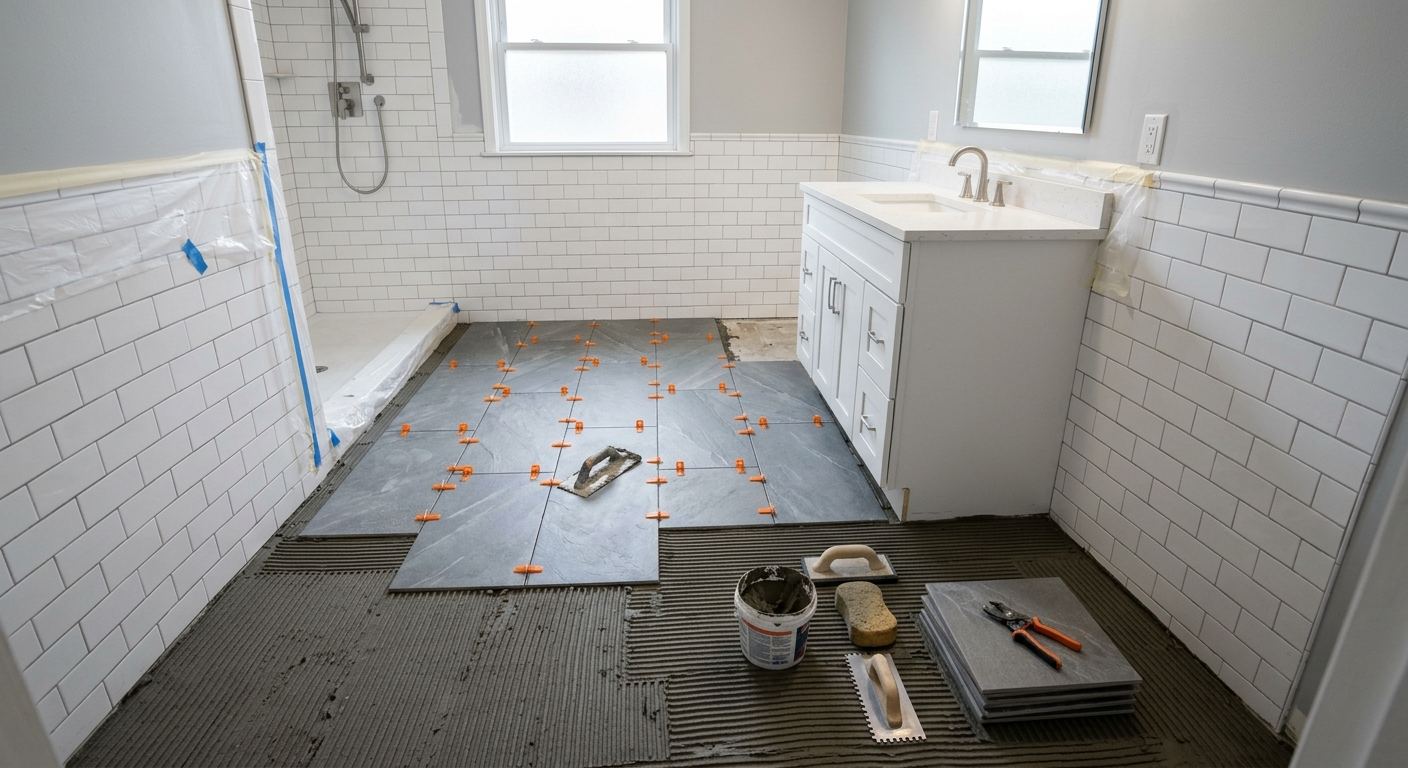
Bathroom renovation options and costs in New Horizons
Bathroom renovations in New Horizons typically start with a simple question—“What will it cost?”—but the answer depends on how much you change once the walls and floors are open. With New Horizons’ population recorded at 8,495 residents in the 2021 Census (Statistics Canada, 2021 Census), projects are often driven by owner-occupiers and growing household expectations for modern plumbing, safer electrical, and better ventilation. In the Lower Mainland–Southwest, many washrooms sit in older mid-century homes and pre-renovation layouts, where dated plumbing pathways can reveal cast-iron or galvanized issues that weren’t visible beforehand. That hidden condition is why the same basic scope can land in a different budget tier after discovery. Add to that the reality of multi-trade work in a small footprint: even modest rooms carry high per-square-foot labour because tilers, plumbers and electricians must coordinate around waterproofing and electrical safety. (Statistics Canada, 2021 Census)
Lower Mainland–Southwest pricing is also shaped by market availability—labour rates and the age of the housing stock are the main cost drivers, more than climate conditions. In Metro Vancouver’s orbit (including nearby Surrey, Burnaby, Richmond and Abbotsford), demand can stretch scheduling, so a well-scoped plan and early material selection help you avoid cost creep. Once bathrooms open up, renovations frequently expand to include plumbing and venting upgrades to bring existing systems closer to current British Columbia code, pushing budgets toward realistic full-reno ranges. If your home is in a neighbourhood corridor where trades crews are turning over work quickly—like the more established residential pockets near community services—expect faster start dates but tighter windows for change orders.
To compare options clearly, review the common renovation tiers below, then use the site conditions checklist in the next section to narrow your quote.
| Renovation Scope |
What's Included |
Typical Duration |
Price Range |
| Cosmetic refresh (paint, fixtures, accessories only) |
New paint, toilet/vanity taps or faucet swap, light accessories, re-caulk, refresh hardware, no plumbing relocations |
3–7 days |
$6,000–$14,000 |
| Mid-range full renovation (new tile, vanity, tub/shower, electrical) |
Demo and disposal, updated vanity, new tub/shower surround or alcove shower kit, tile floor and walls, exhaust fan, basic electrical updates, standard waterproofing |
2–3 weeks |
$18,000–$32,000 |
| High-end full renovation (custom tile, steam shower, heated floors) |
Custom shower with linear drain or steam, premium tile system, heated floor circuit, upgraded lighting, upgraded venting/rough-in allowance if needed, enhanced waterproofing and detailing |
3–5 weeks |
$33,000–$45,000 |
| Shower-only installation (convert tub to walk-in shower) |
Remove tub, install walk-in shower pan and walls, new fixtures, tile floor tie-in, updated waterproofing, ventilation/exhaust fan upgrade where required |
1–2 weeks |
$8,000–$20,000 |
| Bathtub replacement or tub-liner install |
Swap old tub for new alcove tub or install liner system (scope-dependent), new sealing and recaulk, valve/supply checks, limited tile touch-ups |
5–10 days |
$1,500–$6,000 |
| Tile-only installation (floor + surround, existing layout kept) |
Tile floor and select wall areas, grout and sealing, waterproofing upgrades to meet system requirements, no major plumbing relocation |
1–2 weeks |
$2,000–$8,000 |
Prices are estimates only and vary by project scope, site access and material selection.
What affects the price of bathroom renovation in New Horizons
In the Lower Mainland–Southwest, it’s common to see renovation quotes for the “same” bathroom vary by 30–50% across New Horizons and the wider British Columbia market. The main reasons aren’t usually climate—they’re labour rates and what the local housing stock hides once demolition starts. In this region, skilled plumbers, tilers and electricians can be scheduled tightly, and labour demand plus union-influenced pricing in some trades contributes to higher hourly costs. More importantly, older homes can contain cast-iron or galvanized drains and older supply piping; when we discover these during demo, we often need additional rough-in, venting adjustments, and new access panels. That’s why mid-range full renovation budgets commonly land in the $18,000–$32,000 band, while high-end upgrades that include steam, heated floors and premium custom tile move toward $33,000–$45,000.
Older-home surprises can also trigger asbestos abatement. If asbestos-containing materials are found in pre-1985 flooring, drywall compound, or insulation, remediation protocols add material handling, containment, and contractor scheduling. In practice, many projects see added budget in the $1,500–$5,000+ range for this type of unexpected discovery, depending on findings and scope.
Concrete New Horizons examples that change cost quickly: (1) moving a toilet or vanity—requiring drain/supply rough-in—adds labour and patching, even if tile selection stays the same; (2) switching from standard ceramic to large-format porcelain increases layout time and increases underlayment and tile setting demands; (3) upgrading an exhaust fan with a new circuit can be straightforward, but if your panel is older or wiring routes are inaccessible, the electrical scope grows. Finally, bigger bathrooms simply demand more waterproofing, tile, grout lines and labour time—so size influences both the tile-only band ($2,000–$8,000) and full-reno budgets.
| Price Factor |
Why It Matters |
Cost Impact |
| Layout change — moving drain or supply lines |
Requires rough-in work, new pipe runs, patching subfloor/walls and additional waterproofing detailing |
Can add thousands due to additional plumbing labour and wall/ceiling repairs |
| Tile selection — large-format porcelain vs. mosaic vs. ceramic |
Different tile weights, cutting complexity, and tolerances for substrate flatness |
Often shifts tile and labour costs upward in higher-tier renos |
| Fixture tier — builder-grade vs. mid-range vs. designer brands |
Higher tiers increase material price and sometimes require special trims and valves |
Material-only difference can be a few thousand on full renovations |
| Subfloor condition |
Rot, moisture-damaged framing or unlevel concrete can require re-furring, patching or full removal |
Repairs and added labour can meaningfully increase the final total |
| Electrical |
Bathrooms require safe GFCI protection, proper fan wiring and ventilation control; heated floors add a circuit |
Can add cost when new circuits or panel work are needed |
| Waterproofing method |
Membrane type and coverage area influence leak-risk and long-term mould prevention |
Improved systems cost more upfront but reduce failure and rework risk |
| Older-home surprises |
Asbestos tile, cast-iron drains, galvanized pipes and outdated wiring can expand scope |
Discovery can add significant remediation and trade coordination time |
| Bathroom size |
Square footage drives tile quantity, waterproofing area, thinset/grout and labour time |
Large bathrooms often push you from “tile-only” into “full renovation” pricing |
Permits & regulations in British Columbia
In British Columbia (BC), many “freshen-up” bathroom tasks are straightforward and typically do not require permits—especially when you’re not moving services or making structural changes. Cosmetic updates like swapping a vanity, replacing a faucet, repainting, and retiling without moving plumbing fixtures generally fall into the low-risk category and are often handled under standard renovation best practices.
Where permits do come into play is when the work touches life-safety systems or changes the building’s plumbing/electrical infrastructure. In practice, the following typically require a permit and inspection in BC: relocating a drain or supply line (moving a toilet, changing a vanity location, or converting a tub to a shower with new rough-in), adding or altering plumbing valves/rough-in, and upgrading or adding an exhaust fan with new wiring (particularly when it involves electrical circuit changes). Electrical work must meet the provincial electrical code and be done (or signed off) by a licensed electrician—never “DIY and hope” in the bathroom.
To verify a contractor for New Horizons, ask for three items and check them step-by-step: (1) a valid BC trade licence—confirm the number on the relevant online registry listing; (2) proof of liability insurance—review the certificate of insurance for active dates and coverage limits; and (3) worker coverage—request confirmation of WSIB/WCB coverage (often shown on the certificate or a clearance letter). Only proceed once those documents match the scope and the contractor’s legal name on the quote.
Choosing tile, waterproofing and fixtures for your New Horizons bathroom
For bathroom renovations in New Horizons, your three biggest budget levers are tile choice, waterproofing method, and fixture tier. First, tile: entry-level ceramic can be a good fit if you’re keeping the layout simple and want predictable installation pricing, but it may require more careful finishing around edges in high-moisture zones. Porcelain is denser and often performs better for floors and wet-area wall applications; it usually costs more in materials and can increase installation complexity, especially with large-format panels. Natural stone (marble, travertine, slate) looks premium, but it can demand additional labour for selection, layout, sealing, and correction of substrate irregularities—so it can move your project toward the higher bands quickly.
Second, waterproofing: BC bathrooms need reliable moisture control. A paint-on membrane can work for some details, but it must be matched to your system and moisture stress points. Bonded sheet membranes and modern systems (including schluter-style approaches where applicable) generally provide more robust protection when installed correctly at corners, transitions and penetrations. Correct waterproofing is what prevents mould and failure—especially in a region where bathrooms are used year-round and ventilation is only as good as the fan and duct routing.
Third, fixtures: builder-grade can keep you in the mid-range ($18,000–$32,000 band for many full renovations), while designer brands and upgrades like heated floors or a steam shower shift budgets toward $33,000–$45,000. A good example: paying extra for porcelain floor tiles and a full waterproofing system is often justified because the cost of rework from leaks is far higher than the difference at the front end. The right combination depends on your bathroom size, whether you’re changing layout, and the condition of your subfloor.
| Material / Option |
Pros |
Cons |
Price Range |
| Ceramic tile (floor + walls) |
Cost-effective, wide style selection, easier to find matching trim pieces |
Can be less forgiving for wet-floor use depending on finish; may chip if substrate isn’t flat |
$2,000–$5,500 |
| Porcelain tile (floor + walls) |
Better durability for floors, lower water absorption, strong look for modern layouts |
Can cost more for materials and increases labour for large-format installs |
$4,000–$8,000 |
| Natural stone (marble, travertine, slate) |
Luxury appearance, distinct veining and texture |
More expensive materials, requires sealing and careful acclimation; substrate must be very well prepared |
$6,000–$15,000 |
| Frameless glass shower enclosure |
Brightens the bathroom, modern styling, cleaner visual lines |
More custom measurement and install time; can add to maintenance if hard water is an issue |
$1,500–$5,500 |
| Prefab tub surround (acrylic) |
Fast install, lower tile labour, good watertight system when installed to manufacturer spec |
Fewer style options than custom tile; may require additional trim/caulking attention at joints |
$1,500–$4,500 |
| Custom shower pan (tile or linear drain) |
Best aesthetics and drainage control; can eliminate awkward curbs; supports custom layout |
Higher labour for forming slope, waterproofing detail work and drain integration |
$3,500–$12,000 |
How to choose a bathroom renovation contractor in New Horizons
Choosing the right bathroom contractor in New Horizons starts with verification, not just price. First, confirm BC licensing for any trade scope that needs it (especially plumbing and electrical). Then check liability insurance: request the certificate of insurance and ensure coverage is active and sufficient for the project size. For worker coverage, ask for proof of WSIB/WCB coverage—often provided directly on the clearance paperwork or certificate. Don’t accept “we’re covered” verbally; ask to see the documents before you sign.
Next, get 2–3 itemised written quotes—not lump sums. A strong quote breaks out labour vs. materials and clearly lists what’s included: demo and disposal, subfloor repair allowances, waterproofing method, exhaust fan supply and install, and whether permits/paperwork are included. The scope should specify exclusions like “existing plumbing not replaced unless stated,” or “subfloor only repaired if needed upon inspection.” Also confirm warranty terms: ask for the workmanship warranty length in writing, whether it’s tied to the installer or the company, and how long product/manufacturer warranties last. If you sell the home, ask whether workmanship warranty transfers to a new owner.
Payment scheduling matters. In practice, never let a contractor take more than about 10–15% upfront; hold back a portion until completion and final walkthrough. Finally, insist on a start date and a completion estimate in writing so you can plan around limited bathroom access during demo and tile cure times.
- Confirm BC trade licence number for plumbing/electrical scope (and that it matches the quote holder’s legal name).
- Verify liability insurance via certificate of insurance (active dates, coverage limits, no expired policy).
- Request WSIB/WCB clearance or certificate—again, dated and matching the contractor.
- Get 2–3 itemised quotes with a labour/materials breakdown, not a single lump sum.
- Ensure the quote states permit responsibility and whether permit fees are included.
- Confirm disposal and dump fees are included (demo debris is often a surprise cost).
- Ask what waterproofing system is being used and how it’s detailed at corners/penetrations.
- Request the warranty: workmanship duration and what it covers, plus manufacturer warranty specifics.
- Define allowances clearly (tile m², vanity price cap, fixtures allowances) to avoid “upgrade creep.”
- Check the electrical scope: GFCI, fan venting approach, and any heated floor circuit inclusion.
- Set payment terms: max 10–15% upfront, holdback until completion and sign-off.
- Get a written timeline with milestones (demo date, rough-in, waterproofing, tile, trim/commissioning).
In New Horizons, watch for red flags: (1) quotes that refuse to itemise labour/materials; (2) missing proof of BC trade licensing or liability coverage; (3) vague “we’ll handle permits” wording with no responsibility stated; (4) no written waterproofing plan (or only “we’ll use some membrane”); and (5) aggressive payment demands well above 15% before work starts.
Frequently asked questions — bathroom renovation in New Horizons
How long does tile installation take in a New Horizons bathroom?
Tile timelines in New Horizons typically depend on floor area, wall height, and how much layout work is needed. For a tile-only floor plus selected wall surround (keeping the existing footprint), installation is commonly around 5–10 working days, followed by cure time before grout and finishing details. In full renovations, tile work usually falls in the middle of the project after waterproofing is complete and the rough-in is inspected. If you’re using porcelain, large-format tiles, or a custom shower pan/linear drain, plan for extra layout and cutting time for a cleaner finish. Also note that older homes can require subfloor patching or levelling first, which adds time before tile can start (Statistics Canada, 2021 Census).
How much does a bathroom renovation cost in New Horizons?
For New Horizons, realistic bathroom renovation costs usually land in the regional bands used across the Lower Mainland–Southwest. Full bathroom renovations typically range from $18,000–$45,000, depending on whether you’re doing a mid-range update or high-end features like heated floors or a steam shower. If you’re converting just the tub to a walk-in shower, many projects fall around $8,000–$25,000, while tile-only work (floor plus surround with layout kept) often sits around $2,000–$8,000. The bigger variable is what older housing stock reveals—cast-iron/copper/galvanized plumbing and ventilation upgrades can expand the scope once walls open, especially in pre-renovation mid-century homes.
How long does a bathroom renovation take in New Horizons?
Typical timeframes in New Horizons are shorter for cosmetic work and longer for full renovations because of the multi-trade coordination and waterproofing cure steps. A cosmetic refresh can be completed in about 3–7 days. Mid-range full renovations often take about 2–3 weeks, while high-end builds with custom shower details can run 3–5 weeks. Shower-only conversions are commonly 1–2 weeks. Delays most often come from material lead times (custom tile, glass enclosures, or heated floor kits) or from discovery issues in older homes—such as plumbing venting, subfloor repairs, or remediation needs. Planning a clear scope and allowing for a contingency helps keep timelines predictable (Statistics Canada, 2021 Census).
Do I need a permit for a bathroom renovation in British Columbia?
In British Columbia, cosmetic updates usually do not need a permit. Swapping fixtures, repainting, replacing a vanity, and retiling without moving plumbing or making structural changes typically fall into this category. Permits are commonly required when you relocate plumbing (moving a drain or supply line), add or modify exhaust ventilation that requires electrical circuit changes, or make other changes that affect building services. Electrical work must be completed or signed off by a licensed electrician and must meet BC electrical code requirements. In New Horizons, confirm who pulls the permit in your contract, and verify the contractor’s BC trade licence and liability insurance before work begins, so inspections are handled properly.
What's the best tile for a bathroom in New Horizons?
The “best” tile depends on your budget and where it’s installed. For most New Horizons bathrooms, porcelain is a top choice for floors and wet-area walls because it’s durable and has strong water-resistance characteristics compared with basic ceramic. If you want a more budget-friendly approach, ceramic tile can work well, but you’ll want the right finish and careful installation over a properly prepared substrate. Natural stone looks exceptional, but marble/travertine/slate need sealing and meticulous prep, which increases labour. Also, don’t underestimate how waterproofing quality drives long-term performance in BC’s humid bathroom environment. If you’re keeping the layout and doing a tile-only reno, porcelain often justifies the cost where it reduces risk of wear and keeps the finish consistent over time.
Should I do a tub-to-shower conversion?
A tub-to-shower conversion is often worth it in New Horizons for accessibility, faster daily use, and easier cleaning—especially if you’re already investing in a waterproofing overhaul. It’s usually priced similarly to a shower-only installation, commonly around $8,000–$25,000, depending on whether any plumbing relocation is required and what shower pan system you choose (standard pan vs. custom tile/linear drain). If your tub is in good shape and you’re only replacing fixtures, a tub liner or fixture swap may be more cost-effective. However, if your existing tub surround is failing or ventilation is weak, converting can improve both performance and longevity. The key is to plan for the rough-in and venting coordination, since older plumbing stacks and supply lines can affect the scope once the work starts.