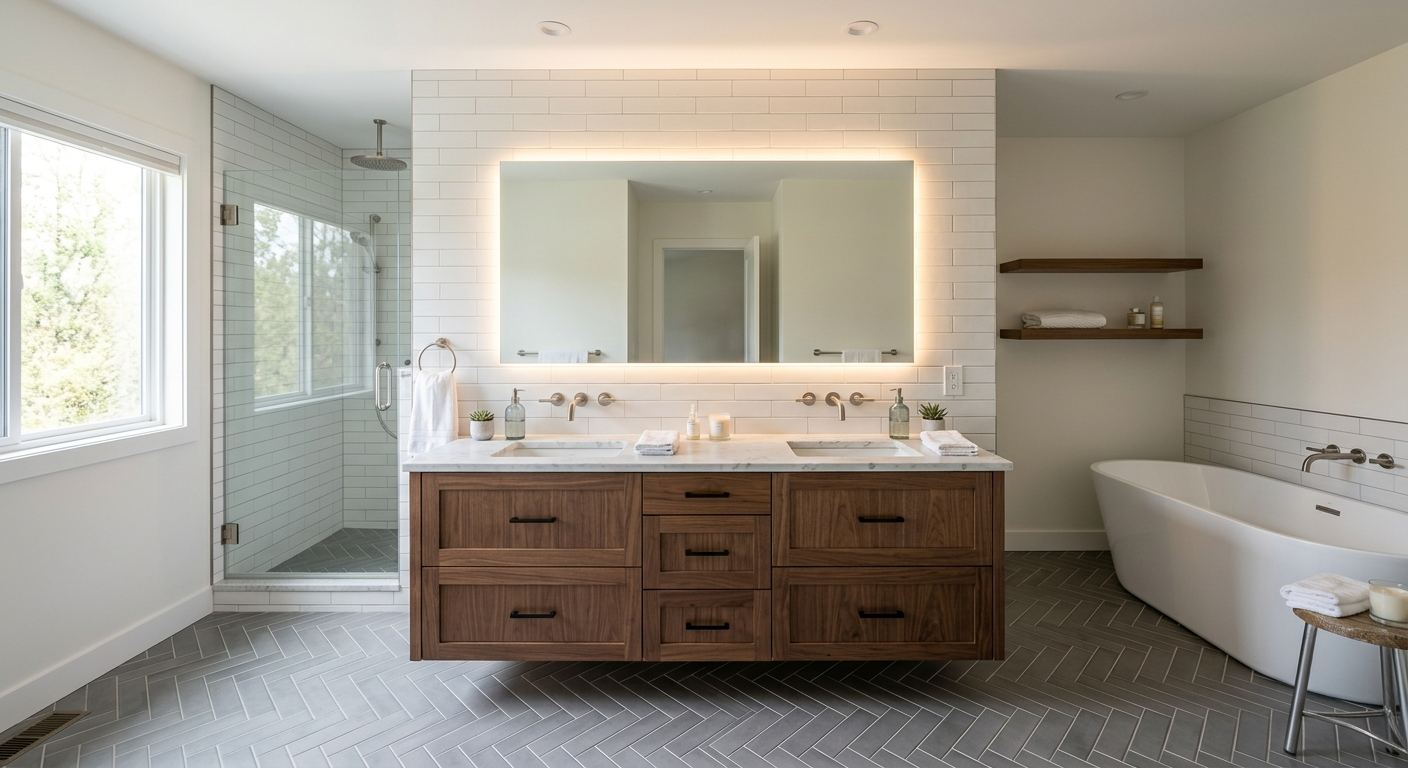
Bathroom renovation options and costs in Pleasantside
Pleasantside bathroom renovations typically start with homeowners deciding how much they want to keep—and in a community shaped by older housing, that choice has a direct impact on cost. In the Lower Mainland–Southwest economic region, the housing stock is often mid-century or earlier, and that matters because dated drain and supply layouts can surface once walls come open. With Pleasantside’s population at 2,671 (Statistics Canada, 2021 Census), the local contractor pool is smaller than in larger urban cores, so scheduling and trade availability—especially tilers and licensed electricians—can influence your timeline and the final price.
Even though Pleasantside sits under a coastal BC climate with wet seasons and indoor humidity, the bigger driver for budgets here is usually labour rates and the age of the home, not “weather” in the way homeowners expect. In pre‑1980 homes you may find cast‑iron or galvanized components, outdated copper supply lines, and older ventilation that needs upgrading. Those discoveries can expand scope into plumbing and venting upgrades to meet current British Columbia code. If asbestos-containing materials are found in older flooring or drywall compound, remediation can add significant cost and time—often changing a mid-range renovation into a higher-cost job.
For planning, it helps to compare common renovation “buckets.” In Pleasantside—particularly around the older residential streets and densified pockets where trades can face tighter access—jobs are often priced with contingency for hidden conditions. Use the table below as a starting point for your quote comparison across scopes.
| Renovation Scope |
What's Included |
Typical Duration |
Price Range |
| Cosmetic refresh (paint, fixtures, accessories only) |
Paint, vanity swap (existing plumbing kept), toilet or sink fixture refresh, hardware, caulking/trim touch-ups, accessory installs |
3–7 days |
$7,000–$14,000 |
| Mid-range full renovation (new tile, vanity, tub/shower, electrical) |
Demo, new waterproofing and tile (floor + surround), vanity and toilet, tub/shower or alcove shower, exhaust fan upgrade, new GFCI where needed, disposal and trim finishes |
2–4 weeks |
$18,000–$32,000 |
| High-end full renovation (custom tile, steam shower, heated floors) |
Premium tile (including custom niches), higher-spec waterproofing, heated floors circuit, frameless glass, steam or upgraded shower system, upgraded ventilation/controls, designer vanity and lighting |
4–6 weeks |
$32,000–$45,000 |
| Shower-only installation (convert tub to walk-in shower) |
Demo tub, new shower pan and waterproofing, tile surround, new glass door, reworked drain lines (as required), exhaust fan/valving updates |
2–3.5 weeks |
$12,000–$28,000 |
| Bathtub replacement or tub-liner install |
New alcove tub and trim replacement or liner system, plumbing reconnection, wall re-caulking, minor surface prep and sealing |
4–10 days |
$5,000–$10,000 |
| Tile-only installation (floor + surround, existing layout kept) |
Tile removal/replacement, underlayment prep as needed, membrane waterproofing, grout/finishes, matching transitions while keeping existing plumbing positions |
1.5–3 weeks |
$6,000–$18,000 |
Prices are estimates only and vary by project scope, site access and material selection.
What affects the price of bathroom renovation in Pleasantside
Across Lower Mainland–Southwest and other parts of British Columbia, you can see the same bathroom renovation land 30–50% apart depending on labour availability, trade rates, and how much “hidden” work is discovered once walls open. In Pleasantside, the market context matters: labour rates and the age of the housing stock tend to be the main cost drivers, not climate alone. Because coastal BC homes can retain indoor moisture longer without proper ventilation, renovations that include exhaust upgrades often cost more—but it’s the labour and electrical/plumbing scope expansion that usually pushes the budget.
Older homes in the region commonly have conditions that broaden scope: cast‑iron or aging drains that require venting changes, galvanized or dated supply lines, and sometimes inadequate bathroom ventilation. When discovery reveals asbestos-containing materials—most commonly in pre‑1985 floor tile, drywall compound, or insulation—abatement protocols can add roughly $1,500–$5,000+ to the budget. That can also change scheduling because additional trades and clearance steps are required before tiling and finishes resume.
Two concrete examples seen in Pleasantside: (1) Moving a vanity’s location by even a small amount can mean rough-in plumbing work and more demo, turning a $18,000–$32,000 mid-range full renovation into a higher-end scope; (2) Choosing large-format porcelain often reduces grout lines, but it increases labour time for layout precision and subfloor prep—so tile-only projects can run closer to the upper end of the tile band, especially when floors need re-leveling.
Use the baseline price bands to frame your planning: a mid-range full renovation typically sits around $18,000–$32,000, while higher-end scopes with heated floors and premium shower systems often approach the $32,000–$45,000 band. Your final cost depends on what’s discovered and how your selections affect waterproofing and installation complexity.
| Price Factor |
Why It Matters |
Cost Impact |
| Layout change — moving drain or supply lines |
Requires rough-in plumbing changes, potential structural wall work, and inspection time |
Often adds $3,000–$10,000 depending on distance and access |
| Tile selection — large-format porcelain vs. mosaic vs. ceramic |
Complex cutting, substrate tolerances, and setting time vary by product format |
Typically +$1,500–$6,000 over entry-level tile installs |
| Fixture tier — builder-grade vs. mid-range vs. designer brands |
Pricing varies widely for toilets, faucets, shower valves, and vanities |
Usually +$1,000–$8,000 total depending on brand and finishes |
| Subfloor condition — rot or unlevel concrete adds scope |
Waterproofing and tile need a stable, flat base to prevent cracking and failure |
Commonly +$1,000–$5,000 for prep/repair |
| Electrical — adding GFCI outlets, exhaust fan, heated floor circuit |
Must meet British Columbia electrical requirements and often requires licensed work |
Typically +$800–$4,000 |
| Waterproofing method — membrane type and extent |
Higher-performance systems reduce moisture risk but require correct installation and materials |
Often +$800–$3,500 depending on coverage and product |
| Older-home surprises — asbestos tile, cast-iron drains, galvanized pipes |
Triggers abatement/remediation and additional plumbing/venting work to modern standards |
Can add $1,500–$15,000+ on discovery |
| Bathroom size — sq ft drives tile and labour time directly |
Tile area, labour hours, and material quantities scale with room footprint |
Roughly +$2,000–$12,000 as size increases across common BC layouts |
Permits & regulations in British Columbia
In British Columbia, cosmetic updates—like swapping fixtures in the same locations, retiling without moving plumbing, replacing a vanity where the supply and drain connections remain unchanged, or painting—typically do not require the homeowner to pull permits. However, renovations that change the “systems” behind the finish usually do. That includes relocating plumbing (moving drains or supply lines), adding or relocating an exhaust fan with new electrical circuitry, and making structural changes to walls or openings.
Electrical work must meet provincial electrical code and be performed by a licensed electrician (or signed off by one). Plumbing rough-in changes generally require a permit and inspection before walls are closed, because inspectors need to confirm proper rough-in, venting, and connection methods. When you’re converting a tub to a walk-in shower, the drain and waterproofing details often require scope that triggers permits and inspections.
For a homeowner in Pleasantside, verify a contractor before work starts:
- Check the contractor’s British Columbia trade licence details relevant to the scope (plumbing and electrical should be tied to licensed trades).
- Request a current certificate of insurance (liability) covering renovations at your address.
- Confirm worker coverage for WCB/WSIB (coverage should be appropriate for the workers performing the work).
- Ask whether permits are required for your specific plan and whether the contractor will pull them.
- Get the inspection responsibility in writing (who schedules and who provides proof of inspection).
If a contractor refuses to provide licence and insurance documentation—or suggests doing electrical/plumbing changes without permits—treat that as a major risk for both safety and coverage.
Choosing tile, waterproofing and fixtures for your Pleasantside bathroom
In Pleasantside, three material decisions usually determine whether your bathroom stays in budget or drifts upward: (1) tile choice, (2) waterproofing method, and (3) fixture tier. Start with tile. Ceramic tile is an entry-level option that can be budget-friendly, but it often has more variation in absorption and can be less forgiving for demanding wet-area applications. Porcelain tile is denser and typically more suitable for both floors and walls, while natural stone (marble, travertine, slate) delivers a luxury look but increases installation complexity and ongoing sealing/maintenance considerations.
Next is waterproofing, which is the anti-mould insurance behind the beautiful finish. In Lower Mainland–Southwest bathrooms, proper waterproofing is critical because the room stays humid after showers and BC homes need reliable moisture control. Paint-on membranes can work for some limited areas, but bonded sheet membranes or properly installed systems tend to provide more robust protection. The right system depends on your shower geometry, substrate prep, and how much movement or cracking risk exists in the existing framing and subfloor.
Finally, choose fixture tier based on both budget and how “visible” the upgrades are. Builder-grade fixtures can look fine, but mid-range valve trim, shower heads, and toilets can improve long-term performance and resale appeal. For example, if you have two options for a full renovation budget, spending the extra on premium tile and upgraded waterproofing may be justified—but jumping to natural stone without correcting subfloor issues usually isn’t. In many Pleasantside renovations, a shift from entry ceramic to mid-range porcelain can cost “some” extra, yet it’s often easier to maintain and install cleanly than stone in a busy household.
Match your selections to your home’s reality: if you’re dealing with older drains, dated ventilation, or subfloor unevenness, prioritize waterproofing and substrate prep first—then spend on the tile and fixtures you’ll notice every day.
| Material / Option |
Pros |
Cons |
Price Range |
| Ceramic tile (floor + walls) |
Lower material cost, broad style selection, familiar to most installers |
More variability; may be less ideal for heavier wet-area performance depending on product |
$2,000–$6,000 |
| Porcelain tile (floor + walls) |
More durable for wet zones, consistent sizing, good for large-format modern looks |
Higher material cost; requires careful subfloor prep for large panels |
$3,500–$8,500 |
| Natural stone (marble, travertine, slate) |
High-end appearance, unique veining and texture |
Sealing/maintenance, heavier tiles can require extra labour and strict substrate flatness |
$6,000–$14,000 |
| Frameless glass shower enclosure |
Clean, modern look; improves perceived space |
Hardware is more expensive; needs precise measurements and strong waterproofing |
$2,000–$7,000 |
| Prefab tub surround (acrylic) |
Fast install; fewer tile labour hours; good value for conversions |
Less design flexibility; relies on clean subbase and proper sealing |
$1,500–$5,000 |
| Custom shower pan (tile or linear drain) |
Best-in-class finish; linear drains help with faster, more even water evacuation |
More build time; waterproofing and slope requirements demand experienced workmanship |
$3,500–$12,000 |
How to choose a bathroom renovation contractor in Pleasantside
To choose the right bathroom contractor in Pleasantside, start with verification: ensure they can work legally for your scope in British Columbia and that their insurance is current. Ask for their British Columbia trade licensing details relevant to the work, then request a certificate of liability insurance with your address listed or covering the project. For workforce coverage, confirm WCB/WSIB status (so you’re not left holding the cost if a worker is injured on site). A reputable contractor will provide documentation before they price your job—no evasive answers.
Next, get 2–3 itemised written quotes. You want labour and materials separated: demolition, framing/repairs, waterproofing, tile setting, fixtures, electrical, plumbing rough-in, and disposal. Make sure the quote includes whether permits are required and who pulls them. Ask for a line item for waste removal and confirm what “demo” actually covers (bathroom drywall, subfloor, old mortar beds, and haul-away).
Warranty matters. Confirm workmanship warranty length for tiling and waterproofing and whether it’s backed by the installer or a third party. Also ask about the product/manufacturer warranty and whether it’s transferable if you sell your home. Agree on a payment schedule that protects you: never pay more than 10–15% upfront; use milestone payments tied to completion, and hold back a final portion until punch list items are done.
Finally, lock in schedule expectations in writing: start date, approximate completion date, and how delays (tile backorders, permit inspections, or hidden plumbing findings) will be handled.
- Request licence/insurance documentation before signing.
- Use itemised quotes (no “lump sum only” shortcuts).
- Confirm permits are included when plumbing/electrical changes are part of your plan.
- Verify who is responsible for inspection scheduling and providing proof.
- Confirm disposal/haul-away is included.
- Ask for exact waterproofing method and membrane type by name.
- Get the warranty terms for workmanship and products in writing.
- Review the schedule: demolition, rough-in, waterproofing, tile, trim/finish.
- Ensure a clear scope list of inclusions and exclusions.
- Confirm tile layout strategy (starting point, thresholds, niche placement).
- Agree on payment milestones (10–15% max upfront).
- Confirm who handles drywall/plaster repairs after plumbing and waterproofing.
Common red flags in Pleasantside include: (1) quoting a full renovation without asking about existing plumbing/venting conditions; (2) skipping itemised pricing for waterproofing and electrical; (3) offering “cash deals” with weak documentation; (4) not explaining permit/inspection responsibilities; and (5) pushing for large upfront deposits or refusing holdback until you complete a walkthrough.
Frequently asked questions — bathroom renovation in Pleasantside
What's the best bathtub material for a Pleasantside home?
In British Columbia, the “best” tub material is usually the one that matches how you use the bathroom and what the subfloor can support. For many Pleasantside homes, a durable acrylic alcove tub is popular because it’s lighter than cast iron, installs quickly, and keeps costs predictable. If you’re aiming for a full renovation budget like $18,000–$32,000, acrylic often fits well alongside new tile waterproofing and an upgraded exhaust fan. Cast-iron tubs are extremely durable but add weight and can increase labour and structural considerations. If you’re not removing walls, a tub-liner system can be a lower disruption option, but long-term performance depends on surface prep and sealing. Always discuss waterproofing and sealing details with your contractor—tubs fail more often at the edges and caulking than in the tub body itself.
Is it worth renovating a bathroom before selling in Pleasantside?
Often, yes—when the renovation addresses high-impact issues buyers notice: outdated finishes, poor ventilation, leaks or staining, and worn tile/grout. In Pleasantside, bathrooms in older homes can show their age quickly, especially if ventilation is weak and moisture has worked into finishes. That said, you should avoid over-improving beyond what your neighbourhood supports. A cosmetic refresh can help if plumbing is sound and you can update fixtures and lighting without moving drains or electrical. If you’re planning a mid-range full renovation around $18,000–$32,000, prioritise waterproofing, ventilation upgrades, and modern tile lines that photograph well. If you discover plumbing or venting problems, budget for repairs to avoid “unfinished” feeling during sale season. The best approach is to reno what prevents future problems—then let aesthetics follow.
How do I plan a bathroom renovation on a tight budget in Pleasantside?
On a tight budget, plan in layers: first stabilize the systems, then upgrade what you’ll see, and finally add premium finishes only where they matter. Start by scoping your work so you’re not moving plumbing. Keeping the existing layout typically helps control labour—especially in the Lower Mainland–Southwest where skilled plumbers and electricians can be in high demand. You can still do a tile upgrade by choosing entry-level ceramic or mid-range porcelain within your price comfort. If you’re targeting a smaller project, a shower-only conversion or tile-only approach can be more efficient than a full gut. For example, full bathroom pricing often lands in the $18,000–$45,000 band, so tightening your scope may keep you closer to the lower part of that range when upgrades are limited. Always include a contingency for older-home surprises like aged drains or supply lines—this is where budgets in Pleasantside most often go sideways.
What's the difference between a cosmetic and a full bathroom renovation?
A cosmetic refresh generally keeps plumbing and waterproofing “behind the walls” unchanged. In practice, it means painting, swapping accessories, replacing fixtures in the same locations, and sometimes redoing trims or hardware. A full renovation goes deeper: demolition, new waterproofing, new tile surfaces, and often electrical and ventilation upgrades (like adding or replacing an exhaust fan or updating GFCI outlets). In Lower Mainland–Southwest homes, a full renovation is also more likely to include plumbing rough-in upgrades because older drains, venting, and supply lines may need bringing into line with current British Columbia code once access is created. That’s why prices commonly differ—cosmetic refreshes can be far less than a full reno that reaches new shower pans and tile. To give context, mid-range full renovations typically land around $18,000–$32,000, while a higher-end full scope can approach $32,000–$45,000.
How do I choose the right contractor for my bathroom in Pleasantside?
Choose a contractor who can prove they’re licensed for the work they’ll do in British Columbia and who’s transparent about scope. Start by verifying their trade licensing (as applicable), requesting a certificate of liability insurance, and confirming WCB/WSIB coverage for their workers. Then get 2–3 itemised quotes that separate labour and materials, including disposal, permit handling (if required), and waterproofing specifics by method and product. In Pleasantside, you should also look for a contractor who asks about existing plumbing and ventilation—because older-home surprises are common and can change costs quickly. Ensure they provide a workmanship warranty for tiling and waterproofing, and that their payment schedule is conservative (no large upfront payments; holdback until completion). Finally, insist on a written start date and timeline—bathroom work usually needs coordination for inspections and materials.
What's the most common mistake homeowners make in bathroom renovations?
The most common mistake is under-scoping the “hidden” work—especially waterproofing, ventilation, and older plumbing/venting conditions—then realizing too late that the finish depends on systems behind the walls. In Pleasantside and the Lower Mainland–Southwest, contractors frequently discover outdated or aging drains, galvanized supply lines, or inadequate exhaust that needs upgrading once the bathroom is opened. Another frequent issue is choosing tile and fixtures without confirming subfloor condition and the waterproofing plan, which can lead to cracked grout, loose tiles, or recurring moisture problems. A related budget mistake is not budgeting for contingencies: asbestos discovery in pre-1985 materials can add $1,500–$5,000+ in remediation. If you’re budgeting toward a mid-range full renovation around $18,000–$32,000, protect yourself by requiring an itemised quote that clearly states exclusions and includes waterproofing and electrical/venting upgrades where needed.