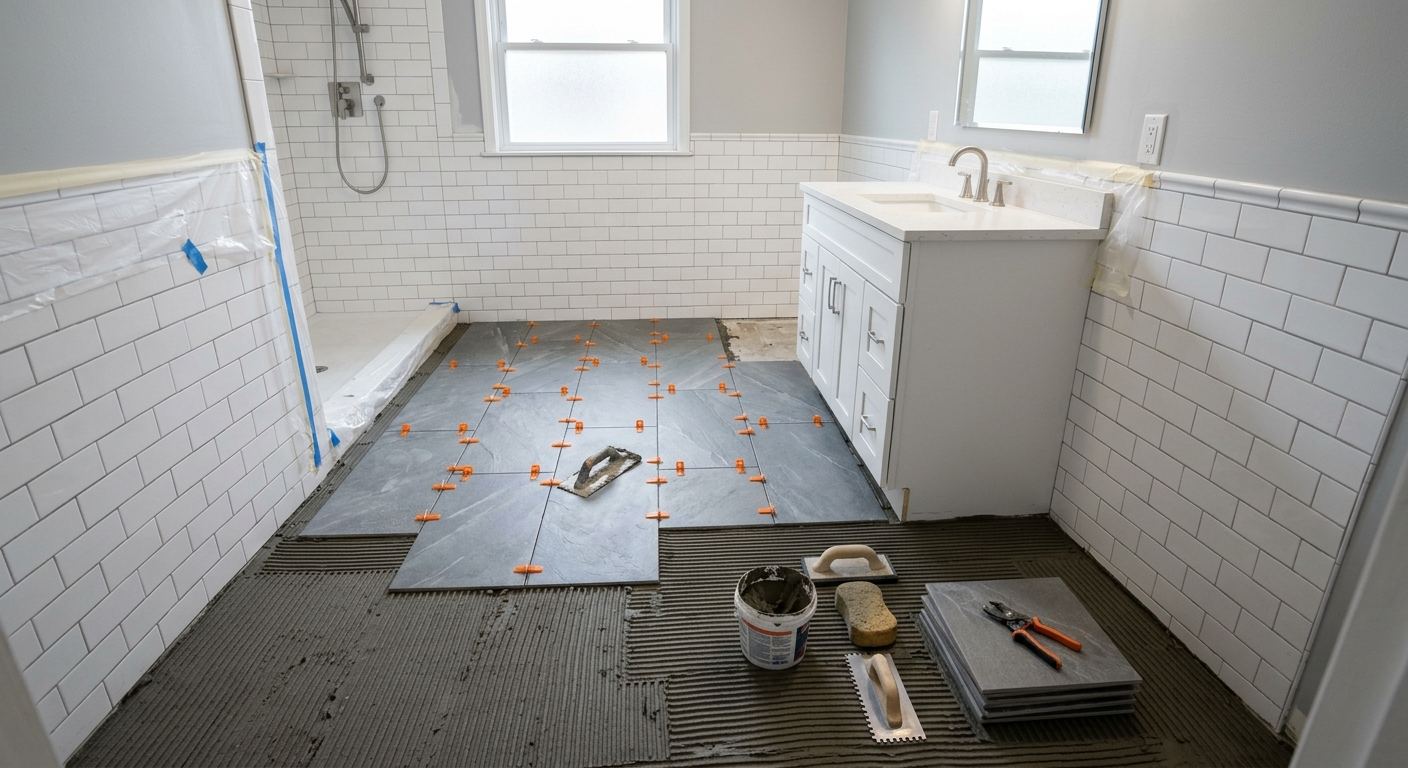
Bathroom renovation options and costs in Clearwater
Clearwater, British Columbia is a small community where bathroom renos tend to be less about “trend” and more about fixing what an older house has quietly outgrown. With about 50.5% of homes built before 1981 (Statistics Canada, 2021 Census), many projects start with dated plumbing layouts and worn finishes—and then quickly reveal drain, venting, and moisture-control issues that weren’t obvious until walls come open. Clearwater also has a high share of homeowner households (75.5% of households own), so we frequently see owners budgeting for long-term performance rather than quick cosmetic change.
In the Thompson–Okanagan region, labour rates and the age of the housing stock are usually the biggest cost drivers—not coastal-style corrosion or salt air. Once crews begin demolition, it’s common to find cast-iron or older supply piping that needs updating to meet current standards, plus ventilation that must be improved when the room is reconfigured. In a place like Clearwater, trade availability can affect scheduling: when multiple trades are needed (plumber, electrician, tile setter, waterproofing specialist), coordination drives the timeline as much as materials.
That’s why you’ll see renovation quotes swing significantly even for “similar” bathrooms. If you’re working in older pockets of town near the core services, like around the downtown area and well-used residential blocks, we also see higher demand for plumbers and electricians once projects start opening up walls.
Use the table below to compare realistic options and budgeting ranges, then we’ll break down what changes the price most in Section 2.
| Renovation Scope |
What's Included |
Typical Duration |
Price Range |
| Cosmetic refresh (paint, fixtures, accessories only) |
New vanity light/fixture swaps, re-caulk, paint, replace toilet/vanity accessories, existing tile left as-is |
3–7 days |
$3,000–$8,000 |
| Mid-range full renovation (new tile, vanity, tub/shower, electrical) |
Demo + prep, new waterproofing for tub/shower zone, tile floor + surround, vanity, toilet, updated exhaust fan, basic electrical upgrades |
2–4 weeks |
$18,000–$28,000 |
| High-end full renovation (custom tile, steam shower, heated floors) |
Full gut, premium tile layout, steam-ready plumbing provisions, heated floor circuit, premium fixtures, custom glass, upgraded venting |
4–7 weeks |
$30,000–$45,000 |
| Shower-only installation (convert tub to walk-in shower) |
Remove tub, rough-in modifications as needed, new waterproofing + tile, glass or curtain track, drain adjustment |
2–3 weeks |
$12,000–$22,000 |
| Bathtub replacement or tub-liner install |
New tub (or liner), new trim/caulking, plumbing connection checks, re-seal surrounding area |
3–10 days |
$6,000–$14,000 |
| Tile-only installation (floor + surround, existing layout kept) |
Tile removal (selectively), prep/leveling, new waterproofing and tile on floor + shower/tub surround, grouting + finishing |
1–3 weeks |
$6,000–$18,000 |
Prices are estimates only and vary by project scope, site access and material selection.
What affects the price of bathroom renovation in Clearwater
In Clearwater and across the Thompson–Okanagan region, homeowners often get quotes that look “too different” for the same bathroom description. A 30–50% swing isn’t unusual when you compare how much labour is required and how much hidden work is uncovered. Nationally, many renovations get grouped as “mid-range,” but locally the real drivers are labour availability and the condition and age of the home. Since about half of the area’s housing stock is older (50.5% built before 1981, Statistics Canada, 2021 Census), projects frequently uncover outdated drain runs, ventilation that no longer meets performance expectations, and supply line issues that force scope expansion.
Even though Thompson–Okanagan weather is generally more manageable than coastal conditions, moisture problems are still real because bathrooms are closed environments. The main cost impact comes when unknowns require deeper fixes: cast-iron or corroded drain stacks and insufficient venting typically mean additional plumbing rough-in and sometimes vent rework. If asbestos-containing materials are found—occasionally in older tile systems or related substrates—abatement protocols can add roughly $1,500–$5,000+ and extend timelines.
Here are a few concrete Clearwater examples we see: (1) keeping your layout and reusing shutoffs can keep a reno closer to the $15,000–$35,000 full-bath band; (2) moving a drain to accommodate a linear shower often pushes you toward the upper end because of additional rough-in and slope requirements; (3) upgrading an exhaust fan with ducting and electrical circuit work can be a modest add when planned early, but becomes pricier when discovered after demolition.
In short, climate matters less here than the “what’s behind the wall” factor, and that’s why transparent scopes and allowances are so important.
| Price Factor |
Why It Matters |
Cost Impact |
| Layout change — moving drain or supply lines requires rough-in work |
New pipe runs, wall opening, and potential venting changes |
Often adds $3,000–$9,000 |
| Tile selection — large-format porcelain vs. mosaic vs. ceramic |
More careful cuts, higher labour time for mosaics, and substrate prep needs |
Commonly shifts budgets by $2,000–$6,000 |
| Fixture tier — builder-grade vs. mid-range vs. designer brands |
Higher faucet/valve and toilet costs, plus sometimes specialized installation |
Typically adds $1,000–$7,000 |
| Subfloor condition — rot or unlevel concrete adds scope |
Framing repairs, underlayment changes, and re-leveling for waterproofing |
Often adds $1,500–$5,500 |
| Electrical — adding GFCI outlets, exhaust fan, heated floor circuit |
Licensed electrical time, new circuits, and code-compliant components |
Commonly adds $1,000–$4,000 |
| Waterproofing method — membrane type and extent |
More robust systems require better detail work and materials |
Usually adds $800–$3,000 |
| Older-home surprises — asbestos tile, cast-iron drains, galvanized pipes |
Remediation, pipe upgrades, and additional labour coordination |
Can add $1,500–$10,000+ |
| Bathroom size — sq ft drives tile and labour time directly |
More surface area increases waterproofing, tile setting, and grout time |
Small bathrooms: lower end of the band; larger: upper end (often $2,000–$12,000) |
Permits & regulations in British Columbia
In British Columbia, the permit picture is usually straightforward: cosmetic work rarely needs a permit, while changes that affect plumbing systems, electrical circuits, or structural elements typically do. For a bathroom refresh in Clearwater, swapping fixtures—like replacing a vanity, toilet, sink, taps, or redoing trim/caulking—commonly falls under “cosmetic” and often doesn’t require a permit. Similarly, straightforward retiling of existing surfaces usually doesn’t trigger a permit unless it’s paired with plumbing relocation or structural wall changes.
Where permits DO commonly apply: relocating plumbing (moving a drain or supply lines), adding or changing exhaust ventilation that involves new ducting and electrical circuits, and any structural wall changes. Electrical work must be completed by a licensed electrician and meet provincial code requirements; in practice, many electrical scopes are permit-driven when adding new circuits (for example, heated floor circuits, new exhaust fan circuitry, or added GFCI-protected outlets in wet areas). Plumbing rough-in changes generally require permits and inspection before walls/tile go back on.
To verify a contractor in Clearwater, start with their British Columbia trade licence details (ask them for their registration info and confirm it online through the provincial registry). Next, request a certificate of insurance—general liability at minimum, and ensure it matches the project value and scope. Finally, confirm workers’ compensation coverage (WSIB/WCB clearance letter or proof—what you’re looking for is that the business is properly covered for the tradesperson portion). If they won’t provide documentation promptly, that’s a red flag before you sign anything.
Choosing tile, waterproofing and fixtures for your Clearwater bathroom
Your tile, waterproofing, and fixture tier decisions are the three fastest ways to steer a Clearwater bathroom reno toward “good value” or “budget blowout.” First is tile choice. Ceramic tile is a solid entry-level option when you want to stay closer to the lower end of bathroom budgets, but it can be more forgiving only if the substrate is well-prepped. Porcelain—denser and less water-absorbing—is often a better mid-range pick for shower zones and floors because it handles wet environments with fewer surprises. Natural stone (marble, travertine, slate) looks exceptional, but it typically adds cost because of material variability, sealing needs, and extra attention during layout and installation.
Second is waterproofing. For British Columbia bathrooms, the goal is long-term mould resistance by keeping water where it belongs. A quality paint-on membrane can work for simpler walls, but bonded sheet membranes or a proven system with detailed corner treatment often perform better for shower assemblies—especially where corners and transitions are tricky. In Clearwater, where bathrooms are used year-round and humidity accumulates, the waterproofing method and workmanship are what determine whether you’ll be redoing tile in five years or enjoying it for decades.
Third is fixtures. Builder-grade faucets and shower valves can be cost-effective, while mid-range and designer brands can add to the budget—but sometimes that increase is justified when it includes better valves, smoother operation, and finishes that match resale expectations. For example, you might spend an extra few thousand on porcelain and a stronger membrane rather than “saving” and then paying later to correct failed grout lines.
Match these choices to your situation: keep layout simple if you’re managing to the $15,000–$35,000 full bathroom band, or go higher on materials if you’re targeting the high-end end where labour detail work and premium assemblies drive the total.
| Material / Option |
Pros |
Cons |
Price Range |
| Ceramic tile (floor + walls) |
Entry-level cost, good variety of colours; fine for keeping budgets controlled |
More sensitive to substrate movement; not as strong as porcelain in some wet zones |
$3,000–$8,000 |
| Porcelain tile (floor + walls) |
Denser and more water-resistant; great for shower walls and floors; wider selection |
May require careful planning for large-format layouts; higher material cost |
$6,000–$14,000 |
| Natural stone (marble, travertine, slate) |
Luxury appearance; unique character; premium resale feel |
Sealing and maintenance; higher labour detail; more variation to manage |
$10,000–$22,000 |
| Frameless glass shower enclosure |
Modern look; visually opens the space; easy to clean |
Installation must be perfectly aligned; hardware can be costly |
$3,000–$7,500 |
| Prefab tub surround (acrylic) |
Fast install; generally consistent performance; often lower labour |
Fewer design customizations; edges and transitions require clean detail work |
$1,500–$4,500 |
| Custom shower pan (tile or linear drain) |
Best way to modernize; linear drains improve water flow and clean lines |
More detail labour; requires careful slope and waterproofing coordination |
$4,000–$12,000 |
How to choose a bathroom renovation contractor in Clearwater
Choosing the right contractor in Clearwater comes down to proof: trade licensing, insurance, clear scopes, and a warranty you can actually use. Start by verifying British Columbia licensing for the relevant trades (for example, electrical and plumbing scopes should be done or signed off by licensed professionals). Then request liability insurance documentation; the certificate should list the business and confirm coverage for the kind of work being performed. For workers’ compensation coverage, ask for a clearance letter or proof of WSIB/WCB coverage—this is the paper trail that shows your job won’t become your risk if something goes wrong.
Next, get 2–3 itemised written quotes instead of a lump sum. You want labour and materials broken out by major assemblies: demo/disposal, rough-in, waterproofing, tile install, fixtures, glass, electrical, and any allowances. Carefully read what’s excluded: permit pull included or not, disposal included or not, and whether repairs to drywall/ceiling are part of the scope after opening walls. Timeline clarity matters, too—ask for a start date and an estimated completion date in writing, and confirm who coordinates between trades.
Finally, match payment structure to risk. Never pay more than about 10–15% upfront; hold back a portion until the bathroom is complete and cleaned. A good contractor will provide a workmanship warranty length, explain what it covers (waterproofing and tile setting details), and confirm whether manufacturer product warranties are preserved and transferable.
- Provide British Columbia trade licence details on request
- Show certificate of liability insurance
- Provide WSIB/WCB clearance letter or equivalent proof
- Use itemised quotes (labour + materials, with allowances called out)
- State whether permits are included and who applies
- Confirm disposal and dump fees are included
- List exclusions (subfloor repair, venting changes, subfloor leveling)
- Show waterproofing method and materials included
- Specify the warranty duration for workmanship and products
- Agree on schedule milestones (demo, rough-in, waterproofing, tile, trim)
- Keep payment to 10–15% upfront; holdback until complete
- Provide a written completion date and punch-list process
Red flags to watch for: (1) quotes that don’t mention waterproofing method or tile prep; (2) refusal to provide insurance/licensing paperwork; (3) lump-sum pricing with no allowances and no exclusions; (4) asking for large upfront payments beyond 10–15%; and (5) vague timelines like “around a month” with no start date or completion target—especially problematic in a market with labour shortages and multiple trade coordination needs in Clearwater.
Frequently asked questions — bathroom renovation in Clearwater
How do I prevent mold in a Clearwater bathroom?
Mold prevention in Clearwater, British Columbia starts with controlling moisture at the source: proper waterproofing, ventilation, and fast drying. In older Clearwater homes (many built before 1981), we often find that exhaust fans were undersized or venting wasn’t routed correctly, so humidity lingers after showers. A solid waterproofing system behind tile—along with correct corner detailing—reduces water intrusion where mould typically begins. Also plan for an exhaust fan that’s properly ducted to move moist air out of the house, not just circulated inside. Finally, use moisture-friendly grouting and finish edges cleanly with proper caulking transitions.
Budget-wise, a mid-range full renovation (often in the $18,000–$28,000 range) typically includes the waterproofing and ventilation upgrades that keep bathrooms dry. For maintenance, run the fan during and after showers and keep shower surfaces squeegeed.
What adds the most resale value in a bathroom reno?
In Clearwater and across the Thompson–Okanagan region, resale value usually comes from upgrades buyers can immediately see and trust: a modern, leak-resistant shower/tub assembly; new vanities and fixtures; and flooring/tile work that looks straight, clean, and finished. Hidden value is equally important: correcting venting performance and upgrading plumbing rough-in so the bathroom isn’t a “risk” home inspection point. If your layout is functional, keeping it often adds more value per dollar than a complicated reconfiguration.
Practically, many homeowners aim for the mid-band full-bath budgets (commonly $15,000–$35,000 for full renovations in this area). Within that, spending on high-quality waterproofing detail, a reliable exhaust fan, and durable porcelain tile tends to give the strongest resale signal. Heated floors and custom glass can push the value higher, but they’re not always necessary for solid ROI.
Can I keep my existing plumbing layout to save money?
Yes—keeping your existing plumbing layout is one of the most effective ways to control cost in Clearwater. When the drain and supply locations stay where they are, you reduce rough-in labour and minimize the chance of discovering surprises behind walls. That matters in older homes where hidden work can quickly expand scope, such as upgrading cast-iron or older pipe sections and improving ventilation tie-ins. Keeping the layout also helps with schedules because it limits how many trades must coordinate deep inside walls.
If you’re converting a tub to a walk-in shower, you can often keep plumbing relatively close by designing the shower with a drain plan that matches the original location. As a rough guide, shower-only projects commonly fall around the $12,000–$22,000 range, and savings are more achievable when you avoid major drain relocation.
How much does a walk-in shower cost in Clearwater?
A walk-in shower in Clearwater typically costs based on whether you’re just replacing the tub with a shower (and keeping plumbing fairly close) or whether you need drain rework, a linear drain, and premium tile/glass. For many Thompson–Okanagan homeowners, a shower-only installation (convert tub to walk-in) often lands in the $12,000–$22,000 range. If you choose higher-end finishes like custom shower pans, larger-format porcelain, and frameless glass, the project can drift toward the top end.
Cost rises when electrical and venting must be updated for code-compliant exhaust and safety, or when subfloor prep is required. In older homes, add a contingency for potential plumbing and moisture-control upgrades once walls are opened.
What's the ROI on a bathroom renovation?
Bathroom renovation ROI depends on the starting condition, what you improve, and how well the work addresses longevity. In Clearwater, buyers value bathrooms that feel dry, modern, and worry-free—especially because older homes are common (with many built before 1981). That means waterproofing quality, ventilation performance, and updated plumbing rough-in can be financially meaningful even if they’re not “visible” like new tile patterns.
For typical owners, renovating into a realistic full-bath budget band—often $15,000–$35,000—tends to perform better than small cosmetic updates alone, especially when the floor or shower is failing. However, ROI isn’t guaranteed; overbuilding with luxury features (like steam systems) in a mid-market home can reduce the payback if the neighbourhood doesn’t support that price premium. The best approach is to match fixture tier and materials to local expectations while prioritizing envelope and moisture control.
Do I need waterproofing behind the tile?
Yes—if you want a bathroom to last, waterproofing behind tile is essential, particularly in shower zones and near tub-to-wall transitions in Clearwater, British Columbia. Tile itself isn’t waterproof in the way a bathroom assembly needs to be. Water can travel through grout lines, through small cracks, and behind trim if the underlying system isn’t protected. A proper waterproofing layer (often a membrane system tailored to the shower design) plus correct sealing at corners, penetrations, and curb transitions is what protects the building materials behind the tile.
In many mid-range full renovations (for example, around the $18,000–$28,000 range), waterproofing is part of the standard package because it prevents mould and costly rework. If you’re doing tile-only installation, confirm in writing that waterproofing and substrate prep are included—not just “tile setting.”