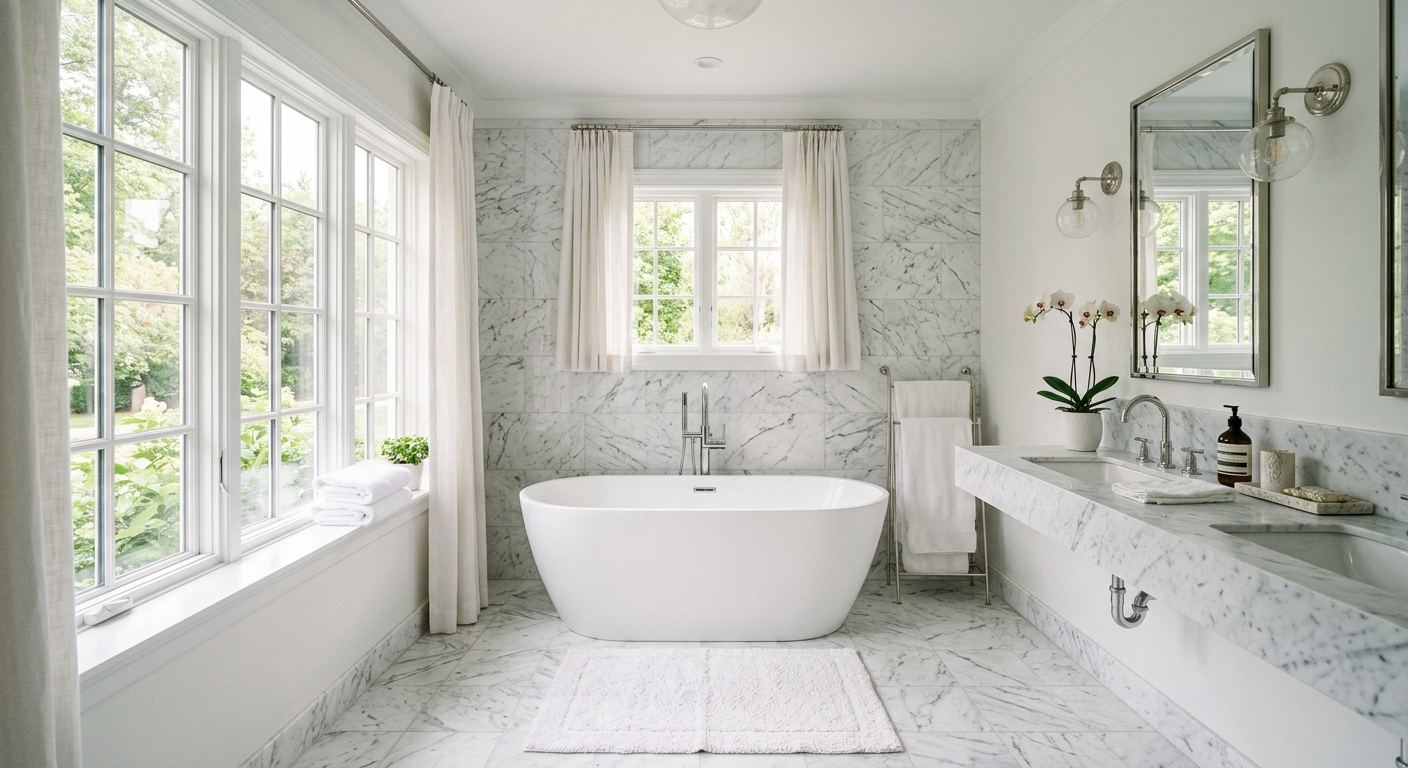
Bathroom renovation options and costs in Port Hardy
Bathroom renovation in Port Hardy comes with a lot of good news: the mild maritime climate on Vancouver Island helps finishes dry out reasonably well. The less predictable part is the housing stock. With 71.3% of homes built before 1981 in the area, many projects start with dated plumbing layouts, aging drain lines, and ventilation that no longer keeps up with today’s shower use—especially when walls are opened. Port Hardy also has a smaller homeowner base (1,210 homeowner households in the profile, 67.4% of households own), which can tighten scheduling during peak renovation months when trades are busy.
On Vancouver Island and the Coast, labour rates and the age of local housing are the main cost drivers—more than temperature swings. General contractors in southern BC commonly bill around 80–120 per hour, while plumbers and electricians often land in the 100–150 per hour range. Once you factor in rough-in upgrades and code-aligned exhaust fan work, a bathroom that looks “straightforward” can move toward the mid to upper end of the full-renovation band ($10,000–$35,000). Trade demand is often strongest in and around the town’s core service areas, where older homes and smaller lot access create faster turnover for contractors.
Below is a practical comparison of common renovation paths and what they usually include—so you can translate a quote into scope, not just totals.
| Renovation Scope |
What's Included |
Typical Duration |
Price Range |
| Cosmetic refresh (paint, fixtures, accessories only) |
Paint-ready prep, new vanity top or vanity swap (no plumbing moves), faucet replacement, toilet refresh or swap, towel bars/accessories, sealing where needed |
3–7 days |
$3,000–$7,000 |
| Mid-range full renovation (new tile, vanity, tub/shower, electrical) |
Demo and disposal, waterproofing, floor + surround tile, vanity, tub/shower or re-tile existing, new exhaust fan and GFCI upgrades (as required), basic lighting adjustments, replace supply lines as needed |
2–4 weeks |
$15,000–$28,000 |
| High-end full renovation (custom tile, steam shower, heated floors) |
Full demo, premium tile and layout, custom shower system (tile/linear drain), heated floors, higher-tier lighting/ventilation, upgraded rough-in where required, upgraded waterproofing coverage, designer hardware and glass (if added) |
3–6 weeks |
$28,000–$42,000 |
| Shower-only installation (convert tub to walk-in shower) |
Remove tub, new shower base/pan and waterproofing, tile or surround, new shower valve trim, replace/adjust drain and venting as needed, exhaust fan/lighting tie-in if required |
2–3 weeks |
$9,500–$18,000 |
| Bathtub replacement or tub-liner install |
Old tub removal and disposal (replacement) or liner install (where suitable), plumbing reconnects, re-seal and finish updates, minor tile touch-up, inspection and leak testing |
1–2 weeks |
$1,500–$7,000 |
| Tile-only installation (floor + surround, existing layout kept) |
Remove existing floor (and wall finish as needed), install tile floor + shower surround, waterproofing to wet-area requirements, grout/seal, modest prep of subfloor/flatness |
1–3 weeks |
$2,500–$10,000 |
Prices are estimates only and vary by project scope, site access and material selection.
What affects the price of bathroom renovation in Port Hardy
Even when two homeowners in Port Hardy want “the same” bathroom renovation, quotes can differ by 30–50% across Vancouver Island and Coast projects and compared with other parts of BC. In practice, it’s not the shoreline humidity that drives cost the most—it’s the combination of regional labour availability and what older homes hide once demo starts. With a large share of local housing built before 1981, you’ll commonly see legacy plumbing layouts, older drain configurations, and ventilation that’s undersized for modern shower flow. When cast-iron drain stacks or older copper runs are encountered, contractors often need additional rough-in work, new venting connections, and more time for troubleshooting.
Asbestos can also swing budgets. If vinyl flooring, older drywall compounds, or some insulation materials contain asbestos (more common in pre-1985 builds), professional testing and abatement can add roughly $1,500–$5,000+ depending on scope and remediation requirements. That’s why a “tile-only” job can quietly become a full renovation once the subfloor is assessed.
Concrete examples from Port Hardy: (1) moving a shower control or adding an exhaust fan often turns a cosmetic refresh into an electrical-and-rough-in project; (2) choosing large-format porcelain tile is great for looks, but it demands stricter subfloor flatness—unlevel areas can increase prep; (3) if you’re converting a tub to a shower, expect shower installation ($4,000–$15,000) to land higher when drains or waterproofing details need correction. For many homeowners, that’s how projects climb into the $10,000–$35,000 full-renovation band.
| Price Factor |
Why It Matters |
Cost Impact |
| Layout change — moving drain or supply lines requires rough-in work |
Wall openings, pipe routing, and leak-proofing layers increase labour and material |
Can add $2,000–$8,000+ |
| Tile selection — large-format porcelain vs. mosaic vs. ceramic |
Harder materials and smaller mosaics change cutting time and installation complexity |
Typically +$1,000–$5,000 |
| Fixture tier — builder-grade vs. mid-range vs. designer brands |
Premium valves, faucets, toilets, and hardware cost more and may require finer fitment |
Varies widely: +$500–$4,000 |
| Subfloor condition — rot or unlevel concrete adds scope |
Repairs and flattening are required to prevent tile failure and to hit waterproofing tolerances |
Commonly +$1,000–$6,000 |
| Electrical — adding GFCI outlets, exhaust fan, heated floor circuit |
Licensed work, new circuits, and proper fan venting add labour and inspection steps |
Can add $800–$4,500 |
| Waterproofing method — membrane type and extent |
System choice affects membrane labour, thickness, and risk reduction for mould and leaks |
Often +$800–$3,000 (value varies by system) |
| Older-home surprises — asbestos tile, cast-iron drains, galvanized pipes |
Testing/abatement, replacement sections, and added rough-in time change the budget quickly |
Can add $1,500–$15,000+ |
| Bathroom size — sq ft drives tile and labour time directly |
More coverage means more prep, more thinset, more grout, and longer install timelines |
Often +$1,000–$10,000 depending on size and level of finish |
Permits & regulations in British Columbia
In British Columbia, many straightforward cosmetic bathroom updates typically do not require permits—things like swapping a vanity, replacing faucets, changing a toilet, repainting, or doing retiling when plumbing locations stay the same. You generally do need permits when you change the “systems” or structural elements: relocating plumbing (moving a drain or supply lines), installing or altering an exhaust fan that requires electrical work and ducting changes, and making structural wall changes (for example, moving framing elements to accommodate a new shower niche or opening up walls for plumbing reroutes). If electrical is involved, it must meet provincial code and be completed by a licensed electrician or signed off appropriately.
For permits and inspections related to plumbing rough-in changes, a permit is commonly required because inspectors need to verify rough plumbing, venting, and pressure/leak testing before surfaces close up. Before work starts in Port Hardy, ask your contractor to clearly list what is included and whether a permit will be pulled.
To verify a contractor’s British Columbia trade licence and coverage, follow a simple checklist: (1) look up the contractor and/or trade licence status using the provincial online registry tools available for BC trade licensing; (2) request a current certificate of insurance and confirm the coverage reflects renovation work (general liability at minimum); (3) ask how workers are covered—ensure workers’ compensation clearance (often referred to as WCB/clearance information) is provided where applicable; (4) confirm the permit responsibilities match the scope—if they’re moving plumbing or adding circuits, those should be identified upfront.
Choosing tile, waterproofing and fixtures for your Port Hardy bathroom
Your budget in Port Hardy usually hinges on three material decisions: tile choice, waterproofing method, and fixture tier. First, tile. Entry-level ceramic tile is often the lowest material cost, but it can come with more labour risk when you need extra adjustments to keep flatness and trim lines tight. Porcelain is denser and more forgiving for wet-area durability, and it typically installs better over a well-prepped substrate. Natural stone (marble, travertine, slate) looks premium, but it often needs careful selection, sealing considerations, and extra time for layout and finishing details. The installation complexity can make natural stone a meaningful jump even if you “save” on fixture costs.
Second, waterproofing. Paint-on membranes can work for limited applications, but in shower areas you generally want a bonded sheet membrane or a proven system installed with the right details at corners, niches, and transitions. This matters in British Columbia because bathroom mould risk is tied to moisture control and ventilation—especially in older homes where existing fan venting may be inadequate.
Third, fixture tier. Builder-grade fixtures keep the initial bill down, while mid-range and designer brands often reduce long-term frustration (better valves, smoother finishes, and more consistent performance). For a concrete example: upgrading from a basic tub/shower valve trim to a mid-range pressure-balanced trim and aligning it with quality waterproofing can be worth it because leaks and valve failures cost far more than the upgrade during a renovation. Pair that with a shower installation that uses a full waterproofing system, and you’ll usually protect the investment within the $10,000–$35,000 full-renovation band many Port Hardy homeowners target.
| Material / Option |
Pros |
Cons |
Price Range |
| Ceramic tile (floor + walls) |
Lower cost, wide style range, easy availability |
More variation in durability and can be less forgiving in wet-area wear if not selected properly |
$2,500–$7,500 |
| Porcelain tile (floor + walls) |
High water resistance, durable for floors, consistent colour and sizing |
May be heavier and can increase underlayment prep if subfloor isn’t flat |
$4,500–$10,000 |
| Natural stone (marble, travertine, slate) |
Luxury look, unique character, strong visual impact |
Higher material and labour cost, sealing/maintenance, more layout time |
$7,000–$18,000 |
| Frameless glass shower enclosure |
Modern appearance, easier visual clean-up, can make smaller bathrooms feel larger |
Hardware and panel cost; requires precise framing/plumbing alignment |
$1,800–$6,000 |
| Prefab tub surround (acrylic) |
Fast install, consistent finish, easier moisture control with correct trim |
Less custom look than tile; limited design changes |
$1,000–$4,000 |
| Custom shower pan (tile or linear drain) |
Best long-term waterproofing when built correctly; sleek drain lines and custom slopes |
More labour and waterproofing detailing; requires careful substrate prep |
$4,000–$15,000 |
How to choose a bathroom renovation contractor in Port Hardy
Start by verifying British Columbia licensing and coverage the same day you request your quote. For electrical, the work must be completed or signed off by a licensed electrician; for plumbing rough-in changes, confirm the plumber’s licence and that permits/inspections are included in the plan. Ask for a current certificate of insurance (general liability) and confirm the contractor provides proof of workers’ compensation clearance/coverage as required for their workers. If a contractor can’t supply these documents promptly, treat that as a risk flag—bathrooms involve water containment, and errors are expensive.
Next, get 2–3 itemised written quotes. You want a breakdown of labour versus materials, including line items like demo/disposal, waterproofing, tile installation labour, exhaust fan, electrical/GFCI work, and any permit/inspection fees. Avoid lump-sum quotes that don’t state what is excluded (for example, drywall repairs, subfloor flattening, asbestos testing/abatement allowances, or disposal). Clarify whether permit pulls are handled by the contractor or by the homeowner.
Review warranty terms: you should receive a workmanship warranty length (often covering installation-related failures) and understand the product/manufacturer warranty for fixtures and waterproofing components. Warranty transferability matters if you sell soon after renovation. On payment, never pay more than about 10–15% upfront, and hold back the final payment until punch list items are complete. Finally, get a start date and completion estimate in writing—Port Hardy schedules can shift when trade crews are booked for multiple older-home renovations.
- Provide BC trade licence numbers for the relevant trades (electrician/plumber as applicable).
- Show a current certificate of insurance before you sign.
- Provide workers’ compensation clearance/coverage confirmation for their crew.
- Use an itemised quote (labour + materials breakdown), not a single lump sum.
- List inclusions/exclusions clearly (permits, disposal, patching, subfloor prep).
- Confirm waterproofing scope and the system being used (not “we’ll waterproof it”).
- Ask how they handle older-home surprises (galvanized piping, cast-iron drains, asbestos testing).
- Get a written timeline with key milestones (demo, rough-in, tile, trim, caulking, final).
- Confirm who does ventilation work (exhaust fan model and ducting plan).
- Agree on payment milestones tied to completed phases.
- Ask for sample finishes and grout/membrane choices so there’s no ambiguity later.
- Ensure the contract includes a workmanship warranty and the process to address defects.
Red flags in Port Hardy include: (1) a contractor who will not provide insurance/licence documents in writing; (2) quotes that omit permit responsibility when plumbing/electrical changes are included; (3) vague waterproofing descriptions; (4) insisting on large upfront payments without a signed contract and schedule; and (5) no clear disposal/cleanup plan during demo.
Frequently asked questions — bathroom renovation in Port Hardy
Is it worth renovating a bathroom before selling in Port Hardy?
Often, yes—especially if your bathroom shows age issues that buyers can detect quickly, like worn tile grout, failing caulking, weak ventilation, or outdated fixtures. In Port Hardy, many homes are older (a large share built before 1981), so buyers may be concerned about plumbing condition and ventilation more than you might expect. A cosmetic refresh can be a quick win, but a full renovation has a stronger “buyer confidence” impact when it fixes moisture risk and aligns with modern exhaust and electrical safety. If you’re trying to stay budget-friendly, a mid-scope update that brings ventilation up to standard and refreshes finishes can be smarter than a full “high-end” build. Typical mid-range full renovations often land around the $15,000–$28,000 range depending on tile and electrical scope, which many sellers can justify with improved perceived quality and reduced inspection surprises.
How do I plan a bathroom renovation on a tight budget in Port Hardy?
Plan around what you can control: keep the layout, and focus money on the parts that prevent future problems. In Port Hardy, costs swing when plumbing and electrical locations move—rough-in work increases labour and inspection steps. Start by choosing a renovation path that matches your need: if your tub/shower is functional, consider a cosmetic refresh or tile-focused upgrade rather than converting to a new shower system. A tile-only installation (floor + surround with the existing layout kept) often sits in the $2,500–$10,000 range, which can be a good budget anchor. Then, allocate a realistic amount for waterproofing and ventilation; cutting corners there is what leads to mould complaints and expensive redo work. For older homes, also keep a contingency for “behind-the-wall” surprises—some projects in pre-1980 builds require additional rough-in adjustments and, occasionally, testing if asbestos-containing materials are suspected.
What's the difference between a cosmetic and a full bathroom renovation?
A cosmetic refresh typically changes the visible finishes without relocating plumbing or major electrical components. Think paint, new vanity tops, faucet swaps, accessories, and sometimes re-grouting or limited retouching. Because you’re not opening walls for new rough-in work, permits and inspections are often not required. A full bathroom renovation goes further: you usually demo down to substrate, replace or rework waterproofing, install new tile in wet areas, upgrade electrical and ventilation, and replace fixtures and sometimes supply/drain components. In Port Hardy and across Vancouver Island and the Coast, the full scope is where labour drives the budget due to older housing stock and the likelihood of hidden conditions. That’s why full renovations commonly fall in the $10,000–$35,000 band, while cosmetic-only work is typically far lower—often just a few thousand dollars depending on what you swap.
How do I choose the right contractor for my bathroom in Port Hardy?
Choose a contractor who can prove they’re licensed/covered for the trades involved and who gives you an itemised scope you can verify. Ask for British Columbia licence information for the electrician/plumber where applicable, a current certificate of insurance, and workers’ compensation clearance. Then request 2–3 written quotes with line items: demo/disposal, waterproofing, tile labour, exhaust fan details, GFCI/electrical work, and whether permits are included. In older Port Hardy homes, scope changes are common—so you should also ask how they handle asbestos testing/abatement if suspected, and what allowances exist for subfloor flatness or cast-iron drain upgrades. Finally, review the warranty and payment schedule: avoid paying more than 10–15% upfront, and hold back until the punch list is completed.
What's the most common mistake homeowners make in bathroom renovations?
The most common mistake is underestimating waterproofing/ventilation and over-optimising for tile looks or fixture cost. In British Columbia, moisture management is what prevents mould and premature failure—not just choosing expensive tile. Another frequent issue is assuming the layout can stay “basically the same” without opening walls: in Port Hardy’s older homes, once you remove the finish, you may discover inadequate venting, galvanized supply lines, or dated drainage that needs upgrading. That’s when budgets jump from a cosmetic direction toward mid-range or full renovations. If you’ve got a conversion plan—like converting a tub to a walk-in shower—failure to plan the drain/vent and waterproofing details early is a classic cause of delays and added costs. A good contractor will map rough-in requirements and confirm waterproofing scope before finalising your budget (and that’s why quotes shouldn’t be vague).
How long does tile installation take in a Port Hardy bathroom?
Tile timelines depend on size, layout complexity, and how much prep the substrate needs. For a typical Port Hardy bathroom, tile-only installations (floor + surround with the layout kept) often take about 1–3 weeks of active work when waterproofing, layout, and cure times are included. A full renovation with tile usually lands around 2–4 weeks for mid-range projects, but it can stretch longer—especially when there are older-home surprises like subfloor repair or additional rough-in updates. Porcelain tile and larger-format selections can also take extra time to achieve flatness and consistent lines. Best practice is to plan around waterproofing cure and grout set times, so the installer can’t “rush” the schedule without risking bond and water resistance. If you’re seeing delays, ask whether it’s prep, waterproofing system curing, or ordering back-ordered tile/trim items.