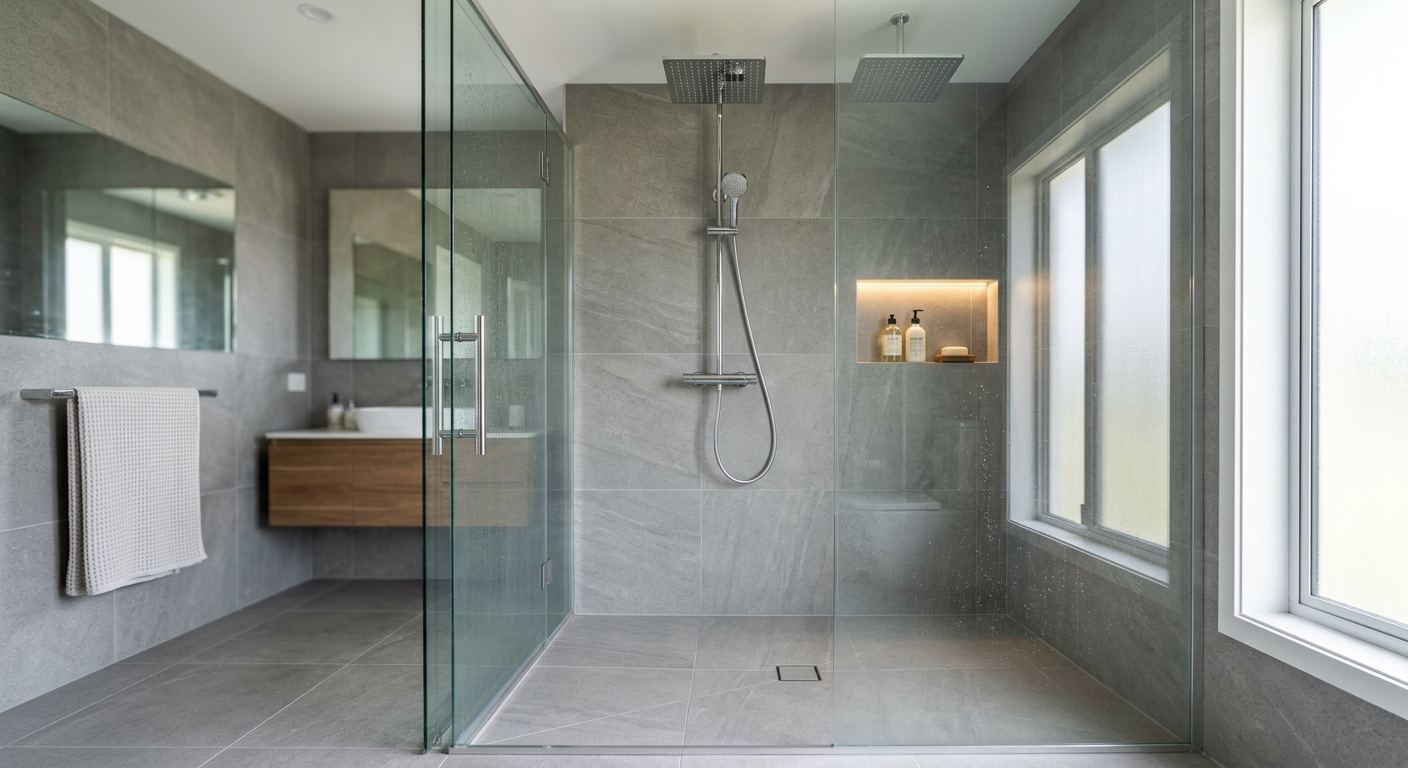
Bathroom renovation options and costs in Central Coquitlam
Bathroom renovation in Central Coquitlam can look surprisingly similar on paper, but the real costs vary a lot once you account for local housing realities and the way trades price risk. Central Coquitlam’s housing stock includes many older mid-century homes, and in a market with a strong renovation cadence you often uncover dated plumbing layouts behind finishes. In fact, the area’s 2021 population was 15,480 (Statistics Canada, 2021 Census), which supports steady demand for skilled trades in the Lower Mainland–Southwest. In older pre-reno bathrooms, you may encounter cast-iron drain sections, galvanized supply lines, and—occasionally in older floor systems—materials that require extra care. Those hidden conditions don’t add “nice-to-have” upgrades; they often expand the job just to make the bathroom safe and compliant.
In the Lower Mainland–Southwest, labour rates and housing age are the main cost drivers, more than climate. Metro Vancouver-area demand for plumbers, tilers, and electricians means contractors price for schedule availability and trade coordination—especially in tight spaces where multiple crews work in sequence. Even modest upgrades frequently trigger plumbing and venting checks, because once walls and floors are open, contractors will identify what must be corrected to meet current British Columbia expectations for drainage, venting, and bathroom ventilation. In Central Coquitlam, this is especially common around places like Central Coquitlam’s Lougheed Highway corridor, where older homes blend with newer infill and renovation schedules run year-round. Use the table below to compare common scopes before you request itemised quotes.
| Renovation Scope |
What's Included |
Typical Duration |
Price Range |
| Cosmetic refresh (paint, fixtures, accessories only) |
Swap vanity/fixture(s) as-is plumbing connections, new lighting/rough-in if existing circuit allows, paint, caulking, toilet trim updates, towel bars and accessories; no major tile demo |
3–7 days |
$3,500 – $9,000 |
| Mid-range full renovation (new tile, vanity, tub/shower, electrical) |
Demo and replace shower/tub surround tile, new vanity and mirror, updated exhaust fan (venting assessed), new or upgraded waterproofing, electrical updates for lighting/GFCI as needed, basic plumbing refresh/valves where accessible |
2–3 weeks |
$18,000 – $35,000 |
| High-end full renovation (custom tile, steam shower, heated floors) |
Custom waterproofing system, heated floors, upgraded tiling (including niches/bench), frameless glass (steam or premium shower package), premium fixtures, expanded electrical plan and lighting design, deeper plumbing upgrades if required |
3–5 weeks |
$35,000 – $45,000 |
| Shower-only installation (convert tub to walk-in shower) |
Remove tub, new shower pan/linear drain option or standard pan, new waterproofing and tile, new valve/controls (if changing), exhaust fan check, glass enclosure and trim |
2–4 weeks |
$14,000 – $28,000 |
| Bathtub replacement or tub-liner install |
Remove and replace tub with new acrylic or swap liner system, new trim and reglazing/caulking, waterproofing tie-ins at perimeter, limited tile patching |
5–10 days |
$1,500 – $6,000 |
| Tile-only installation (floor + surround, existing layout kept) |
Tile demo limited to tile areas, backer/waterproofing as required, floor + wall tiling with grout/finish, grout sealing where recommended, accessory and caulking reset |
1–2 weeks |
$6,000 – $14,000 |
Prices are estimates only and vary by project scope, site access and material selection.
What affects the price of bathroom renovation in Central Coquitlam
In Central Coquitlam and the broader Lower Mainland–Southwest, you can see quote differences of 30–50% for what looks like the “same bathroom” because the scope risk and trade coordination are priced differently. British Columbia’s high construction labour costs—driven by steady demand and limited availability of specialized trades—mean small changes to plumbing, waterproofing complexity, or electrical requirements can move a project from a $18,000–$45,000 full-reno band into a higher range quickly. Climate itself isn’t the main driver here; it’s the market conditions plus the age of local housing. Many Central Coquitlam homes built in earlier eras have bathroom venting that’s dated or undersized, and drainage systems that show wear once floors are opened.
For example, pre-renovation discovery of cast-iron drain sections or aged galvanized supply lines often expands the job from “finish work” into rough-in upgrades. That’s why bathtub/shower conversions and full renovations can converge in budget: moving valves, improving venting, or correcting drainage slopes adds plumbing scope even if your design is modest. In some pre-1985 floors, renovators also run into asbestos-containing materials in vinyl tile, drywall compound, or insulation—when that happens, abatement procedures add time and can increase your budget by $1,500–$5,000+ on top of typical finishing costs. Even ventilation changes for moisture control matter in this region: a properly vented bathroom reduces rework tied to mould and premature grout failure.
Concrete local scenarios that raise cost include: (1) large-format porcelain needing extra substrate prep and tighter flatness tolerances; (2) heated floors requiring additional electrical planning and careful waterproofing continuity; (3) electrical upgrades for GFCI and exhaust fan circuits when existing wiring is limited. Conversely, keeping the layout can reduce rough-in work. If you stay within a mid-range full renovation band (often $18,000–$35,000) and choose simpler tile patterns, costs are more predictable than jumping straight to a high-end package (often $35,000–$45,000).
| Price Factor |
Why It Matters |
Cost Impact |
| Layout change — moving drain or supply lines requires rough-in work |
Bathroom plumbing must be reworked to maintain correct slopes, venting and tie-ins |
Often adds $3,000–$12,000 depending on how far lines move |
| Tile selection — large-format porcelain vs. mosaic vs. ceramic |
Harder tiles demand better substrate prep and more precise installation |
Typically $1,500–$6,000 difference in labour/materials |
| Fixture tier — builder-grade vs. mid-range vs. designer brands |
Valve, trim, mirrors and lighting quality affect material cost and sometimes install complexity |
Commonly $800–$5,000 swing |
| Subfloor condition — rot or unlevel concrete adds scope |
Waterproofing relies on solid, flat surfaces; repairs are often required after demo |
Often $1,000–$8,000+ if structural repairs are needed |
| Electrical — adding GFCI outlets, exhaust fan, heated floor circuit |
Bathrooms require upgraded protection and proper fan sizing; heated floors add dedicated circuits |
Typically $600–$4,000 |
| Waterproofing method — membrane type and extent |
Wet-area membranes must be continuous behind tile and up to the right heights/locations |
Usually $500–$3,500 depending on system and area |
| Older-home surprises — asbestos tile, cast-iron drains, galvanized pipes |
Remediation, disposal and additional plumbing work increase labour and scheduling complexity |
Can add $1,500–$15,000 depending on findings |
| Bathroom size — sq ft drives tile and labour time directly |
More area means more tile, more waterproofing, more set/level time |
Roughly $200–$600 per sq ft equivalent labour+materials in many scopes |
Permits & regulations in British Columbia
In British Columbia, cosmetic updates—like swapping a vanity, replacing a toilet, painting, or retiling without moving plumbing—typically do not require a permit. However, in Central Coquitlam, the moment you relocate plumbing (moving a drain or supply lines), add a new exhaust fan, create openings in walls, or make structural changes, permits and inspections often become part of the process. Electrical work must meet provincial electrical safety requirements and should be performed by a licensed electrician; any new circuits or significant outlet/fan/lighting updates generally need correct sign-off.
Think in practical “yes/no” terms: usually requires a permit when you (1) change the plumbing rough-in path, (2) add/modify bathroom ventilation that changes wiring or ducting, (3) install heated floors that add electrical scope, or (4) open walls/ceilings in a way that changes building systems. typically does not require a permit for straightforward fixture swaps, paint, caulking, and tile installation when the plumbing layout and electrical wiring locations remain unchanged (still confirm with your contractor and local permitting process).
To verify a contractor in Central Coquitlam step-by-step: (1) ask for their British Columbia trade licence number and confirm it using the online provincial registry; (2) request proof of liability insurance and check the certificate of insurance is current and matches the company name you’re hiring; (3) ask how they handle worker protection—coverage in B.C. is commonly supported through WCB-style protection where applicable, and you should request documentation or clearance info related to worker coverage; (4) make sure the permit pulling responsibility is clear in writing (who applies, who schedules inspections). If any of these items can’t be provided, treat it as a budgeting and safety risk before you sign.
Choosing tile, waterproofing and fixtures for your Central Coquitlam bathroom
In Central Coquitlam, the three material decisions that most affect your bathroom budget are tile choice, waterproofing method, and fixture tier. Starting with tile: ceramic tile is usually the entry-level option—good value if you want a classic look, but the installation details and tile flatness still matter. Porcelain tile is typically denser, more water-resistant, and holds up well to daily wet-room use; it also tends to be heavier, so your substrate and prep have to be right. Natural stone (marble, travertine, slate) can look exceptional, but it’s less forgiving: it may need sealing, careful selection of grout and finish, and experienced layout to manage variation.
Next, waterproofing—this is where British Columbia moisture realities matter. Even though Central Coquitlam isn’t “more climate-damaged” than other Canadian regions, bathrooms run continuously on humidity control. A correct system prevents mould and grout failure. Paint-on membranes can work on simpler systems, but bonded sheet membranes and purpose-designed systems (including modern shower preparation methods) typically provide higher reliability when the product is installed exactly as specified, including proper seam treatment.
Finally, fixtures: builder-grade products save up-front, but you may pay later in serviceability or when resale buyers notice gaps in finish quality. Mid-range fixtures often deliver the best balance of feel and longevity. For example, upgrading to porcelain tile and a reliable waterproofing system can cost more, but choosing a premium steam shower component in an otherwise standard layout often adds cost that may not deliver equal day-to-day value.
Match your budget to your situation: if your layout stays put and the subfloor is solid, you can invest in waterproofing and porcelain for the wet zones. If you suspect old drain or supply issues, keep contingency for rough-in upgrades first; “saving” on tile while spending unexpectedly on plumbing often ends up more expensive overall.
| Material / Option |
Pros |
Cons |
Price Range |
| Ceramic tile (floor + walls) |
Great entry price, classic look, easy to find many styles and colours |
Can be more prone to chipping; requires good substrate prep and correct grout selection |
$2,000 – $5,000 |
| Porcelain tile (floor + walls) |
High durability, excellent moisture resistance, wide range of modern designs |
Heavier and more expensive; larger formats demand flatter substrate |
$4,000 – $8,000 |
| Natural stone (marble, travertine, slate) |
Luxury appearance, unique veining and texture |
Requires sealing/maintenance; needs expert installation and careful matching |
$6,000 – $14,000 |
| Frameless glass shower enclosure |
Modern, bright look; makes small baths feel larger |
Glass is higher material cost; installation must be precise to avoid leaks or misalignment |
$2,500 – $7,500 |
| Prefab tub surround (acrylic) |
Faster install, consistent waterproofing system when installed correctly |
Limited style/colour options; less “custom” look than full tile |
$1,000 – $3,000 |
| Custom shower pan (tile or linear drain) |
Great drainage design; linear drains can reduce visual clutter |
More labour-intensive; requires exact waterproofing and slope management |
$3,500 – $10,000 |
How to choose a bathroom renovation contractor in Central Coquitlam
When you hire a bathroom contractor in Central Coquitlam, you want three things verified: British Columbia trade licensing (where applicable), liability insurance, and appropriate worker coverage documentation. Start by asking for the contractor’s licence information and then confirm it via the provincial online registry. Next, request a certificate of liability insurance; it should name the contracting company and show coverage that matches renovation risk (demo, tile work, waterproofing, and electrical coordination). Finally, ask how worker coverage is handled and request the relevant clearance/coverage documentation—don’t accept “it’s covered” without proof.
Then get 2–3 itemised written quotes. You’re looking for a breakdown that separates labour and materials, including line items for demo, waterproofing materials, tile setting and grout, electrical scope, plumbing adjustments, disposal, and—importantly—what’s included for permits. A quote that only states a lump sum is harder to compare and often leads to surprises during hidden-condition discovery. Check warranty details: workmanship warranty length, whether it’s backed by the installer, and whether product/manufacturer warranties are transferred to you. Payment scheduling matters too—never pay more than 10–15% upfront, and use a holdback until the job is complete and deficiencies are corrected. Ask for a written timeline with a start date and estimated completion date so you can plan around trade availability.
- Confirm B.C. trade licence and that it matches the actual work they’re doing
- Request certificate of liability insurance and verify dates/limits
- Ask for worker coverage documentation/clearance info in writing
- Demand itemised quotes: labour vs materials, not lump sum only
- Ensure waterproofing scope is explicit (system type, coverage area, tie-ins)
- Clarify what’s included in disposal (dump fees, drywall/tile hauling)
- Confirm permit pulling responsibility and whether permit fees are included
- Check electrical scope: GFCI, exhaust fan, lighting upgrades, heated floor circuit if applicable
- Get a detailed tile plan: tile type, grout choice, layout and threshold expectations
- Review plumbing scope: valve replacement, drain/supply updates if discovered
- Set a written schedule and include lead times for glass, tile, and fixtures
- Use a warranty checklist: workmanship period, manufacturer warranty terms, transferability
Concrete red flags in Central Coquitlam: (1) they won’t provide licence/insurance documents promptly; (2) they quote a single number with no waterproofing or electrical line items; (3) they ask for more than 10–15% upfront without a detailed contract and schedule; (4) they avoid discussing permits or responsibility for inspections; (5) they dismiss hidden-condition risk (“older homes are easy”) instead of offering contingency planning.
Frequently asked questions — bathroom renovation in Central Coquitlam
Do I need waterproofing behind the tile?
In British Columbia, yes—waterproofing behind shower and wet-area tile is strongly expected as part of a correct installation system, especially in Central Coquitlam where bathrooms face constant humidity. If you’re tiling the tub/shower surround, the correct approach is to install a compatible waterproofing membrane behind the tile and treat seams, corners and changes of plane exactly as the system manufacturer requires. For floors, waterproofing requirements depend on the build-up and whether it’s a shower floor or a general bathroom floor, but moisture management is still critical. If your quote doesn’t clearly name the waterproofing method (membrane type and coverage height/extent), ask for it in writing. Costs vary, but waterproofing and proper set-up commonly fall into mid-reno scopes such as $18,000 – $35,000 for full renovations depending on how much is removed and repaired.
How do I compare bathroom renovation quotes?
Compare quotes by scope, not just total price. Ask each contractor to itemise labour and materials for demo/disposal, waterproofing system, tile labour (including prep), plumbing rough-in changes, and electrical work such as GFCI outlets and exhaust fan upgrades. In Central Coquitlam, it’s common for open walls to reveal issues with drainage, venting, or older piping, so a good quote explains allowance/contingency for surprises (or includes an inspection-based approach). Also check whether permit pulling and inspections are included and who schedules them. Warranty terms should be comparable: workmanship warranty length and manufacturer warranty transfer. If one quote is closer to the lower end of the band (like $18,000 – $45,000 for full renovations) but is missing electrical/waterproofing details, it’s often not apples-to-apples. Use those gaps to renegotiate scope clarity before you decide.
Can I live at home during a bathroom renovation in Central Coquitlam?
Often, yes—if you have a second bathroom or you can plan around limited access. In Central Coquitlam homes, many renovations are phased: demo and rough-in happen first, then waterproofing and tile, and the final electrical and fixture installs follow. That means you can usually keep living in the rest of the house, but showers may be unavailable for parts of the project. If it’s a full bathroom reno (often $18,000 – $35,000 in mid-range scopes), expect disruption for a couple of weeks. For shower-only conversions, the disruption can still be significant during pan/waterproofing curing and glass install windows. Discuss temporary solutions with your contractor before work starts—portable toilet access, protecting floors from dust, and whether they’ll keep the work area sealed. A clear timeline in writing helps you plan evenings and weekends around the work phases.
What's the best bathtub material for a Central Coquitlam home?
The “best” bathtub material depends on your installation setup and how you value maintenance and longevity in a Lower Mainland–Southwest home. Most homeowners choose between acrylic replacement tubs and tub-liner style upgrades. Acrylic is a common pick because it’s lighter than cast iron, installs cleanly, and typically offers good stain and impact resistance for everyday use. Cast-iron tubs are durable but heavy and can complicate removal and floor protection. For pre-existing surrounds, tub-liner installs can reduce demo time, but they’re most effective when the existing tub is in good condition. If your renovation is budget-sensitive, a bathtub replacement or liner scope often sits around $1,500 – $6,000, but it can rise if waterproofing tie-ins or surrounding tile replacement are needed. In older Central Coquitlam bathrooms, confirm the plumbing connection condition before choosing a fast swap—hidden drain and valve issues can add scope.
Is it worth renovating a bathroom before selling in Central Coquitlam?
Often, it’s worth renovating if you’re targeting improvements buyers notice immediately: clean tile, modern vanity/lighting, reliable ventilation, and functional plumbing. In Central Coquitlam, where many mid-century homes are maintained and updated, a bathroom that feels current and stays dry (no lingering odours, no recurring grout problems) tends to help showings. That said, avoid over-upgrading in a way that doesn’t match the home’s overall finishes. A mid-range full renovation (commonly $18,000 – $35,000) can be a sensible balance, while a high-end renovation (often $35,000 – $45,000) is only worth it when the rest of the home supports that level of finish quality. If you uncover older drain or electrical surprises, budget those costs into your decision. Most importantly, focus on waterproofing quality and ventilation performance; those are the upgrades that protect buyers after move-in, not just the cosmetic changes that photograph well.
How do I plan a bathroom renovation on a tight budget in Central Coquitlam?
On a tight budget, plan for two things: where you’ll spend for lasting value and where you can keep costs predictable. First, keep the layout if possible—changing drain and supply locations often creates rough-in work that pushes a job up quickly. Second, prioritise waterproofing and ventilation. If you’re retiling, don’t skimp on a properly installed waterproofing membrane and correct prep; moisture problems are the most expensive mistakes. Third, choose tile formats and fixtures that match your budget: ceramic tile can be a cost-effective starting point, while porcelain is a strong durability upgrade if your subfloor is ready. Many homeowners find that splitting scope helps: consider tile-only installation or a shower-only conversion rather than a full remodel when the rest of the bathroom is serviceable. For budgeting reference, a tile-only scope can fit in a lower band such as $6,000 – $14,000, while a full renovation usually lands in the broader $18,000 – $45,000 range depending on what’s discovered. Finally, build contingency for older-home surprises common to Central Coquitlam’s housing stock.