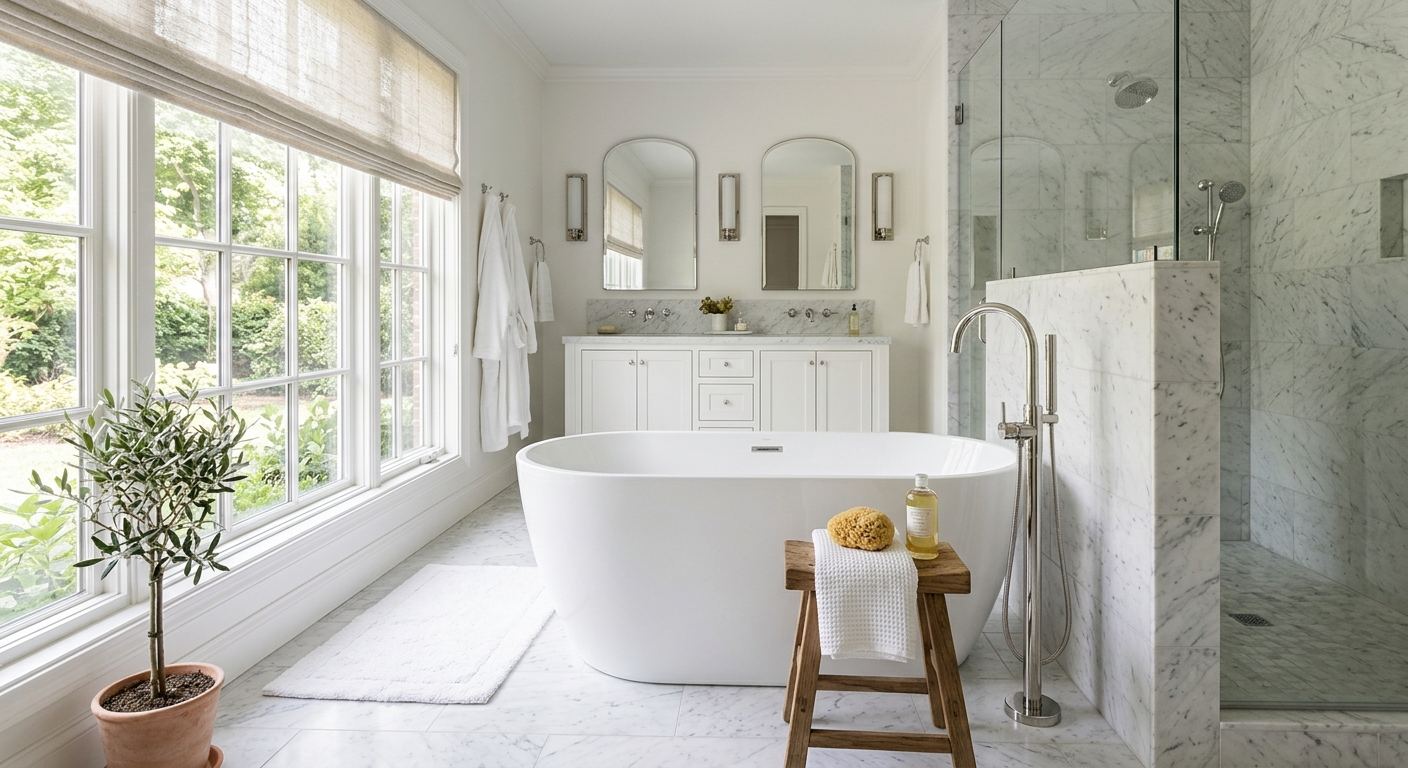
Bathroom renovation options and costs in Univercity
Bathroom renovations in Univercity are typically planned around the reality that this community is small—about 5,000 residents as of the 2021 Census (Statistics Canada, 2021 Census). In practice, that means many renovations rely on contractors who serve the broader Lower Mainland–Southwest market, where demand for skilled trades is steady. Just as important, a lot of the surrounding housing stock is mid-century or older, and that age often comes with dated plumbing layouts and subfloor conditions that aren’t visible until walls and floors are opened. In pre-1980 homes, it’s common to encounter galvanized supply lines or cast-iron/cast-iron-style drains, and occasionally asbestos-containing materials in floor tile, drywall compound, or insulation. Those findings can change the scope fast.
Costs in the Lower Mainland–Southwest are shaped more by labour rates and job complexity than by weather itself. Metro Vancouver and nearby cities like Surrey, Burnaby, Richmond, and Abbotsford tend to have higher construction labour costs and, in turn, less availability of plumbers, tilers, and electricians. When a bathroom opens up, projects frequently expand to include plumbing and venting upgrades to bring systems in line with current British Columbia requirements.
If your bathroom is in an older pocket of Univercity close to the commercial corridors—where more renovation demand concentrates—expect faster scheduling pressure and more competition for tile setters. That’s also why it’s smart to decide early whether you’re doing a cosmetic refresh or a full redesign. Use the table below to compare typical scopes and realistic price bands, then we’ll break down what drives the final number.
| Renovation Scope |
What's Included |
Typical Duration |
Price Range |
| Cosmetic refresh (paint, fixtures, accessories only) |
New vanity or updated fixtures, tap replacements, toilet swap (no plumbing relocation), bathroom fan check, paint, accessories (towel bars/rails), basic caulking |
3–7 days |
$18,000–$45,000 |
| Mid-range full renovation (new tile, vanity, tub/shower, electrical) |
Demo and disposal, tub/shower or surround replacement, tile floor + walls, vanity/lighting, ventilation upgrades, GFCI outlet and exhaust fan connection, waterproofing system, new trim/paint |
2–4 weeks |
$18,000–$45,000 |
| High-end full renovation (custom tile, steam shower, heated floors) |
Premium tile layout, custom shower or steam-ready system, heated floors circuit, upgraded waterproofing, designer vanity and lighting, higher-spec fixtures, advanced venting strategy |
4–7 weeks |
$18,000–$45,000 |
| Shower-only installation (convert tub to walk-in shower) |
Remove tub, install walk-in shower pan and waterproofing, tile surround, glass (if selected), new controls/valves if needed, ventilation check, plumbing rough-in allowance |
1–3 weeks |
$8,000–$25,000 |
| Bathtub replacement or tub-liner install |
Remove and set new tub (or liner system where suitable), recaulk and connect plumbing, basic surround updates, leak testing, touch-up finishes |
4–10 days |
$1,500–$6,000 |
| Tile-only installation (floor + surround, existing layout kept) |
Tile floor and/or tub/shower surround over prepared surfaces, waterproofing where required, grout/caulk, edge details and finishing trims |
1–2 weeks |
$2,000–$8,000 |
Prices are estimates only and vary by project scope, site access and material selection.
What affects the price of bathroom renovation in Univercity
Even when homeowners in Univercity and the wider Lower Mainland–Southwest region choose the same bathroom layout and similar finishes, quotes can land 30–50% apart. The biggest reasons are labour rates and how old the house is—more than the region’s climate. In British Columbia, labour demand is high and skilled trades (especially plumbers, tilers, and electricians) are often booked. That means you can pay more for the same hours of work compared to many other parts of Canada.
Lower Mainland–Southwest housing stock is frequently older, so once walls and floors open, it’s common to discover issues that weren’t obvious during the walk-through. In pre-1980 homes, cast-iron drain components and older supply plumbing (including galvanized lines) can require upgrades. Ventilation is another recurring driver: bathroom fans may be undersized, disconnected, or improperly vented, so adding correct exhaust can expand scope.
Asbestos risk is one of the most budget-inflating discoveries. If a contractor finds asbestos-containing materials in flooring, drywall compound, or insulation in pre-1985 homes, remediation and disposal protocols can add roughly $1,500–$5,000+ depending on what’s affected and how much is disturbed. Electrical scope also grows quickly—if you add GFCI protection and a properly switched, humidity-rated fan, that’s time and materials.
Concrete examples: (1) keeping your tub location can hold many projects near a mid-range full renovation band such as $18,000–$45,000 rather than pushing into shower conversion complexity, and (2) choosing porcelain tile over basic ceramic may raise material cost, but a well-planned layout can reduce cutting and labour. For shower conversions, the typical shower installation band is $8,000–$25,000, and the difference often comes from plumbing rough-in, waterproofing depth, and whether the subfloor needs flattening.
| Price Factor |
Why It Matters |
Cost Impact |
| Layout change — moving drain or supply lines requires rough-in work |
New rough-in affects framing, chases, and wall openings; it also triggers additional inspection steps |
Often adds multiple days and can shift a job toward the upper end of the $18,000–$45,000 band |
| Tile selection — large-format porcelain vs. mosaic vs. ceramic |
Harder materials require better substrates and more careful setting; mosaics increase grout joints and labour |
Can swing the tile-only band of $2,000–$8,000 by thousands depending on size and pattern |
| Fixture tier — builder-grade vs. mid-range vs. designer brands |
Higher-tier fixtures often cost more and may need tighter tolerances and more plumbing time |
Commonly changes total budget by several thousand within $18,000–$45,000 |
| Subfloor condition — rot or unlevel concrete adds scope |
Water damage or uneven surfaces require repairs before tile; otherwise you risk failure and callbacks |
Repairs can push a mid-range bathroom toward the top of $18,000–$45,000 |
| Electrical — adding GFCI outlets, exhaust fan, heated floor circuit |
Bathrooms require code-compliant protection; heated floors add dedicated circuit planning |
Often increases labour and materials, especially when moving fixtures (upper $18,000–$45,000) |
| Waterproofing method — membrane type and extent |
The right system prevents mould and tile failure; more coverage and better systems cost more |
Usually a worthwhile spend inside $18,000–$45,000 to avoid failures |
| Older-home surprises — asbestos tile, cast-iron drains, galvanized pipes |
Discovery changes scope, adds trade coordination, and can require remediation or pipe upgrades |
Can add $1,500–$5,000+ for remediation plus plumbing upgrade time |
| Bathroom size — sq ft drives tile and labour time directly |
More area means more setting, waterproofing, and longer drying/curing windows |
Small baths can stay closer to lower end; bigger baths move toward upper $18,000–$45,000 |
Permits & regulations in British Columbia
In British Columbia, many bathroom updates are treated as cosmetic and typically do not require permits—for example, swapping a vanity, replacing fixtures like taps and a toilet (without moving plumbing), painting, replacing accessories, and straightforward retiling where you’re not altering structural walls or relocating plumbing. However, once you move beyond “swap and surface-finish,” permitting often becomes part of the job.
Work that typically does require permits and inspections includes: relocating plumbing (moving a drain or supply lines), opening walls for rough-in changes, adding or relocating electrical components (like wiring a new exhaust fan circuit or adding heated-floor wiring), and any structural wall changes. If you’re installing an exhaust fan that requires new wiring or venting changes, plan for permitting and an inspection path. Electrical must meet provincial code standards and be completed or signed off by a licensed electrician; plumbing rough-in changes generally require a permit and inspection as well.
To verify a contractor for Univercity, start with three things: (1) licence: confirm the contractor’s British Columbia trade licence, usually shown on their website or through the appropriate provincial registry entry; (2) liability: request a current certificate of insurance naming you as applicable (COI details vary by contractor); and (3) coverage: ask for proof of WCB/WSIB-equivalent coverage where applicable for the workers on site. If they can’t provide documents promptly, it’s a red flag. Then, ensure the scope clearly indicates whether permits are included or pulled by the contractor.
Choosing tile, waterproofing and fixtures for your Univercity bathroom
In Univercity, the “pretty” choices—tile and fixtures—are only half the budget story. The other half is how those materials perform in a humid, wet season and how well the waterproofing is detailed. You’ll get the best value by making three decisions in this order: (1) tile choice, (2) waterproofing method, and (3) fixture tier.
Tile choice: ceramic tile is an entry-level option, with simpler installation tolerances for typical bath walls and floors. Porcelain is denser and often better suited for floors (less likely to absorb water), but it typically requires more careful substrate prep and layout—especially for large-format pieces. Natural stone (marble, travertine, slate) can be stunning and high-end, but it demands sealing discipline and meticulous waterproofing and grouting for consistent results.
Waterproofing: in the Lower Mainland–Southwest, the risk isn’t snow or drought—it’s persistent bathroom humidity and wetting cycles. A paint-on membrane can work in limited, well-planned applications, but for showers, many homeowners do best with bonded sheet membranes or a proven system built around a correct drain integration. The goal is to prevent mould by stopping water migration under tile and into framing.
Fixture tier: builder-grade fixtures are usually cheaper upfront; mid-range and designer options can improve user experience and resale appeal, but the real resale win often comes from the waterproofing, layout logic, and how cleanly the finishes are executed.
Example: if you’re deciding between tile installation at $2,000–$8,000 versus a higher spec tile and more labour-intensive waterproofing, the added cost is justified when it prevents future rework. A small upgrade in tile grade paired with robust waterproofing often beats “saving” on systems that are behind the walls.
| Material / Option |
Pros |
Cons |
Price Range |
| Ceramic tile (floor + walls) |
Entry-level cost, wide colour options, easier matching for mixed trims |
Can be more porous for floors; heavier reliance on correct grout and sealing |
$2,000–$4,500 |
| Porcelain tile (floor + walls) |
Low water absorption for floors, durable for high-traffic baths, clean modern looks with large formats |
Requires solid substrate prep; larger tiles can increase layout complexity |
$3,500–$8,000 |
| Natural stone (marble, travertine, slate) |
Luxury appearance, unique veining and texture, premium feel |
Sealing and maintenance needs; cutting and installation can be more labour-intensive |
$6,000–$12,000 |
| Frameless glass shower enclosure |
Brightens the space, modern profile, easy wipe-down with proper caulking |
Higher material cost; alignment matters—poor framing affects fit |
$2,500–$7,500 |
| Prefab tub surround (acrylic) |
Faster install, predictable performance when installed correctly, easier maintenance |
Limited design flexibility; edges and seams require careful finishing |
$1,500–$5,000 |
| Custom shower pan (tile or linear drain) |
Seamless look, improved accessibility depending on layout, premium linear drain options |
More detail work; incorrect slope or drain integration can cause failures |
$4,500–$14,000 |
How to choose a bathroom renovation contractor in Univercity
Choosing the right bathroom contractor in Univercity is about verifying credentials, protecting yourself on scope, and controlling cash flow. First, confirm British Columbia licensing and ensure the contractor can supply proof of liability insurance and worker coverage. How to check: (1) ask for a copy of their licence details and verify that the work is within their licensed trade scope; (2) request a current certificate of insurance—if they can’t provide it, pause; and (3) request proof of coverage for their workers (often provided as clearance documentation or coverage certificates). If electrical is being added or relocated, confirm that a licensed electrician is involved.
Next, get 2–3 itemised written quotes. You want a labour and materials breakdown—line items for demo, waterproofing, tile setting, electrical fixtures, exhaust fan, plumbing rough-in allowance, and disposal. A lump sum can hide surprises, especially in older homes where cast-iron drains, copper supply lines, or subfloor repair are discovered mid-demo.
Read the scope like a checklist: what’s excluded (glass enclosure, permits, drywall patching, ceiling repair, subfloor flattening), and what’s included (permit pull, disposal/hauling, leak testing). Warranty matters too—ask for workmanship warranty length in writing and whether product/manufacturer warranties are transferable when applicable. Finally, payment schedule: don’t pay more than about 10–15% upfront; hold back a portion until you see the job complete and defects addressed. Demand a start date and completion estimate in writing so scheduling labour doesn’t slip.
- BC licence details provided before you sign anything
- Current liability insurance certificate (ask for dates and coverage)
- Proof of coverage for workers (clearance documentation if provided)
- Itemised quote: labour vs materials vs allowances
- Explicit waterproofing system included (method and coverage)
- Leak testing and curing/drying plan described
- Permit pull responsibility stated in the contract
- Disposal/dump fees included or clearly excluded
- Electrical scope spelled out (GFCI, fan circuit, heated floor circuit if any)
- Tile substrate prep and backer requirements specified
- Warranty terms for workmanship and manufacturer coverage
- Payment schedule capped at 10–15% upfront; holdback until final
Red flags to watch in Univercity: contractors who won’t itemise quotes, vague waterproofing descriptions (“we’ll waterproof it”), refusing to show insurance/coverage documents, asking for large upfront payments beyond 10–15%, and promising fixed timelines without acknowledging plumbing/electrical inspection windows.
Frequently asked questions — bathroom renovation in Univercity
Do I need a permit for a bathroom renovation in British Columbia?
In British Columbia, many cosmetic updates usually don’t need permits—things like swapping a vanity, replacing fixtures, repainting, and retiling where you’re not changing plumbing routes or structural walls. Where permits typically come in is when you relocate plumbing (moving drains or supply lines), open walls for rough-in changes, add or relocate electrical work (like new wiring for a GFCI-protected outlet, exhaust fan circuit, or heated floor circuit), or make structural changes. For a Univercity renovation, a practical approach is to ask your contractor to list which tasks are permit-dependent before signing. Also verify that the electrical portion is completed or signed off by a licensed electrician, and that your contractor will clearly state whether permit pull and inspections are included in the quote.
What's the best tile for a bathroom in Univercity?
The “best” tile usually means the most forgiving combination of tile type, installation quality, and waterproofing—not just the tile name. For many Lower Mainland–Southwest bathrooms, porcelain tile is a strong choice for both floors and walls because it performs well around moisture and holds up to daily cleaning. Ceramic can work too, especially in wall applications. If you’re comparing budgets, tile-only work commonly sits around $2,000–$8,000, and the biggest value difference is often how much time and care goes into prep, waterproofing transitions, and layout. If you want a premium look with natural stone, it can be worth it—but only when sealed and installed with the right waterproofing system to reduce mould risk caused by moisture migrating behind tile.
Should I do a tub-to-shower conversion?
A tub-to-shower conversion is often a smart move in Univercity if you want easier access, faster daily cleaning, or better use of space. That said, it’s one of the scopes where hidden plumbing and venting realities can change the job. Converting a tub to a walk-in shower often falls into the shower installation band of $8,000–$25,000, and the swing comes from whether plumbing rough-in and waterproofing details require extra framing, subfloor flattening, or ventilation updates. If your existing plumbing layout is already close to where the shower valve and drain will be, the conversion can be more predictable. If you need significant drain relocation, expect more demo and higher labour time.
How do I prevent mold in a Univercity bathroom?
Mould prevention in British Columbia bathrooms is mainly about controlling moisture—keeping water where it belongs and venting humidity effectively. Start with a correct waterproofing system for wet areas (shower floors, walls, and transitions) and ensure the drain and corners are detailed properly. After the renovation, grout and caulking must be installed cleanly and cured before regular use. Next, ventilation matters: a properly sized, correctly vented exhaust fan reduces humidity so surfaces dry out. In older Univercity homes, mould risk can be higher if subfloor movement or old failed waterproofing existed before. That’s why it’s important to budget for subfloor repairs if needed rather than trying to “tile over” problems. Quality leak testing and a sensible drying period during the job also matter.
What adds the most resale value in a bathroom reno?
In the Lower Mainland–Southwest market, resale value usually tracks what buyers can see and what they trust not to fail. High-impact items include a clean layout, modern lighting/ventilation, and a reliable shower system—especially waterproofing quality and proper drainage. Premium-looking tile work, a well-finished vanity and mirror setup, and fixtures that match the home’s style can raise perceived value. Buyers also appreciate things that reduce future maintenance: durable flooring, properly installed exhaust fans, and electrical safety improvements like GFCI outlets. Cost-wise, many complete bathroom renovations land around $18,000–$45,000, and the best ROI typically comes from doing the “behind the walls” work correctly rather than spending heavily on finishes while shortcutting waterproofing or plumbing upgrades.
Can I keep my existing plumbing layout to save money?
Yes—keeping your existing plumbing layout is one of the most reliable ways to control cost in Univercity because it reduces demolition and rough-in changes. When you don’t move drains or supply lines, you usually avoid extra wall openings, framing work, and the cascading permitting/inspection steps tied to relocated services. That’s why homeowners who keep the layout often stay closer to the mid-range full renovation budget of $18,000–$45,000 rather than stepping into higher “replumb” scope. Practically, you can still upgrade the look by changing vanity size, swapping fixtures, and retiling while maintaining the original valve locations. Your contractor should confirm drain line condition during demo so you don’t keep the layout but inherit future leaks.