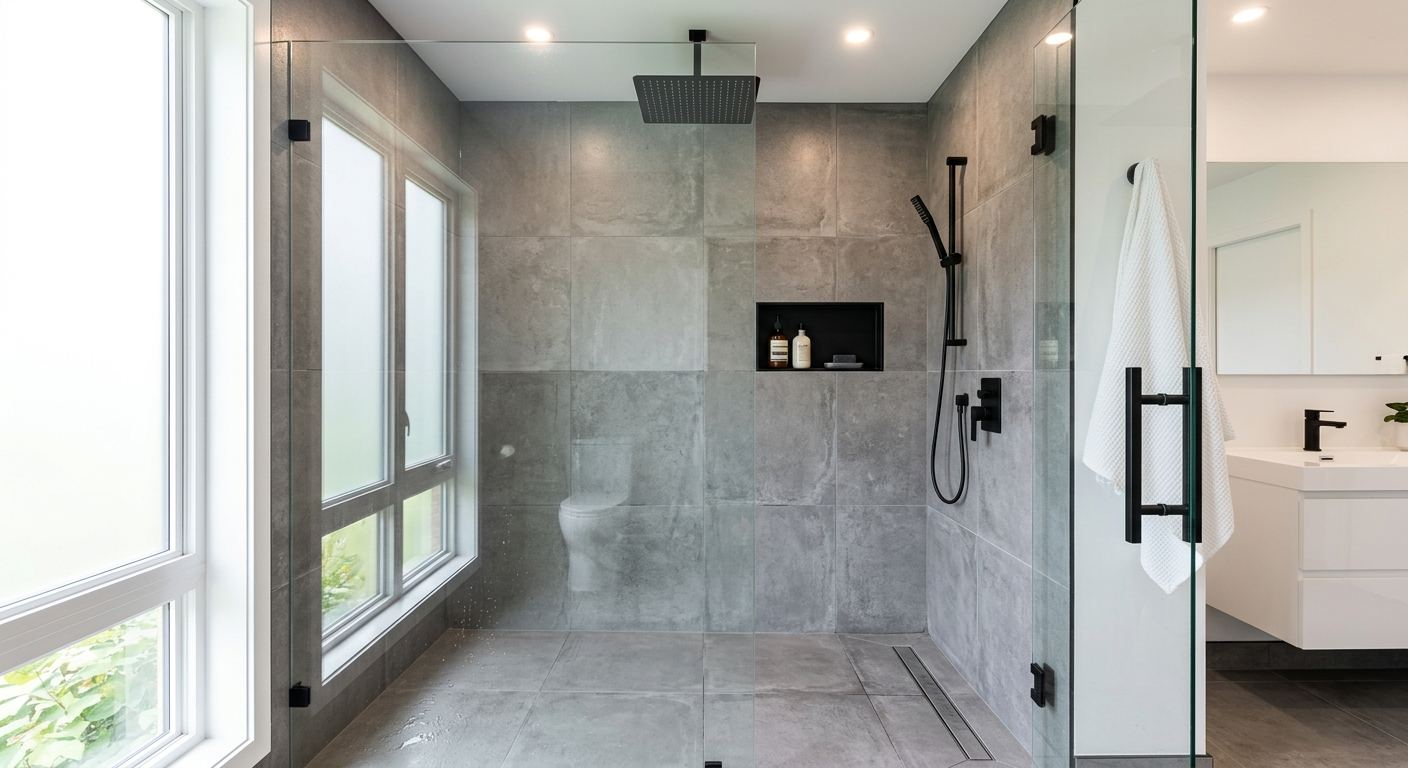
Bathroom renovation options and costs in River Springs
Bathroom renovation in River Springs can look simple on paper, but costs move quickly once walls open—especially in a community of 2,325 people where many homes reflect older layouts (Statistics Canada, 2021 Census). In the Lower Mainland–Southwest, housing stock is often mid-century or earlier, so renovators regularly uncover dated plumbing configurations, and sometimes materials that need careful handling (for example, legacy floor products from older builds). That’s one reason quotes in the Lower Mainland–Southwest region can feel higher than you expected when you compare across British Columbia.
Unlike regions where climate drives the job, River Springs pricing is mainly driven by labour rates and the age of the housing stock. Metro Vancouver–area demand keeps plumbers, tilers, and electricians booked, and when a project requires plumbing and venting upgrades to bring systems up to current code, the scope expands. Even modest bathrooms carry a high per-square-foot cost because multiple trades work in a tight space: demo, rough-in, waterproofing, tile, electrical, and finish work.
In River Springs, trade demand is especially noticeable in older neighbourhood pockets where homes have original drain stacks or older electrical setups—work there tends to start with a quick on-site inspection before pricing. From that baseline, you can choose from several common renovation paths, ranging from a cosmetic refresh to a full high-end build. Use the table below as your starting point for budgeting, then we can refine it after we confirm your plumbing, ventilation, and subfloor condition.
| Renovation Scope |
What's Included |
Typical Duration |
Price Range |
| Cosmetic refresh (paint, fixtures, accessories only) |
New vanity or faucet (no plumbing relocation), toilet (swap-in), paint, replace mirror/lighting, accessories; seal around tub/shower only |
2–5 days |
$3,000–$9,000 |
| Mid-range full renovation (new tile, vanity, tub/shower, electrical) |
Demo + disposal, new waterproofing system, tile floor and surround, new vanity/toilet, tub or surround replacement, updated exhaust fan, GFCI where required, basic electrical refresh |
2–4 weeks |
$18,000–$34,000 |
| High-end full renovation (custom tile, steam shower, heated floors) |
Custom layout improvements, premium waterproofing/membrane, heated floor wiring and mats, frameless glass, steam shower components, designer fixtures, upgraded lighting and ventilation strategy |
4–7 weeks |
$34,000–$45,000 |
| Shower-only installation (convert tub to walk-in shower) |
Remove tub, new shower pan (or linear drain option), waterproofing, tile surround, new glass door, plumbing rough-in as needed, exhaust fan refresh |
1.5–3 weeks |
$8,000–$25,000 |
| Bathtub replacement or tub-liner install |
Swap-in tub replacement OR tub liner system, new caulking and sealing, minor plumbing adjustments for fit, quick surface prep |
2–7 days |
$1,500–$6,000 |
| Tile-only installation (floor + surround, existing layout kept) |
Tile removal and prep, membrane/waterproofing as required, floor + wall tile installation, re-grout and seal; fixtures reused if in good condition |
1.5–3 weeks |
$2,000–$8,000 |
Prices are estimates only and vary by project scope, site access and material selection.
What affects the price of bathroom renovation in River Springs
Two homeowners in the Lower Mainland–Southwest can receive very different quotes for what looks like the same bathroom—often in the 30–50% range. In River Springs, that variation is usually less about “weather” and more about regional labour rates and how often older homes force extra scope once work begins. Compared with other parts of British Columbia, skilled trade availability in the Metro Vancouver orbit is tighter, and demand keeps rates elevated for plumbers, tilers and electricians. Add in that many pre-renovation bathrooms sit in older homes with dated rough-ins, and the budget can shift quickly.
Older housing stock is the biggest driver: once we open walls and floors, we sometimes find cast-iron or galvanized/aged supply components that need upgrades, plus ventilation that doesn’t meet modern expectations. For example, bringing drainage and venting up to current requirements can add both materials and extra labour days. Likewise, insufficient exhaust can mean we need fan replacement and rework to support the new ventilation plan.
Asbestos surprises are less common than people fear, but they’re real in older units. If asbestos-containing materials are identified (for example, certain vinyl floor tiles or older drywall compounds), remediation and protocols can add $1,500–$5,000+ or more depending on extent. Conversely, costs can stay near the budget line when the subfloor is solid and your existing plumbing is sound—making a “tile-only” project closer to the $2,000–$8,000 band.
Concrete River Springs examples: (1) moving a drain or adding a linear floor drain usually pushes you from a mid-range refresh into a full shower remodel scale, aligning with the $8,000–$25,000 shower band; (2) adding heated floors increases electrical scope, often nudging a renovation toward the higher end of the full renovation range—up to $18,000–$45,000—because the wiring and floor prep must be done correctly at waterproofing time.
| Price Factor |
Why It Matters |
Cost Impact |
| Layout change — moving drain or supply lines |
Requires rough-in plumbing work, possible venting adjustments, and new wall/floor openings |
Often adds several labour days and can move you from a tile project into a full renovation band |
| Tile selection — large-format porcelain vs. mosaic vs. ceramic |
Harder materials need better substrate prep; mosaic increases labour; large-format increases risk of waste if measurements are off |
Can add hundreds to a few thousand dollars depending on product and waste allowance |
| Fixture tier — builder-grade vs. mid-range vs. designer brands |
Higher tiers cost more and sometimes require different rough-in or trim compatibility |
Typically shifts the budget by a few thousand dollars on mid-to-high projects |
| Subfloor condition — rot or unlevel concrete adds scope |
Must be corrected before waterproofing; otherwise tile failure and leaks become likely |
Can add repair days and materials, increasing total labour costs |
| Electrical — adding GFCI outlets, exhaust fan, heated floor circuit |
Bathroom electrical must meet code; heated floors add wiring time and careful waterproofing sequencing |
Common contributor to price jumps between cosmetic refresh and mid/high full renovations |
| Waterproofing method — membrane type and extent |
Better systems cost more but reduce mould and leak risk in British Columbia’s consistently damp bathrooms |
Usually a modest cost increase compared to leak remediation later |
| Older-home surprises — asbestos tile, cast-iron drains, galvanized pipes |
Discovery changes scope, requires remediation steps, and can trigger plumbing upgrades |
Can add $1,500–$5,000+ or more depending on extent |
| Bathroom size — sq ft drives tile and labour time directly |
More surface area means more tile, more waterproofing, and longer install time |
Directly affects whether you land in the lower or upper end of the renovation bands |
Permits & regulations in British Columbia
In British Columbia, most cosmetic updates—swapping fixtures, repainting, retiling, and replacing a vanity—generally do not require a permit because they don’t change plumbing locations, structural elements, or building services. In contrast, projects that relocate plumbing (moving a drain or supply line), add or alter ventilation that requires new ducting or new electrical circuits, or make structural wall changes typically do require permits and inspections.
Electrical work must meet the provincial code and be done by a licensed electrician (or signed off as applicable). Adding an exhaust fan with new wiring, upgrading lighting circuits, or installing a heated floor circuit usually triggers permitting and inspection requirements depending on how the wiring is introduced and where the work ties in. Plumbing rough-in changes—especially drain-line modifications—commonly require a permit and inspection before the wall or floor is closed.
How a homeowner in River Springs can verify a contractor step-by-step:
- Ask for their British Columbia trade licence details relevant to your scope (plumbing/electrical/other trade categories as applicable) and confirm the licence is active via the appropriate online registry.
- Request a certificate of insurance showing general liability coverage and make sure the dates are current.
- For worker coverage, confirm their coverage for workplace injury protection (WCB/WSIB-style coverage as applicable in British Columbia) and request proof.
- Verify they pull permits themselves when required and schedule inspections before concealment.
- Get the permit numbers or documentation in writing so you know what was approved and inspected.
That documentation is also your best protection if a bathroom leak appears later—especially in renovations that include shower waterproofing and plumbing upgrades.
Choosing tile, waterproofing and fixtures for your River Springs bathroom
In River Springs, three decisions usually decide whether you stay on budget or end up paying for rework: (1) tile choice, (2) waterproofing method, and (3) fixture tier. Because Lower Mainland–Southwest bathrooms run consistently humid—steam from showers plus daily moisture—your waterproofing details matter as much as tile style, especially around floors, corners and transitions.
Tile choice: ceramic is often the entry point, but it can be more forgiving than porcelain in terms of procurement and supply, while porcelain typically offers better durability and water resistance for floors and wet areas. Natural stone looks upscale, but it can require more careful sealing and a higher installation skill level—so it’s rarely the “cheap look.”
Waterproofing method: paint-on membrane systems are usually best suited for small, straightforward applications, while bonded sheet membranes and engineered systems (including proper seam and corner treatment) provide stronger performance for tiled showers. In British Columbia’s damp conditions, the best waterproofing is the one designed for your shower size and stress points—not just the one that’s fastest to apply.
Fixture tier: builder-grade fixtures keep the upfront number low, but mid-range and designer options often deliver better valve controls, finish durability and smoother trims—helpful for resale and long-term maintenance. If you’re targeting a mid-range renovation budget, you can often justify higher-end tile and a robust membrane while keeping vanity and lighting mid-tier.
Dollar example: If your full renovation is near $18,000–$34,000, paying extra for porcelain tile and a high-performing waterproofing system is usually a better value than upgrading to the most expensive stone for every surface. Natural stone everywhere can push you toward the upper end of $34,000–$45,000, while many homeowners get a “luxury look” with porcelain plus accents.
| Material / Option |
Pros |
Cons |
Price Range |
| Ceramic tile (floor + walls) |
Good entry-level look, broad style availability, generally easier to source and match |
Can be less durable than porcelain for some floor applications; may require careful selection for wet-area performance |
$2,000–$6,000 |
| Porcelain tile (floor + walls) |
More water-resistant and durable, ideal for busy bathrooms, typically better for consistent tile sizes |
Higher product cost and heavier install expectations; waste allowance may be needed for large-format |
$3,500–$8,000 |
| Natural stone (marble, travertine, slate) |
High-end appearance, unique veining and texture, excellent for feature walls |
Needs sealing/maintenance; installation is more exacting; can increase timeline and labour |
$6,000–$15,000 |
| Frameless glass shower enclosure |
Modern look, easier visual cleanup, complements high-end tile |
More expensive hardware; requires correct waterproofing and wall alignment |
$2,000–$6,500 |
| Prefab tub surround (acrylic) |
Fast install, reduced labour time, lower risk of tile cracking, good for tight timelines |
Less “custom” look; can show seams; limited styling compared to tile |
$1,500–$4,000 |
| Custom shower pan (tile or linear drain) |
Improved drainage and slope design, a true custom look; linear drains can modernize the space |
Requires precise waterproofing and layout; adds planning and workmanship time |
$3,000–$12,000 |
How to choose a bathroom renovation contractor in River Springs
Choosing the right bathroom contractor in River Springs starts with proof, not promises. For British Columbia jobs, verify that the contractor’s licensing matches your scope (plumbing and/or electrical work where applicable) and request up-to-date liability insurance documents. Also ask for evidence of workplace injury coverage (WCB/coverage proof as applicable in British Columbia) so you’re not exposed if a worker is injured on your site.
Next, get 2–3 itemised written quotes—not a single lump sum. A proper bathroom quote breaks down labour and materials and clearly separates demo/disposal, rough-in work (plumbing and electrical if included), waterproofing, tile installation, glass/shower hardware, and finishing. Carefully read the exclusions: find out what’s not included (for example, permit fees, asbestos testing or remediation contingency, additional subfloor repairs, or replacement of hidden damaged framing).
Warranty matters in bathrooms because moisture problems can show up months later. Ask for the workmanship warranty length (often tied to tile and waterproofing), the manufacturer warranties for fixtures and membranes, and whether those warranties are transferable if you sell your home. For payment, don’t let the project become “pay as you go” without controls: the safest approach is keeping upfront payments around 10–15%, with a holdback until substantial completion and close-out items are finished.
Finally, insist on a written start date and completion estimate that account for common River Springs realities—material lead times, trade scheduling, and the possibility of older-home surprises.
- Confirm the contractor’s British Columbia trade licence for your scope and verify it’s current.
- Request certificate of liability insurance and confirm it covers renovation work.
- Ask for proof of workplace injury coverage (WCB/coverage as applicable in British Columbia).
- Require 2–3 itemised quotes: labour, materials, and separate line items for waterproofing and tile.
- Check whether permit pull and inspection fees are included or listed as client responsibility.
- Ask if disposal/dump fees are included (demo debris is a common hidden cost).
- Ensure the scope states who handles any asbestos-related testing/remediation contingency.
- Verify waterproofing specifications: membrane type, how corners/seams are treated, and where it extends.
- Confirm tile substrate prep requirements and who inspects subfloor levelness/structural issues.
- Review warranty details for workmanship (tile and waterproofing) and product warranties.
- Set payment milestones tied to completed stages—not vague “progress” claims.
- Get a written timeline and what happens if materials are delayed (lead times are normal here).
Red flags in River Springs: missing licence/insurance paperwork, quotes that don’t itemise waterproofing and electrical, pressure to pay a large deposit upfront, vague scope wording like “repairs as needed” without allowances, and contractors who skip on-site inspection before final pricing—especially on older homes where plumbing/venting upgrades are frequently discovered.
Frequently asked questions — bathroom renovation in River Springs
How do I choose the right contractor for my bathroom in River Springs?
Start by verifying licensing and coverage for the work involved. In British Columbia, ask for proof of active trade licensing where plumbing/electrical is part of your scope, plus current liability insurance and workplace injury coverage. Then compare 2–3 itemised quotes that clearly list waterproofing, tile labour, disposal, and any permit-related steps. For a realistic budget, ask how your job fits local price bands: cosmetic refreshes can be near $3,000–$9,000, while a mid-range full renovation often lands around $18,000–$34,000. Finally, choose the contractor who explains what they’ll inspect before closing walls—especially plumbing condition, ventilation, and subfloor—because those older-home factors affect both cost and long-term leak prevention.
What's the most common mistake homeowners make in bathroom renovations?
The biggest mistake is under-scoping the “hidden” work before the walls come down. In the Lower Mainland–Southwest, many homes are older, so once demolition starts, you may discover cast-iron or aged drain issues, outdated venting, or supply piping that no longer lines up cleanly with your intended layout. Another common error is choosing finishes (tile and fixtures) without locking in waterproofing and ventilation strategy—then rework costs climb. Homeowners also sometimes assume a permit isn’t needed when plumbing is moved or an exhaust fan requires new electrical work. A good contractor will explain what typically triggers permits, what inspections are required in British Columbia, and how they plan contingencies so your project doesn’t expand uncontrollably.
How long does tile installation take in a River Springs bathroom?
For River Springs, tile timelines depend on tile type, bathroom size, and how much prep is required. If you’re doing tile-only (floor plus surround) with the layout staying the same, many projects land around $2,000–$8,000 and typically take about 1.5 to 3 weeks once substrate prep and waterproofing are complete. Large-format porcelain, complex niches, and linear drain details add time because measurements must be precise and movements are more noticeable. If your subfloor is unlevel or damaged—common in older mid-century homes—extra prep can extend the schedule. The fastest tile installs still rely on proper curing times for waterproofing systems before grout and sealing.
How much does a bathroom renovation cost in River Springs?
In River Springs, a full bathroom renovation commonly falls within $18,000–$45,000, with the middle of the range being the most common target. A shower-only conversion (for example, turning a tub into a walk-in) often matches $8,000–$25,000 depending on plumbing changes, waterproofing complexity, and glass enclosure requirements. Cosmetic-only changes usually sit lower—around $3,000–$9,000—because you’re not opening walls or changing rough-ins. Final pricing depends more on labour rates and older-home scope discoveries than on climate. If we find outdated drains, galvanized supply lines, or ventilation upgrades needed to meet current expectations, budgets move upward—sometimes by several thousand dollars.
How long does a bathroom renovation take in River Springs?
Timelines in River Springs typically range from about 2–5 days for a cosmetic refresh to 2–4 weeks for a mid-range full renovation, assuming materials are on hand and the home’s plumbing/electrical condition is straightforward. High-end projects with custom tile, steam showers, and heated floors often take about 4–7 weeks. Shower-only conversions commonly take 1.5–3 weeks. The schedule can expand if we uncover older-home issues like subfloor damage, hidden plumbing concerns, or ventilation upgrades that require additional rough-in work. Because the Lower Mainland–Southwest has strong demand for trades, lead times and scheduling around plumbers, tilers, and electricians can also affect start and completion dates—so a written timeline with allowances is important.
Do I need a permit for a bathroom renovation in British Columbia?
Often, cosmetic updates in British Columbia—like swapping fixtures, replacing a vanity, painting, and retiling without moving plumbing—typically don’t require a permit. However, permits are commonly needed when you relocate plumbing (move drain or supply lines), add new ventilation that requires electrical circuits or ducting changes, or make structural changes to walls. Electrical work must meet code and generally involves licensed work; adding circuits for exhaust fans or heated floors usually triggers permitting/inspection depending on the connection and scope. Plumbing rough-in changes also commonly require a permit and inspection before walls or floors are closed. In River Springs, the best approach is to ask your contractor what steps require permits and request the permit numbers and inspection plan in writing before work begins.