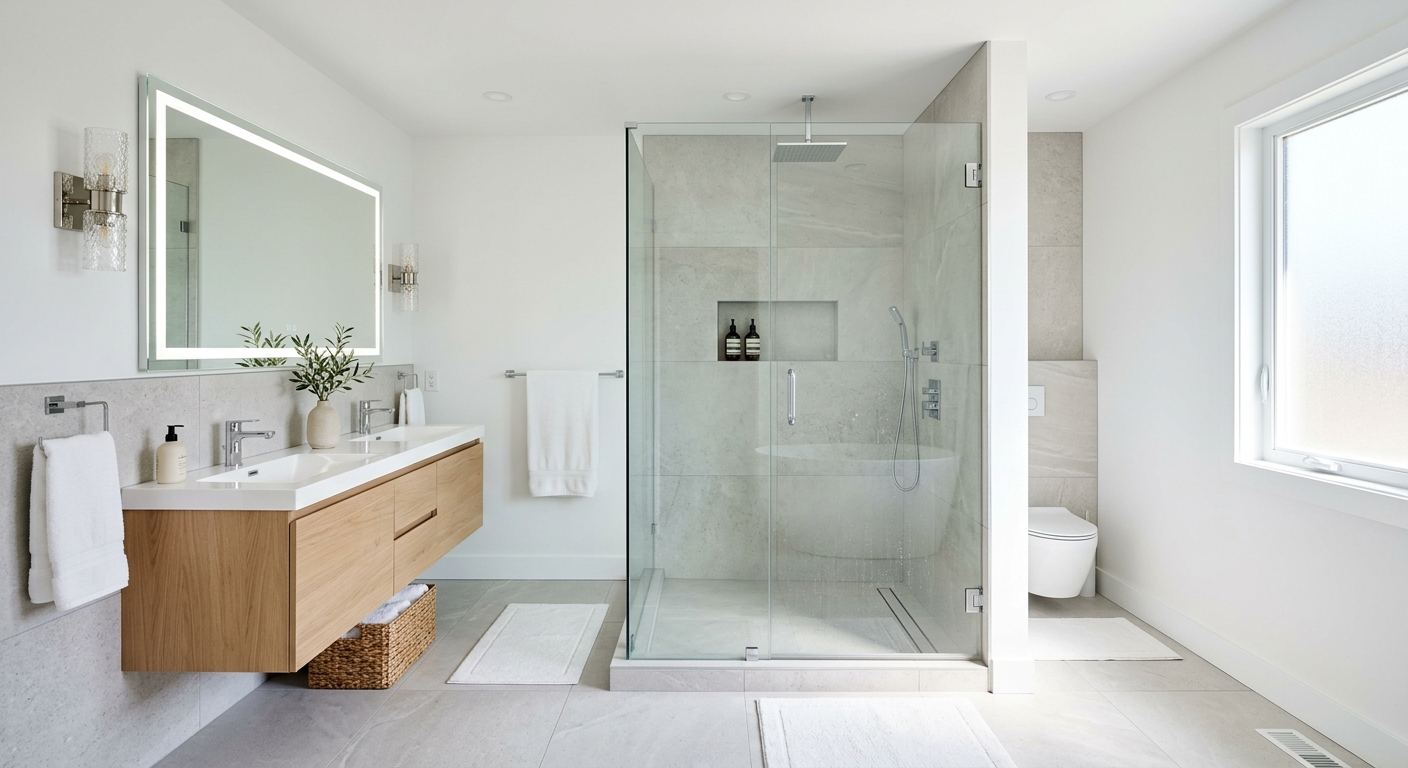
Bathroom renovation options and costs in Blundell
Bathroom renovations in Blundell typically start with one key decision: are you keeping the layout or opening up walls and changing plumbing? With a population of 18,065 (Statistics Canada, 2021 Census), Blundell sits in the Lower Mainland–Southwest market where steady demand keeps trade availability tight—so labour can be one of the biggest variables even for “simple” jobs. Just as importantly, the housing stock in the region includes many pre‑1980 and mid‑century homes, which often means dated drain layouts and the possibility of older materials lurking behind tile, drywall compound, or flooring, including cast‑iron drains and asbestos-containing products in some eras.
In the Lower Mainland–Southwest, costs are shaped more by labour rates and how quickly scope expands once walls are opened than by weather alone. Metro Vancouver area wages for plumbers, tilers, and electricians are typically higher, and that impacts everything from rough-in to electrical for GFCI outlets and new exhaust fans. Once you’re inside the bathroom, it’s common to discover venting or drainage needs that weren’t built to current expectations—so projects that begin as “finish work” often become full renovations to ensure long-term performance.
Builders in Blundell near pockets of older, multi-trade housing—like the more established residential lanes around No. 4 Road and Garden City—often see high call volume because homeowners prefer to upgrade while trades are already on site. From there, it’s easier to compare realistic budgets using the scopes below, then match your choices to your exact bathroom footprint and what’s behind the walls.
| Renovation Scope |
What's Included |
Typical Duration |
Price Range |
| Cosmetic refresh (paint, fixtures, accessories only) |
Paint, light vanity swap, toilet/trim replacements (no plumbing relocation), towel bars, mirror, caulking, basic deep clean and re-seal where needed |
2–5 days |
$18,000–$28,000 |
| Mid-range full renovation (new tile, vanity, tub/shower, electrical) |
Demolition, waterproofing, floor + wall tile, vanity, toilet, tub/shower or surround, new exhaust fan (electrical work), GFCI where required, updated trim and fixtures |
10–18 days |
$28,000–$35,000 |
| High-end full renovation (custom tile, steam shower, heated floors) |
Premium tile, custom waterproofing system, steam shower components, heated floor circuit, designer vanity, upgraded lighting, higher-spec plumbing fixtures, more complex finishes |
18–30 days |
$35,000–$45,000 |
| Shower-only installation (convert tub to walk-in shower) |
Demo of tub, shower base/pan, waterproofing, glass or door package, tile surround, plumbing reconnection, exhaust fan refresh if needed |
8–14 days |
$8,000–$25,000 |
| Bathtub replacement or tub-liner install |
Remove and replace tub (or liner system), new caulking/seals, basic plumbing reconnection, matching surround finishing, inspection/pressure check |
4–10 days |
$1,500–$6,000 |
| Tile-only installation (floor + surround, existing layout kept) |
Tile removal (where required), substrate prep, waterproofing/tiling, grout/finish sealing, reinstallation of trims (no major plumbing relocation) |
5–12 days |
$2,000–$8,000 |
Prices are estimates only and vary by project scope, site access and material selection.
What affects the price of bathroom renovation in Blundell
In Blundell and across the Lower Mainland–Southwest, quotes for the “same” bathroom can swing by 30–50% when labour availability, trade rates, and hidden-condition discoveries are different. Even if your bathroom looks dated, the true cost drivers are usually what happens after the first wall section comes down: additional rough-in work, electrical upgrades, substrate repairs, and waterproofing scope. That’s why Lower Mainland–Southwest pricing often lands higher than many other parts of British Columbia—even when the tile and fixtures look similar.
Here, regional labour rates and the age of local housing stock drive costs more than climate conditions. Many bathrooms in the Lower Mainland–Southwest were built with plumbing and venting assumptions that don’t match current expectations, so when a plumber is opening up drain lines or adjusting supply runs, the scope expands quickly. If pre‑1985 materials are present, discovery of asbestos-containing material in flooring, drywall compound, or insulation can trigger abatement protocols. That commonly adds $1,500–$5,000+ to your budget depending on extent and access.
Two concrete examples I see in Blundell: (1) converting a tub to a shower sometimes costs less only when the drain can stay in a similar location; if it needs to be moved, waterproofing and concrete/subfloor prep increase labour. (2) adding an exhaust fan or upgrading an existing circuit often adds cost, but it’s also where problems get caught—improper ventilation leads to faster deterioration around grout and caulk. Depending on your selections, a mid-range full renovation typically lands in the $28,000–$35,000 band, while high-end upgrades with heated floors and premium waterproofing can push toward $35,000–$45,000.
| Price Factor |
Why It Matters |
Cost Impact |
| Layout change — moving drain or supply lines requires rough-in work |
New rough-in work means more demolition, more trades time, and more chances to uncover old plumbing issues |
Often +$3,000 to $10,000 |
| Tile selection — large-format porcelain vs. mosaic vs. ceramic |
Harder-to-cut formats increase labour; complex patterns increase waste and installation time |
Often +$1,500 to $6,000 |
| Fixture tier — builder-grade vs. mid-range vs. designer brands |
Higher tiers cost more and sometimes require different rough-in tolerances or special trim |
Often +$500 to $4,000 |
| Subfloor condition — rot or unlevel concrete adds scope |
Substrate repairs can require additional framing, board replacement, or patching before waterproofing |
Often +$800 to $5,500 |
| Electrical — adding GFCI outlets, exhaust fan, heated floor circuit |
Electrical work must be code-compliant and typically needs a licensed electrician and inspection |
Often +$1,000 to $6,000 |
| Waterproofing method — membrane type and extent |
The right system for your shower/tub walls affects durability and the need for rework |
Often +$600 to $3,500 |
| Older-home surprises — asbestos tile, cast-iron drains, galvanized pipes |
Remediation and plumbing replacement add trades, disposal, and sometimes permit/inspection activity |
Often +$1,500 to $12,000+ |
| Bathroom size — sq ft drives tile and labour time directly |
More surface area means more tile, more waterproofing, more setting time, and more grout cleanup |
Often +$1,000 to $8,000+ |
Permits & regulations in British Columbia
In British Columbia, many “cosmetic” bathroom updates can proceed without permits, but the moment you relocate plumbing, alter electrical, or change structural elements, permits and inspections typically enter the picture. As a rule of thumb for Blundell homeowners: swapping a vanity, replacing a toilet, repainting, or retiling in the same footprint usually doesn’t require a permit. However, relocating plumbing—moving a drain or changing supply line routes—often requires a plumbing permit and rough-in inspection. Adding or upgrading ventilation is another common trigger: installing a new exhaust fan that requires new or changed electrical wiring generally requires a licensed electrician and typically permit/inspection involvement depending on the exact circuit work.
Electrical must meet provincial code and be completed or signed off by a licensed electrician. If you’re adding heated floors, upgrading lighting, or adding a dedicated circuit, don’t assume it’s “small”—it’s still code and inspection territory.
Step-by-step, here’s how you verify a contractor in Blundell: (1) Ask for their British Columbia trade licence information and confirm it matches the scope (plumbing, electrical, general contracting where applicable). (2) Request a certificate of insurance (liability) showing active coverage and the correct business name. (3) Confirm coverage and compliance with workers’ protection for their workforce (often referenced as WCB/clearance—your contractor should be able to provide proof). (4) For the project, confirm who pulls permits and whether inspection fees are included. (5) Get everything in writing: scope, inclusions, timeline, and warranty terms.
Choosing tile, waterproofing and fixtures for your Blundell bathroom
Your renovation budget in Blundell is driven most by three material choices: tile type, waterproofing system, and fixture tier. First, tile selection sets both the material cost and installation complexity. Entry-level ceramic can be a cost-smart choice when you’re keeping the design simple. Porcelain is often more forgiving for floors (and handles moisture well), but it costs more and can require more precise layout. Natural stone (marble, travertine, slate) looks premium, yet it’s typically higher material cost and can require more careful sealing and finishing, which affects labour time.
Second, waterproofing is what prevents mould and failed grout lines in the Lower Mainland’s damp bathroom conditions. A paint-on membrane can work in some tub/shower scenarios, but for many showers we prefer a bonded sheet membrane or a well-engineered system (often including compatible backer boards and detailing at seams, corners, and change-of-plane areas). The goal is a continuous waterproof layer under the tile and proper drain detailing—especially important if your home has older substrates.
Third, fixture tier impacts both budget and day-to-day experience. Builder-grade fixtures can keep costs down, while mid-range and designer brands may offer better valves, finish durability, and resale-friendly styling. A practical example: if you’re comparing a standard valve/trim package versus a better cartridge/trim set, you might spend an extra $700–$1,500 on hardware, but you avoid common complaints like inconsistent temperature control and finish wear—often worth it when you’re already investing $28,000–$35,000 in a full renovation.
Matching the right combination is how you get “looks great” plus “stays solid” for years in British Columbia, not just for the first walkthrough.
| Material / Option |
Pros |
Cons |
Price Range |
| Ceramic tile (floor + walls) |
Lower material cost, wide style availability, good performance on walls |
Not all ceramic is ideal for floors; more careful selection needed for slip resistance |
$2,000–$6,000 |
| Porcelain tile (floor + walls) |
Denser, typically better for floors, strong moisture resistance, cleaner lines with many rectified options |
Higher cost and may increase labour due to larger formats and layout precision |
$4,000–$8,000 |
| Natural stone (marble, travertine, slate) |
Luxury look, unique variation, strong visual impact for resale |
Higher material and finishing/sealing time; may require more maintenance |
$6,000–$12,000 |
| Frameless glass shower enclosure |
Modern, light look, easy to clean when detailed properly |
Costlier; needs strong wall backing and correct measurements for compliance and fit |
$1,500–$4,500 |
| Prefab tub surround (acrylic) |
Faster installation, more predictable waterproofing when installed correctly |
Limited design options compared with full tile; corners/joins still require attention |
$1,000–$3,000 |
| Custom shower pan (tile or linear drain) |
Clean lines, improved integration with modern layouts, durable when built with correct slope and waterproofing |
More labour and detailing time; drain selection affects cost and complexity |
$2,500–$9,000 |
How to choose a bathroom renovation contractor in Blundell
Choosing the right contractor in Blundell starts with verifying the credentials that protect you if something goes wrong. First, confirm British Columbia trade licensing for the trades involved (especially electrical and plumbing scopes). Next, ask for current liability insurance—your contractor should provide a certificate of insurance that names the correct business entity and shows active coverage. Also verify workers’ protection coverage (commonly discussed as WCB/clearance). If a contractor can’t provide clear proof, that’s your first stop sign.
Then, get 2–3 itemised written quotes—not one-page lump sums. You want labour and materials broken out (tile, waterproofing, fixtures, glass, disposal, and any required subfloor repairs). Read the scope carefully: what’s excluded (e.g., old drain replacement, asbestos testing/abatement, drywall patching outside the bathroom), is permit pulling included, and is disposal and hauling included? Make sure demolition, rough-in inspection steps, and waterproofing sign-offs are described.
Warranty matters too: ask for workmanship warranty length, whether it’s tied to specific components, and whether the manufacturer’s product warranty transfers to you. Finally, payment schedule: never pay more than 10–15% upfront, and hold back a portion until critical work (waterproofing completion, tiling finish quality, and final inspection/close-out) is done. Get start date and completion estimate in writing with key milestones.
- Ask which trades will pull permits and who coordinates inspections.
- Request proof of British Columbia licensing for plumbing/electrical scopes (where applicable).
- Confirm liability insurance certificate is current and matches the contractor’s legal name.
- Verify WCB/clearance documentation for workers on site.
- Get itemised quotes: labour line items and material quantities (tile square footage, membranes, thinset, grout).
- Ensure disposal/hauling is included in writing.
- Confirm waterproofing method and detailing at corners, niches, and seams.
- Check whether subfloor assessment and repairs are included or only “as found” with change orders.
- Ask who supplies and installs glass enclosures and how measurements are verified.
- Clarify what happens if hidden damage is found (galvanized lines, cast-iron drains, uneven subfloor).
- Request a written schedule with start date, milestone dates, and estimated completion.
- Review warranty terms: workmanship duration, manufacturer warranty, and transferability.
Red flags in Blundell: (1) only offering a lump-sum number without line-item pricing, (2) refusing to explain waterproofing details, (3) asking for large upfront deposits beyond 10–15%, (4) skipping written scope/exclusions (especially around disposal and permit pulls), and (5) vague answers on licensing/insurance or “we’ll handle permits” with no documentation.
Frequently asked questions — bathroom renovation in Blundell
How much does a bathroom renovation cost in Blundell?
In Blundell, a full bathroom renovation commonly falls within the typical Lower Mainland–Southwest bands of about $18,000–$45,000, depending on whether you’re just refreshing finishes or doing a true mid-range or high-end rebuild. If your layout stays put and you’re focusing on tile, a vanity, and updated fixtures, many projects land in the mid-range full renovation range (often $28,000–$35,000). If you’re moving plumbing, adding heated floors, and upgrading to premium finishes, budgets more often approach $35,000–$45,000. Costs vary largely due to higher local labour rates and discovery of older-home issues once walls are opened.
How long does a bathroom renovation take in Blundell?
Timing depends on scope, but many Blundell bathroom projects follow a predictable pattern. Cosmetic refreshes can be as quick as 2–5 days, while a mid-range full renovation often takes about 10–18 days of active work. High-end renovations—including custom shower work, heated floors, and additional electrical/trim—frequently run 18–30 days to allow for waterproofing cure times and careful tile sequencing. If the contractor finds issues like subfloor softness, older drain venting needs, or electrical corrections, it can add days because additional trades and inspections may be required under British Columbia practices.
Do I need a permit for a bathroom renovation in British Columbia?
Often, cosmetic updates in British Columbia—like swapping fixtures (within the same plumbing footprint), repainting, and retiling without changing structure—typically don’t require permits. However, permits are usually needed when you relocate plumbing (moving drains or supply lines), add or modify electrical circuits (such as for exhaust fans, GFCI outlets, or heated floors), or make structural wall changes. In Blundell, a practical way to keep it safe is to ask the contractor up front: which permits are required, who pulls them, and when inspections are scheduled. Your electrician and plumber should also be properly licensed for the work they perform.
What's the best tile for a bathroom in Blundell?
For most Blundell bathrooms, porcelain tile is the “best all-around” choice because it’s dense, moisture-resistant, and works well for both floors and walls—especially in damp shower environments typical of British Columbia bathrooms. Ceramic is fine for many wall uses and can also work for floors if you choose the right grade and slip resistance. If you want a luxury look, natural stone (marble, travertine, slate) can be stunning, but it’s more expensive and may require careful sealing and maintenance. Budget-wise, tile-only work commonly sits around $2,000–$8,000, but premium stone and larger formats can move you toward the high end quickly.
Should I do a tub-to-shower conversion?
A tub-to-shower conversion is a common and often good choice in Blundell when homeowners want easier access, lower maintenance, or a more modern layout. It can also reduce the risk of hidden rot if the tub surround was failing. That said, it’s cost-effective only when the drain location and framing are straightforward. If the drain needs moving or venting/rough-in upgrades are required, scope increases. Typical shower installation (including conversion) is often in the $8,000–$25,000 range, depending on glass enclosures, waterproofing complexity, and whether plumbing adjustments are required under British Columbia expectations.
How do I prevent mold in a Blundell bathroom?
Mould prevention in Blundell is mostly about proper waterproofing and ventilation, not just cleaning. Use a reliable waterproofing system with correct membrane installation and detailing at seams and corners; shortcuts here are where failures happen. Ensure the shower is sealed and caulked properly around changes of plane (especially around glass and corners). Then, add or upgrade the exhaust fan so moisture is actively removed—British Columbia bathrooms run humid, and a fan that vents properly makes a big difference. If your home is older, inspect for early signs around grout and baseboards, because hidden moisture behind failed waterproofing can start damage before you see it.