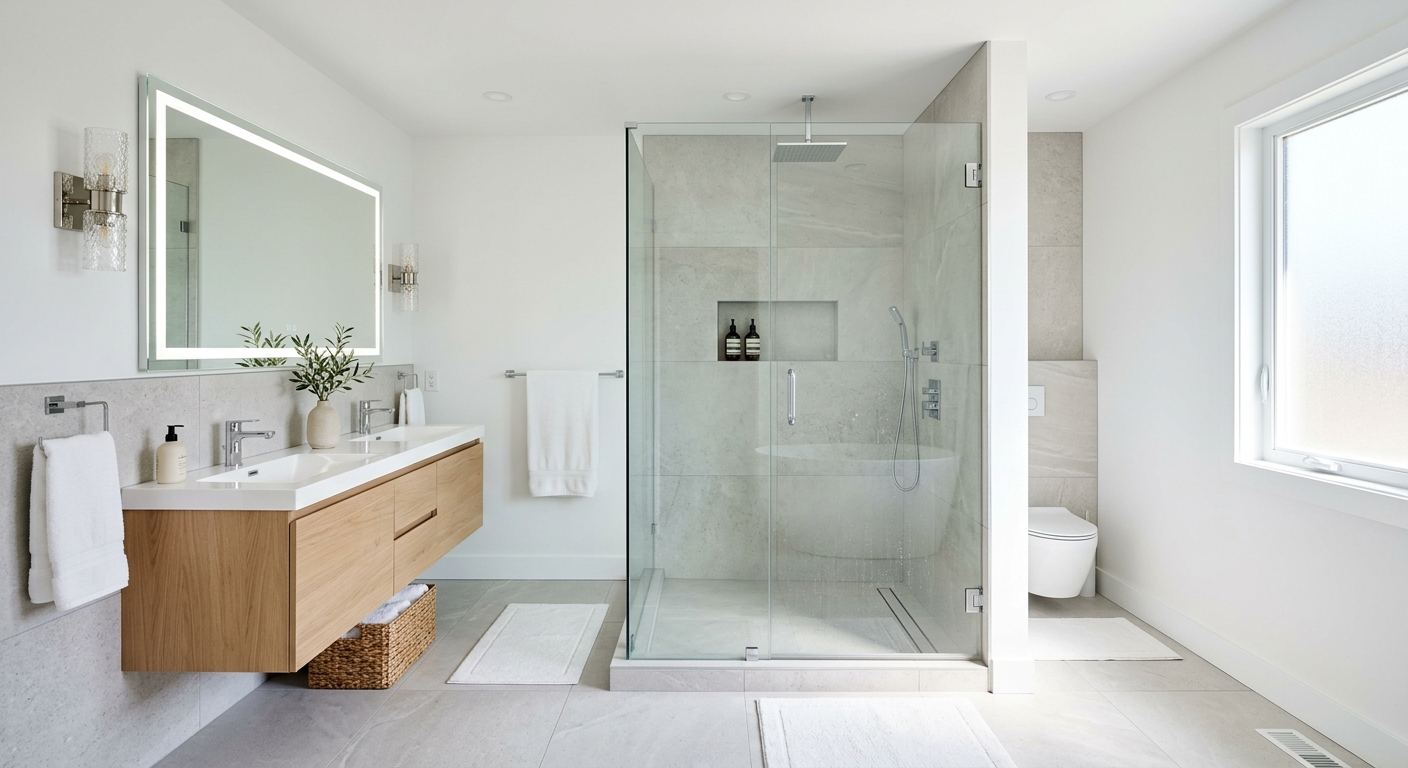
Bathroom renovation options and costs in Middlegate
Middlegate homeowners typically have a few clear paths for a bathroom renovation, whether you’re aiming to freshen finishes or upgrading plumbing and waterproofing. With a population of about 4,000 (Statistics Canada, 2021 Census), local demand is steady, but contractors in the Lower Mainland–Southwest still face tight scheduling because bathroom work relies on multiple trades in a small space. Pricing is also shaped by the area’s older housing stock; in many mid‑century homes, you can run into dated layouts and, when walls are opened, aging drain assemblies and potential asbestos-containing materials in older floor or drywall systems. In pre-1980 homes, that “hidden scope” is one reason bathroom projects can shift from a $20,000–$30,000 plan to a larger full-renovation budget after discovery.
In the Lower Mainland–Southwest, labour rates and skilled-trade availability are a major cost driver—more so than weather—so even modest bathrooms can cost more than expected. Metro Vancouver and nearby hubs like Surrey and Burnaby draw on the same pool of plumbers, tilers, and electricians, which pushes labour pricing up. Market dynamics also mean once you open walls and floors, upgrades often expand to include venting, drainage improvements, and electrical safety upgrades to align with current British Columbia requirements.
If you’re in the older lanes near the town’s established residential pockets and you’re considering a tub-to-shower conversion, tiler and plumber scheduling demand is especially noticeable. Use the cost ranges below to compare renovation scopes before you request an itemised quote.
| Renovation Scope |
What's Included |
Typical Duration |
Price Range |
| Cosmetic refresh (paint, fixtures, accessories only) |
New vanity top or vanity, tap/trim swaps, toilet or sink replacement (no relocation), paint, caulking, accessories, basic deep clean and re-seal |
3–6 days |
$3,000 – $12,000 |
| Mid-range full renovation (new tile, vanity, tub/shower, electrical) |
Demolition and disposal, improved waterproofing, new ceramic tile (floor and walls), vanity install, tub or shower replacement, exhaust fan (new/upgrade), standard electrical updates, plumbing adjustments as needed |
2–4 weeks |
$18,000 – $35,000 |
| High-end full renovation (custom tile, steam shower, heated floors) |
Higher-end tile layout, heated flooring wiring and controls, custom shower system (tile/linear drain) or steam-ready design, upgraded trim and fixtures, expanded electrical, enhanced waterproofing and tolerance for complex finishes |
4–7 weeks |
$35,000 – $45,000 |
| Shower-only installation (convert tub to walk-in shower) |
Remove tub, install new shower pan/drain strategy, waterproofing, new shower enclosure or glass paneling, tile walls and floor, rework plumbing where required, exhaust fan check and upgrade if needed |
1.5–3.5 weeks |
$8,000 – $25,000 |
| Bathtub replacement or tub-liner install |
Remove and set new tub (or install a liner where applicable), set new trim and plumbing connections, re-caulk, test for leaks, minor tile touch-up as required |
4–10 days |
$1,500 – $6,000 |
| Tile-only installation (floor + surround, existing layout kept) |
Surface preparation, waterproofing upgrade appropriate to the system, new tile floor and shower surround/backsplash area, grout and sealing, removal and disposal of existing tile where necessary |
1–3 weeks |
$2,000 – $8,000 |
Prices are estimates only and vary by project scope, site access and material selection.
What affects the price of bathroom renovation in Middlegate
Homeowners in Middlegate often see quotes swing by 30–50% for the “same” bathroom, and it’s rarely because of the tile color or fixture brand alone. In the Lower Mainland–Southwest, regional labour rates and the age of local homes are the biggest cost drivers, and they affect how many trades touch your project once walls are opened. British Columbia pricing can feel higher than other provinces because skilled plumbers, tilers, and electricians are in constant demand, and schedule compression can add labour premiums—especially for larger full renovations in the $18,000–$35,000 band and beyond.
Older homes in this region frequently hide plumbing and ventilation issues. It’s common to encounter cast-iron or older drain assemblies, galvanized or outdated supply lines, or insufficient fan ducting. When those problems are discovered, the scope expands from “finish work” into rough-in upgrades to bring drainage/venting and electrical safety in line with code. In pre-1985 houses, asbestos-containing materials can show up in vinyl floor tile, some drywall compound, or older insulation; if it’s disturbed, abatement protocols can add $1,500–$5,000+ to the budget.
Concrete examples from Middlegate: (1) moving a shower valve or drain often triggers additional rough-in plumbing time and patching—turning a mid-range scope closer to a higher band; (2) a small bathroom with a wider-than-typical tile format can cost more because layout and lippage control take extra labour; (3) installing heated floors adds materials and electrical time, but it can be worth it in colder months when surfaces feel icy. The bottom line is that the “unknowns” inside older walls usually matter more than climate, and that’s why good contractors investigate access points and plan a contingency.
| Price Factor |
Why It Matters |
Cost Impact |
| Layout change — moving drain or supply lines requires rough-in work |
More demolition, piping changes, and inspection readiness |
Often adds 10–25%+ |
| Tile selection — large-format porcelain vs. mosaic vs. ceramic |
Larger tiles reduce grout lines but demand flatter substrates and careful cuts |
Can shift labour/materials by 5–20% |
| Fixture tier — builder-grade vs. mid-range vs. designer brands |
Premium valves, toilets, and vanities can raise material costs and lead times |
Typically $500–$8,000+ |
| Subfloor condition — rot or unlevel concrete adds scope |
Needs structural repair or self-levelling/underlayment before tiling |
Often adds $1,000–$6,000 |
| Electrical — adding GFCI outlets, exhaust fan, heated floor circuit |
New circuits and code-compliant connections affect both labour and inspection |
Commonly adds $600–$4,500 |
| Waterproofing method — membrane type and extent |
Better membranes reduce failure risk and mould issues |
Usually adds $300–$2,500 |
| Older-home surprises — asbestos tile, cast-iron drains, galvanized pipes |
Remediation and replacement add trades and time |
Can add $1,500–$10,000+ |
| Bathroom size — sq ft drives tile and labour time directly |
More surface area increases demo, waterproofing, thinset, and setting time |
Usually $2,000–$15,000 difference |
Permits & regulations in British Columbia
In British Columbia, many cosmetic updates—like swapping fixtures, repainting, replacing a vanity, or retiling without changing plumbing—typically do not trigger permits. However, once you relocate plumbing (moving a drain or supply line), add or change an exhaust fan that requires new electrical, or alter structural wall framing, you’re entering work that usually requires permits and inspections. Electrical work must meet the provincial code and be performed by a licensed electrician, or signed off by one.
For a Middlegate homeowner, the practical way to verify this is to separate the scope into “finish work” and “systems work.” Usually not permit-heavy: replacing a toilet, vanity, or tub/shower trim; doing paint; removing and reinstalling existing fixtures in the same location; and tile work where the layout and plumbing do not change. Usually permit-related: drain/supply relocations, venting changes, adding/relocating plumbing shutoffs, new exhaust fan wiring, and any circuit or heated-floor electrical tie-in. If asbestos-containing materials are discovered during demo, the remediation process also becomes a compliance topic that should be handled by qualified parties.
To verify a contractor’s British Columbia qualifications step-by-step: (1) ask for their trade licence details and confirm them using the appropriate provincial online registry; (2) request a certificate of insurance showing liability coverage and that the policy remains active through the project; (3) ask about workers’ compensation coverage and confirm coverage details through the contractor’s documentation (clearance letters or proof of registration); and (4) make sure these items are included before work starts, not after demo begins.
Choosing tile, waterproofing and fixtures for your Middlegate bathroom
In Middlegate, your bathroom budget is often decided by three material choices: tile type, waterproofing system, and fixture tier. First, tile choice drives both product cost and installation complexity. Ceramic tile is a solid entry option when you want a clean, consistent look, but it can be more forgiving on substrate tolerances. Porcelain tile (especially for floors) is denser and typically more durable in high-moisture areas, but it can be less forgiving if the floor isn’t perfectly prepared—so the prep work matters to keep tiles from cracking. Natural stone like slate or travertine looks premium and can be excellent for resale appeal, but it can require additional sealing and careful selection to avoid staining.
Second, waterproofing method is the mould-prevention engine in British Columbia’s humid bathroom environment. A paint-on membrane may work for certain systems, but many homeowners and contractors prefer bonded sheet membranes or a proven shower system approach (often including a coordinated tray/pan and compatible components). The goal is reliable barrier performance at seams and changes of plane.
Third, fixture tier affects both upfront cost and long-term satisfaction. Builder-grade fixtures keep the initial price down, while mid-range and designer brands often add smoother valves, better finishes, and more robust hardware. If your budget is tight, it’s usually smarter to spend on waterproofing quality and proper substrate prep than to chase the priciest tile. For example, upgrading from an entry ceramic floor to a mid-range porcelain floor might raise tile-related costs, but the difference is justified if you’re already doing a full waterproofing rebuild; however, paying extra for high-end stone while keeping a weaker waterproofing approach usually isn’t a wise trade.
| Material / Option |
Pros |
Cons |
Price Range |
| Ceramic tile (floor + walls) |
Good entry value, wide style selection, easy maintenance with proper grout sealing |
Can be less durable than porcelain on floors; substrate prep still matters for crack resistance |
$2,000 – $5,000 |
| Porcelain tile (floor + walls) |
Denser and more water-resistant for floors, excellent durability, modern looks with realistic textures |
Requires flatter surfaces for best results; premium products can raise material costs |
$3,000 – $8,000 |
| Natural stone (marble, travertine, slate) |
Luxury appearance, unique veining and depth, strong curb appeal |
Sealing and maintenance needs; variation can complicate layout and add labour |
$5,000 – $12,000 |
| Frameless glass shower enclosure |
Brightens the bathroom, modern look, typically easier cleaning |
Higher material and install cost; needs accurate framing/plumb surfaces |
$1,800 – $5,500 |
| Prefab tub surround (acrylic) |
Fast install, watertight panels when set correctly, fewer tile-mortar variables |
Less custom look; seams require careful finishing |
$900 – $3,500 |
| Custom shower pan (tile or linear drain) |
Best for accessibility and design flexibility; linear drains enhance the modern look |
More complex waterproofing and slope work; higher labour risk if not executed well |
$4,000 – $14,000 |
How to choose a bathroom renovation contractor in Middlegate
Choosing the right contractor in Middlegate comes down to verifying qualifications, comparing scopes line-by-line, and protecting yourself with a payment and warranty plan. Start with British Columbia licensing and insurance: ask for their trade licence details and confirm through the provincial online registry. Next, request a certificate of liability insurance naming you as a protected party where applicable, and ensure it covers the project’s scope. Finally, confirm workers’ compensation coverage—typically via proof/clearance documentation provided by the contractor—so you’re not left exposed if someone is injured on site.
When you request quotes, avoid lump-sum only pricing. Ask for 2–3 itemised written quotes separating labour and materials (demo, plumbing rough-in, waterproofing, tile setting, electrical work, disposal, and any carpentry). Read the scope carefully: what’s excluded (for example, subfloor rebuilds), whether permit pull fees are included, and whether waste disposal and dump fees are part of the quote. For bathrooms, you also want clarity on what triggers change orders—like discovering cast-iron drains, galvanized supply lines, or potential asbestos-containing materials.
Warranty matters: confirm workmanship warranty length, whether product/manufacturer warranties apply to installed systems, and if warranties are transferable to future buyers. For payment scheduling, keep deposits modest—never more than about 10–15% upfront—and use a holdback until the job is complete and inspected/verified. Request a written start date and completion estimate, with milestone dates for demo, rough-in, waterproofing inspection/confirmations, tile set, and final trim.
- Confirm British Columbia trade licence details and match them to the specific work they’ll do.
- Request current liability insurance and verify dates cover your project.
- Ask for workers’ compensation/clearance proof documentation.
- Get 2–3 itemised quotes (labour + materials), not a single lump-sum number.
- Ensure permits are clearly stated: included/not included, and who pulls them.
- Confirm disposal/dump fees and drywall/tile waste handling are included.
- Ask who supplies and stores materials (and who pays for lead-time delays).
- Verify the exact waterproofing system (membrane type, corners, seams, and backer strategy).
- Confirm tile substrate prep requirements (self-levelling, backer board, moisture checks).
- Review the electrical scope: exhaust fan, GFCI outlets, heated floor circuit (if any).
- Discuss the plumbing plan for older drains/supply lines before demolition begins.
- Put warranty terms in writing, including workmanship length and coverage limits.
Red flags I see too often in Middlegate: contractors who won’t provide licence/insurance paperwork upfront; quotes that treat waterproofing as “optional” or unclear; no schedule or milestone plan in writing; change orders only explained after demo; and a payment request that asks for most funds before waterproofing, rough-in inspections, or tile setting are complete.
Frequently asked questions — bathroom renovation in Middlegate
How do I plan a bathroom renovation on a tight budget in Middlegate?
To plan on a tight budget in Middlegate, start by scoping your goal: “refresh” versus “full renovation.” If your plumbing is in good shape and you’re not moving fixtures, you can often target a cosmetic path—paint, vanity swaps, and accessory changes—rather than taking on a full rebuild. If you need new tile or a shower update, concentrate spending where it prevents costly failures: good waterproofing and proper substrate prep. In the Lower Mainland–Southwest, labour and trade availability drive costs, so keep the layout as-is when possible. For many homeowners, a realistic compromise sits in the mid-range full-renovation range of about $18,000–$35,000, while simple tile-only work can sometimes fit tighter budgets depending on bathroom size and prep needs.
What's the difference between a cosmetic and a full bathroom renovation?
A cosmetic renovation mainly changes surfaces and fixtures without relocating plumbing or major systems. Think painting, replacing a vanity or toilet if it stays in the same location, updating trim, and accessories—sometimes with re-caulking and minor touch-ups. A full bathroom renovation typically includes demolition, waterproofing rebuild, new tile floor and/or walls, and often electrical and plumbing adjustments required once walls are opened. In British Columbia, moving plumbing (drain/supply relocations) and adding electrical changes like exhaust fan circuits usually bring permits and inspections into the project. That’s why the same bathroom in Middlegate can land anywhere from modest refresh spending to a full renovation in the $18,000–$45,000 band.
How do I choose the right contractor for my bathroom in Middlegate?
Choose a contractor in Middlegate by verifying three things before you sign: British Columbia trade licence details, liability insurance, and workers’ compensation/clearance documentation. Then compare quotes the right way—ask for itemised labour and materials, not a lump-sum. Review the scope for what’s excluded: disposal fees, permit pull responsibility, subfloor repairs, and what happens if they discover older drains or galvanized lines behind walls. For bathrooms, waterproofing specifics matter, so make sure the quote names the method and coverage strategy. Finally, check payment terms: never allow more than about 10–15% upfront. A contractor who can clearly justify costs around waterproofing and tile labour is usually more dependable than one who only sells the lowest number.
What's the most common mistake homeowners make in bathroom renovations?
The most common mistake is underestimating the “opened wall” scope in older British Columbia homes. Homeowners sometimes budget for finishes—tile, vanity, and a fixture swap—then get surprised when the contractor finds cast-iron drains, outdated copper or galvanized supply lines, weak venting, or moisture damage in the subfloor. In older pre-1980 or pre-1985 material cases, asbestos may be present in certain flooring or drywall compounds, and remediation can add significant cost and time. Another frequent issue is skipping proper waterproofing details and relying on shortcuts, which can lead to recurring leaks and mould. The best way to avoid this in Middlegate is to request a contractor who will investigate and document existing conditions early, and include a sensible contingency when planning your budget—especially for full renovations.
How long does tile installation take in a Middlegate bathroom?
Tile timeline depends on bathroom size, substrate condition, and the waterproofing plan. For a typical Middlegate bathroom, tile-only installations often take about 1–3 weeks, including prep and drying time, but it can be faster or slower based on layout complexity and how level the existing surfaces are. If your project is part of a mid-range full renovation, total duration is often 2–4 weeks because tile must coordinate with plumbing rough-in, waterproofing (and cure times), electrical updates, and then grouting and sealing. Larger-format porcelain, complex mosaics, or a custom shower pan with a linear drain can extend schedule due to more layout and more careful setting. A good contractor will provide milestone dates rather than a single “we’ll finish soon” estimate.
How much does a bathroom renovation cost in Middlegate?
In Middlegate, realistic bathroom renovation costs usually track the Lower Mainland–Southwest pricing bands driven by labour and the age of the housing stock. A full cosmetic refresh can land around $3,000–$12,000 if plumbing isn’t touched. For a mid-range full renovation with new tile, a vanity, tub/shower work, and electrical updates, many projects land around $18,000–$35,000. If you’re upgrading further—custom shower features, heated floors, and higher-end finishes—the budget often moves into the $35,000–$45,000 range. If your scope is smaller, shower-only conversions commonly fall around $8,000–$25,000, and bathtub replacement or a liner install can be about $1,500–$6,000. Exact pricing depends on the bathroom size, material tier, and any older-home surprises.