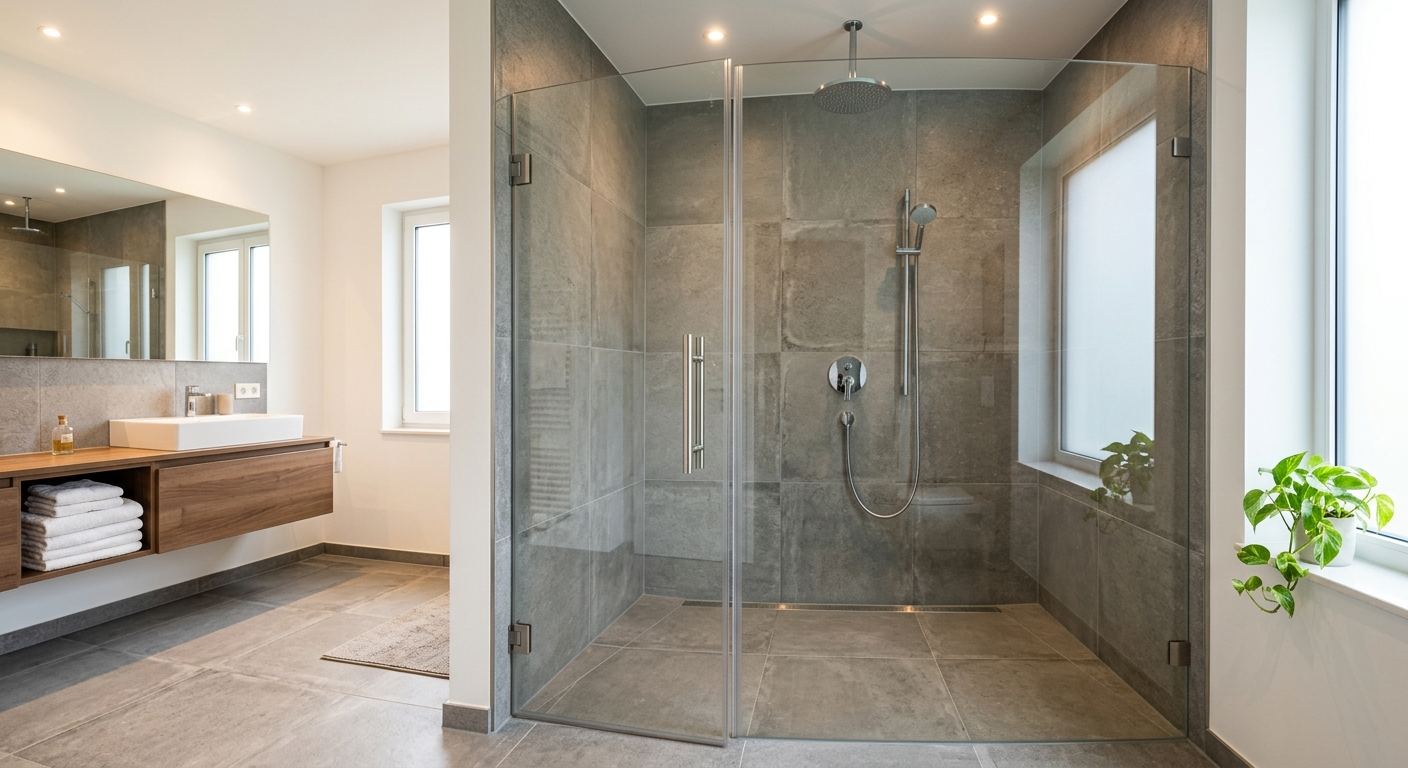
Bathroom renovation options and costs in Whatcom
Bathroom renovations in Whatcom are typically driven by the age of the housing stock and the availability of skilled trades, not the weather alone. In the Lower Mainland–Southwest, many homes were built in earlier decades, and it’s common to find the kind of dated plumbing layouts that lead to hidden scope once walls open—everything from ageing drain materials to older supply lines. Whatcom’s population is 10,270 (Statistics Canada, 2021 Census), and that local mix of homeowners plus steady demand in nearby municipalities helps keep bathroom trade schedules full.
Even though Whatcom’s coastal climate is relatively mild, bathrooms still face high indoor humidity and frequent moisture cycling, so waterproofing and ventilation quality matter. In this region, however, the bigger cost drivers are labour rates and the “discovery” factor: the first time a contractor opens up the floor or ceiling, they often need to upgrade venting, drainage tie-ins, and electrical for safe, code-compliant exhaust and outlets. That’s why quotes for similar projects often land at different numbers once drain stacks, subfloor condition, and electrical capacity are assessed.
In areas of Whatcom with more mid-century homes—particularly around the residential blocks near historic downtown and the older neighbourhood pockets—bathroom renos are in especially high demand because homeowners tend to renovate rather than move. From there, it’s smart to compare options by scope before you compare contractors, and the table below will help you place your project into realistic price bands.
| Renovation Scope |
What's Included |
Typical Duration |
Price Range |
| Cosmetic refresh (paint, fixtures, accessories only) |
New vanity hardware or faucet, toilet trim or swap (where plumbing remains), lighting/vanity bulbs, paint, re-caulk, towel bar/rails, mirrors; no tile removal |
3–7 business days |
$3,000 – $9,000 |
| Mid-range full renovation (new tile, vanity, tub/shower, electrical) |
Demo and rebuild of shower/tub surround, floor tile (typical), vanity and countertop, new exhaust fan and updated GFCI(s), waterproofing system, basic plumbing updates (as required) |
2–4 weeks |
$18,000 – $32,000 |
| High-end full renovation (custom tile, steam shower, heated floors) |
Custom layout, premium tile with more complex patterns, heated floor circuit, steam or upgraded shower system, upgraded waterproofing details, designer lighting, more extensive plumbing/venting upgrades |
4–7 weeks |
$33,000 – $45,000 |
| Shower-only installation (convert tub to walk-in shower) |
Remove tub, build new tiled shower with curb or walk-in profile, new valve trims, waterproofing, ventilation check; drain re-routing only if needed |
2–3 weeks |
$14,000 – $25,000 |
| Bathtub replacement or tub-liner install |
Swap tub to a new unit (or install a liner where condition allows), fresh caulking, reglaze/finish prep, new drain trim; limited tile disturbance |
1–2 weeks |
$3,000 – $6,000 |
| Tile-only installation (floor + surround, existing layout kept) |
Remove existing tile/surface where required, install floor and shower surround tile, waterproofing prep at wet areas, new grout/caulk; keep vanity/fixtures in place |
1–2.5 weeks |
$8,000 – $18,000 |
Prices are estimates only and vary by project scope, site access and material selection.
What affects the price of bathroom renovation in Whatcom
In Whatcom and across the Lower Mainland–Southwest, it’s common to see quotes for the “same” bathroom differ by 30–50%. The main reasons aren’t the outdoors—they’re the inside realities: regional labour rates and the age of the housing stock. Bathroom projects involve multiple trades in a tight footprint, and in this region labour demand for plumbers, tilers, and electricians tends to be strong, which raises day rates and scheduling costs.
Age drives discovery. In older homes, it’s not unusual to find cast-iron or older drain components that don’t connect cleanly to modern trap and venting expectations, plus galvanized supply lines that may need partial replacement when valves are changed. If asbestos-containing materials turn up—sometimes in older vinyl floor tile or older drywall compound—abatement protocols can add meaningfully to the budget, and it can push a typical renovation upward by about $1,500–$5,000+ depending on scope and access. Even ventilation upgrades for moisture control can expand the electrical scope.
Here are a few concrete examples of what changes the number in Whatcom: (1) converting a tub to a walk-in shower often triggers drain-floor work and waterproofing expansion, which is why shower installations in this tier can land around the $8,000–$25,000 band; (2) switching from mid-range tile to large-format porcelain usually increases labour time due to layout tolerances, so tile-only budgets can climb toward the $2,000–$8,000 band for smaller areas but exceed it for full-floor plus surround; and (3) upgrading exhaust fan ducting can add material and labour because paths are already boxed in, and the work must be safe and code-compliant.
| Price Factor |
Why It Matters |
Cost Impact |
| Layout change — moving drain or supply lines requires rough-in work |
Rerouting plumbing means demolition depth, new framing access, and tie-ins that may require inspection |
Can add $3,000–$10,000+ |
| Tile selection — large-format porcelain vs. mosaic vs. ceramic |
Harder substrates and more precise cuts for larger panels; mosaics increase labour for setting and lines |
Typically +$1,000–$6,000 |
| Fixture tier — builder-grade vs. mid-range vs. designer brands |
Premium trims and valves cost more and often require specific rough-in compatibility |
Typically +$800–$4,000 |
| Subfloor condition — rot or unlevel concrete adds scope |
Bathrooms need a stable base; repairs require extra labour, materials, and drying time |
Can add $1,500–$7,000 |
| Electrical — adding GFCI outlets, exhaust fan, heated floor circuit |
More circuits and wiring require a licensed electrician and may affect panel capacity |
Typically +$800–$3,500 |
| Waterproofing method — membrane type and extent |
Full coverage and correct details prevent mould and failures, but materials and labour vary |
Typically +$600–$2,500 |
| Older-home surprises — asbestos tile, cast-iron drains, galvanized pipes |
Remediation and replacement trades expand scope and timeline |
Can add $1,500–$10,000+ |
| Bathroom size — sq ft drives tile and labour time directly |
More area means more prep, more setting time, more waterproofing, and more cure time |
Varies widely; +10–40% for larger rooms |
Permits & regulations in British Columbia
In British Columbia, cosmetic updates—like swapping a vanity, changing taps, re-caulking, painting, or retiling without moving plumbing—typically do not trigger permits. However, when you relocate plumbing (for example, moving a drain or changing where the shower valve connects), adding or relocating electrical for a new exhaust fan circuit, or making changes that affect structure (like removing and rebuilding walls to change framing) permits are commonly required. Electrical and plumbing work must meet provincial code requirements and be performed or signed off by the appropriate licensed trades.
Here’s how to verify a contractor properly as a Whatcom homeowner. Step 1: ask for the contractor’s British Columbia trade licence details (and any relevant sub-trade licences, if your contractor is not the one doing plumbing/electrical). Step 2: request a certificate of liability insurance and confirm it’s current. Step 3: ensure the contractor carries workers’ coverage (WSIB/WCB) as applicable—either through the contractor or their subcontractors—so you’re not exposed if someone is injured on site. Step 4: for assurance, ask whether they pull permits on your behalf when needed and whether inspections are included in the scope.
When in doubt, call the contractor’s office and ask directly: “Which specific tasks require a permit for my bathroom, and is permit pulling included?”
Choosing tile, waterproofing and fixtures for your Whatcom bathroom
In Whatcom, three material decisions usually determine both your budget and how well the bathroom holds up to daily moisture: tile choice, waterproofing method, and fixture tier. First, tile: ceramic is an entry-level option that looks sharp and is typically more budget-friendly, but it can be more demanding to get perfect on floors if the substrate is uneven. Porcelain is a common mid-range sweet spot—denser, often better for wet areas, and more consistent in size for cleaner layouts. Natural stone (marble, travertine, slate) is beautiful, but it adds cost and may require extra sealing and careful selection for slip resistance.
Second is waterproofing. In the Lower Mainland–Southwest, humidity is the daily reality, so waterproofing isn’t optional—it’s the insurance policy. A paint-on membrane can work for some applications, but bonded sheet membranes or a full system (including proper corners, seams, and drain details) generally provide more robust protection when installed correctly. Third is fixtures. Builder-grade faucets and trims can save money upfront, while designer brands often improve finish durability and valve feel, and they can support better resale appeal—especially when the finish matches the rest of the home.
To show where costs are justified: upgrading from basic ceramic to mid-range porcelain with a full bonded waterproofing system can move you from a cosmetic-level tile plan into a mid-range full renovation budget. If your project is trending toward the $18,000 – $32,000 mid-range band, spending the extra on porcelain and a proven waterproofing assembly is usually the “best return” because it reduces the odds of grout staining and moisture-related failures.
| Material / Option |
Pros |
Cons |
Price Range |
| Ceramic tile (floor + walls) |
Affordable, wide style selection, good for many bath surfaces when installed to spec |
More prone to variation; requires solid substrate to avoid lippage; some lines are less slip-resistant |
$2,000 – $8,000 |
| Porcelain tile (floor + walls) |
More water-tolerant, consistent sizing for cleaner lines, often better slip ratings |
Higher material cost; large-format needs extra attention to layout and flatness |
$4,000 – $12,000 |
| Natural stone (marble, travertine, slate) |
Luxury look, unique character, strong curb appeal |
Sealing/maintenance, higher breakage risk, more labour for detailing; slip selection is critical |
$8,000 – $20,000 |
| Frameless glass shower enclosure |
Modern appearance, makes small bathrooms feel larger, durable when installed correctly |
Requires precise tile plane; hardware choices affect cost; may need stronger wall anchoring |
$2,500 – $8,000 |
| Prefab tub surround (acrylic) |
Fast installation, good water resistance, predictable cost and timing |
Less “custom” look than full tile; edges/transition details must be handled carefully |
$1,500 – $5,000 |
| Custom shower pan (tile or linear drain) |
Premium finish potential, improved function with linear drain options, integrated slope details |
More detail work and waterproofing complexity; schedule depends on cure and inspection timing |
$4,000 – $14,000 |
How to choose a bathroom renovation contractor in Whatcom
Choosing the right contractor in Whatcom starts with verification. In British Columbia, you should confirm the contractor (and any subcontractors) have the proper trade licence, current liability insurance, and appropriate workers’ coverage (WSIB/WCB). Ask to see: (1) licence information through the relevant provincial trade registry; (2) the certificate of insurance showing liability limits and coverage period; and (3) a clearance-style document or proof of workers’ coverage depending on how their business is structured. If they can’t provide these quickly, that’s a warning sign.
Next, get 2–3 itemised written quotes. You want a breakdown that separates labour, materials, tile removal, waterproofing, electrical scope, plumbing rough-in allowance, disposal, and permit pulling (if required). A lump-sum number with vague notes is how budgets get out of control once demolition reveals older drain assemblies or subfloor repairs.
Review warranty terms carefully: confirm the workmanship warranty length, what it covers, and whether it’s transferable if you sell. Also check product/manufacturer warranties (for fixtures, shower systems, and membranes) and whether registration is required. Payment matters too—avoid paying more than 10–15% upfront. Use a holdback until the work is complete and you’ve confirmed water testing and final caulking are done. Finally, insist on a written start date and completion estimate; bathroom timelines can stretch when tile patterns, shower glass lead times, or permit inspections are delayed.
- Verify British Columbia trade licence details for plumbing and electrical work.
- Confirm liability insurance is current and ask for the certificate.
- Ask for proof of workers’ coverage (WSIB/WCB) before any demolition.
- Request itemised quotes: labour, materials, disposal, and any allowances.
- Confirm whether permits and inspections are included (and who pays).
- Ask who handles asbestos-risk findings and whether contingency pricing is included.
- Review waterproofing scope: membrane type, coverage areas, and drain treatment.
- Ask about tile prep: subfloor leveling, cement board/drywall treatment, and cure times.
- Get a written warranty for workmanship and confirm transferability.
- Set a payment schedule with a firm holdback until completion and water testing.
- Insist on a written timeline and plan for material delivery delays.
- Confirm who will clean up daily and whether any dust control is included.
Red flags to watch in Whatcom: quotes that don’t specify waterproofing methods, no mention of permits when plumbing/electrical is changing, refusal to provide licence/insurance proof, “allowance” items that are too low for tile or shower glass, and payment requests that exceed 15% upfront or provide no written completion criteria.
Frequently asked questions — bathroom renovation in Whatcom
How long does tile installation take in a Whatcom bathroom?
In Whatcom and throughout British Columbia’s Lower Mainland–Southwest, tile timelines usually depend on substrate prep and waterproofing cure time. For a typical floor plus shower surround, plan for roughly 5–10 business days of actual tile setting work when the layout is straightforward. If the contractor needs subfloor patching, flattening, or additional waterproofing details (like custom corners or a linear drain), the tile schedule can stretch because the membrane must cure before grout and finishes proceed. Drying and inspection timing also matter—especially where plumbing is moved or the shower valve changes. In mid-range full renovations that land around $18,000 – $32,000, tile often becomes a “critical path” item: once it’s set, everything else must align to finish on time.
How much does a bathroom renovation cost in Whatcom?
Bathroom renovation costs in Whatcom generally fall within the region’s practical price bands, with labour rates and housing age doing most of the work. A cosmetic refresh may land in the lower end of the budget, but most homeowners who change tile, fixtures, and ventilation trend into a full renovation range. For a mid-range full renovation (new tile, vanity, tub/shower, and electrical), a realistic target is $18,000 – $32,000. High-end projects with custom tile details, heated floors, or steam showers can reach $33,000 – $45,000. Older homes commonly hide plumbing and subfloor issues, so it’s smart to plan a contingency for discovery and potential upgrades to drainage, venting, and electrical for GFCI and exhaust fan requirements.
How long does a bathroom renovation take in Whatcom?
Timelines in Whatcom are usually measured in weeks, not days, because bathrooms are multi-trade projects and the schedule is shaped by drying times, material delivery, and inspections when plumbing/electrical changes occur. Cosmetic refresh jobs can be about 3–7 business days. Mid-range full renovations commonly take 2–4 weeks, while high-end projects with more complex waterproofing, custom tile layouts, heated floors, or steam systems often take 4–7 weeks. Shower conversions (turning a tub into a walk-in) typically land around 2–3 weeks, depending on drain re-routing and glass lead times. If asbestos-containing materials are discovered in pre-1985 homes, abatement and re-inspection can add time before finishing starts.
Do I need a permit for a bathroom renovation in British Columbia?
In British Columbia, many cosmetic changes don’t require permits—so swapping a vanity, replacing fixtures without moving plumbing, re-caulking, and repainting are typically in the “no permit” category. Permits are commonly required when you relocate plumbing (moving a drain or supply lines), make changes that affect structure, add new electrical circuits, or add an exhaust fan that involves new wiring. Electrical work must comply with provincial code and be performed or signed off by a licensed electrician. Plumbing rough-in changes also generally require permits and inspections. For a Whatcom homeowner, the best approach is to ask your contractor to list exactly what tasks trigger permits and to confirm whether permit pulling and inspections are included in the quote.
What's the best tile for a bathroom in Whatcom?
For most Whatcom bathrooms, porcelain tile is often the best balance of durability, water resistance, and finish appearance—especially for floor surfaces where slip resistance matters. Ceramic tile can work well, but it’s more sensitive to substrate flatness and may not have the same consistency as porcelain across larger formats. Natural stone can be stunning, but you must choose it with slip safety and maintenance in mind (sealing and regular care). The bigger long-term determinant than brand is installation quality: proper waterproofing behind the tile and correct drain details. If you’re aiming for a mid-range full renovation around $18,000 – $32,000, investing in porcelain and a full waterproofing system usually outperforms spending heavily on decorative tile patterns without addressing moisture control.
Should I do a tub-to-shower conversion?
A tub-to-shower conversion is a common upgrade in Whatcom because it can improve daily usability, reduce future maintenance, and make cleaning easier. It often works best when you’re already doing a full renovation and can address the plumbing scope while walls and floors are open. Budget-wise, shower installations and conversions in this region often land in the $14,000 – $25,000 range depending on whether drain re-routing is required, how complex the waterproofing and curb/threshold details are, and whether you’re adding new glass enclosure hardware. Before you commit, confirm your existing drain configuration and venting plan, because older mid-century homes can have hidden challenges (like older drains or supply lines) that expand scope and timeline.