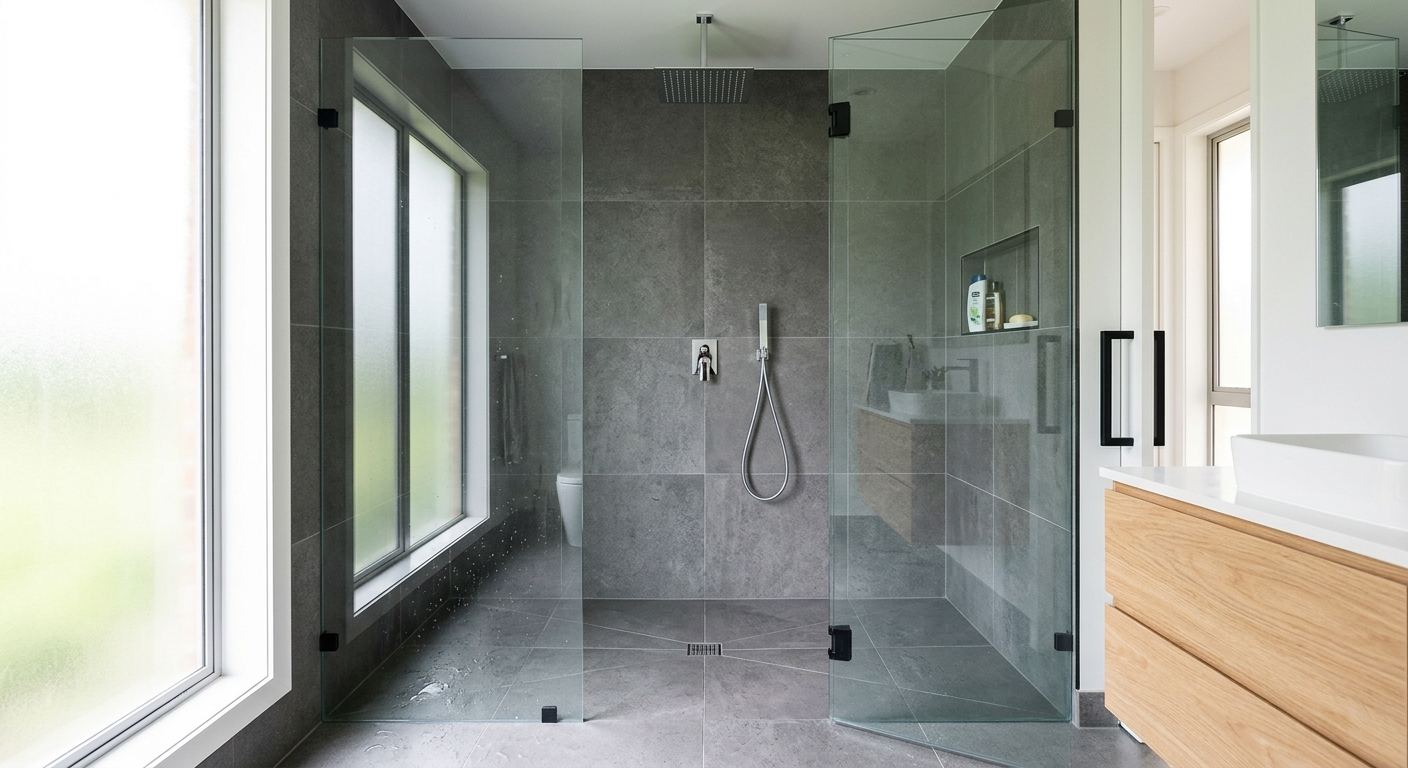
Bathroom renovation options and costs in Six Mile
Renovating a bathroom in Six Mile is very doable, but your budget will depend on how much you change once the walls and floors come open. With Six Mile’s small population (1,031 people, Statistics Canada, 2021 Census), trades availability can be limited, and you’ll often rely on crews who are already booked across nearby Lower Mainland jobs. That matters because bathroom timelines are tightly linked to plumber and electrician scheduling. Just as importantly, many homes in the Lower Mainland–Southwest are older mid-century builds, where you may run into dated plumbing layouts, galvanized supply lines, or cast-iron drain sections once tiles are removed. In pre-1985 homes, asbestos-containing materials can also show up in floor tile or older drywall compound, which can add remediation steps.
In the Lower Mainland–Southwest region, labour rates and housing age are the main cost drivers—more than local climate. The region’s high demand for licensed plumbers, tilers, and electricians means similar scopes can price out higher than other parts of British Columbia. Even modest refreshes can grow when ventilation needs updating or when the contractor discovers inadequate venting, slow drains, or subfloor movement. A thoughtful scope that includes a plumbing/electrical check before demolition is what keeps costs closer to the estimate.
Below are realistic price bands for common renovation paths in Six Mile. Use this table to compare quotes and to decide where you can spend vs. where you can simplify.
| Renovation Scope |
What's Included |
Typical Duration |
Price Range |
| Cosmetic refresh (paint, fixtures, accessories only) |
New vanity or faucet, toilet swap, fresh paint/trim, light fixture replacement, re-caulk, replace accessories; no plumbing relocations |
3–7 days |
$2,500 – $8,000 |
| Mid-range full renovation (new tile, vanity, tub/shower, electrical) |
Demolition; new floor and wall tile, vanity, tub/shower or surround replacement, waterproofing upgrade, exhaust fan, GFCI where needed, basic electrical updates |
2–4 weeks |
$18,000 – $30,500 |
| High-end full renovation (custom tile, steam shower, heated floors) |
Premium tile and layout, custom waterproofing system, steam shower components, heated flooring, upgraded lighting and ventilation, higher-end fixtures/valves |
3–6 weeks |
$31,000 – $45,000 |
| Shower-only installation (convert tub to walk-in shower) |
Remove tub, new shower pan/liner and waterproofing, tile surround, new valve trim, glass or curtain option, ventilation check and updates |
1–3 weeks |
$10,000 – $22,000 |
| Bathtub replacement or tub-liner install |
Swap existing tub for new unit or install liner system; new sealing, re-caulk, minor surround touch-ups |
3–10 days |
$1,500 – $6,000 |
| Tile-only installation (floor + surround, existing layout kept) |
Tile removal/repair as needed, floor and wall tile installation, grout/sealing, waterproofing membrane for the tiled areas; plumbing remains in place |
1–2.5 weeks |
$2,000 – $8,000 |
Prices are estimates only and vary by project scope, site access and material selection.
What affects the price of bathroom renovation in Six Mile
For the same bathroom renovation, quotes in the Lower Mainland–Southwest can land 30–50% apart compared with other British Columbia regions because the biggest levers are labour rates and what the contractor uncovers behind walls—not the weather itself. The Lower Mainland has consistently higher demand for skilled trades, so plumber, electrician, and tile crew time costs more. On top of that, Six Mile homes tend to reflect the broader area’s older housing stock, where dated rough-ins and drainage layouts are common. When you open the bathroom, you’re frequently forced into plumbing and venting upgrades to bring things up to current code, which expands both scope and inspection steps.
Older-home surprises are a major budget driver. It’s not unusual to find cast-iron drain sections that need replacement for reliable flow, galvanized supply lines that require rework, or knob-and-tube wiring around older light and fan circuits. In homes built before about 1985, discovery of asbestos-containing materials in vinyl floor tile or drywall compound can trigger abatement. Depending on access and extent, that can add about $1,500–$5,000+ to the budget.
Two practical examples I see in Six Mile: (1) A “tile-only” job that becomes a full waterproofing rebuild when the subfloor is wavy or moisture-damaged—this pushes the project closer to a $18,000 – $30,500 mid-range renovation. (2) Converting a tub to a walk-in shower where the drain needs repositioning; once labour and rough-in work are included, the project can shift from a smaller $2,000 – $8,000 tile plan toward the shower installation range.
Price predictability comes from investigation: confirm venting capacity, check drain condition, and review electrical capacity before demo so the estimate matches the real scope.
| Price Factor |
Why It Matters |
Cost Impact |
| Layout change — moving drain or supply lines |
Requires plumbing rough-in, possible venting adjustments, and patching/repair around relocated points |
Often adds thousands due to extra trades and inspection |
| Tile selection — large-format porcelain vs. mosaic vs. ceramic |
Harder tiles demand more precise substrate prep, more careful cutting, and longer installation time |
Can increase labour and material line items materially |
| Fixture tier — builder-grade vs. mid-range vs. designer brands |
Higher tiers cost more and may require specific valves, trims, and compatible rough-in parts |
Typically swings the budget depending on the brand set |
| Subfloor condition — rot or unlevel concrete adds scope |
Uneven or deteriorated substrates need removal, rebuild, and improved waterproofing backing |
Large hidden-variable cost; can push a “refresh” toward “full” |
| Electrical — adding GFCI outlets, exhaust fan, heated floor circuit |
New circuits and code-compliant fan wiring increase electrician time and inspection requirements |
Common mid-project add for safety and performance |
| Waterproofing method — membrane type and extent |
Better systems reduce mould risk and failure rates, but require correct prep and proper installation |
Improves long-term value; cost depends on system coverage |
| Older-home surprises — asbestos tile, cast-iron drains, galvanized pipes |
Discovery triggers remediation and more demo/plumbing replacement |
Can add a meaningful contingency to the estimate |
| Bathroom size — sq ft drives tile and labour time directly |
More wall and floor area means more materials, more setting time, and more drying/curing steps |
Scales costs quickly; small rooms still have high per-sq-ft complexity |
Permits & regulations in British Columbia
In British Columbia, cosmetic updates in a bathroom—think swapping fixtures, replacing a vanity, painting, or retiling without moving plumbing—often do not require permits. However, permits typically are required when the work changes the plumbing or ventilation system in a way that affects code compliance. For example, relocating or modifying plumbing rough-ins (moving a drain, changing supply line locations, altering venting), adding an exhaust fan that involves new wiring/circuits, or making structural wall changes usually triggers permitting and inspections.
Electrical work must meet provincial code. If you’re adding outlets (including GFCI where required), upgrading lighting, or installing a heated floor circuit, that should be completed by a licensed electrician and typically signed off per code requirements. Plumbing rough-in changes similarly should be permitted and inspected before walls are closed.
How to verify a contractor in Six Mile step-by-step: (1) Request their British Columbia trade licence details and confirm they’re eligible for the scope you’re hiring (plumbing/electrical if applicable). (2) Ask for certificate(s) of insurance and check that liability coverage is current and matches the project value/risks. (3) If your trade scope involves workers, confirm they carry appropriate provincial workers’ compensation coverage (WCB/WorkSafeBC). (4) Keep paperwork—licence info and insurance certificates—in your job file, and ask for updates before start. If asbestos remediation might be required due to older materials, ensure the contractor coordinates proper, licensed abatement steps before demolition proceeds.
For peace of mind, don’t rely on “we’ve done this before”—verify the licence and coverage before you sign.
Choosing tile, waterproofing and fixtures for your Six Mile bathroom
In Six Mile, three material decisions drive both your budget and your long-term performance: tile choice, waterproofing method, and fixture tier. First, tile. Ceramic tile is the entry-level path for most homeowners, but it can be more forgiving for minor substrate imperfections and is usually the most budget-friendly. Porcelain is typically stronger and better suited for bathroom floors because it’s less porous and performs well where moisture exposure is constant. Natural stone (marble, travertine, slate) looks premium, but it can be more expensive and requires careful sealing/maintenance and skilled installation to prevent issues.
Second, waterproofing. British Columbia bathrooms stay humid through much of the year, and that makes waterproofing quality non-negotiable. A paint-on membrane is often used for simpler, smaller areas, but full system performance usually benefits from a bonded sheet membrane or a tested system approach with the right primers and seam treatments. If you want the lowest risk profile, the key is correct prep, proper overlaps, and ensuring the entire wet area is covered up to the right height.
Third, fixtures. Builder-grade valves and trims can save money at purchase, but mid-range or designer options can improve user experience and resale impact—especially when matched with a better shower valve and efficient exhaust fan strategy.
Budget justification example: upgrading waterproofing and choosing porcelain tile might add a few thousand, but it can prevent costly redo work. If you’re choosing between a tub-to-shower conversion around $10,000 – $22,000 and a full mid-range renovation around $18,000 – $30,500, the difference is usually the waterproofing coverage, tile layout complexity, and electrical/vent upgrades—not just fixtures.
| Material / Option |
Pros |
Cons |
Price Range |
| Ceramic tile (floor + walls) |
Lowest-cost tile option; wide style selection; solid performance for many bathrooms when installed correctly |
Can be more prone to chipping if subfloor isn’t well prepped; not as dense as porcelain |
$2,000 – $4,800 |
| Porcelain tile (floor + walls) |
Better moisture resistance; durable for high-traffic bathrooms; great for modern large-format looks |
Often higher material cost; requires careful substrate prep for flatness |
$3,500 – $8,000 |
| Natural stone (marble, travertine, slate) |
Luxurious appearance and unique character; excellent for statement walls |
Needs sealing/maintenance; can be more complex to install and coordinate |
$6,000 – $15,000 |
| Frameless glass shower enclosure |
Modern look; helps visually open up small spaces in Six Mile; reduces cleaning gaps vs. older systems |
Higher hardware cost; requires accurate framing/leveling and strong installation |
$2,000 – $6,000 |
| Prefab tub surround (acrylic) |
Fast install; easier to waterproof than some tile layouts; cost-effective for tub refits |
Fewer finish options than full tile; can limit design choices |
$1,000 – $3,000 |
| Custom shower pan (tile or linear drain) |
Best match to your design; linear drains improve slope control and a clean, high-end look |
More labour-intensive; demands precise waterproofing and correct drain positioning |
$3,000 – $12,000 |
How to choose a bathroom renovation contractor in Six Mile
Choosing a contractor in Six Mile comes down to documentation, clarity, and how well they manage the realities of bathroom work. Start by verifying British Columbia licensing for the relevant trades in your scope and make sure liability insurance is current. Ask for certificate(s) of insurance and confirm coverage limits are appropriate for your project. For workers on the job, verify provincial workers’ compensation coverage (WorkSafeBC/WCB). Don’t accept “we’re covered”—ask for proof and keep copies. If your scope includes plumbing or electrical changes, confirmation matters even more because inspections and sign-offs depend on the licensed trade.
Next, get 2–3 itemised written quotes, not lump sums. You want labour and materials broken out so you can compare apples to apples: demolition/disposal, rough-in changes, waterproofing system, tile labour, glass/enclosure, and electrical components. Carefully read the scope: what’s excluded (or not mentioned), whether permits are included, and whether disposal of old materials is part of the contract. Confirm the warranty details too—workmanship warranty length, product/manufacturer warranties, and whether warranties remain valid if you sell the home. Finally, use a smart payment schedule: never pay more than 10–15% upfront, and hold back a portion until the job is complete and cleaned up. Get a start date and a completion estimate in writing so you can plan around contractor scheduling pressures typical in the Lower Mainland.
- Request licence details and confirm they match your scope (plumbing/electrical where applicable).
- Verify liability insurance with a current certificate and correct company name.
- Confirm WorkSafeBC/WCB coverage for workers.
- Get 2–3 itemised quotes with line-by-line labour and materials.
- Ask what waterproofing system they use and how they treat corners and transitions.
- Confirm disposal is included (dump fees, trailer time, haul-away).
- Check whether permits and inspections are included in the quote.
- Review timeline: start date, milestone dates, and completion target.
- Clarify allowances for tile/fixtures so you’re not stuck with surprise “upgrade” costs.
- Ask who is responsible for correcting defects and how quickly they respond.
- Review warranty: workmanship duration and what voids it.
- Use milestone-based payments; don’t clear the full balance before final walkthrough.
Concrete red flags I see around bathroom projects in Six Mile: (1) quotes with vague scopes (“includes everything”) without listing waterproofing, tile prep, and disposal; (2) refusing to provide proof of insurance or trade licence information; (3) demanding large upfront payments (beyond 10–15%); (4) no written timeline or missing start/completion targets; and (5) skipping GFCI/exhaust-fan planning while assuming “it’ll be fine.”
Frequently asked questions — bathroom renovation in Six Mile
How do I plan a bathroom renovation on a tight budget in Six Mile?
If you’re budgeting carefully in Six Mile, the trick is to protect the expensive parts: waterproofing and any systems that could fail. Start with a scope that avoids moving plumbing—so you can control costs and reduce permit complexity. Many homeowners successfully do a cosmetic refresh plus selective tile, rather than a full rebuild. For example, a cosmetic-only plan typically lands in the $2,500 – $8,000 band if you’re swapping fixtures, painting, and replacing accessories without re-routing drains or supply lines. If you can stretch a little, a tile-forward approach can be realistic, with tile installation often falling into the $2,000 – $8,000 range when the layout stays the same. Before demo, ask your contractor for an inspection of drain flow and ventilation so you don’t hit surprises that push you toward full renovation scope in the $18,000 – $30,500 zone. In older British Columbia homes, discovery of cast-iron drainage, galvanized piping, or asbestos-containing materials can add significant contingency—planning for that early prevents budget stress.
What's the difference between a cosmetic and a full bathroom renovation?
A cosmetic renovation changes the look without substantially altering the plumbing, electrical, or structure. In Six Mile and across British Columbia, cosmetic work usually means paint/trim refresh, replacing a vanity or toilet, swapping faucets and light fixtures, and upgrading accessories. If you re-tile but keep the existing plumbing locations and don’t disturb major wet-area construction, it can still be treated as a partial renovation. A full bathroom renovation goes further: demolition, new floor and wall finishes with a full waterproofing approach, updated exhaust ventilation, and often electrical upgrades like GFCI outlets or new fan circuitry. Full projects may also include bringing plumbing and venting to current code if older rough-ins are insufficient. That’s why full renovations commonly fall in the $18,000 – $45,000 pricing range, while cosmetic refreshes often stay far below that in the $2,500 – $8,000 range, depending on fixture choices.
How do I choose the right contractor for my bathroom in Six Mile?
Choose a bathroom renovation contractor in Six Mile by verifying trades documentation and demanding clarity. First, ask for proof of British Columbia trade licences relevant to your scope (especially plumbing/electrical if you’re relocating anything) and confirm liability insurance is current. Also request evidence of provincial workers’ compensation coverage (WorkSafeBC/WCB). Second, get 2–3 itemised written quotes that separate labour and materials—waterproofing system, tile labour, disposal, permits and inspections—so you can compare accurately. Third, examine the scope exclusions: disposal fees, permit pull responsibility, and what happens if asbestos-containing material is discovered in older floor or drywall assemblies. Fourth, review warranty terms: workmanship duration, product manufacturer warranty coverage, and whether warranties are transferable on sale. Finally, insist on milestone-based payment. A reputable team won’t push large upfront payments. If you’re targeting a renovation near $18,000 – $30,500, strong scopes and clean documentation protect you from the common Lower Mainland cost creep that comes from unclear waterproofing and discovery work.
What's the most common mistake homeowners make in bathroom renovations?
The most common mistake is treating the bathroom like a purely cosmetic project and underestimating what’s behind the walls and under the floor. In the Lower Mainland–Southwest area, homeowners often plan based on visible finishes, then get surprised by plumbing and ventilation issues once demolition starts. Another frequent error is skipping proper waterproofing details—either by choosing an incomplete system or by letting schedule pressure drive “faster” installation steps. Bathrooms in British Columbia are humid, and moisture management is what prevents mould and tile failure. Budget mistakes can also happen when quotes don’t include permits/inspections for plumbing rough-in or electrical changes, leading to add-on costs later. If you’re moving plumbing, a small layout change can quickly escalate from a $2,000 – $8,000 tile plan toward full renovation scope like $18,000 – $30,500 once rough-in labour, inspection time, and waterproofing build-out are included.
How long does tile installation take in a Six Mile bathroom?
Tile timelines in Six Mile depend on room size, the substrate condition, and the complexity of the layout and waterproofing system. For a typical floor + wall tile refresh where the layout is kept intact, expect roughly 1 to 2.5 weeks for the tile work itself, assuming demolition and substrate prep are straightforward. The installation schedule also depends on grout cure times, waterproofing cure windows, and whether any tiles need to be cut around plumbing fixtures, niches, or benches. If you’re doing a tub-to-shower conversion with a custom pan or linear drain, the schedule can extend because waterproofing preparation and drain/transition detailing take longer and require extra coordination with plumbing.
Because the Lower Mainland–Southwest labour market is busy, scheduling around plumbers and electricians can also affect the overall project duration, even if tile work is on track. To keep your timeline realistic, ask for a written sequencing plan that includes inspection hold points and curing/drying times.
How much does a bathroom renovation cost in Six Mile?
Bathroom renovation pricing in Six Mile typically follows the Lower Mainland–Southwest bands, driven mainly by labour rates and the age of local homes. For a cosmetic refresh (fixtures, paint, accessories only), many projects land around $2,500 – $8,000. If you’re planning a mid-range full renovation with new tile, a vanity, a tub/shower or surround, and electrical updates, expect roughly $18,000 – $30,500. High-end full renovations—custom tile, heated floors, and premium shower features—commonly reach $31,000 – $45,000. Shower-only conversions that convert a tub to a walk-in are often in the $10,000 – $22,000 range depending on drain relocation needs.
In older British Columbia housing stock, hidden conditions like cast-iron drain sections, galvanized supply lines, or asbestos-containing materials in pre-1985 materials can add cost through remediation or extended rough-in work. That’s why good quotes include discovery/contingency allowances and a scope that clearly states what’s included and what would trigger extra approvals.