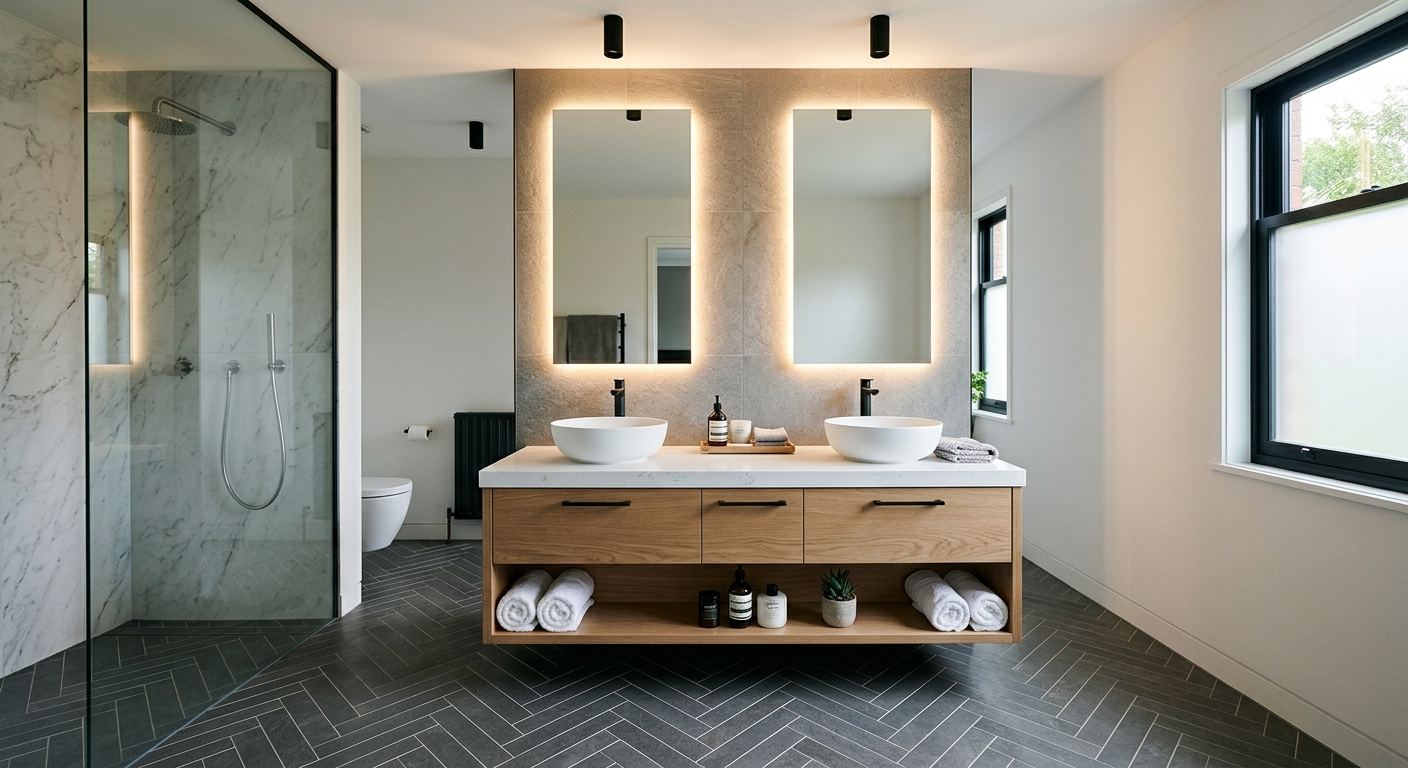
Bathroom renovation options and costs in Chase River
Bathroom renovation in Chase River, British Columbia typically comes down to how much you change versus what you keep. With a population of about 2,900 (Statistics Canada, 2021 Census), this community draws trades from the broader Lower Mainland–Southwest network, where scheduling can be tight once multiple projects stack up. You’ll also see many older homes and mid-century builds in the region—especially in established residential pockets—so it’s not unusual for renovations to uncover dated plumbing routes, older drain materials, and sometimes problematic building materials under flooring or drywall finishes.
In the Lower Mainland–Southwest, labour rates and housing age drive the cost more than day-to-day climate exposure. Still, British Columbia’s persistent indoor moisture means bathroom exhaust performance and waterproofing details matter. If your contractor upgrades ventilation, reworks wet-area detailing, and brings rough-in plumbing up to current expectations, you’ll feel that in the budget—often more than the cost difference between a mid-range versus premium vanity. If you’re working near the busiest commercial-and-service corridor in the Chase area, bathroom trade demand tends to concentrate there as well, so plumbers and tilers may have less availability for “small” jobs.
The best way to compare options is to match your goals to a realistic scope, then use a budget band as a starting point for a detailed quote. Below are common renovation paths used to keep pricing predictable as hidden issues are discovered.
| Renovation Scope |
What's Included |
Typical Duration |
Price Range |
| Cosmetic refresh (paint, fixtures, accessories only) |
Paint, new vanity or taps (no plumbing move), toilet replacement, mirror/light swap, accessories, caulking/trim refresh |
3–7 days |
$3,000 – $8,000 |
| Mid-range full renovation (new tile, vanity, tub/shower, electrical) |
Demo and disposal, floor + wall tile, vanity, tub/shower unit or conversion, exhaust fan upgrade, GFCI outlet(s), basic waterproofing, patch/paint |
2–3 weeks |
$18,000 – $32,000 |
| High-end full renovation (custom tile, steam shower, heated floors) |
Custom shower/tile detailing, heated floors, frameless glass, premium fixtures, upgraded ventilation ducting, enhanced waterproofing system, designer finishes |
3–5 weeks |
$32,000 – $45,000 |
| Shower-only installation (convert tub to walk-in shower) |
Convert tub space, new shower pan/waterproofing, tile surround, curb/linear drain option, glass enclosure, plumbing valve changes, exhaust as needed |
1.5–3 weeks |
$10,000 – $25,000 |
| Bathtub replacement or tub-liner install |
Replace tub or install liner, new fittings, re-caulk and seal, leak test, patch/finish as required |
5–10 days |
$1,500 – $6,000 |
| Tile-only installation (floor + surround, existing layout kept) |
Remove/prepare substrate, tile floor and/or surround, waterproofing to wet-area requirements, grout sealing and finishing trim |
1–2 weeks |
$2,000 – $8,000 |
Prices are estimates only and vary by project scope, site access and material selection.
What affects the price of bathroom renovation in Chase River
Homeowners in Chase River often notice that the same bathroom renovation can land 30–50% apart across the Lower Mainland–Southwest and other parts of British Columbia. In this region, the core drivers are the combination of higher labour costs and how often mid-century systems need correction once walls are opened. Even if you keep the footprint, “hidden” scope appears: the age of drainage and supply lines, ventilation deficiencies, and subfloor conditions all translate into extra labour, new parts, and sometimes permits.
Older housing stock in the Lower Mainland–Southwest area frequently includes cast-iron or aging galvanized drains, dated copper supply lines, and layouts that don’t provide modern wet-area venting. When contractors discover these issues during demolition, it pushes the project toward a mid-range full renovation band—commonly $18,000 – $32,000—or higher if multiple trades must return after rough-in upgrades. Another cost swing comes from discovering asbestos-containing materials (most often associated with older flooring products and some drywall compounds in pre-1985 homes). If abatement is required, it can add $1,500–$5,000+ depending on access and the extent of impacted material.
Concrete examples we see in Chase River: (1) a “simple” tub-to-shower conversion becomes more expensive if the drain tie-in needs adjustment and the subfloor is uneven; (2) heated floors add cost, but if the bathroom is used year-round and you’re installing porcelain tile, the comfort benefit is easier to justify; and (3) large-format tile can reduce grout lines, but it requires flatter substrates—so an unlevel base can force more prep work, nudging the job toward the higher end of your band. If your goal is shower-only, you’ll often land in the $8,000 – $25,000 range once waterproofing and plumbing modifications are included.
| Price Factor |
Why It Matters |
Cost Impact |
| Layout change — moving drain or supply lines |
Requires rough-in plumbing work, patching, and often permit/inspection |
Medium to high ($2,000 – $8,000+) |
| Tile selection — large-format porcelain vs. mosaic vs. ceramic |
Harder tile and larger panels need better prep and more precise setting |
Low to high ($500 – $6,000+) |
| Fixture tier — builder-grade vs. mid-range vs. designer brands |
Brand affects finish, warranty, and sometimes rough-in compatibility |
Low to medium ($300 – $5,000+) |
| Subfloor condition — rot or unlevel concrete adds scope |
Water damage remediation and added backer/underlayment time |
Medium ($1,000 – $6,000+) |
| Electrical — adding GFCI outlets, exhaust fan, heated floor circuit |
Licensed electrical time and possible panel/circuit upgrades |
Medium ($600 – $3,500+) |
| Waterproofing method — membrane type and extent |
Better systems often cost more but reduce failure risk in wet areas |
Medium ($500 – $2,500+) |
| Older-home surprises — asbestos tile, cast-iron drains, galvanized pipes |
Remediation, replacement, and increased trade coordination |
High ($1,500 – $10,000+) |
| Bathroom size — sq ft drives tile and labour time directly |
More square footage increases materials, prep, and install time |
Low to high (varies widely, commonly 10–40%) |
Permits & regulations in British Columbia
In British Columbia, cosmetic updates usually don’t require permits. Swapping a vanity, replacing a toilet, changing taps, repainting, or retiling without moving plumbing or electrical typically falls under “finish work.” However, in a Chase River bathroom renovation, the work that does trigger permits and inspections is usually: relocating plumbing rough-ins (moving drain or supply lines), adding or relocating a bathroom exhaust fan when it involves new wiring/circuits, and any electrical modifications tied to ventilation or heated floors. Structural wall changes and any work that affects load paths or requires inspection also commonly require permitting.
Electrical work must meet British Columbia electrical code and be performed by, or signed off by, a licensed electrician. Plumbing rough-in changes also typically require a permit and inspection before finishing surfaces are closed up.
Step-by-step for a homeowner in Chase River: (1) ask for the contractor’s BC trade licence number and confirm it through the province’s online registry; (2) request an up-to-date certificate of insurance showing liability coverage—check expiry dates and that it matches the job scope; (3) confirm required worker coverage paperwork (WCB/WSIB-type coverage in practice) and ask for a clearance letter or acceptable proof; (4) verify the permit responsibility in writing—who pulls it, when it’s pulled, and what inspections are expected.
Do these checks before demo day so you’re not stuck with uncovered work that can’t be inspected or completed properly.
Choosing tile, waterproofing and fixtures for your Chase River bathroom
In Chase River, your three biggest “budget levers” are tile choice, waterproofing method, and fixture tier. First, tile: ceramic is typically entry-level and can be a good match when you’re keeping layout changes minimal, but it may be less durable for high-traffic bathrooms. Porcelain is denser and often better for wet-area floors, though the installation is usually more demanding because porcelain requires a very stable, properly prepared substrate. For luxury looks, natural stone like travertine or slate can be gorgeous, but it’s more sensitive to installation tolerances and may require sealers and special finishing steps.
Second, waterproofing: in British Columbia’s humidity, the bathroom wall and floor envelope needs a system that’s compatible with the substrate and the tile. Paint-on membranes can work in some scenarios but are more dependent on application thickness and detail work. Bonded sheet membranes and modern shower-system approaches (including proper corners, overlaps, and drain detailing) generally reduce failure risk when installed correctly.
Third, fixtures: choosing builder-grade versus mid-range versus designer brands affects purchase price, but also practical performance—valve quality, finish durability, and how smoothly parts function over time. A concrete example: if you choose mid-range porcelain tile and a quality membrane system, you might spend extra—say a few thousand dollars versus ceramic—but you’re buying long-term reliability. If you’re trying to keep within a $18,000 – $32,000 full renovation band, it’s smarter to invest in waterproofing and substrate prep first, then upgrade fixtures second.
Matching the materials to your bathroom’s moisture exposure and the Lower Mainland–Southwest demand for skilled labour helps keep costs aligned with outcomes.
| Material / Option |
Pros |
Cons |
Price Range |
| Ceramic tile (floor + walls) |
Affordable; wide selection of colours/styles; generally easier to install than many hard porcelains |
Can chip or wear faster in high-traffic use; may be less slip-resistant depending on finish |
$2,000 – $4,500 |
| Porcelain tile (floor + walls) |
Higher durability; better moisture resistance; great choice for modern, low-maintenance finishes |
Requires excellent subfloor prep for large formats; more expensive tile |
$3,000 – $7,500 |
| Natural stone (marble, travertine, slate) |
Premium look; unique veining; strong curb appeal for resale |
Higher material and labour complexity; sealing/maintenance often required |
$5,000 – $10,000 |
| Frameless glass shower enclosure |
Modern appearance; easier cleaning; can make smaller bathrooms feel larger |
Must be installed perfectly for proper sealing; glass hardware quality affects longevity |
$1,800 – $4,000 |
| Prefab tub surround (acrylic) |
Fast install; good water resistance when correctly sealed; reduces tile labour time |
More limited design options; can look less “custom” than full tile |
$800 – $2,500 |
| Custom shower pan (tile or linear drain) |
Better layout flexibility; improved drainage options (linear drains popular for modern builds) |
More trades coordination; higher waterproofing and detailing effort |
$2,500 – $8,000 |
How to choose a bathroom renovation contractor in Chase River
Choosing the right contractor is the difference between a bathroom that looks great on day one and one that stays tight after British Columbia’s long, damp stretches. Start by verifying British Columbia licensing: ask for the contractor’s licence number and confirm it through the province’s online resources. Next, request liability insurance and ensure the certificate of insurance lists the correct legal entity and is current. For worker coverage, ask for proof of WCB/WSIB-type coverage (and request a clearance letter or acceptable documentation). Don’t accept “we’re covered” without seeing paperwork—bathrooms involve multiple trades and tight sequencing, so documentation matters.
Then get 2–3 itemised written quotes, not a single lump sum. You want a breakdown separating labour, tile-setting/waterproofing labour, plumbing rough-in/electrical work, disposal, and allowance amounts for fixtures. Read the scope carefully: what’s excluded (old subfloor repairs, drywall replacement, permit fees, tipping/disposal)? Is permit pulling included, and are inspections scheduled before walls are closed? Confirm what happens if hidden issues appear—do you get a change order range or a fixed contingency?
For warranty, ask for the workmanship warranty length and whether it’s tied to the specific shower/tile assembly. Also get the manufacturer warranty on products (tile, membrane, fixtures) and whether it’s transferable if you sell your home. Payment schedule should be controlled: never pay more than about 10–15% upfront; keep a holdback until job completion and final walk-through. Finally, demand a written start date and completion estimate that matches the scope (including cure times for membranes and setting materials).
- Licence number provided in the quote and confirmed online
- Current liability insurance certificate (expiry date included)
- Proof of required worker coverage (WCB/WSIB-type documentation)
- Two to three quotes that list labour and materials line-by-line
- Explicit scope for demo, disposal, and debris haul-away
- Details on who pulls permits and pays permit/inspection fees
- Waterproofing system name and what areas it covers (walls, floor, transitions)
- Tile substrate prep responsibilities (flattening, backer/patching)
- Exhaust fan specs and electrical work scope (GFCI, circuit allowances)
- Leak testing and “hold” points before tiling
- Workmanship warranty wording and exclusions
- Payment schedule capped with a final holdback until punch list completion
Concrete red flags to watch for in Chase River: (1) a quote that refuses to itemise labour and materials or won’t name allowances; (2) “we don’t need permits” when you’re moving drain/supply lines or adding ventilation circuits; (3) no written waterproofing plan (or only vague “we waterproof” statements); (4) asking for most money up front; and (5) no documentation for insurance and licensing—especially troubling when older homes may involve remediation and multiple trades.
Frequently asked questions — bathroom renovation in Chase River
How do I prevent mold in a Chase River bathroom?
Mold prevention in Chase River comes from controlling moisture at three points: ventilation, waterproofing, and fast-drying surfaces. First, make sure your bathroom fan is properly sized and ducted so steam and humidity are exhausted, not just recirculated. Second, use a proven waterproofing method behind the tile (including properly detailed corners and drain transitions). Third, don’t rely on paint alone—washable wall finishes and correct caulking at changes of plane reduce water intrusion. In older Lower Mainland–Southwest homes, hidden leaks around drains or outdated plumbing can contribute to persistent dampness, so a quality leak test before tiling is critical. If your full renovation budget is around $18,000 – $32,000, you’ll usually have room to do it right rather than “patch and pray.” (Statistics Canada, 2021 Census)
What adds the most resale value in a bathroom reno?
In British Columbia, bathroom projects that improve reliability and reduce maintenance tend to support stronger resale appeal. The biggest resale wins typically come from: a modern, well-functioning layout; a properly waterproofed shower assembly; updated plumbing fixtures and shutoffs; and an exhaust fan that actually clears moisture. Durable, attractive finishes help, but they’re usually secondary to the “system” work. Upgrading to porcelain tile in wet areas, adding heated floors where it fits your routine, and using better valve/fixture tiers can make the bathroom feel current. If you’re aiming for a full renovation, many homeowners in the Lower Mainland–Southwest target $32,000 – $45,000 when they want premium tile, frameless glass, and heated floor comfort—these elements show immediately during home showings. The key is choosing improvements that address how people use the space, not just what photographs well.
Can I keep my existing plumbing layout to save money?
Yes—keeping your existing plumbing layout is one of the most practical ways to reduce cost in a Chase River bathroom renovation. When you don’t move the drain or supply lines, you avoid a lot of rough-in labour, drywall openings, and the extra coordination between plumbing and electrical. In the Lower Mainland–Southwest region, layout changes can also increase the chance of permit requirements and uncovering behind-wall surprises in older homes (such as older drain materials). If you’re doing a shower conversion (tub to walk-in) but leaving the drain location mostly unchanged, that can still be cost-effective while letting you modernise the waterproofing and glass enclosure. For many homeowners, this approach keeps you closer to mid-range full renovation budgets like $18,000 – $32,000 rather than pushing into higher-cost territory.
How much does a walk-in shower cost in Chase River?
A walk-in shower conversion in Chase River typically falls within the regional bathroom scope bands, but the final cost depends on whether the drain and valves are moved and what waterproofing and tile system you choose. As a realistic planning range, shower-only installations often land between $8,000 – $25,000. If your walk-in shower stays near the existing tub footprint and only needs valve adjustments, it can trend toward the lower end. If hidden subfloor issues appear, or if you add a linear drain with premium tile and frameless glass, it trends higher. In older Lower Mainland–Southwest houses, it’s also common to pair shower conversions with ventilation improvements (exhaust fan and circuit work), which increases scope but reduces moisture risk—important in British Columbia’s humidity.
What's the ROI on a bathroom renovation?
ROI varies by neighbourhood, finish level, and whether the renovation solves functional problems (leaks, poor ventilation, dated plumbing). In British Columbia, the bathroom is one of the most scrutinised rooms by buyers, so even modest upgrades can be valuable if they’re done to a durable standard. High-impact choices—like correct waterproofing, updated plumbing fixtures, and reliable exhaust—often outperform purely cosmetic upgrades because they reduce buyer worries about future failures. That said, overspending on ultra-premium finishes in a budget bathroom can reduce ROI if the rest of the home doesn’t match. A smart approach is to align your scope with the common regional price bands: cosmetic refreshes can be lower (often within $3,000 – $8,000), while full renovations are typically $18,000 – $45,000 depending on tile complexity and electrical/plumbing upgrades. The best ROI comes from making the bathroom easy to maintain and confident to use.
Do I need waterproofing behind the tile?
Yes. In British Columbia wet areas, waterproofing behind tile is a core requirement for long-term performance—especially in a shower. Waterproofing isn’t just “for showers”; it’s essential where water contacts walls and floors (shower walls, shower floor, and splash zones around tubs as applicable). The goal is to create a continuous system that manages water before it can reach framing or subfloor materials. In older Lower Mainland–Southwest homes, small leaks can go unnoticed behind surfaces until they cause damage, so a proper waterproofing installation plus a thorough leak test before tiling matters. If you keep your existing plumbing layout, you still shouldn’t skip waterproofing. For most mid-range full renovations (commonly $18,000 – $32,000), the waterproofing system and detailing are included as part of the wet-area assembly, not treated as an optional upgrade.