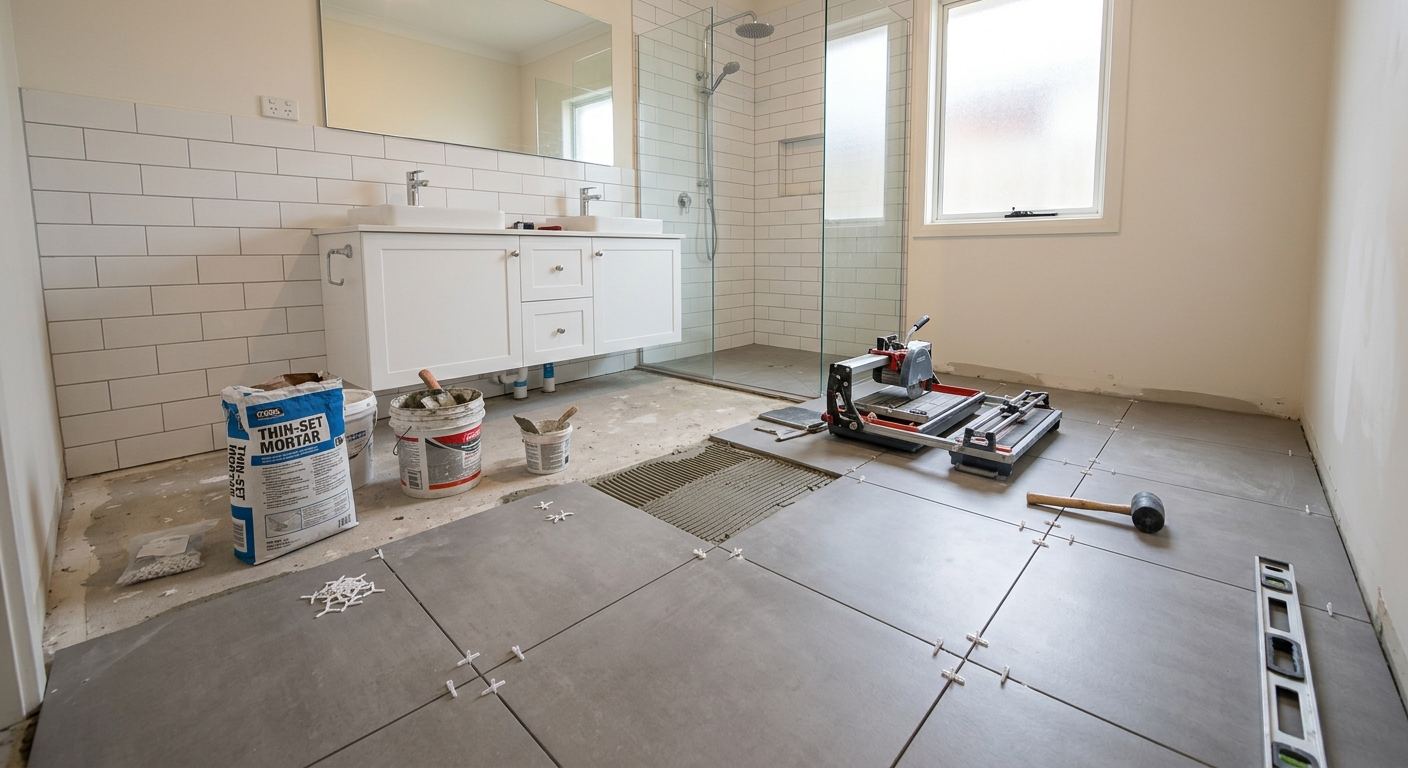
Bathroom renovation options and costs in Prince George
Bathroom renovations in Prince George range from quick cosmetic upgrades to full reconfigurations, and the right choice depends on your budget, your home’s age, and how much you want to change. In Prince George, many homes were built before 1981 (61.7% of dwellings), which means dated plumbing layouts, older venting strategies, and sometimes floor systems that were never designed around today’s waterproofing expectations. That’s also why we occasionally plan for asbestos in floor tile or older drywall/texture finishes before demo—especially in 1950s–1980s properties.
In the Cariboo region, costs are influenced more by local labour rates and the realities of older housing than by climate alone. Yes, we manage moisture year-round—venting capacity, insulation continuity, and careful sealing matter—but most budget swings come when contractors open walls and find undersized drain stacks, galvanized supply lines, or electrical that needs upgrading to meet current safety requirements. Trades are busy in areas with higher turnover and multi-phase remodels; in Prince George, we often see strong demand in and around the Hart Highway corridor as well as established family neighbourhoods close to the downtown core.
Because those variables can push projects up or down quickly, it’s helpful to compare renovation “tiers” side-by-side first, then tailor inclusions once you know what’s behind the walls. Use the table below as a starting point for realistic price expectations in Prince George.
| Renovation Scope |
What's Included |
Typical Duration |
Price Range |
| Cosmetic refresh (paint, fixtures, accessories only) |
New vanity or faucet, toilet/fixtures swap, fresh paint, accessory install, minor caulking/trim updates; no changes to plumbing or drain rough-in |
3–7 days |
$9,000–$14,000 |
| Mid-range full renovation (new tile, vanity, tub/shower, electrical) |
Demo and rebuild of shower/tub surround and floors, new vanity and lighting, updated waterproofing and ventilation, electrical for fan/GFCI, standard fixtures and materials |
2–4 weeks |
$18,000–$26,000 |
| High-end full renovation (custom tile, steam shower, heated floors) |
Custom layout and tile work, premium fixtures, heated floor circuit, enhanced ventilation, steam-ready shower systems, upgraded lighting/trim, higher-end membranes and finishes |
3–6 weeks |
$28,000–$40,000 |
| Shower-only installation (convert tub to walk-in shower) |
Remove tub, rough-in adjustments as needed, new walk-in shower pan/liner or waterproofing system, glass door (if selected), new valve/trim and tile surround |
2–3 weeks |
$14,000–$22,000 |
| Bathtub replacement or tub-liner install |
Swap tub (or install an approved tub-liner where appropriate), re-caulk/finish, replace surround as needed, reseal waterproof edges, basic plumbing connection changes |
5–10 days |
$6,000–$10,000 |
| Tile-only installation (floor + surround, existing layout kept) |
Remove and reinstall tile for floor and shower/tub surround, prep and level as required, waterproofing upgrade where needed, grout/seal, keep existing plumbing locations |
1–3 weeks |
$9,000–$16,000 |
Prices are estimates only and vary by project scope, site access and material selection.
What affects the price of bathroom renovation in Prince George
In Prince George and across the Cariboo, it’s common to see quotes for the “same” bathroom differ by 30–50% once contractors price the real work behind the walls. The main driver isn’t climate alone; it’s local labour rates combined with the age of the housing stock. With 61.7% of dwellings built before 1981, many bathrooms sit on older drain and vent systems, older supply piping, and floors that may need stabilization before new tile is installed. When a plumber or electrician touches those systems, upgrades are often mandatory to meet current expectations—especially if we find cast-iron or galvanized runs, undersized venting, or inadequate exhaust.
We also see asbestos risk in some older finishes. If asbestos is present in vinyl floor tile or older drywall/compound (more common in pre-1985 homes), safe abatement becomes its own line item and can add roughly $1,500–$5,000+ depending on extent and containment needs. Ventilation still matters in British Columbia’s damp winters: poor fan sizing or duct routing can lead to moisture damage, so we typically budget for a correctly sized exhaust fan and proper air path when we’re opening walls.
Concrete examples from Prince George: (1) keeping the existing layout usually keeps you closer to the mid-range full renovation band (about $18,000–$26,000), while moving the drain and supply lines can push the plumbing scope into higher-cost territory; (2) upgrading from standard waterproofing to a full membrane approach plus proper transitions can add cost, but it prevents callbacks and mould risk in a high-humidity room. (3) If your bath is in a 1950s–1970s house and we uncover older wiring, electrical remediation can add several thousand dollars—often the difference between a mid-range and higher-end outcome within the $14,000–$32,000 full-reno backbone range.
| Price Factor |
Why It Matters |
Cost Impact |
| Layout change — moving drain or supply lines requires rough-in work |
More demo, new rough-in, possible subfloor modifications, and longer schedule for trades |
Often +$3,000–$8,000 |
| Tile selection — large-format porcelain vs. mosaic vs. ceramic |
Harder installs need better prep, more cutting, and more labour time/skill |
Often +$2,000–$6,000 |
| Fixture tier — builder-grade vs. mid-range vs. designer brands |
Valve/trim quality, finish longevity, and installation complexity vary by brand |
Often +$1,000–$5,000 |
| Subfloor condition — rot or unlevel concrete adds scope |
Unlevel surfaces require structural repair and more underlayment/prep for tile |
Often +$1,500–$7,000 |
| Electrical — adding GFCI outlets, exhaust fan, heated floor circuit |
New circuits increase electrician time, materials, and coordination |
Often +$800–$4,500 |
| Waterproofing method — membrane type and extent |
Better systems add materials and time but reduce moisture failures |
Often +$1,000–$4,000 |
| Older-home surprises — asbestos tile, cast-iron drains, galvanized pipes |
Certified specialists/inspections for asbestos; plumbing upgrades for aging materials |
Often +$1,500–$10,000+ |
| Bathroom size — sq ft drives tile and labour time directly |
More surface area increases material quantities, cutting, setting time and cure time |
Often +$2,000–$12,000 |
Permits & regulations in British Columbia
In British Columbia, many “surface-level” bathroom updates rarely require permits. Cosmetic work like swapping a vanity, replacing a faucet, updating accessories, re-painting, and typical retouching of tile (without moving plumbing) usually falls under normal home renovation that doesn’t trigger permit requirements.
Permits and inspections are typically required when you relocate plumbing (moving a drain or supply line), make changes to the plumbing rough-in, or add/upgrade electrical circuits—especially for new exhaust fan wiring, additional GFCI outlets, or any heated floor installation. If you’re changing structural framing or moving walls, that can also trigger permit activity. For electrical work, all work must comply with provincial code and be performed by a licensed electrician (or signed off by one, depending on the work scope).
For Prince George homeowners, a practical verification process is straightforward:
- Ask for the contractor’s BC trade licence number and confirm it through the applicable online registry.
- Request a current certificate of liability insurance and review coverage limits.
- Confirm workers’ compensation coverage (commonly WCB) for the contractor and any subcontractors.
- For work that affects plumbing or electrical, ensure the permit pull (if required) is included or clearly identified before scheduling starts.
- Get all paper documents attached to your written quote—scope, inclusions/exclusions, and warranty terms.
Do not rely on verbal assurances; licensing and coverage are the difference between a smooth renovation and a complicated dispute if something goes wrong.
Choosing tile, waterproofing and fixtures for your Prince George bathroom
In Prince George, three material decisions usually determine whether you land in a mid-range full renovation or closer to the higher-end end of the $14,000–$32,000 full-bath backbone. First is tile choice. Ceramic is a solid entry-level option for floors and walls, but porcelain typically offers better stain resistance and more consistent thickness—often worth it if your household uses the space heavily. Natural stone (marble, travertine, slate) looks premium, but it can require more careful installation and sealing routines, which increases both labour complexity and long-term maintenance.
Second is waterproofing. British Columbia’s damp season and indoor humidity mean the bathroom must be built to perform, not just look good. A paint-on membrane can work in simpler situations, but a bonded sheet membrane or a proven systems approach (including compatible profiles, corners, and transitions) generally provides stronger protection where seams and stress points occur—especially around niches, benches, and the shower floor. Choosing the right method helps prevent mould and grout breakdown in a room where ventilation cycles can’t always keep up.
Third is fixture tier. Builder-grade fixtures keep initial costs down, while mid-range and designer brands often improve finish longevity and valve performance. If you’re balancing budget, spend smart: for example, an extra $1,500–$3,000 on a higher-quality valve trim and a proper waterproofing system can be a better “value upgrade” than moving from basic ceramic to an expensive mosaic accent wall—because it reduces failure risk and callbacks.
Match the combination to your situation: if you’re converting a tub to a walk-in, prioritize waterproofing and pan quality. If you’re doing a cosmetic refresh, you can keep fixtures simpler and focus money on surface finishes.
| Material / Option |
Pros |
Cons |
Price Range |
| Ceramic tile (floor + walls) |
Good value, wide design selection, easier to source locally through suppliers |
More variation in durability vs porcelain; may stain sooner in high-use areas |
$2,000–$6,000 |
| Porcelain tile (floor + walls) |
Denser and more stain-resistant, better for floors; consistent sizing for clean layouts |
Higher material cost; still requires excellent prep and layout planning |
$4,000–$9,000 |
| Natural stone (marble, travertine, slate) |
Premium look and unique veining; great for feature walls and shower surrounds |
More installation time; needs sealing/maintenance; can be sensitive to grout choice |
$6,000–$14,000 |
| Frameless glass shower enclosure |
Modern, bright look; can make smaller baths feel larger |
Cost adds up with sizes, custom panels, and hardware; requires correct framing/plumb |
$3,000–$8,000 |
| Prefab tub surround (acrylic) |
Fast install, consistent fit, lower labour than full tile surrounds in many cases |
Limited design flexibility; may not match tile look; needs correct sealing details |
$1,500–$4,500 |
| Custom shower pan (tile or linear drain) |
Improved accessibility and premium finish; linear drains look high-end |
More layout and waterproofing complexity; requires precise slope and detailing |
$4,500–$12,000 |
How to choose a bathroom renovation contractor in Prince George
Choosing the right contractor in Prince George starts with proof—not promises. Ask for their British Columbia trade licence number, then verify it using the relevant BC online registry. Request a certificate of liability insurance and confirm it’s current and appropriate for renovation work. Also confirm workers’ compensation coverage (commonly WCB) for their crew and any subcontractors; you want documentation in writing, not just a verbal “yes.”
Next, get 2–3 itemised quotes. A good quote breaks labour and materials apart (tile setting, plumbing rough-in, electrical for fan/GFCI, drywall/paint, waterproofing/membrane, disposal, and glass hardware), rather than one lump sum that hides the real risk. Read the scope carefully: is permit pull included when required, who pays for inspections, and is disposal/dumpster included? With older homes, ask how they handle unknowns like cast-iron drains, galvanized piping, or potential asbestos in pre-1985 finishes. A thorough contractor will explain contingencies clearly.
Warranty matters too: confirm workmanship warranty length for tile and waterproofing, and whether product warranties apply to the specific brands installed. Check if warranties are transferable if you sell your home. For payments, never pay more than about 10–15% upfront; hold back a portion until the job is complete and punch list items are finished. Finally, insist on a start date and completion estimate in writing so trades can be scheduled without surprises.
- BC trade licence number provided and verifiable online.
- Current certificate of liability insurance on request.
- Workers’ compensation coverage confirmed in writing.
- 2–3 itemised quotes (labour vs materials) instead of lump sum.
- Written scope includes disposal/haul-away and protection of floors/fixtures.
- Permit pull responsibility is clearly stated when plumbing/electrical scope triggers it.
- Waterproofing method and membrane system are named, not just “waterproofing included.”
- Tile installation details: prep/leveling plan, grout type, and caulking specs.
- Electrical scope lists GFCI, fan wiring, and any heated floor circuit.
- Plumbing scope lists valves, drain lines, and venting updates if discovered.
- Warranty terms: workmanship + product, and whether transferable.
- Payment schedule with 10–15% max deposit and holdback until punch list completion.
Red flags in Prince George include: quotes that don’t explain what happens with plumbing/electrical upgrades in older homes; lack of proof of BC licensing and insurance; waterproofing described vaguely (“we’ll waterproof it”); payment schedules asking for large upfront amounts (well beyond 10–15%); and no written timeline or no named subcontractors when multiple trades are required.
Frequently asked questions — bathroom renovation in Prince George
How long does tile installation take in a Prince George bathroom?
In Prince George, typical tile installation time depends on bathroom size, layout complexity, and how much prep the subfloor needs. For a bath that keeps the existing layout, tile setting commonly takes about 5–10 working days, but total production can stretch longer because of waterproofing cure times and grout/set schedules. If you’re doing floor and shower surround together, plan for additional time for waterproofing transitions, niche areas, and any linear-drain prep. In older pre-1981 homes, subfloor leveling or repairs can add days before tile can even start. If you’re converting a tub to a shower, coordination around plumbing and pan waterproofing also affects the calendar.
How much does a bathroom renovation cost in Prince George?
For Prince George homeowners, a realistic full bathroom renovation usually falls within the broader Cariboo/provincial pricing backbone of about $14,000–$32,000, depending on scope and what’s discovered behind walls. If you’re doing a mid-range full reno (new tile, vanity, tub/shower, and electrical), you’re often looking at roughly $18,000–$26,000. If you keep it mostly cosmetic—fixtures, paint, and accessories—costs can sit around the $9,000–$14,000 estimate range. Major swings usually come from moving plumbing, adding electrical circuits (like exhaust fan/GFCI or heated floors), or from older-home surprises such as cast-iron/copper drain issues or asbestos in older flooring/texture. (Statistics Canada, 2021 Census)
How long does a bathroom renovation take in Prince George?
Most bathroom renovations in Prince George complete in about 2–6 weeks, but the range depends on how many systems must be updated. A cosmetic refresh can be as quick as 3–7 days. A mid-range full renovation often lands around 2–4 weeks because multiple trades overlap (demo, plumbing/electrical rough-in, waterproofing, tile, drywall/paint, then trim). High-end jobs with custom tile details, steam-ready elements, or heated floors can be 3–6 weeks. Older housing stock (with many homes built before 1981) can extend schedules if unexpected subfloor repairs, venting updates, or certified abatement are needed. In British Columbia’s winter conditions, cure times and drying schedules can also affect the overall timeline.
Do I need a permit for a bathroom renovation in British Columbia?
It depends on what you change. In British Columbia, cosmetic updates like replacing fixtures, swapping a vanity, or retiling without moving plumbing often do not require a permit. Permits are typically required when relocating plumbing (moving drain/supply lines), changing plumbing rough-in, adding exhaust fans that require new electrical circuits, or performing any electrical work that ties into new circuits (including heated floors). Structural changes to walls can also trigger permitting. For Prince George homeowners, confirm permit responsibility before work begins and ask your contractor to document the permit/inspection plan in writing. Also verify their BC licence and insurance—so you’re covered if inspections fail or something needs correction.
What's the best tile for a bathroom in Prince George?
“Best” depends on whether you’re optimizing for durability, budget, or appearance. For most Prince George bathrooms, porcelain tile is a strong choice because it handles moisture exposure well and resists staining better than typical ceramic options. Ceramic can still work well, especially in walls or lower-impact areas, but porcelain often performs better for floors. Natural stone looks luxurious, but it needs more careful installation and sealing upkeep—so it’s not always the best fit for families who want low maintenance. Whatever you choose, the real success factor is the waterproofing system, proper substrate prep, and correct grout/caulking details—because British Columbia’s indoor humidity can turn small installation flaws into mould or grout failure over time.
Should I do a tub-to-shower conversion?
A tub-to-shower conversion is often worth it in Prince George if you want easier access, better day-to-day usability, or you’re already dealing with aging tub surrounds and waterproofing. It’s commonly priced in the shower-install band of about $5,000–$15,000 for shower installation, but a full conversion with plumbing adjustments, new pan waterproofing, tile, and glass can land higher depending on scope. If you keep the existing drain location, it’s usually less expensive than rerouting plumbing. In older homes built before 1981, conversions sometimes uncover drain/vent or subfloor issues that must be corrected, which can add cost but prevents repeat failures. If you have mobility concerns, plan for a safer curb-less approach or grab-bar blocking while walls are open.