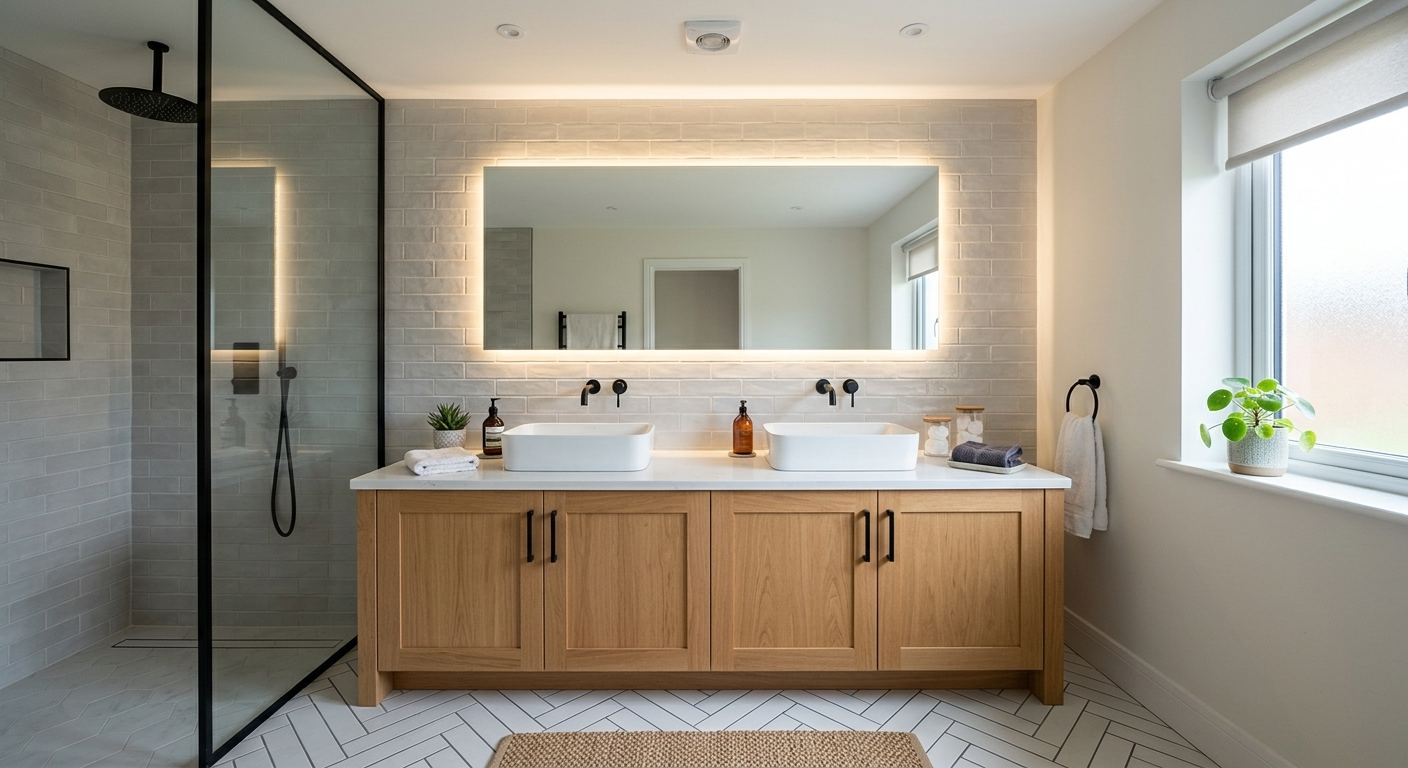
Bathroom renovation options and costs in Government Road
Bathroom renovation in Government Road is all about matching the right scope to your budget, because the local mix of older homes and steady demand in the Lower Mainland–Southwest keeps labour pricing tight. In the 2021 Census, Government Road sits at a population of 2,325 (Statistics Canada, 2021 Census), which matters mainly because crews and trades need to travel and schedule efficiently across nearby communities. Just as importantly, Lower Mainland–Southwest homes often include mid-century and pre-1980 layouts, where outdated plumbing routes can hide cast-iron drains, ageing galvanized supply lines, and sometimes asbestos-containing materials in flooring, drywall compound, or insulation.
Even though British Columbia’s coastal climate is generally wet rather than extreme-hot, the real cost driver here is the market: labour rates and the age of the housing stock. Metro Vancouver and surrounding areas such as Surrey, Burnaby, Richmond, and Abbotsford have comparatively high construction labour costs, plus limited availability of skilled plumbers, tilers, and electricians. That’s why a “simple” change like swapping a tub for a shower often expands once walls are opened—venting, drainage slope, and waterproofing details get upgraded to meet current British Columbia requirements.
Projects are especially in demand in the Denman/False Creek-adjacent corridor of the wider Vancouver area and along busier renovation hubs around South Vancouver and Richmond commuting routes, where tile and plumbing crews get pulled into multiple concurrent jobs. Use the comparison below to map your goals—cosmetic refresh, mid-range update, or full renovation—against typical timelines and Lower Mainland pricing.
| Renovation Scope |
What's Included |
Typical Duration |
Price Range |
| Cosmetic refresh (paint, fixtures, accessories only) |
Paint and caulking, vanity or tap swap (no plumbing relocation), lighting refresh, re-seating toilet, shower head swap, towel bars, hardware, deep clean |
2–4 days |
$6,000–$12,000 |
| Mid-range full renovation (new tile, vanity, tub/shower, electrical) |
Demo and disposal, new vanity and toilet, tub-to-shower or tub surround, floor and wall tile, exhaust fan upgrade, GFCI outlet(s), basic waterproofing, plumbing updates as discovered |
10–18 days |
$18,000–$30,000 |
| High-end full renovation (custom tile, steam shower, heated floors) |
Custom steam shower or larger walk-in, premium tile layout, heated floor system, upgraded waterproofing and niche(s), designer vanity, upgraded lighting, deeper electrical scope and commissioning |
18–30 days |
$30,000–$45,000 |
| Shower-only installation (convert tub to walk-in shower) |
Remove tub, install shower base and pan/membrane, glass enclosure (or fixed panel), tile floor and surround, exhaust fan assessment, drain modifications if required |
7–14 days |
$8,000–$25,000 |
| Bathtub replacement or tub-liner install |
Remove and replace tub (or liner where compatible), new trim and valves, re-caulk and reseal, minor tile touch-ups, leak testing |
3–7 days |
$1,500–$6,000 |
| Tile-only installation (floor + surround, existing layout kept) |
Remove existing finishes at tile areas, install tile floor and wall surround, waterproofing over substrate where needed, new grout and sealing, toilet/vanity protection and re-set |
5–12 days |
$2,000–$8,000 |
Prices are estimates only and vary by project scope, site access and material selection.
What affects the price of bathroom renovation in Government Road
In Government Road and across the Lower Mainland–Southwest, quotes for the “same” bathroom can land 30–50% apart from one contractor to another because the budget line items respond to what’s discovered after demo. Two projects can both say “new tile and a vanity,” yet one may require drain stack replacement, added ventilation ducting, or electrical panel work once the walls open. That’s also why labour rate differences between British Columbia cities and other provinces can move pricing more than homeowners expect—especially in a region where plumber, tiler, and electrician availability is consistently stretched.
Lower Mainland–Southwest costs are driven mainly by labour rates and the age of the housing stock, not by day-to-day climate. In older homes, it’s common to uncover cast-iron or galvanized components, plus ventilation setups that are undersized for today’s exhaust fan models. A hidden issue can turn a mid-range renovation into a full-scope update: for example, correcting a deteriorating drain connection or upgrading venting often adds days of labour and inspection time. In pre-1985 construction, asbestos-containing materials may be present in vinyl floor tile or drywall compound—if discovered, abatement protocols can add roughly $1,500–$5,000+ depending on containment and disposal requirements.
Concrete examples we see in Government Road: (1) converting a tub to a walk-in frequently triggers drain slope checks and membrane prep that can push the shower-only scope toward the higher end of the $8,000–$25,000 band; (2) switching from entry-level tile to large-format porcelain increases layout time and materials cutting waste, pushing tile-only work from the lower end of the $2,000–$8,000 band toward the top when the room is tight. If you’re targeting a full renovation, a straightforward refresh may sit near $18,000, while a high-end plan with heated floors and more electrical can move closer to $45,000 once the underlying plumbing and waterproofing details are accounted for.
| Price Factor |
Why It Matters |
Cost Impact |
| Layout change — moving drain or supply lines |
Requires rough-in plumbing work, new piping runs, and often patching subfloor and framing |
$3,000–$12,000 |
| Tile selection — large-format porcelain vs. mosaic vs. ceramic |
Large-format demands precision, more labour per lineal foot, and higher breakage/trim waste |
$1,000–$6,000 |
| Fixture tier — builder-grade vs. mid-range vs. designer brands |
Better units cost more and may require upgraded valves, power requirements, or different rough-in parts |
$800–$5,500 |
| Subfloor condition — rot or unlevel concrete adds scope |
Water exposure can create hidden soft spots, requiring removal, re-levelling and additional waterproofing prep |
$1,200–$8,000 |
| Electrical — adding GFCI outlets, exhaust fan, heated floor circuit |
Modern bathroom electrical needs more circuits and code-compliant GFCI/GFI protection |
$600–$4,500 |
| Waterproofing method — membrane type and extent |
Proper membrane coverage reduces long-term moisture risk; higher-spec systems cost more but prevent failures |
$500–$4,000 |
| Older-home surprises — asbestos tile, cast-iron drains, galvanized pipes |
Triggers remediation, extra demolition, additional disposal and more trades plus inspections |
$1,500–$12,000+ |
| Bathroom size — sq ft drives tile and labour time directly |
More area increases tile quantities, thinset/grout, waterproofing roll-out, and time for setting and curing |
$1,000–$10,000 |
Permits & regulations in British Columbia
In British Columbia, cosmetic updates in most Government Road bathroom renovations—like swapping a vanity, replacing trim, re-caulking, changing faucets/fixtures (when you don’t move plumbing), and repainting—typically do not require permits. Where work becomes more than “like-for-like,” permits are commonly triggered. Relocating plumbing (moving a drain or supply line), adding or changing an exhaust fan that requires new ducting or a new electrical circuit, and any structural wall changes generally require permits and inspections.
Electrical work must meet current provincial electrical code and be performed by a licensed electrician (or signed off appropriately). If you’re adding heated floors, new GFCI-protected receptacles, or modifying bathroom lighting wiring, expect an electrical permit/inspection path depending on scope. Similarly, plumbing rough-in changes—any new valves, drains, supply runs, or venting adjustments—usually require a permit and inspection before closing walls.
To verify a contractor in Government Road step-by-step: (1) confirm the British Columbia trade licence number on their paperwork and match it to the appropriate online registry listing for their trade; (2) ask for a current certificate of insurance (general liability) and read the effective dates and jobsite address; (3) request proof of coverage for construction-related work via the appropriate workers’ compensation coverage (commonly WCB/WSIB-type coverage) and ensure the certificate names the legal entity you’re hiring; (4) obtain a written quote showing which permits the contractor will pull, and whether disposal and protection are included.
Choosing tile, waterproofing and fixtures for your Government Road bathroom
In Government Road, your renovation budget is shaped by three material decisions: tile choice, waterproofing method, and fixture tier. First, tile choice: ceramic is the entry-level option for floors and walls, generally with easier installation and lower material cost. Porcelain sits in the mid-range and typically handles moisture and daily wear better, with better consistency in thickness and tone. Natural stone (marble, travertine, slate) looks premium, but it can be higher labour and require careful sealing and layout planning.
Second, waterproofing method: paint-on membranes can work for certain applications, but they must be applied at the correct coverage thickness and paired with proper detailing at corners and transitions. Bonded sheet membranes and engineered systems (often installed with manufacturer-approved methods) provide a more robust moisture barrier when done correctly. In British Columbia’s coastal humidity—where bathrooms dry slowly when ventilation is weak—choosing the right system helps prevent mould and grout breakdown over time.
Third, fixtures: builder-grade taps and toilets cost less upfront, but mid-range or designer brands can improve comfort, resale appeal, and long-term reliability. For example, spending an extra $700–$1,800 on a higher-performance exhaust fan and compatible ducting is often justified because it reduces moisture load and protects the tile assembly you paid to install. By contrast, paying for luxury tile without upgrading waterproofing and ventilation is usually not a smart trade-off.
When you plan your selections, aim for a “durability-first” pairing: resilient porcelain or well-chosen stone, a waterproofing system matched to your shower size and substrate, and a fixture tier that fits your usage. That combination keeps your renovation looking good longer in the Lower Mainland–Southwest.
| Material / Option |
Pros |
Cons |
Price Range |
| Ceramic tile (floor + walls) |
Lower material cost, wide selection, straightforward installation for standard formats |
Can be less durable than porcelain in some high-traffic patterns; more variability by batch |
$2,000–$5,500 |
| Porcelain tile (floor + walls) |
More moisture and wear resistance, consistent sizing for cleaner lines, better suited for larger formats |
Higher materials and sometimes more labour for layout/cutting precision |
$3,000–$8,000 |
| Natural stone (marble, travertine, slate) |
Luxury appearance and unique veining, strong curb appeal for resale |
Needs sealing/maintenance, can chip or etch; additional layout and labour time |
$5,000–$14,000 |
| Frameless glass shower enclosure |
Modern look, easier cleaning, durable hardware when properly installed and sealed |
Higher hardware cost, more careful alignment required to prevent water leakage |
$2,000–$6,500 |
| Prefab tub surround (acrylic) |
Fast install, typically less labour time, consistent surface quality |
Less “designer” look than tile, seams require good sealing, may be less custom |
$1,500–$4,000 |
| Custom shower pan (tile or linear drain) |
Cleaner finish with linear drainage, better design control, improved long-term drainage when done right |
Higher labour due to slope, detailing, and specialized waterproofing |
$3,000–$12,000 |
How to choose a bathroom renovation contractor in Government Road
Choosing the right contractor in Government Road starts with proof, not promises. In British Columbia, verify licensing by asking for their trade licence details and matching them to the correct online registry listing for the work they’ll perform. Next, request liability insurance and confirm the certificate is current and covers bathroom renovation activities at your address. For workers’ coverage, ask for proof of workers’ compensation coverage (WCB/WSIB-type coverage) so you’re not exposed if a worker gets injured on site.
Then get 2–3 itemised written quotes—not lump sums—so you can compare labour and materials line by line (demo/disposal, framing, waterproofing system, tile, plumbing rough-in, electrical, permits, and installation items). Read the scope carefully for exclusions: whether asbestos testing/abatement is included if discovered, whether permit pull fees are included, and whether disposal is included or billed separately. Confirm the warranty too: workmanship warranty length (typically tied to the installer), separate manufacturer product warranties, and whether warranties are transferable to you if you sell.
For payments, avoid large deposits; a healthy schedule is usually no more than 10–15% upfront, with the remainder tied to milestones. Hold back a portion until completion and final walkthrough, especially for waterproofing-sensitive areas like showers and transitions.
Finally, require a written timeline with a start date and an estimated completion date. In the Lower Mainland–Southwest, scheduling depends on trade availability; an experienced contractor will coordinate plumbing, electrical, and tiling without leaving your bathroom open longer than necessary.
- Provide BC licence number(s) matching the exact trades they’ll perform.
- Show current general liability insurance with your jobsite named or covered under the policy.
- Ask for workers’ compensation coverage proof (WCB/WSIB-type) before work begins.
- Use itemised quotes: labour, materials, waterproofing system, tile labour, and fixtures listed separately.
- Confirm which permits the contractor will pull and who pays permit fees.
- Specify disposal and recycling—dump fees add up quickly in renovation scopes.
- Include protection for floors and adjacent rooms (masking, tarping, dust control).
- Demand a detailed scope for plumbing: what’s “as discovered” vs included.
- Clarify warranty length for workmanship and whether product warranties transfer to the homeowner.
- Set a realistic payment schedule: max 10–15% upfront, milestone-based progress.
- Require written start/completion estimates and a plan for schedule delays.
- Ask who the day-to-day supervisor is and when you’ll get update check-ins.
Concrete red flags I see too often in Government Road bathroom renovations: contractors who won’t put permits and scope in writing, vague “included” lists that omit waterproofing details, pressure to pay most of the job upfront, no proof of current BC insurance/licensing, and promises like “no need for waterproofing” or “we’ll match existing plumbing without checks” (which is risky in older homes).
Frequently asked questions — bathroom renovation in Government Road
What's the difference between a cosmetic and a full bathroom renovation?
In Government Road (and across British Columbia), a cosmetic refresh usually means finishes and visible fixtures only: paint, replacing a vanity or faucet like-for-like, updating lighting, and accessories. A full bathroom renovation typically includes demolition, new tile (floors and/or walls), updated waterproofing, and usually electrical and plumbing upgrades—especially if you change fixtures, relocate controls, or improve ventilation. For example, if you keep the same tub footprint and just swap hardware and re-caulk, it may land in the cosmetic band (often around $6,000–$12,000). If you’re reworking the shower/tub area with new tile and electrical, you’re typically in the mid-range full renovation territory (around $18,000–$30,000).
How do I choose the right contractor for my bathroom in Government Road?
Start by verifying British Columbia licensing and proof of liability insurance and workers’ compensation coverage before anyone touches your bathroom. Then request 2–3 itemised written quotes (labour + materials breakdown), because “$25,000 bathroom” can mean very different levels of waterproofing, electrical scope, and disposal. Read the scope for what’s included: permit pull responsibility, protected masking and dust control, and whether disposal is included. In older Lower Mainland–Southwest homes, also ask how they handle discovery items like cast-iron drains, dated copper supply lines, or possible asbestos-containing materials in older floor tile or drywall compound. A good contractor will explain contingencies clearly and keep budget surprises controlled.
What's the most common mistake homeowners make in bathroom renovations?
The most common mistake I see in British Columbia is focusing on the visible finishes while under-scoping the moisture-control and rough-in realities. Homeowners often assume tile and fixtures alone will solve issues, but in pre-1980 homes the hidden problems—like old drains, insufficient ventilation, or underspecified waterproofing at corners and transitions—drive mould risk and early grout failure. Another frequent error is comparing quotes that omit electrical and plumbing upgrades. A “basic” shower conversion that doesn’t include exhaust fan improvements or waterproofing system details often costs more later when leaks or delayed drying appear. If you’re budgeting, use the local price bands as a starting point—mid-range full renovations commonly sit around $18,000–$30,000—and insist on a waterproofing plan in writing.
How long does tile installation take in a Government Road bathroom?
Tile timing depends on bathroom size, layout complexity, and the waterproofing and curing schedule. In Government Road, a typical floor-and-surround tile-only job often takes about 5–12 days for install time, not counting full cure periods that can add a little buffer before you grout and finish. If the project is a mid-range full renovation with full demo, waterproofing prep, and multiple trades coordinated, the tile phase is commonly a key part of a 10–18 day overall schedule. If you choose large-format porcelain or add niche detailing, expect more careful layout and cutting, which can extend installation time. Always confirm when you’ll be ready for waterproofing inspection and when materials can be grouted.
How much does a bathroom renovation cost in Government Road?
In Government Road, realistic costs align with the Lower Mainland–Southwest pricing reality: labour and older housing stock are the biggest budget drivers. A full bathroom renovation commonly falls between $18,000–$45,000 depending on how much plumbing/electrical work is required and how premium the finishes are. Shower-only conversions (like converting a tub to a walk-in) often land in the $8,000–$25,000 range, while tile-only work with an existing layout kept can be about $2,000–$8,000. If you’re replacing just a tub or installing a tub liner, many projects land around $1,500–$6,000. The final number can move if you uncover cast-iron/copper issues, ventilation shortfalls, or asbestos-containing materials in older floor tile or drywall compound.
How long does a bathroom renovation take in Government Road?
Timelines in British Columbia are driven by scheduling across multiple trades—plumbing, electrical, waterproofing, and tiling—plus inspection wait times. A cosmetic refresh typically takes 2–4 days. A mid-range full renovation often takes about 10–18 days from demo through finishes, while a high-end full renovation with heated floors and premium waterproofing details is more commonly 18–30 days. Shower-only installations (tub-to-walk-in conversions) frequently run 7–14 days. If unexpected issues surface—like needing drain upgrades, venting corrections, or asbestos remediation—time can stretch due to additional approvals and proper containment. Ask your contractor for a written schedule with trade order and inspection checkpoints before you commit.