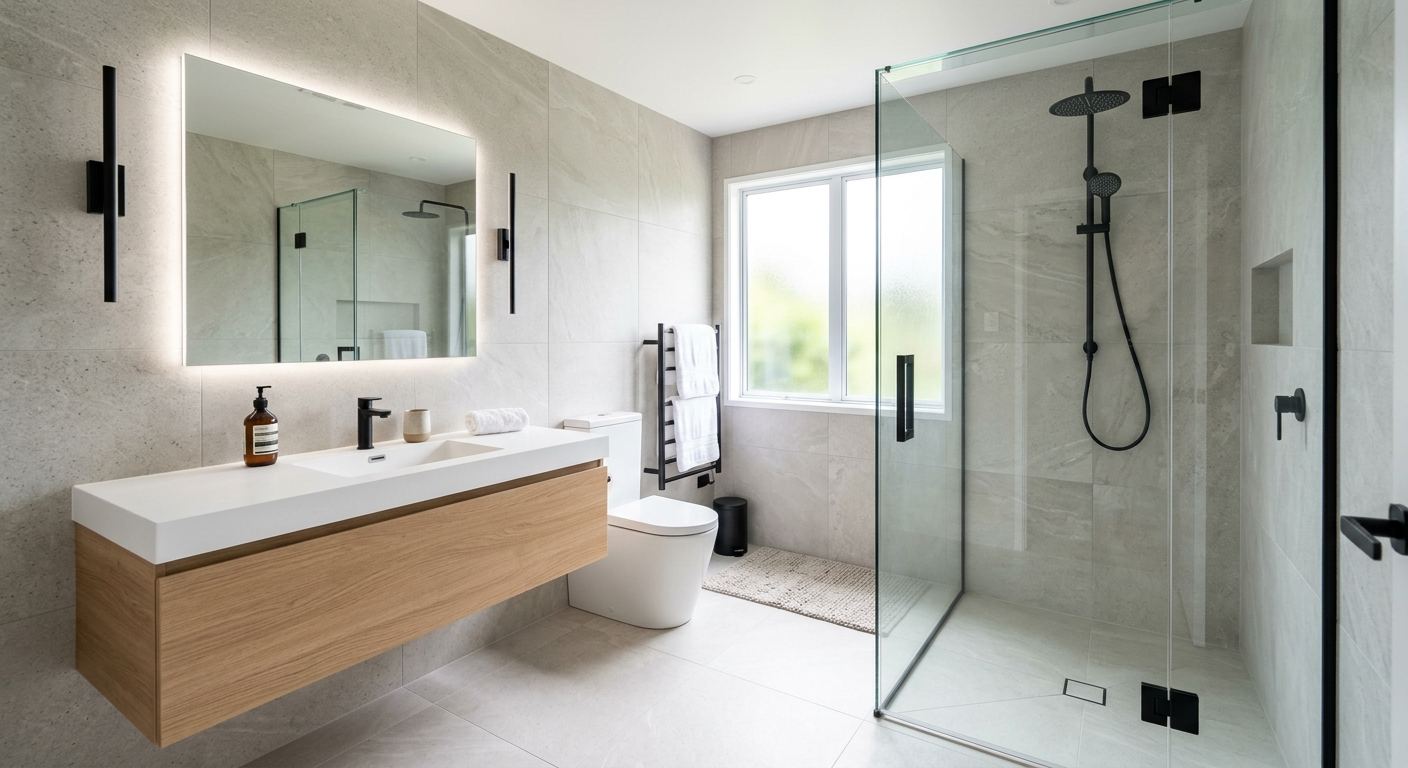
Bathroom renovation options and costs in South Arm
Renovating in South Arm typically starts with a decision: keep it simple with a cosmetic refresh, or open up the walls and address the parts that silently drive long-term comfort—waterproofing, ventilation, and aging plumbing. With South Arm’s population of 7,503 (Statistics Canada, 2021 Census), the local trades market can be efficient, but pricing still tracks the broader Lower Mainland–Southwest reality: higher labour costs and strong demand for licensed plumbers, tilers, and electricians. Just as important, many homes in the Lower Mainland–Southwest are mid-century or older, so once drywall and floors come up you may discover outdated drainage (including cast-iron components), older copper supply, or even asbestos-containing materials in pre-1985 finishes. Those “hidden” conditions can be the difference between a straightforward bathroom facelift and a full scoped renovation.
Cost is also shaped more by the age of housing stock than by weather. In the Lower Mainland–Southwest, the market norm is that contractors price bathroom work with current British Columbia code expectations—especially venting, subfloor readiness, and waterproofing systems that can handle long shoulder-season humidity. In neighbourhood pockets around Steveston North (where you often see older homes and small lots), trade scheduling can be tighter once projects involve venting upgrades and electrical tie-ins, so booking early helps keep labour predictable. Next, use the ranges below to compare typical options in South Arm before you request itemised quotes.
| Renovation Scope |
What's Included |
Typical Duration |
Price Range |
| Cosmetic refresh (paint, fixtures, accessories only) |
Bathroom paint, new vanity top or vanity (no plumbing move), toilet/vanity fixtures if existing rough-in remains, lighting refresh (like-for-like), accessories (towel bars, mirrors), no tile floor surround replacement |
3–7 days |
$3,500–$10,000 |
| Mid-range full renovation (new tile, vanity, tub/shower, electrical) |
Demo and disposal, subfloor prep, new waterproofing, tub/shower surround tile, tile floor (standard tile), vanity replacement, toilet replacement, vent fan upgrade, new GFCI outlet(s) as needed, basic lighting upgrades |
2–4 weeks |
$18,000–$35,000 |
| High-end full renovation (custom tile, steam shower, heated floors) |
Premium tile package (porcelain or custom layout), heated floor wiring and finishes, custom shower/steam options, upgraded exhaust + controls, higher-tier fixtures, refined lighting, expanded waterproofing and drainage details |
4–8 weeks |
$35,000–$45,000 |
| Shower-only installation (convert tub to walk-in shower) |
Remove tub, rough-in adjustments as needed, new shower pan/liner and waterproofing, tile shower walls and floor, glass door (standard), new exhaust/venting tie-in, new drain trim |
2–3 weeks |
$8,000–$25,000 |
| Bathtub replacement or tub-liner install |
Remove and replace tub (or install a liner where appropriate), plumbing connections, caulking and trim finishes, re-grout/re-tile minimal areas, inspection and sealing at wet-wall edges |
5–10 days |
$1,500–$6,000 |
| Tile-only installation (floor + surround, existing layout kept) |
Tile removal (as needed), backer prep, waterproofing for wet areas, tile floor and tub/shower surround, matching trim and grout, minimal electrical touch-ups only if required for code or fit |
1–3 weeks |
$2,000–$8,000 |
Prices are estimates only and vary by project scope, site access and material selection.
What affects the price of bathroom renovation in South Arm
In the Lower Mainland–Southwest, homeowners often see quote differences of 30–50% for the “same” bathroom because the biggest cost drivers are labour rates and what’s hidden inside older walls—not the weather outside. Metro Vancouver-area schedules rely on specialized trades (plumbers, tilers, electricians), and when demand is high, day rates and material lead times can shift fast. On top of that, older homes in the Lower Mainland–Southwest commonly hide cast-iron drains or dated galvanized/copper supply runs, and those can require upgrades once rough-in walls are opened. That means your budget can move from a mid-range full renovation (often in the $18,000–$35,000 band) to higher-end work if drain/venting and subfloor corrections become part of the scope.
As you explore options, remember that British Columbia bathrooms also need to be built for humidity. Ventilation upgrades and properly detailed waterproofing are where failure is most expensive. In pre-1985 homes, discovery of asbestos-containing materials in vinyl floor tile or drywall compound can trigger abatement protocols. That kind of remediation is frequently a budget jump—commonly adding $1,500–$5,000+ depending on what’s found and how much needs containment and disposal.
Two South Arm-specific cost examples: (1) if you want to relocate a vanity drain or add a pocket drain, you’ll likely pay for additional rough-in labour and inspection time; (2) if your subfloor has movement or cracked concrete, you’ll pay for more prep and leveling before tile and waterproofing can be installed. These items connect directly to the bathroom size too—more square footage usually means more tile labour time and increased membrane and thinset usage, not just materials.
| Price Factor |
Why It Matters |
Cost Impact |
| Layout change — moving drain or supply lines requires rough-in work |
Relocating plumbing means opening walls, redoing rough-ins, pressure testing and inspections, plus wall patching after tiling |
Often +$2,000–$8,000 depending on distance and condition |
| Tile selection — large-format porcelain vs. mosaic vs. ceramic |
Larger tiles require flatter substrates and more careful installation; mosaics can be slower and more labour-intensive to align |
Often +$500–$5,000 across a full surround and floor |
| Fixture tier — builder-grade vs. mid-range vs. designer brands |
Higher tiers cost more and may require different trims, valves, and installation accessories |
Often +$300–$3,500 for fixtures and trim |
| Subfloor condition — rot or unlevel concrete adds scope |
Tile systems fail on movement; you may need plywood replacement, decoupling adjustments, or concrete leveling/patching |
Often +$1,000–$6,000 |
| Electrical — adding GFCI outlets, exhaust fan, heated floor circuit |
Bathrooms require code-compliant GFCI protection and proper fan ducting; heated floors require dedicated circuits and safe wiring |
Often +$800–$4,500 |
| Waterproofing method — membrane type and extent |
The right system at seams, corners, curb transitions, and penetrations is what prevents leaks and mould |
Often +$500–$3,000 versus minimal/less comprehensive systems |
| Older-home surprises — asbestos tile, cast-iron drains, galvanized pipes |
Remediation and re-plumbing can expand scope, involve extra trades, and extend timelines |
Often +$1,500–$12,000+ depending on severity |
| Bathroom size — sq ft drives tile and labour time directly |
More area means more waterproofing and more hours for setting, grouting, and cleanup |
Often +$2,000–$10,000 as size scales |
Permits & regulations in British Columbia
In British Columbia, cosmetic updates—like swapping a vanity, changing a mirror, painting, and even retiling in-place—often do not require a permit. If you’re not moving plumbing lines and you’re not changing the structure, most “like-for-like” fixture replacements are treated as straightforward upgrades. However, permits and inspections become important when your project crosses into systems work. Relocating plumbing (moving a drain or supply line), adding or changing an exhaust fan that involves new wiring/circuits, or making structural wall changes are the types of work that typically require permits and inspections. Electrical work must meet provincial code requirements and be completed or signed off by a licensed electrician, even for small bathroom updates such as adding a properly protected GFCI outlet or tying in a heated floor circuit.
For a South Arm homeowner, a practical way to verify your contractor is to check three items step-by-step before work starts: (1) BC trade licence—confirm the contractor and each required trade hold valid provincial licensing; (2) liability insurance—request a certificate of insurance and ensure coverage is active for the project term; (3) workplace coverage—ask whether they carry the required worker protection coverage (often discussed as WCB/WSIB-type coverage depending on the business structure) and request proof/clearance information. Then keep copies of the insurance documents and the permit/inspection plan if permits are required.
If a contractor won’t tell you what’s permitted (or refuses to provide licence and insurance paperwork), that’s usually a warning sign—especially in older Lower Mainland–Southwest homes where wall opening often reveals additional scope.
Choosing tile, waterproofing and fixtures for your South Arm bathroom
Material choices are where South Arm bathroom budgets either stay predictable or start slipping. First, decide on tile: ceramic is the entry-level option for both floors and walls, and it’s usually more forgiving on small irregularities. Porcelain is denser and commonly chosen for floors because it handles moisture and wear well, but it needs solid prep and careful layout. Natural stone (marble, travertine, slate) looks premium and can raise the renovation’s perceived value, yet it often adds installation complexity and sealing/maintenance requirements.
Second is waterproofing, which matters in British Columbia because humidity lingers in bathrooms without strong extraction. A proper system includes the right membrane at transitions and penetrations. Paint-on membranes can work for some applications, but bonded sheet membranes or a tested, engineered system (including a schluter-style approach depending on what your contractor is using) generally provide more consistent protection when installed correctly.
Third is fixtures. Builder-grade valves, toilets, and shower trims can keep costs down, but mid-range or designer brands often bring better flow control, quieter operation, and a more cohesive look that helps resale. A practical way to match budget: if you’re considering upgrading from a basic tub-shower to a full shower with tile, the bigger win is often investing in waterproofing and substrate prep rather than only upgrading surface finishes.
Example: spending an extra few hundred dollars on premium waterproofing and proper detailing is typically more justified than adding a high-end mosaic pattern if your subfloor is out of level or your exhaust fan can’t handle moisture loads. In the Lower Mainland–Southwest, that reliability matters—especially when steam and long showers are part of daily use.
| Material / Option |
Pros |
Cons |
Price Range |
| Ceramic tile (floor + walls) |
Generally more affordable; wide selection; good for wall applications; easier to match with trim |
Floor tile performance depends on hardness and finishing; may be less durable than porcelain in high-traffic wet rooms |
$2,000–$5,000 |
| Porcelain tile (floor + walls) |
High durability; often lower water absorption; strong choice for floors; supports modern, clean layouts |
Requires flatter substrate and more exact setting; can be pricier per tile |
$4,000–$8,000 |
| Natural stone (marble, travertine, slate) |
Luxury look; unique veining; can elevate the bathroom’s resale appeal |
Higher material and installation cost; sealing and more maintenance; layout planning is critical |
$6,000–$14,000 |
| Frameless glass shower enclosure |
Premium, open feel; reduces visual clutter; works well with tile-forward designs |
More expensive; needs accurate framing and tile-to-glass alignment; installation is detail-heavy |
$2,500–$8,500 |
| Prefab tub surround (acrylic) |
Faster install; often waterproof by design; good value when you’re keeping a tub |
Limited design options vs tile; seams and transitions still need correct finishing |
$1,200–$3,000 |
| Custom shower pan (tile or linear drain) |
Tailored slope and drainage; modern linear-drain look; strong performance when built on correct waterproofing |
More labour and coordination; requires careful alignment with plumbing and waterproofing layers |
$2,000–$9,000 |
How to choose a bathroom renovation contractor in South Arm
Choosing a contractor in South Arm is less about who has the nicest showroom and more about proof: licensing, insurance, clear scopes, and warranties that match the work. In British Columbia, verify the contractor’s trade licence(s) for the type of work they’re doing and ask for a certificate of liability insurance. For labour coverage and employee-related protections, ask for proof of required workplace coverage and any clearance letter documentation they can provide. If they can’t produce paperwork quickly, move on—bathrooms involve plumbing, electrical, and waterproofing, so the liability risk is real.
Next, request 2–3 itemised written quotes. Avoid lump-sum-only proposals; you want line items for demolition/disposal, waterproofing method, tile supply and install, electrical scope (fan, GFCI, heated floor circuits), plumbing rough-in work if lines move, and permit handling where applicable. Read the scope carefully for exclusions like subfloor repairs, asbestos testing/abatement, or whether permit pulling and inspection fees are included. Finally, confirm warranty coverage: get the workmanship warranty length in writing, understand the product/manufacturer warranties, and ask whether warranties are transferable to new homeowners—important for resale.
For payment, keep it controlled: never pay more than 10–15% upfront, and hold back a portion until completion and closeout documents are provided. Also insist on a written start date and a realistic completion estimate, because delays often come from trade scheduling and material lead times in the Lower Mainland–Southwest.
- Ask for BC trade licence numbers and verify they match the scope (plumbing/electrical where required).
- Request a current certificate of liability insurance and confirm jobsite coverage.
- Confirm workplace coverage/clearance documentation for their workers.
- Get 2–3 itemised quotes with labour and materials broken out (not just a total).
- Ask what exactly is included in waterproofing (membrane type, coverage areas, and seam treatment).
- Clarify permit pull responsibility and whether inspection fees are included.
- Confirm disposal and haul-away are included (construction debris, old fixtures, tile waste).
- Ask how they handle asbestos risk in older homes (testing plan and abatement procedure if found).
- Request tile layout assumptions: substrate prep, backer adjustments, and grout selection.
- Verify timeline with dates, milestones, and lead-time allowances for glass/fixtures.
- Check warranty terms: workmanship length, what voids coverage, and product warranty documents.
- Use a controlled payment schedule; keep a holdback for final completion and punch list items.
Red flags in South Arm: quotes that omit waterproofing details, “all-in” totals with no breakdown for labour/materials, refusal to provide licence/insurance paperwork, payment schedules asking for large upfront deposits (beyond 10–15%), and vague warranty language (“we’ll fix it”) without a written term.
Frequently asked questions — bathroom renovation in South Arm
Should I do a tub-to-shower conversion?
In South Arm and across British Columbia, a tub-to-shower conversion is often a great move for accessibility and everyday use—especially if the bathroom is small and you’re tired of working around a high step. Cost-wise, a shower-only installation in the Lower Mainland–Southwest commonly lands in the $8,000–$25,000 band depending on whether you’re keeping the plumbing layout or changing drain/supply locations. If your existing tub plumbing is already near the planned shower drain and the subfloor is solid, the job is typically smoother. If walls or drains are older (cast-iron or dated supply), conversion can expand into additional plumbing and venting updates, so you should budget for surprises. Most homeowners get the best value when they invest in a properly built shower pan, waterproofing, and a strong exhaust fan so the new shower stays mould-resistant.
How do I prevent mold in a South Arm bathroom?
Mould prevention in South Arm is mainly about moisture control and waterproofing quality. First, ensure your bathroom has effective venting—many renovations include upgrading the exhaust fan so it vents to the exterior and runs long enough to clear humidity after showers. Second, use the right waterproofing system and details at corners, seams, and around penetrations; this is where leaks usually start. Third, keep tile grout and caulking in good condition—cracked seals can let water reach the substrate. In older Lower Mainland homes, hidden plumbing issues or inadequate drainage can raise humidity levels behind walls; that’s why a scope that includes subfloor checks and proper leak-risk investigation can save money later. If asbestos-containing materials are present in older finishes, plan for testing/abatement—mould prevention also means doing remediation properly when materials are disturbed. As a ballpark reference, a mid-range full renovation is often $18,000–$35,000, and waterproofing quality is a major factor inside that range.
What adds the most resale value in a bathroom reno?
For resale in British Columbia, buyers tend to pay for reliability and modern comfort more than trend finishes. The biggest value add is a bathroom that feels “dry and tight”: correct waterproofing, a properly functioning exhaust fan, updated ventilation, and fixtures that look current and operate quietly. A cohesive tile package and clean glass shower enclosure also help, but the deeper value is usually in systems that reduce future repairs. If your home is in South Arm’s older housing stock, updating plumbing and venting when the walls are open can prevent costly problems that scare buyers. High-impact changes include converting a cramped layout into a more functional shower, adding heated floors for comfort, and upgrading lighting around mirrors. Budgeting matters: a mid-range full renovation often falls in the $18,000–$35,000 band, while higher-end work with heated floors and custom details typically pushes toward $35,000–$45,000. The “best ROI” usually comes from spending on the parts that keep water where it belongs.
Can I keep my existing plumbing layout to save money?
Yes—keeping your existing plumbing layout is one of the most reliable ways to control cost in South Arm. If you keep the toilet location, vanity location, and shower/tub drain in roughly the same spots, you typically reduce rough-in labour, wall opening, and inspection complexity. That can help you stay closer to the lower end of the mid-range full renovation band ($18,000–$35,000) rather than moving into expanded scopes. The trade-off is that you should still build correctly: even with the same layout, the contractor should assess subfloor flatness, ensure adequate waterproofing coverage, and confirm the venting/exhaust setup meets current expectations. If you’re planning a shower-only conversion, you can sometimes save money by aligning the new shower drain as close as possible to where the tub drain already is. If discovery of older drains or supply lines forces upgrades, you’ll still pay more—but it’s usually less than full re-routing. Ask for an itemised quote that shows what changes trigger extra plumbing work.
How much does a walk-in shower cost in South Arm?
A walk-in shower in South Arm typically falls into the “shower installation” range of $8,000–$25,000, depending on what you’re replacing and how much plumbing/venting work is needed. A straightforward conversion (tub to walk-in) with minimal layout changes, standard tile selections, and a basic glass door often lands nearer the middle-to-lower end. If you want custom tile work, a linear drain, upgraded waterproofing coverage, frameless glass, or you uncover older plumbing that requires upgrades, it can push toward the higher end. Heated floors and premium fixtures add more. In pre-1980 or mid-century homes, hidden cast-iron drain components or dated supply lines sometimes expand scope once walls are opened. That’s why it’s important to request an itemised quote that clarifies what’s included for rough-in adjustments, waterproofing method, glass enclosure, and exhaust fan tie-ins.
What's the ROI on a bathroom renovation?
ROI varies by neighbourhood, finish level, and whether the renovation addresses issues buyers care about (waterproofing, ventilation, and modern plumbing function). In South Arm and across the Lower Mainland–Southwest, the ROI discussion often comes down to avoiding future repair risk and improving everyday usability. A well-executed mid-range full renovation (often $18,000–$35,000) can be a strong value play when it replaces failing surfaces, improves ventilation, and refreshes the layout with durable materials. If you jump into high-end custom tile, steam features, and heated floors, the renovation may improve lifestyle and buyer appeal, but resale returns can be less certain than you’d hope—especially if the rest of the home isn’t updated. The biggest ROI comes from spending where failure is most costly: waterproofing, correct slope/drainage, and code-compliant electrical/venting. Also, using an itemised scope and staying realistic about contingency reduces financial risk. A thorough process typically beats an overly “upgrade-heavy” plan with minimal waterproofing investment.