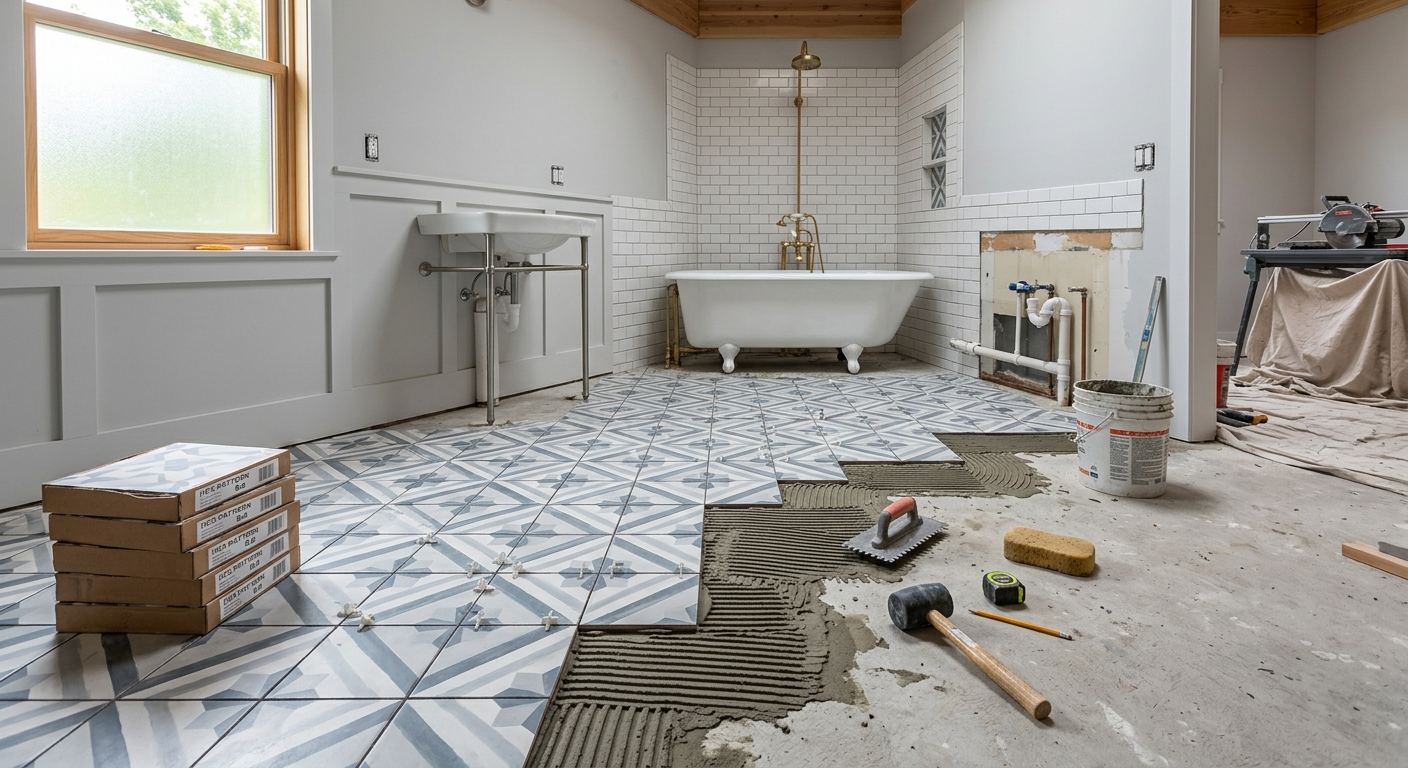
Bathroom renovation options and costs in South Granville
South Granville, British Columbia is where homeowners often expect a “refresh” to look simple—but in practice the cost depends heavily on what’s behind the walls. With a local population of 24,820 (Statistics Canada, 2021 Census), there’s sustained demand for skilled trades across the Lower Mainland–Southwest, especially around the Westside streets and shopping corridor where bathroom contractors are booked months ahead. That demand matters because labour rates and the age of housing stock are the main cost drivers here, more than climate.
In many pre-1980 homes in the broader Lower Mainland, you can run into dated plumbing layouts, older drain materials and, in some properties, asbestos-containing materials associated with older flooring or drywall compounds. Those surprises don’t show up until the demo stage—when removal, additional trades, and sometimes abatement planning can expand the scope quickly. Even small bathrooms can become expensive because multiple trades work in the same tight footprint.
Lower Mainland–Southwest projects also commonly expand once walls are opened to include plumbing and venting upgrades that bring the bathroom up to current British Columbia requirements. You’ll also see more ventilation work in this region because proper exhaust and moisture control are critical in our damp coastal climate; an under-sized fan or poorly sealed duct route can lead to chronic odour and mould risk. In areas like the South Granville neighbourhood around West 16th Avenue and the Museum District approach, tilers and plumbers are especially in demand, which can affect scheduling and quote timing.
Below are realistic budget ranges so you can compare options before you start itemising scope for a quote.
| Renovation Scope |
What's Included |
Typical Duration |
Price Range |
| Cosmetic refresh (paint, fixtures, accessories only) |
New paint, swap vanity/sink and toilet (if kept in same locations), tap upgrades, towel bars/accessories, caulking touch-ups; no re-plumbing or retiling beyond minor patching |
3–7 days |
$6,000–$12,000 |
| Mid-range full renovation (new tile, vanity, tub/shower, electrical) |
Demo and disposal, new waterproofing and tile (typical sizes), vanity and mirror, tub-to-shower refinishing or new shower/tub combo, exhaust fan upgrade, GFCI outlet updates, basic plumbing refresh, trim and finishing |
2–4 weeks |
$22,000–$34,000 |
| High-end full renovation (custom tile, steam shower, heated floors) |
Custom layout improvements, premium tile and detailing, steam shower components, heated floor system, higher-end fixtures, enhanced waterproofing and membrane systems, recessed lighting where allowed, upgraded venting runs |
4–7 weeks |
$38,000–$55,000 |
| Shower-only installation (convert tub to walk-in shower) |
Remove tub, install walk-in shower pan, waterproofing, tile surround, new valve/trim, ventilation check, minor drain rough-in if required, glass or fixed panel option allowance |
1–3 weeks |
$14,000–$26,000 |
| Bathtub replacement or tub-liner install |
Replace tub with new acrylic/steel tub and re-seal, or install tub-liner system where the existing tub is structurally sound; new trim and touch-up waterproofing |
4–10 days |
$2,500–$6,000 |
| Tile-only installation (floor + surround, existing layout kept) |
Remove existing finishes where needed, prep and flatten surfaces, install new tile floor and shower/tub surround, waterproofing system, grout/seal, re-trim around fixtures (re-use fixtures if unchanged) |
1–2.5 weeks |
$3,500–$9,500 |
Prices are estimates only and vary by project scope, site access and material selection.
What affects the price of bathroom renovation in South Granville
In South Granville and the wider Lower Mainland–Southwest, two bathroom renovation quotes for the “same” bathroom can differ by 30–50% because the region has higher labour costs and the work often uncovers hidden scope once walls are opened. Across British Columbia, that labour premium and the age of local housing stock can outweigh climate differences—turning a straightforward refresh into a full rough-in and remediation project. Metro Vancouver’s competitive market also means less schedule flexibility for plumbers, tilers and electricians, which pushes labour time and sometimes material procurement costs.
Older homes in the Lower Mainland–Southwest region frequently hide cast-iron or older drain stacks that need upgrading, galvanized supply lines that aren’t ideal for modern pressure/valve requirements, and ventilation that doesn’t meet current best practice. Those items inflate scope because plumbing and venting upgrades are tied to inspections and the need to open walls and floors. In some pre-1985 homes, discovery of asbestos-containing materials in vinyl floor tile or drywall compound can trigger abatement protocols. When that happens, budgets commonly add $1,500 to $5,000+, depending on extent and containment requirements.
Concrete examples from South Granville: (1) if you keep the existing footprint but replace tile, you may stay close to the tile-only band (often $2,000–$8,000)—but if you adjust the shower curb height or relocate valves, rough-in work can move the job toward mid-range full renovation pricing (commonly $18,000–$45,000). (2) Choosing large-format porcelain can raise material and labour per square foot due to higher prep accuracy, yet it can reduce grout lines and improve long-term maintenance if the substrate is properly levelled.
The takeaway: in South Granville, the “real” price driver is what’s found during demo, not what you initially see. Build contingency into your plan and align your scope with your home’s probable age and systems condition.
| Price Factor |
Why It Matters |
Cost Impact |
| Layout change — moving drain or supply lines requires rough-in work |
Relocation typically means opening floors/walls, modifying venting, and bringing plumbing up to current code and inspection requirements |
Often +$5,000–$12,000 vs. keeping the existing layout |
| Tile selection — large-format porcelain vs. mosaic vs. ceramic |
Different tiles need different prep tolerances, labour techniques, and handling; mosaics take more cuts and setting time |
Often +$1,500–$6,000 depending on product and complexity |
| Fixture tier — builder-grade vs. mid-range vs. designer brands |
Premium valves, trims and toilets cost more and can require specific rough-in compatibility |
Often +$500–$5,000 |
| Subfloor condition — rot or unlevel concrete adds scope |
Bad substrates require repairs, additional underlayment prep and sometimes moisture mitigation |
Often +$1,500–$7,500 |
| Electrical — adding GFCI outlets, exhaust fan, heated floor circuit |
Bathrooms require GFCI and safe wet-area installations; heated floors require dedicated electrical planning |
Often +$800–$4,500 |
| Waterproofing method — membrane type and extent |
Better membranes and full coverage reduce long-term mould and failure risk; requires correct system build-up |
Often +$600–$3,500 |
| Older-home surprises — asbestos tile, cast-iron drains, galvanized pipes |
Unexpected remediation and plumbing replacement expand trades and schedule; may trigger abatement planning |
Often +$1,500–$10,000+ |
| Bathroom size — sq ft drives tile and labour time directly |
More surface area means more labour for demo, prep, setting, waterproofing and finishing |
Often +$3,000–$12,000 as size increases |
Permits & regulations in British Columbia
In British Columbia, cosmetic updates—like swapping fixtures, replacing a vanity, re-painting, and retiling while keeping the plumbing locations the same—typically don’t need a permit. However, once you start relocating plumbing, adding new ventilation components, or changing structural elements, permits and inspections become part of the process. In a South Granville bathroom reno, the most common “permit-needed” items are:
- Plumbing rough-in changes: moving a drain or supply line, changing valve locations, or modifying venting typically requires a permit and inspection.
- Electrical updates: adding or altering circuits (for example, a new exhaust fan circuit, heated floor circuit, or new GFCI outlet wiring) must be done to provincial code by a licensed electrician.
- Structural wall or framing changes: any changes that affect load paths or require building modifications usually need permits and inspections.
Here’s the practical step-by-step a homeowner can follow. First, ask the contractor for their British Columbia trade licence and confirm it in the appropriate online registry. Second, request a certificate of liability insurance (make sure it names you as an interested party where applicable) and confirm coverage limits are current. Third, check that the contractor has proper worker coverage; many homeowners will ask for proof of WSIB/WCB coverage (as applicable to the contractor’s operations) before work starts. Keep copies of everything and ensure the scope in the quote aligns with the permits that will be pulled (or excluded).
Choosing tile, waterproofing and fixtures for your South Granville bathroom
In South Granville, three material decisions consistently decide whether your bathroom ends up closer to the budget-friendly bands or climbs toward high-end full renovation pricing: tile choice, waterproofing method, and fixture tier. Because we’re in the Lower Mainland–Southwest, bathrooms see heavy humidity loads—so waterproofing performance matters as much as appearance.
First, tile choice. Entry-level ceramic can be a smart start when you want a clean look and lower material cost, but it’s often less forgiving in terms of durability and requires correct substrate prep to avoid cracking. Porcelain is the common mid-range sweet spot: it’s denser, more water-resistant, and it tends to hold up well in shower floors and surrounding walls. Natural stone (marble, travertine, slate) looks exceptional and can boost perceived value, but it often costs more in materials and labour—and it needs careful sealing and matching thicknesses for consistent results.
Second, waterproofing. A quality paint-on membrane can work for some situations, but bonded sheet systems or engineered systems (including proven shower waterproofing assemblies and modern corner detailing) often provide stronger, more predictable performance where failure risk is highest—like corners, niches and curb transitions.
Third, fixture tier. Builder-grade fixtures can keep you nearer to mid-range full renovation budgets, while designer brands add both purchase cost and sometimes specialized trims/valves. For a specific example: choosing porcelain tile and a robust waterproofing system might sit in the mid-range tile installation band (often around $2,000–$8,000 for tile-only scope), while natural stone + premium detailing can push tile and labour closer to the upper end—where the difference is justified if you’re committed to the look for the long term.
| Material / Option |
Pros |
Cons |
Price Range |
| Ceramic tile (floor + walls) |
Lower material cost, wide variety of styles, good for budget-friendly refreshes when installed on a properly prepared surface |
Can chip or crack if the substrate isn’t stable; less durable than porcelain in some high-wear areas |
$2,000–$6,500 |
| Porcelain tile (floor + walls) |
More water- and wear-resistant, excellent for shower environments, holds up better over time, cleaner look with larger formats |
Higher material cost; larger formats require flatter prep for a premium finish |
$3,500–$8,000 |
| Natural stone (marble, travertine, slate) |
Luxury appearance and unique variation; strong resale appeal if matched correctly |
Higher risk of staining without proper sealing; more labour for layout and finishing |
$6,500–$15,000 |
| Frameless glass shower enclosure |
Bright, modern look; easier visual cleanliness; helps a small bathroom feel larger |
Costs more for quality hardware; installation requires precise framing and waterproof detailing |
$3,500–$8,500 |
| Prefab tub surround (acrylic) |
Fast install, consistent finish, often cheaper than full tile, good watertight performance when fitted correctly |
Fewer design options; can look less custom than tile; future replacement may be easier than redoing water-proof details |
$1,500–$4,500 |
| Custom shower pan (tile or linear drain) |
Modern drainage options, cleaner lines; with the right build-up can be very durable and water-tight |
More labour-intensive; requires meticulous waterproofing and slope planning |
$6,000–$14,000 |
How to choose a bathroom renovation contractor in South Granville
Choosing a bathroom contractor in South Granville comes down to proof: licensing, insurance, and a well-scoped contract that matches the work you actually want. Start by verifying British Columbia trade licence details for the contractor and, where applicable, for each specialized trade (plumbing and electrical are the biggest). Next, ask for a certificate of liability insurance and confirm the coverage dates and limits are current. For worker coverage, request proof of WSIB/WCB coverage (as applicable to the contractor’s operations) so you’re not exposed if an injury occurs on your property.
Then get 2–3 itemised written quotes rather than a single lump sum. You want a labour + materials breakdown that clarifies what’s included for demo, disposal, waterproofing, backer board or substrate prep, tile setting, trim and caulking, and whether permits are pulled. Scope clarity matters because bathroom projects often expand: if you discover aged drainage, you don’t want the price to shift later without an agreed change order.
Pay attention to warranty. Ask for the workmanship warranty length and whether the manufacturer warranties for shower systems, membranes, or heated floors apply to you and are transferable. A sensible payment schedule keeps risk controlled—never more than 10–15% upfront, and hold back payment until the job is complete and any punch-list items are addressed.
Finally, demand a start date and completion estimate in writing. A realistic timeline prevents costly overlap with your work or your family schedule.
- Confirm BC trade licence(s) before signing and ensure the licence matches the type of work proposed.
- Request certificates: liability insurance + proof of worker coverage (WSIB/WCB as applicable).
- Use itemised quotes (labour vs materials) instead of “one number.”
- Ask whether permits are included in the price and who pulls them.
- Clarify disposal: dumpster size, haul-away, and whether drywall/tiling waste is included.
- Confirm waterproofing scope: membrane type, coverage areas, and how corners/niches are detailed.
- Require a tile plan: layout method, allowance for cuts, and grout line expectations.
- Check electrical scope: exhaust fan specs, GFCI requirements, and any heated floor circuit details.
- Ensure plumbing scope includes shut-off, valve replacement allowance, and venting confirmation where needed.
- Verify who provides tempered glass/door installation (if applicable) and whether measurement is included.
- Read the exclusions: what happens if a subfloor is found rotted or out of level?
- Match warranty terms: workmanship length + manufacturer warranty + transferability to future owners.
Red flags in South Granville: (1) a contractor who won’t provide itemised quotes or tries to keep everything vague until “later,” (2) refusing to show proof of BC licensing and insurance, (3) promising “no surprises” while skipping an inspection of existing plumbing/electrical conditions, (4) offering an unusually low price with no waterproofing system specified, and (5) asking for most of the payment upfront (beyond 10–15%).
Frequently asked questions — bathroom renovation in South Granville
Can I live at home during a bathroom renovation in South Granville?
Often yes, but it depends on your bathroom layout and how long the main demo-and-tile phase lasts. In South Granville, many homeowners choose to stay home during mid-range renovations because crews typically work in daytime shifts and keep dust contained with proper plastic barriers. If your project is shower-only or tile-only, you can sometimes preserve basic function by sequencing plumbing work and temporary access. The Lower Mainland–Southwest labour market can tighten schedules, so start and completion dates should be written into your contract. For budget context, a tile-only scope may run around $3,500–$9,500, which is usually faster than a full rough-in. If asbestos-containing materials are discovered in older finishes, that can temporarily change how you live in the home due to containment requirements.
What's the best bathtub material for a South Granville home?
For most South Granville homes, acrylic tubs are a practical “best overall” choice: they’re lighter than cast iron, easier to install, and typically cost less for replacement. If your goal is longevity and a solid feel, a thicker acrylic or quality composite tub can last many years when installed properly with the right support and sealed edges. If you’re trying to stay closer to the bathtub replacement/tub-liner band, tub-liner installs can look attractive when the existing tub is structurally sound; those projects often land around $2,500–$6,000. For older homes where subfloor or framing is questionable, we often recommend checking the support before deciding—because the “best material” is the one your rough-in can actually carry without future flexing or leaks.
Is it worth renovating a bathroom before selling in South Granville?
It can be, especially if your bathroom shows dated finishes, worn waterproofing, or fixtures that limit buyer confidence. In South Granville, buyers often pay attention to moisture control and the quality of the shower/tub waterproofing more than they do to trendy colours. A well-executed renovation also helps the appraiser and home inspector because it clarifies that the electrical, ventilation and plumbing updates were done to current expectations in British Columbia. That said, overspending doesn’t always pay back—so align scope with the level of the home. Many homeowners target a mid-range full renovation (commonly $22,000–$34,000) or a focused shower conversion when the layout is otherwise solid. If you already have a structurally sound bathroom, tile-only work or a cosmetic refresh can be a more cost-effective way to improve presentation without triggering major plumbing changes.
How do I plan a bathroom renovation on a tight budget in South Granville?
Start by choosing what you will not change: keeping the layout typically avoids the most expensive rough-in work. Many South Granville budgets do best when you combine a cosmetic refresh with limited tile replacement, or you do a tile-only installation while retaining fixtures that are in good condition. Tile is where small upgrades can produce big visible gains, but it still needs a proper waterproofing build-up to prevent mould and failure in our damp coastal conditions. If you’re aiming to control total costs, choose mid-range porcelain rather than natural stone, and consider refinishing strategies like upgrading fixtures and re-caulked sealing rather than full shower rebuilds. As a reference point, shower-only conversions often fall around $14,000–$26,000, while tile-only can be closer to $3,500–$9,500 depending on size and complexity. Most importantly, plan contingency for older-home surprises—especially if you suspect cast-iron drains, dated supply lines, or older flooring finishes.
What's the difference between a cosmetic and a full bathroom renovation?
A cosmetic renovation typically focuses on visible surfaces and fixture swaps without disturbing the plumbing or major waterproofing systems. Examples include new paint, replacing a vanity, mirror and hardware, upgrading the toilet (if it stays in the same location), swapping lighting, and doing minor touch-ups. A full renovation involves demo down to the studs or substrate, new waterproofing, new tile, and often electrical and plumbing updates—especially common in the Lower Mainland–Southwest when older homes require improved venting or modern GFCI and exhaust fan installations. Budget-wise, cosmetic refreshes can often sit around $6,000–$12,000, while full renovations commonly land in the wider band of $18,000–$45,000 depending on scope, tile selection and whether you convert tub to shower or relocate fixtures. If you’re unsure, ask your contractor to outline what’s staying in place before the quote is final.
How do I choose the right contractor for my bathroom in South Granville?
In British Columbia, verify licensing and insurance before anything starts. Ask for the contractor’s BC trade licence information and confirm it matches the work they’re quoting. Request a certificate of liability insurance and proof of worker coverage (WSIB/WCB as applicable). Then compare 2–3 itemised written quotes with labour and materials breakdowns—especially for waterproofing, disposal, permit pull responsibilities, and any exclusions. A reputable South Granville contractor will specify the waterproofing method, membrane type, and the ventilation plan for the exhaust fan and electrical. They should also outline a realistic timeline and provide a workmanship warranty with clear terms. Keep payments controlled: never pay more than about 10–15% upfront and hold back until completion. If the quote is too cheap and doesn’t name waterproofing details, expect cost creep later—often the most expensive kind.