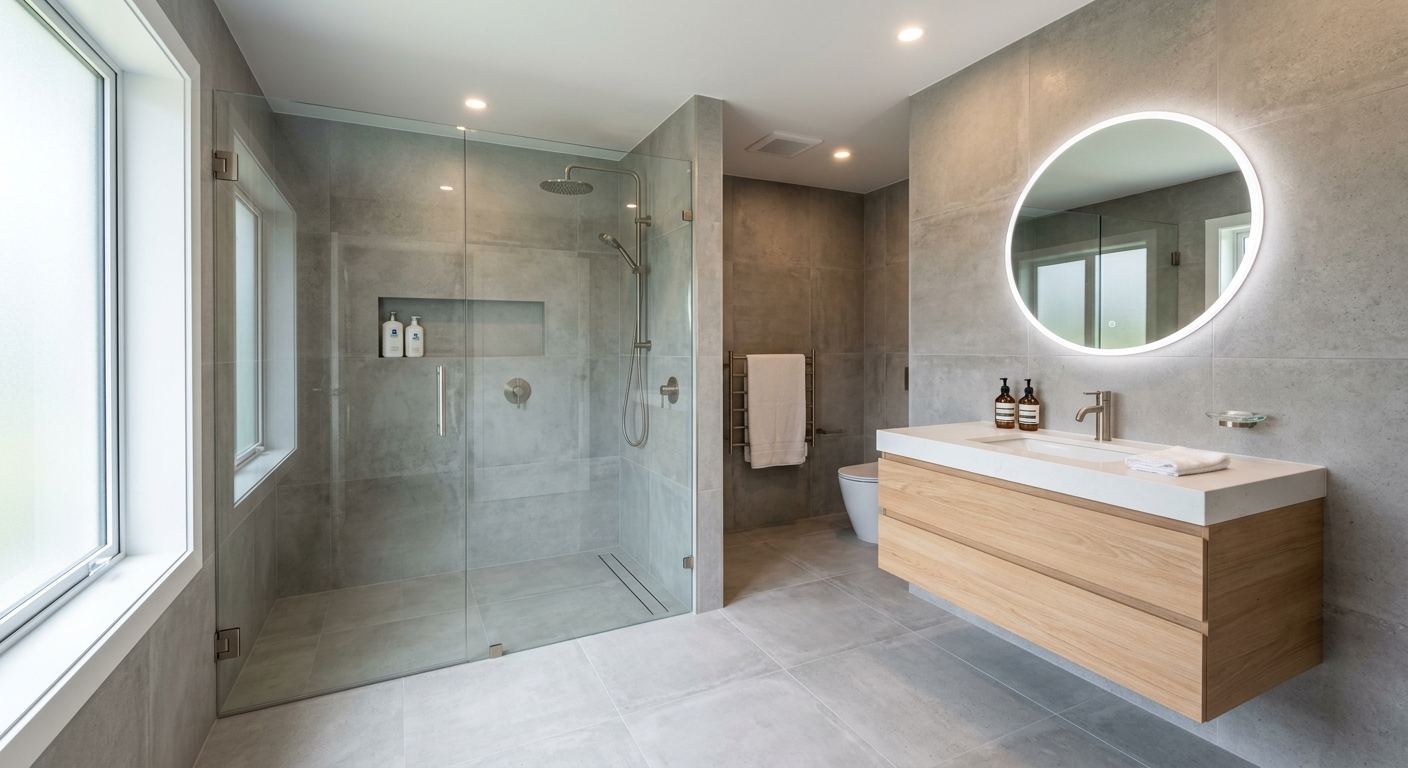
Bathroom renovation options and costs in Cawston
Cawston homeowners typically start with one of three goals: freshen the look, improve performance, or fully modernize the plumbing and finishes. With a population of 1,040 (Statistics Canada, 2021 Census), trades can still be scheduled efficiently when scope is clear, but the contractors who specialize in tile and waterproofing often get booked around nearby projects in the Lower Mainland–Southwest. In older homes, especially those built before 1980, it’s common to find outdated layouts and dated assemblies behind the walls—think galvanized supply lines, cast-iron or older drain piping, and sometimes asbestos-containing materials in older floor tile or drywall compound. Those surprises are a major reason quotes can widen fast.
In the Lower Mainland–Southwest, renovation costs are driven more by regional labour rates and housing age than by weather swings. Metro-area demand keeps skilled plumbers, tilers and electricians busy, and once walls are opened, renovations often expand to include venting and drain upgrades to align with current British Columbia code expectations. Even modest bathrooms can land on the higher end of the range because multiple trades work in a tight footprint, and waterproofing and tile labour are both time-intensive.
If you’re renovating near the more established residential pockets around Cawston’s core, you’ll often get faster access to trades because crews can stack work between neighbouring properties. Use the options below to sanity-check budgets before you request a detailed, itemized quote.
| Renovation Scope |
What's Included |
Typical Duration |
Price Range |
| Cosmetic refresh (paint, fixtures, accessories only) |
Paint, vanity swap (existing plumbing locations), tap/trim replacement, toilet replacement, new mirror/light, accessories; no plumbing rough-in changes |
3–7 days |
$3,000 – $9,000 |
| Mid-range full renovation (new tile, vanity, tub/shower, electrical) |
Demo and dispose, new vanity and toilet, tub/shower or surround re-tile, proper waterproofing, exhaust fan upgrade, GFCI where required, basic lighting updates |
2–4 weeks |
$18,000 – $30,000 |
| High-end full renovation (custom tile, steam shower, heated floors) |
Custom shower/tub design, premium tile and layout, bonded waterproofing system, heated floor circuit, upgraded electrical and lighting, steam-ready components (where applicable) |
4–7 weeks |
$30,000 – $45,000 |
| Shower-only installation (convert tub to walk-in shower) |
Remove tub, waterproof shower pan and walls, drain relocation (if required), new glass enclosure, new fixtures/trim, exhaust and lighting check |
1–3 weeks |
$8,000 – $25,000 |
| Bathtub replacement or tub-liner install |
Replace tub and fixtures OR install a tub liner (where suitable), prep/surface work, new caulking and trim; plumbing adjustments as needed |
3–10 days |
$1,500 – $6,000 |
| Tile-only installation (floor + surround, existing layout kept) |
Remove existing tile (as planned), install floor and wall tile, grout and sealing where applicable, waterproofing and backer prep |
1–3 weeks |
$2,000 – $8,000 |
Prices are estimates only and vary by project scope, site access and material selection.
What affects the price of bathroom renovation in Cawston
For the same bathroom, two Cawston homeowners can receive quotes that differ by 30–50% once you compare scope, labour scheduling, and what’s “unknown” until demolition. In the Lower Mainland–Southwest, labour rates and the age of housing stock are the biggest cost drivers—more than day-to-day climate. That’s because older homes often hide drain and supply issues that don’t show until walls and floors come up, and those discoveries typically trigger additional plumbing work, venting updates, and extra inspection steps.
It’s also common to find galvanized supply lines or older drain stacks that may not meet today’s expectations. If you discover materials that require remediation—such as asbestos-containing vinyl floor tile or old drywall compound—abatement can add roughly $1,500–$5,000+ and require coordinating another trade and timing the rest of the build around it. That’s one reason a “mid-range” project that starts around $18,000 – $30,000 can drift toward $30,000 – $45,000 if multiple systems need upgrades.
Two real cost examples we see often in this region: (1) moving a toilet or vanity usually means rough-in work and wall access, which increases labour and repair time; (2) swapping from a simple tub surround to a tiled shower with a proper drain and waterproofing expands the waterproofing area and surface prep. On the other hand, keeping your layout intact and selecting mid-range tile can keep costs closer to the tile-only band of $2,000 – $8,000—especially when the subfloor is sound.
Even though British Columbia’s humidity can affect how long materials take to cure, most budget variance in Cawston comes from labour availability, trade stacking, and the “scope expansion” that happens when older assemblies are exposed.
| Price Factor |
Why It Matters |
Cost Impact |
| Layout change — moving drain or supply lines requires rough-in work |
Toilets, vanities and showers need proper slope, venting connections, and accessible plumbing runs |
Typically +$4,000 to +$12,000 depending on how much is moved |
| Tile selection — large-format porcelain vs. mosaic vs. ceramic |
Harder materials can require more cutting time, extra labour and careful substrate prep |
Often +$1,000 to +$6,000 overall |
| Fixture tier — builder-grade vs. mid-range vs. designer brands |
Higher-end valves, trim and shower components cost more and may require upgrades |
Commonly +$500 to +$5,000 |
| Subfloor condition — rot or unlevel concrete adds scope |
Uneven or damaged substrates require repair, membrane adjustments, and more labour |
Often +$1,500 to +$7,000 |
| Electrical — adding GFCI outlets, exhaust fan, heated floor circuit |
Bathrooms require code-compliant wiring, dedicated protection and proper venting |
Commonly +$800 to +$4,500 |
| Waterproofing method — membrane type and extent |
Coverage size and system type affect prep time, materials and long-term moisture protection |
Often +$600 to +$3,500 |
| Older-home surprises — asbestos tile, cast-iron drains, galvanized pipes |
Remediation, pipe replacement and coordination with additional trades can expand scope |
Can add $1,500 to $10,000+ when discovered |
| Bathroom size — sq ft drives tile and labour time directly |
More floor/wall area increases time for prep, thinset, setting, waterproofing and grouting |
Roughly +$2,000 to +$12,000 as size increases |
Permits & regulations in British Columbia
In British Columbia, not every bathroom update needs a permit. Cosmetic work—like swapping fixtures on existing connections, repainting, replacing a vanity without moving plumbing, and retiling where the plumbing and structure aren’t changed—typically doesn’t trigger a permit. What changes the permit requirement is whether you’re altering plumbing, electrical or building components.
Common projects in the Cawston area that DO usually require a permit (and inspection) include: relocating a toilet, moving a drain or supply line, changing the rough-in location for a shower or tub, adding new exhaust fan venting where ducting or electrical runs are created/altered, and any structural wall changes (including openings). Electrical work generally must follow provincial electrical code, and any adding or modifying circuits—such as a new GFCI outlet, exhaust fan circuit, or heated-floor circuit—should be completed by a licensed electrician and signed off as required.
For homeowner verification, take a simple step-by-step approach. First, ask for the contractor’s British Columbia trade licence documentation (and confirm it matches the scope they’ll do: plumbing/electrical/tile as applicable) and verify it using the relevant online registry. Next, request a current certificate of liability insurance—showing the effective dates and coverage amount—and confirm they are insured for the type of work on your site. Finally, in BC contexts where coverage applies, ask for proof of workplace coverage (WCB) and review the clearance/coverage documentation they provide. If they won’t supply documentation before scheduling, that’s a red flag.
Choosing tile, waterproofing and fixtures for your Cawston bathroom
In Cawston, your biggest cost swings usually come from what you choose for tile, how you waterproof it, and what tier of fixtures you install—not from the paint colour. Start with tile choice: ceramic is a solid entry option when you want a straightforward look and uncomplicated installation, while porcelain typically handles moisture and wear better and can be easier to maintain long-term in a bathroom. Natural stone (marble, travertine, slate) can deliver luxury, but it adds premium material cost and often requires more meticulous finishing and sealing to keep it looking consistent.
Next, waterproofing method. In the Lower Mainland–Southwest, bathrooms see frequent steam and humidity, and the wrong system or incomplete coverage is what leads to mould and failed grout lines. Paint-on membranes can work for certain smaller applications, but bonded sheet membranes and proven systems (including appropriate tiled-wall pan approaches) are often selected for their reliability across edges, corners and transitions. Finally, fixtures: builder-grade pieces reduce upfront cost, mid-range often gives better valve control and finish longevity, and designer brands can materially improve the shower experience and resale appeal.
A practical dollar example: if you’re comparing standard ceramic tile vs. porcelain for a typical bathroom floor and surround, the material difference might look small on day one, but porcelain plus a premium waterproofing build-up can add several thousand dollars of total project value by reducing the risk of rework. That’s a place where paying for the right waterproofing and a better tile product is usually justified—especially when you’re already opening walls and paying for labour.
| Material / Option |
Pros |
Cons |
Price Range |
| Ceramic tile (floor + walls) |
Entry-friendly cost, wide design selection, easy to match with common grout styles |
Can be less impact-resistant; requires careful slip/readiness selection for floors |
$2,000 – $4,500 |
| Porcelain tile (floor + walls) |
Better moisture/wear performance, consistent colour, often more durable under daily cleaning |
More expensive material; heavier/cutting requires skilled installation |
$3,500 – $8,000 |
| Natural stone (marble, travertine, slate) |
High-end look and unique veining; premium feel for showers and accent walls |
Sealing and maintenance; can be sensitive to stains and needs careful substrate prep |
$6,000 – $15,000 |
| Frameless glass shower enclosure |
Modern appearance, keeps bathrooms brighter, durable when installed correctly |
More expensive; requires precise wall layout and stable waterproofing transitions |
$1,500 – $4,500 |
| Prefab tub surround (acrylic) |
Fast install, generally water-tight when sealed properly, lower labour than full tile |
Less custom look; seams and panels may not match high-end expectations |
$800 – $2,500 |
| Custom shower pan (tile or linear drain) |
Luxury drainage and tailored layout; supports a fully waterproof tiled shower design |
More labour-intensive; requires flawless slope, waterproofing and drain coordination |
$2,500 – $9,500 |
How to choose a bathroom renovation contractor in Cawston
Start by verifying the contractor’s British Columbia credentials and coverage—because bathroom renovations involve electrical, plumbing, and waterproofing in a small area where mistakes are costly. For licensing, ask for the relevant BC trade licence(s) tied to the scope they’ll perform (and confirm the numbers match what you’re hiring them to do). For insurance, request a certificate of liability insurance with the correct address/project details and check it’s current. For workplace coverage in the BC context, ask for proof of WCB coverage and any clearance documentation they can provide. If they can’t produce these, you’re taking unnecessary risk.
Next, get 2–3 itemized written quotes, ideally with labour and materials broken out by line item (demo/disposal, framing or substrate, waterproofing, tile setting labour, electrical/plumbing labour, fixtures supply, and any glass enclosure). A lump-sum quote can hide what’s excluded. Pay attention to: whether permits are included, who pulls them, whether asbestos investigation/abatement is addressed if discovered, and whether disposal and dump fees are included.
Warranty matters for both workmanship and products. Ask how long the contractor backs installation (waterproofing and tile installation are key) and whether the manufacturer warranties are transferable if you sell the home. For payment, keep it sensible: never pay more than 10–15% upfront, and use a holdback until completion and final walkthrough. Finally, require a written timeline with a start date target and an estimated completion window, plus how delays from material lead times will be handled.
- Licences: ask for BC trade documentation that matches your scope (plumbing/electrical where applicable).
- Insurance: confirm current liability coverage and request the COI before work starts.
- WCB/workplace coverage: request proof/clearance documentation for the contractor’s operations.
- Itemized quote: insist on labour and materials lines, not just totals.
- Scope clarity: list what’s included for demo, disposal, and protection of the home.
- Permits: confirm whether permits are included and who pulls them.
- Waterproofing specification: ask which membrane/system is used and where it applies.
- Tile plan: confirm layout approach (trim, edges, substrate prep, grout type).
- Electrical scope: confirm GFCI requirements and the exhaust fan plan.
- Plumbing scope: confirm whether venting or rough-in upgrades are assessed.
- Schedule: get a written start date, completion estimate, and delay communication plan.
- Warranty: workmanship warranty length and what it covers (especially tile/waterproofing).
Red flags to watch for in Cawston: (1) they won’t provide licences/insurance details up front, (2) they refuse itemized pricing or won’t explain inclusions/exclusions, (3) they provide no waterproofing system details for a tiled shower, (4) they pressure you for large upfront payments, and (5) they promise “no surprises” without a contingency approach for older-home plumbing or possible remediation needs.
Frequently asked questions — bathroom renovation in Cawston
Can I live at home during a bathroom renovation in Cawston?
Often yes in Cawston, especially for cosmetic refreshes, tile-only work, or a shower conversion that’s completed in a short, well-managed window. For mid-range full renovations, you can usually stay home if you have a second bathroom or if the contractor can stage work so you retain at least one functional wash area. In older homes common across the Lower Mainland–Southwest, demo sometimes reveals plumbing or venting issues that can extend downtime, so plan for a “work stoppage” period if the main shower must be shut down. Your best move is to request a schedule showing when plumbing is disconnected/reconnected and when waterproofing cures. As a ballpark, a cosmetic project might be 3–7 days, while full reno timelines often run 2–4 weeks.
What's the best bathtub material for a Cawston home?
“Best” depends on whether you’re optimizing for longevity, weight, or installation speed. In many Cawston renovations, an acrylic tub replacement is a common value choice because it’s relatively quick to install and can reduce labour time. If you’re after a more premium feel and strong durability, cast iron or higher-end materials can last decades, but installation may require more careful handling and can be costlier. If you’re upgrading on a tight scope, a tub liner can be a practical option when the existing tub surface is suitable—though liners work best when prep is done correctly. Expect bathtub replacement or tub-liner install budgets of about $1,500 – $6,000, and if you’re moving fixtures or changing the plumbing rough-in, your costs can rise toward the broader full-renovation bands.
Is it worth renovating a bathroom before selling in Cawston?
Renovating can be worth it when it solves functional issues buyers notice quickly—like poor ventilation, outdated fixtures, or visible deterioration—rather than chasing high-end finishes that don’t match the neighbourhood’s expectations. In a region where older housing stock is common, buyers often pay attention to whether waterproofing is current and whether plumbing and electrical upgrades were done responsibly. A mid-range full renovation (often budgeted within $18,000 – $30,000) can be a strong “value” spend if your layout and subfloor are sound. If your bathroom is missing key upgrades (like an effective exhaust fan or GFCI protection), addressing those can make your home feel safer and better maintained. That said, if major hidden problems exist behind walls—such as older drain stacks or remediation needs—you’ll want to price those risks into your decision rather than betting on return alone.
How do I plan a bathroom renovation on a tight budget in Cawston?
On a tight budget in British Columbia, the best strategy is to protect your plumbing and electrical layout whenever possible, because layout changes are where costs spike due to rough-in work and added labour. Start with a “targeted upgrade” plan: keep the footprint, do waterproofing correctly where it’s already exposed, and upgrade only the high-impact finishes—like the vanity, lighting and an exhaust fan. If you’re sticking to tile, consider a tile-only scope in a controlled area; tile-only installations can fall around $2,000 – $8,000 when your layout doesn’t change. Build in contingency for older-home surprises, since older assemblies can reveal issues only after demolition. Finally, request itemized quotes so you can see what you’re paying for in labour versus materials, and avoid paying extra for features you can delay (like heated floors) until you’re confident the base build is solid.
What's the difference between a cosmetic and a full bathroom renovation?
A cosmetic renovation focuses on appearance and small surface-level upgrades without changing plumbing or structural elements. Typical cosmetic work includes painting, fixture trim and accessory swaps, and sometimes replacing a vanity when taps remain on existing connections. A full renovation goes beyond finishes: it involves demo and often new tile with a full waterproofing build-up, replacing or upgrading fixtures, and commonly addressing electrical (GFCI outlets and exhaust fan) and plumbing rough-in—especially in older homes. In Cawston and the wider Lower Mainland–Southwest, full renos are more expensive mainly because you’re paying for multiple trades in a small space and for the “hidden scope” that emerges once walls and floors are opened. If you’re comparing budgets, cosmetic refreshes might be around $3,000 – $9,000, while full renovations typically fall within the $18,000 – $45,000 range depending on how far you go.
How do I choose the right contractor for my bathroom in Cawston?
Choose a contractor the same way you’d choose a surgeon: verify credentials, demand clarity, and check the details. In British Columbia, ask for the correct trade licensing for the work they’ll do and review a current certificate of liability insurance before signing anything. Ask about workplace coverage documentation as well. Then get 2–3 itemized written quotes showing labour and materials—not lump sums—plus who handles permits (if any). Scope matters: confirm what’s included for disposal, whether waterproofing specs are listed, and what happens if older-home surprises are found during demo. A good contractor will discuss timelines in writing, provide a workmanship warranty, and use a sensible payment schedule (generally keeping upfront payment to around 10–15%). If you’re planning a project in the $18,000 – $30,000 band, insist that electrical and waterproofing steps are clearly defined so you can predict costs instead of reacting to delays.