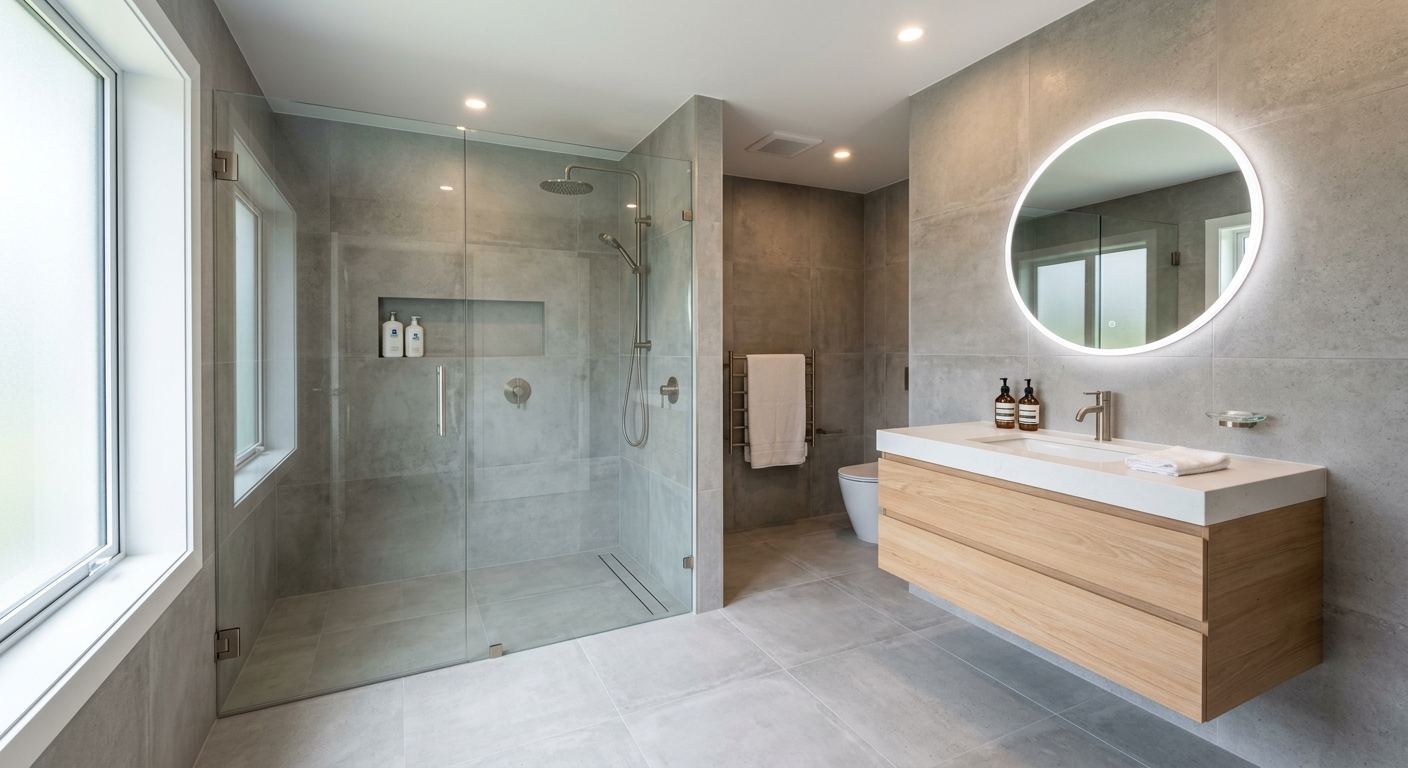
Bathroom renovation options and costs in Pritchard
Pritchard homeowners typically start with one of three paths: a cosmetic refresh, a mid-range full renovation, or a higher-end redesign. With Pritchard’s population at 1,500 (Statistics Canada, 2021 Census), crews often work in regional hubs across the Lower Mainland–Southwest, then travel in when the scope is ready—so scheduling can affect your total cost. Cost also tracks closely to housing age. In many pre-1980 homes across the Lower Mainland–Southwest, dated drain and supply layouts are common, and you may run into aging cast-iron drains, galvanized supply lines, or even asbestos-containing materials in older flooring or drywall compound. When walls open, that “small” project can quickly expand into plumbing and venting upgrades to bring everything up to current British Columbia expectations.
In this region, renovation pricing is driven more by labour rates and the age of the housing stock than by day-to-day climate. Even though the Lower Mainland has milder temperatures, bathroom moisture control is still critical: bathrooms need dependable ventilation, proper waterproofing detailing, and correct slope at drains. Because labour demand is strong for plumbers, tilers and electricians, labour can be the swing factor—especially in established neighbourhoods in the broader Metro Vancouver corridor where trade availability competes across projects. If you’re seeing the most demand for bathroom work near trades-heavy pockets like Fraser Highway/Surrey-adjacent areas (commonly where regional scheduling is tight), it’s a good reminder to lock scope and materials early.
Below are practical renovation options and what they usually include in Pritchard, so you can compare quotes apples-to-apples before you transition to a contractor’s itemized pricing.
| Renovation Scope |
What's Included |
Typical Duration |
Price Range |
| Cosmetic refresh (paint, fixtures, accessories only) |
New vanity or faucet/fixtures (no moving plumbing), paint, replace accessories, recaulk, deep clean; keep existing tile layout and waterproofing as-is |
2–5 days |
$5,000–$12,000 |
| Mid-range full renovation (new tile, vanity, tub/shower, electrical) |
Demo and rebuild of tub/shower surround and/or floor tile, new vanity, updated waterproofing, exhaust fan (existing venting permitting), basic electrical upgrades (as needed), fixtures, new trims/finishes |
2–4 weeks |
$18,000–$32,000 |
| High-end full renovation (custom tile, steam shower, heated floors) |
Custom waterproofing system, premium tile (often larger formats), heated floor (new circuit), designer fixtures, possible steam shower components, glass package, expanded electrical/venting upgrades if required |
4–7 weeks |
$32,000–$45,000 |
| Shower-only installation (convert tub to walk-in shower) |
Tub removal, new shower pan/waterproofing, new tile surround, new shower valve/trim, glass door or enclosure, ventilation check, patching and finishing |
2–4 weeks |
$8,000–$25,000 |
| Bathtub replacement or tub-liner install |
Replace tub with new unit and reglaze/finish as applicable, new trim/fixtures; liner option if substrate is suitable and waterproofing can be verified |
3–10 days |
$1,500–$6,000 |
| Tile-only installation (floor + surround, existing layout kept) |
Remove existing tile as needed, prep substrate, waterproof and tile floor + walls per your spec, grouting and caulking to transitions |
1–3 weeks |
$2,000–$8,000 |
Prices are estimates only and vary by project scope, site access and material selection.
What affects the price of bathroom renovation in Pritchard
In the Lower Mainland–Southwest, it’s common to see quote variation of 30–50% for what looks like the same bathroom on paper. The biggest drivers aren’t usually the tiles or paint—they’re labour rates and what’s hidden behind walls. This region’s housing stock often includes older layouts with aging drainage and outdated supply lines, so once demo starts, contractors frequently uncover scope that affects both plumbing and ventilation. Even mild Lower Mainland weather doesn’t change that reality: bathrooms still need correct moisture management, exhaust performance, and durable waterproofing detailing.
Across British Columbia, labour availability is a major swing factor. In the Lower Mainland–Southwest, demand for plumbers, tilers and electricians is strong and skilled trades can be booked further out, pushing effective labour costs up. Older homes also show their age differently during renovations: for example, cast-iron or galvanized sections may require replacement to stop slow drainage or to connect to modern venting. It’s also not unusual to discover asbestos-containing materials in pre-1985 homes (such as certain vinyl floor tile or older drywall compound). If abatement is required, budgets can climb by roughly $1,500–$5,000+ depending on access and the extent of materials.
Here are a few real-world Pritchard examples that influence cost: (1) keeping the same tub location avoids rough-in rewiring/plumbing changes and can help a project stay closer to the $18,000–$32,000 mid-range band; (2) converting a tub to a walk-in shower adds waterproofing and sometimes drain slope corrections, commonly pushing the job toward the $8,000–$25,000 shower-only range; (3) upgrading a bathroom’s ventilation—especially where the vent path is awkward—can add labour even if finishes are mid-tier.
| Price Factor |
Why It Matters |
Cost Impact |
| Layout change — moving drain or supply lines requires rough-in work |
Changes plumbing and often ventilation routing; increases demo and rebuild time |
Can add thousands due to added rough-in trades and inspection steps |
| Tile selection — large-format porcelain vs. mosaic vs. ceramic |
Material cost varies; larger formats require flatter substrates and careful setting |
Higher-end tile packages can increase total by a few thousand in mid-to-high projects |
| Fixture tier — builder-grade vs. mid-range vs. designer brands |
Valves, trim, and accessories vary in finish durability and brand pricing |
Often shifts the job by several thousand, especially in full renovations |
| Subfloor condition — rot or unlevel concrete adds scope |
Unlevel or damaged areas require removal and rebuild; affects waterproofing longevity |
May require extra backer prep, patching, and additional labour days |
| Electrical — adding GFCI outlets, exhaust fan, heated floor circuit |
Bathrooms require code-compliant protection and safe circuiting |
Costs rise quickly when new circuits or fan/lighting revisions are needed |
| Waterproofing method — membrane type and extent |
Proper waterproofing is the mould-prevention system behind the tile |
Good systems cost more, but they reduce callbacks and long-term moisture risk |
| Older-home surprises — asbestos tile, cast-iron drains, galvanized pipes |
Hidden materials trigger remediation/extra trades; drain repairs can expand scope |
Often the largest unexpected swing; can add $1,500–$5,000+ for abatement when found |
| Bathroom size — sq ft drives tile and labour time directly |
More area means more tile, more setting/grouting, longer waterproofing prep |
Smaller bathrooms can stay near the lower end of the band; larger spaces trend higher |
Permits & regulations in British Columbia
In British Columbia, many bathroom updates are considered cosmetic and typically do not require a permit—such as swapping fixtures and accessories, replacing a vanity if plumbing connections remain in the same location, painting, and retile where you’re not changing the plumbing or electrical routes. If you’re simply refreshing finishes and keeping the existing layout, most homeowners can avoid the permit timeline.
However, permits are commonly required when you relocate plumbing (moving a drain or supply lines), change a wet-area layout, add or modify plumbing rough-ins, or make structural wall changes. Exhaust fans are another trigger: when you add a new fan or modify venting and tie into new wiring/circuit work, it typically crosses into permit-worthy electrical and building requirements.
Electrical work must meet provincial code and be performed by a licensed electrician or properly signed off. Plumbing rough-in changes typically require a permit and inspection before the walls are closed.
To verify a contractor in Pritchard, do this step-by-step: (1) Ask for their British Columbia trade licence details and check the licence information through provincial online resources; (2) request a current certificate of insurance for liability coverage (it should list the correct business name and address); (3) confirm coverage for workplace injury protection—commonly handled through WSBC/WCB—by requesting evidence of coverage; (4) request clearance or documentation where applicable for your project. A reputable bathroom contractor will provide these items upfront, along with an itemized scope tied to what requires permits.
Choosing tile, waterproofing and fixtures for your Pritchard bathroom
In Pritchard, three material decisions usually determine whether your renovation feels “worth it” or “money lost”: tile choice, waterproofing method, and fixture tier. First, tile: ceramic is a good entry point for floors and wall finishes, but it demands proper substrate flatness for clean edges. Porcelain is denser and more durable for floors, and it’s often the better value when you’re buying coverage for a full surround. Natural stone (marble, travertine, slate) is beautiful, but it adds variability—some stones require more careful sealing and the installation can be more labour-intensive.
Second, waterproofing: British Columbia bathrooms are moisture-heavy, and mould prevention depends on the system behind the tile, not the brand label. Paint-on membranes can work for smaller, straightforward areas, but bonded sheet membranes or a proper bonded system (including correct detailing at corners, niches, and curb edges) are often more dependable where moisture risk is higher—like curbless showers or frequently used family bathrooms.
Third, fixtures: builder-grade valves and trims cost less up front, while mid-range or designer brands typically offer smoother operation, better finishing, and better long-term performance. For example, if you choose a mid-range shower valve package and spend that “extra” $300–$900 compared with builder-grade, it’s usually justified because you’re paying once for the opening-and-plumbing work, not repeatedly for replacement.
To match your budget, pair: entry ceramic with a proven waterproofing system if you want to keep costs contained; or step up to porcelain + a higher-performance waterproofing/membrane package if you expect long-term durability and lower maintenance. In the Lower Mainland–Southwest, it’s rarely worth cutting waterproofing corners just to save on tile.
| Material / Option |
Pros |
Cons |
Price Range |
| Ceramic tile (floor + walls) |
Budget-friendly; wide colour/style selection; good for walls and many floor applications |
Not as hard as porcelain; needs careful substrate prep for longevity |
$2,000–$4,500 |
| Porcelain tile (floor + walls) |
More durable and water-resistant; better for high-use floors; cleaner looks with modern large-format options |
Can cost more per sq ft; larger formats require flatter subfloor |
$4,500–$8,000 |
| Natural stone (marble, travertine, slate) |
High-end look; unique veining and texture |
More expensive; sealing/maintenance considerations; can increase labour time |
$6,000–$12,000 |
| Frameless glass shower enclosure |
Premium look; easier visual clean lines; durable hardware (when installed correctly) |
Requires accurate tile edges and careful waterproofing detailing at returns/pan |
$1,800–$5,500 |
| Prefab tub surround (acrylic) |
Fast install; fewer tile-setting variables; often straightforward to keep water tight when fitted properly |
Less design flexibility than tile; can limit custom niches/looks |
$600–$2,500 |
| Custom shower pan (tile or linear drain) |
Best for real drainage performance; allows modern linear drain look; integrates with your waterproofing system |
More complex build; requires skilled slope planning and careful waterproofing transitions |
$3,000–$10,000 |
How to choose a bathroom renovation contractor in Pritchard
Start with proof. In British Columbia, you want a contractor who can supply their trade licence details (for the trades involved), current liability insurance, and evidence of workplace injury coverage such as WSBC/WCB. In practice, you’ll check: (1) that their business name matches the documents you receive; (2) that insurance is active and covers the scope you’re hiring them for; and (3) that injury coverage is valid for the period of your project. If they can’t provide these quickly, treat it as a red flag—bathrooms involve multiple trades and higher risk if something fails behind the walls.
Next, require 2–3 itemised written quotes. You want a labour + materials breakdown (not one lump sum), with line items for demolition, waterproofing, tile setting, plumbing rough-in (if any), electrical allowance, glass/enclosure, and disposal. Read exclusions carefully: confirm whether permit pulling is included, whether asbestos testing/abatement is an allowance or “as discovered,” and whether site cleanup/disposal is part of the contract.
Warranty matters for both workmanship and products. Ask for the workmanship warranty length (and whether it covers labour plus materials if there’s a failure). Also confirm the product/manufacturer warranties for tile, fixtures, and waterproofing systems—and whether any warranties are transferable to you as the homeowner.
Payment scheduling should be restrained: never pay more than 10–15% upfront, and use a holdback until substantial completion and your final walk-through. Also insist on a written start date and a completion estimate. In Pritchard and the Lower Mainland–Southwest, a realistic timeline protects you from expensive “waiting time” while trades finish other jobs.
- Verify BC trade licence details for the contractor and the specific trades they subcontract
- Request current liability insurance (certificate of insurance) before signing
- Confirm WSBC/WCB coverage evidence for workers on your site
- Get 2–3 itemised quotes with labour and materials separated
- Ensure waterproofing scope is clearly written (membrane type, coverage areas, and detailing)
- Confirm whether permit pulling is included when plumbing/electrical changes are required
- Ask how they handle “unknowns” (old drain condition, subfloor rot, asbestos risk) with allowances
- Check disposal/removal is included (demo debris and packaging)
- Ask what protections are used for your home (dust control, door coverings, floor protection)
- Review fixture model numbers/brands so you can verify upgrades and substitutions
- Request workmanship warranty terms in writing and what is covered
- Use a payment schedule with a holdback until final inspection and sign-off
Red flags in Pritchard: quotes that omit waterproofing specifics; “cash price” offers without a written contract and scope; no proof of BC licensing/insurance; unusually low pricing that doesn’t include permits or disposal; and vague timelines (“sometime in summer”) without start/end dates.
Frequently asked questions — bathroom renovation in Pritchard
How do I plan a bathroom renovation on a tight budget in Pritchard?
If budget is tight in Pritchard, focus on keeping the layout stable and spending where it matters most for long-term performance. Staying in the mid-range approach can mean you aim for a full renovation budget like $18,000–$32,000 while avoiding the biggest cost escalators: moving drains/supplies and electrical rewiring. Choose tile strategically—porcelain on floors (durability) and ceramic or simpler formats on walls if you want to balance cost. Also prioritize waterproofing details; it’s the best “mould insurance” in British Columbia bathrooms. To avoid surprises from older housing (including possible galvanized/cast-iron drainage issues), ask your contractor for a pre-demo investigation plan and include an allowance for common hidden conditions.
What's the difference between a cosmetic and a full bathroom renovation?
A cosmetic refresh typically means you replace what’s visible without disturbing the wet-area systems: paint, accessories, and sometimes fixtures like a vanity top, faucet, or hardware. If you’re not moving plumbing or changing the waterproofed shower/tub surfaces, permits are often not needed in British Columbia. A full renovation goes deeper: it usually includes new tile (floor and/or surround), updated waterproofing, and often electrical upgrades such as a better exhaust fan or improved lighting. When drains or venting need attention, costs change quickly in the Lower Mainland–Southwest because older homes often reveal outdated pipework behind walls. As a reference point, a mid-range full renovation is commonly budgeted around $18,000–$32,000, while a cosmetic refresh is usually much less.
How do I choose the right contractor for my bathroom in Pritchard?
Choose a contractor who can document the basics: BC trade licence details (as applicable), active liability insurance, and evidence of workplace injury coverage such as WSBC/WCB. For Pritchard projects, insist on 2–3 itemised quotes with labour and materials broken out, including waterproofing scope and disposal. Read whether permit pulling is included if plumbing/electrical changes are planned—some jobs require permits and inspections, especially when you relocate drains, add circuits, or modify ventilation. You should also confirm warranty terms: workmanship coverage length and product/manufacturer warranty details. Finally, keep payment safe—10–15% upfront is plenty—and hold back until the job is complete and you’ve done a final walk-through. These steps reduce the chance of “scope creep” that’s common when older walls hide issues.
What's the most common mistake homeowners make in bathroom renovations?
The most common mistake is under-scoping the project during planning—especially when dealing with older Lower Mainland–Southwest homes. Homeowners often budget for finishes, then discover that plumbing venting, drainage slope, or subfloor repairs are required once walls open. Another frequent issue is selecting tile and fixtures while delaying waterproofing decisions; cutting corners on waterproofing is what leads to callbacks, grout breakdown, and mould risk in British Columbia humidity. On top of that, many people assume permits aren’t needed. If you’re changing plumbing locations, adding exhaust fans with new wiring, or altering wet-wall structures, permitting and inspections are typically part of the process. A well-prepared contractor builds contingency allowances and documents what’s included, which helps keep a project closer to its intended band—like $8,000–$25,000 for many shower-only conversions.
How long does tile installation take in a Pritchard bathroom?
Tile timelines vary by bathroom size, substrate prep, and layout complexity. In Pritchard, a straightforward tile-only project (floor + surround, layout kept) often takes about 1–3 weeks, assuming subfloor prep and waterproofing are ready when installers arrive. If the substrate needs additional leveling, repairs, or if there are shower-pan upgrades (like a custom slope or linear drain), expect longer. Larger-format porcelain can also require more time for layout and careful setting to maintain alignment. The installation period is only part of the schedule—drying and curing times for waterproofing and grouts also affect the calendar. When people plan around just “tile day,” they often miss the prep and cure phases that protect the work long-term in British Columbia’s wet conditions.
How much does a bathroom renovation cost in Pritchard?
Costs in Pritchard generally align with Lower Mainland–Southwest pricing patterns where labour and older housing conditions drive the budget. For a full bathroom renovation, a realistic range is $18,000–$45,000, depending on whether you keep the layout and how much plumbing/electrical upgrading is uncovered. A shower-only installation (like converting a tub to a walk-in shower) is commonly in the $8,000–$25,000 band. Tile-only work (floor + surround with waterproofing) often falls around $2,000–$8,000, while a bathtub replacement or tub-liner install can be roughly $1,500–$6,000. Exact pricing depends on bathroom size, finish tier, and whether older drains/supply lines or ventilation upgrades are required once walls are opened.