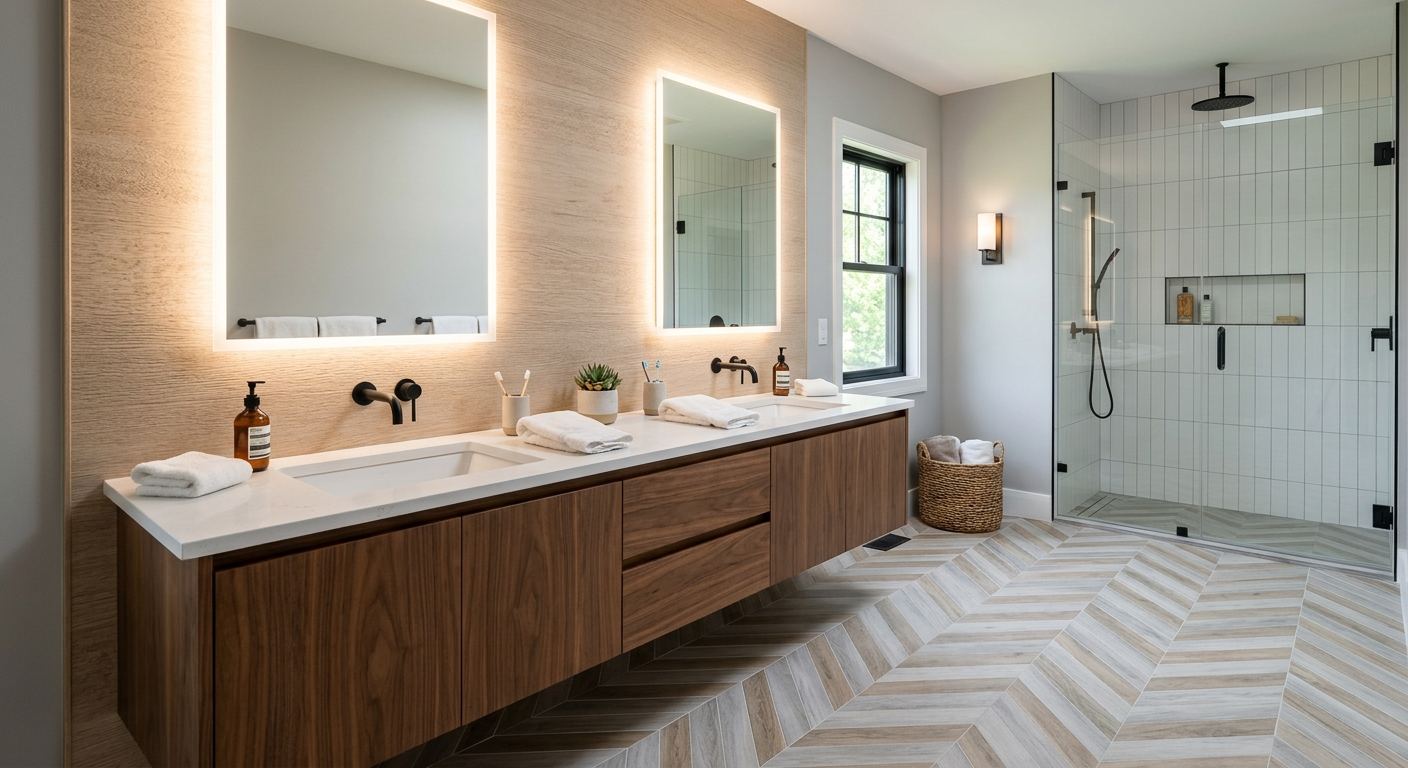
Bathroom renovation options and costs in Brentwood Bay
Bathroom renovation in Brentwood Bay can range from a simple refresh to a full rebuild, and the right plan depends on what’s behind your walls. With 7,581 residents (Statistics Canada, 2021 Census), the area has a steady flow of homeowners upgrading older homes where plumbing layouts and materials are often dated. In the Lower Mainland–Southwest region, labour rates and the age of housing stock are typically the biggest cost drivers—more than day-to-day weather. Many Brentwood Bay properties are mid-century or earlier, so it’s not unusual to uncover cast-iron or galvanized components, and in some pre-1985 builds, asbestos-containing materials in flooring or drywall compound may require proper abatement before work can continue.
Because Metro Vancouver trade availability is stretched by consistent demand, bathroom quotes can diverge noticeably once walls open: plumbers, tilers, and electricians are scheduled as a coordinated sequence, and any hidden repair can expand scope. Moisture control is also non-negotiable in British Columbia; bathrooms that don’t get proper waterproofing and ventilation tend to show issues sooner, especially around showers and exterior-facing walls. In busy pockets like the Brentwood Bay village core and along the waterfront corridor, we see higher demand for trades when homeowners move fast to keep the project out of peak scheduling windows.
Below are realistic cost ranges for common renovation paths in Brentwood Bay, so you can compare apples to apples as you review quotes—then we’ll break down the exact factors that swing budgets.
| Renovation Scope |
What's Included |
Typical Duration |
Price Range |
| Cosmetic refresh (paint, fixtures, accessories only) |
Repaint, swap vanity top or vanity, replace toilet or faucet, update lighting fixtures, accessories; no wall or floor openings |
2–5 days |
$3,000–$8,000 |
| Mid-range full renovation (new tile, vanity, tub/shower, electrical) |
Demo and disposal, new waterproofing, floor + wall tile, new vanity, tub/shower or surround replacement, exhaust fan upgrade, GFCI outlets, basic plumbing refresh |
2–3 weeks |
$18,000–$33,000 |
| High-end full renovation (custom tile, steam shower, heated floors) |
Higher-end tile and layout, custom shower (or steam-ready system), heated floor circuit and finishes, upgraded electrical, premium fixtures, niche/bench detailing, expanded waterproofing system |
3–5 weeks |
$33,000–$45,000 |
| Shower-only installation (convert tub to walk-in shower) |
Remove tub, rough-in checks, new shower pan and waterproofing, floor + wall tile, new glass, drain/venting coordination as needed |
1.5–3 weeks |
$8,000–$25,000 |
| Bathtub replacement or tub-liner install |
Remove existing tub and install new tub and surround (or liner where appropriate), sealing, re-touch tile/trim, fixture swap, basic waterproofing at transition points |
3–7 days |
$1,500–$6,000 |
| Tile-only installation (floor + surround, existing layout kept) |
Tile removal and prep, underlayment and waterproofing system as required, floor + wall tile install, grouting and sealing; assumes plumbing stays put |
7–14 days |
$2,000–$8,000 |
Prices are estimates only and vary by project scope, site access and material selection.
What affects the price of bathroom renovation in Brentwood Bay
In Brentwood Bay and across the Lower Mainland–Southwest region, two bathroom projects that look identical at the showroom can land 30–50% apart in total cost. The main reasons are the same: regional labour rates and the age of the local housing stock. In British Columbia, once you open walls, you’re often forced to address plumbing and ventilation to get the system working as intended and to align with current code expectations. That’s why a “mid-range” full reno can creep toward the upper end of the $18,000–$45,000 band when drain stacks, supply lines, or fan venting aren’t up to standard.
Climate isn’t usually the headline driver here, but moisture management is. When waterproofing details are wrong—or when ventilation is undersized—British Columbia humidity can accelerate grout and substrate failure, leading homeowners to redo work sooner. Also, older homes can hide asbestos-containing materials in vinyl floor tile or older drywall compound (pre-1985), and abatement can add roughly $1,500–$5,000+ before finishes even start.
Two common Brentwood Bay scenarios that change price fast: (1) converting a tub to a walk-in shower often triggers drain slope and venting coordination, which can push labour beyond a straightforward install; (2) restoring an unlevel subfloor (or dealing with rot around a perimeter) increases prep time before any tile is set. On the flip side, if you keep the layout and use a standard tile format within the $2,000–$8,000 tile-only band, costs stay more predictable.
In short: your quote variance is usually about what’s behind the wall—not what’s outside it.
| Price Factor |
Why It Matters |
Cost Impact |
| Layout change — moving drain or supply lines requires rough-in work |
New rough-in work adds plumber time, wall/floor openings, and possible venting changes |
Often +$3,000–$10,000 depending on distance and wall type |
| Tile selection — large-format porcelain vs. mosaic vs. ceramic |
Harder-to-cut formats and smaller mosaics increase labour and waste |
Can swing +$1,000–$6,000 on finishes and install time |
| Fixture tier — builder-grade vs. mid-range vs. designer brands |
Higher tiers cost more and may require more precise install tolerances |
Typically +$800–$5,000 |
| Subfloor condition — rot or unlevel concrete adds scope |
Requires repair, additional membrane/underlayment and longer prep before tile |
Often +$500–$4,500 |
| Electrical — adding GFCI outlets, exhaust fan, heated floor circuit |
New circuits and code-compliant components increase electrician time |
Commonly +$800–$3,500 (can be more with panel upgrades) |
| Waterproofing method — membrane type and extent |
Full coverage detailing prevents mould and costly rework |
Typically +$300–$2,500 (highly protective value) |
| Older-home surprises — asbestos tile, cast-iron drains, galvanized pipes |
Remediation and replacement add trades and permit/inspection time |
Often +$1,500–$10,000+ |
| Bathroom size — sq ft drives tile and labour time directly |
More surface area means more materials, cure times and installation hours |
Can shift the project by thousands, especially for full-tile walls |
Permits & regulations in British Columbia
In British Columbia, the rule of thumb is: cosmetic changes are usually simpler than anything that moves plumbing, electrical or structural elements. Swapping fixtures in place—like replacing a vanity, toilet, faucet, or retiling without moving plumbing—typically does not require a permit. However, permits are commonly required when you relocate plumbing (for example, moving a drain line or supply lines), add or relocate a bathroom exhaust fan where new ducting or electrical connections are involved, or make structural changes that affect framing or walls.
Electrical work must meet British Columbia code and be done by (or signed off by) a licensed electrician. Plumbing rough-in changes typically require permit and inspection before you close the walls. If older finishes contain asbestos, the abatement process and documentation can also affect scheduling, even when the visible work is “just tile.”
To verify a contractor in Brentwood Bay step-by-step: (1) check their British Columbia trade licence number (and confirm it matches the scope—plumbing/electrical if applicable); (2) request a certificate of insurance and confirm liability coverage amounts and active dates; (3) ask for proof of workers’ coverage (WCB/WSIB-equivalent coverage) or a clearance letter where required by the contracting process; (4) confirm that their permits will be pulled by them when needed; and (5) keep copies of all documents with your signed contract and change orders.
Choosing tile, waterproofing and fixtures for your Brentwood Bay bathroom
In Brentwood Bay, your bathroom budget usually rises or stabilizes based on three material decisions: tile type, waterproofing system and fixture tier. First, tile choice: ceramic is often the entry-level option and can be cost-effective if you’re keeping the design straightforward. Porcelain is denser and works well for both floor and walls, but installation can be more demanding due to weight and cutting—especially with large-format panels or custom layout patterns.
Second is waterproofing method. In British Columbia’s damp conditions, the right approach prevents mould in the long run. A paint-on membrane can be fine for simple scopes, but bonded sheet membranes and proven bonded systems generally provide more robust results in higher-risk shower zones when installed correctly at all corners, transitions and penetrations.
Third is fixture tier. Builder-grade fixtures save money upfront but may feel less solid and wear differently over time; mid-range often offers a better balance for day-to-day use; designer fixtures can justify their cost when you’re matching finishes for resale appeal and longevity.
Here’s a practical example: if you’re choosing between basic ceramic and a mid-range porcelain, the material and labour difference is often not worth it if you’re keeping tile coverage limited. But if you’re tiling full shower walls or adding heated floors, investing in the correct waterproofing + porcelain typically makes sense—because the expensive part is the labour and the access, not just the tile.
| Material / Option |
Pros |
Cons |
Price Range |
| Ceramic tile (floor + walls) |
Lower material cost; wide colour and size selection; good for straightforward layouts |
More variation in durability; requires careful selection for wet areas |
$2,000–$5,000 |
| Porcelain tile (floor + walls) |
Better water resistance and durability; holds up well for shower surround and floors |
Often heavier and may need more layout planning; higher material cost |
$4,000–$8,000 |
| Natural stone (marble, travertine, slate) |
Premium look and texture; strong resale appeal |
Sealing and maintenance; can be more complex to cut and level |
$7,000–$14,000 |
| Frameless glass shower enclosure |
Modern appearance; easier to keep clean when properly installed; good durability |
Costs more; needs accurate framing and waterproofing detailing |
$2,000–$6,000 |
| Prefab tub surround (acrylic) |
Fast install; fewer tile hours; good for budget-focused bathrooms |
Less custom look; may show seams or transitions depending on model |
$1,500–$3,500 |
| Custom shower pan (tile or linear drain) |
Seamless look; linear drains improve drainage and design; strong performance when detailed properly |
More labour and detailing; requires precise slope and waterproofing system |
$4,000–$12,000 |
How to choose a bathroom renovation contractor in Brentwood Bay
Choosing a contractor in Brentwood Bay is less about catchy ads and more about proof. Start with British Columbia trade licensing: ask for the licence number(s) that match the work being quoted (especially plumbing/electrical-related scope). Next, request liability insurance documents showing the insurer, policy period and coverage level, and keep a copy for your records. For workers’ coverage, confirm they carry the required coverage for their crews; you can ask for proof of coverage and, when applicable, a clearance letter from the employer’s coverage provider. If a contractor can’t provide these quickly, that’s a serious warning sign.
Then get 2–3 itemised written quotes. You want a labour + materials breakdown and clearly stated allowances (tile, fixtures, waterproofing products, glass, disposal). Avoid “lump sum only” quotes without scope detail, because bathrooms in older BC homes frequently expand once walls open. Read the exclusions: ask what’s not included (permit pulling, demolition, subfloor repairs, replacing vent duct, asbestos testing/abatement if discovered, and disposal). Also review warranty terms—workmanship warranty length (often 1–2 years), manufacturer product warranty, and whether warranties are transferable if you sell your home.
Payment schedule matters. Never pay more than 10–15% upfront. Hold back a portion until key milestones are complete (waterproofing inspection-ready stage and final trim). Make sure the timeline includes a start date and a completion estimate in writing.
- Provides BC trade licence details and matches them to the scope
- Shows current liability insurance certificate before you sign
- Confirms workers’ coverage and/or clearance letter upon request
- Uses itemised quotes with allowances (tile, fixtures, glass, membrane)
- Lists inclusions/exclusions clearly (permits, disposal, patching, painting)
- Explains waterproofing method and how corners/penetrations are treated
- Documents demo and subfloor assessment before tile is ordered
- Includes a workmanship warranty in writing
- States the inspection/permit responsibility (who pulls permits and when)
- Provides a realistic schedule with buffer for cure times and inspections
- Uses a milestone-based payment plan (small deposit, holdback)
- Communicates clearly about older-home risks (venting, drains, hidden damage)
Red flags we commonly see with bathroom contractors in Brentwood Bay include: vague scope language (“including all labour” with no breakdown), refusal to show licensing/insurance documents, no written waterproofing details, promises of “fixed price” without allowing for hidden plumbing or asbestos discoveries in older homes, and schedules that start immediately without a pre-start site visit or inventory planning—especially when tile and specialty parts have lead times.
Frequently asked questions — bathroom renovation in Brentwood Bay
What's the most common mistake homeowners make in bathroom renovations?
In Brentwood Bay, the most common costly mistake is under-scoping the hidden work. Homeowners often price finishes only (tile, vanity, fixtures) and assume plumbing/venting are “fine as-is” until walls open. In the Lower Mainland–Southwest region, where labour costs and older housing stock drive the real cost, it’s typical to uncover issues like aging drains, outdated supply lines, or inadequate bathroom exhaust routing—especially in mid-century homes. Another frequent error is skipping a clear waterproofing scope or accepting a basic membrane without detailing at transitions and penetrations. Those shortcuts can lead to mouldy substrates and early rework. A predictable approach is to include contingency planning and require an itemised quote before demo starts (Statistics Canada, 2021 Census).
How long does tile installation take in a Brentwood Bay bathroom?
Tile time in Brentwood Bay usually depends on tile size, layout complexity, and prep condition. For many bathrooms where the layout stays put, you’ll typically see tile installation take about 7–14 days as part of a broader 2–3 week renovation. Prep is often the real schedule driver: backer board/underlayment work, leveling an unlevel subfloor, and installing the waterproofing system can add several days before any tile touches wet areas. Cure and finishing times also matter—thinset and grouts need appropriate handling time before the area is used. If you’re doing large-format porcelain or custom shower detailing, add time for careful cutting and alignment. Your contractor’s schedule should show sequencing, not just a single “tile day count.”
How much does a bathroom renovation cost in Brentwood Bay?
For Brentwood Bay, most homeowners land inside the typical full renovation range of $18,000–$45,000, depending on size, finishes, and whether plumbing/venting must be upgraded. If you’re doing a shower conversion (like tub-to-walk-in), a common realistic band is $8,000–$25,000. Tile-only work—when you keep the plumbing and layout unchanged—often falls around $2,000–$8,000, while bathtub replacement or tub-liner installs are commonly $1,500–$6,000. What pushes you toward the top end in British Columbia is usually not “weather,” but labour costs and older-home discoveries behind the walls, including venting issues or possible asbestos-related remediation in older builds.
How long does a bathroom renovation take in Brentwood Bay?
Typical timelines in Brentwood Bay are about 2–3 weeks for a mid-range full renovation and 3–5 weeks for a high-end reno with custom shower details and heated floors. The schedule depends on inspection/permit timing when plumbing or electrical is modified, plus material lead times for tile, glass, and specialty fixtures. Even for “simple” tile projects, waterproofing and cure times are non-negotiable—rushing can cause long-term failures in BC humidity conditions. If you’re converting a tub to a shower, plan for roughly 1.5–3 weeks because drain rough-in coordination and waterproofing detailing happen early and drive downstream work. A good contractor will provide a written start date, completion estimate, and a sequencing plan that accounts for cure and inspection days.
Do I need a permit for a bathroom renovation in British Columbia?
Often, cosmetic changes in British Columbia don’t require a permit—like swapping fixtures in place, repainting, or retiling without moving plumbing/electrical. Permits are typically required when you relocate plumbing (move drain or supply lines), add or reconfigure electrical components tied to bathroom ventilation or new circuits, or make structural changes. Electrical work must meet BC code and be done by a licensed electrician (or signed off by one). Plumbing rough-in changes usually require permit and inspection before the walls close. For Brentwood Bay homeowners, the practical step is to ask your contractor what permits they will pull, then verify that they’ll schedule inspections at the correct stages. Get confirmations in writing with your itemised quote.
What's the best tile for a bathroom in Brentwood Bay?
The “best” tile depends on your priorities, but in Brentwood Bay bathrooms we commonly recommend porcelain for wet-area floors and wall surrounds because it’s durable and water-resistant when installed with the correct waterproofing system. Ceramic can be fine for budget-friendly scopes, but it requires careful product selection for wet areas. Natural stone (like slate or travertine) looks premium and can elevate resale value, but it needs sealing and more maintenance, and it can be trickier to cut and level. For showers, the real performance comes from waterproofing and correct slope, not tile brand alone—especially in British Columbia’s damp environment. If you’re budgeting, you can often choose mid-range porcelain and allocate more money to waterproofing quality and ventilation, rather than paying for higher-end stone in every surface.