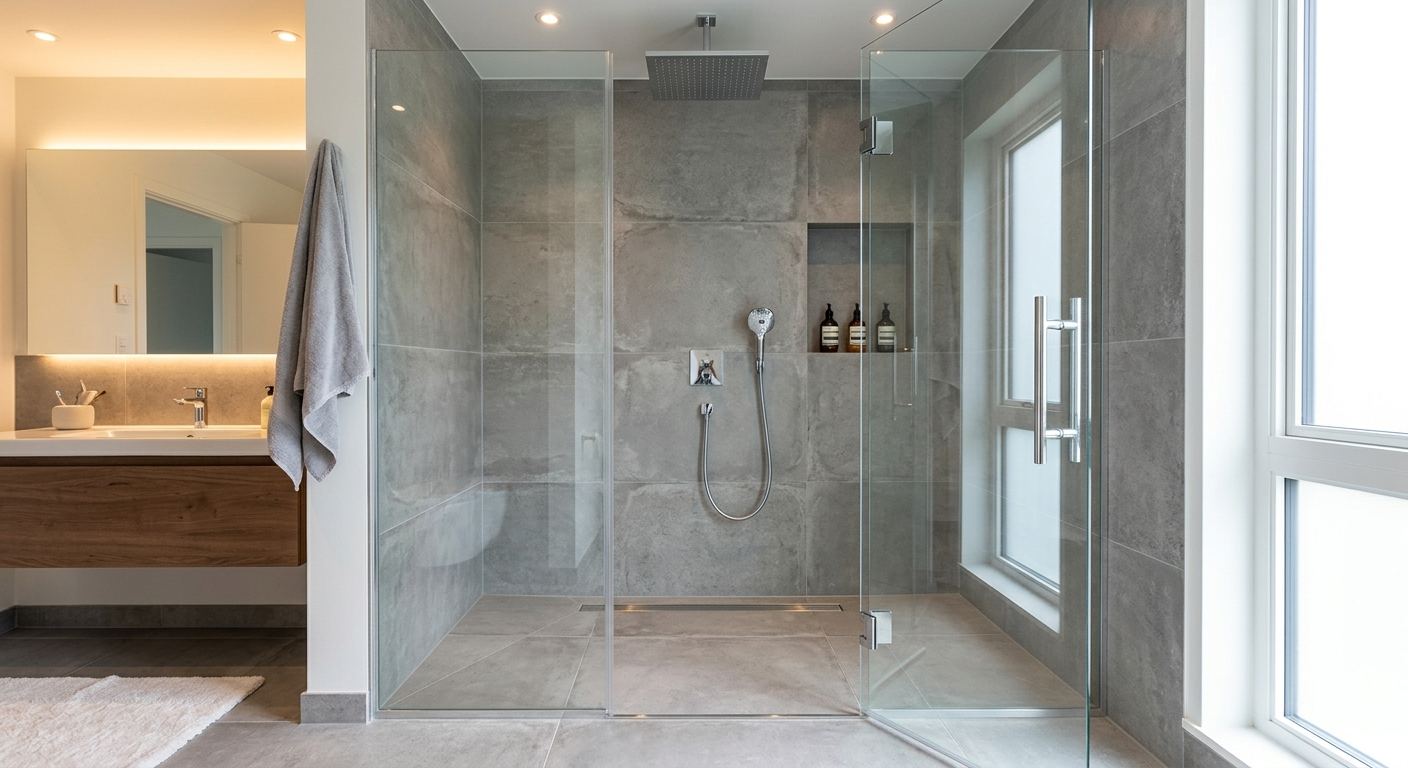
Bathroom renovation options and costs in Delta
Bathroom renovations in Delta, British Columbia typically fall into a few predictable tiers, but the final budget depends heavily on what the contractor finds once walls and floors come off. In Delta, more than half of the housing stock is older—53.6% of homes were built before 1981—so dated plumbing layouts, older drain materials, and occasional asbestos-containing materials in floor tile or drywall compound aren’t unusual. With 75.6% of households in the area owning their homes, many projects are planned as long-term upgrades, not quick refreshes, which affects how many homeowners choose to expand scope once discovery happens.
In the Lower Mainland–Southwest, bathroom pricing is driven more by regional labour rates and construction demand than by local climate. That said, the market’s frequent “opened-wall” work means ventilation, waterproofing, and plumbing venting upgrades often get bundled in—especially to bring existing systems up to current British Columbia expectations. Contractors also tend to be especially in-demand in the more established residential pockets of Delta, such as Tsawwassen, where many older family homes are being updated and trades schedules can tighten.
Use the ranges below to sanity-check quotes. For a typical Delta bathroom, a cosmetic refresh can be budget-friendly, while full renovations commonly land anywhere from the mid-range to the higher end when plumbing/venting changes and premium tile or heated floors are included. Next, compare the price drivers that explain why two “same-size” bathrooms can land 30–50% apart.
| Renovation Scope |
What's Included |
Typical Duration |
Price Range |
| Cosmetic refresh (paint, fixtures, accessories only) |
Paint, replace vanity/top and faucet, toilet refresh or replace, swap lighting, re-caulk, accessory upgrades; no plumbing relocations |
2–5 days |
$3,500 – $8,000 |
| Mid-range full renovation (new tile, vanity, tub/shower, electrical) |
Demolition and disposal, new backer/waterproofing where needed, tile floor + surround, new vanity and tub/shower unit, exhaust fan upgrade, GFCI outlet work, minor plumbing updates |
2–3 weeks |
$18,000 – $30,500 |
| High-end full renovation (custom tile, steam shower, heated floors) |
Custom tile detailing, steam-ready plumbing provisions, heated floor system, upgraded waterproofing system, designer vanity and fixtures, premium lighting, possible venting improvements |
3–5 weeks |
$30,500 – $45,000 |
| Shower-only installation (convert tub to walk-in shower) |
Remove tub, set new shower base/pan, tile surround, new glass option, waterproofing, re-route drain as needed, update controls/valves |
1.5–3 weeks |
$8,500 – $22,000 |
| Bathtub replacement or tub-liner install |
Remove and replace tub OR install tub-liner system (site-dependent), re-caulk/trim, plumbing connection adjustments, surface preparation |
2–7 days |
$1,800 – $6,000 |
| Tile-only installation (floor + surround, existing layout kept) |
Tile removal and install of floor + shower/bath surround, waterproofing at tile surfaces, new grout/caulk; plumbing layout typically unchanged |
1.5–3 weeks |
$2,500 – $8,000 |
Prices are estimates only and vary by project scope, site access and material selection.
What affects the price of bathroom renovation in Delta
In the Lower Mainland–Southwest, homeowners often see quotes for the “same” bathroom that differ by 30–50%—and it’s usually not the tile that’s the culprit. The biggest swings come from regional labour rates and what the age of local housing stock forces the contractor to uncover. Delta has a large share of pre-1981 homes, and older layouts commonly hide issues such as cast-iron or ageing drain stacks, outdated copper supply lines, and limited ventilation strategies. Once walls are opened, a cosmetic plan can quickly expand into plumbing and venting work to meet contemporary expectations, and that’s where budgets move fastest.
As a rule of thumb, discovery drives scope more than British Columbia’s outdoor weather does. The moisture in a bathroom is controlled by ventilation, waterproofing details, and how wet-area surfaces were built—not by whether it’s raining outside on a given day. Still, in many Delta homes, you may see older exhaust ducting runs that don’t provide strong airflow to the exterior, so upgrading the fan and ducting can add time and electrical scope. The same goes for waterproofing: the right membrane and proper detailing prevents mould in the humid shoulder seasons common around Metro Vancouver.
Two concrete examples: a tub-to-shower conversion can look straightforward until the drain rough-in needs rework—shifting the drain or valve location changes labour and materials substantially. And if asbestos is found in vinyl tile or old drywall compound (more common in older builds), abatement can add about $1,500–$5,000+ to the budget and requires additional coordination. This is one reason a “mid-range” full renovation (often around $18,000–$30,500) can drift toward higher-end pricing when heated floors or custom waterproofing detailing are added (commonly bringing the project into the $30,500–$45,000 range).
| Price Factor |
Why It Matters |
Cost Impact |
| Layout change — moving drain or supply lines |
Requires rough-in plumbing work, possible framing changes, and re-tiling around new valve locations |
Often adds $2,500 – $8,000+ |
| Tile selection — large-format porcelain vs. mosaic vs. ceramic |
Material price and installation difficulty increase with harder substrates, smaller mosaics, and tighter tolerances |
Typically +$1,000 – $6,000 |
| Fixture tier — builder-grade vs. mid-range vs. designer brands |
Quality affects durability, finish, and sometimes rough-in compatibility |
Typically +$800 – $5,000 |
| Subfloor condition — rot or unlevel concrete adds scope |
May require new subflooring/backer, additional prep, and longer cure times |
Typically +$1,500 – $5,500 |
| Electrical — adding GFCI outlets, exhaust fan, heated floor circuit |
More trades time and wiring/permit items; heated floors require dedicated circuits |
Typically +$800 – $4,000 |
| Waterproofing method — membrane type and extent |
Better systems reduce callbacks and mould risk; correct detailing is labour-intensive |
Typically +$500 – $3,500 |
| Older-home surprises — asbestos tile, cast-iron drains, galvanized pipes |
Discovery triggers remediation, disposal, and sometimes full stack or supply upgrades |
Often +$1,500 – $10,000+ |
| Bathroom size — sq ft drives tile and labour time directly |
Tile quantity, backer area, and labour hours scale with size; bigger rooms also mean more coordination |
Often +$1,000 – $6,000+ |
Permits & regulations in British Columbia
In British Columbia, cosmetic updates usually do not require a permit. That includes swapping a vanity, replacing a toilet, changing bathroom lighting, repainting, and retiling where you keep the plumbing locations the same. However, permits are typically required when you change how the plumbing or electrical system is installed or routed.
Work that typically requires a permit in BC: relocating or adding plumbing rough-ins (moving a drain or supply line for a vanity/shower/tub), installing a new exhaust fan that involves new wiring/circuit work, major electrical upgrades (including adding GFCI protection where required for the bathroom circuit), and any structural changes that affect walls or supporting framing. Also, if you discover asbestos or need remediation, the project may require additional approvals and work must be coordinated appropriately.
Work that typically does NOT require a permit: replacing fixtures with like-for-like positions (same valve and drain locations), surface-level caulking, painting, accessory swaps, and tile replacement that doesn’t alter plumbing locations.
How Delta homeowners verify a contractor in practice: (1) ask for their BC trade licence number and confirm it online through the provincial licensing registry; (2) request a certificate of liability insurance showing adequate coverage for your project; (3) ask for proof of WCB/WSIB coverage documentation (as applicable to the contractor’s structure) and keep it with your contract; and (4) for any electrical or plumbing rough-in scope, verify the specific licensed trades are assigned to the work.
Choosing tile, waterproofing and fixtures for your Delta bathroom
In Delta, the bathroom budget is shaped by three material decisions: tile choice, waterproofing system, and fixture tier. Start with tile. Entry-level ceramic can be cost-effective, but it often needs more careful handling at transitions and can be less forgiving in busy wet-area floors. Porcelain is denser and typically performs better in a bathroom floor because it absorbs less water and resists wear from daily foot traffic. If you want luxury, natural stone like marble, travertine, or slate can look exceptional, but it’s more sensitive to installation detailing and sealing requirements, which can raise labour time.
Second is waterproofing—this is where British Columbia humidity becomes a daily reality inside the bathroom. Paint-on membranes can work in limited scenarios, but bonded sheet membranes or a properly detailed system (including corners, overlaps, and drain interfaces) often provide more reliable results for shower walls and floors. The right membrane and correct installation reduce mould risk, especially during damp seasons when ventilation may run longer.
Third is fixtures. Builder-grade options can keep you closer to the lower end of typical full renovation pricing, while mid-range or designer brands can push a project higher—but they’re often worth it where they improve ergonomics and long-term finish quality. For a practical comparison: upgrading from standard tile to porcelain plus a more robust waterproofing detail can be justified if you’re planning a mid-range full renovation around $18,000–$30,500; the incremental material cost is usually less than the cost of fixing water-related failures later. If you’re targeting a high-end bathroom in the $30,500–$45,000 band, custom shower pan detailing and premium stone or heated floors become more cost-effective at that point.
| Material / Option |
Pros |
Cons |
Price Range |
| Ceramic tile (floor + walls) |
Lower material cost, wide variety of styles, good wall performance |
More variation in durability by product; may be less ideal for high-traffic shower floors if not rated correctly |
$2,000 – $4,500 |
| Porcelain tile (floor + walls) |
Lower water absorption, durable for floors, better long-term wear |
Heavier tiles can require more careful layout and may raise labour if cuts are complex |
$3,000 – $6,500 |
| Natural stone (marble, travertine, slate) |
Premium look, unique patterns and texture |
Needs sealing/maintenance, can be more expensive to install due to calibration and finish requirements |
$6,000 – $12,000 |
| Frameless glass shower enclosure |
Modern appearance, easy to clean, can visually open up the space |
Requires precise plumbing/tile plane accuracy; hardware and glass thickness affect cost |
$2,500 – $6,500 |
| Prefab tub surround (acrylic) |
Fast install, consistent fit, usually straightforward waterproofing interface |
Less design flexibility than tile; repairs can be limited if damage occurs after installation |
$900 – $2,500 |
| Custom shower pan (tile or linear drain) |
Design control, linear drain options improve water management and style |
More labour-intensive waterproofing and slope planning; requires excellent detailing |
$2,500 – $8,000 |
How to choose a bathroom renovation contractor in Delta
Choosing the right contractor in Delta comes down to proof, paperwork, and clarity. First, verify British Columbia licensing and insurance. Ask for the contractor’s BC trade licence details (or the licences of the specific trades performing plumbing/electrical/tile work), then check their liability insurance certificate for your project’s coverage limits. For coverage, ask for proof of WCB/WSIB status and confirm it applies to the work crew that will be on your site. Don’t rely on “we’re insured” unless you can see the certificate.
Second, get 2–3 itemised written quotes. You want a breakdown that separates labour and materials (tile, membrane, fixtures, glass, disposal, and electrical/plumbing scope) rather than a vague lump sum. Review what’s excluded: permit pull, disposal, patching and painting, subfloor repair, and any allowances for tile patterns or special cuts. For example, if a quote’s tile allowance is low, your final cost can rise quickly once you pick your actual porcelain or stone.
Third, scrutinize warranty. Ask for the workmanship warranty length (and what it covers), the manufacturer warranty for key products, and whether any warranty is transferable if you sell your home. Fourth, payment schedule matters: never pay more than 10–15% upfront; hold back a portion until completion and final walkthrough. Lastly, insist on a written timeline with a start date and completion estimate.
- Confirm BC trade licence numbers for the trades that will perform plumbing/electrical work.
- Request a current certificate of liability insurance with project-specific coverage.
- Ask for proof of WCB/WSIB coverage for the contractor and crews.
- Get 2–3 itemised quotes (labour vs materials) and compare apples-to-apples allowances.
- Verify whether permits are pulled by the contractor or by you—and whether they’re included in the price.
- Check if disposal and dumpster fees are included, and where debris will be stored on-site.
- Make sure the quote includes waterproofing scope (membrane type, coverage area, and detailing at seams).
- Confirm who orders fixtures and how substitutions are handled if a product is backordered.
- Ask what happens if cast-iron drains, galvanized supply lines, or asbestos-containing materials are found.
- Review the demolition plan and whether it includes dust control for occupied homes.
- Ask about workmanship warranty length and whether it applies to waterproofing and tile.
- Set a realistic payment schedule: 10–15% max upfront, with a holdback until punch-list completion.
Red flags to watch in Delta: (1) quotes without a clear waterproofing plan or membrane type; (2) “we’ll just do it” wording around permits or electrical—without specifying licences; (3) large upfront deposits beyond 10–15%; (4) no written start date/completion target; and (5) vague exclusions like “subfloor issues are extra” without a process for discovery and pricing.
Frequently asked questions — bathroom renovation in Delta
How much does a bathroom renovation cost in Delta?
In Delta, most homeowners land somewhere inside the Lower Mainland–Southwest price bands, but the final number depends on plumbing/venting upgrades and what’s behind older walls. A cosmetic refresh is often a few thousand dollars, while a mid-range full renovation typically follows the $18,000–$30,500 band and can climb if you add electrical upgrades, better waterproofing, or upgrade fixtures. If you’re doing a more complex project—custom tile, heated floors, or steam-ready work—budgets commonly reach the $30,500–$45,000 range. Because 53.6% of Delta homes were built before 1981, some projects also include “surprise” scope like drain stack work or ventilation improvements once walls open. (Statistics Canada, 2021 Census)
How long does a bathroom renovation take in Delta?
Timelines in Delta are usually determined by the number of trades involved and how quickly long-lead materials arrive, more than by outdoor weather. A cosmetic refresh can be finished in about 2–5 days. A mid-range full renovation commonly takes around 2–3 weeks, while high-end work with custom tile work and heated floors is often 3–5 weeks. Shower-only conversions often fall near 1.5–3 weeks. In older Delta homes (many built pre-1981), add time if plumbing updates, venting upgrades, or subfloor repairs are discovered after demolition. Your contractor should provide a written start date and completion estimate, plus a plan for what happens if materials are backordered.
Do I need a permit for a bathroom renovation in British Columbia?
In British Columbia, simple cosmetic work typically doesn’t need a permit—such as replacing fixtures like a vanity or toilet in the same location, re-caulking, and painting. Permits are commonly required when you change plumbing or electrical systems. That includes moving a drain or supply line, adding or relocating a shower valve where rough-in changes are needed, and adding an exhaust fan that requires new wiring or circuit work. Electrical work must be done or signed off by a licensed electrician, and plumbing rough-ins usually need permit/inspection when altered. For Delta homeowners, the safest approach is to ask your contractor (in writing) exactly which permit steps they handle, and to confirm licensing and insurance before work starts.
What's the best tile for a bathroom in Delta?
“Best” usually means most durable for wet-area use and easiest to maintain long-term. In Delta bathrooms, porcelain is often the go-to for floors because it’s denser and performs well with frequent moisture exposure. Ceramic tile can work great for walls and some floors when you choose properly rated products, but porcelain tends to be a safer bet for shower floors and heavy traffic. Natural stone (marble/travertine/slate) delivers a luxury look, but it needs sealing and careful installation detailing. Whichever tile you pick, the waterproofing and correct waterproofed transitions matter just as much for preventing mould in British Columbia’s damp bathroom environment.
Should I do a tub-to-shower conversion?
A tub-to-shower conversion is a popular choice in Delta, especially for accessibility, faster daily use, and easier cleaning. If your tub surround is dated or you’re already planning a shower-area waterproofing upgrade, the conversion can be cost-effective. Expect the budget to follow the shower installation band, often around $8,000–$25,000, depending on how much the drain and valve locations need reworking and what glass enclosure you select. In older homes (many built pre-1981), the decision becomes more about what you discover behind the wall—drain upgrades, valve compatibility, and ventilation adjustments can change scope. If you plan to keep the layout simple, it’s often the most predictable way to move budget forward.
How do I prevent mold in a Delta bathroom?
Mould prevention starts with controlling moisture: strong, properly ducted exhaust and correct waterproofing. In Delta and the wider Lower Mainland–Southwest, bathrooms can stay damp between uses, especially in mid-century homes where ventilation may be undersized or ducting may be poorly routed. Choose a reliable waterproofing system for the shower/tub wet zone, ensure seams and corners are detailed correctly, and don’t skip waterproofing coverage at transitions. Use an exhaust fan sized for the room and vent it properly to the exterior. Maintenance also matters—repair caulking promptly and wipe surfaces after showers if possible. If your home is older (53.6% of homes built before 1981), be alert for hidden material issues once surfaces open, and address them before finishes are replaced.